

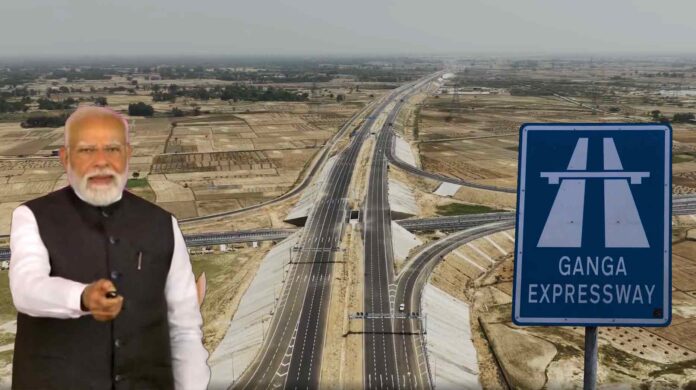
Prime Minister Narendra Modi inaugurated the 594 km-long Ganga Expressway on Wednesday, 29th April. This expressway, from Meerut to Prayagraj, will significantly enhance connectivity within the state of Uttar Pradesh. It is expected to give a big push to industries, logistics, farming and overall development in the region.
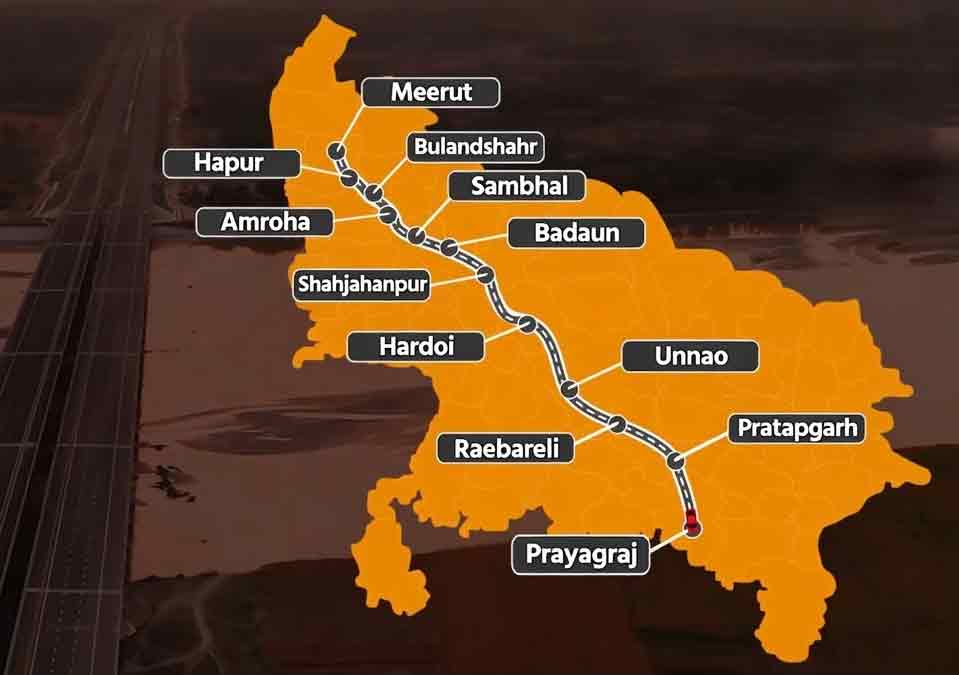
The new expressway passes through 12 districts, including Meerut, Hapur, Bulandshahr, Shahjahanpur, Hardoi and Prayagraj. It is likely to cut down travel time and make the movement of people and goods faster and safer. The new road will cut travel time between Meerut and Prayagraj from roughly 10-12 hours to 6-8 hours, and is expected to save fue by upto 30%.
#WATCH | PM @narendramodi inaugurates the #GangaExpressway in Hardoi, a 594-km high-speed corridor built at a cost of ₹36,230 crore, connecting 12 districts across western, central and eastern #UttarPradesh.
— DD News (@DDNewslive) April 29, 2026
The Expressway will reduce travel time between Meerut and Prayagraj… pic.twitter.com/vCLqzLQmPT
Speaking at the launch event in Hardoi, PM Modi called the project a game-changer for the state. “The way the Ganga has been the lifeline of Uttar Pradesh for thousands of years, similarly, this expressway will become a new lifeline for the state’s development,” he said.
Chief Minister Yogi Adityanath also welcomed the project and said, “Before 2017, Uttar Pradesh was entangled in dynastic politics and casteism, marked by riots, lawlessness, curfews, and the parallel influence of mafia, where one could not even imagine development, employment, or investment. Today, I am happy to say that in the past nine years, the result of the double-engine government is visible in Uttar Pradesh, with a strong network of expressways, highways, district roads, and about four lakh kilometers of rural roads now in place.”
आदरणीय प्रधानमंत्री श्री @narendramodi जी के कर-कमलों से 'गंगा एक्सप्रेस-वे' के लोकार्पण हेतु जनपद हरदोई में आयोजित कार्यक्रम में… https://t.co/TelV9pYRSq
— Yogi Adityanath (@myogiadityanath) April 29, 2026
Features of the expressway
The ₹36,230 crore expressway has been built as a six-lane road, which can be expanded to eight lanes in the future. It has a design speed of 120 kmph, making it one of the fastest corridors in the state. Adani Road Transport Limited (ARTL), the roads arm of Adani Enterprises Limited (AEL), developed 464 km, or nearly 80 per cent of the alignment of the total 594 km road. The company said in a press release that it deployed over 12,000 workers at peak construction. The remaining stretch was developed by IRB Infrastructure.
A special 3.2-km airstrip has also been built near Shahjahanpur so that fighter jets of the Indian Air Force can land during emergencies. Apart from this, the road is equipped with modern safety features like CCTV cameras, an Intelligent Traffic Management System, emergency call boxes, ambulances and patrol teams.
Boost to Industry and Jobs
Officials said the expressway will also support economic growth. Industrial and logistics hubs are planned along the route, including warehouses, cold storage units and food processing centres. The govt has planned it as an expressway-cum-industrial corridor, integrating logistics parks, warehousing, agro-processing and manufacturing zones.
The state govt has lined up 12 Integrated Manufacturing and Logistics Clusters (IMLCs) along the corridor, and nearly 6,507 acres of land have been identified. As per officials, 987 investment proposals worth nearly Rs 47,000 crore have already been received. The Expressway is expected to generate roughly 3,00,000 direct and indirect employment opportunities over a 10-year period, according to the UP government’s estimates.
There will be different sector-specific nodes in the industrial clusters, focusing on sectors like manufacturing, logistics, e-commerce, food processing and warehousing etc. According to the UP government’s estimates, the expressway is expected to generate ₹25,000–30,000 crore in annual logistics savings, create around 3 lakh jobs over the next decade and contribute over ₹1 lakh crore to the state’s GDP, while improving freight velocity and reducing inventory holding costs across sectors.
The Ganga Expressway will also connect with other major expressways like Purvanchal, Agra-Lucknow and Bundelkhand, creating a large road network. This is expected to attract investment, create jobs and help Uttar Pradesh move closer to its goal of becoming a trillion-dollar economy. The trunk corridor will strengthen trade flows by enabling faster movement of agricultural produce and goods. Farmers and small businesses stand to benefit from improved market access and better price realisation.
The expressway also strengthens UP’s industrial and agricultural connectivity while improving access to religious destinations such as Prayagraj and Varanasi, supporting spiritual tourism and local livelihoods. Expected to benefit over 8 crore people, the corridor will improve connectivity, shorten journeys, and support sustained economic growth across UP.
