

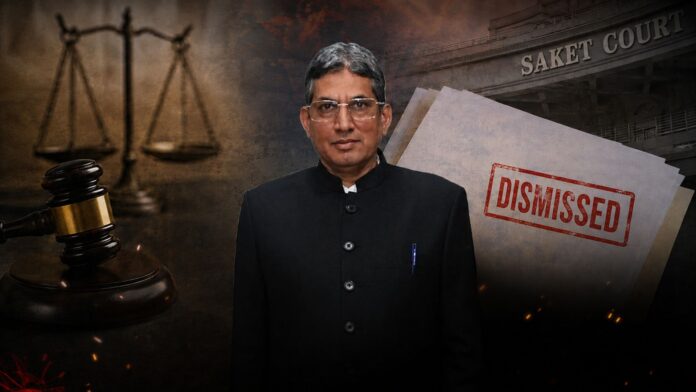
Jawad Ahmed Siddiqui, an accused in the money laundering case linked to the Al-Falah Group, which came into the spotlight after the Red Fort blast, has suffered a setback from Delhi’s Saket Court. The court has dismissed two separate applications filed by him.
In the first application, Siddiqui had sought permission to place certain documents on the court record, describing them as being of “sterling quality” and of an “unimpeachable character”. Jawad had argued that examining these documents was extremely necessary for arriving at a just decision. In the second application, he had sought a list from the ED of those documents collected during the investigation on which the agency was not relying for its case (unrelied documents).
Additional Sessions Judge Sheetal Chaudhary Pradhan dismissed both applications in a 48-page order passed on August 4, 2026. The court said that at the stage at which the matter is currently pending, the court primarily has to examine the ED’s prosecution complaint and the material filed along with it and determine whether a prima facie case is made out against the accused.
Understand the Stage at Which the Case Is
The case is being pursued under Sections 3 and 4 of the Prevention of Money Laundering Act (PMLA). The ED has filed a complaint under Section 44(1)(b) of the PMLA. However, the court has not yet taken cognisance of the complaint.
In simple terms, it is still to be decided whether, upon examining the ED’s complaint and the material placed along with it, the court finds a case sufficient to initiate further criminal proceedings against the accused or not.
The present order dated August 4, 2026, is mainly concerned with the manner and extent to which the accused can be heard before cognisance is taken. The court also noted that arguments on the question of cognizance from the ED’s side had already been completed, while arguments from the accused’s side were yet to be made. In the meantime, these two applications were filed, and it was necessary to decide them first.
Siddiqui is facing a case under the Prevention of Money Laundering Act (PMLA) involving approximately Rs 415 crore. His institution has also been accused of providing shelter to those accused in the Red Fort blast that took place in November 2025.
What Had Jawad Ahmed Siddiqui Sought?
The basis of both applications filed by Siddiqui was a provision contained in Section 223(1) of the BNS, under which a court cannot take cognisance of an offence without hearing the accused.
In the first application, Siddiqui told the court that certain documents related to his business had come from official sources. These were stated to include documents connected with various Indian government authorities and banks. Siddiqui described them as being of “sterling quality” and of an “unimpeachable character” and asked the court to take them on record.
Siddiqui argued that examining these documents would help the court understand the alleged contradictions in the ED’s allegations and would make the hearing taking place before cognisance more effective and meaningful.
Siddiqui’s second demand was that the ED be directed to provide a list of unrelied documents, that is, documents which the investigating agency had obtained during the course of the investigation but had not relied upon in its case.
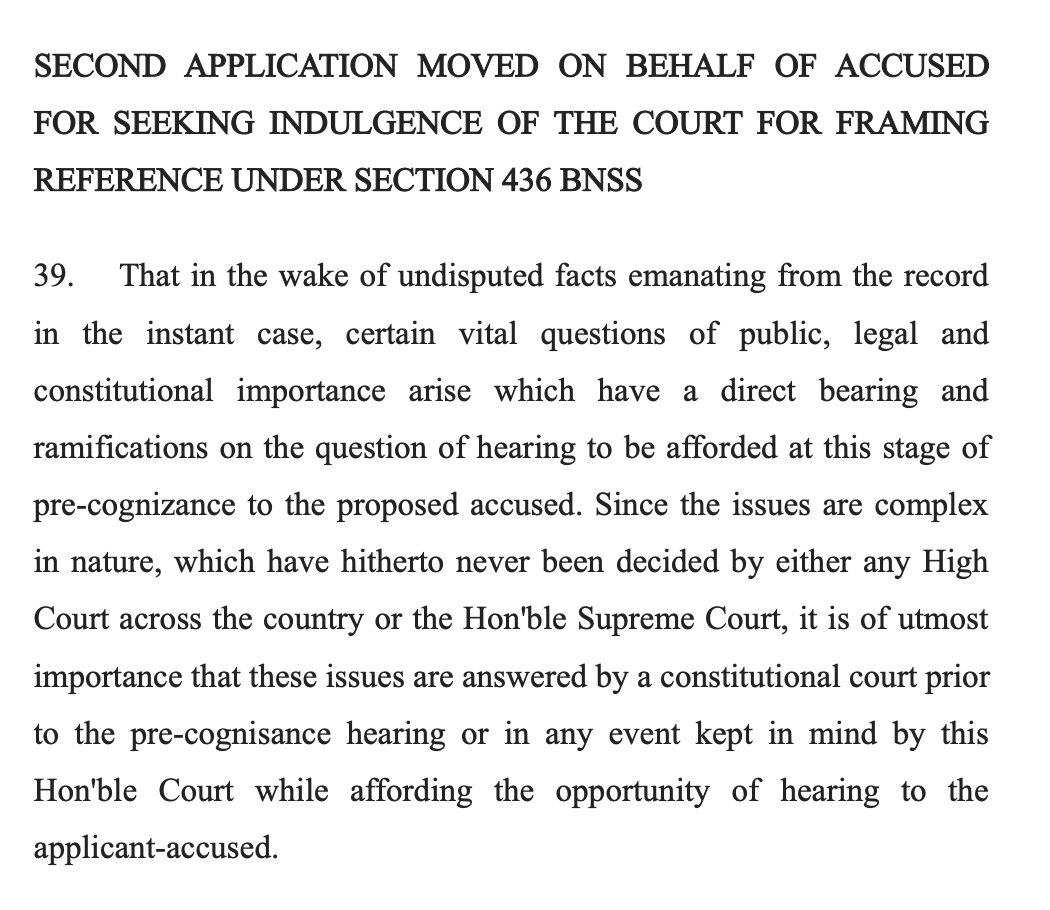
In the second application, Siddiqui had sought that important questions of law arising in the matter be referred to the High Court under Section 436 of the BNSS. His main argument was that the first “proviso” to Section 223(1) is a new provision that gives the accused a right to be heard before cognisance is taken, but the “limits, nature and scope” of such a hearing are not yet completely clear.
The court’s order states, “In view of the facts emerging from the record of the present case, certain important questions concerning public interest, law and the Constitution arise. These questions have a direct bearing on the manner and extent to which a proposed accused should be afforded an opportunity of hearing at the stage preceding the taking of cognisance of the case.”
It further states, “Since these issues are complex in nature and have so far not been decided by any High Court in the country or by the Hon’ble Supreme Court, it is of utmost importance that these questions be resolved by a constitutional court before the hearing preceding cognisance takes place. Or, at the very least, these important questions may be kept in mind when this Hon’ble Court affords the applicant an opportunity of hearing.”
What Are Relied, Unrelied and Sterling Documents?
When an investigating agency seizes a large quantity of documents, devices, bank records and other material during raids or searches, it presents only some of these before the court along with its complaint/chargesheet. These are called “relied upon documents”, meaning documents on which the prosecution is relying.
The remaining documents which the agency does not submit along with the complaint are called “unrelied upon documents”. The accused side has always maintained that these “unrelied” documents may contain material that could be helpful to the defence and, therefore, at least a list of such documents should be provided to the accused.
Meanwhile, by “sterling quality documents”, the accused meant those documents that were already in the possession of the accused himself and which he wanted to place before the court himself.
What Arguments Did Jawad Ahmed Siddiqui Make?
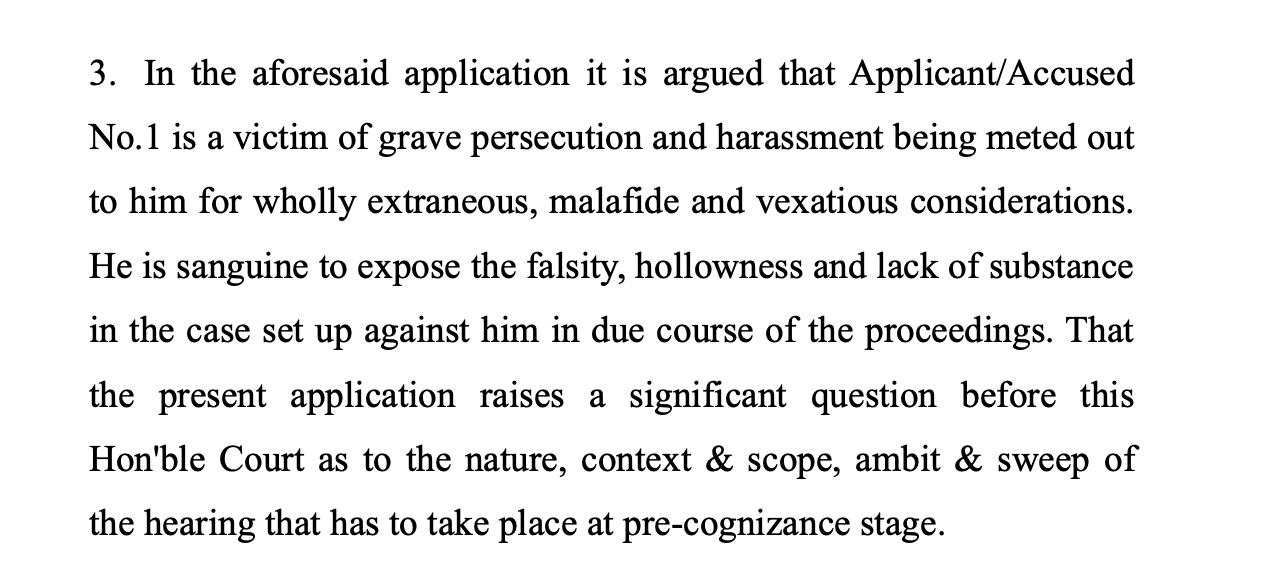
According to the court order available with OpIndia, the defence initially claimed that Siddiqui was being subjected to serious harassment and persecution for completely baseless, malicious and irrelevant reasons, and that he was confident that in the further proceedings he would expose the hollow foundation of the case.
Through this application, an important question of law was also raised as to what exactly would be the nature, context, scope and limits of the hearing to be afforded to an accused before the court takes cognisance of an offence.
On behalf of Siddiqui, it was argued that a Magistrate cannot take cognisance of an offence without giving the accused an opportunity of hearing. The defence argued that the Supreme Court and various High Courts across the country have already interpreted this provision and that it is now an established legal position that an opportunity of hearing cannot be merely a formality. The accused must be given an effective, purposeful and meaningful opportunity to put forward his case.
The defence also said that when the law gives an accused an opportunity of hearing, it cannot mean merely that the accused should be allowed to appear before the court and be heard. It argued that in the interests of justice, the court should adopt a procedure through which the accused gets a real and effective opportunity to present his case.
It was argued that unless the accused knows how much material the investigating agency has withheld and what kind of material it is, he cannot properly prepare his defence. It was also said that such withheld material may contain evidence that favours the accused and may directly affect or weaken the allegations. The prosecution cannot be given the liberty to select only the material that establishes the guilt of the accused and keep back material that may assist the defence.
Attempt to Prolong the Proceedings: ED
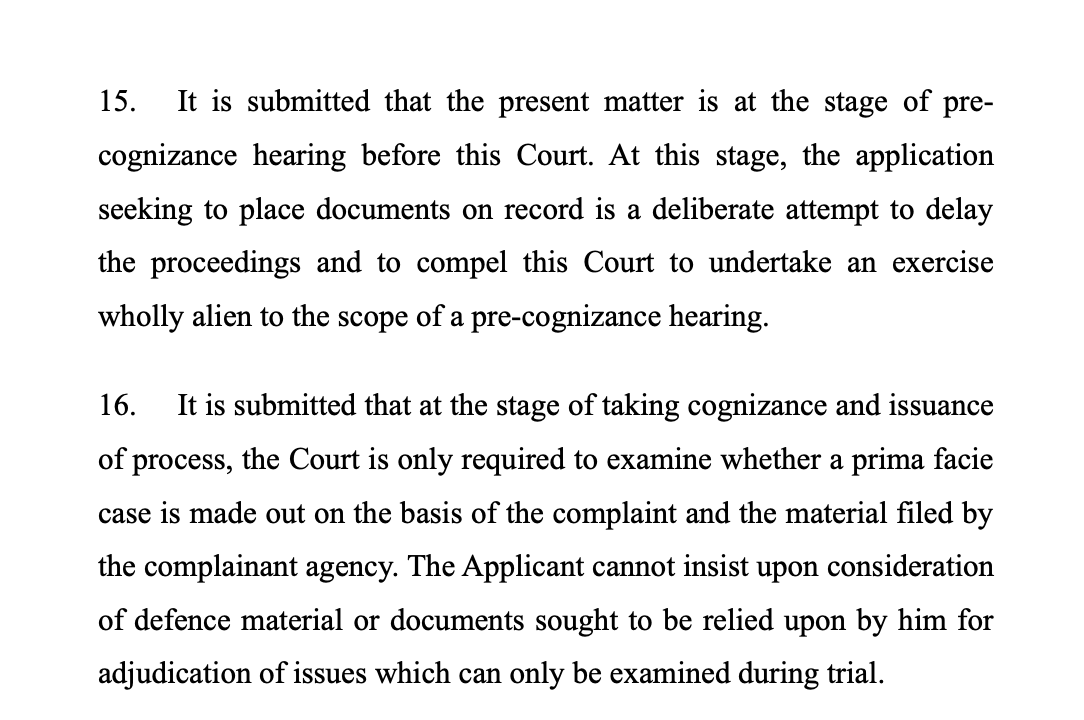
The ED strongly opposed Siddiqui’s demands before the court. The ED described the entire application as a calculated attempt to deliberately delay the proceedings. According to the ED, the accused wanted to compel the court to undertake an inquiry that was completely outside the scope of a hearing preceding cognisance.
The ED argued that at the stage of taking cognisance and issuing process (summons), the court only has to see whether a prima facie case is made out based on the complaint and the material filed along with it by the prosecution. At this stage, the accused does not have the right to demand consideration of his defence material.
The ED also informed the court that a detailed order had already been passed on March 27, 2026, in the same case regarding Siddiqui’s demand concerning unrelied documents. In that order, the court had said that at the stage preceding cognisance, it was not necessary to provide a list of unrelied documents. The court had also held that the investigation was still underway at that time and that providing such a list could affect the ongoing investigation. On this basis, that application had been dismissed.
The ED said there was no need to refer the matter to the High Court. The agency also described the demand under Section 436 as incorrect and premature. According to the agency, the questions that Siddiqui wanted to have referred to the High Court were not necessary for deciding cognisance in the present case. They were broad questions of law and had no direct connection with the limited hearing currently taking place.
Regarding the ED’s arguments, the court order states, “This application is an abuse of the process of law and its sole purpose is to delay the consideration to be undertaken on taking cognisance of the case. For this purpose, the proceedings are being diverted towards other issues which have no connection with the limited proceedings to be undertaken by this Court at the stage preceding the taking of cognisance.”
The ED said that the scope of the hearing under the provisions of Section 223(1) of the BNSS is limited. The purpose of this hearing is not to examine the merits of the case in detail, decide disputed questions relating to facts, examine the defence arguments or give a final decision on questions of law.
The ED argued that Article 228 does not confer upon a subordinate court the power to invoke this provision or direct the Hon’ble High Court to exercise its jurisdiction under it. The power to exercise jurisdiction under Article 228 is vested only in the Hon’ble High Court. Its exercise entirely depends on whether the High Court is satisfied that an important constitutional question exists which requires determination.
According to the ED, there is no basis for referring the matter under Section 436 of the BNSS or invoking Article 228 of the Constitution of India. Article 228 does not confer upon a subordinate court the power to refer a case to the High Court or direct the High Court to exercise its constitutional powers under the provision.
What Did the Court Say in Its Order?
In her order, Judge Sheetal Chaudhary Pradhan said, “The demand made by the accused for providing a list of unrelied documents has already been decided by the Court in its detailed order dated March 27. The issue as to when and at what stage such documents should be provided to the accused has already been decided by the Supreme Court. The demand made by the accused is without any legal basis and is not liable to be accepted.”
The order further states, “At the stage of taking cognisance, the Court has to look only at the material placed by the complainant. The purpose is only to ascertain whether a prima facie case is made out, based on which process may be issued for summoning the accused before the court. There is no legal basis for permitting the documents in the possession of the accused to be taken on record.”
While dismissing both applications filed by Siddiqui, the court said, “Section 436(2) of the BNSS provides that a Sessions Court trying a case may, if it thinks fit and the case does not fall under sub-section (1), refer any question of law arising during the trial of such case for the decision of the High Court. However, in the facts and circumstances of the present case, the alleged questions of law raised by the accused are neither invalid nor ineffective.”
The court said, “The interpretation of these provisions has already been made in several judgments of the High Courts and the Supreme Court. Therefore, there is no need for the present Court to refer the matter to the Hon’ble High Court for its opinion on these questions. Accordingly, there is also no legal basis in the application filed by the accused.”


