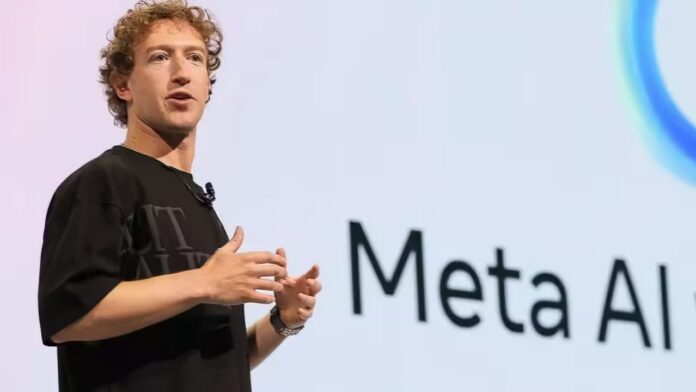
Meta’s reported admission before senior officials of the Ministry of Electronics and Information Technology (MeitY) that “a lot of money was paid to boost certain types of content” has opened up a much larger debate than the temporary removal of PM Modi’s video. The social media giant acknowledged during a meeting with government officials that “significant sums were spent to boost certain categories of content” and also admitted that illegal content had been promoted on its platforms. CEO Mark Zuckerberg apologised for lapses relating to child sexual abuse material (CSAM), deepfake content and operational errors.
These disclosures by Meta are a damning indictment of deliberate content manipulation practised by the social media behemoth for its India operations. For years, the company has maintained that it functions as an “intermediary”, a platform that merely hosts user-generated content and therefore enjoys legal protection from liability for what users post. However, with the platform’s admission that it decides which content deserves greater visibility, especially in return for payment, the line between a neutral intermediary and an active publisher begins to blur, and it is a brazen content manipulation practice.
The admission goes beyond ‘selective technical glitches’
Public attention initially centred on the brief removal of PM Modi’s video from Facebook and Instagram. Meta later described the takedown as an operational error, restored the video and apologised.
However, the disclosures made during Wednesday’s meeting have shifted the focus from a single moderation mistake to the company’s broader content amplification practices.
According to sources, Meta officials admitted that substantial amounts of money were paid to boost certain kinds of content on its platforms. They also acknowledged that illegal content had been promoted. While the exact categories of content being referred to have not been publicly disclosed, the admission itself has raised questions about how Meta’s algorithms and paid promotion systems operate, something that was widely known but never publicly admitted by the company.
Unlike a simple hosting service, a platform that selectively amplifies content is making editorial decisions about what millions of users are more likely to encounter in their feeds. That distinction lies at the heart of the legal debate.
What does “boosting content” actually mean?
On platforms such as Facebook and Instagram, not every post receives equal visibility. Sophisticated algorithms determine which posts are shown to which users, in what order, and how frequently.
Boosting refers to increasing the reach of content beyond its natural audience. This may happen through paid promotion, recommendation algorithms or other amplification tools that push selected posts before significantly larger audiences.
Such amplification can dramatically alter the public visibility of a post. A piece of content that might otherwise have reached a few thousand users can suddenly appear before millions.
If money is involved in deciding which narratives receive wider distribution, critics argue that the platform is no longer functioning as a passive technological intermediary. Instead, it is actively influencing the information ecosystem by determining what users are encouraged to consume.
That distinction becomes even more significant if, as sources claim, some of the amplified content was illegal.
Why India’s intermediary law matters
The legal debate revolves around the concept of “safe harbour” under the Information Technology Act, 2000.
The law grants intermediaries protection from liability for content uploaded by users, provided they comply with prescribed due diligence obligations and do not play an active role in creating or selecting unlawful material.
The rationale behind this protection is practical. A platform handling billions of daily posts cannot realistically examine every image, video or comment before it goes online.
However, safe harbour was designed for entities that merely transmit information rather than actively shaping public discourse.
The government officials informed the Meta delegation that the company cannot automatically seek protection under the intermediary provisions because its systems determine who receives particular content.
If a platform’s own algorithms decide what users should see, and especially if those decisions are influenced by commercial arrangements, it raises legitimate legal questions about whether the platform continues to satisfy the conditions necessary for intermediary protection.
Hosting content and promoting content are not the same
There is an important legal and practical distinction between hosting content and promoting it.
A passive intermediary simply provides digital infrastructure where users can upload information. It neither endorses nor selectively amplifies that content.
Promotion, however, involves deliberate choices. Recommendation engines identify posts that are likely to receive greater engagement and display them more prominently. Paid boosting enables content to reach audiences far beyond those who would ordinarily encounter it. Trending systems and personalised feeds similarly influence what users consume.
When a platform undertakes these functions, it is exercising a degree of editorial discretion over the visibility of information.
Meta’s admission that money was paid to boost certain content strengthens the view that the company performed a far more active role than that of a neutral intermediary.
Why this matters in India
India is Meta’s largest market by user base. Hundreds of millions of Indians rely daily on Facebook, Instagram and WhatsApp not merely for social interaction, but also for news, political discussions, entertainment and business communication.
The visibility decisions made by Meta’s algorithms therefore influence what a substantial proportion of India’s internet users see every day.
Most users assume that viral posts have become popular because of genuine public engagement. However, algorithmic amplification and paid boosting can significantly alter that perception by artificially increasing the reach of selected material.
If particular narratives receive disproportionate visibility because they have been boosted rather than because users naturally engaged with them, it can influence public debate without users necessarily recognising that commercial amplification has played a role.
This is precisely why governments around the world are increasingly demanding greater transparency regarding recommendation algorithms and paid promotions.
The PM Modi video controversy became the trigger
The government’s scrutiny intensified after PM Modi uploaded a vertical video message on July 23 during the height of protests led by the online Cockroach Janta Party (CJP). The video was temporarily removed from Facebook and Instagram before being restored.
Meta attributed the incident to a technical error and apologised for the removal.
The explanation, however, reportedly failed to satisfy the Ministry of Electronics and Information Technology, which summoned senior Meta executives, including Global Affairs Chief Joel Kaplan, for discussions.
According to reports, the meeting extended well beyond the Prime Minister’s video. Officials also questioned Meta over the spread of child sexual abuse material, deepfake content and broader failures in content moderation.
The Parliamentary Standing Committee on Information Technology, chaired by BJP MP Nishikant Dubey, also reportedly sought an apology from Meta CEO Mark Zuckerberg and pressed for stronger action against platforms carrying child sexual abuse material and content demeaning women.
Questions over Meta’s moderation systems
The admission that illegal content had been promoted has inevitably brought Meta’s moderation systems under renewed scrutiny.
The company has repeatedly stated that it invests billions of dollars in artificial intelligence, automated detection technologies and human moderators to identify harmful content before it spreads.
Despite these investments, Meta has frequently faced criticism globally over the continued presence of child sexual abuse material, deepfake videos, financial scams, misinformation, hate speech and other forms of unlawful or harmful content.
If illegal material was nevertheless amplified through recommendation systems or paid promotion mechanisms, critics argue that it raises serious questions about whether existing moderation safeguards are adequate and whether commercial incentives sometimes conflict with platform safety.
A global debate that extends beyond India
The concerns being raised in India mirror debates taking place across the world.
Regulators in the European Union, the United States, Australia and several other jurisdictions have increasingly focused on algorithmic accountability rather than merely content removal.
The European Union’s Digital Services Act, for instance, requires very large online platforms to assess and mitigate systemic risks arising from their recommendation systems and to provide greater transparency about how algorithms influence users.
Governments globally are recognising that recommendation algorithms do not simply organise information—they shape public opinion by determining what receives visibility and what remains unseen.
Meta to be called again for further discussions
For Meta, the issue is far from over. It is expected to be called again for further discussions with Indian authorities.
Whether the meeting ultimately results in regulatory action remains to be seen. However, the controversy has already revived a fundamental legal question: can a platform that actively amplifies content through algorithms and paid promotion continue to claim the same protections as a passive intermediary?
At present, there has been no judicial determination that Meta has forfeited its intermediary status or violated Indian law in relation to these reported admissions. The claims regarding boosting certain content and promoting illegal material are based on sources quoted by NDTV and have not yet been tested through any formal legal process.
Even so, the episode has intensified scrutiny of one of the world’s largest technology companies. As social media platforms increasingly influence political discourse, public opinion and access to information, the debate is shifting from what users post to what platforms choose to amplify.
For policymakers, that distinction may ultimately prove to be the defining issue in the next phase of India’s digital regulation.