

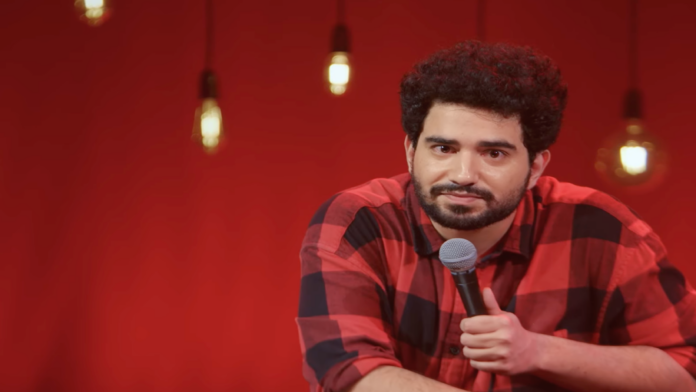
The Supreme Court on Friday brought a major legal chapter of the India’s Got Latent controversy to a close, quashing the FIRs registered against comedian Samay Raina, YouTuber Ranveer Allahbadia and others in connection with the controversy surrounding the show.
The case, which began with a widely criticised episode of Raina’s YouTube comedy show, eventually evolved into a broader legal debate over the limits of online expression, obscenity, dignity and the responsibilities of social media influencers. The latest order marks a significant turn in a controversy that had repeatedly brought the creators before the country’s highest court.
How the controversy began
The controversy erupted in February 2025 after Ranveer Allahbadia appeared as a guest on India’s Got Latent and made an obscene remark involving parents and sex. The comments triggered a massive public backlash, followed by complaints and FIRs in Maharashtra, Assam and other jurisdictions alleging obscenity and the use of indecent and offensive language.
Allahbadia subsequently approached the Supreme Court, seeking protection from coercive action and relief from the multiple criminal cases arising from the same episode. The Court initially granted him interim protection from arrest while making it clear that the right to free speech could not be treated as an unrestricted licence to make comments that crossed accepted standards of decency.
The Supreme Court also temporarily restricted Allahbadia from publishing content before subsequently permitting him to resume The Ranveer Show, subject to an undertaking relating to morality and decency. The Court noted his submission that the podcast was his principal source of livelihood and that hundreds of people depended on the programme for employment.
Samay Raina’s Canada remark draws SC warning
The proceedings took another dramatic turn in March 2025 after Raina referred to the litigation during a show in Canada. At the conclusion of the performance, he reportedly joked about the audience having paid his lawyer’s fees.
The remark did not go down well with the Supreme Court. During the March 3 hearing, Justice Surya Kant warned Raina not to take the proceedings lightly or publicly discuss matters that were before the Court.
At the same hearing, the bench dealt with Allahbadia’s request to resume his podcast and balanced the restriction imposed on his online activity against his livelihood concerns. Allahbadia was permitted to resume the podcast, while the Court continued his interim protection from arrest and directed him to cooperate with the investigation in Guwahati.
Controversy expands to remarks about persons with disabilities
The India’s Got Latent litigation later acquired a separate and particularly sensitive dimension when the Supreme Court took up allegations that Raina and other comedians had made derogatory remarks about persons with disabilities and people suffering from rare genetic disorders.
The Cure SMA Foundation approached the Supreme Court, arguing that such content demeaned persons with disabilities and undermined their dignity. In May 2025, the Court issued notices to Raina and four other comedians and directed their personal appearance. The bench stressed that speech intended to demean or denigrate a class of people could attract legal scrutiny.
The Court subsequently directed Raina and the other comedians to publicly display unconditional apologies on their platforms. It also examined the larger question of how freedom of expression should be balanced against the dignity and rights of vulnerable groups in the age of social media.
The proceedings eventually moved beyond punishment. In November 2025, the Court directed Raina and the other comedians to use their platforms to highlight the achievements of persons with disabilities and help generate awareness and funds for the treatment of children suffering from rare disorders. The Court described the exercise as a social responsibility rather than simply a punitive measure.
SC pulls up Raina over non-compliance
The Court’s intervention did not end there. On July 14, 2026, the bench imposed a ₹3 lakh fine each on Raina and four others after the Court was informed that its earlier directions concerning participation of persons with disabilities in their programmes had not been properly followed.
Bar & Bench reported that the Court took particular exception to Raina’s failure to invite persons with disabilities to his shows, despite the directions issued earlier.
The proceedings also saw the Court sharply criticise the conduct of the influencers. The bench questioned whether they believed that staying outside India could place them beyond the reach of its orders. The Court described Raina as having “taken the court for a ride” and termed the alleged violation of undertakings as brazen.
A long-running battle over free speech and responsibility
What began as a controversy over an offensive joke ultimately became a much larger examination of the responsibilities that accompany the enormous reach enjoyed by digital creators.
The Supreme Court’s interventions repeatedly underscored that constitutional protection for speech does not exist in isolation. The Court examined the competing interests of free expression, public morality, individual dignity and the protection of vulnerable communities, while also considering whether social-media influencers require clearer standards of conduct.
The latest quashing of the FIRs therefore closes a major criminal-law chapter arising from the India’s Got Latentcontroversy. But the litigation has already left a wider legal and policy question in its wake: how should India regulate online speech without turning legitimate restrictions on harmful or degrading content into a tool for suppressing free expression?
For Raina and Allahbadia, the Supreme Court’s latest order brings relief from the criminal proceedings that had followed them for more than a year. For the wider digital ecosystem, however, the controversy has served as a warning that the enormous freedom offered by online platforms also comes with equally significant legal and social consequences.
