

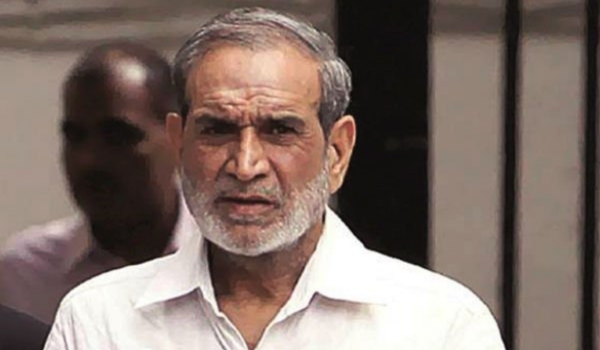
Former Congress MP Sajjan Kumar, who was serving a life sentence for the murder of five men during the 1984 anti-Sikh riots, died at a Delhi hospital on Thursday. He was 80.
Kumar, a three-time Lok Sabha MP from Outer Delhi, was taken to Safdarjung Hospital after his health deteriorated. Doctors declared him brought dead. The hospital has not yet disclosed the cause of death.
His death brings to an end the life of a Congress politician whose career remained permanently overshadowed by one of the darkest episodes in independent India’s history.
From Congress heavyweight to convicted rioter
Kumar was a prominent Congress leader and represented the Outer Delhi constituency in the Lok Sabha for three terms. He remained associated with the party for decades before resigning from its primary membership following his conviction in 2018.
The case against him stemmed from the violence that engulfed Delhi following the assassination of Prime Minister Indira Gandhi by her Sikh bodyguards, Satwant Singh and Beant Singh, on October 31, 1984.
In the days that followed, armed mobs targeted Sikh families, homes and businesses across the national capital. Thousands of Sikhs were killed across India, with Delhi witnessing some of the worst violence.
For Kumar, the legal battle over his alleged role in the violence lasted more than three decades, passing through multiple courts and producing both acquittals and convictions.
Life sentence for killing of five men
The Delhi High Court in December 2018 overturned Kumar’s earlier acquittal in a case concerning the deaths of five people in the Palam Colony area of Delhi during the riots on November 1 and 2, 1984.
The court convicted him and sentenced him to life imprisonment, holding him responsible for his role in the killings. Kumar subsequently surrendered and was lodged in Tihar jail.
His challenge to the conviction and sentence remained pending before the Supreme Court.
The conviction marked a dramatic fall from grace for a politician who had once been among Congress’ most influential leaders in Delhi. His political career, which had included three terms in Parliament, came to an end amid renewed scrutiny of the party’s handling of the 1984 violence.
A three-decade-long search for justice
The 1984 anti-Sikh riots remained a deeply contentious chapter in Indian politics and the justice system for decades. A large number of cases were initially closed, ended in acquittals or failed to result in convictions, leading victims and survivors to repeatedly demand a fresh investigation.
Kumar’s conviction became one of the most significant developments in the long-running legal process surrounding the violence.
His death, therefore, comes while the legal legacy of the 1984 riots continues to evoke strong emotions among survivors and victims’ families.
More than four decades after the violence, the events of 1984 remain a reminder of the devastating consequences of political and communal violence, and of the prolonged struggle faced by victims seeking accountability.
