

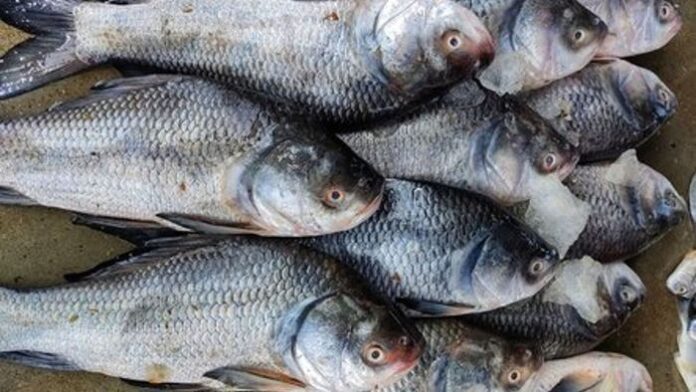
Bihar authorities have issued a public health advisory warning residents against catching, buying, selling or consuming fish found in floodwaters after flash floods in Nepal sent large volumes of water into the state.
The warning comes as waters from Nepal’s Trishuli River flow into Bihar through the Gandak and Kosi rivers. With river levels rising, unfamiliar and unusual-looking fish have reportedly surfaced in several flood-affected areas, with some people said to have fallen ill after consuming them.
The Bihar Department of Dairy, Fisheries and Animal Resources has cautioned that fish displaced by floods may have been exposed to sewage, polluted drains, dead animals, bacteria, viruses and other pathogens. The department has therefore advised people to stay away from fish caught directly from floodwaters until environmental conditions return to normal. Nepal police have issued a similar warning to residents.
Why authorities are worried about the fish
During floods, fish from ponds, rivers, lakes and reservoirs can be swept away and dispersed over large areas. According to the advisory, prolonged exposure to contaminated floodwater can make them unsafe for consumption.
Authorities have specifically asked people not to consume fish that appear unknown or unusual, and not to assume that unfamiliar fish are safe simply because they look edible.
The public has also been asked to:
- Avoid buying, selling or consuming fish caught from floodwaters.
- Consult the concerned fisheries authorities before consuming any unfamiliar species.
- Seek medical attention if vomiting, diarrhoea, abdominal pain, dizziness or breathing difficulty develops after eating such fish.
- Report sightings of unusual fish to the District Fisheries Officer or local administration.
- Ignore rumours and prioritise official safety advisories.
Nepal floods have sent debris and wreckage downstream
The threat is not limited to fish.
The Kosi and Gandak rivers have swollen following the floods in Nepal, carrying substantial quantities of mud, silt, stones and other debris into Bihar. Landslides and glacial bursts in Nepal’s mountainous regions have reportedly added tree trunks and other material to the downstream flow.
The floodwaters have also carried wreckage from damaged bridges and hydroelectric projects, along with vehicles, household belongings and LPG cylinders from flooded settlements. Human and animal remains have also reportedly been swept downstream, further increasing concerns over contamination.
Contaminated water could trigger a disease outbreak
Another major concern is the possibility of contaminated floodwater mixing with drinking-water sources, including hand pumps and wells.
Health experts cited in the report have warned of increased risks of diarrhoea and cholera, while contaminated food and water can also contribute to diseases such as typhoid and hepatitis A and E. Stagnant water and prolonged waterlogging could additionally create breeding grounds for mosquitoes, increasing the risk of dengue, malaria and chikungunya, besides skin and eye infections.
The problem is particularly serious in Bihar’s districts bordering Nepal, where groundwater contamination is already a concern.
Existing groundwater contamination adds to the risk
Several border districts, including West Champaran, East Champaran, Sitamarhi, Kishanganj, Purnia and Araria, already have groundwater containing arsenic above the safe limit of 10 parts per billion.
High levels of iron have also been recorded across almost all seven districts bordering Nepal. Officials have warned that floodwaters could further contaminate local water sources, compounding the existing problem.
The flooding is also expected to damage agricultural land in border districts, potentially affecting the availability of grains and vegetables and placing an additional burden on farmers.
Dr PV Singh of Bihar government-run LNJP Hospital told NDTV that timely relocation of residents from severely affected areas to safer locations would be crucial in protecting people from the health risks posed by contaminated water.
For residents in flood-hit areas, authorities have urged caution, asking them to avoid contact with floodwater wherever possible and follow official instructions until river levels fall and affected water bodies return to safer conditions.
