

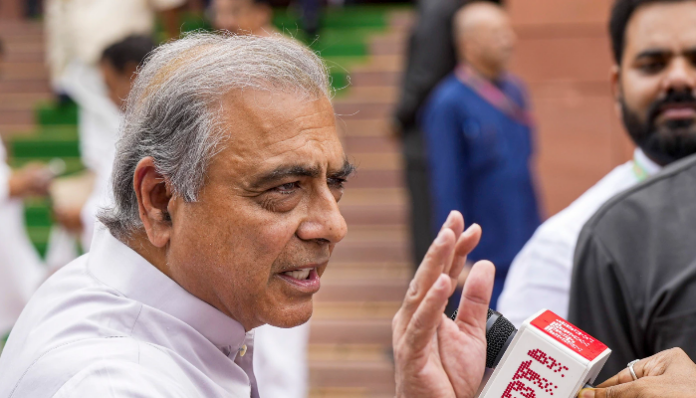
On 14th September (Monday), senior advocate Mahesh Jethmalani raised serious concerns over the glaring lapses within the judiciary and pointed out the factors behind its declining credibility among the public. Speaking at an event in New Delhi, he highlighted the scandal surrounding former Justice Yashwant Varma, the lack of transparency in collegium appointments, the absence of a database tracking complaints against judges, corruption within tribunals and the delays that continue to plague the legal system.
Jethmalani also made a special reference to the role of “fixer lawyers” and how they contribute to the problems within the system. He was addressing the 6th edition of the Ram Jethmalani Memorial Lecture, which was attended by Union Minister for Law and Justice Arjun Ram Meghwal, Chief Justice of India Surya Kant, eminent lawyer Harish Salve and several other prominent figures.
Cash-at-home scam of Justice Varma
Jethmalani initially brought attention to the cash-at-home scam related to Yashwant Varma, who served as a judge in both the Allahabad and Delhi High Courts. “Transparency in the legal system must start with those responsible for delivering justice, i.e., the judiciary. A depressing scandal unfolded, as we are all aware, when a fire in the outhouse of an active high court judge revealed that it housed burnt and partially burnt sacks containing cash in Rs 500 denominations,” he recounted.
Jethmalani subsequently emphasised statistics to outline how the episode caused a profound loss of confidence in the judiciary. He indicated that Daksh, a public policy research organisation established in Bengaluru in 2009 that focuses mainly on justice reform or justice system reform, found that 60 to 70% of respondents had complete confidence in the judiciary as an institution in 2017.
“On the other hand, a C-voter India Today survey conducted soon after the fire incident to gauge public sentiment towards the judiciary in the wake of the controversy found the following: 30% fully trust the judiciary, 12% somewhat, 48% do not trust it at all and 10% had no opinion,” he mentioned.
However, Jethmalani asserted that both the former chief justice and his successor responded with great urgency and transparency regarding the situation. “Varma was removed from all judicial responsibilities, and a panel of three judges was formed to investigate the issue. The results exposed that he had authority over the outhouse,” he added, while choosing not to engage with other discoveries of the probe that he considered irrelevant to delve into at this time.
Jethmalani remarked that Varma had approached the Supreme Court on two occasions. First to contest the committee’s findings and then to quash the parliamentary proceedings in relation to his impeachment. “Both attempts were dismissed, and the judge ultimately resigned in April of this year. While this brought a temporary end to that chapter, it would have been fitting for C-Voter India today to analyse public confidence in the judiciary after his ouster.”
Jethmalani maintained that these actions would likely have improved the public perception of the judiciary, but also noted that no First Information Report (FIR) has been lodged in this case, even after a year and a half has elapsed. He stated, “It is true that the judge has resigned and ceases to be a public servant. Hence, no sanction is required for initiation of an investigation.”
He proceeded to shed light on the complications that could accompany such a move, asking, “The question is who sets the process in motion. So this is a little bit of a grey area. Can the police or the CBI (Central Bureau of Investigation) submit an FIR?” He also cited a previous judgement and inquired whether the CJI had to urge the President to grant a green signal to investigate the case.
However, Jethmalani endorsed that swift and clear action was critically needed irrespective of the scenario in light of the extensive harm this incident inflicted on the whole legal system.
No transparency in collegium appointments
Jethmalani further contended that there should be transparency in the collegium’s processes for appointing and transferring judges in the higher judiciary. He mentioned that opacity in this area cultivates suspicion of favouritism and victimisation.
“Moreover, surveys show that the public’s perception of judicial corruption is currently at its highest level within the subordinate judiciary. There is no transparency about the number of complaints against subordinate judges that have been reported to the vigilance mechanisms across various states. The National Judicial Data Grid (NJDC) primarily functions as a database for court cases, orders, judgments, and information on pendency and disposal,” he highlighted.
Jethmalani conveyed that, however, there is currently no database for grievances against judges of the higher judiciary or subordinate judges, nor for the probe or disciplinary results of these complaints. “Such a database is imperative if corruption at all levels of the judiciary is to be eradicated, since any delay in dealing with these complaints can be detected in real time and checked,” he added.
He requested the CJI to take action in this matter in the interest of transparency and public trust, submitting that the database should be on a pan-India basis, as no state has made available definitive data concerning such complaints and the actions taken in response.
“Uttarakhand, a relatively small state, stands as an exception where, from January 2020 to April 2025, its High Court vigilance mechanism received 258 complaints related to judicial corruption, of which only four led to disciplinary or criminal proceedings. The question of whether this low figure is due to frivolous complaints or a lackadaisical review can only be answered by a comprehensive database and an evaluation of the nature of those complaints,” he stated.
Rising corruption in tribunals
Jethmalani also elaborated on the increasing public dissatisfaction regarding the escalating corruption within the tribunals, especially those governed by the Insolvency and Bankruptcy Code (IBC). He pointed out that there is an excessive deferral in the resolution of cases, which contradicts the fundamental purpose of setting up tribunals.
“There are only two alternative solutions available to address this issue. One remedy involves closely monitoring the activities of these tribunals. This would require the formation of a national tribunal data grid that not only tracks the number and pendency of cases before the tribunal but also includes complaints against tribunal members submitted to the vigilance mechanism and their resolutions,” he suggested.
However, Jethmalani warned, “Its success hinges on the transparency of tribunal operations and the eradication of corruption. A recent public interest litigation presented to the Supreme Court recommended the creation of a national data grid for tribunals, similar to the national judicial data grid that it plans to introduce.”
According to him, the petition was rejected on the basis that the 7,000 draws assigned to the apex court were solely intended for E-courts and tribunals. However, the court permitted the petitioner to seek assistance from the Law and Justice Ministry for the purpose.
Jethmalani called upon Union Minister Meghwal to consider the issue before remarking, “The second alternative is for Parliament to entirely abolish the tribunalisation of the bankruptcy code and return the bankruptcy jurisdiction to the High Court, as was once advised by the late Fali Nariman.”
Fixer lawyers responsible for corruption in judiciary
Jethmalani, after outlining the challenges afflicting the judiciary, held fixer lawyers accountable for the same, stating, “The bar must conduct a thorough introspection of its own involvement in perpetuating postponements and corruption within our legal system.”
“The existence of corruption in the judiciary or tribunals is contingent upon the activities of fixer lawyers who manipulate the legal system by facilitating bribery. Those within the bar are well aware of their identities. Their names are probably available to intelligence agencies and should be conveyed to the Supreme Court collegium if this has not yet been done,” he pressed.
He pushed for exemplary actions against lawyers who behave as middlemen, strongly asserting, “The future of the bar should belong to lawyers who believe only in winning their case on merits. In other words, the bar should be a repository of lawyers who know the law and not the judge.”
Notably, the sensitive matter of bench fixing made headlines when Kapil Sibal, who represents anti-Hindu Delhi riots accused, Umar Khalid, tried to engage in forum shopping and bench fixing for his client. Interestingly, liberals such as Rajdeep Sardesai were shamelessly promoting this unethical practice at that time.
Jethmalani further criticised, “It is a trying shame that it was not until this year, via a petition presented to the Supreme Court, that the public became aware of the prolonged holdups in elections for various state bar councils and the restructuring of the bar councils of India, which have persisted for years and, in some instances, for decades.”
He similarly added, “It is also a crying shame that there was an effort to extend the tenure of the chairman of the Bar Council of India for a duration of 5 years until 2030, rather than adhering to the mandated 2-year term as stipulated by the Act.”
Jethmalani mentioned that the plea brought before the Supreme Court also detailed events of nepotism and corruption among bar council officials, as well as an effort to maintain control over the trust vested with important functions in perpetuity. He added, “They might cease to be a part of bar council but continue to be associated with the crucial trust.” He also praised the petitioners for alerting the court to this startling turn of events, declaring that he is keenly awaiting the decision as he concluded his speech.


