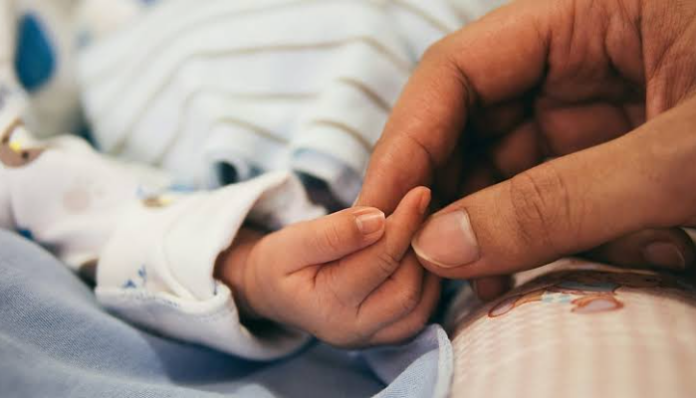
A two-year-old child with severe, terminal medical issues has been euthanised by doctors in the Netherlands. According to reports, this is the first tragic occurrence of its kind under the expanded euthanasia laws, as the baby becomes the youngest person in the world to undergo this procedure.
In 2024, the Dutch government made a historic decision to remove age limitations on administering euthanasia to terminally ill kids. Earlier, assisted dying in the Netherlands was tightly limited to newborns under the age of one and adolescents aged 12 and above. The principle is that the doctor must use medical insight to come to the conclusion that ending the child’s life is the sole practical way to end their excruciating and hopeless agony.
The gender of the toddler, who was born during a holiday in a different nation, remains undisclosed to the public. Nearly the entirety of their existence was spent struggling with profound brain damage, cerebral palsy and visual dysfunction resulting from an extremely premature delivery occurring at merely 26 weeks and 3 days of gestation.
The circumstances surrounding the procedure were examined by a medical review board. The child’s attending doctor pursued independent second opinions after confirming that no medical intervention could ease the patient’s agony. Additional treatment was tried, but had to be stopped because of the negative effects.
The Dutch Committee for Late-Term Abortion and Termination of Life in Newborns and Children stated that the child also experienced serious respiratory distress due to mucus-filled lungs and uncontrollable epileptic seizures that did not improve with medication.
According to the independent medical review, the child’s “unbearable suffering was clearly visible.” It expressed that all essential facets of human functioning were significantly and permanently compromised.
The board stated, “Despite all medical and non-medical interventions, the parents and the doctor observed no improvement in the child’s condition and were convinced that the child was suffering unbearably and without prospect of relief.”
A life marked by profound brain damage, continuous seizures, unrelenting pain and no recovery
An official government report conveyed that the child was initially admitted to the neonatal intensive care unit (NICU). It read, “Severe complications emerged due to extreme prematurity, including recurrent infections accompanied by sepsis, a systemic inflammatory response to pathogens that causes tissue and organ damage.”
Afterwards, the baby was transferred to the Netherlands at four and a half months of age, and an assessment was carried out.
The analysis highlighted, “Brain MRI demonstrated extensive cerebral injury, encompassing periventricular leukomalacia (PVL), white matter damage resulting in spastic cerebral palsy and the occipital cortex, the posterior part of the cerebral cortex, was similarly affected with highly anticipated cerebral visual impairment (CVI).”
Infantile epileptic spasm syndrome (IESS), formerly known as West syndrome, was identified when the child was eight months old. This is an acute epilepsy syndrome that is characterised by difficult-to-treat epilepsy, which causes developmental delay and frequent, excruciating discomfort.
The epileptic seizures persisted even as the treatments advanced, culminating in the development of a chronic sleep disturbance. It was pointed out that the child behaved in a highly restless manner. Sleep disturbance, coughing fits and swallowing difficulties developed as a result of the epileptic seizures that continued regardless of the treatments.
The baby had a critical developmental delay, with an approximated age of six weeks, in spite of being nearly two years old at the time. There was absolutely no language development, and the cerebral visual impairment further restricted the opportunities for interaction. According to the diagnosis, the child would require lifelong care for all routine daily tasks.
It was further noted that the progression of respiratory issues might be accelerated by the presence of scoliosis. According to the doctor, the child’s unsafe swallowing habit also made it easier for food or contents from the stomach to enter the airways and induce aspiration pneumonia, a lung infection brought on by aspiration.
Hence, the likelihood of death at a very young age due to such complications was considered very high.
“During the child’s short life, there was a complete lack of development and improvement. All facets of ‘being human’ in terms of motor skills, behaviour, and personality were severely impaired, and this would not improve,” the report asserted. The child’s pain was apparent during periodic epileptic seizures, which were expressed through crying, arching of the back and shortness of breath.
The doctor believed that there was a drastic rise in the child’s misery and there was a major risk of additional issues at such a young age because of the inability to reduce the existing pain, as well as the presence of conditions with a short life expectancy alongside no possibility of improving quality of life.
A difficult decision confronts the parents
The diagnosis, prognosis, and available treatments were extensively explored with the parents because the child was unable to interact in any manner. As examinations provided increased clarity and the child’s condition visibly deteriorated, the parents decided to terminate the life. The parents maintained their position during the doctor’s repeated discussions with them on the matter.
The goal was to end or at least lessen the child’s suffering, and the parents feared that the suggested remedies would only exacerbate it. The doctor talked about palliative alternatives with them on multiple occasions.
However, they did not want the option of prolonged sedation that would result in starvation, in which case the child would eventually die from a lack of fluids and nutrients, and their concern was understood. The doctor sought an independent evaluation from another doctor outside of his own area, who also determined that ending the life was the only reasonable method to alleviate or eliminate the pain.
There are no standards for performing euthanasia on children under the age of twelve in the nation.
The doctor opted to gently put the child to sleep at the request of the parents, with escalating doses of morphine and midazolam intravenously to trigger drowsiness or a reduction in consciousness. The child went into a very deep state of sleep and died when the doctor gave coma-inducing medications, propofol and thiopental.
According to the report, the committee found that the doctor acted with due care after taking into account all relevant facts, circumstances, and considerations. The evaluation verified that all ethical and legal requirements set forth by Dutch law had been met before taking the measure.
The euthanasia law of the Netherlands and its 2024 extension
Euthanasia is defined as “the active ending of life on request” in the Netherlands, which was the first country to allow it in 2002. The law has strong public support and is only permitted under certain conditions. Belgium, its neighbour, was the first nation to allow euthanasia for all children in 2014.
Adults were authorised to use it, followed by newborns in cases where a dying patient was in pain and palliative care was not working, after which children were included as well by the Dutch government. Notably, Articles 293 and 294 of the Dutch Criminal Code make assisted suicide and euthanasia illegal.
The government has outlined, “The only exception is when the procedure is performed by a doctor who has satisfied six statutory due diligence criteria. These criteria are laid down in the Termination of Life on Request and Assisted Suicide (Review Procedures) Act. The doctor is also required to notify the municipal pathologist.”
Paediatric euthanasia is prohibited by law, but it can be executed under recognised standards with little chance of legal repercussions.
Euthanasia was originally legalised for adults and children who were 12 years of age or older, then newborns and at present kids between 1 and 12. The Royal Dutch Medical Association’s (KNMG) view that a doctor’s intention to relieve suffering occasionally clashes with their duty to save life, which was reflected in the approval.
Therefore, a decision has to be made about which obligation to uphold in such circumstances. The KNMG acknowledged that euthanasia should only be utilised as a last resort, following the failure of all other methods to alleviate suffering.
“Sometimes, a child is so severely ill that the parents and doctor together decide that there is no alternative but to terminate the life. The doctor must always exercise due medical care,” the government stresses.
The step can be taken only when a child has a fatal illness and is in excruciating pain with no possibility of recovery, and it is permissible to end their life. The government emphasises, “This means the child is in constant, severe pain. And that there is no cure and no reasonable alternative to relieve the child’s suffering, even through palliative care.”
The doctor and the parents might choose to end the child’s life in these cases. However, the parents and, if feasible, the patient have to be consulted. The government directs, “A doctor’s decision about terminating the life of a child aged 1 to 12 must be based on general medical standards and current medical knowledge. The doctor must exercise proper medical diligence when performing the procedure.”
This legalisation in the Netherlands has been a complex project. It involved public debate, litigation, legislation, regulation, and continuing revaluation. The Dutch developed a regulatory strategy that differs from that of other nations owing to this approach.
Technically, euthanasia is unlawful and regional oversight committees must be notified of every such case. These committees consist of “4 doctors specialising in relevant areas of medicine, a lawyer and an ethicist.”
They submit their findings to a public prosecution service, which has the authority to ascertain whether to file criminal charges against the doctor who does not adhere to the law and offer sufficient care to the patient.
The detailed requirements that govern the process: Late-term abortions, euthanasia of newborns and kids aged 1-12 years
According to the Dutch Criminal Code’s Articles 82a, 289, and 296, a late pregnancy termination or a life-ending act involving a newborn or a child between the ages of one and twelve is illegal. The decision to pursue criminal charges in this regard is made by the Public Prosecution Service (Openbaar Ministerie or OM).
The review committee evaluates the doctor’s actions and expresses the outcomes in an opinion, which is forwarded to the OM for an autonomous decision.
In the case of patients ranging from one to twelve years of age, the essential prerequisite mandates that the doctor must arrive at the conviction, rooted in medical understanding and best practices, that life termination constitutes the only appropriate intervention to address the child’s incurable and unbearable distress.
The doctor has to approach the parent(s) beforehand when a late pregnancy or life-ending procedure is intended for a baby or child aged 1-12 years. They must agree, and the patient’s report should be delivered to the appropriate authorities. The doctor cannot move forward in the absence of consent from parents.
An independent doctor should be consulted if possible. The doctor must report the procedure to the municipal coroner. The latter would inspect the body and ascertain the cause and reason of death before contacting the public prosecutor, who gives the nod for burial or cremation.
“The doctor has to send the completed notification form, including all relevant supporting documents, to the committee. He or she must report to the review committee within three months of the procedure,” after which another form and pertinent paperwork are to be handed over to the committee.
The committee must convene every eight weeks to analyse the received report. It is comprised of 6 persons: a chairperson, four expert doctors and an ethicist. The evaluation is based on the documents, ensuring that the doctor acted in the appropriate manner. He or she could also be asked to respond with an oral explanation or supply further documents if needed.
In fact, doctors are routinely told to explain the report orally, as prescribed by the regulations. The committee’s ruling conveys whether the doctor operated in compliance with the specified standards of care.
It is then forwarded to the doctor and published online in anonymous form. The Public Prosecution Service obtains the committee’s judgement if it is satisfied with the doctor’s conduct and then decides whether or not to proceed with the prosecution.
On the other hand, the Public Prosecution Service and the Inspectorate General for Health Care (IGJ) receive the committee’s conclusion if it finds that the parameters of due diligence have not been followed. These bodies individually determine, within their respective authority and role, whether and what steps should be taken.
The Public Prosecution Service is given a strong recommendation by the committee and the former, in turn, renders an independent decision pertaining to the case.
The wider debate surrounding the recent case
The news that a 24-month-old was euthanised in the Netherlands has sparked a comprehensive debate over this sensitive issue, with people both opposing the decision and acknowledging the circumstances that led to it. Some have questioned the ethical implications of the move, while others have sought to understand the hard medical realities faced by the family.
A user claimed that “they are killing one-year-old children with disabilities and epilepsy in the Netherlands.” He also quoted Dr Bert Keizer, a prominent Dutch physician, author and geriatrician and wrote, “Anyone who embarks on euthanasia ventures on a slippery slope along which you irrevocably slide towards the indiscriminate killing of defenceless patients.”
Now they are killing one-year-old children with disabilities and epilepsy in the Netherlands https://t.co/ptgVKHNKaB
— Ian Birrell (@ianbirrell) September 29, 2026
‘Anyone who embarks on euthanasia ventures on a slippery slope along which you irrevocably slide towards the indiscriminate killing of defenceless patients,”…
A person accused that murder was being legalised in the Netherlands.
So there you have it folks, murder is legal in the Netherlands. pic.twitter.com/j62SVoTA1G
— ADG (@ADGactual) October 1, 2026
Another user remarked “cold-blooded murder” and wanted the United States to pull out of the North Atlantic Treaty Organisation (NATO), referring to the European Union as leeches.
Are you fucking kidding me? Cold blooded murder.
— JohnRocker (@itsJohnRocker) October 1, 2026
The United States needs to pull out of NATO and unassociate with the leeches we call the European Union
An individual questioned why a dying child had to be “killed.” She commented, “The child is dying. I don’t get it. Is it just about the money?” She inquired if it is like euthanising a dog to alleviate its suffering and facilitate a peaceful death, adding, “Why not let nature just take its course?”
I don’t understand why they would kill a dying child? The child is dying! I don’t get it. Is it just about the money? Or is it like putting down a dog? Why??? Why not let nature just take its course?
— Slightly (@heyjustpray) October 1, 2026
However, others defended the step, highlighting the basis which drove the doctor and the parents in this direction. According to a “pro-life” supporter, the decision was “justified” by severe health issues affecting the baby, such as developmental delays, physical impairments, and epileptic seizures.
I‘m very pro life but having a 2 year old that has a development of 6 weeks after birth (!), severe psychological and physical disabilities, daily epileptic episodes and agonising pain – I see this as justified.
— Lord Y. Fouzi 🇨🇭💜 (@yaminfouzi) October 1, 2026
A netizen posted information about the diagnosis and prognosis of the child for “those who are too lazy to read the actual article and don’t want to realise and admit that this was an act of mercy as a desperate last resort, not an irresponsible and easily made decision.”
For those that are to lazy to read the actual article and don’t want to realize and admit that this was an act of mercy as a desperate last resort thing, not an irresponsible and easily made decision. pic.twitter.com/jgPC43y5yH
— Not interested (@no12gain) October 1, 2026
A woman asked, “If the child was suffering and dying already, isn’t this the most humane way to speed up the inevitable?”
If the child was suffering and dying already isn’t this the most humane way to speed up the inevitable?
— Brattani (@Bratt_world) October 1, 2026
A user stated that those against the decision were “monsters” because the baby suffered from sepsis and had major mental and physical disabilities “that would make it impossible to live any sort of quality life. It would be in pain for life, unable to even communicate.”
If you're against this then you're a monster, plain and simple. Not only is the baby suffering from SEPSIS, but it has EXTREME physical and mental disabilities that would make it impossible to live any sort of quality life. It would be in pain for life, unable to even communicate pic.twitter.com/iXaFw6lhNL
— Stelio Kontos (@StelioKontos699) October 1, 2026
The heartbreaking circumstances behind an impossible choice
There can be no denying that the decision to end a life is an extraordinarily difficult one, and when it involves a child, it becomes all the more challenging and excruciating. It is one of the most extreme choices anyone can encounter.
Yet, in certain devastating circumstances, people might find themselves under unbearable pressure to take a course of action they would never willingly accept, but have to undertake when every other avenue has been exhausted. A couple narrated their story in an article for The Guardian last month.
They shared, “Our daughter had a genetic syndrome – not inherited from either of us but a completely random genetic error that occurred during cell division – that put her chance of living until birth at something close to 1%. Even if she were safely born, she could never have children of her own without drastic intervention and would require medical care throughout her life – care we could not afford to provide.”
They designated the option that was presented to them as “horrendous” because they had to terminate the pregnancy “after fighting so long to become pregnant.”
Similarly, a woman conveyed how she had to make the same harrowing choice after a 20-week scan, in a 2021 article for the media outlet.
She disclosed, “We were told our baby had a congenital diaphragmatic hernia (CDH). Her diaphragm hadn’t formed completely, resulting in her internal organs clustering in her chest. Her lungs wouldn’t develop properly and, if she survived until birth, there was a chance her life expectancy could be measured in single figures, a significant portion of it spent in hospital.”
She explained that the prognosis was so extreme that this was the only way the couple could ensure their baby did not suffer.
Another woman walked the daunting path in 2014 after the “test indicated her fetus could have a rare condition called triploidy, which means it has 69 chromosomes instead of the normal 46, and causes many developmental issues such as heart, kidney and neural tube defects. In almost all cases, the pregnancy ends in miscarriage or stillbirth. The few babies that make it to delivery die within hours or days.”
Conclusion
The sanctity of life is of paramount importance, and every possible measure must be taken to preserve it. At the same time, it cannot be denied that certain situations can arise in which parents and family members are faced with extraordinarily difficult choices. That does not make the ethical questions surrounding euthanasia any less significant. It makes the need for stringent safeguards, careful medical assessment and compassion in such cases even more fundamental.