

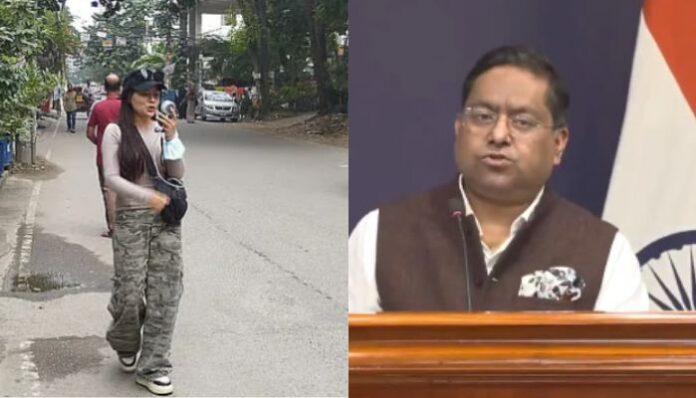
Days after it was reported that around 150 Chinese vloggers and influencers are producing content that falsely portrays slums in Dhaka as neighbourhoods in Delhi, the Ministry of External Affairs has condemned efforts to tarnish India’s image.
Addressing a press conference on 10th November, MEA spokesperson Randhir Jaiswal called efforts by Chinese vloggers to present a distorted image of India “unfortunate”. He urged concerned authorities to take action against such people.
“We have seen media reports in this regard. Such efforts to present a distorted picture of any country are unfortunate. Insofar as efforts to buy foreign elements to portray Dhaka as Delhi are concerned, the peddling of false narratives only undermines the credibility of those who are undertaking such actions and those who are behind them. And I would urge the authorities concerned to take action against such people,” Jaiswal said.
#WATCH | Delhi: On Chinese vloggers reportedly livestreaming from slums in Dhaka, MEA Spokesperson Randhir Jaiswal says, "We have seen media reports in this regard. Such efforts to present a distorted picture of any country are unfortunate. Insofar as efforts to buy foreign elements to portray Dhaka as Delhi are concerned, the peddling of false narratives only undermines the credibility of those who are undertaking such actions and those who are behind them. And I would urge the authorities concerned to take action against such people."
— ANI (@ANI) November 10, 2026
Recently, Prothom Alo, a leading Bangladeshi newspaper, reported that about 150 Chinese influencers have been stationed in Bangladesh for the past two months, producing content that falsely portrays slums in Dhaka as neighbourhoods in Delhi and promotes claims about tea made from cow urine.
The Chinese influencers have been active on short-video platforms and social media, using local footage from Bangladesh, particularly its capital, slums in Dhaka, while labelling it as visuals from India’s Delhi.
In one purported example, images of Dhaka’s densely populated informal settlements are presented as Delhi slums, apparently to reinforce negative stereotypes about urban poverty in India. Other posts repeat unverified claims about cow-urine tea, a narrative that has circulated in previous online disinformation campaigns.
Bangladeshi media raised questions about why foreign influencers would focus on slum imagery and culturally sensitive food claims. Some analysts note that Bangladesh and India share complex political and media ties, and that unverified content can spread quickly during periods of regional tension.
Local Bangladeshi residents object to the Chinese nationals’ activities. They claim that, despite complaints, the police are not monitoring their operations. Officers at the local station say they have seen Chinese nationals making such videos in various parts of Uttara but do not know why they are filming. Attempts to find out more have been hindered by language barriers and the Chinese nationals’ apparent irritation, prompting the police to avoid pursuing the matter further.
