Home Blog Page 2269

California: 17 arrested in connection with Gurdwara shootings in gang war of rival Sikh groups, including 2 Khalistanis wanted in India for murder

17 people have been arrested as a consequence of a multi-agency investigation into Khalistani extremist activity linked to 11 shootings in Northern California in the USA. The arrests have been made in relation to a string of shootings that occurred in Gurdwaras in Stockton, Sacramento, and other areas. After a series of searches conducted at over 20 different locations, firearms like the AK-47, handguns, and at least one machine gun were seized.

Gurvinder Singh, Dharamvir Singh, Jobanjit Singh, Gurvinder Singh, Nitish Kaushal, Gurminder Singh Kang, Devender Singh, Karambir Gill, Rajeev Ranjan, Jobanpreet Singh, and Singh Dhesi are among those who are apprehended whereas, Amandeep Singh, Harmandeep Singh, Gursharn Singh, Grucharan Singh, and Jaskaran Singh are yet to be arrested.

The officials are unsure if they have legal representation or someone who can speak on their behalf. This investigation, known as Operation Broken Sword, led to the confiscation of 41 firearms from suspects responsible for violent crimes and shootings in Sutter, Sacramento, San Joaquin, Solano, Yolo and Merced counties. According to the investigators, the violence was the result of conflict between two rival Sikh groups.

A combination of images shows firearms seized by police after arresting as many as 17 people in California in connection with a series of shootings in Gurdwaras in Stockton, Sacramento and other locations. (Source: The Tribune)

In an announcement made by California Attorney General Rob Bonta, Yuba City Police Chief Brian Baker, and Sutter County District Attorney Jennifer Dupré, it was revealed that the 17 felony arrests were made on Sunday during a massive operation that saw agents executing search warrants at different locations throughout Northern California.

Two suspects were described as ‘fugitives from India who are wanted on a number of murders out of India,’ according to the authorities. As per the California Attorney General, the arrested persons are members of opposing criminal organisations that are suspected to be behind a number of shootings and violent crimes in the counties of Sutter, Sacramento, San Joaquin, Solano, Yolo, and Merced, including five attempted murders.

A Sikh procession in Yuba City in 2018 witnessed sword attacks and fistfights that marked the beginning of the violence, which led to a shooting at a wedding there in September 2021. A traditional ceremonial sword was used to brutally beat a man at Yuba until it broke, and the situation swiftly deteriorated into shootings.

Police revealed that the suspects planned two mass shootings, one on March 26, 2022, in which two men were shot close to a Gurdwara in Sacramento County, and another on August 27, 2022, when five men were shot outside a Gurdwara in Stockton.

Rob Bonta stated, “Today, California is safer thanks to collaboration, determination, and swift action by DOJ agents and our law enforcement partners in Sutter County.” He added, “No family should ever have to worry about drive-by shootings or other forms of gun violence in the neighbourhoods where their children live and play. As a result of this joint law enforcement effort, we’re taking guns off the street and putting suspected gang members and their associates behind bars.”

“An investigation of this magnitude requires a tremendous amount of time and effort, and especially a lot of personnel,” observed Jennifer Dupré. She emphasised that more needs to be done to stop gun violence since individuals should have the freedom and security to live their lives. She assured, “There will be more takedowns. There will be more guns removed from dangerous individuals.”

She unveiled that the suspects were involved in 10 more shootings in which 11 men were shot, all of whom were ‘members of the syndicate.’ She added that the suspects had previously been part of a single organisation before one faction broke off, and ever since then, they have been rivals trying to outdo each other. The feud was fostered by strong personal ties, and all of the men held are members of the Sikh community in California, Jennifer Dupré said.

She further added, “It could have been a bloodbath had law enforcement authorities not arrested seven armed extremists who planned to shoot their targets during a parade.” Two males were injured in the subsequent gunfire at the parade.

When the second incident occurred in Vineyard last month, Operation Broken Sword was already in progress. Locals frequently refer to the Yuba area as ‘mini Punjab’ because it is home to a sizable Sikh population that is also well-represented across the Central Valley of California.

The FBI, the Drug Enforcement Administration, as well as numerous local, state, and federal law enforcement organisations, and the Narcotic and Gang Enforcement Task Force, got involved as a result of the violence.
Sudan: As conflict between the Army chief and paramilitary leader leaves hundreds dead, read what is happening and why

At least 200 people have died in clashes between Sudan’s military and its main paramilitary force and control of Khartoum’s presidential palace and airport is now questionable following disputed claims from both sides. The fighting poses a threat to the stability of Sudan and the wider region.

An apparent power struggle between the two main factions of Sudan’s military dictatorship led to the outbreak of violence.

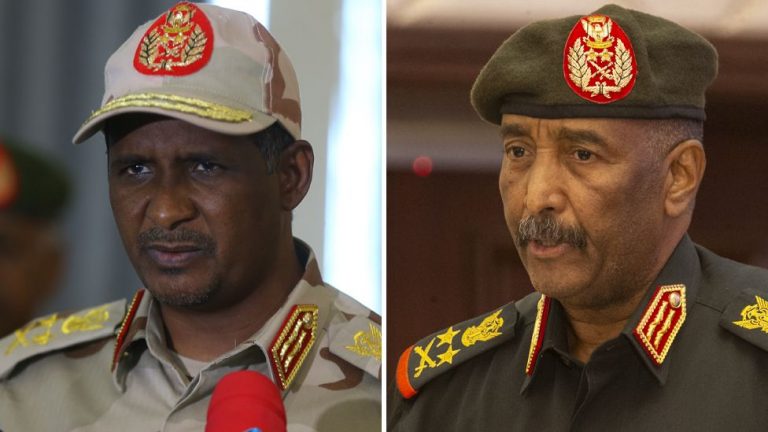
The paramilitaries of the Rapid Support Forces (RSF), a militia group, support the former warlord Gen Mohamed Hamdan Dagalo, also known as Hemedti, while the Sudanese armed forces generally support Gen Abdel Fattah al-Burhan, the de facto ruler of the country.

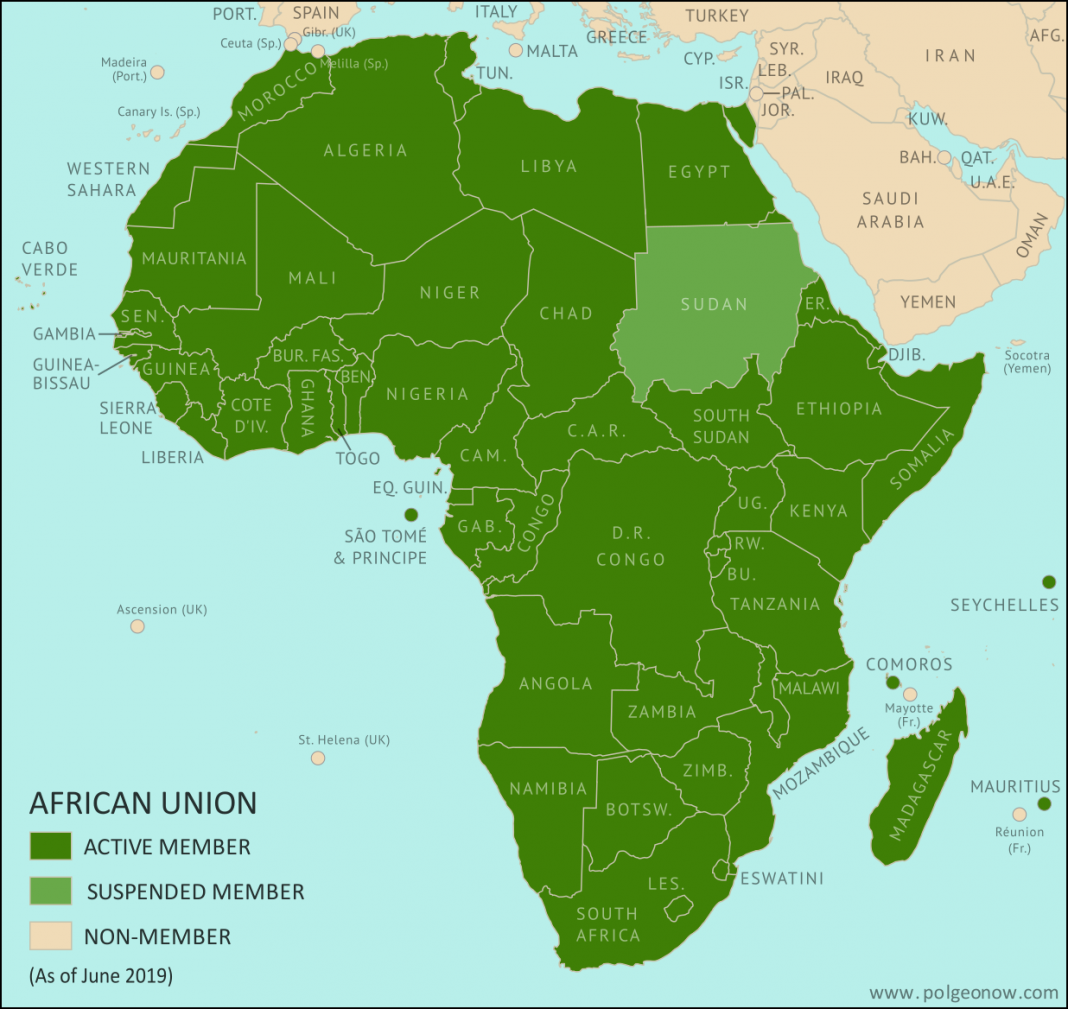
Sudan’s location in Africa and its neighbouring region, image via Political Geography Now

The power struggle dates back to the years before a 2019 uprising that toppled the dictator Omar al-Bashir. During that time, he amassed powerful security forces that he purposefully pitted against one another.

After Bashir was overthrown, attempts to establish a democratic, civilian-led administration failed, and diplomats in Khartoum issued a warning in early 2022 that they worried such unrest would break out. Tensions have increased more recently.

Cause for the development of military rivalries

Bashir established the RSF in order to put an end to a rebellion in Darfur that had been going on for more than 20 years as a result of the locals being neglected politically and economically by the central government of Sudan. The ‘Janjaweed’ moniker, which grew to be connected with many crimes, was also used to refer to the RSF.

Before sending them to put down a rebellion in South Darfur, Bashir converted the Janjaweed into a semi-organized paramilitary force in 2013 and awarded their leaders military ranks. Later, many of them were sent to fight in the wars in Yemen and Libya.

In order to remove Bashir in 2019, the RSF under Hemedti and the regular military troops under Burhan worked together. Following that, the RSF cracked down on a peaceful protest that had been organised in front of Khartoum’s military headquarters, killing hundreds of protesters and raping dozens more.

A coup in October 2021 halted a power-sharing agreement with the citizens who organised the anti-Bashir rallies. This agreement was meant to hasten the transition to a democratic administration.

After the coup, the army regained power, but it was met with a fresh round of isolation, weekly protests, and worsening economic conditions. Tensions with Burhan surfaced as Hemedti swung behind the idea for a fresh transition.

Hemedti, who controls tens of thousands of experienced soldiers, has enormous riches through the export of gold from clandestine mines. He has long been unhappy with his role as the official deputy on the ruling council of Sudan.

Since the revolt, the desire of civilians for military oversight and RSF absorption into the regular armed forces has been a major source of friction.

What do civilians want

Additionally, civilians have demanded the transfer of valuable military holdings in trade, agriculture, and other sectors. These assets are a vital source of funding for an army that frequently outsources combat operations to local militias.

The search for justice on accusations of war crimes committed by the military and its allies in the Darfur War in 2003 is another source of disagreement.

In June 2019, military personnel were involved in the killings of pro-democracy protestors, and justice is also being sought in these cases. An official investigation’s delays have infuriated activists and civic organisations. They also demand justice for the at least 125 protesters who have been slain by security personnel since the coup in 2021.

Sudan’s geographic placement on the map attracts conflicts

Sudan is located in a conflict-prone region bordering the Red Sea, the Sahel, and the Horn of Africa. The likelihood of a smooth transition to a civilian-led government is hampered by its strategic location and agricultural resources, which have attracted regional power struggles.

Sudan’s relations with Ethiopia in particular have been strained over issues like disputed farmland along their border.

Significant geopolitical factors are also at play, as the US, Saudi Arabia, the UAE, and other countries compete for influence in Sudan.

The transformation in Sudan has been viewed by Saudi Arabia and the United Arab Emirates as a chance to counteract Islamist influence in the area. They are members of the “Quad,” which also includes the US, Britain, and the UN and has funded mediation in Sudan. Western nations are concerned about the possibility of a Russian facility on the Red Sea, which Sudanese military officials have said they are open to.

Supreme Court sets aside Bombay High Court order acquitting GN Saibaba in Maoist link case

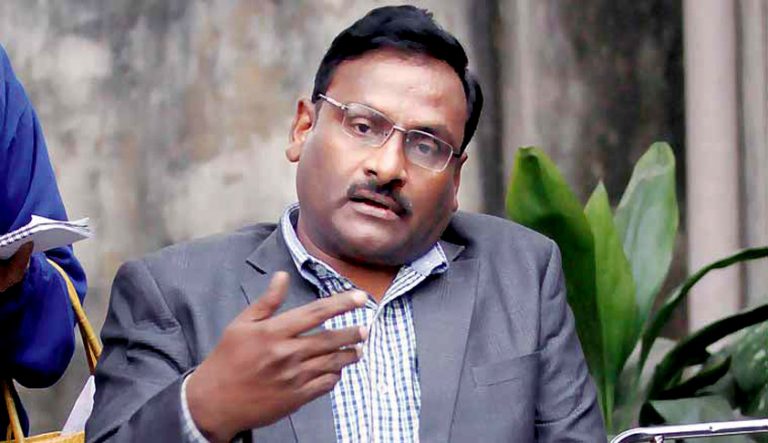
On Wednesday, April 19, the Supreme overturned the Bombay High Court’s decision to exonerate former Delhi University professor GN Saibaba in a case involving alleged Maoist ties. The Supreme Court sent the case back to the high court for reconsideration by a different bench.

The High Court’s ruling from October 14, 2022, allowing Saibaba’s appeal against a 2017 trial court decision convicting and sentencing him to life in prison, was challenged in the case that led to the verdict. The Maharashtra government argued that, in light of Section 465 of the Code of Criminal Procedure, failing to obtain sanction cannot result in acquittal.

That appeal was upheld by the high court on the grounds that, in accordance with Section 45(1) of the Unlawful Activities (Prevention) Act (UAPA), the sessions court had filed charges against Saibaba without obtaining sanction from the Central government.

The high court must make a decision on the case within four months, according to an order from the bench of Justices M R Shah and C T Ravikumar. In the interest of propriety, the court ruled that a new bench should hear the case on all points since the bench that acquitted them had already formed an opinion.

The Supreme Court suspended the ruling, noting that the high court had not addressed the case’s merits, the trial court’s decision convicting the defendants. 

The State of Maharashtra was represented by Additional Solicitor General SV Raju. The accused was represented by Senior Advocates R. Basant, Nitya Ramakrishna, and Advocate Shadan Farasat.

It is notable that in October last year, the Bombay High Court division bench of Justices Rohit Deo and Anil Pansare acquitted GN Saibaba, a former professor of English at Ram Lal Anand College of Delhi University based on the fact that the session court had framed charges against him under the Unlawful Activities (Prevention) Act without sanction from the central government, which is required under Section 45(1) of the act.

The High Court bench back then said that even though the charges against the accused are serious and terrorism poses a great threat to the country, a civil democracy can’t bypass procedural safeguards available to the accused. The bench said that “every safeguard, however miniscule, legislatively provided to the accused, must be zealously protected.”

GN Saibaba and several others were convicted and sentenced to life by the sessions court of Gadchiroli in March 2017 for association with the Revolutionary Democratic Front (RDF), an affiliate of CPI(Maoist). Saibaba and the others were found to be posing Naxal literature, and the court had said that they intended to circulate the literature among people in Gadchiroli to incite people to join the Naxals.

Most of the material both in physical and electronic form was found with Saibaba, and allegedly he had introduced others accused in the case with the Maoist organisation.

They were charged under Sections 13, 18, 20, 38, and 39 of the UAPA and Section 120B of the Indian Penal Code. The others charged in the case were agriculturists Mahesh Kariman Tirki (22) and late Pandu Pora Narote (27), professor Hem Keshavdatta Mishra (32), journalist Prashant Rahi Narayan Sanglikar (54) and labourer Vijay Nan Tirki (3). GN Saibaba was arrested later, and their trials were clubbed with his trial.

UP: Sabina of Bareilly marries Sompal in the Agastya Muni Ashram, becomes Hindu, and requests police to provide security

0

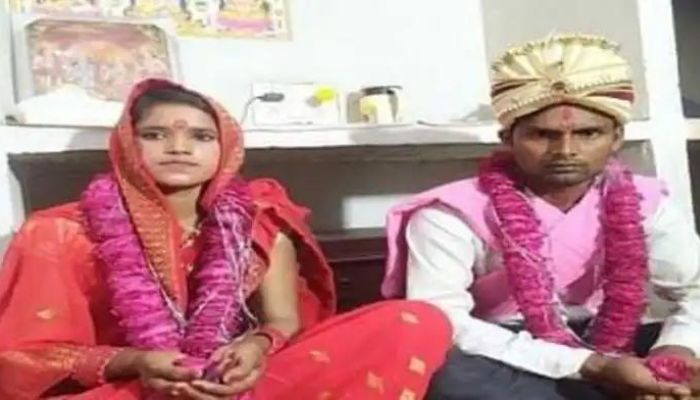
A Muslim girl named Sabina has converted to Hinduism in the Bareilly district of Uttar Pradesh. She is married to Sompal. Sabina will now be known as Sonam. The couple married on Monday, April 17, 2023, at the Agastya Muni Ashram in Bareilly. Pandit KK Shankhdhar, who solemnized the marriage, told in an interaction with OpIndia that the two had known each other for a long time.

Sabina and Sompal’s family members are against this relationship. The couple has urged the police for providing protection. According to reports, Sabina hails from Bishratganj in Bareilly. Her husband Sompal is a resident of Kundaria Khurd. The two were in love for a long time.

When Sabina told about this relationship in her house, there was a lot of opposition from the family members. Meanwhile, Sompal’s family members also knew about the relationship. They also objected to it. As their family members were not ready, both of them decided to get married in the temple.

Sabina and Sompal contacted Pandit KK Shankhdhar of the Agastya Muni Ashram in Bareilly. Pandit Shankhdhar agreed to solemnize their marriage after necessary legal procedures. He took certificates of adultness from Sabina and Sompal. Finally, on Monday, Sabina and Sompal tied the knot.

It is being told that Sabina also sang the song ‘Yeh Dosti Tere Naam Se Shuru Tere Naam Par Khatm’ for her husband. At present, Sabina and Sompal are worried about their safety. Both have sought protection from the Bareilly police.

Pandit Shankhdhar has also shared photos and videos of this marriage with OpIndia. He said that the boy has a relative who lives next to the girl’s house. The boy used to visit that relative frequently. During this time, both of them fell in love and got married.

According to Pandit Shankhdhar, an FIR has been lodged by the girl’s family against the boy in the Bishratganj police station, due to which the girl has gone to court for her statement of CrPC section 164.

Earlier, in the same Agastya Muni Ashram, Amrina became Radhika to marry Pappu, Nazish became Niharika to marry Neelesh, and Shehnaz became Suman to marry Ajay. A few days ago, in an interaction with OpIndia. Pandit Shankhdhar had said that there is a threat to his life. He told that he has become the new target of the Islamists as he has solemnized more than 64 marriages in which Muslim girls embraced Hinduism to get married to Hindu boys.

Government and financial documents related to mining in Bihar found burning in West Bengal, CBI rushes to retrieve the papers

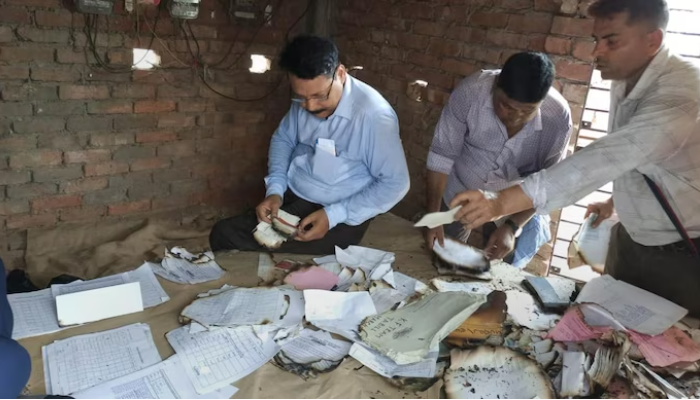
Following information that a truckload of important government documents was set on fire by unidentified people, Central Bureau of Investigation (CBI) officials rushed to the South 24 Parganas area of West Bengal on Tuesday. They rummaged through the remnants of the papers while attempting to put out the fire on a plot of abandoned property in the Andul Garia neighbourhood of Bhandar.

On Tuesday morning, the Andul Garia villagers detected a fire on the ground inside a fenced vacant plot and discovered numerous burning official documents. After getting information about the burning papers at Andul Garia at Bhandar, multiple CBI teams reached the area to investigate. They extinguished the fire and tried to recover the documents.

The CBI’s preliminary inquiry indicated that those papers are connected to mining operations in a number of locations around the bordering state of Bihar.

The documents that were burned may be connected to mining operations in several regions of adjoining Bihar, according to a senior CBI officer. The documents include receipts for huge amounts of money, files, project reports, cash memos, balance sheets etc.

The source of the documents is yet to be confirmed. The half-burnt records are being examined by the CBI, which is looking into a number of instances, including the school recruitment scam in the state.

“Getting information that documents were being burnt in Bhangar, some of our officers went there and collected some partially burnt papers. Going by the initial look, it seems that they belong to mining affairs in Bihar,” a CBI officer told PTI. The officer said that the documents are not linked to the teacher recruitment scam in West Bengal. “It does not appear so. This is, however,  an initial observation. We need to examine more. We will also test them chemically to have a clear idea,” he noted while responding to a query about some of the documents being related to the job scam in West Bengal.

In order to conduct inspections, the agency representatives escorted by CRPF personnel cordoned off the area. The documents, reported by locals, were transported by individuals in a lorry before being abandoned and set on fire in the wee hours of the morning. They included checks from a bank and paperwork with official stamps.

There were suspicions that the act was the work of some local politicians. The papers were allegedly set on fire in an effort to eliminate evidence connected to instances that central authorities are looking into.

The plot where the documents were burnt is owned by a Bihar resident named Rajesh Singh, who purchased it from an Indian Air Force pilot some time ago. CBI has summoned Rajesh Singh for questioning.

The residence of Trinamool Congress block president Shahjahan Mollah, who is being investigated in connection with the teachers’ recruitment fraud, was recently searched by the CBI and documents related to the recruitment scam were seized from his house.

The CBI team also questioned Saokat Molla, a TMC lawmaker from the nearby Canning (East) Assembly district. “We would give them every opportunity for cooperation. A thorough investigation will undoubtedly identify the perpetrator,” he claimed.

Rakesh Adhikari who serves as the local panchayat’s deputy chief was interrogated by the CBI regarding the land under his purview. He was reportedly asked if he knew any of the people incarcerated in the education scandal, including former education minister Partha Chatterjee.

Senior officer Umesh Kumar, who is probing cases of coal smuggling, is also reportedly examining the retrieved documents. “We are also checking who is behind this and how these documents are brought here,” the official observed.

Locals asserted that a group of powerful local politicians brought all of those papers to the vicinity and lit them on fire. These leaders are said to be close to Partha Chatterjee, who is being held by the ED in connection with the jobs scam. However, Rakesh Adhikari refuted all of these allegations.

In the meantime, Bharatiya Janata Party has intensified its attack against TMC. The party is saying that since TMC is afraid, it is trying to cover up its frauds.

More BJP leaders slammed the TMC, declaring that the CBI will expose the latter’s corruption and that these stunts wouldn’t help them. “Those involved in scams will get locked up,” warned one BJP leader. “Law-abiding citizens aren’t reluctant to respond to any inquiries. However, TMC is undoubtedly guilty of corruption that they are valiantly attempting to conceal,” pronounced another party leader.

Notably, Mamata Banerjee’s TMC has been marred with multiple scams over the past many years. Early on Monday, CBI arrested Jiban Krishna Saha, a TMC legislator from Burwan in Murshidabad district, for his involvement in the infamous bribe-for-job scandal in West Bengal. He is the third sitting legislator to be arrested in the scam. For their roles in the recruitment scandal, former TMC minister Partha Chatterjee and TMC MLA Manik Bhattacharya are already in jail.

Delhi anti-Hindu riots: Another HC Judge recuses from hearing plea of Asif Iqbal Tanha

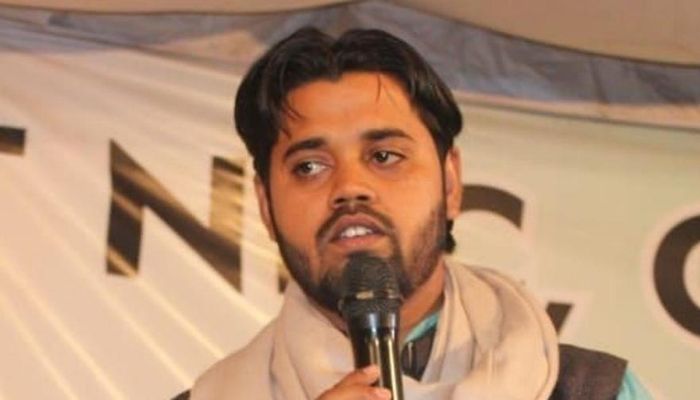
Justice Amit Sharma of the Delhi High Court on Wednesday recused himself from hearing the petition moved by Asif Iqbal Tanha alleging the leak of material from the charge sheet against him and his confession statement to a media channel. 

Earlier, Justice Anup Jairam Bhambhani had recused himself from hearing the plea. Justice Amit Sharma recused himself from hearing the matter and listed the matter before another bench on Monday, subject to the order of the bench of the chief justice. 

During the hearing, the court asked that the case and charge sheet in the matter, the same investigated by the special cell of Delhi Police. 

Special Public Prosecutor (SPP) replied that yes it is the same. Thereafter the court said, “This will have to be listed before another bench. List before another bench subject to orders of the chief justice on Monday.” 

Earlier, Justice Bhambhani had recused himself from hearing after News Broadcasters and Digital Association (NBDA) and News Broadcast Federation (NBF) moved intervention pleas. 

Justice Bhambhani had passed an order and said, “Be that as it may, after giving its anxious consideration to the matter, what prevails with the court is that no action on the part of the court must in any manner have a deleterious impact on the credibility of the justice system. Regardless of the view that this court may hold in relation to the intervention applications files, that view must yield to the view which better subserve to preserve the credibility of the system, which credibility derives not just from fairness in fact, but equally importantly, from fairness in perception.” 

This matter pertains to the plea files by Tanha against the alleged media leak in his confession statement in relation to the Delhi riots of February 2020. 

He has alleged that the sensitive information was leaked to the media house by the police. The media house may be directed to take down the sensitive information, the plea said. 

This case is in connection with the investigation of the larger conspiracy of the Delhi riots of February 2020. The case was initially registered by the Crime Branch of Delhi Police. Later on, the investigation was transferred to the special cell. The sections of the Unlawful Activities (Prevention) Act (UAPA) were also invoked.

(This news report is published from a syndicated feed. Except for the headline, the content has not been written or edited by OpIndia staff)

Deities mocked, racial slurs hurled, beef chucked and pressured to convert to Islam: Hindu students in UK face racial discrimination, reveals think-tank

A study conducted by the UK-based think tank, Henry Jackson Society, has found that Hindu students in the country are being subjected to bullying and racial discrimination in classrooms.

It was carried out by a research fellow named Charlotte Littlewood, who interviewed 988 Hindu parents and surveyed more than 1000 schools in the United Kingdom.

As per a report by The Telegraph, Littlewood noted that Hindu students were being bullied by their Muslim classmates and repeatedly asked to convert to Islam.

“51% of Hindu parents surveyed reported that their child had experienced anti-Hindu hate in schools, while less than 1% of schools surveyed reported any anti-Hindu related incidents in the last 5 years,” the study found.

“8 physical assaults were detailed. One female Hindu pupil had beef thrown on her, a male student was reported to have to change East London schools three times on account of anti-Hindu bullying and concerns have been risen around a problematic approach to teaching Hinduism that is directly leading to bullying in the classroom,” it further added.

Charlotte Littlewood noted that several Hindu students were mocked for their vegetarianism in classrooms and that their deities were belittled in a manner reminiscent of the radical Islamists that attacked the Hindu community in Leicester.

She also found that Hindus were verbally abused by White students using xenophobic slurs and held responsible for political and social events, which take place in India.

According to the study by the Henry Jackson Society, Hindus have faced threats for virtue of their Faith at the hands of Muslim pupils. In one case, a Hindu student was told that his life will become ‘easier’ if he converted to Islam.

“You aren’t going to survive very long… If you want to go to paradise, you’ll have to come to Islam… Hindus are the herbivores at the bottom of the food chain, we will eat you up,” the victim was told by his Muslim classmates.

In another case, Hindu students were told to watch videos of Islamic preachers and convert since their religion ‘made no sense’. Derogatory slurs such as ‘Kaffir’ were also hurled at them.

They also braced discrimination from Christian students who told them that Hindu deities would be sent to Hell by Jesus Christ.

Religious education fostering discrimination against Hindus: Think-tank

The study also found that inappropriate religious education, which amplified misconceptions surrounding the Indian caste system and Hindu deities, added to the mockery of Hindu pupils in the UK’s classrooms.

It came to light that Hindu students were not being given a holiday on Diwali although off-days were given to adherents of other religions during their festivals. Charlotte Littlewood also observed that anti-Hindu hate incidents in the country’s schools were poorly reported.

While speaking about the matter to The Telegraph, Conservative Party MP Ben Everitt said, “The findings in this report are damning and shed light on the varying themes and forms which anti-Hindu discrimination materialises in the classroom.”

He acknowledged the problematic approach in which Hinduism was taught in UK’s schools. “If we want to make real, sustained, long-term progress in reducing discrimination towards those of minority faiths in our schools, then we need to make sure that young people are receiving the best possible education about the many faiths which are woven into the fabric of our diverse United Kingdom,” Ben Everitt emphasised.

Centre urges SC to make states and union territories party in same sex marriage, files fresh affidavit

The Centre has filed a fresh affidavit in various petitions seeking legal recognition of same-sex marriage and urged the Supreme Court to make states and Union Territories as a party in the matter. 

Solicitor General Tushar Mehta apprised the top court about the Centre’s fresh affidavit. A five-judge Constitution Bench headed by the Chief Justice of India DY Chandrachud begins hearing a batch of petitions seeking legal recognition of same-sex marriage. 

CJI DY Chandrachud remarked that the Centre has now informed the state that the matter is going on. That’s excellent! So now it’s not that the states are unaware, the court said. 

Centre apprised the SC that the Union of India, has issued a letter dated April 18 2023 to all States inviting comments and views on the seminal issue raised in the present batch of petitions. 

Centre, in a fresh affidavit, submitted that the said issue goes to the root of the present matter and has far-reaching implications. 

Centre requested that all States and Union Territories be made a party to the present proceedings and their respective stance be taken on record and in the alternative, allow the Union of India, to finish the consultative process with the States, obtains their 
views/apprehensions, compile the same and place it on record before the Court, and only thereafter adjudicate on the present issue. 

Centre, in the fresh affidavit, submitted it is clear that the rights of the States, especially the right to legislate on the subject, will be affected by any decision on the subject. 

Centre, in the affidavit, submitted before SC various States have already legislated on the subject through delegated legislations, therefore making them a necessary and proper party to be heard in the present case. 

Centre, in affidavit, submitted in such a matter wherein legislative rights of the States under the Seventh Schedule and the rights of the residents of the States are clearly in question, it was the bounden duty of the Petitioners to make all States a party to the present litigation. 

Centre, in an affidavit submitted, that despite the same, the States were not made a party to the present batch of petition unlike other occasions wherein for decisions on questions of seminal constitutional importance, especially wherein legislative powers of the States are under the scanner of the Court. 

Centre submitted that any decision on the present issues without making States a party, without specifically obtaining their opinion on the present issue, would render the present adversarial exercise incomplete and truncated. 

Centre submitted that in light of the above, a prayer was made before this Court, to make all States a party to the present litigation and invite their respective stands on the said issue during the hearing on April 18. 

Centre stated that despite the said constitutional, jurisprudentially and logically fair request being made, the top Court is not pleased to rule upon the same.

(This news report is published from a syndicated feed. Except for the headline, the content has not been written or edited by OpIndia staff)

Senior citizen files plea in Bombay HC alleging violation of noise pollution rules by mosque loudspeakers, alleges inaction by authorities

0

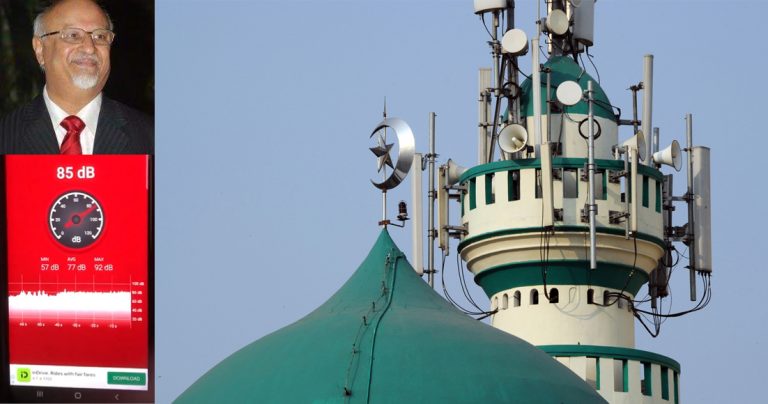
A senior citizen has filed a writ petition in the Bombay High Court HC requesting the court to issue directions to the relevant authorities to ensure strict implementation of the Noise Pollution Rules, 2000, and to stop violations of these rules by mosques and slums in Wadala’s Antop Hill, such as the playing of loud music for longer than the permitted duration of time for the azaan. 

On Wednesday, a division bench led by Acting Chief Justice Sanjay V. Gangapurwala and Justice Sandeep V. Marne heard a petition from retired marine engineer Mahendra Sapre, who said that he has been complaining to the authorities about noise pollution for a long time but no action was taken. He said that he had earlier complained about noise pollution to various authorities via email on November 11, 2022. He added that he has complained to the police over five hundred times, but no action was taken. As a result, he was compelled to file the petition with the court seeking directions to the authorities.

According to reports, 75-year-old Mahendra Sapre now resides at the  Institute of Chemical Technology (ICT) at Matunga (East) campus with his wife after retiring from the Navy. His wife is a professor in Indian Chemicals Technology. There is a slum named Bengalipura in front of his building. The mosques and shrines in this slum, according to the ex-navy personnel, have more than 19 loudspeakers that were installed without authorization. The noise emanating from all of these is causing extreme distress. Sapre has clarified that his petition is only against noise pollution and is not directed against any religion or community.

Sapre’s lawyer, Prerak Choudhary, stated that his client had filed a complaint with the district magistrate and senior police officers regarding noise pollution emerging from the Bangalipura slum area. The complaint was also supported by faculty members and students from the ICT.

The petitioner approached the High Court after becoming annoyed at the reluctance of the relevant authorities to take action. The petition claimed that since the petitioner lives on the ICT campus, which is a silent zone, using loudspeakers for azaan constitutes noise pollution. The petition further alleges that Mumbai Police and Brihanmumbai Municipal Corporation have failed to perform their duties in controlling noise pollution and failed to revoke permissions granted for loudspeakers. 

“The use of loud music systems at illegal shamiyanas built near the Wadala railway track, at nighttime after 10 pm and beyond the prescribed noise level of 45 dB for nighttime in a residential area, is in gross violation of Noise Pollution Rules, requiring immediate action from the authorities concerned,” claimed the plea.

OpIndia checked petitioner Mahendra Sapre’s Twitter profile and found multiple tweets complaining about the noise pollution in the locality. In one such tweet posted in December last year, Sapre complained about the high-decibel music played at the shamiyanas built near Wadala railway track and wrote, “@RailMinIndia @PiyushGoyal @PMOIndia @crpfindia @RPFCRBB @RPFCR shamiyana on rail tracks, the bridge, kings circle to Wadala harbour line, ground tracks CR wadala gtb nagar location Bangalipura slum. This “regular” affair high dB music psychedelic lights/motorman safety?.”

Furthermore, Sapre alleged that the Mumbai Police and the Brihanmumbai Municipal Corporation had neglected to carry out their duties to control pollution and to rescind permissions for loudspeakers. It further stated that the noise originating from the region in question exceeds the set decibel levels that are acceptable in silent zones. 

He also posted videos showing the decibel level of the loudspeakers displayed by a phone app.

Petitioner Sapre also asked for directions to the authorities to remove the loudspeakers from the slum, mosques, madrassas, etc. The next hearing for the plea will take place on June 12.

Queen Cleopatra: Egyptian lawyer sues Netflix for portraying Cleopatra as a black woman, accusations of historical distortion levelled

An Egyptian lawyer has filed a case with the Public Prosecutor to shut down the streaming platform, Netflix, after the release of the trailer for the documentary series, “Queen Cleopatra”. The lawyer, Mahmoud al-Semary, argued that the depiction of the Greek historical figure as a black-skinned woman is an act of forgery that goes against the historical and cultural values of Egypt.

According to reports, al-Semary demanded that all legal measures be taken against those responsible for the documentary and the management of the streaming platform for their participation in “this crime.” He also called for an investigation into the matter and for Netflix to be blocked in Egypt.

In his complaint against Netflix, al-Semary argued that “most of what Netflix platform displays contradicts Islamic and societal values and principles, especially Egyptian ones.” He added that the platform displayed advertisements that attracted millions of people in the world to watch the documentary Queen Cleopatra, who was of Greek origin depicting her as black woman, unlike Egyptian history and civilization.”

The complaint further accused the makers of the documentary and platform management of promoting Afrocentrism and falsifying and distorting the history of Egypt. It demanded that all works aimed at obliterating and distorting the Egyptian identity be stopped from being broadcast.

The trailer for “Queen Cleopatra” has caused controversy in Egypt, with many arguing that the portrayal of the queen as a black-skinned woman is historically inaccurate. Cleopatra was a member of the Greek Ptolemaic dynasty, which ruled Egypt for several centuries. The issue of her ethnicity has been debated by scholars for years, with some arguing that she may have had some African ancestry.

The case against Netflix has been met with mixed reactions in Egypt. While some have supported al-Semary’s argument, others have criticized the complaint as being overly conservative and limiting freedom of expression. Many have also argued that the portrayal of Cleopatra as a black-skinned woman is a positive step towards greater representation and inclusivity in media.

Netflix has not yet responded to the complaint. However, the streaming platform has faced similar controversies in the past over its portrayal of historical figures. In 2020, the platform faced backlash over its portrayal of the Polish royal family in the series “The Crown”. The Polish government demanded that Netflix add a disclaimer to the show, stating that it was a work of fiction.

The case against Netflix is likely to spark further debate about the role of streaming platforms in shaping cultural values and historical narratives. It also raises questions about the balance between freedom of expression and cultural sensitivity.

Overall, the controversy surrounding “Queen Cleopatra” highlights the ongoing debate about representation and diversity in the entertainment industry, as well as the importance of cultural heritage and historical accuracy. The case against Netflix is likely to be closely watched by scholars, activists, and cultural commentators around the world.

Earlier it was reported that female social media influencers in Egypt are facing the threat of arrest and imprisonment on charges of immorality. This comes as part of the Egyptian government’s ongoing crackdown on dissent and attempts to control public discourse.

According to reports, female influencers in Egypt have been targeted by a new campaign aimed at policing their online content. Authorities have accused these influencers of promoting immorality and indecency through their social media accounts.

Several prominent influencers, including Haneen Hossam and Mawada al-Adham, have been arrested and detained on charges of inciting debauchery and violating family values. Hossam, who has over a million followers on TikTok, was sentenced to 10 years in prison in July 2021, while al-Adham was sentenced to two years in prison in August 2021.

The charges against these women are based on videos they posted on social media, in which they dance and interact with male followers. The government has argued that these videos promote immoral behaviour and violate the country’s conservative social norms.