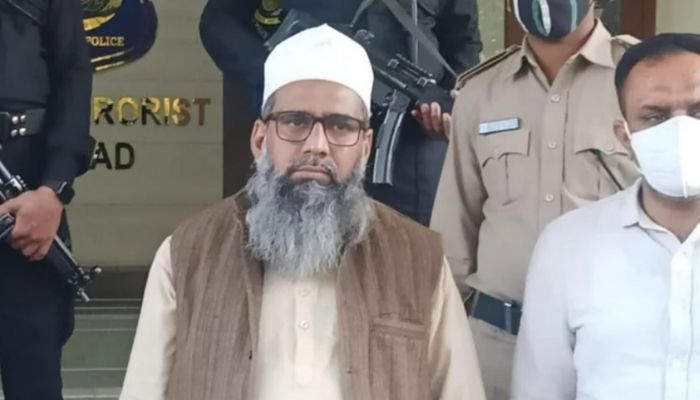
A day after Gujarat Anti-Terrorism Squad (ATS) arrested Maulana Qamar Gani Usmani from Delhi in connection to the murder of Kishan Bharwad, old videos have now surfaced on social media which show the Islamic cleric vying to avenge ‘blasphemy’.
A video from August 2021 was shared on Twitter by journalist Swati Goel Sharma. In the said video, Delhi police personnel were seen desperately trying to stop Maulana Usmani from holding anti-blasphemy protests. “We will go anyhow (to protest) since we have made a call to the public,” he announced.
“We will not listen to you. Insults have been hurled against our Prophet. We will not keep calm. What do you think? You will intimidate us by filing cases”, the radical Islamic cleric said.
Gujarat ATS has arrested Delhi-based maulana Qamar Ghani Usmani of Tehreek-Farogh-E-Islam for ‘radicalising’ killers of #KishanBharvad
Watch Delhi cops unsuccesfully trying to stop Usmani from holding a protest in August, where his followers demanded death for blasphemers pic.twitter.com/jwe4OxP9eG
“On August 8, it was said that Allah will be slithered and you have come here to teach me the law. What happened to the implementation of laws then? I don’t want to talk about it further. You can do whatever you want”, Maulana Usmani told the Delhi police.
In another video shared by journalist Swati Goel Sharma, the Islamist, who abetted the gruesome murder of Kishan Bharwad, was greeted by his co-religionists with chants of beheading for blasphemers.
“Nabi ke hum Ghulam hai. Gustaak-e-Nabi ki ek ki saza sarr tann se juda (We are the slaves of Prophet Muhammad. There is only one punishment for blasphemy – decapacitating the head from the rest of the body),” yelled his supporters.
Maulana Qamar Ghani Usmani of Tahreek-Farogh-E-Islam was garlanded, showered with petals and cheered on by Islamists as he walked the streets of Mumbai.
Gujarat ATS has arrested Delhi-based Maulana Qamar Ghani Usmani of Tahreek-Farogh-E-Islam for radicalising killers of #KishanBharwad
Here is Usmani being welcomed with chants of “san Tan se juda” (beheading for blasphemers) in his visit to Mumbai in September pic.twitter.com/mrKZWVxxev
Maulana Qamar Gani Usmani is the chief cleric of Tahreek-e-Farogh Islami or TFI. He was arrested in connection to the Tripura riots along with three associates in November 2021. He was booked under relevant sections of IPC and UAPA. He had spent 21 days in jail before getting bail in the case. After getting bail, Usmani said in a speech he never asked Allah to free him from jail. He said, “It was Allah’s grace that I got bail in 19 days even though people do not get bail even after six months if they are booked under UAPA.”
In February 2021, Usmani had justified the murder of Kamlesh Tiwari. He had said, “There is a conspiracy to ruin the lives of Muslims. There is an attempt to make India just like Spain. To achieve it, they are testing how much Muslims in India love their Prophet. This is why Kamlesh Tiwari was asked to do blasphemy. If you remember, that time people had come to roads to protest. There was fear someone would kill Tiwari, so he was sent to prison.”
He added it was not a punishment but an attempt to save Kamlesh Tiwari from getting killed. Tiwari was killed in cold blood in Lucknow on October 18, 2019.
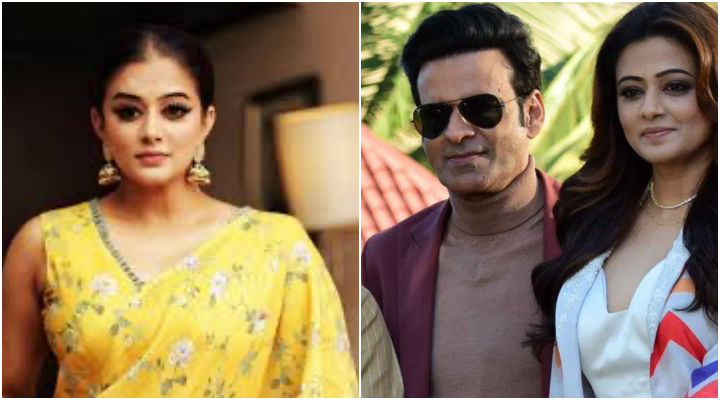
Tamil actress Priyamani has stated that Bollywood keeps portraying ‘South Indians’ in stereotypical roles, as people who just speak Hindi with an accent. Discussing how the Hindi movie industry had failed to provide a proper representation of the county’s south in movies so far, the ‘Family Man’ actress has stated that in Bollywood movies, there has been a dearth of proper representation of characters from the country’s southern half.
Priyamani further stated that there was a time when actresses from the South like Sridevi, Hema Malini, Rekha and Vyjayanthimala used to rule the silver screen in the Hindi film industry, but it all stopped. She added that over the years, the representation of ‘South India’ in Bollywood has been reduced to portraying characters who just do not speak Hindi the normal way, characters whose job is to say things like “Aiyo, kaisa ji, kya bolta ji”.
Speaking to an entertainment portal, Priyamani also expressed pleasure in the fact that slowly, things are changing. She added that eventually, it started with South industry technicians being brought to work on Hindi movies. Many of them made their mark successfully.
“Right now, I’m very happy that finally South talent is also getting recognised here in Bollywood and South stars are also getting their due,” the actress said.
Priyamani stated that finally, the South film industry is getting its due, as the Bollywood audiences are appreciating content from the South and popularising South Indian movie stars.
Priyamani is a popular and successful actress. She has acted in dozens of movies in Malayalam, Tamil, Telugu and Kannada. She was seen in Aishwarya-Abhishek starrer Ravan and had done an item song in Shah Rukh Khan-Deepika starrer Chennai Express.
Priyamani also appeared in the popular web series Family Man, where Manoj Bajpayee and Samantha Ruth Prabhu had also played key roles. It streams on Amazon Prime. Priyamani’s upcoming movies are ‘Maidaan’ with Ajay Devgan and Viraat Parvam’ with Rana Daggubati and Sai Pallavi.
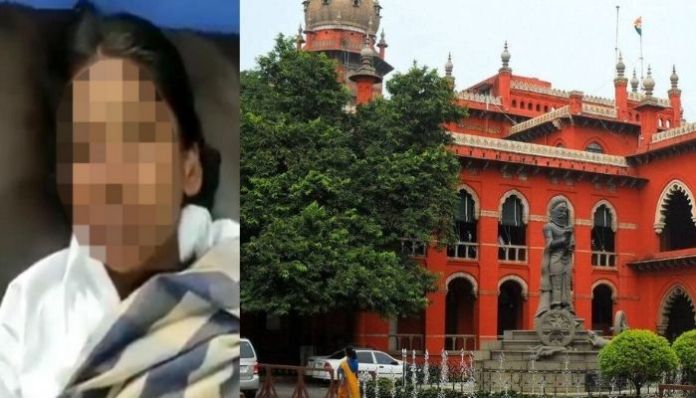
The Madurai Bench of the Madras High Court on Monday transferred the Lavanya suicide case to the Central Bureau of Investigation after the victim’s parents had filed a petition seeking a CBI probe into the matter.
The case was transferred to the CBI on the day when the NCPCR team is visiting Thanjavur to conduct a probe into the case and enquire with officials involved. The NCPCR had earlier alleged that the Tamil Nadu government was not cooperating with the enquiry presided over by their state team and therefore they had to get a team from the Centre to conduct the inquiry.
The girl, a student in standard 12th Class in Sacred Heart Higher Secondary School in Thirukattupali in Thanjavur in Tamilnadu was reportedly coerced by her missionary school into accepting Christianity. After she had refused to convert, the school authorities had prevented her from leaving the hostel during the Pongal holidays and instead forced her to clean the entire premises including toilets. Due to the constant harassment, the 17-year-old took her life by consuming pesticides used in the school garden.
A video of the victim’s call for help was published on social media where she was seen in an unconscious situation talking about her torture. The video, originally in Tamil (translated by The Commune) said, “They (school) had asked my parents in my presence if they can convert me to Christianity and help her for further studies. Since I didn’t accept, they kept scolding me.” She had named one Rachael Mary, who allegedly tortured her.
Victim’s parents had filed a petition seeking CBI investigation into the matter
The decision to hand over the case to CBI comes in the wake of a petition filed by the victim’s parent seeking a thorough investigation into the death of their child by the premier central agency. In the plea, the petitioner stated that they had lost the trust in Madras Police as confidential information about the girl and the evidence had got leaked in the media.
Seeking a thorough investigation by some central agency, the petitioner’s lawyer said “By releasing confidential information, they are trying to stir up a debate on the death of the girl. We have lost faith in the police. For fair investigation, the case has to be transferred to CBI.”
The petitioner’s counsel further said, “It is a matter to be investigated how the girl could obtain poison in the hostel. Statements made by the victim to third parties shortly before her death are to be taken as direct evidence. The principle of res gestae applies. So those statements cannot be questioned.”
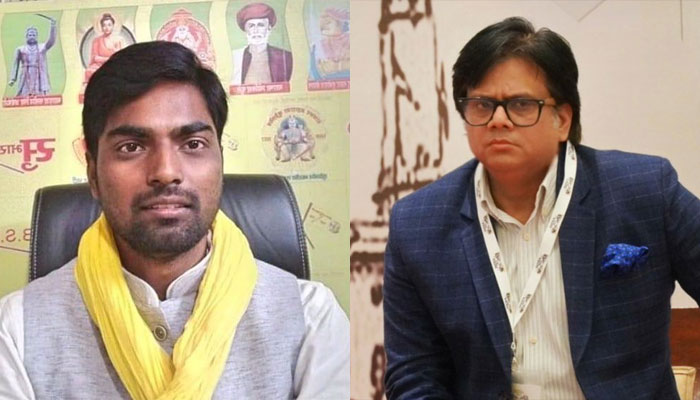
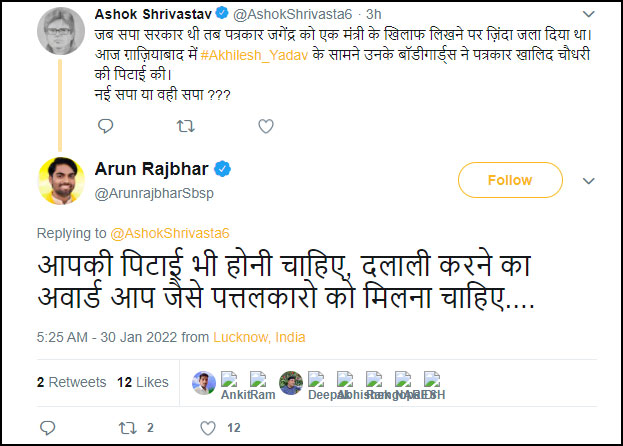
On January 30, Ashok Shrivastav, journalist, DD News, demanded action against Arun Rajbhar, National General Secretary, Suheldev Bhartiya Samaj Party (SBSP), after he threatened Shrivastav on social media platform Twitter.
In his tweet, Shrivastav said, “Today Akhilesh Yadav’s security personnel beat up a journalist, I wrote against it, OP Rajbhar Ji’s son Arun Rajbhar Ji threatened to beat me up.” He further urged Home Minister, UP Police and Election Commission to take action against Rajbhar. “Please take action in this matter. This is an attack on the media on journalists,” he added.
Rajbhar, whose party is an ally of the Samajwadi Party (SP) for the upcoming UP Assembly elections, in the now-deleted post, had said, “Journalists like you should be thrashed. You should get a reward for the bootlicking.”
Now=deleted tweet by Arun Rajbhar. Source: Archive.org
Shrivastav, in a tweet, had condemned the incident in which Akhilesh Yadav’s bodyguards had thrashed journalist Khalid Chaudhary. He had said, “When SP was in power, journalist Jagendra was burnt alive for writing against a minister. Today, bodyguards of Akhilesh Yadav thrashed journalist Khalid Chaudhary in front of him. New SP or same SP?”
जब सपा सरकार थी तब पत्रकार जगेंद्र को एक मंत्री के खिलाफ लिखने पर ज़िंदा जला दिया था। आज ग़ाज़ियाबाद में #Akhilesh_Yadav के सामने उनके बॉडीगार्ड्स ने पत्रकार खालिद चौधरी की पिटाई की। नई सपा या वही सपा ???
This tweet by Shrivastav irked the politician and SP ally who said responded with a threat saying the journalist should be thrashed.
Akhilesh’s bodyguard thrashed journalist
On January 29, during a press meet, journalist Khalid Chaudhary was thrashed by the bodyguards of former UP CM Akhilesh Yadav when he was trying to ask questions. In the video, the journalist could be heard saying, “Don’t thrash me”, but the bodyguards and SP workers kept pushing him.
This is not the first time journalists have been thrashed in Yadav’s presence. In March 2021, a ruckus broke out between a group of journalists and the supporters of Samajwadi Party leader Akhilesh Yadav at a hotel in Moradabad in Uttar Pradesh. Yadav was in the city to attend the wedding of an MLA and had conducted a press conference at the said hotel on Thursday evening. During the ruckus, a reporter named Fareed Shamsi (identified as the one with a dark blue shirt) took a severe blow to his nose from Yadav’s security guard’s rifle. He was also pushed aside by a Samajwadi party supporter, who stood adjacent to him.
The Advertising Standards Council of India (ASCI) has issued a list of 28 influencers on Instagram who were found violating the guidelines issues. These influencers include Bollywood actor Ranveer Singh and actress Jacqueline Fernandez.
According to the ASCI website, these 28 influencers violated guidelines that require these influencers to add “disclosure labels” on the first instance and on subsequent routine checks when promoting paid content.
ASCI guidelines
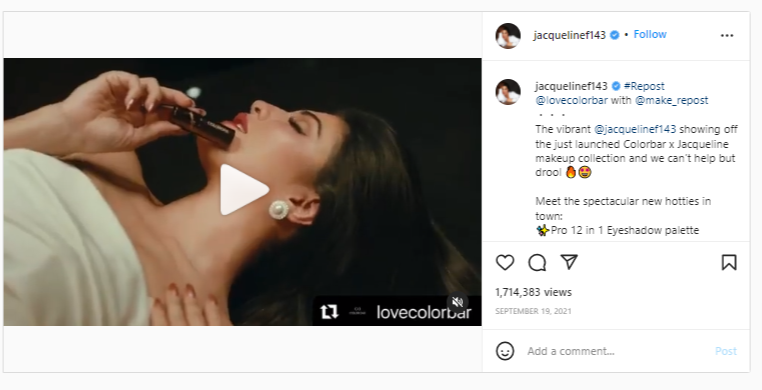
Jacqueline Fernandez was found violating the guidelines and failed to add the disclosure label on a post where she was promoting Colorbar cosmetics.
Post that violated guidelines
If one notices, there is no tag disclosing that she was promoting paid content or posting a brand advertisement. This goes against ASCI guidelines.
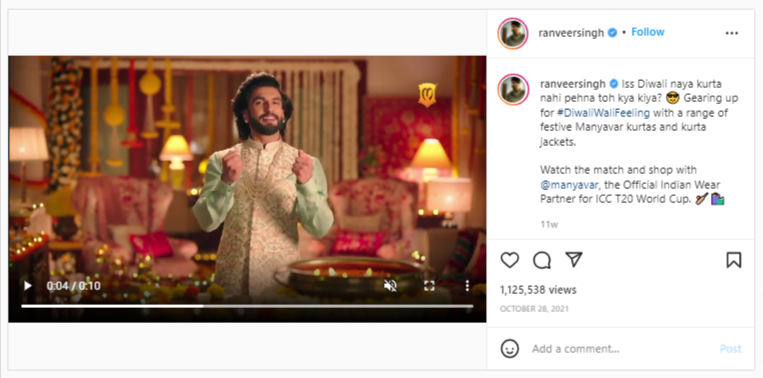
Ranveer Singh on the other hand was promoting brand Manyavar, but failed to add the disclosure tag.
Post that violated guidelines
These also included MasterChef India 4 finalist Karishma Sakhrani and tech blogger Shlok Srivastava.
Manisha Kapoor, general secretary, ASCI said that the non-compliant cases are routinely escalated to the government. “We hope this signals to the industry that we are serious about consumer protection and pushing the agenda around misleading ads. And that we will continue to educate, collaborate to reach out to more and more influencers and brands to spread the message of responsibility and transparency in advertising.”
These influencers have millions of followers on Instagram, in fact, Ranveer Singh and Jacqueline Fernandez have a total of over 96 million followers put together.
Last year in June, ASCI made it mandatory for influencers to label their promotional posts to ensure transparency and safeguard the interests of consumers. The guidelines say that the influencers must label branded posts if there’s a material connection between them and the advertisers, failing which, both parties shall be held accountable.
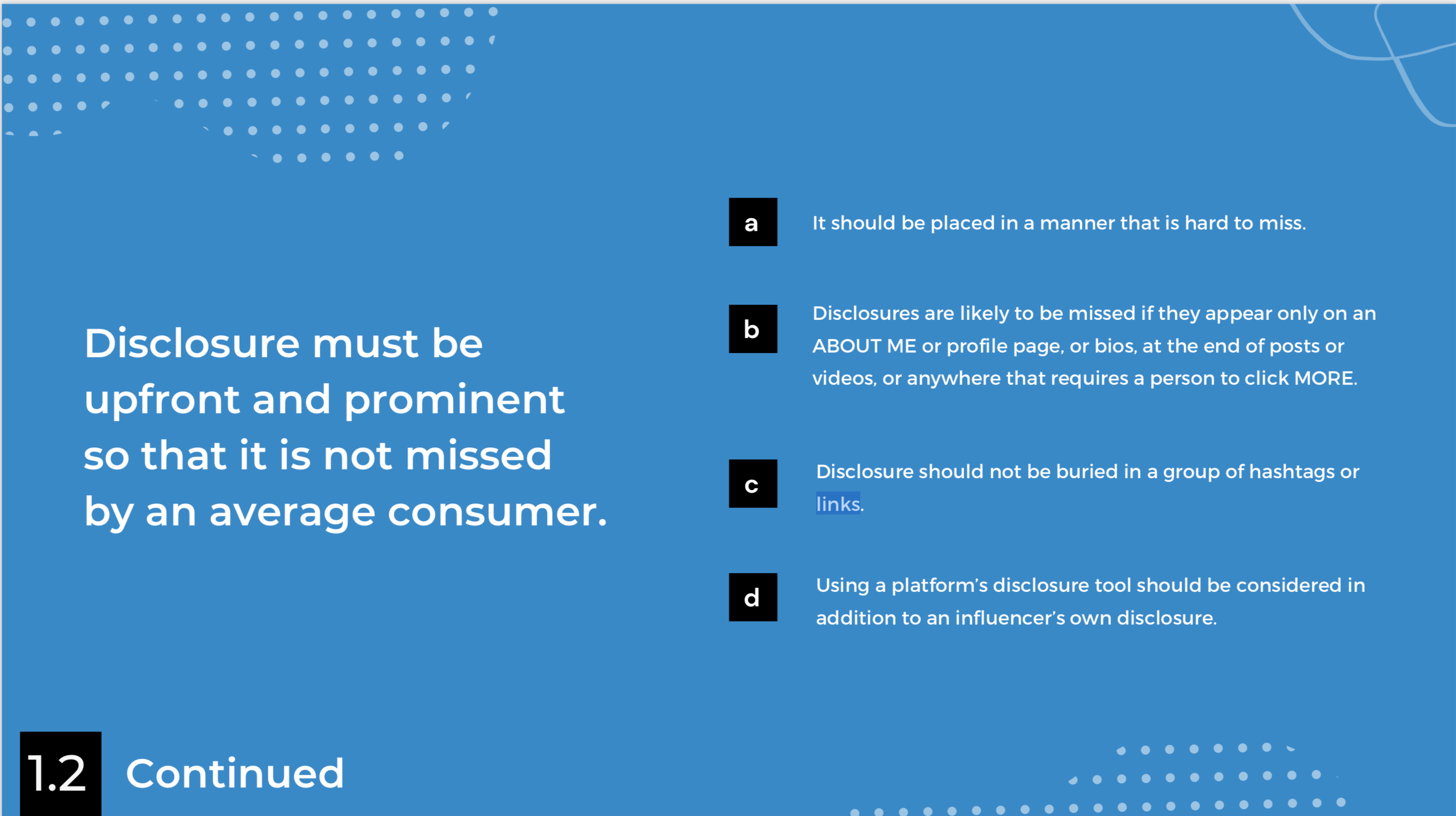
According to the guidelines, the disclosure tags must be prominent so it is not missed by the consumers.
ASCI guidelines
Following are the tags that the influencers are supposed to appropriately used:
Advertisement
Ad Sponsored
Collaboration
Partnership
Employee
Free gift
The guidelines further say:
Responsibility of disclosure of material connection and also of the content of Advertisement is upon the Advertiser for whose product or service the advertisement is, and also upon the Influencer. For clarity, where Advertiser has a material connection with the Influencer, Advertiser’s responsibility will be to ensure that the posted Influencer advertisement is in line with the ASCI code and its Guidelines. While the Influencer shall be responsible for making disclosures required under the Guidelines. The Advertiser, shall, where needed, call upon the Influencer to delete or edit an advertisement or the disclosure label to adhere to the ASCI Code and Guidelines.
According to a report on Economic Times, between July and December 2021, 5,000 posts, stories and feeds from influencer handles were screened for complaints including those from end consumers. Out of all the complaints, 719 were in violation of the guidelines. 80% of influencers voluntarily amended or withdrew their posts and out of the remaining posts 86% complied after ASCI asked them to withdraw or modify their posts. The violations predominantly fell in the following categories: fashion and lifestyle (29%), cosmetics (19%), food and beverage (13%), and personal care (12%). Beauty etailer Nykaa showed up thrice on the list.
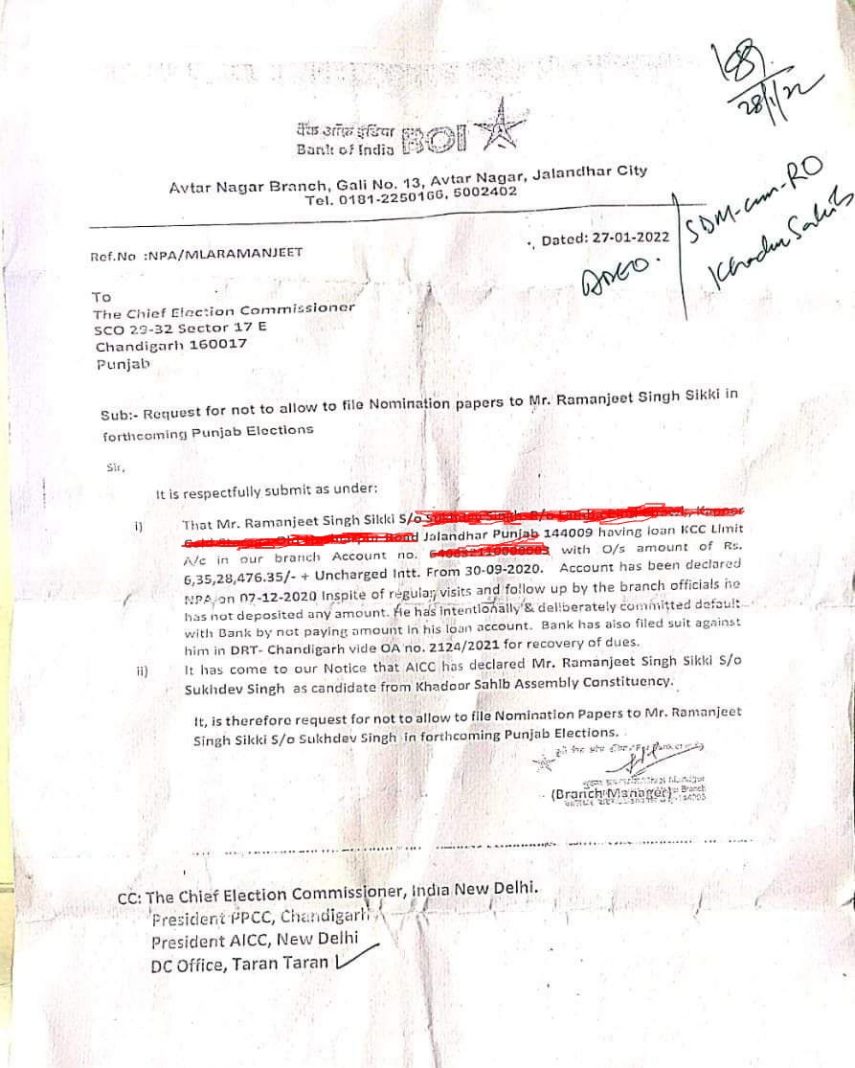
The Bank of India (BOI) has written to the Election Commission against the Congress candidate from Punjab’s Khadoor Sahib seat, Ramanjeet Singh Sikki. The bank has stated that Sikki has defaulted on his loan worth Rs 6.35 crores. The bank has also notified the returning officer of Khadoor Saheb and the SDM of the Tarn Taran district regarding the same.
The letter by BOI to ECI
The BOI has written that Ramanjeet Singh Sikki had availed a loan worth 6.35 crores from the bank. Despite several visits by bank officials to his residence and subsequent follow-ups, Sikki has not paid back the amount and the outstanding amount with interest was declared NPA by the bank in December 2020.
The letter also mentions that the bank, after failing to get Sikki to pay back the loan, had filed a lawsuit against him in 2021.
The bank has written that Congress Party has declared Sikki as their MLA candidate from the Khadoor Sahib constituency. They have requested the Election Commission of India to not allow Sikki to file his nomination for the upcoming state assembly elections.
CEC forwards letter for further action, Congress MP’s brother to contest for the same seat
The CEC has forwarded the letter to the district election officer, the All India Congress Committee, and the Pradesh Congress Committee for further action. Tribune India has reported that the SDM has been asked to take appropriate action on the issue.
As per reports, Punjab Youth For Change leader Harbans Singh has stated that it has become common in Punjab to avail a bank loan and then not pay it back. He added that many farmers suffer crop loss and hence fail to pay back the loans. But Sikki is affluent, he should have paid the loan amount back. Singh added that the ECI should consider the request by BOI and stop Sikki’s nomination because it will send a strong message to loan defaulters.
In the latest development, disgruntled Congress MP Jasbir Singh Dimpa’s brother Harpinder Singh aka Ranajn Gill has announced that he will contest the elections for the Khadoor Sahib seat, despite the party naming Ramanjeet Sikki, a two-time MLA.
Though it is not yet clear whether Gill will contest as an independent candidate, there are some reports that he is in talks with the BJP. Sikki’s candidature may get rejected if the ECI prevents him from filing a nomination.
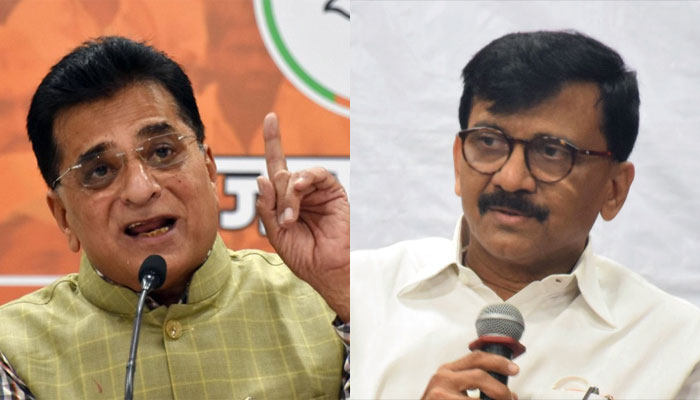
On January 30, Bharatiya Janata Party leader Kirit Somaiya slammed Shiv Sena leader Sanjay Raut for his ‘wine is not liquor’ comment. He alleged Raut was saying so because his two daughters are partners with a wine company and have a significant investment in the business that would churn a profit of Rs 100 crore per annum for Raut’s family.
How & Why WINE Distributor
“Ashok Garg MAGPIE Group” gave Partnership to Sanjay Raut Family in 2021?
Sanjay Raut & Family has NO Experience, Knowledge, Education of Wine Business or any such Business?
Not contributed Single Paisa for this joint venture
While talking to the media, Somaiya said, “The decision taken by the Maharashtra government is to benefit the family of Sanjay Raut, which is in partnership with a wine company. Raut has a partnership in Maharashtra’s big industrialist Ashok Garg’s wine company named Magpie Global Limited. He has a big investment in this wine business, in which both daughters and wife of Sanjay Raut are in the position of director in the company. MADAK Global Private Limited was renamed Cloud Pie DFS Private Limited. His family gets a profit of about Rs 100 crores annually from Magpie Company.”
He further alleged the company is involved in wine distribution and Raut’s investment in the company is the reason he has been supporting the decision of the state government to allow the sale of wine in supermarkets and walk-in stores. He said, “This company has the business of wine distribution. Sanjay Raut is supporting the decision to sell wine in supermarkets due to the huge investment in the wine business. That’s why Sanjay Raut is not calling wine alcohol and is saying this decision will benefit the farmer.”
He also dared Raut to prove him wrong if the allegations levelled were false. “On April 16 2021, Sanjay Raut’s family had signed a contract with this company; his two daughters, Vidhita and Poorvishi, are directors in this company. If my allegations are false, then Sanjay Raut should prove me wrong,” he added.
Earlier, Devendra Fadnavis, former Chief Minister, Maharashtra, had said the Maha Vikas Agadi govt (Shiv Sena, Congress and NCP) wanted to turn Maharashtra into “Madhya-radhtra” or a liquor state.
Supermarkets and walk-in stores to sell wine in Maharashtra
On January 27, the Maharashtra government had cleared a proposal that allowed the sale of wine in supermarkets and walk-in stores across the state. The premises owner has to pay an annual fee of Rs 5000 for the license. The government claimed it would provide more access to the marketing channels for Indian wineries.
As the controversy erupted after the decision, Shiv Sena leader Sanjay Raut claimed wine is not liquor. He said, “Wine is not liquor. If wine sale increases, farmers will benefit from it. We’ve done this to double farmers’ income.”
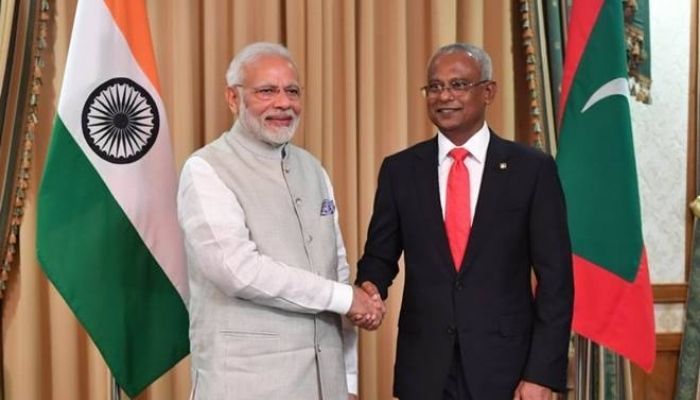
In a bid to counter the alleged China-sponsored, politically motivated, anti-India narratives in the island nation of Maldives, the ruling Maldivian Democratic Party (MDP) is drafting a new bill to outlaw internal political movements that adversely impact foreign relations.
The ‘India Out’ campaign has gained momentum in the Maldives, following the release of former President Abdulla Yameen Abdul Gayoom from jail. He had accused India of interfering in the country’s internal politics and the incumbent Maldivian government of ‘colluding’ with India.
As such, incumbent President Ibrahim Mohamed Solih and his MDP will propose a new bill in the Parliament to stall the ‘India Out’ campaign. Solih has been a strong proponent of ‘India First’ foreign policy and his government sees that the nefarious anti-India campaign by the Opposition may hurt the bilateral relations between Maldives and India.
The proposed new law will attract a penalty of 20,000 Maldivian Rufiyaa, besides a jail term of 6 months or house arrest of 1 year for insinuating that the Maldives is under the military, economic or political control of another foreign nation.
Govt of Maldives has decided to criminalize the use of #IndiaOut slogan. According to a bill drafted by the ruling party, those who take part in the campaign can be jailed up to 6 months.
The Opposition has dubbed the drafted bill as an attack on the constitutional rights of the people. A spokesperson for the Progressive Congress Coalition, Heena Waleed alleged, “It’s a downright attack on the constitutional rights of the people. Their right to freedom of assembly and freedom for expression cannot be curtailed to protect the interests of a foreign power.”
The Background of ‘India Out’ controversy
The so-called ‘India Out’ campaign began in 2020 as on-ground protests, which later shifted to social media as a ‘hashtag campaign’. Besides the Progressive Party of Maldives (PPM), one of the frontrunners of this anti-India campaign has been a news outlet by the name of Dhiyares.
While speaking to The Indian Express, Dhiyares co-founder Shifxan Ahmed alleged, “We are just protesting military presence in the country. We are not calling for a violent clash against India or Indians in the Maldives.”
According to one research analyst, Dr Gulbin Sultana, the ‘India out’ campaign is led by former President Abdulla Yameen Abdul Gayoom. Sultana added that it is not a civil society movement anymore but rather a political movement.
Owing to the anti-India sentiments fuelled by the divisive campaign, Indian teachers had been at the receiving end of harassment from protestors. ‘India Out’ campaigners had targeted 2 Indian teachers on two different islands under the garb of protests. They were asked to leave the country.
The cases were confirmed by the Education Ministry of Maldives. “The ministry has also filed a case with the police since the Shaviyani Funadhoo School’s wall has been vandalized with spray paint, in a sign that reads India Out,” a report in The Edition stated. It must be mentioned that former President Yameen, who is behind the campaign, had been pro-China during his tenure between 2013 and 2018 as Maldivian President.
The Maldives is of strategic importance for both India and China, with the Communist regime trying to exert its influence in the Indian Ocean. To counter this, India has invested large sums of money in the island nation and has now become of the largest investors in the island nation. “Ultimately the Maldives does need assistance from India. It is not a very big power in the region and India is an important country,” informed research analyst Dr Gulbin Sultana.
Maldivian political parties extend support to India
One of the primary arguments behind the ‘India out’ movement is the alleged presence of Indian military forces in the island nation. While speaking on this matter, Chief of Staff at President’s Office Ali Zahir said that the presence of foreign military did not automatically imply foreign control over the Maldives. “Even our own military personnel are stationed in various countries abroad,” he added.
Besides the incumbent Maldivian government led by President Ibrahim Mohamed Solih, other political parties such as the Adhaalath Party has condemned the motivated campaign against India. “Adhaalath Party condemns the efforts undertaken by a political party to incite hatred in the people’s hearts towards neighbouring and global partners that are assisting in the growth and development of the country,” it said in a statement.
The largest Opposition party of Maldives, Jumhooree Party, stated, “The majority of the countries in the world have accepted this practice, on an international, regional and mutual level. It is a common political stunt by oppositions to imply such “unarmed” military personnel on official duties as the presence of foreign “military” in the country”.
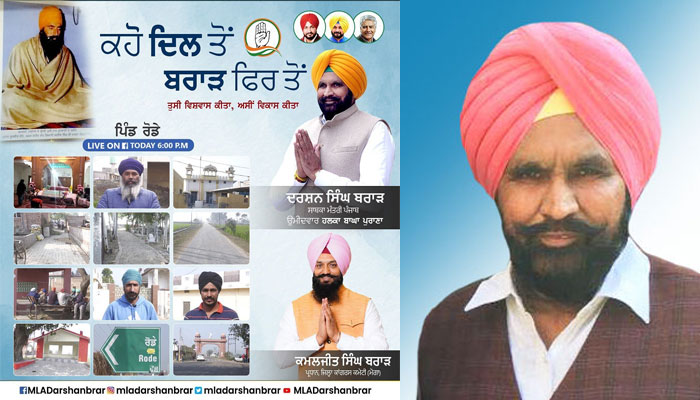
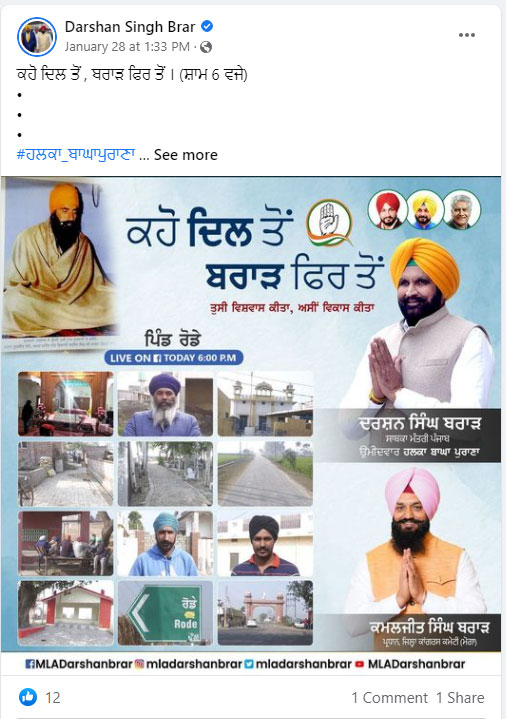
On January 28, Congress Candidate from Baghapurana constituency, Moga, Punjab, Darshan Singh Brar promoted a Facebook Live session with an image of Khalistani terrorist Jarnail Singh Bhindranwale. The live session was specifically for the residents of village Rode, where Bhindranwale was born. The image used in the poster had a caption, “Fourteenth chief of Damdami Taksal, singer of Gurbani, great warrior, Amar shaheed Sant Jarnail Sant Gyani Jarnail Singh Ji Khalsa Bhindra Wale”, written in Punjabi.
Congress leader Darshan Singh Brar promoted Facebook Live with Bhindranwale’s photo.
Brar had refused to comment when Bhindranwale’s house was turned into Gurudwara
In 2007, the conversion of Bhindranwale’s ancestral house to a Gurudwara was started under the supervision of Damdami Taksal. It was named Gurudwara Sant Khalsa. At that time, Jasvir Singh Rode, nephew of Bhindranwale, had informed Indian Express that Bhindranwale’s photographs would be installed in the langar hall, library and an education institute in the Gurudwara.
When Brar was approached by IE for comment, he refused to say anything and claimed it was the internal matter of the residents of the village. According to the granthi of the Gurudwara, no one had opposed the construction.
Punjab Assembly Elections
Punjab will vote for the upcoming Assembly elections on February 20. The voting will be done in a single phase. The results will be announced on March 10 along with other states.
CM Yogi Adityanath had said recently that the state of UP is no longer known for the infamous Saifai festival, but it now hosts major cultural events like the Ayodhya Deepotsav and the Divya Kumbh. During the Samajwadi Party regime, the Saifai festival, organised annually at the Saifai village, the seat of the Mulayam Singh Yadav clan in Etawah district, had often made headlines, for the wrong reasons.
For a state struggling to provide the basic necessities like roads, power supply, jobs, road transport and food, the annual extravagance and festivities with the taxpayers’ money were seen as a vulgar display of power and family politics.
Akhilesh Yadav brought more film stars after ascending to the state power in 2012
In March 2012, Akhilesh Yadav became the chief minister of the state. Soon after that, the whole state machinery was deployed in the preparations of this festival scheduled in December 2012. This festival included the performance of popular artists like singer Kailash Kher and poet Munawwar Rana. Stand-up comedian Kapil Sharma was accompanied by Pakistani comedian Irfan Ali Hasan. Singer Sapna Mukharji and dancer Shyamak Dawar were also the ones among the key attractions of the festival that year.
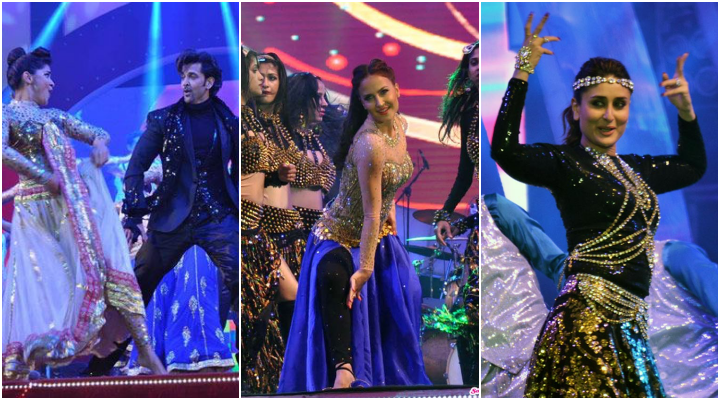
These performances were coupled with even bigger star performances like singing performances by Bollywood singer Shaan and dance numbers by Hrithik Roshan who was also felicitated and awarded after his performance. Not to forget, everything in this 14-day festival was paid for by the state. However, during Mayawati’s regime from 2007 to 2012, the glamour around the festival was somewhat reduced, maybe due to the lack of power.
Grandeour of the festival increased in 2013 despite Muzaffarnagar riots
In 2013, violent and brutal riots had happened in Muzaffarnagar. Relief camps were set for the victims of the riots. As the festival was scheduled in December, it was right in the middle of a cold wave. Children and kids were dying in those relief camps and the government along with its ministers and officials was busy organizing and enjoying the festival that included popular songs and dance numbers. NGOs and people from the relief camps in Shahpur village kept crying but none was listened to. Entertaining the party leaders and their grand family was far more important for the whole system rather than saving the riot victims who were shivering in cold. When people were seeking help to save their lives, ministers were busy responding to the jokes cracked by the star comedians.
When Mulayam Singh Yadav’s attention was drawn towards the fact, he dodged the question by terming it as a rumour. Mulayam Singh Yadav had then claimed that this was a move by the BJP to malign the image of the Samajwadi Party and its government in the state. Adding to this, the chief secretary of the state went on to make a controversial statement wherein he had said that nobody dies of cold.
The Saifai festival would be organized as an initiative to save the rural and folk culture and promote local art. But in reality, there was nothing folk or rural, instead, it catered typical Bollywood entertainment to the ministers and officers spending the government funds. There were Qawwali sessions, stand-up comedy performances, Bollywood dance, and singing shows. Rather than rural and folk artists, celebrities from the cinema were the key attractions of this festival. Besides, there used to be a cycle marathon, wrestling competition, and kids singing program.
As the festival advanced in the month of January 2014, so did increase the antisocial activities of the goon of the SP. There emerged a ruckus in the middle of the ongoing Saifai festival and the police slightly used the force to control the mob. But leave alone settling down, the public started beating the police back. This was the condition of law and order in Uttar Pradesh under Akhilesh Yadav.
तारीख़ – 10 जनवरी 2014,UP की कहानी मीडिया की ज़ुबानी,इसीलिए नई नहीं,वही सपा है !! pic.twitter.com/afhHeT9GbT
The police complained about this unexpected violent behaviour of the people to the CM but nothing happened as all of them belonged to the native village of the state’s ruler.
Hundreds of crores spent for Bollywood stars while UP lacked basic necessities
In 2014, around Rs.334 Cr was spent on this festival out of which Rs. 100 Cr was spent on the Bollywood night alone. Salman Khan and Madhuri Dixit were also among the guests. At the other end of the state in Muzaffarnagar, victims of the riots staying in relief camps were dying in the cold.
Back in Saifai, Mulayam Singh Yadav was saying that there is nobody in the relief camps and everyone there had gone back to their homes. Arrangements of dining and accommodations were made for more than 1000 VVIP guests. More than 400 officers and other staff from the government were deployed for the organization of this festival.
It was the festival that witnessed more than 85 takeoffs and landings of helicopters in a matter of a few days. It took a total of 9 airplanes to bring the VVIPs and guests to this festival. This year Ranveer Singh and Mallika Sherawat were the main attractions.
The next edition of this festival was organized in December 2015. Mulayam Singh Yadav inaugurated the program. This was the 18th Saifai Festival which is organized in the memory of Ranveer Singh Yadav, nephew of Mulayam Singh Yadav. The festival had everything from Ghazal sessions to light and sound shows. Lisa Hayden, Ranveer Singh, and Hrithik Roshan were among the invitees while Boman Irani, Huma Quraishi, singer Arijit Singh, Parineeti Chopra, Jaqueline Fernandes, Sushant Singh, Vaani Kapoor, Richa Chadhdha, Lorin D’souza were the participating performers.
The festival added more glamour in 2016 when actresses like Sonam Kapoor and Kareena Kapoor Khan took part in the performances along with Ranveer Singh. The Bollywood couple Saif Ali Khan and Kareena Kapoor Khan were offered a ‘Royal Feast’ by the government. Singer Ankit Tiwari performed at the festival. People had an opportunity to move steps onto the rhythm beats with Arjun Kapoor. Sonakshi Sinha and Mika Singh shared the stage for performances. Ranveer Singh took it a step further. He was seen falling flat on the feet of Mulayam Singh Yadav. It is notable that even in this festival, people threw away the chairs and made a ruckus with the police force on the spot.
Bollywood celebrities were ferried on chartered flights.
In fact, there were performances by artists like Javed Ali, Ali Abram, Karishma Tanna, Sunil Grover, Ashraf Ali, and Uday Singh Gouri. There was a ruckus and law and order issues at the festival in 2014. The police lathi-charged.
In 2017, the Yadav family was entangled in domestic disputes, and hence the festival was not organized. The same year, the state witnessed a change in the government and since then, the Saifai Mahotsav came to an abrupt stop.
The Saifai festival had started in 1997. Mulayam’s nephew Ranveer Singh Yadav used to be the main organizer of this festival who passed away in 2002. After his death, this festival is being organized in his memory every year. His son Tej Pratap Yadav now looks after the organizing part. He was elected as the MP from the Mainpuri constituency in 2014 at the age of 26. This Lok Sabha seat used to be the home ground for Mulayam Singh Yadav. Tej Pratap Yadav is married to Rajlakshmi Yadav who is the daughter of Lalu Prasad Yadav.