Home Blog Page 5896

Images show Congress-ruled Punjab mainly responsible for stubble burning, media continues to question Haryana and Modi

When it comes to environmental issues, it is best to try not to point political fingers. Because pollution is a collective failure. And more importantly, we need everyone to cooperate in order to do something effective about it. But when the data is so clear and so one-sided, it would be simply dishonest not to point it out. By now, you must have heard about how the crop stubble burning across Punjab and Haryana has turned Delhi into a gas chamber.

Untitled.png
Delhi’s air quality worsens as stubble burning continues

According to SAFAR (System of Air Quality and Weather Forecasting and Research) which comes under the Ministry of Earth Sciences, crop stubble burning now accounts for 46% or almost half of the total pollution in Delhi’s air.

The media keeps saying that Punjab, Delhi and Haryana should resolve this issue mutually. This sounds nice and ‘neutral’ because that would mean one Chief Minister each from Congress, AAP and BJP.

But is that really the case? Is crop stubble burning from Haryana really in the picture? This satellite picture of fires shared by India Today’s Data Intelligence Unit suggests that the answer is an emphatic NO!

Untitled.png
Satellite image of stubble burning updates show Punjab with highest stubble burning incidents

This is conclusive, leaving no room for doubt. The BJP government in Haryana has basically ended the process of crop stubble burning. The problem is almost exclusively coming from Congress-ruled Punjab.

Again, it is not nice to go partisan on environmental issues, but that does not mean we should cultivate illusions.

Here is another NASA satellite image shared by NDTV.

Untitled.png
NDTV claiming Punjab and Haryana show spurt in stubble burning even as the map they share shows a different picture

Just look at the actual photo they have shared of stubble burning and see if you can convince yourself to agree with the line that both Punjab and Haryana are responsible for Dehli pollution woes!

Hard to find another image that captures the difference between Congress and BJP rule so clearly.

Read: Why stubble burning suddenly became such a huge problem in recent years around Delhi, a few reasons

No other way to put this: but that smoke in Delhi’s lungs is the aroma of Indian liberalism. And just like Indian ‘secularism,’ it is bad for everyone: Hindu, Muslim, whatever.

Meanwhile, liberal journalists have been talking about “questions” that border on denial of both science and common sense.

Untitled.png
‘Journalist’ Vir Sanghvi in denial mode

Indeed, why should it matter if the winter airflow pattern goes from Punjab towards Haryana and down to Delhi? It’s not like effects of environmental damage can become visible far away from the places that cause them.

In fact, I have some similar questions. How come the ice caps on the South Pole are melting due to CO2 emissions? There is no heavy industry, nor vehicular traffic nor agriculture in Antarctica! Makes sense, no?

Clearly, the need of the hour is to identify the causes of the problem and do something about it, regardless of political inclinations. But as the smog over Delhi continues, liberals continue to drag politics into it.

Untitled.png
MK Venu blames PM Modi

This is the kind of tweet that would prompt a BJP supporter to ask where was the concern for people when almost 50% of households before 2014 were breathing smoke every day, cooking on firewood? Was that not vulgar enough?

But does this blame game help Delhi breathe better? Who wins in this?

Just last month, we have seen liberals blatantly using environmental issues for partisan purposes. Remember Aarey forest? A small patch of it was being chopped down to make way for a metro railway that would save a lot of CO2 from being pumped into the atmosphere.

But the science did not matter to the Aarey protesters. Their target was BJP Chief Minister Devendra Fadnavis. Just like the science on airflow and satellite images from NASA don’t matter. Because the aim is to somehow drag in the BJP government in Haryana which has done a stellar job of containing crop stubble burning.

In this particular case, with Delhi pollution through the roof, the problem of stubble burning is coming mainly from Punjab and not from Haryana. It is a state ruled by Congress and it is Capt Amarinder Singh’s government which must find the solution. It is for citizens and media to bring pressure on the Govt of Punjab to own up responsibility. And they must stop dragging in the Govt of Haryana, just to appear ‘balanced.’ If the X-ray image shows that only one leg is broken, we can’t ask the doctor to pretend that both legs are broken, just to appear ‘balanced.’

The satellite image doesn’t lie. Let us accept it.

RTI reply reveals AAP government in Delhi has not spent almost 80% of the Green Tax collected in last four years

While Delhi continues to grapple with a very high level of air pollution, an RTI reply has revealed that the AAP government in Delhi didn’t spend most of the money collected under green tax over last several years. The Arvind Kejriwal led government spent only around 20% of the money collected for mitigation of environmental problems.

RTI Reply on green tax in Delhi

As per the RTI reply accessed by Times Now, the Delhi government has said while green tax of ₹1174.67 crore was collected since 2015, only ₹272.51 crore have been spent. Moreover, of the ₹272 crore spent, ₹265 crore were spent on the orders of the Supreme Court. The Delhi government on its own spent only a few crores of rupees of the green fund for repairing roads. The RTI reply states that ₹265 crore was spent on the Delhi–Meerut Regional Rapid Transit System. This means that a huge amount of ₹902 crore remains unutilised in the fund collected as green tax by the Delhi government. That’s a whopping 77% of the fund sitting idle.


Reacting to the RTI reply, union health minister Dr Harsh Vardhan said that this speaks volume about the Callous and casual attitude of the government towards ensuring better health for the citizens of the capital. “₹900 crore is not a small amount, people have paid for that to ensure that the government spends it on a positive manner on positive things, to ensure better living for them”, Dr Vardhan said.


Reacting the RTI reply reported Times Now, the AAP government in Delhi has said that the fund will not go unused. The said that the expenditure is happening in phases, and the fund will be spent in the next six months. The Kejriwal government also said that Electric buses have been already commissioned.

Read: Odd-Even rule makes a comeback in Delhi, pollution had increased when it was enforced for the first time in 2016

This is not the first time that RTI reply has revealed how the Delhi government has been unable to spend the green tax collected. Another similar RTI query in 2017 has revealed that while ₹787 crore were collected as the green cess, only ₹93 lakhs was spent out of that. This amount was spent on preparation of documents for the radio-frequency identification system at toll plazas. In 2017 also the Delhi government had said that unused amount will be used to purchase 500 electric buses. In March this year the Kejriwal government had approved the purchase of 1000 electric buses, but electric bus services have not started in the capital city yet.

The green tax, or the ‘environment compensation charge (ECC)’, is required to be paid by diesel trucks entering Delhi.

Delhi: Girl murdered for wanting to end relationship, Arman, Samsad and Noman arrested, prime accused Lukman absconding

0

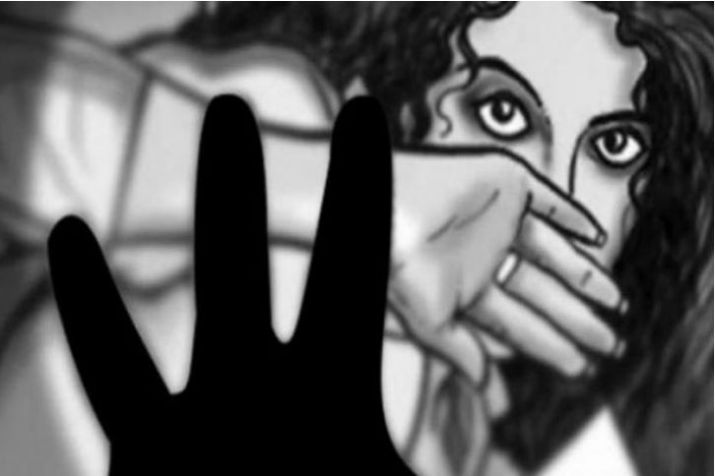
The Delhi Police have arrested three men for allegedly killing a woman and dumping her body after stuffing it in a suitcase in Outer North Delhi’s Bawana area.

According to the reports, the accused have been identified as Noman (30), a resident of Noida, Arman (26), a resident of Shakurpur Village and Samsad (30), a resident of New Usmanpur in connection with murdering a Hindu woman and stuffing her body in a suitcase.

The police investigation had revealed that the victim was identified as Neha Patel a resident of Shakurpur village. According to the police, she was in a live-in relationship with a Muslim man named Lukman for the past one month.

The interrogation of the accused by the police revealed that Patel wanted to end her relationship with Lukman as she was fed up with his behaviour. Reportedly, this had led to a big quarrel between the couple on the night of 16 October, after which Lukman and his brothers allegedly killed the girl.

Read: Delhi Police arrests Mohammed Ayub accused of slitting girlfriend’s throat, chopping the body into pieces for rejecting a marriage proposal

Later, the accused dumped her body which was found stuffed in an abandoned suitcase in Bawana on the morning of 18 October.

The police had recovered the CCTV camera footage of the area around Lukman’s house. The footage had shown Lukman and his brothers, Armaan and Noman, pulling a trolley bag on the night of 17 October. Another CCTV camera footage revealed an unidentified person travelling in auto-rickshaw dumping the suitcase.

Lukman, who is the prime accused in the case has absconded following the incident. The police said that investigations are underway to catch Lukman.

Kerala: CM Vijayan says UAPA charges against his party workers arrested over Maoist links will be scrutinised

0

Facing severe protests over the arrests of two CPI(M) workers over alleged connection to Maoist terorists, Kerala Chief Minister Pinarayi Vijayan on Sunday took a u-turn to say that his government would examine the slapping of the Unlawful Activities (Prevention) Act (UAPA) charges against the two CPI(M) party workers.

According to the reports, Kerala Chief Minister Pinarayi Vijayan speaking to the media said that the government does not agree with UAPA. “Two youths have been arrested and they are facing charges under UAPA. Police had stated certain things. I have promised the parents of one of the arrested, who met me, that the government would examine the matter and adopt a stand,” he said.

However, the Kerala police had claimed that during the investigation it had solid evidence against two Communist party workers. The police had asserted that the duo had maintained contact with Maoist functionaries.

A review authority was constituted by the state government to analyse whether a case requires persecution under UAPA. Section 45 (2) of the UAPA Act mandates that the sanction for prosecution shall be given only after an authority formed for the purpose makes an independent review and makes a recommendation.

Former judge PS Gopinathan, chairman of the review authority of UAPA cases, said the mere recovery of pro-Maoist material is not enough to induce UAPA sections. “Mere recovery of Maoist-related documents would not be enough. Since the new authority came into effect from January 2018, around a dozen cases have come up before it seeking a recommendation for prosecution. But we have given sanction only for less half of them. The main drawback in the UAPA cases is a lack of evidence. The authority would recommend prosecution only if it is convinced about the evidence,” he said.

The Case:

The Kerala Police on Saturday had nabbed two workers of the Communist Party of India- Marxist for alleged links to the Maoists and for distributing pro-Maoist brochures that had criticised the police force’s Thunderbolt commandos-led killing of four Maoists in Kerala’s Palakkad district.

According to the police, the two accused, Alan Suhaib and Thaha Fasal who hailed from Thalassery, were handing out pro-Maoist pamphlets and shouting pro-Maoist slogans when they were arrested from the Pantheerankavu market. They have been booked under the Unlawful Activities Prevention Act (UAPA) by the Pantheerankavu police station in Kozhikode district.

The arrests of two CPI(M) workers by the communist Kerala government had caused further resentment against the CPM-led Left Front government in Kerala from within the party and the allies. The CPI, a key coalition partner of the CPI(M), had strongly alleged that the recent killing of four Maoists was a fake encounter.

Following discontent within the party, Kerala Chief Minister Pinarayi Vijayan has sought a report from State police chief Loknath Behera after the arrests triggered widespread criticism.

Earlier, CPI(M) Kozhikode district secretary P Mohanan said the police should review the act of invoking UAPA sections against the youths as it was done in a hasty manner. “Our party does not support Maoist ideology. We support only a democratic way of functioning. A detailed investigation should be conducted into this incident to bring to light the truth,” he demanded.

Columnist with Shekhar Gupta’s ThePrint bullies his way to ‘blue tick’ by accusing Twitter of being casteist, then demands the blue tick be taken away

In a strange string of events, after bullying Twitter into giving him a blue tick and accusing Twitter of being casteist while doing so, ThePrint columnist Dilip Mandal has now urged Twitter to take the blue verification tick back.


In a Tweet, Professor Dilip Mandal, who works with ‘upper caste’ Shekhar Gupta in The Print said that he wanted his blue verification tick removed and that everyone should get an ‘equal status’ on Twitter. He also said that whoever has most ‘dum’ his opinion will hold greater value.

Dilip Mandal, who says he is against ‘Blue Tick Hierarchy’ in his Twitter bio, had earlier called Twitter casteist for not giving him a verification blue tick because according to him, Twitter gives out verification badges as per caste of people. He spent his entire weekend along with other trolls accusing Twitter of being ‘Brahmanvadi’ for not giving him a verified badge. He had also said how many other Dalit activists were deprived of a ‘blue tick’ because of Twitter’s ‘Brahmanvad’.

Read: Accusing Twitter of being an agent of ‘Brahmanvad’ shows the hollowness of leftist Dalit activism

He called Manish Maheshwari, Twitter India head, a casteist bigot for being unfair to Dalits and not verifying his own Twitter handle. Essentially, Mandal, who is associated with Shekhar Gupta’s ThePrint, where Gupta is an upper-caste Baniya by caste and has a verified Twitter account, had accused Twitter of being casteist for not giving him a blue tick. However, he now seems to not want the blue tick and is rallying for Twitter to ‘take it back’.

Later in the night on Sunday, after day-long activism demanding verified account, Mandal said that his fight is not for a blue tick, but the fact that Twitter has upper and lower caste divisions. Not having a verified profile is now described as caste discrimination on the hands of Twitter. And now, after his account is verified, he is threatening Twitter that unless the micro-blogging site verifies Twitter accounts of 500 non-political people from SC-ST-OBC community, he will get his blue tick removed.


Former US President Barack Obama reacting on Dilip Mandal’s tweets

Dilip Mandal had said that that the ones with ‘neeli janeu (blue janeu)’ are the ones who tweet, and others retweet and say ‘wow, sir!’ which is not acceptable to him. Mandal had also announced that on 4th November, the Bhim Army will protest outside the Twitter office in Mumbai and lock it out.

He has now threatened that ‘Bhim Army’ is about to reach Mumbai office of Twitter to ‘shut it down’.


He has also asked his followers what would be an apt time to ‘trend’ ‘Shut Down Casteist Twitter’ on Twitter.


This controversy was not limited to Dilip Mandal. Several other prominent people like Media troll Prashant Kanojia, too, joined in the trend. Amusingly, he is the same journalist who had tweeted likening Dalits to animals. Later, Lalu Prasad Yadav’s party RJD too joined the trend after Mandal had urged everyone to tweet with ‘Brahmanvad Twitter’ hashtag.

One must recall that this juvenile controversy has broken out a year or so after Twitter CEO Jack Dorsey triggered a huge controversy for holding a placard that said ‘Smash Brahminical Patriarchy’.

This controversy, while might appear silly, is the lowest ebb that caste politics has fallen to where even a verification tick by Twitter can be turned into a caste issue.

Uttar Pradesh: Shani Dev idol inside temple premises vandalised in Bulandshahr village

0

In a shocking incident, a statue of Shani Dev installed in an ancient Shiva temple in the Vaira Firozpur village of Bulandshahr, Uttar Pradesh was desecrated by unknown attackers on Saturday leading to a tense situation in the village.

According to the reports, an idol of Shani Dev was being worshipped in the old temple near the primary school in Vaira Firozpur village of Bulandshahr district. On Sunday morning, one Ramesh, who carries out cleaning activities at the temple, found out that the statue of Shani Dev placed under a Peepal tree has been vandalised.

As the news of idol desecration and vandalism spread across the village, the villagers assembled near the temple premises and started a commotion. Soon, SDM Subhash Singh, CO Manish Yadav and SHO Narendra Kumar Sharma reached the village to take the stock of the situation.

SDM Singh tried to pacify the villagers by promising to install a new statue and take strict action against the accused. According to SDM Singh, the temple premises has become a regular place for some anti-social elements who gather there to drink alcohol. The DM stated that it is being suspected these intoxicated men may have desecrated and damaged the Shani Dev idol.

The angry villagers demanded strict action against the culprits. Later, in the presence of SDM and SHO, the fragmented idol was immersed into the Ganges at Brajghat.

Speaking to the media, SDM Subash Singh said, “At night, antisocial elements vandalised the temple and broked down the Shani idol. A police team has been formed to search for the accused”.

Actor-cum-cocktail politician, Swara Bhasker, refers to a four-year-old child actor as ‘chu**ya’ in a ‘comedy’ show

Comedy is a strange medium these days. One is encouraged to ‘roast’ and be mean, offensive to people’s sensibilities in the name of humour but the same set of ‘comedians’ who like to identify themselves as the ones who show the mirror to the establishment. In a recent episode of popular comedy show ‘Son of Abish’ on YouTube, daughter of Censor Board member during the UPA regime Ira Bhasker and small-time actor, Swara Bhasker, referred to a child actor as ‘chu**ya’.


She is describing one of her initial ad shoots about a soap where against her expectations of appearing in a dreamy sequence she was confronted with a four-year-old child actor. When the child called her ‘aunty’, Bhasker, in her head, called the child ‘chu**ya’ even as the audience erupted in laughter. “Children are basically evil, right?” she says while the host of the show Abish, agrees.

Read: The Left has lost its moral compass and using Greta Thunberg to further their narrative is just proof of that

In the ‘comedy show’ she then talks more about the ad where the little boy wanted to relieve himself but no one was taking him to washroom, so she felt pity on the ‘kameena bachha’ because after all he is a child. She later narrates how the child peed in the water tub he was already in and she had to shoot in that situation only.

Kerala: 91-year-old Jacobite woman denied burial as Orthodox faction refuses funeral rites by Jacobite priest

0

A 91-year-old deceased woman was denied burial rights after a difference of opinion erupted between the members of the Malankara Orthodox Church and the Jacobite Syrian Church over their right to conduct the rituals of the deceased.

According to the reports, a 91-year-old woman Mariyamma Rajan of Kizhakkeveetil died on Monday. The deceased belonged to the Jacobite faction and her funeral was delayed following a standoff between the Jacobite and Orthodox factions.

Reportedly, the Jacobite faction was demanding that a Jacobite priest should carry out the rituals at the funeral of Mariyamma at her home and no funeral rituals should be conducted under an Orthodox priest in the cemetery.

However, St Mary’s Church is now under the control of the Orthodox faction and they refused the demand of the Jacobites. Reportedly, the police officers and revenue officials blocked the funeral procession 100 metres from the church after the Orthodox faction opposed the burial at the church cemetery.

Read: Two Christian factions in Kerala fight over a Church, HC directs arrest of Jacobites preventing Orthodox entry

As the police officials prevented the Jacobites to bring the body to the church, they returned with the dead body without conducting the funeral.

According to a High Court order, the members of Jacobite and Orthodox factions have equal rights to attend the Church and bury family members in the cemeteries. However, only the clergy appointed as per the 1934 Constitution can conduct the burial.

District collector Adeela Abdulla said that though she held discussions with both Jacobite and Orthodox factions. However, the administration said that no arbitration was possible as both the factions remained adamant on their stance.

The St. Mary’s Church at Kattachira was closed for the past several months after clashes had erupted between the Orthodox and Jacobite factions over its ownership. However, the church was later handed over to the Orthodox faction based on a Supreme Court order in July.

Read: Tensions continue between two Christian factions over possession of church in Kerala following Supreme Court verdict

A similar fight had occurred last year too. The body of a 95-year-old man was denied burial at the Church cemetery as his grandson, who was to carry out the rituals, was a Jacobite priest.

There have been several such cases of fights over burials of believers between the two factions. In such instances, the bodies of the deceased are kept frozen for days together as the family struggles to get them buried.

In August this year in Kochi, after a similar fight between the Jacobite and Orthodox factions over the burial ritual of 86-year-old Sara Varkey, a Jacobite, had forced her family members to donate her body to the Ayurveda medical college.

As per reports, the family had to take such decision after the Orthodox faction refused to allow the Jacobite priest from conducting the funeral prayers as per the family wishes.

Read full details: CJI Ranjan Gogoi bats for NRC, slams media and ‘arm-chair commentators’ for their skewed reportage

Chief Justice of India Ranjan Gogoi speaking at a book launch event of journalist and author Mrinal Talukdar has slammed the media for its skewed reportage about National Registry for Citizens (NRC). CJI Gogoi also spoke at length about the need for an NRC in Assam and elsewhere at the event. The book that CJI was launching was ‘POST- COLONIAL ASSAM’ (1947-2019), written by Talukdar.

CJI Gogoi started by explaining why he was at the book launch. He said, “I am not one amongst those whom you would come across at book-launches, but I decided to join this one as I was truly impressed by the idea and the project that Mrinal has been pursuing with dogged diligence and devotion, titled “Nanda Talukdar Social History Project” which aims, among others, at documenting the epoch-making post-independence developments and events in Assam like the National Register of Citizens (NRC) etc that have left a mark in the social history of Assam”.

History of Assam and the need for NRC

CJI Gogoi said that the history of Assam is long and turbulent and while the people of Assam have made the nation proud, it has faced a troublesome history with “severe socio-economic crisis stemming from industrial strikes, agrarian struggles, and natural calamities including frequent floods. Added to this, widespread agitations and resultant violence have deeply impacted socio-political life in Assam”.

He says that perhaps the one issue that has troubled Assam the most is the issue of illegal immigration that has dominated all aspects of life for the people of Assam and even the narrative emanating from the state.

“Political mobilisation and actions in this regard have resulted in over four decades of political turmoil and instability. There are numerous accounts of how the student agitation got initiated and progressed to give voice to a long-standing grievance, most vividly articulated in the famous 3D demands of the year around 1978 i.e. detection, deletion and deportation”.

CJI says that the subsequent decades saw all political parties coming together to tackle this problem and one could see the widespread support it drew from the people of Assam. “For the next four decades suspicion, panic and hostility fed continuously by furious political rhetoric and relentless violence became the new normal, with the state machinery remaining unable or unwilling to tackle it”, he said.

Read: Congress’ abhorrent treachery: It is time Congress answers for Assam and to Assam

He said that one has to then figure out how at the policy level, such issues can be tackled “that is capable of fostering diversity while providing a framework for cultivation and expression of shared basic values and common interests”.

“The Assam Accord of 1985 and its concomitant features – the introduction of Section 6A in the Citizenship Act and the promise of a National Register of Citizens was an attempt to evolve a solution through the legal framework. What are the results? Section 6A is waiting for a nod from the Supreme Court while the NRC is not without contestations. The NRC is neither new nor a novel idea. It found expression as early as in the year 1951 and in the particular context of Assam, in 1985 following the Assam Accord. In fact, the current NRC is an attempt to update the 1951 NRC. Prior to this exercise, the whole discourse had been repeatedly fed with an enormous amount of guesswork as to the number of illegal migrants, which in turn fuelled panic, fear and vicious cycles of lawlessness and violence”.

CJI Gogoi said that this exercise is necessary to ascertain, with some amount of certainty, the number of illegal immigrants and that is what NRC aims to do. In fact, CJI Gogoi said that NRC is the “most peaceful means by which the stakeholders seek to remedy the wrongs and omissions of that turbulence, whose effects changed the courses of lives of not only individuals but of communities and cultures across the region. Those changes have had cascading effects, down the generations. The cascade still operates, in indescribable ways and manifestations”.

People who raise objections are playing with fire

CJI Gogoi said that the wounds of the past haven’t healed for Assam yet and there is no place now for any political conundrum.

Read: Heartburn over NRC is because India has never discussed religious privilege

“The Assamese people have displayed great magnanimity and large-heartedness in accepting various cut-off dates, for the purposes of preparation of the NRC, that are at a considerable distance from the time when the first onslaught of forced migration hit them or their ancestors. This humaneness is ‘acceptance’, that is one of the first steps towards inclusivity. It needs to be told and brought on record that people who raise objections, including to these cut-off dates, are playing with fire”, said CJI Gogoi.

CJI Ranjan Gogoi slams ‘arm-chair commentators’ and the Media

Slamming the media, CJI Gogoi said that the media commentary on NRC has made matters worse and so has the emergence of arm-chair commentators who are far divorced from ground realities.

“At this cross-road, we need to keep in mind that our national discourse has witnessed the emergence of arm-chair commentators who are not only far removed from ground realities, but also seek to present a highly distorted picture. The emergence of the social media and its tools have also fuelled the intent of such commentators, who thrive through their ‘doublespeak’ language sitting in the confines and comforts of their spaces. They launch baseless and motivated tirades against democratic functionalities and institutions, seeking to hurt them and bring down their due processes. These commentators, and their vile intentions, do survive well in situations where facts are far removed from the citizenry, and rumour-mills flourish”, he said.

Read: NRC draft has come as a death knell for the already dwindling common sense of opinion makers

CJI Gogoi said that Assam too has faced this issue with arm-chair commentators who are far removed from reality have questioned the due process and the vital steps being taken to usher in a new era of peaceful co-existence leading to overall prosperity and progress of the region.

While the CJI emphasised that the process of NRC is more of acceptance and that we need to accept diversity, he questioned the fourth estate and how it handles such reportage.

“It is our duty to participate in the political life of the community, the society and the state as public citizens. Without such involvement, there remains the danger of becoming irrelevant and sinking into cynicism, endlessly creating and diagnosing problems without playing any part in solving them. One can see this happening these days, in the manner in which working of the institutions are assessed, especially by the media and particularly on social media. A case in point would be the nature of reporting about the whole NRC process, and institutions engaged therein. One has to ask, is this a constructive manner of engaging with any institution, particularly one tasked with the crucial responsibility of protection of basic rights of all. We must desist the urge of finding wrongs and shortcomings everywhere we look and merely for the sake of finding one. The constant desire to play to the gallery by demeaning institutions and all their efforts must be resolutely avoided. This, of course, must be a self-check. At no point is this a suggestion for uncritical affiliation, for public scrutiny and critical engagement are an absolute imperative for attainment of a vibrant and meaningful democracy. But where is the critical engagement, when unrestrained mudslinging, casting unsubstantiated aspersions and launching personal attacks against both the institution and its members, masquerade as public discourse? We all will do well to remember, that it does not take long to tear down an institution but it takes aeons to build an effective one”, said CJI Gogoi.

NRC – A base document for the future

CJI Ranjan Gogoi said, “the NRC as it will finally emerge is not a document of the moment – 19 lakhs or 40 lakhs is not the point. It is a base document for the future – kind of a reference document to determine future claims. This is its intrinsic value, in my comprehension”.

Essentially, CJI Ranjan Gogoi put NRC in its historical context with the violence Assam has seen over the decades over the issue of illegal immigration and also slammed arm-chair commentators and the media for the skewed reportage of the issue which is far divorced from ground realities.

Kamlesh Tiwari murder: Yusuf carried out recce of Kanpur on behalf of killers, sold them pistol two years back

More links emerge with Kanpur in the Kamlesh Tiwari murder case following the arrest of the 24-year-old accused Yusuf Khan who allegedly provided the pistol to the shooters. As per reports, Khan had carried out recce in Kanpur which helped the shooters in getting the SIM card for their mobile phones despite never having visited Kanpur earlier. On Yusuf’s directions, they purchased the cards from the shop near Rail Bazaar and boarded the bus from Tat Mill crossroads in Kanpur.

Read: The Wire interviews Umar Khalid to whitewash Kamlesh Tiwari murder, Umar says ‘Muslims must mobilise’

As per reports, Yusuf gave information about Kanpur when he befriended Ashfaq and Moinuddin, who killed Hindu Samaj Party leader Kamlesh Tiwari last month. Yusuf was well-versed with Kanpur as well as Lucknow and visited Rail Bazaar frequently. That’s when he got to know of the two women who worked at Kanha Telecom. He passed on the information to Ashfaq and Moinuddin and hence, they reached Kanha Telecom as soon as they got off the train in Kanpur.

Read: Jamiat Ulem-e-Hind extends legal and financial support to Islamists who brutally murdered Hindu activist Kamlesh Tiwari

ATS and the intelligence agencies questioned Yusuf’s friends and relatives for more information. The report further states that Yusuf is constantly changing details about the supplier of pistol and the amount paid. Sometimes he says he paid Rs 20,000 while other times he says he paid Rs 50,000. He is also changing his statement on when he provided the pistol to murderers. Sometimes he says he gave it two years back while sometimes he says he provided the pistol two months back. ATS is now trying to locate his pistol supplier and find out the price that was paid.

Read: Moinuddin, one of the two men who murdered Kamlesh Tiwari, was a delivery boy with Zomato

On the 18th of October, Hindu activist and leader of the Hindu Samaj Party, Kamlesh Tiwari, was brutally murdered by Jihadis at his office in Lucknow. He was shot and his throat was slit by the murderers. Since then, the investigation has seen numerous developments and various people have been arrested for their involvement in the murder. The two main accused, Moinuddin, along with Ashfaq, were arrested by Gujarat ATS on October 22 after being on the run for four days. While Moinuddin worked as Zomato delivery boy, Ashfaq, second man arrested for the murder of Kamlesh Tiwari, worked as a medical representative in a pharma company. He had forged his colleague’s Aadhaar to pose as Rohit Solanki, a Hindu rights activist, to gain the trust of Tiwari.