Home Blog Page 5977

Indian Coordination Committee of Farmers’ Movements welcomes India not joining RCEP, calls for withdrawal from all negotiations and FTAs

0

After it was reported that India has decided against joining the RCEP in its present form, Indian Coordination Committee of Farmers’ Movements (ICCFM) has welcomed the move, and has called for India to formally withdraw from all RCEP negotiation and similar Free Trade Agreements. RCEP is a trade bloc with the ASEAN group and its FTA partners, and India was supposed to be one of the members of this group. But as India’s demands were not met during the negotiations, India decided not to join the economic block.

The full statement issued by ICCFM is given below:

“INDIA HAS TO WITHDRAW FORMALLY AND FULLY FROM RCEP NEGOTIATIONS & SIMILAR FREE TRADE AGREEMENTS”:

Indian Coordination Committee of Farmers’ Movements

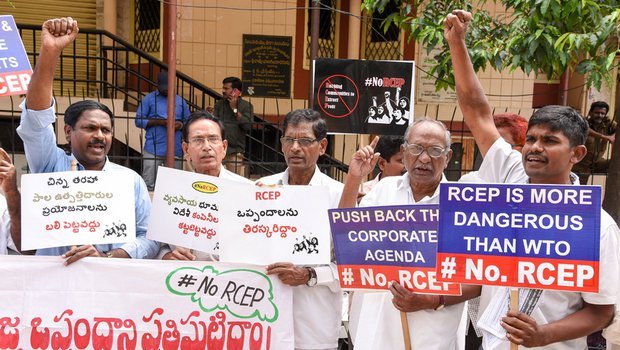
New Delhi, November 4th 2019: Reacting to the developments in Thailand, with countries in RCEP negotiations deciding to go ahead for now without India, farmer leaders in India stated that this is a good development, and that India will not lose in any manner. They reiterated their demand that India stay out of the RCEP deal. “We will not accept any further negotiations by the government, and this is not just about RCEP but other Free Trade Agreements too, including the one being negotiated with USA”, said Yudhvir Singh of Indian Coordination Committee of Farmers’ Movements (ICCFM). Farmer leaders claimed it as a victory of farmers’ movements in India and other movements who kept up the pressure on the Indian government to prioritise citizens’ interests over investors’ and corporations’, through large scale protests and direct actions.

ICCFM had given a call of action on 24th October when widespread anti-RCEP protests were organised by all members of ICCFM in their respective states. From now on, ICCFM will maintain this momentum of opposition to RCEP and other FTAs in coming days till India finally withdraws formally from the negotiations.

“We will not accept this Regional Comprehensive Economic Partnership in any form, and India has to withdraw from RCEP negotiations completely. The government will face increased agitations and resistance from farmer movements otherwise”, warned Yudhvir Singh of Indian Coordination Committee of Farmers’ Movements (ICCFM).

“We are happy that RCEP is for now going ahead without India, but the threat of RCEP has not gone for ever. As per the news reports from Bangkok, it will be finalised at the 36th Round of ASEAN Summit scheduled for February 2020 in Vietnam. Almost every sector in agriculture (including plantation sector), dairy and manufacturing has opposed the RCEP. It is unclear why India should continue to pursue negotiations on this trade deal, for whose benefit. Analysis of the past FTAs is clearly showing that we only have increased trade deficits with FTA partners, after the FTA is signed and implemented. Further, there have been significant price crashes for our farmers. While the government seems to believe that India will also benefit from increased exports, past FTAs have clearly shown that such agreements have not out-performed overall export growth in any manner, and the utilisation rate for what is negotiated for exports is very low. Meanwhile, what the government really has to worry about is the import deluge that we will be subjected to. We should not forget that elsewhere in the world, national leaders are boldly prioritising their citizens’ and country’s interests and walking away from deals being negotiated or even deals made in the past. There is a free trade deal being negotiated between EU and USA which has kept agriculture out of the deal. We demand once again that India stay out the RCEP deal as well as other FTAs for our overall economy’s interests”, said Yudhvir Singh.

The worries of farmers’ movements pertain to direct impacts on milk producers as well as other producers like that of plantation products (oil palm, coconut, pepper, cardamom, rubber, coffee etc). There will be impacts on oilseed producers with cheaper palmolein products from south east asia and threats to wheat and cotton producers too. There are also concerns around farmers’ seed rights and seed freedoms if RCEP pushes India towards a UPOV regime, due the fact that other countries in the pact are already aligned with the UPOV regime of IPRs on seeds. While it is being said that the IPR provisions have been re-negotiated, the threat is not likely to vanish. Concerns around Investor-State-Dispute-Settlement provisions in RCEP, data localisation in the context of e-Commerce etc., persist too.

Also Read: All you wanted to know about the RCEP, the trade deal forming the world’s largest economic block

Kannaiyan Subramanian of South Indian Coordination Committee of Farmers’ Movements (SICCFM) said that the current context of Indian economy as well as the agrarian crisis in the country have to be kept in mind too, when negotiating such deals. “The country is witnessing rapid deceleration in growth of the economy, businesses are shutting down or slowing down, unemployment is on the rise, and farmers’ suicides are continuing unabated. We cannot afford to have any development that has direct or indirect impacts on the rural economy in particular. Farmers are already facing severe price crashes with the government not making good on its meagre price promises. In such a situation, if we reduce and also eliminate import duties on almost all product lines and subject our markets to cheaper produce from elsewhere, how are our farmers expected to survive?”.

“On the WTO front, we already are having a turbulent time. While on the face of it, there is a stalemate in WTO talks, in reality, there have been several adverse developments on this front. India’s food security programmes have come under question, on the grounds that we are breaching the accepted subsidy levels for our rice and wheat producers. Sugarcane subsidies have also come under question and we have been dragged to the dispute settlement body”, explained Rakesh Tikait, national spokesperson, Bharatiya Kisan Union (BKU). “RCEP has to be understood in this context of Indian farmers already receiving a battering in global trade agreements”.

Badagalapura Nagendra, President of Karnataka Rajya Raitha Sangha said, “It is high time that the government put out the various deals that it is negotiating in the public domain. The undemocratic and secretive processes are not acceptable to us. State governments should assert their authority in this context. We also do not buy the argument of the Union Commerce Minister that inefficiencies of our producers cannot be protected any more – what the Commerce Minister is not realising is that other producers are receiving far greater subsidies than Indian producers, and in fact, our farmers have been negatively subsidised. This was also captured in an OECD study last year very clearly. What is also important to realise that reliance on cheaper imports does not help the cause of growth in the country, and will only get us into a vicious spiral of increased unemployment and losses, with our production, and producers’ purchasing power getting affected”.

RCEP is a Free Trade Agreement being negotiated between 16 countries including 10 countries that belong to the ASEAN bloc, along with Japan, China, South Korea, Australia, New Zealand and India. If the agreement gets signed and takes effect, it would cover 47% of the world’s population, about 30% of the world’s GDP, 33% of the world’s exports, would involve 8 of the 10 busiest ports of the world, and 30% of the world’s maritime trade. The deal is not just about commerce, but also about investments, and is expected to account for 32.5% of global investment flows, if sealed. RCEP’s negotiations have been underway from 2013 and 28 rounds of talks have been held so far. With 11 of the 15 partners that India is negotiating RCEP with, the country already has a trade deficit. India has opted to stay out of the deal for now, as per a joint statement issued in Bangkok by the leaders of 16 negotiating partner countries.


Note: The press release issued by ICCFN has been published without any editing.
Chennai wakes up to smog, did Delhi do it? IMD says no, weather bloggers say maybe

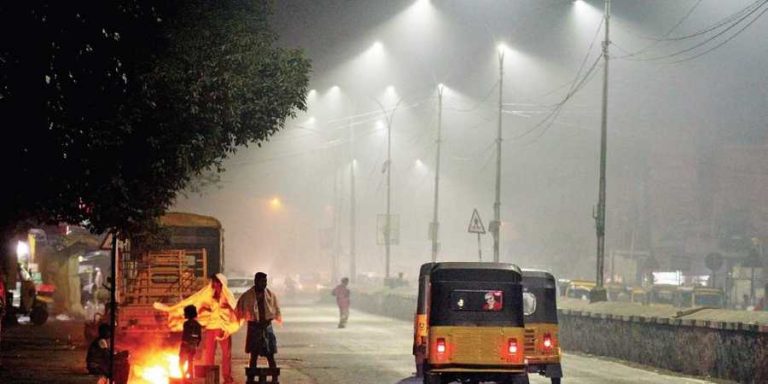
The scourge of air pollution seems to have hit the southern metropolis of Chennai as well as the city woke up to a hazy smog on Monday with PM 2.5 measure registering unhealthy levels. With the national capital being in the news for its worsening climate, the smog cover over Chennai set off alarms for the residents of the city fearing if their city would go the Delhi way.

If weather bloggers are to be believed, there may be a trickle-down effect on the Chennai’s pollution levels due to the acute pollution crisis suffered by the north India.

Weather blogger Pradeep John described that while the recurring problem of stubble burning by farmers in Haryana and Punjab has rarely affected states like Tamil Nadu, this time around it has coincided with the break in monsoon. John has predicted that most parts of Tamil Nadu will be covered with a hazy smog next week because of the pulled air from north India being down towards the southern India.

Read: Why stubble burning suddenly became such a huge problem in recent years around Delhi, a few reasons

The dispersion models of SILAM vindicated John’s stands showing that smoke plumes were traveling east from Delhi into the Bay of Bengal, and from there drifting towards Chennai and other parts of Tamil Nadu.


According to the experts, in the absence of north-easterly to easterly winds in the Bay of Bengal, which are mainly responsible for bringing seasonal rains to Chennai and Tamil Nadu, the polluted north-westerly winds from the north west India are moving towards the south and blowing into Chennai and along the south-eatern coastal line.


As a result of the above phenomenon, Chennai and major parts of southern India might experience a delay in the seasonal rains and increased pollution levels.

However, the Indian Meteorological Department (IMD) appeared to disagree with the opinion of the weather bloggers. The IMD says that it is impossible for polluted air to travel from Delhi, which is about 30 degree latitude. The deputy director general of the IMD, S Balachandran asserted that the pollution in Delhi has absolutely no impact on Chennai.

The former head of IMD, Chennai, YEA Raj said, “During northeast monsoon, Chennai has easterly, northeasterly and southeasterly winds. So if there is something wrong in the ocean, that air could get pushed towards Chennai. Also, during southwest monsoon, if Bengaluru has polluted air, there are chances of it drifting to Chennai due to the westerlies. Otherwise, the surface level air parcel moving from Delhi to Chennai is not possible during northeast monsoon.”

SC questions the logic of odd-even rule in Delhi, asks Kejriwal government to furnish data of its actual impact

The Delhi government led by Arvind Kejriwal faced the scrutiny of the Supreme Court today as the apex court questioned the Aam Aadmi Party government on its implementation of the odd-even scheme as a measure to curb the choking air pollution in the national capital.

Reportedly, the apex court pulled up the Delhi government by questioning the achievement of Arvind Kejriwal’s ‘odd-even scheme’ and asked the government to furnish figures regarding the impact of the road rationing.

“What is the logic behind the odd-even scheme? Banning diesel vehicles we can understand, but what is the point of the odd-even scheme?” asked Justice Arun Mishra.

“People have to travel. You are not stopping travel. What do you achieve by stopping cars?” said SC bench comprising of Justices Arun Mishra and Deepak Gupta, who are hearing a plea by the pollution control body Environment Pollution Control Authority on stubble burning in neighbouring states like Punjab and Haryana.

Justice Mishra asked Delhi government why it has put restrictions on private cars while exempting autos and taxis. He added that these autos and taxis will ply more and pollute equally when people are not using their private vehicles.

Reprimanding the Delhi government, Justice Gupta stated that it would make sense if the government’s debate was based on cars and buses. “It would make sense of you were saying cars vs buses. The solution is single-person-use vehicles against mass-use vehicles. You have only added some 100 buses to public transport. People don’t even want to use Metros. The Metro to the Airport runs empty most of the time,” added Justice Gupta.

The Supreme Court directed the Delhi Government to produce data or records to prove that the odd-even scheme has reduced pollution in Delhi by November 8, even as autos and taxis continue to ply the roads.

Earlier, the SC had warned the Centre as well as Delhi government regarding the air pollution in the national capital and said the city is choking, but both the governments are simply passing the buck. Taking a strong note of the situation, the apex court said, “Delhi chokes every year, but we haven’t been able to do anything.”

Read: Delhi reels under horrific levels of pollution, AQI levels cross 900 in some places, flights affected

“Every year this is happening and continues for 10-15 days. This can’t be done in civilised countries. Right to life is most important. It’s not the way we can live,” the court said while directing both the Delhi government and the centre to take the requisite steps to curb the situation.

“This is too much. There is no safe place to live in this city, even in homes are not safe. We are losing precious years of our life due to this,” the court added.

How realistic is Prime Minister Modi’s target of making India a $5 trillion economy by 2024

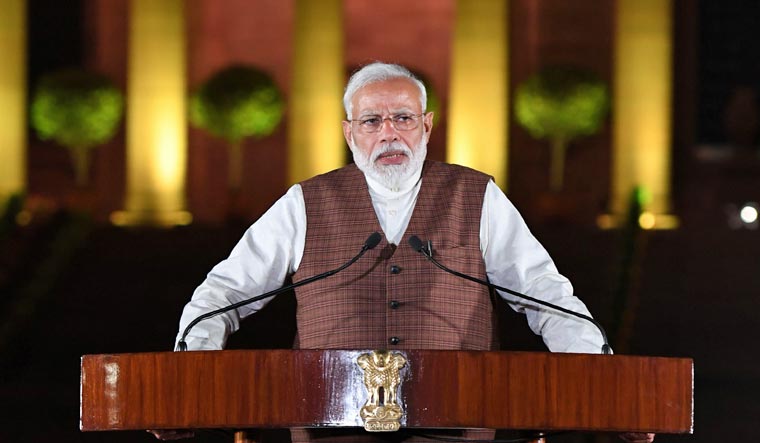
India’s Prime Minister Mr Narendra Modi has declared his vision of making India a $5 trillion economy by 2024. The hallmark of visionary leaders is that they set audacious targets and then achieve them. However, the roadmap to achieve this goal is not devoid of its share of challenges. A deeper look into the current economic situation and required growth rates to achieve this milestone would reveal that this would be a “stretch goal” which is achievable but not without significant action on economic reforms.

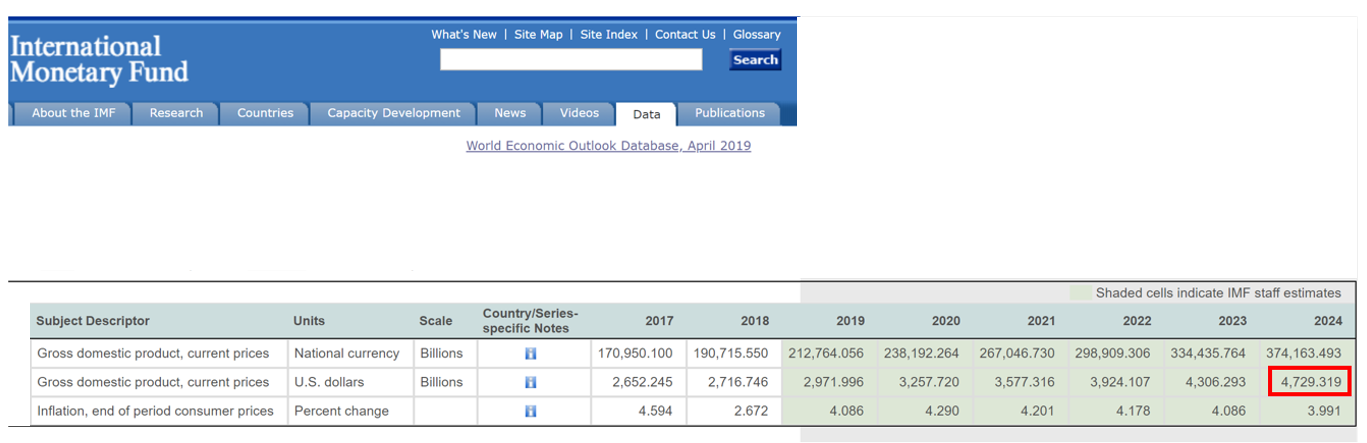
As per the published data from the International Monetary Fund (IMF), India’s GDP in 2018 was $2.7 trillion. IMF forecast for India’s GDP in 2024 is $4.7 trillion. These estimates are in-line with Morgan Stanley which forecasts India’s GDP to touch $5 trillion by 2025.

Source: IMF database

The INR/USD exchange rate assumed by the IMF for future years in the above analysis is shown in the table below. The green cells contain data taken from IMF and white cells show the calculated values.

INR/USD currency exchange rates assumed in IMF estimates

From the IMF estimates above, it can be inferred that if –

  • India’s nominal GDP grows at about 11.8% per year
  • and inflation hovers at around 4% to 4.2% per year (hence real GDP growth = 7.6% to 7.8% per year)
  • and INR depreciates at no more than 2% per year (INR/USD exchange rate in 2024 is less than 79)

Then India’s nominal GDP would be approximately $4.7 trillion in 2024.

The size of the economy in 2024 could exceed $4.7 trillion, if the GDP growth rate picks up or if Rupee stays stronger than the above estimates. For example, if real GDP grows at 7.6% per year, but the currency exchange rate in 2024 stays at the levels of INR 75 per USD then nominal GDP would hit $4.9 trillion in US dollar terms.

Challenges

Unfortunately, the global economy is currently going through a slowdown as all major economies of the world are facing headwinds. As of 2019, USA is facing an economic slowdown. China’s GDP growth is at 27 years low and Industrial Output is at 17 years low. Germany is facing a recession (not a slowdown of growth, but actual CONTRACTION of the economy). France’s growth is declining across industries. In Britain, investments are down to 17 years low. Japan’s factory output has slumped. Australia’s GDP growth is at 20 years low. Singapore is facing a recession. South Korea exports are down for 8 consecutive months and the world economy is expected to grow at its slowest pace since the financial crisis of 2008.

With all major economies of the world going through turbulence, India’s economic growth is expected to face a temporary slowdown too. During such scenarios, exports may find it tough to rise and investments may dry down which would make the target even stiffer.

Opportunities

At the same time, the ongoing US-China trade war can be potentially leveraged as a huge one-time opportunity. Towards the year 1999, the global issue of Y2K migration had presented an opportunity that was seized with both hands by the Indian IT companies. That one-time window of opportunity helped nascent Indian IT companies to grow by leaps and bounds and become global behemoths. The current US-China trade war presents a similar opportunity that could potentially help India’s Manufacturing sector grow rapidly.

As per USISPF, hundreds of companies are currently looking to relocate their manufacturing base from China. Elon Musk had expressed his desire to start Tesla Manufacturing in India. If Government of India could swiftly come up with policy reforms for companies looking to start manufacturing in India, it could lead to the rapid expansion of India’s Manufacturing sector with large scale job creation, increased exports and rapid economic growth.

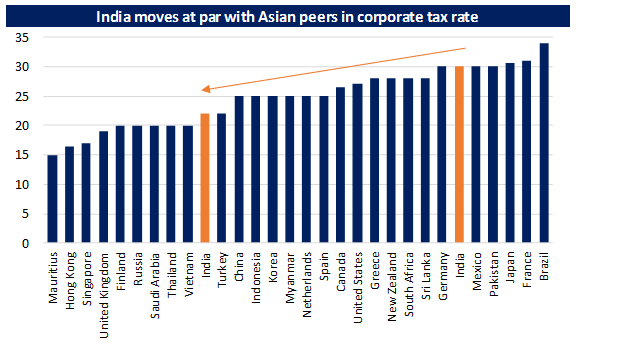
Structural reforms like IBC, GST and others have helped India jump World Bank’s Ease of Doing Business rankings from 142 (in 2014) to 63 (in 2019). That’s a quantum jump signifying a marked improvement in starting new businesses in the country. In another favourable policy change, the government has slashed corporate tax rates from 30% to 22% for existing companies and from 25% to 15% for new manufacturing companies. Including a surcharge and cess, the effective tax rate for existing companies would now come down from 35% to 25.17%. This makes India a highly attractive investment destination for companies looking to set up manufacturing.

Source: moneycontrol

In a continued slew of reforms, the government may also announce a dedicated relationship manager for any entity investing more than $500 million in India. Such an officer would help the investor with all government clearances at the centre and state levels.

The Road Ahead

The above steps show the government’s intent to fuel economic growth. However, while the above are necessary, they may not be sufficient by themselves. As the above analysis illustrates, an aggressive increase in exports is not only the key to boost economic growth but would also strengthen INR to propel the nominal GDP even higher.

For the last few years, India’s exports have stayed stagnant. Recently, a government panel has reported that an Exports growth rate of 10% is achievable. It requires India to reduce the cost of capital and introduce labour reforms that facilitate easier business expansion. Making labour laws more flexible would enable firms, particularly in labour-intensive sectors, to scale up rapidly. This would create more jobs in the MSME sector which is traditionally the backbone of the Indian economy for sustainable growth, employment generation, development of entrepreneurial skills and contribution to export earnings.

Another recommendation to increase exports is through a renewed focus on Free Trade Agreements (FTAs). In that direction, it might be worthwhile to consider that by early November 2019, India may sign up RCEP (Regional Comprehensive Economic Partnership) deal. RCEP is a Free Trade Agreement between ten ASEAN countries along with six additional members that include India, China, Australia, New Zealand, Japan and South Korea. In the currently proposed form, RCEP would be the world’s largest economic bloc, covering nearly half of the global economy.

Read: All you wanted to know about the RCEP, the trade deal forming the world’s largest economic block

RCEP requires member countries to provide duty-free access to their markets to each other. This makes RCEP a double-edged sword. While some trade organizations in India fear that this might help Chinese goods to flood Indian markets, the treaty also has its benefits for Indian exports. For agricultural products like rice, India has a competitive advantage and RCEP would open up ASEAN countries as a new 10 million tonne market for India. The treaty would also enable Indian industry to join global supply chains for high-end goods such as electronics and engineering.

Additionally, the government is also pursuing a limited trade deal with the USA to reinstate GSP (Generalized System of Preference) for India. GSP is the largest US trade preference programme and is designed to promote economic development by allowing duty-free entry for thousands of products from designated beneficiary countries.

If India signs up RCEP and the limited trade deal with the USA, then it might provide a significant opportunity to increase exports in the coming years. It would also compel Indian manufacturers to create globally competitive products for local consumption and exports, lest they lose out to cheaper imports from China, Vietnam and South Korea.

Summary

The key to hitting the $5 trillion mark is increasing exports, reducing the cost of capital and bringing flexible labour laws. While the government has taken some steps in the above direction, more action on economic reforms is still required.

Eventually, whether India’s nominal GDP reaches $5 trillion by 2024 or is stuck at below $4.7 trillion is dependent on how the various global factors play out and how the Government of India rolls out economic reforms to propel the economy.

Watch: The moment when terrorists threw grenade in Srinagar market which claimed one life, injured 22

0

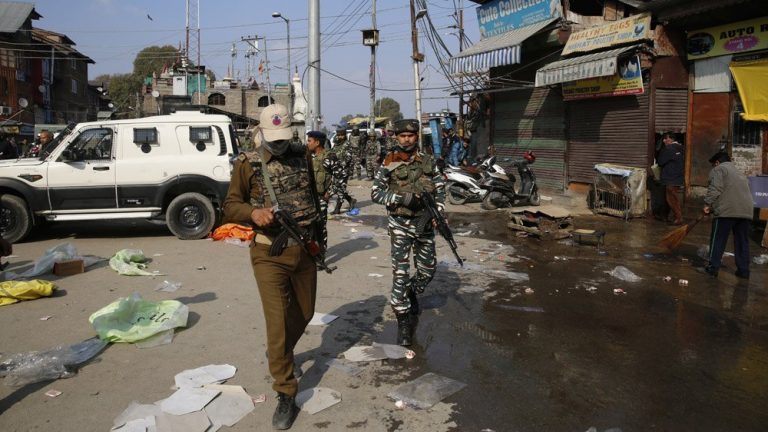
One civilian was dead and as many as 22 people were left injured when terrorists threw a grenade in Maulana Azad road market in Srinagar.


As per DNA report, at least 22 people were injured and one person lost his life. As per initial reports, the terrorists came on a bike and threw a hand grenade on a busy market spot. The injured include at least 3 SSB personnel. One Rinku singh of Saharanpur has succumbed while two locals Aijaj and Fayaz Ahmed are critical.

Read: A day ahead of EU delegation’s visit to Kashmir, terrorists lob grenades at bus stop injuring 20 civilians

On 28th October, terrorists had thrown a hand grenade in Iqbal Market area near Sopore bus stand in Baramulla, Jammu & Kashmir.

Hooliganism of Delhi lawyers continues, now an on-duty policeman assaulted near Saket District Court

0

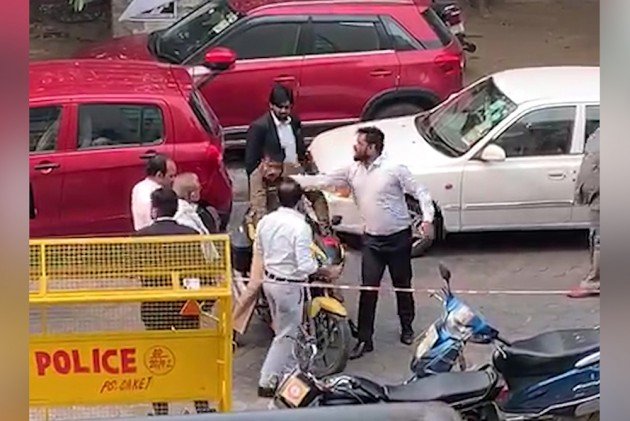
The lawyers in Delhi appear to be on a violent rampage as they indulged in yet another scuffle with a policeman near the Saket district court in Delhi. A shocking video showing the lawyers assaulting an on-duty bike-borne policeman is now doing the rounds on the Internet.


In the above video, the lawyers can be seen unleashing crude hooliganism against the police official by slapping him and later throwing a helmet on him. The unfortunate policeman, in a bid to save himself from further beating at the hands of the lawyers, takes a u-turn on his bike and escapes away.

As per latest reports, clashes between lawyers and police has now reached another court premise in Delhi. On Monday, lawyers at Delhi’s Karkardooma court reportedly beat up a policeman and have misbehaved with a woman journalist. Social media posts also say that common men, including litigants and some court staff members, have been attacked by the lawyers too.

The incident happened a day after another appalling video of a fight between lawyers and Delhi police personnel had emerged. Earlier yesterday, a fight broke out between lawyers and policemen near the premises of Tis Hazari court, with lawyers reportedly taking law into their own hands and beating up policemen. In response, the policemen also unleashed violence against the lawyers injuring two of them.

Watch: Delhi lawyers spat with journalists, push and shove a woman journalist when questioned about yesterday’s scuffle with Delhi Police

According to the reports, the incident began around 3 pm on Saturday when a policeman of the Delhi Police got into an altercation with a lawyer over parking his car outside the jail lockup, a space reserved for jail vans. However, the argument flared up when a group of lawyers who were campaigning for the bar council elections got into a heated exchange with the police.

This was not enough. The lawyers also manhandled a journalist when they were asked about the incident. When questioned about their behaviour with the policeman at Tis Hazari court, Delhi lawyers got into a verbal spat with ANI news agency journalist Aiman at St Stephen’s hospital. Some lawyers even pushed and shoved a woman journalist when she tried to ask questions to Delhi Chief Minister Arvind Kejriwal who had gone to meet the injured lawyers at the hospital. Delhi Chief Minister Arvind Kejriwal met the lawyers at the hospital who were injured and said that the Delhi Government will bear the expenses of their treatment.

All you wanted to know about the RCEP, the trade deal forming the world’s largest economic block

The Congress party’s attack on the proposed RCEP agreement continued with former president Rahul Gandhi tweeting an article by The Wire alleging that the FTA will flood India with cheap goods. He tweeted that this will result in millions of job losses and will cripple the economy. Before this Sonia Gandhi had alleged that the RCEP deal with China will deal a body blow to the Indian economy. “We can ill-afford to become a dumping ground. India being made a dumping ground of Chinese goods is catastrophic. In the past 72 years, no country has signed FTA with China,” she had said.

The government, on the other hand, is denying these allegations and said that the proposed agreement will be beneficial to India. The central government has also said that India’s trade deficit with other countries has been increasing as a result of various Free Trade Agreements (FTA) signed by previous UPA government. The FTAs signed with most countries have proved to be unfavourable for India, as a result of which India’s trade deficit doubled since 2011 to ₹12.86 trillion in 2018-19.

Government claims that the RCEP agreement will be far better placed to protect domestic interests than the previous deals signed by the Congress government with ASEAN bloc, and interest of domestic industry and the people of India will be protected before entering into any free-trade agreement.

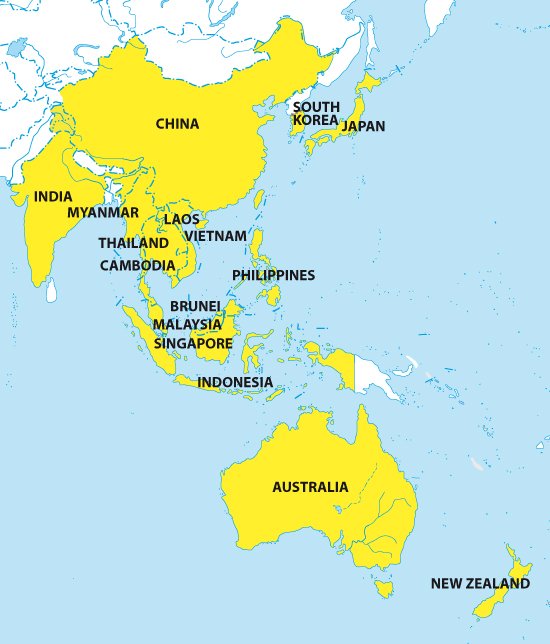
The Regional Comprehensive Economic Partnership (RCEP) is a proposed free trade agreement (FTA) between the ten member states of the ASEAN (Association of Southeast Asian Nations) and its six FTA partners. The ASEAN members are Brunei, Cambodia, Indonesia, Laos, Malaysia, Myanmar, the Philippines, Singapore, Thailand, Vietnam, and the six FTA partner states are India, China, Japan, South Korea, Australia and New Zealand.

RCEP
Map of RCEP member countries

The negotiations for the formation of RCEP had started in 2013, and India had joined the discussions at that time itself. This means that the preparations for joining the RCEP had started during the Congress-led UPA government. Then prime minister Manmohan Singh had attended the ASEAN summit held in Cambodia in November 2012, where the RCEP negotiations were formally launched.

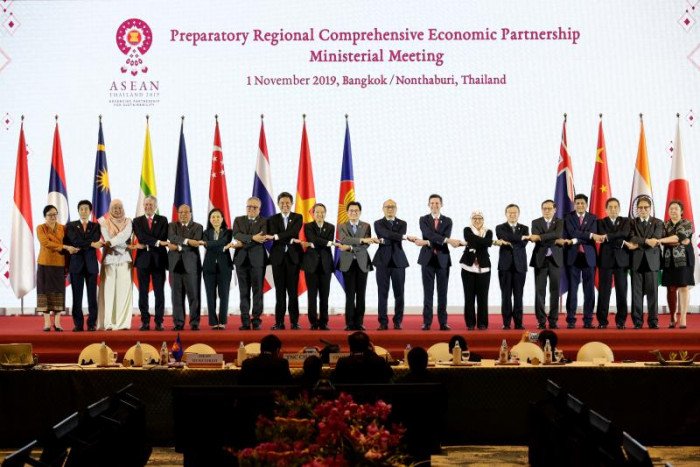
All sixteen members of the RCEP aim to finalise the RCEP deal by November this year, for which Commerce Minister Piyush Goyal is in Bangkok for the eight RCEP ministerial meeting.

When formally finalised, the RCEP will be world’s largest economic block, covering nearly half of the global economy. It is estimated that by 2050, the GDP of RCEP member states is likely to be around 250 trillion USD, with the combined GDPs of India and China making up more than 75% of the amount. The RECP is planned to create an integrated market which will make it easier for trade in products and services among the member countries. The RCEP’s objective is to remove trade barriers and improve market access for businesses in the region.

The proposed RCEP would cover almost every aspect of the economy such as goods, services, investment, economic and technical cooperation, intellectual property rights (IPR), rules of origin, competition and dispute settlement.

Also Read: Congress messed up the FTA they signed and are now blaming others

The RCEP will provide the Indian industry with a large market with low trade barriers. Industries that are competitive will certainly benefit from it.

As the RCEP, like any FTA, involves removing trade barriers, several domestic industries in India are worried that there will be a negative effect of the agreement on them, as they expect that goods from the member countries will be available at cheaper rates in India due to this. Several sectors like dairy, steel, automobile, textile etc are worried about the deal. Most apprehension is the result of China being a part of the RCEP, the global manufacturing powerhouse with whom the Indian manufacturers can’t compete.

Indian industry was not able to take the benefit of the previous FTAs that India signed with other countries, leading to India importing more than its exports to the FTA partners. India’s trade deficit with several countries went up after FTAs were signed with them. And that’s why several industry players are not very optimistic about the RCEP deal.

Due to such apprehensions, India is seeking several changes to the deal, which is delaying the formal signing of the RCEP. It was supposed to be finalised during the ongoing ASEAN meet in Bangkok where PM Modi is present, and while the rest 15 nations are ready with the agreement, India is not ready to sign it yet. According to reports, India is particularly not ready to reduce or eliminate the tariff on several items, fearing threat of cheap imports from China.

India also wants that the base year for determining tariff should be 2019, the year when the deal is going to be finalised, but other nations want it at the 2013 level, when the RCEP talks had started. India had raised tariffs on several items in 2014, which means if 2013 levels are accepted, India will have to accept lower customs duties.

India also wants an auto-trigger mechanism, where in case of a sudden surge in import from a particular country due to the agreement, it can decline the concessions on tariff for some products as per its decision.

There are several other issues where India is seeking modifications of the terms of the agreement, and that’s why more rounds of talks will take place before a final decision is arrived at.

According to some reports, the RCEP members are split over India, while some want to conclude the deal without India, others don’t want a RCEP without India. Malaysia, which is had criticised India over the Kashmir issue, wants to finalise the deal, but the key countries in the ASEAN bloc are not willing to form the RCEP leaving India out.

If India fails to agree with the terms, the rest 15 countries may move ahead and sign the deal without India. That will mean that India will not have to lower tariff for these countries, but it will also mean that Indian industry will not have easy access to this huge market as there will be high trade barriers for India’s exports. So, it is a decision India has to make, whether the country wants access to a huge international market, or whether it wants its domestic market remains protected.

Defending the RCEP, Commerce Minister Piyush Goyal has said that India cannot stay isolated in a globalised world and that it cannot stop its engagements and trade with the rest of the world. “If India remains out of RCEP, we will be left isolated from this large trading bloc. The trade among RCEP countries is about $2.8 trillion. If India sits outside RCEP, whether it is in our interest or against our interest, it is also the responsibility of the government to see. You will want us to engage to find solutions which is in national interest,” he said.

Uttar Pradesh: Mansoori community in Kaushambi villages protest against construction at cemetery land, claim forceful occupation by land mafia

0

Tension has gripped the area after an alleged group of land mafia began some construction work in a particular cemetery, belonging to the Mansoori community, near the Idgah (the place where mass prayers are offered by the Muslims) in Ansarganj locality falling under Kaushambi district in Uttar Pradesh, which had been forcefully occupied by them a few days ago.

This cemetery, which is believed to be the ancestral graveyard of the Mansoori community was forcefully occupied by the land mafias a while ago. The Mansoori community, spread across several villages like Purva, Turtipur, Rahimpur Molani uses the Ansarganj cemetery.

Tension arose when the intruders allegedly started some construction work on the land two days ago. Local residents belonging to the Mansoori community, namely Aashiq Ali Mansuri, Hasan Ali Mansuri, Rafiq Ahmad Mansuri, Mushtaq Ahmad Mansuri, Hasim Ali and Ahmed Ali have begun protests against this alleged forceful occupation and illegal construction in what they believe to be their ancestral property.

They have approached higher officials with complaint letters wherein they mentioned that the cemetery land has belonged to the community for several generations. The community has claimed that the graveyard also finds mention in local revenue records as the property of the community.

The community has alleged tha the land mafia has occupied the land by force and have now started construction at the site.

Judging by the tensions that gripped the area following the illegal occupancy and alleged construction in the graveyard, SDM Rajesh Chandra has ordered to maintain status quo until any further notice.

Road to Ram Janmabhoomi, Ayodhya: How Hindus fought for Shri Ram

As we stand at the cusp of the Ram Janmabhoomi verdict, it is important to recall what happened 29 years back and how Hindus fought for Lord Shri Ram. The incidents that happened in Ayodhya in the last days of October and the 1st four days of November 1990 have left an indelible mark in the history of India.

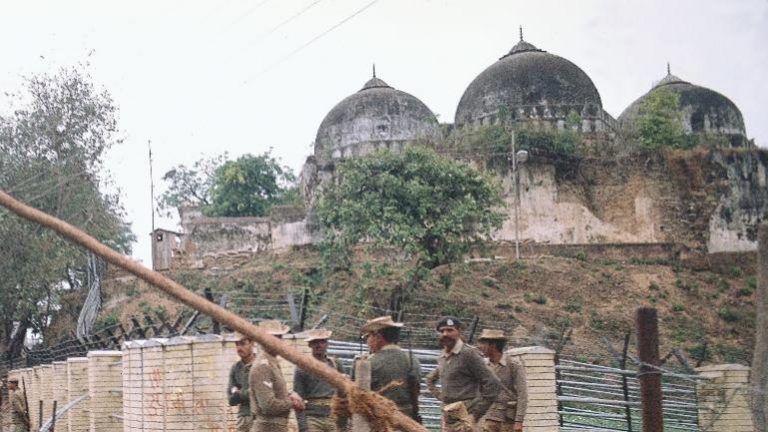
The incidents of October 1990 made Mulayam Singh and his administration jittery. Despite all his efforts, thousands of Karsewaks reached Ayodhya. Over 2 lakh Karsewaks were arrested in various cities, on the way to Ayodhya. All borders to Ayodhya and even neighbouring districts were sealed. The annual Panchkosi and Chaudah Kosi parikrama were stopped by the administration despite orders of the High Court which said parikrama should be allowed. These are the most important pilgrimage in the city where millions come every year. All big Sadhu-Sants along with many BJP, RSS and VHP leaders including Shankaracharya of Jyotishpeeth were arrested on way to Ayodhya.

Read: Former ASI regional director KK Muhammed explains why Muslims should voluntarily hand over the land at Ayodhya to Hindus

The role of Mulayam Singh and his administration has been the vilest and proved to be most brutal over the years. The administration even tried to demolish the Shilanyas mandap at Janmasthan in Ayodhya and even remove the Vigrah of Ramlalla from the place. The role of the Central Ministry of Home Affairs was also suspicious. While a section of BSF and CRPF soldiers deployed in and around Ayodhya came down brutally on Karsewaks, there was a big section which actually was sympathetic towards them. This sympathy was probably one big reason why despite all the bans, Karsewaks and leaders were successful in reaching Ayodhya in such big numbers.

Karsewaks entered the Janmasthan complex on 30th October 1990 and moved towards the dome. Some climbed up the dome and even hoisted the Bhagwa flag on the structure. Two of them were immediately shot at by the forces. Many Karsewaks were murdered by forces during the Karsewa and their bodies were dumped into Sarayu river. Many such dead bodies were discovered by Sadhus and Karsewaks for many following days.

Read: Babri Masjid demolition: Pride or shame lies in the eyes of the beholder. Here is why people can be proud of it

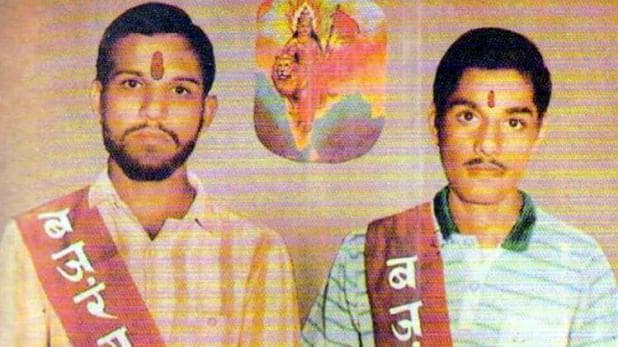
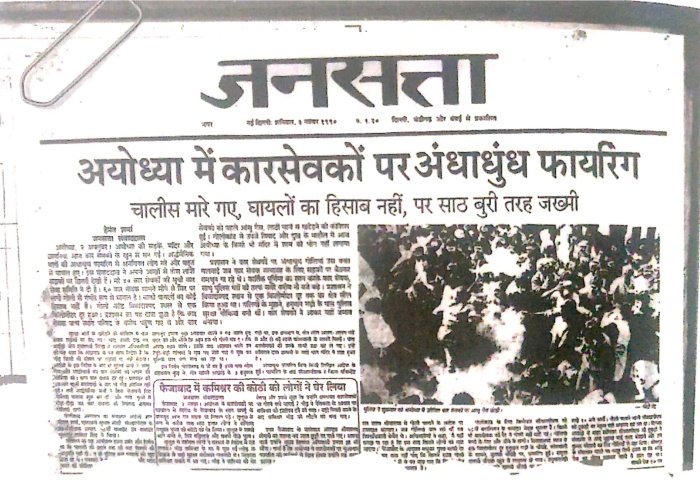
2nd November was the most dreadful day. Almost 40 people were killed in police firing and more than 100 were gravely injured by bullets shot in head or chest. Sharad Kothari and Ram Kothari, the brothers who were part of the team who climbed atop the dome were shot in cold blood after being dragged out from a mandir they were sitting in. Sitaram Kori, a Karsewak from Jodhpur was shot in the head for picking a teargas shell from the road and putting it a drain nearby, according to Hemant Sharma’s book, ‘Ayodhya ka Chashmadid’. Karsewaks was shot in chest and head that too without any provocation. Senior Journalist Hemant Sharma writes in his Book ‘Yuddh me Ayodhya’ how a sadhu was shot when he was throwing water on Karsewaks who were suffering from the impact of teargas.

Jansatta news article after the firing on Karsevaks

Another aspect of the handling of the movement by the government was the brut force by which the government brushed the media aside. Almost no big Hindi newspaper was allowed to publish or distribute in Ayodhya and the neighbouring districts. Those papers which were published, their all copies were confiscated by police from their offices and hence wasn’t allowed to get distributed. Many editors faced police action for publishing newspapers. Cases were filed against them. The Chief Secretary and DGP categorically denied any type of firing in Ayodhya, which was nothing but a plain lie.

Read: Hindus have been demanding restitution since 1528 for the Ram Temple destroyed by Islamist barbarians, Rajeev Dhavan

3rd November 1990 saw an unprecedented incident, unique in the history of India which has been recorded in the book by Hemant Sharma. Wives and children of administrative and military officers led a big demonstration and did gherao of the residence of the Ayodhya Commissioner. They were demanding that the action against Karsewaks should be stopped immediately. They told their husbands to not follow orders of Mulayam Singh govt and not become part of his evil plan. They were carrying placards ‘General Dyer Mat Bano’ and ‘Karsewako ki Hatya Band Karo’. They sat for hours and finally decided to leave only after assurance that action against Karsewaks will be stopped at the earliest.

In 1990, Ayodhya saw the blood of Karsevaks being spilt and much more. 29 years have passed since then. Now we are looking at the judgement which will be a culmination of a 491-year-long struggle, which started in 1528. A struggle that claimed the lives of many. Many, like the Kothari brothers.

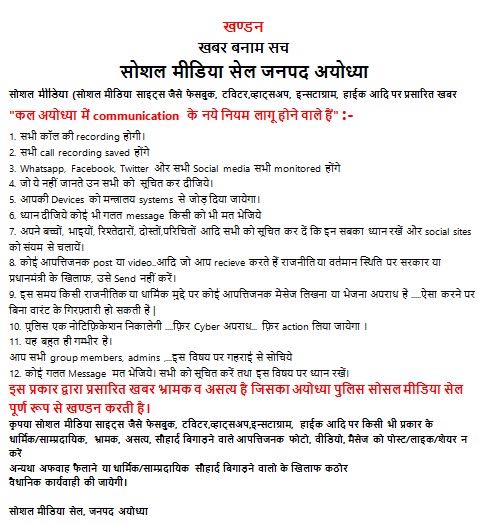
Ayodhya police issue circular, dismiss snooping, call recording rumours ahead of Ram Janmabhoomi verdict

Ahead of the apex court’s judgment on Ayodhya dispute which is expected before November 17, the Ayodhya police have scotched the rumours that are doing the rounds in the run-up to the much-awaited verdict. The police have rejected the claims surrounding the communication regulations being implemented in the city just before the court pronounces the verdict.

Ayodhya Police have dismissed rumours being circulated on social media

Issuing a clarification, the police dismissed the several baseless rumours doing the round on the Internet. Rumours such as communication in Ayodhya will be monitored by the police, phone calls will be recorded, social media websites such as Twitter, Facebook activities of the individuals will be tracked, mobile phones of Ayodhya residents will be connected to Mantralaya system are being passed on to incite panic among residents.


The rumours also declared that police will be closely monitoring the messages being exchanged, videos and audios being shared on Whatsapp and other social media websites and thus suggested the users exercise restraint in sharing any objectionable or contentious content to others.

However, the Ayodhya police media cell has rejected the rumours saying that no such communication guidelines have been issued by the police and the rumours that are being proliferated on the social media websites are completely baseless and entirely misleading. It further warned the people that strong action will be initiated against those who are found sharing lies, rumours, communally sensitive messages, photos or videos.

Read: Section 144 imposed in Ayodhya in anticipation on Ram Janmabhoomi case verdict as the hearing enters its last week

The hearing of the long-drawn Ayodhya dispute ended on October 16, 2019, after arguments made by all the contending parties concluded in the matter. The 5-judges bench headed by Chief Justice of India- Ranjan Gogoi is expected to deliver the verdict before November 17.