Home Blog Page 6282

Watch: Hanuman Chalisa and chants of ‘Jai Shree Ram’ reverberate in Hauz Qazi Durga Mandir that was earlier desecrated by Muslim mob

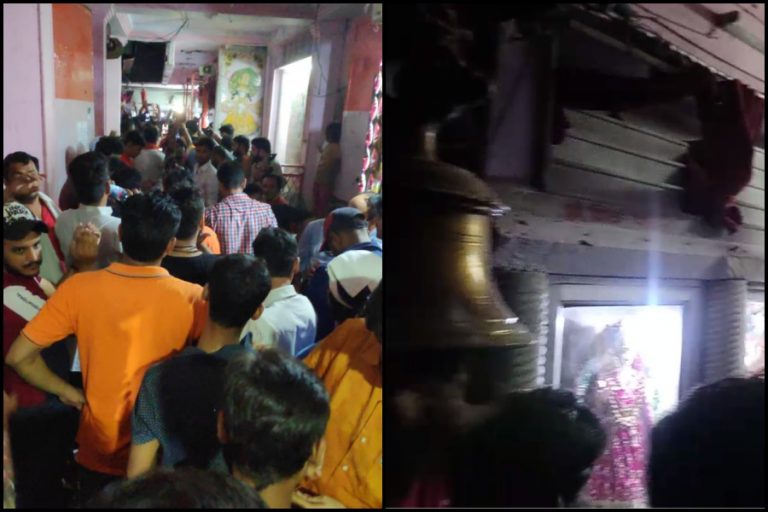
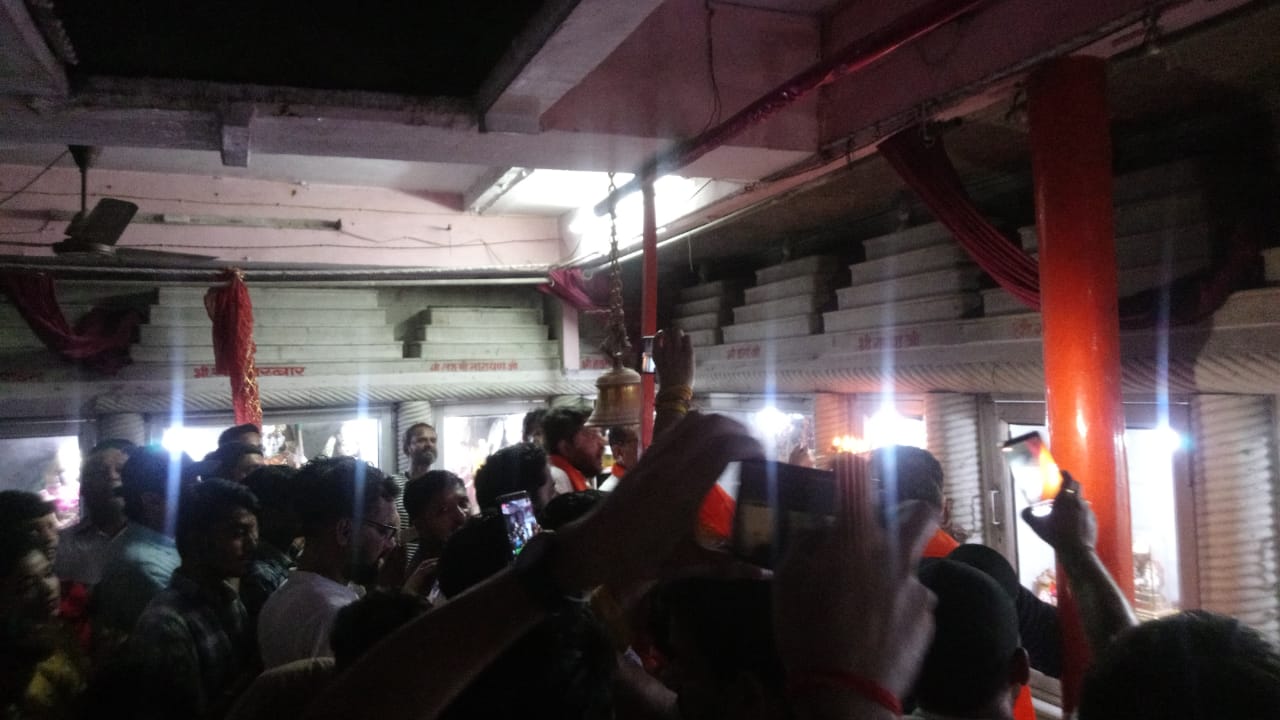
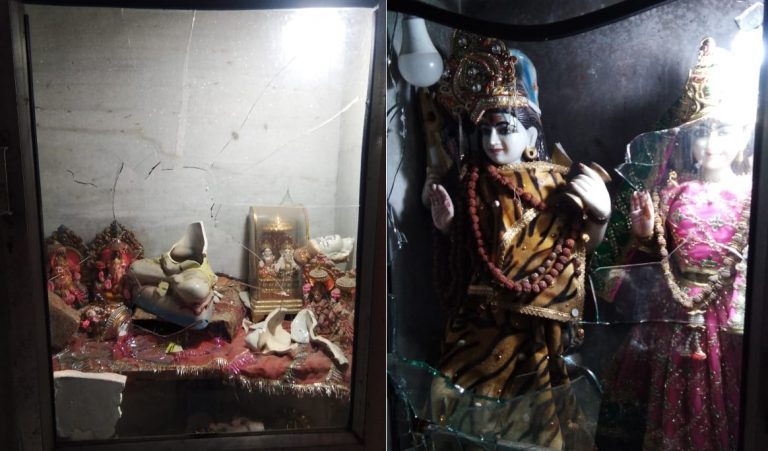
On 30th June 2019, Durga Mandir in the heart of Hauz Qazi, Delhi was desecrated by a strong Muslim mob. The idols of the temple were broken and according to the local Hindus of Hauz Qazi, the miscreants urinated in the temple as well. After communal tension simmered in the area for days, Hindu activists today organised a prayer event and recitation of the Hanuman Chalisa at the Durga Mandir that was earlier vandalised.

[youtube https://www.youtube.com/watch?v=EKCBq2HksEw]

[youtube https://www.youtube.com/watch?v=EwS7uWYQ_dM]

[youtube https://www.youtube.com/watch?v=fb1tQGvm9-Y]

Over 300 activists congregated at the narrow bylane in Hauz Qazi that is fondly called the Durga Mandir Wali Gali. Chants of Jai Shree Ram reverberated through the lanes.

[youtube https://www.youtube.com/watch?v=dq1TYZdNHWY]

[youtube https://www.youtube.com/watch?v=YV9H96Oyui8]

Earlier in the day, the main organiser of the event, a Hindu activist called Aviral Sharma was detained by the local police in a bid to allegedly intimidate him into cancelling the event.

After pressure to release Aviral built up and the activist refused to cancel the event, he was let go by the Gokulpuri police station.

After his release, Aviral had taken to Twitter to invite activists yet again inviting fellow Hindu activists to join him at Durga Mandir, Lal Kuan at 7 PM for the prayer event.


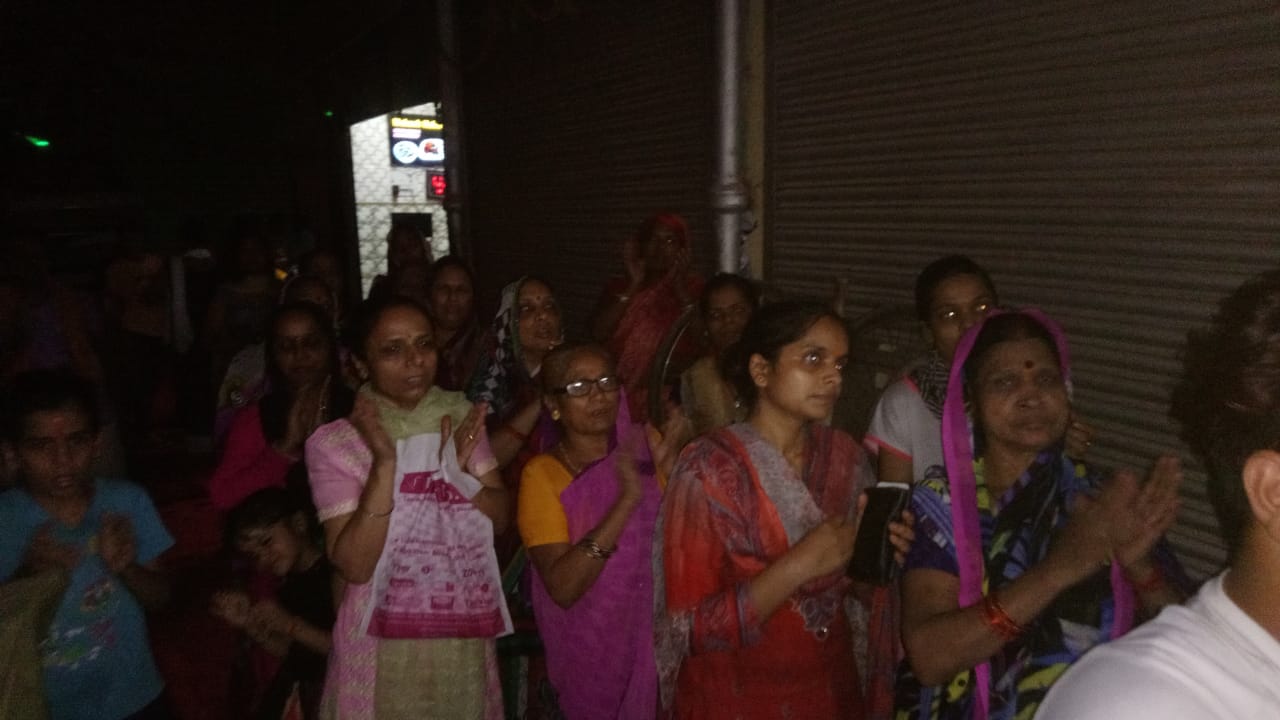
The prayer event was enthusiastically attended by not only the activists but also the Hindu residents of Durga Mandir Wali Gali.

Nine people have been arrested in connection with the desecration of the Durga Mandi in Hauz Qazi in Delhi’s Chandi Chowk area. Out of them, four have been identified as juveniles. The communal tension in Hauz Qazi was triggered by a skirmish caused by an argument over parking. When the argument over parking in the area became intense, some people started pelting stones. Later in the night a mob entered the temple and vandalised it. The police have confirmed that Muslim youths in the area attacked the temple.

Delhi: Condition of the 6-year-old minor girl who was brutally raped by Mohammed Nanhe remains critical

On July 2, 2019, one Mohammed Nanhe carried out a brutal sexual assault of a 6-year-old girl in the National Capital’s Dwarka-Sector 23 and later abandoned her. The victim was abducted from near her house and taken to an isolated place where the accused raped her. The minor was found lying in a pool of blood by a passerby in the bushes adjacent to a road and was rushed to Deen Dayal Upadhyay Hospital.

The victim was later shifted to Safdarjung Hospital. The condition of the girl remains fragile as she has sustained serious injuries in her private parts, including ruptured veins. Doctors have also claimed that there were bite marks on her stomach.

However, four days since the terrible tragedy befell her, the condition of the little girl continues to remain very critical. Her inconsolable father lamented, “I heard about Delhi a lot. I came here to earn bread and butter for my family. What have I achieved! My little girl is unable to speak. All she could speak is Papa-Papa. She is unable to speak anything else.”

He further added the condition of the girl is so fragile that she couldn’t speak anything to the judge when he had come to record her statement. The judge said he would come later to record the statement.

Delhi CM Arvind Kejriwal expressed his anguish over the shocking incident of the rape of a minor girl in the heart of the nation’s capital. He also assured the victim’s father of every and all manner of support and cooperation from the Delhi government along with Rs 10 lakh as compensation and a reputed lawyer for getting the culprit punished and setting an example for others.


According to media reports, the girl was going to a temple when she was lured by the accused. The police found a CCTV in the area of crime, which caught the face of the accused. With the help of this footage, Delhi police identified and nabbed the accused. Nanhe lived in the same locality as the little girl. He has reportedly confessed to his crimes to the police.

Here are 10 incidents of Temple desecration and sacrilege across the country since June 2019

On the 30th of June, a Temple in Old Delhi was desecrated by a Muslim mob on a rampage. It created quite the stir as it occurred at the National Capital. However, Temple Desecration occurs far more frequently than we would like to imagine. In this article, we document desecration of Temples across the country and attacks on them that have occurred since June, 2019.

1. Banda Veer Bahadur Singh Bairagi Statue and Kishordas Temple Desecration, Haryana

On the night of 3rd June, antisocial elements attacked Kishordas Temple at Khada village and also the statue of the Warrior. The legs of the horse statue at the Temple were smashed and the elements removed the sword from the Warrior’s hands and threw it aside. The religious sentiments of the villagers were hurt and it was suspected that the crime was committed with the communal atmosphere in the village.

2. Murtis vandalized, Bijnor

A few hours after Murtis at the Chamunda Mandir in Sabdalpur Teli village were vandalized by antisocial elements in the second week of June, Murtis in the Shiv Mandir at Pipalsana village were vandalized. The religious sentiments of the villagers were naturally extremely hurt as a consequence. The Police promised that the perpetrators will be identified and punished accordingly.

3. Murtis vandalized, Haryana

In Mitrol village at National Highway No. 19, Murtis at the Tulsi Kundam Mandir were vandalized by antisocial elements. Mahant Subedar Dubey informed the Police that on the night of 1-2 June, unidentified elements vandalized the Murtis of Lord Hanuman and Ganesha by pelting stones at them.

The villagers were angry and demanded the immediate arrest of the accused. The Police registered a case against unidentified individuals and launched an investigation into the matter.

4. Murtis vandalized, Rajasthan

In Binawala Dhani village of Dausa district, unidentified miscreamts vandalized Murtis of Lord Hanuman and Bhagwan Shiva at a local Mandir. As appears to be the norm, villagers demanded the immediate arrest of the accused and the Police promised strict action against the perpetrators.

5. Attempt to Vandalize Murti, Uttar Pradesh

A Muslim youth entered a Temple in Khatoli in July and attempted to break the Murti of Hanuman in it. He also abused the devotees worshipping at the Temple. The people present at the scene managed to get hold of the perpetrator but couldn’t prevent him from smashing the glass at the Temple. The Police came in and arrested him. The accused was identified as Musa.

6. Temple ransacked, Uttar Pradesh

Communal tensions prevailed in Rohanya village in Pilibhit, Uttar Pradesh in the first week of June after a Muslim mob ransacked a temple to oppose loudspeakers. The mob broke the loudspeaker and took away the idols of the temple along with them. Five men, Mehboob, Monis, Israel, Azaad and Alanoor have been arrested and a case was registered for trying to create enmity between religious groups.

7. Attack on Temple, Uttar Pradesh

A Muslim mob entered a temple in Ghasauli village, Meerut in the last week of June and beat up a group of Dalit men who had put up loudspeakers in the temple for playing devotional songs. The Muslim community had objected to the loudspeaker on temple premises, which is near a mosque after the men from Dalit community put them up.

Later, the mob attacked the temple and beat up the Dalit men with lathis and sticks. They also reportedly attacked them with a sharp object and even started pelting stones. Over half a dozen people inside the temple were injured and the communal tensions escalated.

Police officials from nearby thana arrived on spot and controlled the situation before matters escalate. The injured were moved to a hospital and six people, Akram, his brothers Karim and Saddam, Zulfikar s/o Sayeed, Abdul Rahim Pudhh Nawabuddin and Arif s/o Riyazuddin were arrested.

8. Mujibur Rehman posts obscene photos with Idols, Tamil Nadu

A 28-year old man named Mujibur Rahman was arrested in the second week of June by Trichy police in Tamil Nadu for posting obscene pictures he had clicked with ancient sculptures of women, a thousand-year-old architecture in Thanjavur Brihadeeswara temple.

The police officials arrested the youth after several Hindu devotees, heritage enthusiasts and activists complained over the sacrilege of idols at one of India’s greatest and oldest temples.

9. 25 Idols and Sculptures destroyed, Tamil Nadu

The Tamil Nadu police have arrested five minor boys for allegedly breaking 25 cement idols and sculptures at the Periyanayaki Amman temple in Tiruvarur district. The minor boys were caught by the police after they broke into the temple to steal iron rods within the figures, which could then be sold off to purchase alcohol.

The incident occurred before the consecration ceremony at the temple was supposed to take place. The idols which were destroyed included those of Lord Murugan, Periyanayaki, Kala Bairava, while sculptures which were damaged were those of different animals.

10. Temple Desecration, Bulandshahar

In the first week of July, a man named ‘Irshad’ alias Irani had urinated on the Shivling in a Mahadev temple in city’s Jahangirabad neighbourhood. The man was immediately arrested by the Bulandshahr police after a complaint was filed by Bajrang Dal members against Irshad for trying to spoil the sanctity of the ancient Shiv temple.

World Cup Preview, Australia v South Africa: Can South Africa end their campaign with a win

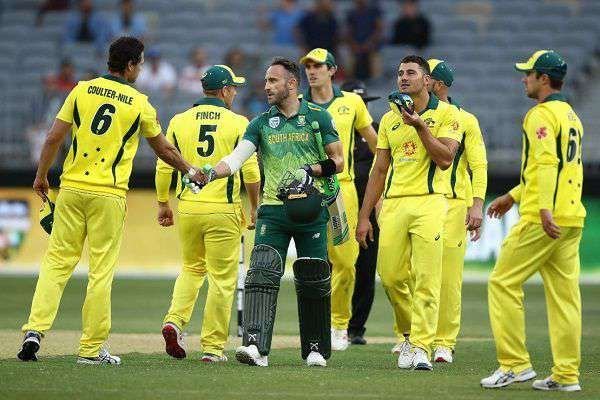
South Africa would be playing for pride, their last match of the tournament and that too against the mighty Australians. These two teams played probably the best ODI of all time, not once but twice (World Cup Semifinal, 1999 and Johannesburg 2006) and fans would be expecting the same again.

Australia would like to win the last game so that they can remain at the top of the points table and face New Zealand in the semis. They have peaked at the right time and won all the matches in this tournament except against India. They look much better on current form and as well as on paper. With both the openers in batting and bowling at their best form of life, it shouldn’t be much difficult for Australia to win the match.

South Africa would be looking to win a match after not able to play up to their expectations in the tournament although they have won the last two games of the tournament but against two weak teams, Afghanistan and Sri Lanka.

South Africa’s best is to win the toss and bat first and put pressure on Australian batsmen to chase a modest total.

Australia v South Africa in ODIs:

Overall: Matches 99, Australia Won 48, South Africa Won 47, Tied 3 No Result 1

World Cup: Matches 5, Australia Won 3, South Africa Won 1, Tied 1

Recent Form (most recent first): Australia  W W W W W, South Africa W L L W NR

ICC Rankings: Australia (3), South Africa (5)

Upcoming Records:

Pat Cummins has taken 94 wickets and needs six more to become the seventeenth Australian player to reach the 100 ODI wickets milestone.

Quinton de Kock has scored 4,855 runs and needs 145 more to reach the 5,000 runs milestone.

Dave Warner has scored 4,859 runs and needs 141 more to become the fifteenth Australian to reach the 5,000 runs milestone.

Squads:

Australia: Aaron Finch (capt), Jason Behrendorff, Alex Carey (wk), Nathan Coulter-Nile, Pat Cummins, Usman Khawaja, Nathan Lyon, Shaun Marsh, Glenn Maxwell, Kane Richardson, Steve Smith, Mitchell Starc, Marcus Stoinis, David Warner, Adam Zampa.

South Africa: Faf du Plessis (capt), Hashim Amla, Quinton de Kock (wk), JP Duminy, Beuran Hendricks, Aiden Markram, David Miller, Chris Morris, Lungi Ngidi, Andile Phehlukwayo, Dwaine Pretorius, Kagiso Rabada, Tabraiz Shamsi, Imran Tahir, Rassie van der Dussen.

Tauba Tauba: Twitter in splits after Pakistani TV anchor confuses Apple Inc with the fruit

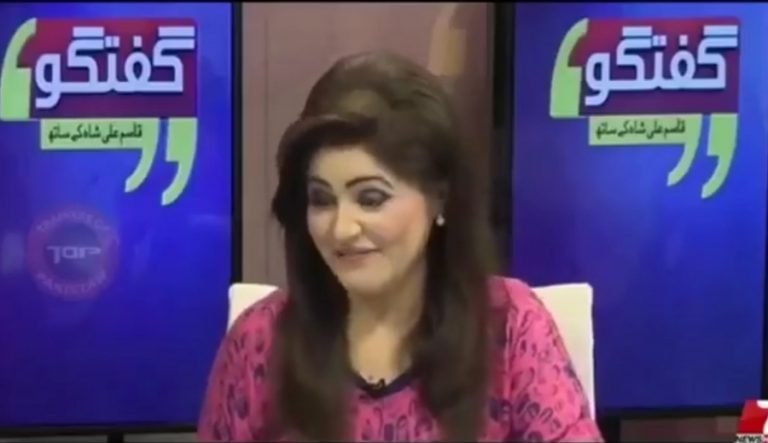
Regardless of the tensions at the border, Pakistan, especially the Pakistani TV, keeps giving Indians reasons to laugh every now and then. In yet another gaffe that left the people on social media in splits, a Pakistani female TV anchor confused  Apple Inc with apple the fruit.


In a clip of a TV show, which is doing the rounds on social media, the anchor is seen having a discussion with a panelist who is talking about the company Apple Inc. “The income of the Apple is much bigger than Pakistan’s budget”, the panelist said. The panelist had not yet finished when the TV anchor interrupted and said that she had heard somewhere that there are numerous varieties of apple, without realizing the panelist was actually talking about Apple Inc.

She did not realize her mistake until the panelist corrected her and said he was actually referring to the company Apple Inc and not the fruit.

The hilarious interaction soon went viral and jokes started ouring in.


Some hailed the panelist for maintaining his calm and not bursting into laughter at the anchor’s ignorance.


Recently, Pakistan made itself an object of ridicule, when, during the live streaming of the press conference of the provincial government of Khyber Pakhtunkhwa, the cat filter got accidentally turned on, making the faces of the people look like cats.

You will not decide what one wants to watch: Bombay HC slams CBFC

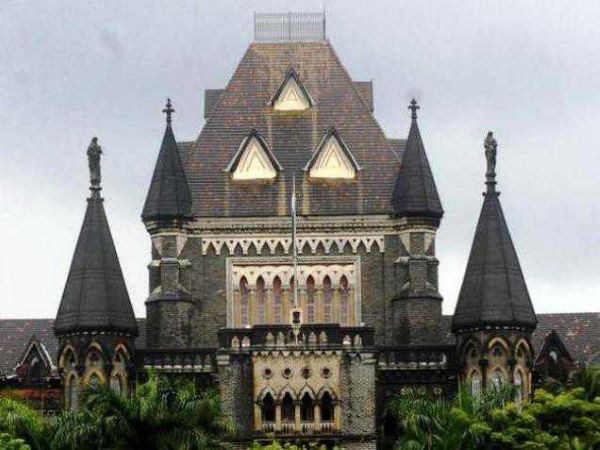
On Friday, the Bombay HC slammed the CBFC for refusing to issue a U certificate to a children’s film. The court was hearing a petition filed by Children’s Film Society (CFS) seeking directions to the CBFC to hear its plea to issue U certificate to its film ‘Chidiakhana’.

A division bench of Justices SC Dharmadhikari and Gautam Patel said yesterday that it was time to redefine the role of the Central Board of Film Certification (CBFC). The court has observed that the board thinks that it was the “only one with an iota of intelligence to decide for everyone”.

The board had given the film a universal/adult (U/A) certificate in January this year. The board had objected to an abusive word and a particular scene in it. The board had asked the scene to be removed. The HC bench stated that by asking for the scene and the word to be removed, the board was trying to pretend that such issues do not exist.

Reacting to this, justice Patel said, “Are you (CBFC) ostriches? Put your head in the sand and pretend something does not exist”.

“We actually wonder if the CBFC officials have children of their own. You (CBFC) are a certification board and not a censor board. You will not decide what one wants to watch and see”, said Justice Patel. He added, “nobody has given you (CBFC) the intellectual morality and authority to decide what one wants to watch and see”.

The bench also said, “Looks like we may have to redefine your (CBFC) role entirely. You (CBFC) are forming an opinion that the whole population is infantile and imbecile and you are the only one with an iota of intelligence to decide for everyone”.

The bench said that it would be better to use movies to teach children about issues like racism, discrimination, child labour and drug abuse. The bench opined that the world is changing and so is the art of storytelling.

The CBFC’s Regional Officer has been directed to file an affidavit elaborating and outlining the board’s policy while certifying children’s films. The case would be further heard on August 5th.

The CBFC has been known for its controversial decisions of censoring films. In 2015, Ashoke Pandit, a CBFC member, wrote a scathing letter against CBFC chairperson Pahlaj Nihalani. Pandit accused him of acting like a “tyrant” and creating an “anarchic environment”. Pahlaj Nihalani was notorious for demanding censoring films. There was even a petition to sack Nihalani from the board.

A ‘stock exchange’ for social organisations is a welcome step announced in the Union Budget 2019-20

In the year 2002, a Public Interest Litigation (PIL) had accused Hind Swaraj Trust of Anna Hazare of misutilisation of a grant of Rs 1 lac given to it by the Government of India. The PIL had alleged that the Council for Advancement of People’s Action and Rural Technology (CAPART) of the Ministry of Rural Development had given a grant of Rs 1 lakh to Anna Hazare-led Hind Swaraj Trust (HST) for watershed development in three Maharashtra villages in 1999-2001, but more than 90% of the money was spent on honoraria, travelling, printing and stationery.

The Supreme court seized the opportunity and ordered a thorough counting of NGOs in the country, and asked to share how many of them were filing mandatory annual income-expenditure details. CBI was entrusted with the task.

In 2015 when the numbers came many were startled. We now know that over 31 Lakh NGOs exist in the country while only 10% of them file their balance sheet. In other words, there is no clue how the rest 90% spend their money.

But with our organisational experience of 35 years into NGO capacity building, I can claim with a certain confidence that the reason behind these numbers has less to do with any financial misdemeanour and more to do with the lack of documentation culture in the sector.

The poor habit of record keeping and documentation in NGOs is also partially responsible for the credibility crisis it is currently going through. A closer look at the current funding sources and their annual contribution is also imperative to understand why the sector is so perennially funding-starved.

It is a known fact that since 2014 Modi government has taken a slew of measures to reform the NGO/Social sector. It began by promoting the use of DARPAN website and a centralised platform for the release of funds and expense-reporting. This was done to avoid duplication of funding by departments for the same project. However, to date, only about 74,000 NGOs have enrolled on the website.

As far as government funding to NGOs is concerned, Rs 15,329.16 crore was given during 2016-17. However, the number of NGOs which got this funding is only 23,176. Continuing with the funding consolidation and cleanup spree government also disbanded CAPART and merged it with National Institute of Rural Development and Panchayati Raj (NIRD-PR) at the beginning of this year.

It is also well known that apart from the government funding, NGOs also receive funding from private individuals as a charity, Corporate funding in the form of Corporate Social Responsibility (CSR) or from foreign sources through the FCRA.

As far as Private funding is concerned with a report from the Bain & Co. suggests that total fund from Private philanthropists was Rs 43,000 crore for the year 2017-18. The figure is seeing a steady increase every year. The contribution through CSR funding was Rs 13,000 crore for the same period and that too is growing steadily each year. The amounts, however, are meagre compared to countries like US, Britain. If funding available per NGO is calculated the situation looks grim.

Funding from abroad for NGOs is also an established and well-known fact. However, over the last 5 years, there has been a steady drop in the same. Between 2014-2019 around 20,000 NGOs lost their FCRA licence. Most of these were dubious advocacy organisations receiving large funds from abroad. The notable ones among these were Ford Foundation, Amnesty International etc.

While in 2010-11 around 14,000 crores of foreign funding came to India which largely came for 22,000 NGOs, the amount last year plunged to only 40% of this figure. Hence, Funding is one of the key challenge NGOs and VOs in India face today.

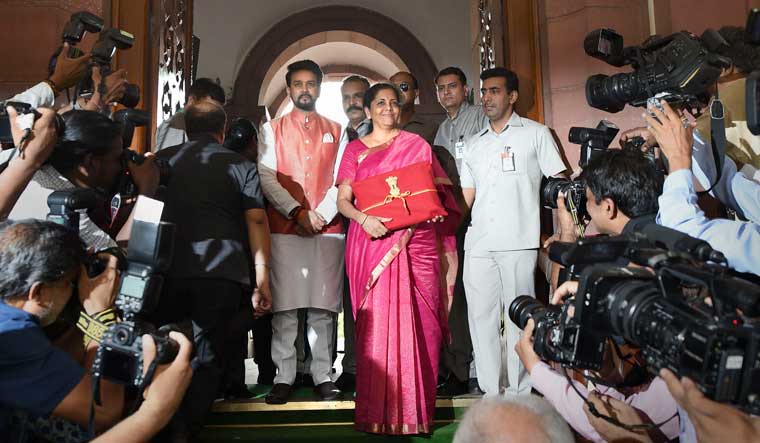
It is perhaps this reason the sector rejoiced at the budget announcement when Finance Minister Smt Nirmala Sitharaman announced setting up of a Social Stock Exchange to allow social organisations to raise capital. She mentioned that an Electronic Fund-raising Platform (EFP) would be created for social and voluntary organisations to raise capital, debt and mutual funds.

While the idea of a Social Stock Exchange is not a new one, for a country with double the number of NGOs than the number of schools it has, a bold step like this one is sure to create both amazement and excitement.

The roots of this idea date back to the year 2000 when the United Nations formed a pact called ‘United Nations Global Compact’ in order to encourage businesses worldwide to adopt sustainable and socially responsible policies and to report on their implementation. Out of its many initiatives, the UN Global Compact also promoted the Sustainable Stock Exchanges (SSE) initiative.

In 2002, Celso Grecco, a Brazilian created the first social stock exchange of the world for the Brazilian stock exchange. Launched in 2003, the model became a case study at the United Nations and a model recommended to all stock exchanges by Kofi Annan, former UN Secretary-General. Social Stock Exchanges currently exist in the UK, Canada, Singapore, South Africa, Brazil, Jamaica and Kenya.

In India the benefit of starting the social stock exchange could be threefold:

a) to help social and voluntary organisations to find investors. The electronic fundraising platform will list social enterprises in the same way as public listed companies under SEBI.

b) Processes and documentation involved in the listing will bring transparency in the sector which in turn would improve the sector’s credibility quotient thereby attracting more investors, private as well as corporate. Once investors join, rating agencies like CRISIL and ICRA would also find value in entering the space by opening their NGO desks thereby leading to more transparency and more credibility for the sector.

c) lack of organised data sharing mechanisms and coordination often has it that multiple NGOs in a region try to solve the same problem through separate ways thereby creating either duplication or redundancy in the process. A senior NITI Aayog official had once openly shared during an NGO roundtable that the sector players are working so randomly in various directions that many times the total work done adds up to zero. A step like SSE would bring in openness and thereby consolidation of efforts.

However, many questions remain to be answered and many challenges left to be addressed.

Firstly, India had seen a similar debate when SME exchange was announced in the year 2011. Whether the experiment has been a success or failure is still debatable, or it could be a little early to judge, however it offers many learnings for the government.

Secondly, a number of our social and voluntary organisations are registered either as trusts or societies and very few as section 8 companies. Hence the government will have to introduce some mechanism to convert existing trusts and societies to the share-based non-profit Section 8 companies. Going by the expense a company incurs during the listing process for NSE or BSE, if the government doesn’t subsidise the cost in SSE, it will not be possible for many NGOs to list on their own. Hence the government will not only have to subsidise many expenses but also incentivise funding agencies and rating agencies to participate.

A nation with 30 lakh plus NGOs don’t have even a single NGO close to the top 100 global not-for-profit organisations. The days of ignominy may soon be over and the path to glory for the Indian social sector could be through this important step.


Bulandshahr: Shivling desecrated, Irshad arrested for urinating on the idol

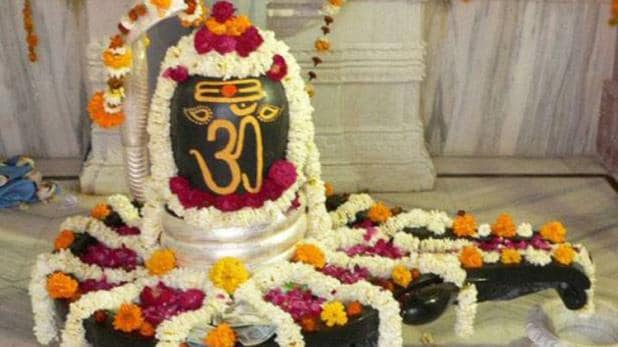
In what appears as a wanton attempt to stoke communal tensions in the city, a man named ‘Irshad’ alias Irani had urinated on the Shivling in a Mahadev temple in city’s Jahangirabad neighbourhood. The man was immediately arrested by the Bulandshahr police after a complaint was filed by Bajrang Dal members against Irshad for trying to spoil the sanctity of the ancient Shiv temple.


In a report by Sudarshan News, the Bajrang Dal member Yatinder Gehna said, “A Muslim man named Irani was caught red-handed peeing on the Shivling of the ancient Shiv Temple in old mandi of Jahangirabad area. He was often found lurking around the temple premises. People here are angry with his act. He has fled from the place. A police complaint had been filed against him and he has been nabbed from his house.”

Confirming the incident, the Bulandshahr police tweeted that the accused ‘Irshad’ has been booked under Section 295(Injuring or defiling a place of worship with the intent to insult a religion) and Section 153A(Promoting enmity between different religious groups) and immediately sent to jail.


In the Chandi Chowk case, the idols in a Hindu temple were broken and the temple vandalised by a Muslim mob, it was also reported that some of the members of the mob tried to defile the temple and the idols installed in them by urinating on them.

Political propaganda reaches Headingley: Plane flies over stadium where India plays today with ‘Free Kashmir’ message

While several people claim that politics and sports should not be mixed, but one has often seen the lines blur. Today, a plane was seen flying over Headingley stadium in Leeds where India is battling Sri Lanka in a World Cup cricket match. The plane carried the message “India stop genocide and free Kashmir”.


The message itself was that of Islamic propaganda considering the real genocide that Kashmir has seen is that of the Kashmiri Pandits in the 1990s. The constant messaging of this elusive “genocide” in Kashmir is a result of the muscular approach being taken by the Indian government to ensure the end of Pakistan sponsored terrorism in the Valley.

Earlier too, in a similar incident, a plane had flown over the stadium with a ‘Free Balochistan’ message during an Afghanistan-Pakistan match.

Patna court grants bail to Rahul Gandhi in a defamation case filed by Sushil Kumar Modi over “all Modis are thieves” remark

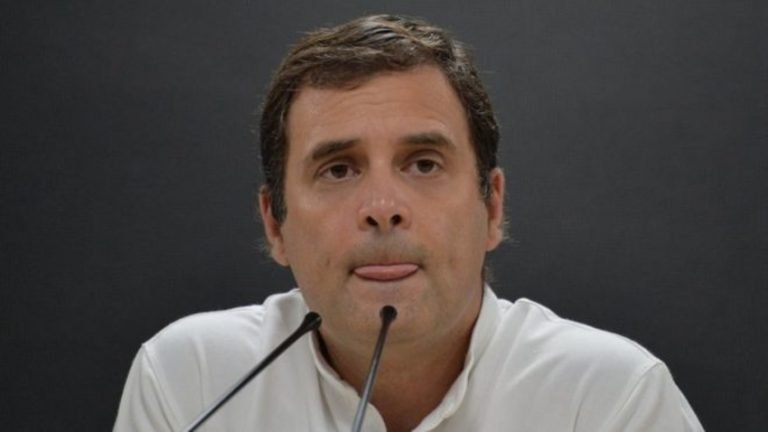
Former Congress president Rahul Gandhi was granted bail today by a Patna court in connection with a defamation case filed by Bihar Deputy Chief Minister Sushil Kumar Modi.

Modi had filed the case in the month of April in the court of the Chief Judicial Magistrate (CJM) against Gandhi’s casteist and insensitive remarks made during an election rally in Karnataka’s Kolar district wherein he had insinuated that all thieves have Modi in their surnames.

“I have a question. Why do all the thieves have Modi in their names whether be it Nirav Modi, Lalit Modi, and Narendra Modi? We don’t know how many more such Modis will come out”, Gandhi had said.

The case was referred by CJM Shashikant Roy to ACJM Kumar Gunjan. Gandhi who recently submitted his resignation as the President of Congress party took a dig at the Prime Minister and said that anyone who raises a voice against the PM Modi’s government, the BJP, and the RSS, is slapped with court cases. “Whoever stands against RSS’ and Narendra Modi Ji’s ideology is attacked, court cases are slapped. My fight is to save the Constitution, to stand for the poor and the farmers”, he said.


Gandhi was accompanied to the court by senior Congress leaders from Bihar and the State in-charge of the party Shashikant Gohil. A number of Congress workers had reportedly gathered outside the Patna court demanding the withdrawal of Rahul Gandhi’s resignation.

Rahul Gandhi is reportedly on a court appearance spree. Earlier this week, he had appeared at a court in Mazgaon. On July 9, he is scheduled to appear in a court in Ahmedabad in another defamation case over his statements.