Home Blog Page 6906

Heroin worth Rs 250 crores caught by NCB near Jammu, was packed in apple crates

0

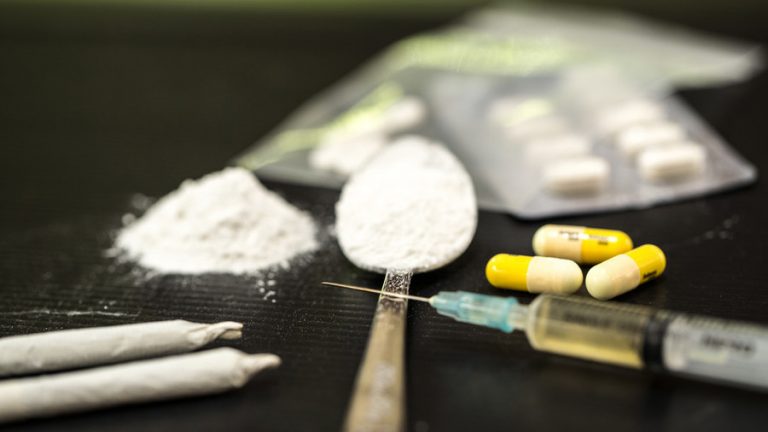
The Narcotics Control Bureau (NCB) has caught a man carrying heroin worth Rs 250 crores hidden in the apple crates. According to reports, he was supposed to distribute the contraband to Delhi-based suppliers.

The man named Abdul was driving the truck laden with heroin when he was nabbed by the NCB at a check-post near Jammu. During the search, the NCB officers found that packets of heroin were stuffed under Apple crates in a manner that would deceive the police. 50kgs of heroin was recovered whose market value is estimated to be close to Rs 250 crores. According to the officials, the forbidden drug was being smuggled into Jammu and Kashmir’s Kupwara from Pakistan. The driver is being interrogated to determine the source of the contraband and those members of the drug cartel involved in smuggling.

The illicit drugs were reportedly routed from Afghanistan via Pakistan into Jammu and Kashmir. As per media reports, the driver Abdul was reportedly paid Rs 4.5 lakhs to smuggle the drug. NCB officials have reportedly stated that in the last 2.5 months, NCB has caught almost 160 Kgs of Heroin being smuggled from Afghanistan. Meanwhile, following the trail, the NCB officials have reached Kupwara and are in search of one Mehrum fruit seller in Kashmir assumed to be responsible for getting the drugs transported to the suppliers in Delhi.

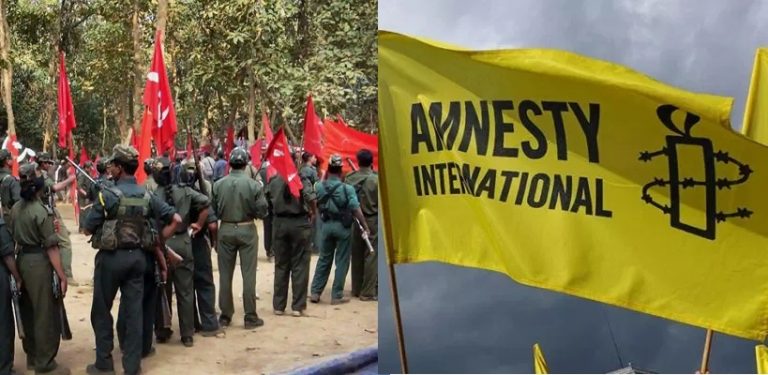
Amnesty International defames India based on the say-so of Arun Ferreira, one of the arrested ‘Urban Naxals’

Amnesty International India, which is facing investigations for violation of regulations, has published an article saying India is becoming a dangerous place for human rights defenders. The reason for them making this grave allegation is a statement by ‘activist’ Arun Ferreira saying that he was “hit” by an investigating police officer. Ferreira alleged before a court that he was hit on his face eight to ten times by Assistant Commissioner of Police (ACP) Shivaji Pawar during interrogation.

Arun Ferreira was one of the ‘urban naxals’ arrested by Maharashtra police for their links with Maoist terrorists. Although organisations like Amnesty paints them as human rights defenders, they are actually sympathisers and active supports of left-wing terrorists, according to evidence recovered by police. Amnesty says it “believes that arrests in relation to the Bhima Koregaon incident, are politically motivated and are aimed at chilling peaceful dissent”. On the other hand, police have reiterated several times that they have proof of the link between the activists and the Maoists. Police say the activists instigated the Bhima Koregaon violence. During raids, police have also recovered letters which indicated that the activists were active participants in terror activities by Maoists, include in a plan to assassinate the prime minister of India.

In an exclusive interview with OpIndia, former Maoist leader Pahad Singh had revealed that Arun Ferreira was present in meetings of the Maoists. In 2006, Singh witnessed Ferreira attending a division meeting of the terrorists, which was attended by central committee members of the banned outfit.

There are several such proofs of links of the urban naxals with the red terrorists, but for Amnesty International, they are human rights activists, who routinely keeps silence on terror attacks by the Naxals.

Amnesty India itself is found to be in conflict with the law, and facing investigations for its financial dealings. Last month, its head offices in Bengaluru was raided by Enforcement Directorate. The NGO is accused of violating FCRA and FEMA laws. Despite being not registered under FCRA, Amnesty was receiving foreign funds. To do that, they had registered four companies and routed foreign contributions through them, which is a violation of FEMA rules.

If Ferreira was indeed mistreated by police, the court will take appropriate action. But that Amnesty, which is itself under investigation, prefers to call a man with alleged links to Maoists as a ‘Human Rights Activist’ just to paint India in poor light, proves that Amnesty has a larger agenda that must be scrutinised.

Here is how the Statue of Unity does not compromise other development activities

Prime Minister Modi inaugurated “Statue of Unity” on 31 October 2018 as the world’s tallest statue to honour the architect of independent India Sardar Vallabhbhai Patel.

A large part of the country viewed this engineering marvel with pride but it was also followed by criticism from some pockets about using the money for other development activities. In that perspective, it is important to understand that Rs. 3000 crores (including maintenance over the next 15 years) is not a big deal for a country like India. This investment in a revenue-generating project is next to nothing when viewed in the perspective of the following other numbers –

  • Today, the Indian government collects almost 20 lakh crores every year in tax revenue (split almost equally across direct and indirect taxes)
  • Over the next few decades, this number will increase manifold. In the last 30 years, tax revenue has increased 50 times
  • In 1998-99, the government collected 1 lakh crore in taxes in a year. Just 20 years on, today this is one month’s GST collection
  • Govt also makes about 10,000 crores in non-tax revenue every year
  • Indian government’s annual revenue of Rs. 20 lakh crore (USD 275 billion) is more than the nominal GDP of 150 countries

Yes, India needs to continue investing in Education, Infrastructure, Healthcare, Science & Technology to improve HDI. The article published in IndiaSpend and republished in TheWire quibbles how this money

could have instead funded two new Indian Institute of Technology (IIT) campuses, five Indian Institute of Management (IIM) campuses and six Indian Space Research Organisation (ISRO) missions to Mars…

It must be noted that all that is already happening at a much larger scale and a piddly 3000 crore would hardly dent that effort

  • In the last four years, the Modi Government has also paved the way for
  • 8000 new CBSE schools
  • 5 new IITs
  • 6 new IIMs with permanent campus by 2021 (cost 3,775 crores) and
  • 20 new AIIMs (cost 15,000 crore)


  • Roads and Highways are being built at a record pace
  • 73% more highways were built in four years of Modi government than in UPA’s last four years
  • The investment was 60,000 crores in 2017 and 1 lakh crores in 2018


  • Metro train projects have been launched in 15 new cities. Spent was:
  • 9,300 crores in 2015-16
  • 15,300 crores in 2016-17
  • 7,500 crores in 2018-19 (up to September 30, 2018)


  • Indian Railways is undergoing rapid transformation and modernization
  • Made in India, semi high-speed trains with world class facilities are gradually replacing old Shatabdi and Rajdhani trains
  • High Speed Rail (Bullet Train) is being launched for the Mumbai-Ahmedabad route, the total cost is 1.1 lakh crores (spread over 50 years)
  • More semi-high speed and high speed (bullet train) routes are to be added shortly in future


  • 1.25 crore (12.5 million) homes have been constructed for poor under PMAY scheme
  • The allocation was 23,000 crore in 2017
  • Government is on target to achieve “housing for all” by 2022 (total expected spend is 2 lakh crore)


  • 8.8 crore (88 million) toilets have been constructed under Swachh Bharat initiative
  • Sanitation coverage has increased from 38% to 95% within 4 years
  • 5 lakh villages, 530 districts and 25 states / UTs have been declared Open Defecation Free
  • Government is on target to make India 100% Open Defecation Free by October 2019
  • The budget has been in the range of 20,000 crores every year


  • Ayushman Bharat has been launched to provide free healthcare for 10 crores (100 million) families –
  • 1 lakh people have already benefited within 4 weeks of launch
  • The central government budget is 12,000 crores (first year)


  • Atal Tinkering Labs have been started in 5400 schools
  • School children are provided access to cutting-edge modern technologies like 3D Printing, Robotics, IoT and microprocessors with an objective to cultivate scientific innovation


  • ISRO (Indian Space Research Organization) is working on –
  • Moon landing mission (Chandrayan-2) by early 2019
  • Mission to study Sun (Project Aditya) by 2020
  • The manned mission to space by 2022– total cost is 10,000 crores

India can easily do all these things to improve education, infrastructure, healthcare, science & technology and also build the world’s tallest statue.

Millions of Indians are already rising out of poverty at a rapid pace. With the ongoing development activities, 44 Indians are pulled out of poverty every minute. Recently, India lost the dubious tag of the country with the largest number of people in poverty. By end of this year, India is set to drop further in this ranking.

Great leader set big audacious goals and then achieve them. Besides building the world’s tallest statue, India is also looking at achieving 100% Open Defecation Free status by 2019, housing for all by 2022 etc. Shortly, India could also be home to the world’s tallest residential tower in Mumbai.

NYC’s Empire State building shines bright orange to celebrate Diwali

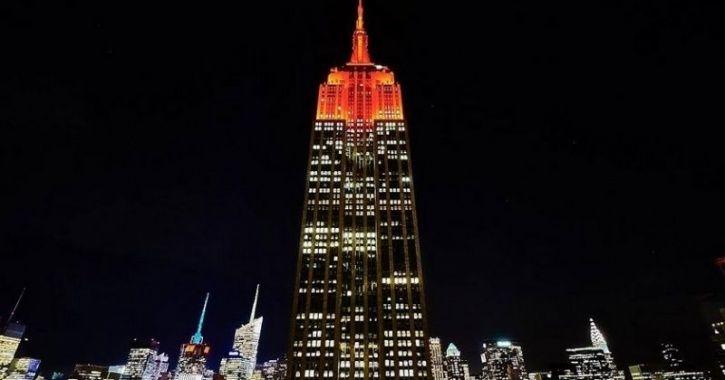
Diwali, the festival of lights, was celebrated by Indians all across the world on Thursday with much enthusiasm. To honour the festival, this year, the Empire State building in New York city was all gleamed up in orange light.


The historic event was organised by the Federation of Indian Associations (FIA) in cooperation with Empire State Realty Trust.

For the inaguration of the events, organised by the Federation of Indian Associations invited Indian origin musician Jay Sean and Miss America 2014 Nina Davuluri to light the ceremonial lamp.


The organizers, in a press release had said, “ We would like to gratefully record here that Empire State Realty Trust and FIA together have already illuminated Empire State Building in each August symbolizing celebration of India‘s Independence Day for almost over two decades by selecting vibrant tri-colours on India’s flag – Orange, White and Green. This incredible illumination has won the hearts of a growing Indian American community as well as global tourists.

“These repeated gestures by ESRT indeed helps in spreading ancient Indian Philosophy Vasudhaiva Kutumbakam (The world is one family) and also demonstrates a great harmony in spirit and deeds between the people of world’s largest and oldest democracies in this Nov. 7th Diwali Illumination ceremony. Jay Sean the young popular Indian singer and Miss America 2014 Nina Devuluri with glorifying it by their presence and performance besides other invited guests.”

The gorgeous visuals of the iconic tower of the Empire State building glowing in orange left the netizens spellbound. Many on social media expressed admiration by sharing images of this mesmerizing sight.


Along with NYC’s iconic structure gleaming on Diwali, the world’s tallest building in Dubai also had a special message and artwork projected on it on the occasion of Diwali. The LED projections on the building were part of the special 10-day Diwali celebrations in Dubai, which also featured this popular clip of a Dubai Police marching band playing the Indian national anthem.


This is not the first time, both these buildings have taken part in the celebration of Indian events. In August, both iconic buildings were lit up with the Indian tricolour to mark Independence Day. The Burj Khalifa also celebrated Mahatma Gandhi’s 150th birth anniversary this year with a tribute to him on October 2, his birth anniversary.

Chhattisgarh: A day ahead of PM’s visit, Naxals blow up CISF vehicle in Dantewada

0

In a yet another attack ahead of the November 12 elections in Chhattisgarh, Naxals have triggered an IED blast on a bus near Bacheli in Chhattisgarh’s Dantewada area causing multiple casualties. 3 civilians and 1 CISF personnel have lost their lives in the incident. 2 other injured CISF personnel were reportedly rushed to the nearby hospital in Bacheli for treatment.


The attack occurred ahead of the visits by PM Narendra Modi and Congress president Rahul Gandhi to Bastar region, just days before the state goes to polls. Maoists on Thursday triggered an improvised explosive device (IED) killing four persons including a security personnel at Bacheli in the Naxal-infested Dantewada district, about 430 km south of Raipur. Reports have stated the CISF personnel were out to buy vegetables and grocery for the camp.

As per the Dantewada superintendent of police Abhishek Pallava’s interview to The New Indian Express, the Naxalites targeted a CISF vehicle detonating a powerful IED blast killing one Central Industrial Security Force (CISF) jawan and three civilians, a driver, conductor, and cleaner of the mini-bus, on the spot. Two jawans have reportedly sustained injuries.

The CISF personnel are deployed in the region to safeguard the network of NMDC installations and its operational units. The attack comes a day ahead of PM Modi’s rally in Jagdalpur and three days before the first phase of the polls is scheduled to start on 12 November. As top security mechanisms are deployed for election safety and for major rallies in the state, the attack has come as a shocker.

Earlier, Naxals had put up posters and pamphlets across the poll-bound Chhattisgarh warning locals to steer clear of the elections. The Naxals have recently attacked a patrolling car in which 2 CRPF personnel and a Doordarshan TV cameraman lost their lives. This attack comes just 2 days after 62 Naxals surrendered themselves to the Police.

The defamatory lies and the truths surrounding Haren Pandya’s murder

Haren Pandya was a former minister in the Gujarat Government of the BJP. He resigned from the Cabinet in August 2002, was denied a ticket in the December 2002 Assembly elections and was murdered on 26 March 2003. Since then, biased sections of the media and self-styled secularists have implied that the Narendra Modi Government got him killed, or more specifically, Narendra Modi got him killed. This is, of course, total trash, and also inflammatory and defamatory.

On 4 November 2018, Firstpost reported:

“A witness in the Sohrabuddin Shaikh alleged fake encounter case told a trial court in Mumbai on Saturday that Shaikh had killed former Gujarat home minister Haren Pandya. The killing had allegedly been ordered by former Gujarat IPS officer DG Vanzara, the witness further claimed. Pandya was murdered in Ahmedabad in 2003.

The witness — name not disclosed — said he met Shaikh in 2002 and became good friends with him and his wife Kausar Bi and his associate Tulsi Prajapati. “During that time, Sohrabuddin told me he had got money from DG Vanzara to kill Gujarat’s home minister Haren Pandya and he completed the job. I then told him that what he did was wrong and he had killed a good person,” the witness told the court. The witness further said that in 2005 he was arrested by Rajasthan police and lodged at Udaipur jail where he met Prajapati.”

This is not a confession, but hearsay. It is Y claiming that X told him (X is no more, and died as many as 13 years ago, so no way to authenticate this) that Z ordered him i.e. X to kill someone. Y has given no proof that X ever told him so, and even if X did tell him so, that has no value at all, since X has to tell that to other investigators or to a judge. And Y made this claim 13 years after the death of X for the first time, not once for at least 13 years. Sohrabuddin Sheikh died on 26 November 2005.

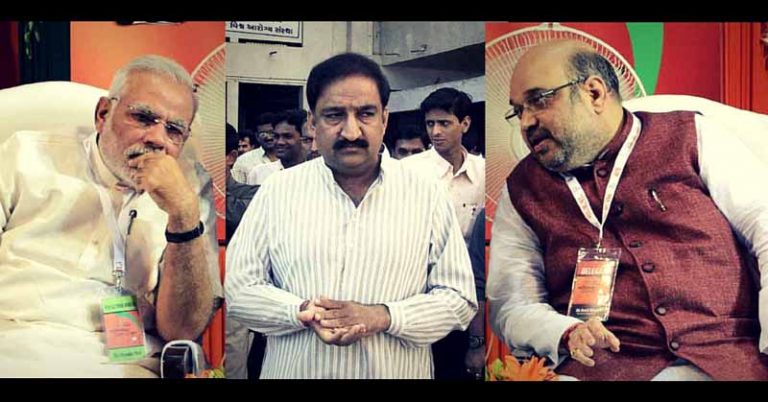
But none of this matters to those who WANT to somehow blame Narendra Modi and/or Amit Shah for the killing of Haren Pandya. Negationist Prashant Bhushan, who defended the heinous brutal killers of Godhra even after their conviction by a trial court latched on to this hearsay. Bhushan tweeted the link claiming how the said ‘confession’ confirms the public suspicion.

Thus he implied that Amit Shah and/or Modi got Pandya killed. Congress leader Sanjay Nirupam also tweeted accusing Shah of ordering Pandya’s killing.

Nirupan directly accused Amit Shah of ordering to kill Sohrabuddin ignoring his acquittal in the case completely. And also implied that Modi and/or Shah ordered Pandya’s killing. A hearsay statement by one witness [who was also arrested by Police in 2005] with no evidence provided to even support the hearsay statement is no proof at all, which a senior lawyer like Prashant Bhushan and leader like Sanjay Nirupam know very well.

Now let us get into the merits of the Haren Pandya case and see facts. The media conveniently hid facts which would make it very obvious that he was killed by radical Islamists. The media tried to imply that he was killed as he was an opponent of Narendra Modi. With the wife of Haren Pandya contesting the polls against the BJP in the Gujarat Assembly polls in December 2012, many were asking the reason for her doing so.

Haren Pandya was perhaps the only man from the BJP who may have been actually involved in the riots in 2002 [Maya Kodnani was innocent, and was correctly acquitted by the High Court after being wrongly convicted by the trial court of Jyotsna Yagnik]. Haren Pandya was accused of demolishing a dargah near his house on 1st March 2002 in anger against Godhra, a dargah which was on the roads causing inconvenience to traffic and may have had to be demolished by the municipal corporation anyway. The self-styled liberals were howling against Haren Pandya since March 2002.

However, after 2-3 months, he changed his stand and started speaking against the government for not protecting the minority. The demolition of the dargah allegedly carried out by him brought him on the top of the hit list, and therefore, he was killed. Before Pandya started speaking against Modi in 2002, he was the media’s hate figure.

However, after the differences between him and Modi cropped up when Pandya refused to vacate his Ellis Bridge constituency seat for Modi, he became media’s favourite. He was soon hailed as a hero who was taking on the big man. This also shows that the biased section of the media will make a hero out of anyone who targets Narendra Modi without judging the case on merits.

Modi became Chief Minister of Gujarat in October 2001 and had to enter the Assembly. Till then he had never fought a single election in his life from a corporation to the Lok Sabha. Ellis Bridge seat is considered one of the safest for the BJP in the country. It was a part of Advani’s Gandhinagar seat till delimitation. Modi reportedly wanted Pandya to vacate this seat of Ellisbridge so that he i.e. Modi could enter the Assembly but Pandya who was then Home Minister refused. So Modi had to go for Rajkot II which he won by 14,000 votes on 24 February 2002, 3 days before Godhra carnage. Pandya was demoted from Home Minister to Revenue Minister and since then his resentment against Modi became even stronger.

It is believed that Pandya himself allegedly demolished the dargah and then cleverly shifted the blame on Modi by speaking against Modi. There was a self-appointed Concerned Citizens Tribunal headed by Retd. Supreme Court Judge, Justice Krishna Iyer, which conducted its own ‘study’ and report on the Gujarat riots and, as expected, held the government guilty.

Haren Pandya allegedly told that Concerned Citizens Tribunal (CCT) in May 2002 that in a crucial meeting on 27 Feb 2002 late night at CM’s bungalow, Gandhinagar [the day Godhra happened] Modi told police officers to allow Hindus to riot the next day. Pandya was not even present at that meeting and never claimed to be present to anyone except the CCT. Only Modi and 8 others officers (not a single minister) were there in this meeting, as per the SIT report.

Sadly the CCT also made a fool of itself by trying to absolve the perpetrators of the heinous crime of Godhra carnage by suggesting that the fire was set ‘from inside’ (implying it was an inside job!) and denying out-rightly that any mob had torched the train.

Pandya then resigned from the Cabinet in Aug 2002 as Revenue Minister also. Then when in December 2002 elections came Modi denied Pandya a ticket. This angered Pandya horribly along with his wife and father. Sadly in March 2003 Islamist radicals murdered him for what is believed to be to avenge the for the dargah demolition for which the self-styled secularists had howled against him since March 2002 until the time he took on Modi.

The late Pandya’s father [who passed away in 2011] and wife both may well know that he was most probably killed for dargah demolition by Islamist radicals but their anger was perhaps against Modi for denying Pandya a ticket for MLA which would have meant he could not become a minister. The dargah demolition was not the only charge on Pandya. The self-appointed CCT, which had no authority to do anything and gave a horribly biased report full of lies, published its report in November 2002 in the form of a book titled “Crime against humanity” and made many charges against the late Haren Pandya himself on his alleged anti-Muslim statements and activities and severely criticized Pandya on Vol. I page 36, page 44, page 48, Vol. II page 48, page 49, page 52, page 77, page 87. The SIT report gives many quotes from that report against the late Haren Pandya himself on his alleged anti-Muslim statements and activities on pages 452-456.

But to save his own skin, Pandya turned against Narendra Modi and told a totally unauthorized CCT that Modi ordered police to allow Hindus to riot the next day in the crucial 27 Feb night meeting (This is of course, totally false, and the SIT found this charge to be baseless). At that time, after allegedly deposing before the self-appointed CCT, Pandya allegedly told Outlook magazine about his deposition. Outlook reported it in its issue of 3 June 2002 and 19 August 2002.

The weekly Outlook magazine had also alleged that Modi told officials to allow Hindus to take revenge the next day in that crucial 27 February night meeting. It first did this in its issue dated 3 June 2002, following which Narendra Modi sent a defamation notice as reported by The Indian Express on 8 June 2002. The Outlook reported in that article:

“The minister told Outlook that in his deposition [to the CCT], he revealed that on the night of 27th  February, Modi summoned DGP (i.e. Director General of Police) K. Chakravarthy,  Commissioner  of Police, Ahmedabad, P.C. Pandey, Chief Secretary, G. Subarao, Home Secretary, Ashok  Narayan, Secretary to the Home Department, K. Nityanand  (a serving police officer of IG rank on deputation) and DGP (IB) G.S. Raigar. Also present were officers from the CM’s office: P.K. Mishra, Anil Mukhim and A.K. Sharma. The minister also told Outlook that the meeting was held at the CM’s bungalow.

The minister told the tribunal (CCT) that in the two-hour meeting, Modi made it clear there would be justice for Godhra the next day, during the VHP-called bandh. He ordered that the police should not come in the way of “the Hindu backlash”. At one point in this briefing, according to the minister’s statement to the tribunal, DGP Chakravarthy vehemently protested. But he was harshly told by Modi to shut up and obey. Commissioner Pandey, says the minister, would later show remorse in private but, at that meeting, didn’t have the guts to object…”

Notice how in the Outlook report, Sanjiv Bhatt is nowhere in the picture? Now there are clear factual errors in this. The Outlook report names Chief Secretary, G. Subarao and an officer in the CM’s office, A.K. Sharma, as among those at the meeting. Neither were present in that meeting. That day, Subarao was on leave abroad [the SIT too mentioned this on page 312 of its report]  and instead it was acting Chief Secretary S.K. Varma who participated in that meeting! This single goof-up alone is enough to dismiss the claims of Outlook on that meeting, or, assuming that the late Pandya did make such allegations, his. Outlook realized its terrible goof-up and in the 19 August 2002 issue, it acknowledged its error in its claimed interview with Pandya.

Now let us assume that the late Minister Haren Pandya did tell Outlook that Modi told officials to allow Hindus to vent their anger the next day in that meeting. What credibility does Pandya have when he was not even present in that meeting? And when he could not even correctly name the people who were in the meeting, wrongly naming two people as being present there, how can anyone believe that he would know what happened inside the meeting? He also said that it was a 2-hour meeting, while it lasted only 30 to 45 minutes! (SIT report said so). Outlook wanted to crucify Narendra Modi by hook or by crook, and in its issue of 3 June 2002, it held Modi guilty without bothering to cross-check if the information provided by the Minister (Pandya) was correct or not. Was it not Outlook’s duty to cross-check the facts before making such a serious allegation against a Chief Minister?

In all this, Outlook relied only on the testimony of Haren Pandya, whom it did not even name at that time. But neither the tribunal nor Outlook have given any evidence that Pandya met them or told them anything of this sort. Outlook claims that it has a taped interview of Haren Pandya of August 2002. In its issue dated 19 August 2002, Outlook reported: “Modi’s pet theory was that the man, who went to the tribunal, was his then revenue minister, Haren Pandya. He even asked his intelligence officials to get proof to nail Pandya. But the intelligence wing, Outlook learns, gave no conclusive proof to Modi. Yet, he sent Pandya a show-cause notice through the state BJP president, asking him to explain if and why and with whose permission he went to the tribunal. Pandya, in his sharp reply that unmistakably ridiculed Modi, denied he went to the tribunal.” So, neither Outlook nor the tribunal have any evidence that Pandya told them anything, and Pandya himself denied the charge! In short, there is no proof in public domain that Haren Pandya ever made any allegations on Modi on that 27 February meeting. There is no evidence in public forum of Pandya ever telling Outlook anything before August 2002, or of him deposing before the CCT.

But this writer does think that Pandya could have (and most likely did) deposed before the CCT and may have talked to Outlook for its 3rd June issue as well.

Outlook claims it has a taped interview of Haren Pandya [whom it did not name at that time, but after his murder revealed as Haren Pandya indeed] which it published in its issue of 19 August 2002. In this interview  of 19th  August 2002 Outlook reported (emphasis added):

“Minister (continuing): See, whatever I told you, it was not as if some disgruntled man was saying it. I didn’t say all those things because I was unhappy. There is nobody in my position who can fight him. So, it’s important I remain an insider, in power, in position.  That’s why I want my identity to be protected.

You mentioned Subarao. There was trouble with that. (The Outlook report named chief secretary G. Subarao and an officer in the CM’s office, A.K. Sharma, as among those at the meeting. Neither was present.)

Minister: What happened was that there was a chief secretary- in-charge then. I got my facts mixed up. But listen, their denial was very weak, wasn’t it? If they try to make an issue of it, tell them that you want the official denial from all the people mentioned in the story on paper, with their signatures. Leave the two they say weren’t there at the meeting but ask the others to say that there was no meeting, no direct or indirect orders. Let them say that on paper with their signatures….

Minister (continuing): I made a mistake with the chief secretary’s name. But the rest is all true. The time, the place, everything was correct. If they put pressure, ask them for official denial from the officers.

Minister (continuing): Vijay Rupani (who was supposed to organise the yatra) will give information on the (Gujarat) Gaurav Rath Yatra. But be careful when you meet these people. They are such guys that they’ll try to extract my name from you. Be careful.”

And Outlook stuck to its story even after the clear goof-up. See the role of Outlook. It admitted that it wrongly named two people as being present in the meeting. That should have been enough to dismiss this charge when Outlook and an alleged Minister cannot even correctly tell the names of the people who were present in the meeting (Haren Pandya was, of course, not present which he admitted to Outlook). How could they know what happened in that meeting? So what Outlook said in effect was ‘Though our report wrongly named two people as being present and though we could not even tell correctly who were present, our charge that Modi ordered the police to allow Hindus to vent their anger is 100% true!’ A magazine with an iota of honesty would have perhaps admitted that they had relied on a man whose information was incorrect and who had personal grudges and withdrawn the story.

But that’s not what happened. Even in its 19 August 2002 issue, there are blunders. Haren Pandya says (as claimed by Outlook) “I made a mistake with the chief secretary’s name. But the rest is all true.”

But the rest is also not all true. Not only was the chief secretary not there (he was on leave abroad), another officer, A.K. Sharma was also not present. This was admitted by Outlook, not by the Minister! And sadly for Outlook, there was a third blunder in this allegation even in the 19th August issue, which is that DGP (IB) G.C. Raigar was also not present in this meeting! Neither Outlook nor Pandya knew this. So even in the 19th August issue, when they admitted mistakes in the 3 June 2002 issue, they stuck to their story saying ‘rest all information is correct’, but the information in the 19th August 2002 was also wrong since G.C. Raigar was also wrongly named as being present. Outlook said, “2 people were wrongly named: Chief Secretary, G. Subarao and A.K. Sharma”. But the fact is that THREE people were wrongly named, G.C. Raigar also was not present! And the magazine continues to hold Modi guilty in that 27 February meeting, ignoring all its mistakes. Also note that it also mentioned the name wrongly- his name is G.C.Raiger, not G.S.Raiger!

Also, note that the names mentioned by Outlook, of the people being present at the meeting do not include Sanjiv Bhatt at all! Notice how even a magazine like Outlook, which forcibly tried to hold Modi guilty in that 27 February meeting, has never even mentioned Sanjiv Bhatt in 2002.

In its issue dated 12 November 2007, when 12 perpetrators had already been convicted for Haren Pandya’s murder in June 2007, Outlook again tried to imply that Narendra Modi got Pandya killed. Outlook reported:

“Haren Pandya knew he’d be killed if Outlook said it was he who told us of Modi’s instigation of the ’02 riots. He was killed anyway.

In May 2002, less than three months after the Gujarat riots, Haren Pandya, then revenue minister in the Narendra Modi government, made a startling revelation to Outlook. He told the magazine (Jun 3, 2002) that on the night of February 27, Narendra Modi held a meeting at his official bungalow in which he specifically instructed bureaucrats and senior police officers, including Ahmedabad police commissioner P.C. Pande, to allow “people to vent their frustration and not come in the way of the Hindu backlash”…

…At that point, Outlook had chosen not to reveal Pandya’s identity since he had spoken to us in strict confidence—it’s only now that we go public about it. Despite this, many in the Gujarat government suspected him to be the “minister” quoted in our report. Pandya felt that under the circumstances it would be best if he resigned from the government. This he did on August 6, 2002. Seven months later, on March 26, 2003, he was mysteriously murdered. The case is still under investigation.

Before he quit as minister, Pandya had spoken again to Outlook (Aug 19, 2002). This time we recorded the conversation (the tape of which is with the magazine). The former revenue minister implored us not to reveal his identity under any circumstance since he feared the worst. “Don’t disclose my identity even verbally,” he had said. “My name should not be quoted in any story, not even as minister or BJP leader. If you write BJP leader, I will die. If you write minister, even then I will die.

[Note: Outlook did write it as ‘Minister’!]”

Haren Pandya may have made such a claim to Outlook, but he was not truthful while making it. Outlook cleverly hid the fact that Pandya was accused of demolishing a dargah, and making anti-Muslim statements and activities, details of which would convince anyone that radical Islamists would have wanted to kill him for revenge and only highlighted his anti-Modi statements so that Modi could be blamed for his killing!

For further knowing the lies of Haren Pandya, Outlook and the CCT let us note the following. The SIT report on page 452 quotes Pandya as saying to the CCT that he was present in that 27 Feb 2002 night meeting and that the then MoS for Home i.e. Gordhan Zadaphiya was also present in it. The SIT then says on page 453 that there is conclusive evidence to prove that Zadaphiya was in Godhra on 27 February and returned on 28 Feb morning, meaning that there was no way Zadaphiya could have attended the 27 Feb night meeting in Gandhinagar, as he was in Godhra. Thus the alleged claim by Pandya that Zadaphiya was present in the 27 Feb meeting incorrect.

Besides, we have seen that Pandya could not even correctly name the people present in the meeting, wrongly naming people who were abroad on leave as being present in that meeting, so the question of his being present is ruled out. The SIT says on page 56 of its report that Haren Pandya’s call records also show that he was present in Ahmedabad till 22:52 hours on 27 Feb 2002, so there is no question of him attending the meeting in Gandhinagar from 10:30 PM to 11:00 PM, more than 25 kms away.

The SIT report also says on page 458 that it appears that the late Haren Pandya had misled the Hon’ble members of the CCT namely, Justice P B Sawant and Justice Hosbet Suresh that he was present in that meeting with a view to increasing his credibility. Most importantly, the SIT says on page 452 that Pandya’s deposition had not been recorded anywhere by the Tribunal (Vindicating what we had said in Myth 19, that CCT has given no proof of Pandya’s deposition to it). Pandya, thus, made two different claims to Outlook and CCT (assuming what they say on his testimony is right):

  • To the CCT, Pandya claimed he himself was present in the 27 Feb late night meeting and so was the then MoS for Home Gordhan Zadafiya
  • To Outlook, Pandya admitted that he himself was not present in the 27 Feb meeting nor was Zadafiya, but he gave a list of people present which was not correct and contained mistakes

These contradictions conclusively prove that all claims of Haren Pandya on that 27 Feb meeting are unreliable. Besides, his calls records conclusively prove that he was not present in that meeting so any claim made by him about that meeting has absolutely no value. This also exposes the biased section of the media- that it will make a hero out of anyone targeting Narendra Modi, ignoring the merits of the case completely, and will forget all charges on that person targeting the big fish Narendra Modi. It will leave no stone unturned to somehow blame Narendra Modi for any act, even if the courts have convicted others for it.

A full expose of the biased section of the media, Outlook magazine, Sanjiv Bhat, Haren Pandya on these charges is done by us comprehensively in Chapter 7, Myth 19 and Chapter 12 of our book “Gujarat Riots: The True Story”.


Naxals beat CPI worker to death on suspicion of being a police informant

A worker of the Communist Party of India (CPI) was killed by Naxals in Sukma district of poll-bound Chhattisgarh on Wednesday afternoon, according to PTI. The victim Kalmu Dhruva’s wife is a sarpanch of the Bodko village.

“According to villagers, he was brutally beaten to death with sticks by the ultras”, said Sukma Superintendent of Police Abhishek Meena.

The Naxals have called for a boycott of the Assembly elections. 18 constituencies in eight Naxal-affected districts, Bastar, Kanker, Sukma, Bijapur, Dantewada, Narayanpur, Kondagaon and Rajnandgaon, have polls on November 12.

According to reports, Dhruva’s brother was also killed by the Naxals two months ago. He had fled to Andhra Pradesh due to the fear of being killed by the Naxals. He was killed when he returned. The two brothers were on the target of the Naxals for a long time as they were suspected of spying on them.

A few days ago the Centre had ordered the tightening of security in the state based on the inputs from the intelligence agencies about ‘assiduous preparations’ of Naxals to interrupt the two-phase elections. The red terrorists have called for a boycott of the assembly elections, calling the election process as “fictitious”.

Chhattisgarh has been struggling with Naxal insurgency for years. There have been many instances of Naxal violence against locals in recent months. Recently, a Doordarshan cameraman and two CRPF personnel were killed by Naxals in an ambush. In September, two tribals from Chhattisgarh were killed and their bodies were dumped in Gadchiroli area in Maharashtra after Naxals suspected them of being police informers.

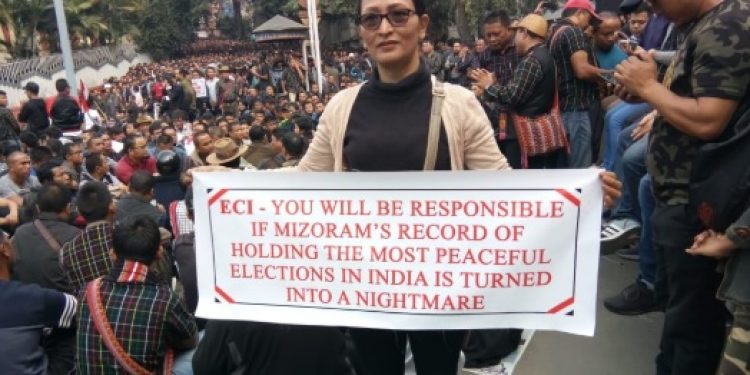
Mizoram: Agitation against CEO called off after the Election Commission summons him to Delhi

Local political groups and NGOs in Mizoram have called off their agitation against Chief Electoral Officer (CEO) of the state SB Shashank on Wednesday after he left for Delhi. Amid rising protest against the CEO, including from the Congress government, the Election Commission has summoned Shashank to Delhi.

Several organisations in Mizoram, under the umbrella body NGO Co-ordination Committee, have been demanding the removal of Shashank from the state ahead of assembly elections scheduled for 28th November. The centre of the contention is voting rights of Bru people from Mizoram currently lodged in refugee camps in neighbouring Tripura. More than thirty thousand people are living in Tripura after they escaped from Mizoram followed by large-scale violence against them in 1997.

These people are still voters in Mizoram, and during last assembly and parliament elections, the election commission had set up facilities for them to vote inside Tripura. But this was protested by Mizo organisations, and the Congress government. After that, the EC had made a commitment that in future votes for Mizoram will take place only in Mizoram. For the upcoming election, the election commission had taken up revision of electoral roll of Bru refugees in Tripura, and they were planning to set up poll booths at a border town in Mizoram for them. But the Mizo organisations were not supporting this move. They argued that only those who have returned to Mizoram should be allowed to vote.

A principal secretary-level officer in Mizoram, Lalnunmawia Chuaungo was allegedly interfering in the electoral roll updating process for the Bru people. On a complaint from the CEO, the EC had removed Chuaungo from his post week. CEO Shashank had said that Chuaungo interfering in the election process and security arrangements for the polls, adding that Mizoram government did not seem keen to have any new Bru voter enrolled. A Gujarat cadre IAS officer, Chuaungo is a Mizo man, and he was supported by the Mizo organisations in the effort to prevent Bru voters from voting in the elections. This was another reason for their demand for removal of Shashank.

On Monday, Mizoram CM Lal Thanhawla wrote to Prime Minister Narendra Modi saying that removal of Shashank was the “only solution” for conducting the polls smoothly. Despite supporting the protesters, the CM himself was unable to file his nomination form in Serchhip as the returning officer’s office was gheraoed by protesters.

As the protests intensified, the Election Commission had sent a three-member delegation on Tuesday to meet the representatives of the protesting organisations. But the meeting remained inconclusive and the protesters didn’t budge from their position. On Wednesday morning they resumed their agitation in front of the CEO’s office. Amid all this tension, the Election Commission decided to summon Shashank to Delhi, and he left Mizoram on Wednesday itself. After news of his departure, the civil society decided to call off its agitation.

Shashank is meeting the officials of the poll panel today in Delhi. He does not know whether he will return to Mizoram or he will be removed from his post, the CEO said before leaving. He said that he was simply carrying out his duties as per instructions of EC and he has no intention to hurt the sentiments of local people in Mizoram. Shashank also said that reports of Bru refugees being allowed to vote inside their camps in Tripura is just a rumour, and EC was yet to take a final decision on the matter.

With just 20 days to go before the assembly election, the Election Commission will have to resolve the matter very soon to ensure a smooth election.

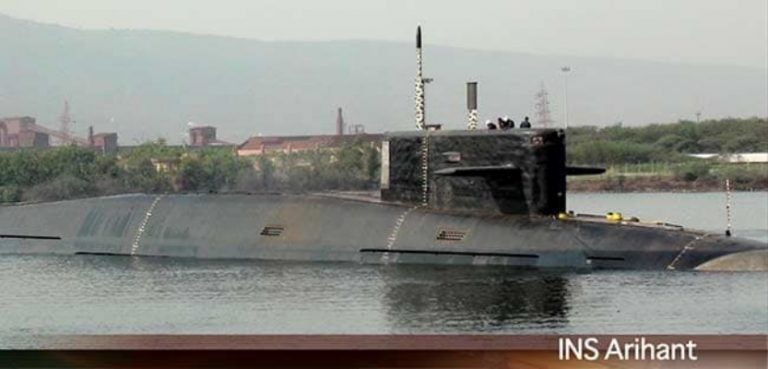
As INS Arihant completes its first deterrence patrol, Indian defence scientists need to be applauded

The U.S. Navy officially embraced the concept of nuclear submarines when it rolled out the USS Nautilus in 1954. However, nuclear submarines as principal weapons of war emerged when the Navy ordered the construction of USS Thresher (SSN-593) in 1958. Three years later, the newly-commissioned stealth submarine served as the lead boat of her class of nuclear-powered attack submarines, displaying an unrivalled speed of 33 knots, unrivalled stealth features, deep-dive capabilities, a state-of-the-art sonar system, and the capability to lurk under the oceans for long periods.

So impressed was the U.S. Navy with USS Thresher’s capabilities, it ordered the construction of fourteen nuclear submarines with similar design characteristics and weaponry. However, disaster struck on 10th April 1963 when the Thresher, during a deep-diving exercise, sunk with all hands on board. A fact-finding exercise later confirmed that the disaster occurred due to a faulty salt-water piping system joint that relied on silver brazing instead of welding. The system initially shorted an electrical panel, scrammed the reactor, and caused loss of propulsion.

Following the sinking of the Thresher, the U.S. Navy embarked on a comprehensive submarine safety programme known as SUBSAFE which fixed existing flaws in Thresher-class submarines. Till today, not a single SUBSAFE-certified nuclear submarine has been lost at sea, and the only one the U.S. Navy lost since Thresher was the USS Scorpion in 1968 which was not SUBSAFE-certified.

In the meantime, the Soviet Navy also had its fair share of nuclear submarine disasters, losing five submarines to accidents and explosions. The most disastrous of them all was the sinking of the Kursk, a monstrous nuclear sub displacing up to 16,100 tonnes, carrying two nuclear reactors, dozens of 33-feet-long nuclear-tipped missiles, and housing over a hundred sailors.

The experience of the world’s premier naval forces demonstrates that even though nuclear submarines take years of research and billions in funding to perfect, they still remain vulnerable to flaws and little details that escape the attention of their designers during the conceptualisation stage.

India arrived fifty-years late to the nuclear submarine party when it first launched INS Arihant, a 6,000-tonne “technology demonstrator” in 2009 and commissioned it seven years later. Indeed, Arihant’s initial objective was to validate the country’s newfound expertise in nuclear technology and stealth and to pave the way for the construction of more advanced submarines with greater tonnage and weapon-carrying capacity.

Even though Arihant did not suffer the same fate as the USS Thresher or the ill-fated Soviet nuclear submarines, it suffered an unfortunate event following its commissioning when an open hatch let seawater into the propulsion area, forcing the Indian Navy to park the submarine for ten months to replace all the affected propulsion pipes.

Following the minor hiccup, Arihant re-emerged as a singular success for India’s naval designers, completing its first deterrence patrol as the unseen vanguard of over a billion Indians, waiting to strike hard in the event of a nuclear attack. The completion of its deterrence patrol catapulted India into the league of just five countries capable of deploying the nuclear triad.

The success of the Arihant programme has already started bearing fruit. In November last year, India launched INS Arighat, a follow-on nuclear submarine which is earmarked for commissioning sometime around late 2020. Once commissioned, it will cruise at 24 knots, carry eight K-4 ballistic missiles or twenty-four smaller-range K-15 missiles, six torpedo tubes, and may weigh almost twice as much as the Arihant.

India is also reportedly working on two additional 1,000-tonne-plus nuclear submarines dubbed S4 and S4 Star and is spending 90,000 crores on the much-talked-about ATV project. Five years from now, these three fresh nuclear submarines, along with Arihant, could prowl deep into the far corners of the Indian Ocean, tailing enemy submarines, practising deep dives, and posing existential challenges to India’s enemies.

However, if we read the work of some journalists (especially some that command vast swathes of editorial space in leading newspapers and news websites), we would be led to believe that the minor accident involving INS Arihant was a stinging reminder that India’s nuclear submarine programme is a failure right from the start.

If you read some doomsday articles about India’s ATV project, you would see that the journalists do appreciate the complexities that designers encounter while designing nuclear submarines and that it takes years to perfect the use of such machines, yet they would choose headlines that would instantly deflate the hopes of any patriot who would want to hear about the country taking positive steps to bolster its strategic defence posture.

For instance, Modern Diplomacycarried an article in August titled “INS Arihant Accidents: Question Mark on the Sustainability of India’s Naval Force”. Here’s an excerpt from the article:

“India could not make considerable progress in developing underwater deterrence. It needs more efforts to overcome all these technical problems to launch a robust triad. It is not difficult to predict that a fully operational nuclear submarine would take 10 to 20 years. The first few submarines, including, INS Arihant is as a technology demonstrator rather than a vigorous deterrent projector. Arihant has faced many problems from the start and still experiencing repairs for damage. The performance of these vessels belongs to the first and second generation of SSBNs. For the sea-based deterrence, India needs S-5 vessel and a powerful reactor, which will take two decades more.”

If it will take one or two decades more, then why not give our designers the time to conduct more research and roll out better submarines? Why predict doomsday in the headline?

Here’s another from the Diplomat: “INS Arihant Accident Raises Questions About the Sustainability of India’s SSBN Force”. In the article, Robert Farley pointed out that “This stuff is hard. The Indian experience has been particularly difficult because India has never constructed a nuclear submarine before, has never operated an SSB, and has very limited experience with nuclear attack subs.”

He pointed out the experiences of Russia and China in the development of nuclear submarines to explain India’s starting problems. “It took the USSR nearly a decade to produce a meaningful deterrent boat. It has taken China nearly three decades, despite extensive experience in both countries in submarine construction and operation,” he wrote.

No one is contesting the fact that Indian scientists and atomic energy experts will have to burn the midnight oil in the years ahead to build better and larger reactors and better stealth technologies to make our future nuclear submarines more agile and powerful. However, the delicious starter has been served and work is underway to deliver an even sweeter dessert. In the meantime, let’s cut the Indian Navy and our scientists some slack and just applaud what they’ve achieved so far.

Muslim cleric declares musical nights and beauty parlours as un-Islamic

0

Few days after Darul Uloom Deoband had issued a fatwa declaring nail polish as un-Islamic, clerics of Majlis-e-Shura, a religious conglomerate in Jammu and Kashmir’s Kishtwar district, issued a dictat declaring musical nights and beauty parlours as un-Islamic.


President of Majlis-e-Shura told in an interview given to Times Now that Parda is a duty in Islam. When there is a wedding party or musical night, men and women dance together which is prohibited in Islam. He also said that musical nights were stopped in Kishtwar after the fatwa was issued. But around one or two weeks ago, these musical nights started again. “We will try to curb these by citing Quran and Hadis to the people as we do not own any army or police station or jail to enforce the fatwa”, he said.

The cleric blamed the women who ‘roam’ around at night for compromising their modesty. He said that such women can handle things themselves but they blame the police instead. He even advised the non-muslim women to cover themselves.

The cleric called beauty parlours as un-Islamic as according to him women do not properly cover themselves in beauty parlours which is bad in Islam.

Bizzare fatwas have been very common recently. The Darul-Uloom has a number of fatwas against, DJ music, life insurance and even letting the shopkeeper help while trying new bangles. Women who have defied fundamentalism have also faced hostility and threats from fundamentalist elements.