Home Blog Page 7078

WikiLeaks Cables from 2005-06 reveal Congress’ sinister Assam politics that compromised national security

0

We had earlier written how the trouble in the north-east really began with the mismanagement during the partition in 1947. That followed by the organized genocide of the Bengali Hindu population by the Pakistani Army in present-day Bangladesh forced many to migrate to India and live as refugees, most of whom were Bengali Hindus. Since the Indo-Pak war in 1971, however, the religious denomination of those seeking residence in India has changed vastly. The influx of immigrants into Assam from Bangladesh resulted in huge protests, which often turned violent, that culminated with the signing of the Assam Accord between the Government of India and the leaders of the movement in 1985.

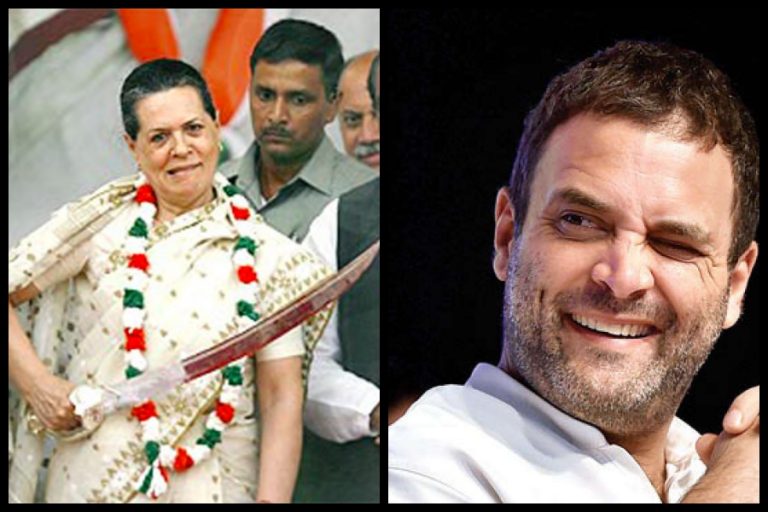
Former Congress President Sonia Gandhi, however, during her campaign in the state in 2006, had allegedly promised to amend the Foreigners Act which would prevent the deportation of illegal Bangladeshi immigrants.

As per a WikiLeaks cable from 2006 allegedly sent by US consulate officer in Kolkata on 16th February 2006, on 11th February 2006, UPA chairman and Congress President Sonia Gandhi had travelled to Assam to launch the 2006 state assembly campaign.

The cable says that while the BJP and Asom Gana Parishad (AGP) the main opposition in Assam were fragmented, Congress still had not lost support from the critical Muslim community. Sonia Gandhi had then offered to amend the Foreigners Act to prevent the deportation of illegal Bangladeshi immigrants.

As per the cable (emphasis added),

The Muslim vote is likely to determine whether Congress can retain its majority. The Muslim community’s importance has been magnified by a steady influx of Bangladeshi immigrants and Muslims presently hold 13 Congress seats in the assembly. Traditionally, Congress had been the party of choice for the Muslims as it protected illegal Bangladeshi migrants from deportation. Congress also supported the Illegal Migrants Determination by Tribunals Act (IMDT) of 1983, applicable only in Assam, which made identification, detection and deportation of foreigners in Assam incredibly complex and protected post-1971 illegal Bangladeshi migrants.

Congress’ relations with the Muslims suffered a setback in July 2005, when the Supreme Court ruled the IMDT unconstitutional. Assam, like the rest of India, is now subject to the Foreigners’ Act of 1946, which requires the police to deport illegal residents. Muslims in Assam criticized the Congress for failing to support the IMDT in court and in November 2005, formed a Muslim political group the United Democratic Front (UDF). UDF Leader Hafiz Rashid Chowdhury (protect) said that the UDF is running on the slogan of “Anti-Congress, Anti-BJP.”

The Congress had passed the IMDT Act in 1983 to determine whether a person is or is not an illegal migrant in the state of Assam. In rest of the states, the identification of foreigners was done through Foreigners Act, 1946. The cable further states (emphasis added):

The Congress has tried to appease the Muslims by not enforcing the Foreigners Act and in her recent visit, Gandhi offered to amend the Act. According to Assam Congress Spokesman Abdul Khaleque (protect), the amendment would effectively bring the IMDT provisions under the Foreigners Act and again create special exceptions and a tribunal for Assam. Also on February 11, Gandhi visited Barpeta, which has a large concentration of Bangladeshi Muslims, and laid the foundation stone for a new medical college.

Another cable dated 29th July 2005 sent by US consulate in New Delhi speaks about the repealing of the Illegal Migrants (Determination by Tribunals) (IMDT) Act in Assam. The cable reads how the repealing of the Act is considered as a victory for the BJP and the AGP and paving way for more liberal deportation procedures. The cable says (emphasis added):

The Congress government, which passed the IMDT Act in 1983, has been accused of catering to mostly-Muslim Bangladeshi migrants in order to use them as a vote bank, and of allowing “demographic aggression” in Assam. The total lack of political will by the Congress-led government, as well as logistical obstacles to implementation will likely blunt any surge in deportations, but the repeal will nonetheless intensify communal politics in Assam and hurt the Congress party’s electoral prospects ahead of spring 2006 elections there.

A Congress Party government passed the IMDT Act in 1983 at the height of an anti-foreigner (read: Bangladeshi) uprising spearheaded by the All Assam Student’s Union (AASU) in response to the growing number of Bangladeshi refugees in Assam. The new law supplanted the Foreigner’s Act, which still governs the rest of the country, and was intended to assuage the anti-immigrant groups by setting up a judicial mechanism in the form of tribunals to determine the nationality of a suspect. In practice, it made deportations more difficult by moving the burden of proof of nationality from the suspect (as under the Foreigner’s Act) to the accuser, i.e., in most cases, the government, but also private citizens and entities. The Congress government used the act to pay lip service to expulsions for electoral gain while allowing illegal immigration to continue unabated.

As a result, the IMDT Act became widely viewed by ethnic Assamese, their parties, and the national BJP party as
a hurdle to identifying and deporting illegal Bangladeshi migrants in Assam. Largely-Hindu opposition parties such as the AGP and the BJP deemed the law “migrant friendly” and accused the Congress of shoring up its vote base by giving Muslim Bangladeshis the right to vote. As the AGP, All-Assam Students’ Union (AASU) and BJP began to agitate against the ineffective and duplicitously-named law, Congress defended it on the ground that it helped prevent genuine citizens from being harassed.

The cable also states how many, including people within the Congress, felt that the IMDT Act put the government and all of its apparatus in favour of the migrants. Kirip Chaliha, Congress leader from Assam had reportedly said that although Congress must publicly oppose the repeal, privately agreed that the act was a detriment to security and that the government “cannot be blind on infiltration.” The cable further states that the Congress’ prospects in Assam may be affected because of perception amongst Muslims that Congress failed to ‘protect them’. It further states that the repeal of the IMDT Act may have simplified the process of deportation, the lack of political will by Congress made sure that the Muslims would not really suffer

Another cable from 22nd September, 2005 from New Delhi in India states that the problem of change in political demographics in the Northeast and increase in Islamic extremism is aggravated by the realisation that ‘neither the Communist and Congress parties, which in many areas rely on a Muslim vote bank, nor Bangladesh, which India claims denies all migration, are ready to do anything to stem the problem.’ It states that the Communist and the Congress parties which were in power in the many of the border states in East and Northeast had “exhibited no political will to crack down on immigrants”. Except in West Bengal, where “Congress was against migrants as they tend to vote for the CPI(M)”.

The cable states (emphasis added):

As more migrants gained the right to vote, they quickly became a protected vote bank for Congress and Communist parties. This violent history and the continued efforts to exaggerate the threat of immigration makes the migrants more susceptible to radicalism.

The accusations that the Congress and Communist parties cater to Muslim migrants as a vote bank by giving them illegal voting rights have raised concerns in political circles about the effect of the “demographic invasion.”

Recently, after initially opposing the National Register for Citizens (NRC), Congress has now gone on damage control mode as Leader of Opposition in Rajya Sabha, Congress leader Ghulam Nabi Azad said that Congress is not against the NRC, but it should be implemented as per the Assam Accord signed during the tenure of Rajiv Gandhi and said that this is a humanitarian issue. This sort of reflects how Congress dealt with the IMDT Act where Centre opposing the repeal of act whereas privately the state unit would be in favour of the repeal, as revealed by the cables.

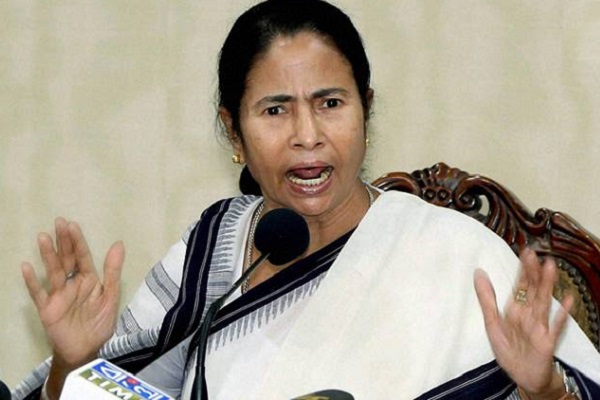
Congress is not the only one with double standards. We had earlier reported how TMC supremo and West Bengal chief minister Mamata Banerjee who is now claiming that the NRC could lead to unrest in the country, wanted the Centre to handle the illegal Bangladeshi immigrants’ issue since it ‘spelt disaster for Bengal’.
Mamata meets Gandhis, but Bengal Congress chief calls her a ‘chameleon’, ‘trojan horse’ and ‘dictator’

0

While Mamata Banerjee is trying to forge a relationship with Congress in Delhi, the Bengal Congress Chief seems to be in no mood to join hands with the Chief Minister of the state.

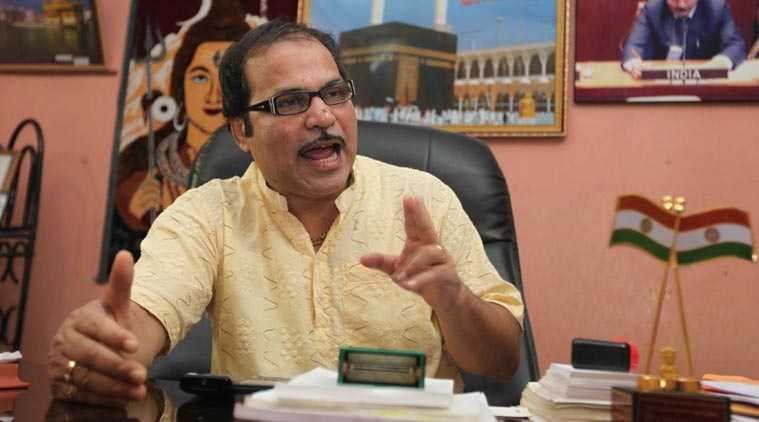
West Bengal Congress chief Adhir Ranjan Chowdhary launched a scathing attack on Mamata Banerjee and went to the extent of comparing Mamata Banerjee to a “chameleon”. He said that in 2005, Banerjee had brought an adjournment motion against illegal migrants, but now, she has changed her tracks.


Mamata Banerjee had met Congress chief Rahul Gandhi and Sonia Gandhi. She had held talks on the united opposition and had also invited them to attend a joint rally on January 19 in Kolkata. But West Bengal Congress is sceptical of joining hands with the Trinamool Congress.

The Bengal Congress chief alleged that Banerjee is acting like a “Trojan Horse” and dividing the “united opposition” by floating the idea of a federal front. He urged the leaders of various parties not to trust her and accused her of conspiring to be the next Prime Minister.

“Her single objective is to be the prime minister of India. She is hankering after the post of prime minister. She is having a ‘Devegowda-syndrome and Gujral-syndrome’,” he said.

He further accused Mamata of trying to finish off the Congress in West Bengal on the one hand and also seeking the support of the party to fight the next Lok Sabha election on the other.

“She is nothing but a ‘chameleon’ who changes her colours. She is an unreliable, unpredictable politician and Congress and other leaders should not trust her at all,” he said.

He accused Mamata of being a dictator, who is projecting herself to be a ‘female monk’, but trying to eliminate Congress in the state by not allowing them to either vote or contest in elections referring to the recent violent Panchayat elections held in the state. “It seems that doing politics in Bengal is a crime; we are the victims of politics of elimination in the state”, he further added.

The PCC chief, who is believed to severely hostile to Mamata said that she is using other parties to win as many seats as possible in Bengal and claim the post of the Prime Minister after the next Lok Sabha elections. He reiterated that while Mamata Banerjee has sealed the Assam-Bengal border, she hypocritically says that she will give shelter to the ones who will be thrown out of Assam.


The NRC debate has caused internal divisions in the Trinamool Congress, as the Assam state unit of the Trinamool Congress is now in tatters after the president of the Assam TMC resigned from the party, as the party has compromised its position on the indigenous Assamese identity.

Dwipen Pathak slammed Mamata Banerjee for reacting to the NRC without understanding the ‘ground realities’ in Assam. Pathak, along with other the two leaders resigned from the party within hours of TMC delegation arrived in Silchar airport.

‘Mulk’ director calls fellow Indians ‘losers’, requests Pakistanis to watch his movie, even illegally

0

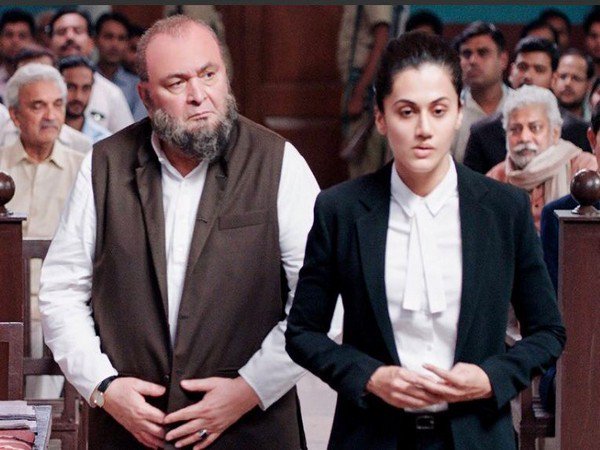
Filmmaker Anubhav Sinha, whose movie ‘Mulk’ hits theatres today, has written a letter to Pakistani citizens. Expressing his displeasure over the Pakistan censor board banning the movie, he has urged Pakistanis to watch the movie by any means possible, even if illegal.

While praising his movie and claiming that it is all about love and co-existence, Sinha, ironically, tries to belittle and defame his own countrymen. Addressing the letter to ‘Dear citizens of Pakistan’, Sinha’s first line of the letter is ‘some losers back home will call me anti-national for calling you dear citizens of Pakistan’. 

He then goes ahead to claim how his movie is neither pro-Muslim of stereotyping Muslims but it is about love and co-existence. Ironically, in a letter that begins with calling his own countrymen as ‘losers’, Sinha does not even have one word of criticism against the Pakistan government for banning his movie.

The letter goes ahead to claim how his movie is all about love and he then expresses his displeasure over his movie being banned in Pakistan and urges Pakistanis to watch it ‘illegally if they must’.

Pakistan’s Federal Censor Board had banned the movie yesterday.

Sinha’s attempt to encourage Pakistanis to engage in cinema piracy was criticised by many on social media.


The promoters and makers of Mulk had run a media campaign stating some statistical data over the alleged discrimination Indian Muslims have to face. It generated a social media backlash after people alleged that they are quoting unverified data to garner cheap publicity for their film. Anubhav Sinha was also in the news for giving statements where he had claimed that Muslims are becoming terrorists because Hindu miscreants are being facilitated.


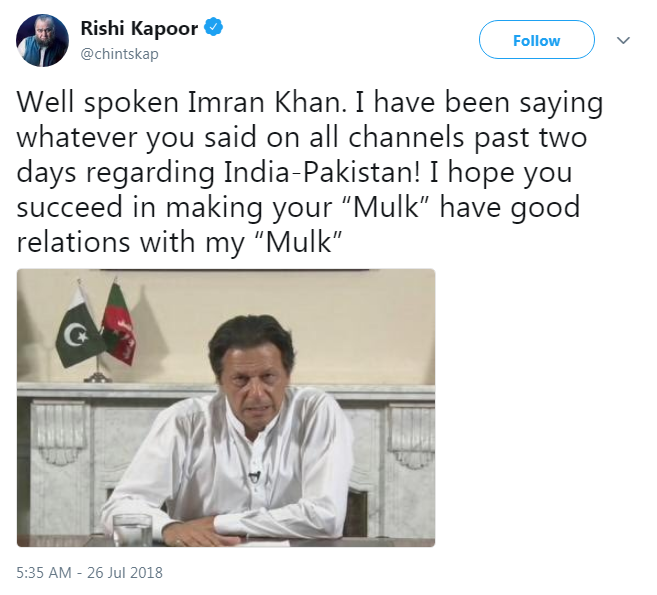
Even veteran actor Rishi Kapoor, who plays the lead role in the movie, had been very affectionate in his approach towards Pakistan’s new probable PM-elect Imran Khan. In a tweet that was mocked widely as brazen and opportunistic movie promotion, he had asked Imran Khan to help better bilateral ties with India.

Rishi Kapoor’s tweet

Banning Indian movies is very common in Pakistan. Recent movies to be banned included ‘Padman’, ‘Veere Di Wedding’, ‘Raazi’ and Anushka Sharma’s ‘Pari’.

To avenge rifleman Aurangzeb’s brutal murder by terrorists, 50 villagers return from the Gulf

0

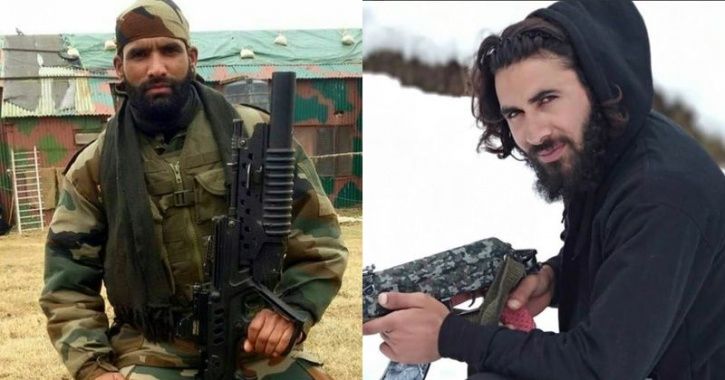
To avenge the death of their friend, rifleman Aurangzeb, 50 youth left their jobs in the Gulf to return back to Salani village in Mendhar, the hometown of rifleman Aurangzeb who was killed by terrorists in South Kashmir in June this year.

Indian Armyman, Aurangzeb who was abducted and killed by terrorists in Pulwama on June 14 when he was on his way home in Rajouri district for Eid celebrations, belonged to 4 Jammu and Kashmir Light Infantry and was posted at the 44 Rashtriya Rifles camp at Shadimarg in Shopian.

He was found murdered by a team of police and Army at Gussu village, about 10 km away from Kalampora, in Pulwama district.

Mohammad Kiramat and Mohammad Taj are among the 50 youths who left their jobs in Saudi Arabia to return permanently to Salani village, to join police and army for avenging the death of their friend and fellow villager Rifleman Aurangzeb.

“When we heard about the killing of brother Aurangzeb, we left Saudi Arabia the same day, and forcibly got ourselves relieved from the job. It can’t be done on the spot, but we managed somehow. 50 youth from this village returned with me.  The only mission is to avenge the death of Aurangzeb”, said Mohammad Kiramat.

While Aurangzeb’s brother is a serving army man, his father Mohammad Hanief is a former Sepoy of the Jammu and Kashmir Light Infantry. 24-year-old Aurangzeb’s abduction and killing in June had sent shock waves in Jammu and Kashmir, compelling his family to make an emotional appeal to the Prime Minister, the Army and the Jammu and Kashmir government to eliminate militancy from the state and avenge his death.

However, brutality did not stop here, following which two policemen and one CRPF jawan were killed when they were on leave. After the abduction and murder of Aurangzeb, a pattern seems to be emerging in the valley, terrorists targetting security personnel who are on leave.

Reportedly, successful anti-terror operations being consistently carried out in the valley have frustrated terrorists and a series of brutal killings of local security forces personnel is a tactic adopted by terrorists to demoralize them and block human intelligence gathering.

“It is a temporary phenomenon and exists because of instigation from across the border.  I am sure very soon this would be reversed and things would improve. We are going to take many steps in which the overground structure of these terrorists will be paralyzed”, said SP Vaid, DG Police, Jammu, and Kashmir.

The terrorists attempting to intimidate the security personnel, last month released a video, where an abducted SPO, Mudassir Wani, was made to appeal to the other SPO’s to quit their jobs and earn some other livelihood. But the Indian armymen-based in Jammu and Kashmir say they are undeterred by these threats.

“We won’t fear just because militants have issued a threat, militants are not responsible for doing this, but those handlers who are sitting in Kashmir and have given the orders to carry out such acts”, said Mohammad Qasim.

“We will perform our duties as we have been doing, we will keep giving sacrifices for our country despite the threats, many of our brothers have been martyred, for them as well”, said an SPO who didn’t want to be named.

Price of misplaced activism: Post GST exemption, manufacturing cost of sanitary napkins up

0

Not too long ago, activists had come together to start a “lahu ka lagaan” campaign that demanded sanitary napkins be exempt from GST. The government was often branded anti-women to have included sanitary pads in the GST bracket. Even Twinkle Khanna, party because of her misplaced sense of activism and party because her husband’s movie, Padman, was up for release, created a brouhaha over the issue of sanitary napkins being included in the GST bracket and we had written about how she was so, so wrong. At the time, Arun Jaitley had also explained why sanitary napkins shouldn’t be exempt from GST as well.

However, soon, the government gave in to popular activism and exempted sanitary napkins from GST. While the activists celebrated, the manufacturers felt the heat of this move.

Reports have emerged that Rajesh Shah, President of the Feminine and Infant Hygiene Association of India has written to Arun Jaitley urging the Finance Ministry to reconsider their position and instead include sanitary napkins in the 5% category. He reportedly said, “Instead of taxing sanitary napkins at 0%, the government should have classified the product under the lowest tax slab so that the mechanism of GST is intact and the product is less expensive. This is the main point we have made to the government.”

Manufacturers too have hiked their base price. They have complained that the cost of production of sanitary napkins has gone up because of this move by the government. They said that since the raw materials like wood pulp, adhesive, release paper, packing material and other commodities at 12%-18%, they end up paying GST, but it won’t be refunded in the form of input tax credit since the end product has become taxfree.

The manufacturers have hiked their base price in a bid to offset the hiked price and the fact that they are getting no input credit owing to napkins being exempt from GST.

“The exempt status of the finished product of sanitary napkins from GST effectively denies input tax credit to companies on the inputs that go into the manufacturing, distribution and promotion of these products in India. As a result, companies in this area will only be able to pass on to consumers the net benefit of this exemption,” said a spokesperson of Johnson & Johnson, a manufacturer of a range of products.

He also said that “the gains from lower taxes are offset by the higher input taxes that are now incurred.”

GST officials said the council may consider this matter in its August 4 meeting.

GV Krishna Rao, GST principal commissioner, who represents Karnataka zone in the GST Council said “making local industries competitive against imported napkins is imperative apart from other things related to pricing. The council will look into it”.

Pakistan’s cyber war to break India: Instigate Indians by spreading fake news through Whatsapp

0

According to IT experts based in Kerela, Cyber intrusions from Pakistan based groups is becoming a recurrent problem, wherein a lot of fake news is being planted by Pakistan to hurt India. Many Keralites are being trapped into these Whatsapp groups, as reported by Times Now. Pakistan is known to have a break India agenda by deepening fault lines within the country and this ‘cyber war’ seems to be one more step in that agenda.


According to the report, fake news is being spread, personal data is being stolen and chances of entrapment are high. Times Now quotes a complaint made by a cyber expert Moju Mohan to the police.

Mohan has complained to the police saying that there are more than 500-600 links in various websites, and on clicking these ‘URLs’ the user automatically gets added to various WhatsApp groups.

There are 60-70 such Whatsapp groups controlled from Multan and Islamabad in Pakistan, few being, ‘Pakistan Zindabad’, ‘Interconnected’, ‘I love my sister’, and so on. Once you get connected to these groups, one starts receiving obscene messages and videos, especially of Indian girls, below the age of 16. It was reported that such exercises were also used for data theft.

India has witnessed over 30 cases of lynchings over the past few months due to rumours being spread over WhatsApp.  Earlier this year, there were reports of how a Pakistani video was edited and spread as a child theft alert message across India. The reports said that a modified version of a video that was made for Karachi based Roshni Helpline’s Facebook page was being shared where the main crux of the original video was removed.

AICTE identifies 277 fake institutions functioning in India, Delhi tops with 66 such institutions

0

Union Ministry of State for Human Resource Development Satya Pal Singh while responding to a question in the Lok Sabha earlier this week said that it has identified as many as 277 colleges offering engineering and other technical studies degrees without All India Council of Technical Education (AICTE) approval. National capital Delhi tops the list with 66 such colleges whereas Telangana comes second with 35. West Bengal has 27 such colleges and Karnataka has 23.

Singh said that these colleges have been asked to seek necessary AICTE permission to avoid being shut down. The University Grants Commission (UGC), which is maintaining a list of 24 fake universities, is monitoring on the issue. It has also sent instructions to take steps against such institutes, the minister further added.

AICTE Chairman Anil Sahasrabudhe said that these institutions are neither approved by the council nor are they affiliated to the respective universities. He said if the institution is not approved by the council, they are not affiliated to the university as well. And hence, the degree or certificate or diploma these colleges may offer would not be recognised for the purpose of higher education or jobs. He said that they may get the training which may be useful, but the degree or certificate from these institutions will not be useful.

Assam: Post NRC draft release and imposition of sec 144, TMC leaders detained at Silchar Airport

0

A team of Trinamool MPs and MLAs were detained at the Silchar airport today. The team had gone to Assam in response to the final draft of the NRC which was published recently. The team which was led by West Bengal Minister Firhad Hakim consisted of 6 MPs, 1 MLA and 1 Minister.


Party leader Kakali Ghosh Dastidar has alleged that the Police misbehaved with the members of the team. “As soon as we reached the arrival lounge of the Silchar airport, we were confronted by a team comprising of the district magistrate and police officers. A police personnel hit me on my chest. The cops also manhandled Kakoli Ghosh Dastidar, Mamata Bala Thakur and Mahua Moitra,” TMC Rajya Sabha MP Sukhendu Sekhar Ray alleged. However, S Laxman, Deputy Commissioner of Assam’s Cachar district has denied the allegations.

Controversial TMC leader, Derek O’Brien, deemed the incident a ‘super emergency’. He said, “Our delegation was detained at Silchar airport. It is our democratic right to meet people, this is a super emergency like situation. What is going on? If 144 is on, where is the notification? They are lawmakers, not lawbreakers. Therefore they agreed to go in groups of two. Six MPs and one MLA have been detained at the airport. This is a bad situation. People are nervous and we are trying to be with the people.”

Kamalakhya Dey Purkyastha, the Congress legislator from Assam, disagreed with the detainment of the TMC team. He said, “My personal view is that the decision by the Assam government not allowing the TMC delegates to come out and meet the people is wrong. This was our chance to tell them that whatever TMC and Mamata Banerjee have been saying about NRC in Assam is all wrong.”

The Bharatiya Janata Party (BJP) has asserted that the TMC team has no business in the state and that they are there to ‘spread tension and create trouble.’ “They are the problem. Who asked the Trinamool MPs to go there? None else has gone there … They should come back,” Dilip Ghosh, president of West Bengal’s BJP unit, said. “If they try to create unrest in Assam, the administration will take action. They should be forced out of the state,” BJP national secretary Rahul Sinha said.

The Cachar district administration issued a prohibitory order under section 144 of the CrPC last night and banned the entry of anyone not involved with the NRC in the district. West Bengal Chief Minister Mamata Banerjee has come under severe criticism following her inflammatory remarks on the NRC resulting in 2 members of the TMC in Assam quitting the party. A case has also been registered against her for her ‘civil war’ remark.

Supreme Court expresses shock at rape and sexual assault cases emerging from Churches in Kerala

0

The Supreme Court (SC) on Wednesday expressed shock at the rape and sexual assault cases which are emerging from churches in Kerala, New Indian Express has reported.

According to the report, the SC made these comments while hearing a minor’s rape case where the accused is a christian priest named Father Robin Vadakumcherry. The rape took place in Kerala’s Kotiyoor in 2016 and the victim subsequently gave birth to a child in 2017. The child was then handed over to a foundling home. A case was subsequently filed against the christian priest by the Kerala police and he is currently in custody.

Thus the Supreme Court bench of Justices A K Sikri and Ashok Bhushan remarked that such rape cases coming out of the Kerala church were shocking and disturbing.

As reported by us recently, in another such matter from Kerala, a case of rape has been registered against three Christian priests who have been accused of abusing and blackmailing a married woman for a whopping 380 times.

Under the minor’s rape case, prosecutors have alleged that doctors too were involved in the matter as they were aware about Father Robin’s crime, and after the child was born – wanted to cover it up.

The lawyer appearing on behalf of the two doctors and a hospital administrator sought that they not be tried under the POCSO act, as according to him it might create a wrong precedence and, other medical professionals may shy away from disseminating timely medical assistance.

According to a report published in The Hindu, the accused doctors and hospital administrators namely Gynaecologist Sister Tessy Jose, paediatrician Hyder Ali and Sister Ancy Mathew, were discharged by the Supreme Court bench. The medical professionals are reported to have helped the victim give birth.

The court though has refused to quash charges against the Child Welfare Committee’s chairman – Father Thomas Therakan and committee member – Sister Betty Jose, who were aware that the baby was kept in the foundling home and did nothing to surrender the child under the juvenile justice act.

Incidentally more shocking details are emerging about the case that the victim has claimed in the Thalassery Additional district sessions court that she and the father had consensual sex and that she wants to have a family life with him, Indiatimes has reported.

As per the report she has also claimed that she was an adult when she got into a relationship with the christian priest. This though has been contradicted by her birth certificate and school records which show that she was indeed a minor.

As a result of the dramatic U-turn by the victim, she has been declared a hostile witness by the court.

VHP claims Mamta Banerjee sheltering more illegal immigrants than Assam, presses for NCR in Bengal

0

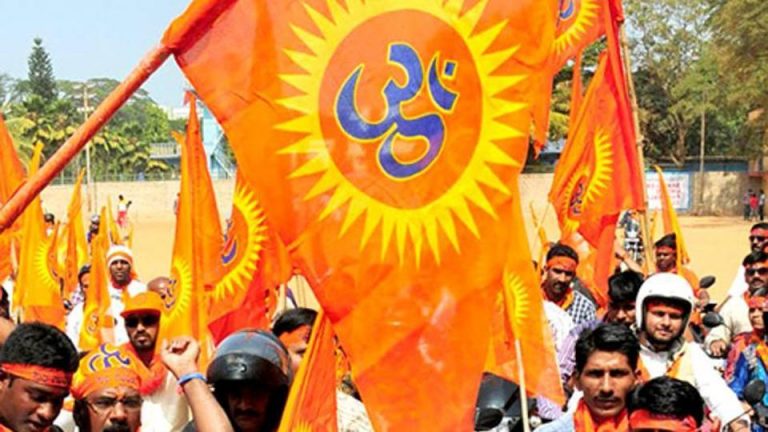
The Vishwa Hindu Parishad (VHP), is planning to conduct a huge campaign in West Bengal along the Indo-Bangladesh border to press for NRC in the state, reports The New Indian Express.

Sachindranath Singha, the organizational secretary of VHP’s east zone, said, “There are more illegal immigrants in West Bengal than in Assam. We want an implementation of NRC in West Bengal to identify the infiltrators and deport them. We will soon start a massive campaign in the border districts to create awareness among the original residents to press for NRC”.

He further reiterated VHP’s stance on ‘infiltrators’ and ‘refugees’ from Bangladesh, by saying, “We consider all Hindus who had fled religious persecution in East Pakistan and Bangladesh to seek shelter in India as ‘refugees’ and demand citizenship for all of them. However, we consider all Muslims who slipped into India from Bangladesh as ‘infiltrators’ and want their citizenship stripped and deported.”

While criticising Mamta Banerjee, the chief minister of West Bengal, for her ‘hypocrisy’ over the NCR issue and for using ‘infiltrators as vote bank’, he restated that, “Simply being able to speak Bengali doesn’t mean they are Bengalis.”

Mamta Banerjee’s hypocritical attitude on the NCR draft in Assam has drawn a lot of criticisms. Mamta who has been quick at launching a lethal attack at the BJP-led government, accusing them of “forceful eviction” by saying that people had become ‘refugees’ in their own state and that the Centre was targeting Bengalis and Biharis, had ironically on 4th August 2005, (she, in the Opposition at that time and the state under the CPI(M) rule) held very differing views on this same issue.

During a session in the Lok Sabha, Banerjee had raised the issue of illegal immigrants in West Bengal, saying that illegals migrants from Bangladesh have spelt disaster for the state, and was upset about being disallowed to raise this issue in the Lok Sabha.