Home Blog Page 1394

“Next time you want to take holiday, go to Sri Lanka”: Sri Lankan leaders thank EAM S Jaishankar for promoting Sri Lankan tourism

0

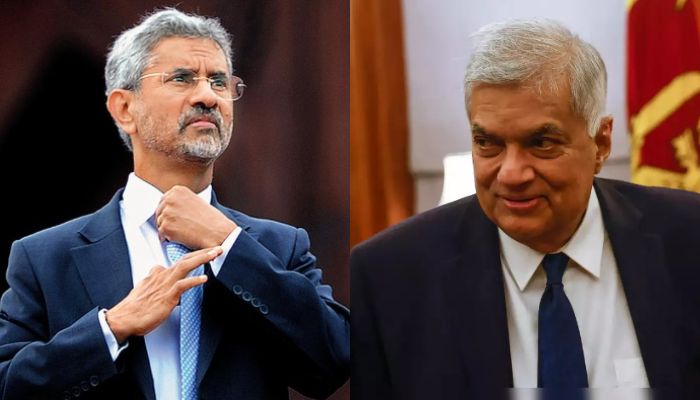
Sri Lankan political leaders heaped praise on External Affairs Minister (EAM) S Jaishankar for promoting Sri Lankan tourism and appealing to people to visit the island country in their next holidays.

Former Sri Lankan member of parliament, Sajith Premadasa, lauded India’s minister and said he ‘deeply appreciates’ EAM Jaishankar’s efforts in campaigning tourism for Sri Lanka.

Taking to X, he said, “Deeply appreciate @DrSJaishankar efforts on championing tourism to Sri Lanka. We warmly welcome all our Indian friends to experience the rich tapestry of our culture. #Gratitude #Hospitality.”

Moreover, former member of Parliament and former Sri Lankan cricketer Sanath Jayasuriya also thanked Jaishankar for supporting Sri Lanka and said India’s support of Sri Lanka Tourism is priceless.

“Special thanks to His excellency Indian External Affairs Minister @DrSJaishankar for your support during our darkest time by words and deeds. Also India’s support to Sri Lanka Tourism is priceless to us,” Former cricketer Suriya posted on X.

This comes after EAM Jaishankar, while speaking at an event, advised people to visit Sri Lanka to take a holiday.

Jaishankar spoke about India’s support for Sri Lanka and said, “My first advice to you, the next time you want to take a holiday, go to Sri Lanka. I’m serious.”

“Please go to Sri Lanka. I say this to all of you. Mix with the normal people in Sri Lanka and ask them what they think about India. And I can tell you you will feel yourself grow with that answer,” he said.

He further elaborated how India had come forward in Sri Lanka’s support when the world had turned its back on the country.

“For the average Sri Lankan, when the world had turned its back on Sri Lanka…I have myself been in Colombo. And there was a petrol shortage. People were pushing their cars to get petrol. There were queues upto kilometers. The country was running out of food, there were no essential commodities. Now at a time when the rest of the world turned its back on Sri Lanka, the only country which came forward and came forward not in a small way. We actually committed 4.5 billion dollars to Sri Lanka. They negotiated for a long time with the IMF, which is where help should have come from. And the IMF package was less than 3 billion dollars. So what we did immediately, quickly, and efficiently was 50% bigger than what the IMF did. And no other country came close,” EAM said.

Sri Lanka plunged into its worst economic crisis particularly in 2022 through 2023. In July 2023, India reiterated its willingness to support the country in its efforts to recover.

India was the first creditor nation in 2023 to convey financing assurances required to kickstart the IMF process.

India was also the first nation to have over its letter of support for financing and debt restructuring of Sri Lanka to IMF.

Multiple credit lines and currency support from India under its “Neighbourhood First” policy began to help Sri Lanka gather stability in is path to economic recovery.

On the other hand, the current Maldives government under President Mohamad Miuzzu has displayed not only a thankless attitude but Islamist representatives of his pro-China government have insulted India and PM Modi. Now, his government is facing stark criticism from the Opposition putting the Miuzzu govt in danger.

This despite the fact that in 2022, India in response to a request from Maldives provided it financial assistance of 100 million dollars as budgetary support during the difficult economic situation.

In 2004, India was the first country to assist Maldives when it was reeling from the severe loss owing to the tsunami. India again was the first country to help Maldives during its water crisis in Male in December 2014.

Maldives is also one of the biggest beneficiaries of India’s “Neighbourhood First” policy. Yet the current government’s hostile approach against the presence of Indian forces on the island nation and against India at large has strained the ties.

The latest statement by EAM S Jaishankar promoting Sri Lanka tourism is an example of the kind of friend India can be should its neighbours make efforts to maintain such friendly ties.

(With inputs from agencies)
No concept of ‘minority’ in 1920, Muslims said they were a nation: Lawyer drops historical bombshell in SC arguing AMU minority status case, CJI says ‘immaterial’

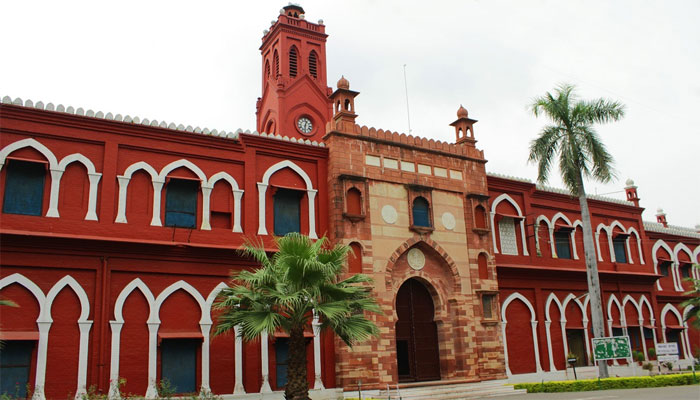
On 30th January, senior advocate Rakesh Dwivedi unleashed a historical bombshell in the Supreme Court of India during the hearing on the minority status of Aligarh Muslim University (AMU). Dwivedi delved into the pre-partition history, challenging the Supreme Court’s proposition on the minority status of AMU. He was appearing on behalf of a petitioner who successfully contested the 50% reservation for Muslims in AMU in the Allahabad High Court. A seven-judge bench led by Chief Justice DY Chandrachud is hearing the matter.

Dwivedi contested the very concept of “minority” attached to the Muslim community in India. Citing Sir Syed Ahmad Khan, founder of AMU, he asserted that before partition, specifically in 1920 when AMU was established, Muslims did not consider themselves a minority in India but called themselves a “nation”.

Dwivedi argued that when AMU was established during British rule in India, the concept of minority was non-existent. He warned that if the university is granted minority status, it may jeopardise the institution’s eminence. He emphasised that Syed Ahmed Khan considered Muslims to be a separate nation, which was evident in the establishment of the Muhammadan Anglo-Oriental (MAO) College.

To support his argument, Dwivedi pointed out that AMU did not challenge the Supreme Court’s Azeez Basha judgment of 1967 for 40 years. Notably, the Azeez Basha judgment adjudged AMU to be a non-minority institute. He said, “Sir Syed Ahmad Khan had established Muhammadan Anglo-Oriental (MAO) College, whose foundation was laid by Lord Lytton. Khan considered Muslims to be a separate and distinct nation which had once ruled over India.”

Furthermore, he highlighted Khan’s contributions to the two-nation theory that Allama Iqbal further supported, leading to the partition of India and the formation of Pakistan in August 1947. Dwivedi unearthed the roots of AMU and pointed out that the Imperial legislative council during British rule played a significant role in the establishment of AMU. He stated how prominent figures like Mohammed Shafi, Shah Nawaz Bhutto and Raja of Mahmoodabad played a vital role in establishing the university. These prominent figures actively backed the Muslim League and the formation of Pakistan as well.

CJI, however, did not agree with Dwivedi. He said the relationship of Syed Khan with the government was not material in the current case. He said, “Saying that the founder was in touch with the ruling powers then is not a means to say that the group is not the minority. A political party in a state may regard a minority as an important vote bank. So can we say that it fulfils all criteria of being a minority, but since it is an imp vote bank, can we say it is not a minority, then it becomes very subjective.”

Dwivedi said, “Khan did not consider Muslims to be a minority merely because they were numerically less than Hindus. Khan is considered the father of the two-nation theory, which was later seconded by poet Allama Iqbal at the 1930 Muslim League session in Allahabad and made the basis of the 1940 Lahore Resolution by Mohammed Ali Jinnah. It is this theory of two nations, which emphasises parity between Hindu India and Muslim India, that led to the partition and creation of Pakistan. The theory of two nations does not accommodate the theory of safeguards for a minority.”

“Given this pre-independence ground situation, could Muslims be considered a minority?” he questioned. Notably, Khan was a sub-judge during British rule. Later, he became a member of the Imperial Legislative Council. He led the movement to establish AMU as he was close to the Britishers. However, the British government decided to establish and administer AMU under a central legislation.

Legal dispute over the Minority status of AMU

The legal controversy concerning Aligarh Muslim University’s minority status began in 1967, when the Supreme Court (in S. Azeez Basha and others v. Union of India), led by then Chief Justice of India KN Wanchoo, was evaluating revisions made to the AMU Act of 1920 in 1951 and 1965. These changes influenced how the university was administered.

Furthermore, a rule stating that only Muslims could be members of the University Court was eliminated, allowing non-Muslims to participate. The modifications also lowered the jurisdiction of the University Court while increasing the powers of AMU’s Executive Council.

These changes to the AMU’s organization were challenged in the Supreme Court. The petitioners argued essentially that Muslims founded AMU and hence had the authority to administer it. On October 20, 1967, when examining a challenge to these revisions, the Supreme Court ruled that AMU was not created nor administered by the Muslim minority.

The Supreme Court ruled that Muslims may have established a university in 1920, but this would not have assured that the degrees earned there would be legally accepted by the Indian government.

As a result, the court underlined that AMU was formed through a central Act to ensure that the government recognized its degrees. “So while the Act may have been passed as a result of the efforts of the Muslim minority, it does not imply that the University, under the 1920 Act, was established by the Muslim minority,” the SC ruled.

Furthermore, the Supreme Court concluded that the university was not entirely operated by Muslims in accordance with the 1920 Act. Instead, its administration was delegated to the Lord Rector and other statutory organizations. The University Court, which had only Muslim members, was also elected by a non-Muslim electorate, the Supreme Court stated.

The Supreme Court verdict sparked national Muslim protests. In 1981, political authorities introduced an amendment to the AMU Act that expressly confirmed the minority status. The modification added Sections 2(l) and 5(2)(c), stating that the university was “an educational institution of their choice established by the Muslims of India” and “subsequently incorporated” as the AMU.

In 2005, the AMU further introduced a policy that reserved 50% of postgraduate medical seats for Muslim candidates. This was challenged in the Allahabad High Court, which, the same year, reversed the reservation and declared the 1981 Act invalid. The court determined that the AMU could not maintain an exclusive reservation because, according to the Supreme Court’s decision in the S. Azeez Basha case, it was not classified as a minority institution. In 2006, a series of eight petitions, including one from the Union government, challenged the High Court’s verdict in the Supreme Court.

In 2016, the NDA government told the Supreme Court that it was dropping its case, stating that “as the executive government at the Centre, we can’t be seen as setting up a minority institution in a secular state.”

On February 12, 2019, a three-judge bench led by the then-CJI Ranjan Gogoi referred the case to a seven-judge bench. On Tuesday, the Bench, which included Chief Justice of India DY Chandrachud, Justices Sanjiv Khanna, Surya Kant, JB Pardiwala, Dipankar Datta, Manoj Misra, and Satish Chandra Sharma, began hearing the case.

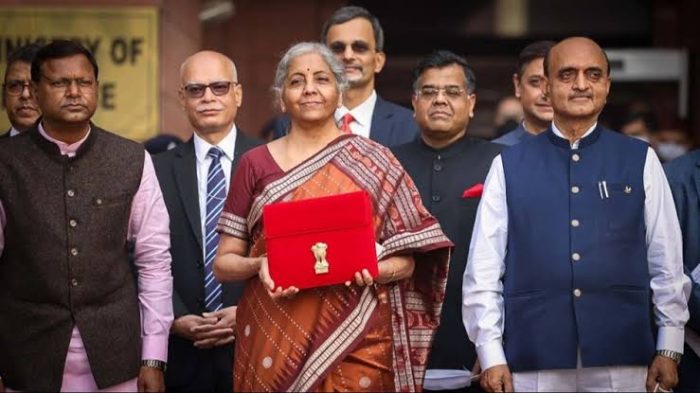
Finance Minister Nirmala Sitharaman set to present Budget 2024, the last during PM Modi’s second term

On Thursday, Union Finance Minister Nirmala Sitharaman will table the interim budget before the country heads for Lok Sabha polls later this year. This will be her sixth Budget as the Finance Minister and last in the second term of the Modi government.

The interim budget will take care of the financial needs of the intervening period until a government is formed after the Lok Sabha polls. A full budget will be presented by the new government.

The Budget Session of Parliament commenced on Wednesday with President Droupadi Murmu addressing a joint sitting of Lok Sabha and Rajya Sabha.

In her address, the President said 2023 was a historic year for the country and among other steps, the country kept up the momentum of being the fastest-growing major economy.

“The year 2023 was a historic year for India when it grew the fastest among major economies despite the global crisis. India grew about 7.5 per cent for two consecutive quarters,” she said.

The last session before Lok Sabha polls, expected to be held in April-May this year, will have a total of eight sittings spread over 10 days.

A day before the session was set to start, Parliamentary Affairs Minister Pralhad Joshi, at an all-party meeting, said the budget session would mainly be devoted to the financial business relating to the interim union budget for 2024-25 and discussion on the Motion of Thanks on the President’s Address.

However, essential legislative and other business may also be taken up during this session. The all-party meeting was attended by 45 leaders from 30 political parties.

In addition, he also informed that Supplementary Demands for Grants for 2023-24 in respect of the Union Government will be discussed. The presentation and discussion on the Interim Budget of the Union Territory of Jammu and Kashmir for 2024-25 along with Supplementary Demands for Grants of Union Territory of Jammu and Kashmir for the financial year 2023-24 will also be taken up and voted.

State of the Economy:

The Indian economy is projected to grow close to 7 per cent in the financial year 2024-25 which starts this April, said the Ministry of Finance in a review report.

The strength of domestic demand has driven the economy to a 7 per cent plus growth rate in the couple of years.

India’s economy grew 7.2 per cent in 2022-23 and 8.7 per cent in 2021-22. The Indian economy is expected to grow 7.3 per cent in the current financial year 2023-24, remaining the fastest-growing major economy.

The robustness seen in domestic demand–private consumption and investment–traces its origins to the reforms and measures implemented by the government over the last 10 years.

Also, firm GDP growth forecasts, inflation at manageable levels, political stability and signs of central bank tightening its monetary policy have all contributed to painting a bright picture for the Indian economy.

According to projections, India is expected to become the third-largest economy in the world with a GDP of USD 5 trillion in the next three years. Subsequently, India can aspire to become a USD 7 trillion economy in the next six to seven years (by 2030).

Highlights from the 2023-24 Budget:

The last full Budget of Modi government 2.0 had proposed to increase capital expenditure outlay by 33 per cent to Rs 10 lakh crore in 2023-24, which would be 3.3 percent of the GDP. It was almost three times the outlay in 2019-20.

Further, the government had proposed to increase the agricultural credit target to Rs 20 lakh crore with a focus on animal husbandry, dairy and fisheries. The agriculture sector of the country has been growing at an average annual growth rate of 4.6 per cent in the last six years.

Like the previous two Union Budgets, the Union Budget 2023-24 was also presented in paperless form.

Presenting the Union Budget 2023, Union Finance Minister Nirmala Sitharaman pegged the fiscal deficit target for 2023-24 at 5.9 per cent of gross domestic product (GDP).

The Finance Minister further said that the government intends to bring the fiscal deficit below 4.5 per cent of GDP by the financial year 2025-26.

The 2023-24 Budget document noted that the Indian economy was backed by strong macroeconomic fundamentals, and there are ample indicators to back it. Be it capital expenditure, the asset quality of banks, foreign exchange reserves, GST collections, fiscal consolidation, and convergence of wholesale and retail inflation, all these indicators were on strong ground.

Prime Minister Narendra Modi, hailing what he called the “first budget of Amrit Kaal,” said that it would lay a strong foundation for building a developed India by 2047.

(This news report is published from a syndicated feed. Except for the headline, the content has not been written or edited by OpIndia staff)

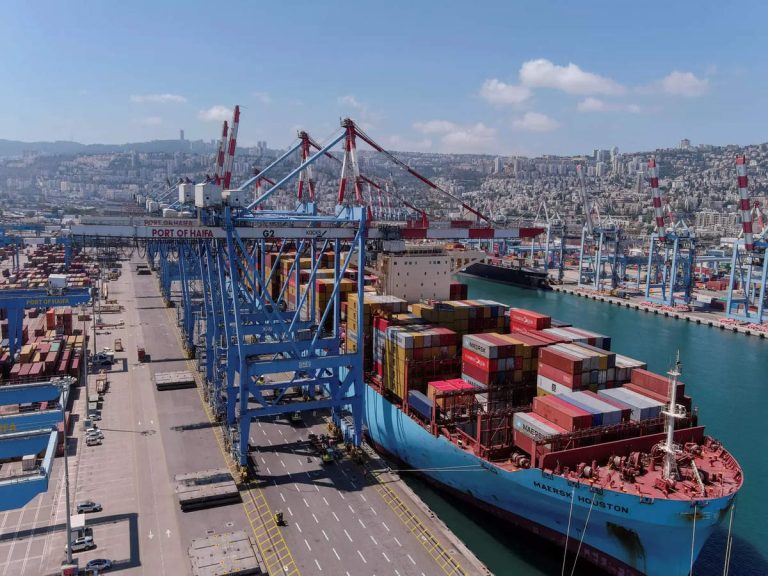
Iraq based Islamic Resistance group claims it attacked Haifa Port in Israel using drones

0

The Islamic Resistance in Iraq (IRI) group has come out with a statement that they attacked the Israeli port city of Haifa with a one way attack drones. The pro-Iranian group said that they carried out the attack in support of the Palestinians.

Israeli government is yet to issue any statement regarding these claims by the IRI.

In Its statement, IRI said, “In continuation of our approach in resisting the occupation, and in support of our people in Gaza and in response to the massacres committed by the usurping entity against the Palestinian civilians and children, women and elders, Mujhaid of the Islamic resistanve in Iraq today, Thursday 1-2-2024, attacked the port of Haifa in our occupied lands in Palestine and confirms the Islamic resistance.”

Notably, earlier, in January this year, Islamic Resistance of Iraq had claimed to have struck Haifa with a long-range missile. There was no confirmation or denial of the attack by Israeli government and military. The group published a video purporting to show the launch of the missile. 

Iran backed Islamist groups in Iraq have been targeting Israel repeatedly during the course of the ongoing Israel-Hamas war.

Israel Hamas war

On 7th October, Hamas terrorists launched an all-out attack on Israel from sea, land, and air. At least 5,000 rockets were launched into Israel from Gaza and tunnels were used to breach the Israeli territory and butcher Israeli civilians, particularly in the border villages. A music festival hosting more than 200 people was turned into a slaughter ground with many women raped, mutilated and abducted to Gaza.

At least 1,300 people, including some foreign nationals, babies, women and senior citizens died in the attacks. More than 200 were abducted and taken to Gaza.

Israel has been at war with Hamas since then, and has been conducting military operations inside Gaza.

Haryana: Three Rohingya men sentenced to ten years in jail for trafficking and raping two Rohingya women in a Nuh refugee camp. Read full details

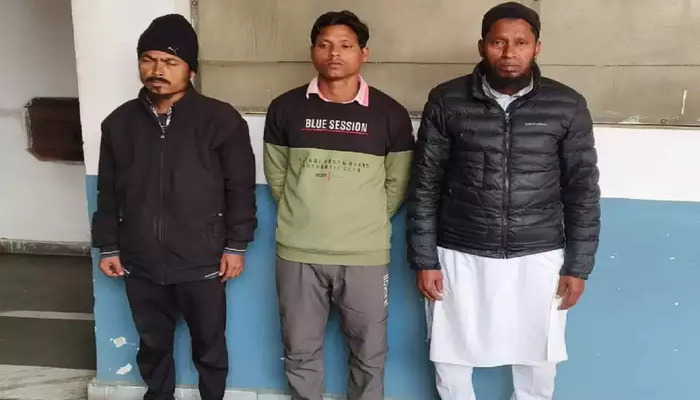
On Tuesday (30th January), three Rohingya men were sentenced to ten years of rigorous imprisonment for trafficking two Rohingya women from Bangladesh to Nuh, Haryana in 2021, and raping them. The three convicts have been identified as Mohammad Ayas, Hafeez Ahmed, and Mohammad Yunus.

According to Nuh police, two women in their early 20s illegally sneaked into India from Bangladesh by giving Rs 25,000 to a person. The two women paid the money to a suspect the police have not identified yet. The women were taken to Delhi via Mizoram and Kolkata by the now-convicted persons Mohammad Ayas, Hafeez Ahmed, and Mohammad Yunus. According to the police, the convicted trio were staying in Nuh’s Rohingya refugee camp at the time.

Haryana Police said that the convicted had involvement in trafficking vulnerable Rohingya women into Jammu and Kashmir via Bangladesh and then arranging their marriages for money.

While Ayas, Hafeez and Yunus were trafficking women and arranging their marriage for money, in this case, they raped the two Rohingya women in a Rohingya refugee camp in Nuh.

On Tuesday, the additional district and session judge in Nuh, Ajay K Verma convicted the three Rohingya men of trafficking and raping two Rohingya women. The court also imposed a fine of Rs 10,000 each. In case of non-payment, the convicts will face an additional punishment of one year in jail.

The Nuh police stated that the convicts approached the two women’s brother at a Rohingya refugee camp in September 2021 in Hyderabad, Telangana, promising to release his sisters for Rs 15,000 each. Authorities said that despite the man’s payment of Rs 30,000, the perpetrators declined to release the women. In September 2021, the women were taken to Malab village in Nuh and sold to a woman in Anantnag, Kashmir, for Rs 70,000 each.

Meanwhile, Narender Bijarniya, superintendent of police in Nuh said that despite several raids conducted in various locations, the woman from Anantnag has not been arrested. “The man who took Rs 25,000 from the women to cross the border has not been identified,” SP Bijarniya said.

The victim’s brother then approached the Child Welfare Committee (CWC). Based on the information, the CWC launched a raid in Malab village and rescued the women from a hutment in a Rohingya camp in Shahpur Nangli in Nuh district. Medical examinations confirmed that the women were raped and tortured.

Acting on the women’s complaint, the Nuh police filed an FIR against the three Rohingya men in November 2021 under Indian Penal Code sections 370 (human trafficking), 370A (sexual exploitation of a trafficked minor), 342 (wrongful confinement), 120 B (conspiracy), 34 (common intention), and 506 (criminal intimidation).

The police then recorded the statements of the two women. Meanwhile, the medical examinations confirmed that the women were raped and tortured. Consequently, the police added sections 6 and 8 of the Pocso (Protection of Children from Sexual Offences) Act to the FIR. At the time, investigators thought the victims were minors.

In January 2022, an age determination test was conducted on the two women and their ages were determined to be between 19-20 and 20-22 respectively. Following this, the sections of the Pocso Act were removed and sections 376 (rape) and 354 (assault or criminal force to woman with intent to outrage her modesty) were added.

Public Prosecutor Pratap Singh said that the criminals were apprehended from the refugee camp in December 2021 after CWC received information about the two Bangladeshi women trafficked. “All three had confessed to the crime and were sent to judicial custody,” Singh said.

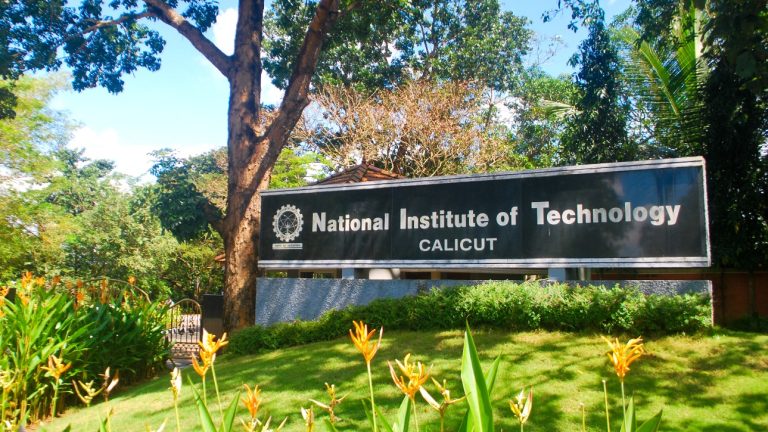
Solely responsible for inciting unrest: NIT-Calicut suspends student who protested against Ram Mandir Pran Pratishtha, had held ‘India is not Ram Rajya’ poster

National Institute of Technology-Calicut (NIT-Calicut) has suspended a student for an year followings protest against Ram mandir Pran Pratishtha in Ayodhya. The student, from the Department of Electronics and Communication, protested against the Ram mandir leading to tension on the campus last week. Following that, the Dean of Students’ Welfare decided to suspend the student.

Vysakh Premkumar,the fourth-year B.Tech. student has been suspended for a year for an “unlawful gathering” that led to “campus unrest”.

Earlier, on January 22, on the day of the Ram Mandir Pran Pratishtha in Ayodhya, tensions had prevailed in the NIT campus as some students were protesting against the ceremony with “India is not Ram Rajya” poster, while some others were celebrating the Ram Mandir. Vysakh Premkumar was part of the group protesting against the ceremony. This led to tension on the NIT campus.

As per an OnManorama report, Vysakh clashed with a group named ‘Science and Spirituality Club’ after he raised objections to a saffron map with bow and arrow, attributed to Lord Ram.

The order issued by the Dean has highlighted Vysakh’s role in the tensions saying that he was solely accountable for inciting unrest and lowering the esteem of the institute. He has been banned from entering the campus or even the hostel during the course of his suspension without recieving prior permission.

The Dean’s order also states that Vysakh Premkumar is a repeat offender and he had been warned verbally earlier as well on multiple occasions for not acting as per the students’ code of conduct.


Gyanvapi case: Allowing Hindus to offer Puja inside Vyas Ka Tekhana is a violation of Places of Worship Act, claims AIMIM chief Owaisi

0

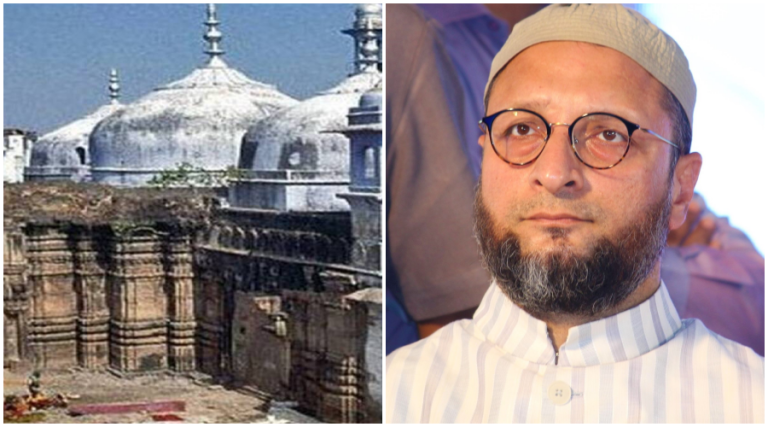
 All India Majlis-e-Ittehadul Muslimeen (AIMIM) president Asaduddin Owaisi said that the judgment by the Varanasi court to allow Hindu devotees to offer prayers inside the ‘Vyas Ka Tekhana’ area inside the Gyanvapi mosque complex was a violation of the Places of Worship Act.

Asaduddin Owaisi said, “The judge who gave the decision was his last day before retirement. The judge appointed the District Magistrate as receiver on January 17 and finally, he has directly given the verdict. He himself said that no prayers were offered since 1993. It has been 30 years. How does he know there is an idol inside? This is a violation of the Places of Worship Act.”

He further said that it was a wrong decision.

“He has ordered to open the grills within 7 days. 30 days should have been given to make an appeal. This is wrong decision. Till the time Modi government does not state that they stand by the Places of Worship Act this will go on. During Babri Masjid title suit judgement, I had raised this apprehension. Places of Worship Act was made a part of the basic structure of the Supreme Court decision, then why are the lower courts not following the order?” Owaisi said.

He further said that the Intezamia Masjid Committee will appeal in the Allahabad High Court against this decision.

This comes as Varanasi court on Wednesday allowed Hindu devotees to offer prayers inside the ‘Vyas Ka Tekhana’ area inside the Gyanvapi mosque complex.

The court has asked the district administration to make the necessary arrangements in the next seven days.

Advocate Vishnu Shankar Jain, representing the Hindu side, told ANI, “Puja will start within seven days. Everyone will have the right to perform Puja.”

“Hindu side is allowed to offer prayers at ‘Vyas Ka Tekhana’. The District Administration will have to make arrangements within 7 days,” Jain said.

The mosque has four ‘tahkhanas’ (cellars) in the basement, of which one is still in the possession of the Vyas family, who used to live there. Vyas had petitioned that, as hereditary pujari, he be allowed to enter the tahkhana and resume pooja. 

(This news report is published from a syndicated feed. Except for the headline, the content has not been written or edited by OpIndia staff)

AAP leader Swati Maliwal asked to take oath as Rajya Sabha MP twice after she read the wrong oath and then chanted ‘Inquilab Zindabad’

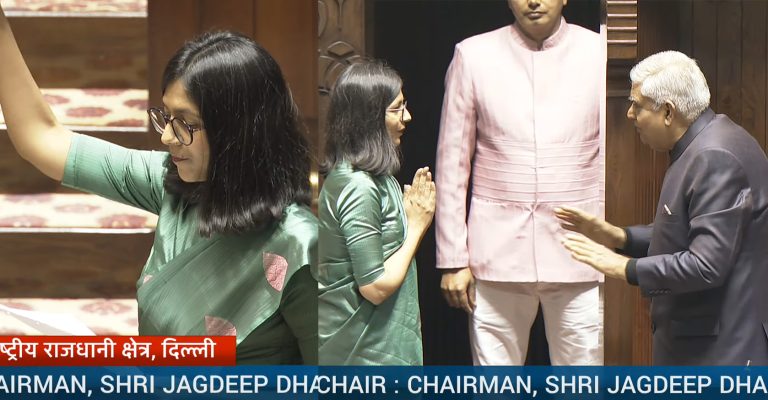
Aam Aadmi Party (AAP) leader and former chairperson of Delhi Women’s Commission, Swati Maliwal took oath as Member of Parliament in Rajya Sabha on Wednesday ahead of the the start of the interim budget session. However, she was asked by Vice President Jagdeep Dhankhar to take the oath twice, as she read the wrong oath the first time, and then included a slogan in the oath at the end.

Three new members were sworn in as Rajya Sabha MPs on Wednesday, Satnam Singh Sandhu, Narain Dass Gupta, and Swati Maliwal. Satnam Singh Sandhu, who has been nominated to the upper house, was the first to take the oath, after which Narain Dass Gupta, who has been re-elected by the AAP, took the oath. Swati Maliwal was the third Rajya Sabha MP to take the oath on Wednesday.

However, while taking the oath, she read the oath for nominated members instead of elected members. She read out, “Mei Swati Maliwal jo Rajya Sabha ke sadashya naam nirbachit huyin hoon”, which means means “Me Swati Maliwal who has been nominated as a member of Rajya Sabha”. After ending reading out the oath, she chanted the slogan ‘Inquilab Zindabad’.

This was immediately flagged by the Parliament officials, and one of the officers told her that she will have to take the oath again due to the violation. Minister Piyush Goyal also objected to the same. Swati Maliwal offered “I will say it again”. But Rajya Sabha chairperson Jagdeep Dhankar sent the AAP leader back to her seat, saying that he would call her back.

He said that this is a solemn occasion, and there are earlier instances of diversions made in oaths in India and outside, and corrections had to be made in such incidents. The VP said that she is a young member of the house and she will have to bear with it. He asked her to take her seat, and when she did this, he called her name afresh, asking her to take the oath again.

When she approached the well to take the oath again, an official reminded her that she has to read only what is written in the paper, making it clear that any slogans are not allowed in the oath. This time Swati Maliwal read out the correct oath and didn’t chant any slogan.

The VP announced that the first oath would not go into the records.

It is notable that Satnam Singh Sandhu, the founder-chancellor of Chandigarh University, was nominated to the Rajya Sabha by President Droupadi Murmu on Tuesday. After he took the oath, Dhankar noted that he is the first member to take oath in the new parliament building. He said, “You have made history. You are the first person to take the oath in the new Parliament building.”

Delhi HC rejects plea seeking pre-censorship of content against Rohingya Muslims on Facebook, says it is a ‘treatment worse than the disease’

0

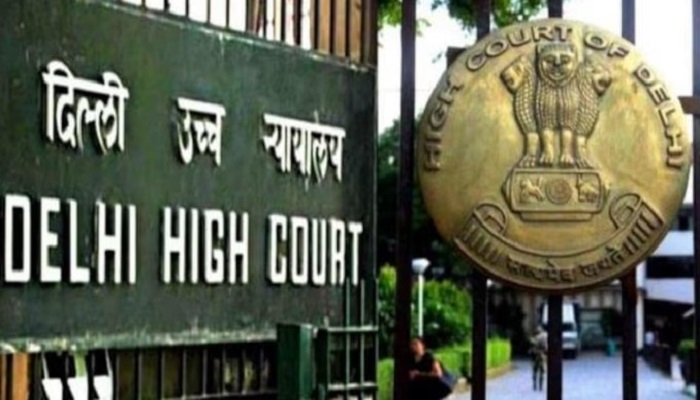
The Delhi High Court on 31 January rejected a petition seeking pre-censoring of content against Rohingya Muslims on Facebook. The plea was filed seeking an order compelling the Union Government to prohibit Facebook India from allegedly spreading “hateful and harmful content” against the Rohingya population on the social media network, but it has been denied by the Delhi High Court.

Acting Chief Justice Manmohan and Justice Manmeet Pritam Singh Arora, who composed the division bench, stated that the notion of censoring any Facebook posts against Rohingyas beforehand is an example of “a treatment that is worse than the disease.”

The court said that the Information Technology Rules, 2021, and their grievance redressal process, along with the legal requirements of social media platforms to refrain from promoting the transmission of hate speech are enough, and it is not possible to order pre-censoring of content. The court pronounced, “Consequently, this Court is of the opinion that in view of the aforesaid Rules the direction sought by the Petitioners to Union of India to restrain Facebook from allegedly promoting, amplifying and spreading hate speech covered by Section 153 and 500 of IPC (Indian Penal Code) and particularly hate speech against Rohingyas does not arise for consideration.”

It further declared that under Article 226 of the Indian Constitution, a party who has been wronged cannot give up on a complete system of remedy provided by an Act to seek High Court jurisdiction. “Consequently, as there is a robust grievance redressal mechanism in existence, the Petitioners have an alternative efficacious remedy and are at liberty to avail the redressal mechanism as per IT Rules, 2021, with respect to any objectionable posts.”

As a result, the bench dismissed the PIL Public Interest (Litigation) filed by two Rohingya refugees, Kawsar Mohammed and Mohammed Hamim, against Facebook India, alleging that the social media platform’s algorithmic features encourage the spread of “hateful and harmful content” that targets the Rohingya individuals. The petitioners had been living in Delhi for the past two to five years after fleeing ethnic conflict in Myanmar.

On Facebook, they attempted to get an order to stop using its virality and ranking algorithms, which they claimed promoted hate speech and acts of violence against communities of colour. Additionally, a request to alter the petition was made, urging for the Union Government to be instructed to take enforcement legal measures to prevent Facebook from purportedly disseminating hate speech against the Rohingya minority.

Facebook requested that the plea be dismissed because it makes no mention of the ineffectiveness of the regulations implemented by the social media giant. The Meta platform argued that the Central Government has enacted the IT Rules of 2021 which has put in place a three-tier system to tackle offending posts, including hate speeches, on social media platforms.

The bench noted that as there is no assertion in the writ suit that the government and Facebook have disregarded its statutory duties under the IT Rules 2021, the reliefs sought against Facebook are not viable. The court also noted that it seems the petitioners were not aware of the relevant provisions of the IT Rules before today’s hearing.

Jharkhand CM Hemant Soren resigns amid reports of arrest by ED, JMM elects Champai Soren as new CM

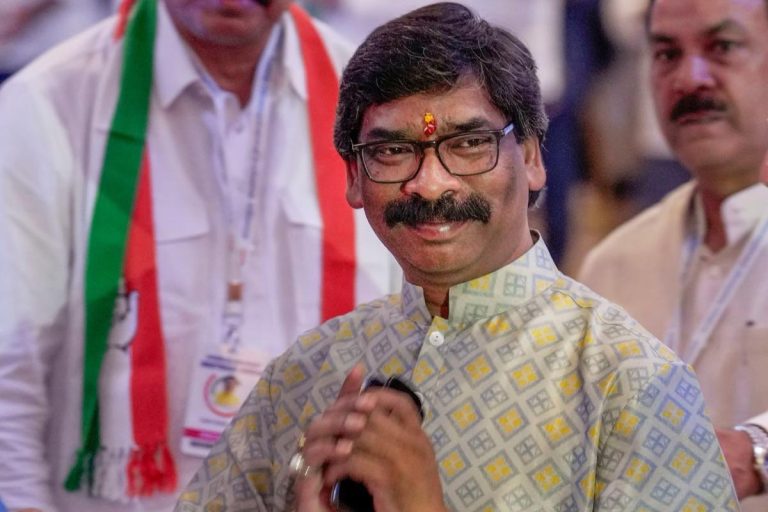
The Jharkhand CM Hemant Soren resigned amid reports of his arrest by the Enforcement Directorate. As per reports, the central agency was unsatisfied with the responses provided by the chief minister during questioning, following which it arrested Soren. The JMM elected Champai Soren as the new chief minister of the state.

The ED is currently investigating at least three cases related to benami properties and illegal mining involving Soren.

For more than six hours, a group of Enforcement Directorate (ED) officials interrogated Chief Minister Hemant Soren at his official residence, which eventually culminated in his arrest.

Soren is likely to resign before his arrest, reports said. According to BJP MP Nishikant Dubey, Champai Soren was proposed by the legislature party for the post of Chief Minister. “Hemant Soren ji could not make Kalpana Soren ji the Chief Minister due to opposition from the family,” Dubey tweeted.

The Jharkhand CM had allegedly tried dodging interrogation by the Enforcement Directorate in connection with a major land scam case. Soren had already skipped 9 ED summons before the central agency finally questioned him on Wednesday.

The ED had written to Jharkhand CM asking him to provide a date for questioning on January 29 or 31, or else the agency itself would go to him for questioning, in connection with a money-laundering case linked to an alleged land scam.

Earlier on January 22, ED issued a summons to Soren for the ninth time, asking him to be available for questioning between January 27 and 31 in the case.

Meanwhile, on January 20, the Enforcement Directorate arrived in Ranchi to question the Jharkhand Chief Minister in the land scam case. The eighth summons was issued to Soren on January 13, asking him to be available for questioning between January 16 to 20, in the case.

According to the Enforcement Directorate, the investigation pertains to a “huge racket of illegal change of ownership of land by the mafia” in Jharkhand. The ED officials are investigating the illegal purchase and sale of 4.55 acres of land under military control in Ranchi.