Home Blog Page 1393

A tale of two interim budgets in 2014 and 2024, reduced capex and deferred payments to fraudulently save face in 2014 vs the best-managed large economy in 2024

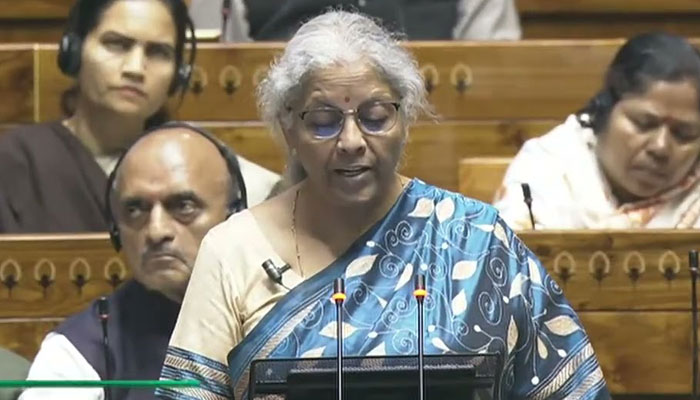
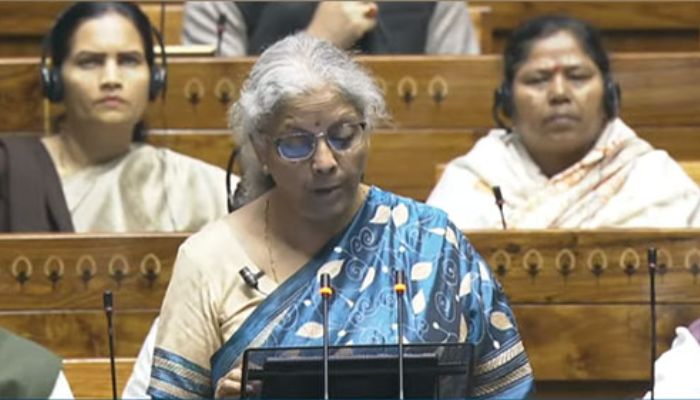
Union finance minister Nirmala Sitharaman presented the interim budget in the parliament today, which is the last budget of the 2nd Modi government. Ahead of the budget, the ministry published a note on the Indian economy, showing how much the economy has progressed in 10 years during the Modi government. The comparisons of numbers from the interim budget of 2014 and the current interim budget show a massive difference between the two budgets, both after 10 years of rules of UPA and NDA govts.

A study of the 2014 interim budget shows means and measures to hide the real state of the economy and artificially boost numbers. On the other hand, the 2024 interim budget has shown that India is the best-managed large economy in the world, well on track to become a $5 trillion economy.

Not only Modi government accelerated the growth of the economy, but the govt also absorbed the deferred liabilities of the previous UPA government. In order to show the numbers in good light, the Dr Manmohan Singh government had pushed payments of subsides on Oil and fertilizers amounting to ₹35,000 crore for the year 2013-14 to the next year, which artificially reduced the deficit of the UPA govt. But this played havoc with cash flow of the related companies, destroying growth.

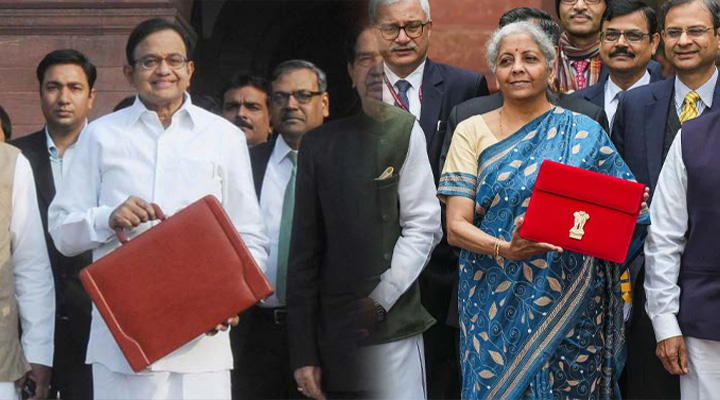
In the 2014 interim budget, Finance Minister P Chidambaram had reduced plan expenditure by ₹80,000 crore, again to manage deficit. This meant that essentially all productive investment was killed. The payments to all infrastructure and other companies were put on halt, to reduce expenses in the govt books. As a result, growth in the economy stalled. Numbers show that only ₹8,000 crore was spent in January to March 2014, against the usual spent of ₹85,000 crore.

Between 2005 to 2014, the capital expenditure of the government fell from 23% to a mere 14%. This resulted in the stalling of job growth.

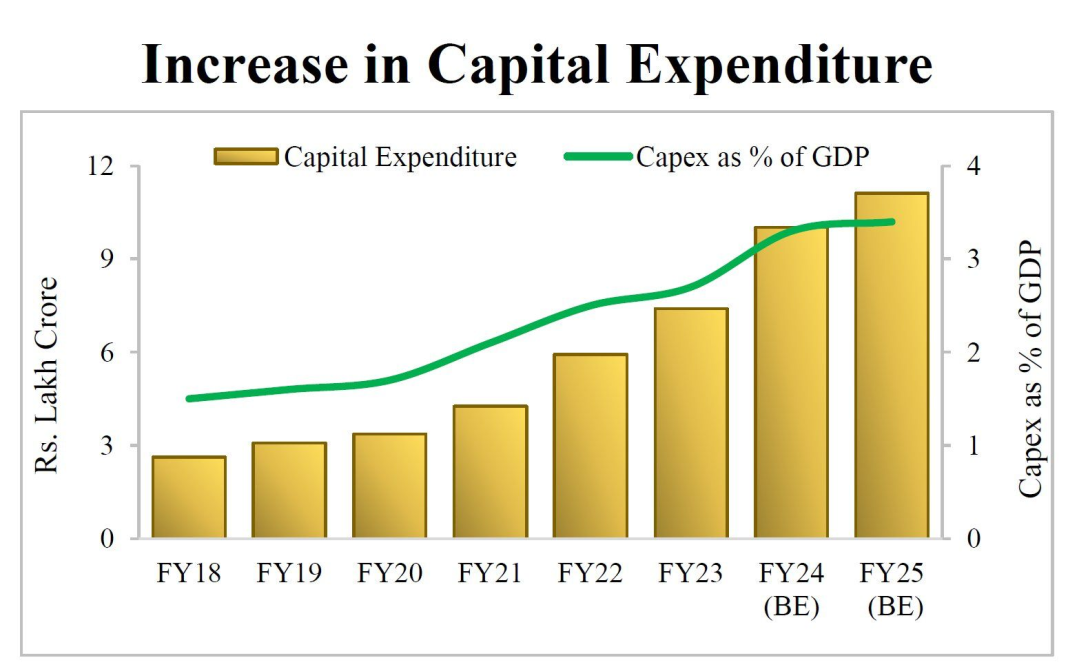
On the other hand, the interim budget presented by Nirmala Sitharaman show a massive increase in capital expenditure under the Modi government, firing the growth engine. Capex is on a record high and continuously increasing. Effective overall capex is ₹15 Lakh crore now, and ₹11.1 crore of it is only on Infrastructure development like roads, railways, ports etc.

The last 10 years of NDA have been high growth and high job and employment generating years. Moreover, there are no ‘Sleight of Hand’ in the budget to hide expenses to artificially show a better economy.

India was 10th largest economy in terms of GDP in nominal terms in 2014, and now the country is 5th largest economy. FDI inflows have more than doubled from $304.03 billion to $642.21 billion. Individual’s weighted mean income as per income tax returns have gone up from ₹3.1 lakh to ₹11.6 lakh. The consumer price inflation has gone down from 10.08% in 2013 to 5.65% in 2023.

With the growth in economy, the income tax burden has also come down for individuals. The effective tax rate was 19.22 % for income upto ₹15 lakh in 2013, and now it is 10.4%, almost half.

Interim Budget 2024: FM announces white paper on economy comparing Congress era with Modi years, committee to study demographic changes and its impact

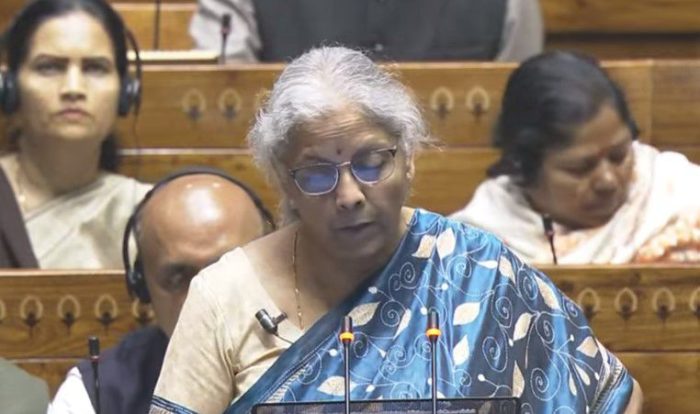
On 1st February, Finance Minister Nirmala Sitharaman tabled the Interim Budget 2024-25 in the Parliament. During her 58-minute budget speech, the Union Minister announced that the government would lay a white paper on the Economy before and after Prime Minister Narendra Modi came to power.

In her speech, she said, “In 2014, when our government assumed the reins, the responsibility to mend the economy step by step and put the governance systems in order was enormous. The need of the hour was to give hope to the people, to attract investments, and to build support for the much-needed reforms. The Government did that successfully following our strong belief in ‘nation-first’.”

She said about the economy now and then, “The crisis of those years has been overcome, and the economy has been put firmly on a high sustainable growth path with all-round development.” Furthermore, the minister announced that the Government will lay a White Paper on the table of the House ‘to look at where we were then till 2014 and where we are now, only to draw lessons from the mismanagement of those years.’

Committee to examine population explosion and demographic changes

Furthermore, another essential announcement that the finance minister made was that the government would soon set up a committee to study the fast-growing population and demographic changes. She said that the rising population growth and demographic changes challenge the goals of ‘Vikas Bharat’.

The high power committee she proposed will study the challenges arising from the growth of the vast population and demographic changes. She added that the committee will be mandated to make recommendations for overcoming the challenges.

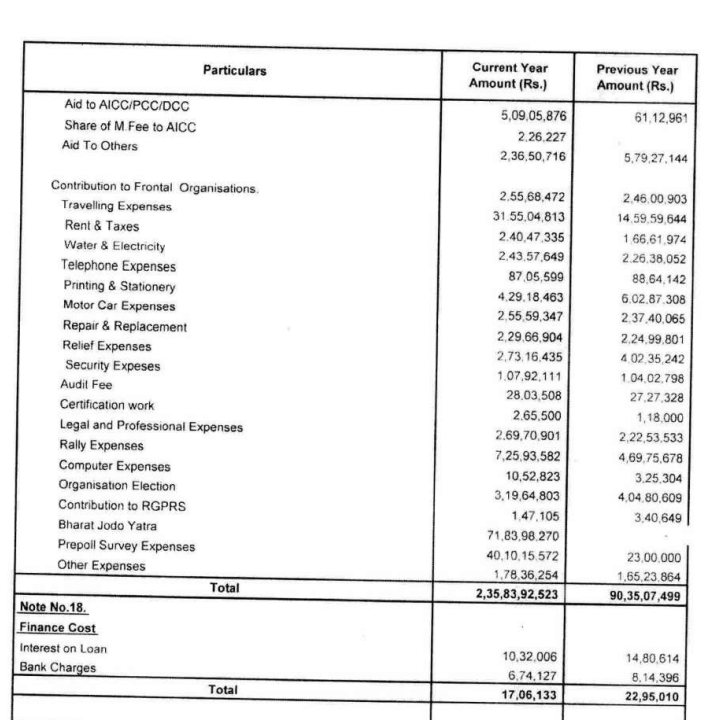
Congress spent Rs 71.8 crore on Rahul Gandhi’s Bharat Jodo Yatra, party’s annual audit report shows its income decreased but expenses went up

Congress scion Rahul Gandhi’s controversial foot march ‘Bharat Jodo Yatra’ was a mega ‘relaunch’ of the Gandhi scion after multiple failed attempts. The Congress party lost in three out of four state assembly elections after the ‘Yatra’. The Yatra started in September 2022 and ended in January last year and could not yield much productive results for the party, however, it cost around Rs 71.83 crore. The yatra cost constituted 15.3% of Congress’s total annual expenditure and more than 30% of its administrative and general expenses in the year 2022-23. The party revealed this in its Annual Audit Report for the fiscal year 2022-2023 filed with the Election Commission.

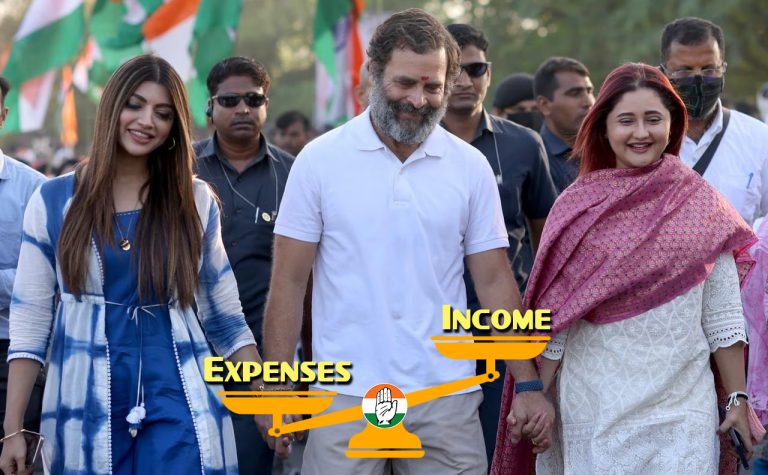
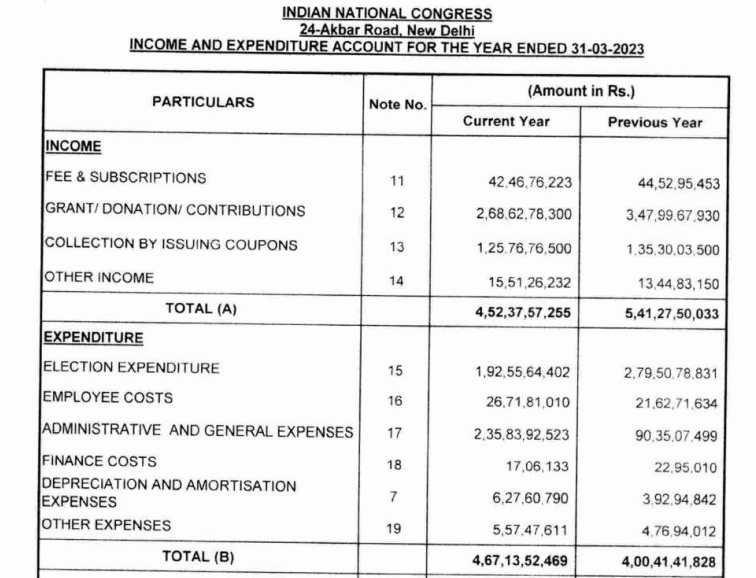
Much like its electoral performance, the Congress party’s total receipt has also dropped to Rs 452 crore from Rs 541 crore in 2021-22. Meanwhile, its expenditure has increased from Rs 400 crore in the financial year 2021-22 to Rs 467 crore in 2022-2023, resulting in a deficit of Rs 15 crore.

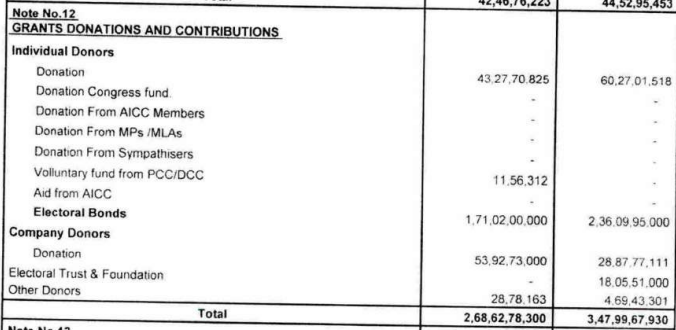
Its electoral bond receipts plummeted to Rs 171 crore from Rs 236 crore in 2021-22, accounting for 63% of total donations and 38% of overall income. In total, the party received Rs 268 crore in “grants, donations, and contributions,” while in fiscal year 2021-22, it collected Rs 347 crore.

In 2022-23, Congress spent Rs 71.8 crore on the yatra and Rs 192.5 crore on elections (a decrease from Rs 279.5 crore the previous year). The party’s administrative and general expenses increased by 161% compared to 2021-22, owing to the yatra, a new programme, and a significant increase in spending on pre-poll surveys, which cost the party more than Rs 40 crore in 2022-23, up from Rs 23 lakh in the year 2021-22.

Notably, individual donors contributed Rs 43.2 crore of the party’s total revenues of Rs 452 crore in the previous fiscal year which is down from Rs 60.27 crore in 2021-22, while companies contributed Rs 53.9 crore in an increase from Rs 28.8 crore in 2021-22. The Congress reported no money from electoral trusts and foundations in 2022-23, after receiving Rs 18 crore through this source in 2021-2022.

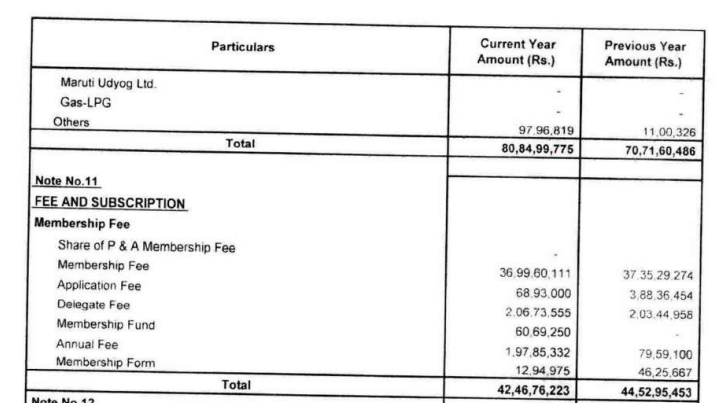
Congress Annual Audit Report (Source: Election Commission)

Moreover, the party received Rs 125.7 crore in income from coupon issues and publication sales, while fees and subscriptions brought in Rs 42.4 crore.

Bharat Jodo Yatra

On 7th September 2022, Rahul Gandhi embarked on his relaunch journey ‘Bharat Jodo Yatra’ and proclaimed himself as the owner-operator of ‘Mohabbat Ki Dukaan’. The foot march started in Tamil Nadu’s Kanyakumari and concluded on 30th January 2023 in Jammu and Kashmir.

From widening the linguistic divide, meeting anti-Hindu pastor George Poonaiah, walking alongside Congress leader who openly slaughtered cow,  feeling hatred between Maharashtra and Gujarat, controversial ‘activists’ like Yogendra Yadav, Medha Patkar, anti-Sikh riots accused Jagdish Tytler to raking up ‘outsider’ rhetoric in Jammu and Kashmir when migrant workers and non-locals were being killed by the terrorists, the Bharat Jodo Yatra grabbed attention for most if not all wrong reasons.

Despite the failure of the Bharat Jodo Yatra, the party has launched Bharat Jodo Yatra 2.0. The same old foot march with “Nyay” added to it. The Bharat Jodo Nyay Yatra started on 14th January and will conclude on 20th March 2024 across 14 states covering 6,200 kilometres and 85 zillas.

Donate for Desh

 On 18th December 2023, Congress President Mallikarjun Kharge had launched the party’s fundraising campaign “Donate for Desh” from New Delhi where he donated Rs 1.38 lakh. On 28th December 2023, the party marked its 138th anniversary. In alignment with that, it had issued an appeal to its supporters to contribute in multiples of ₹138, while urging its district and state-level workers to donate ₹1380.

The fundraiser has turned out to be a flop show as the grand old party has received just Rs 16 crore, as informed by Congress’s treasurer Ajay Maken on 23rd January.

As reported earlier, the party could manage to raise just Rs 11 crore in two weeks since the campaign’s launch prompting the party leadership to direct the party workers to increase their efforts to raise more funds from party leaders, workers, and the general public. The paltry collections by the grand old party so far reflect the nation’s mood and that the party has failed in its attempts to connect with the people and garner their support.

Decreasing donations, rising expenses, and an already falling apart I.N.D.I. Alliance are all bad indications for the Congress party ahead of the Lok Sabha elections this year.

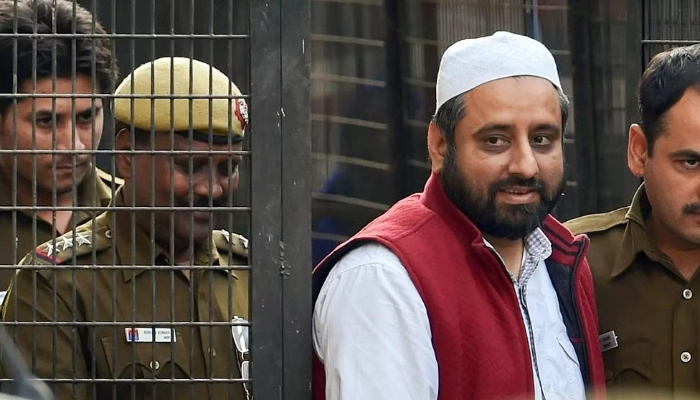
Delhi High Court refuses to stay ED summons to AAP MLA Amanatullah Khan in Delhi Waqf Board money laundering case

0

On Thursday (Frbruary 1), the Delhi High Court refused to stay the summons issued to Delhi MLA Amanatullah Khan in Delhi Waqf Board money laundering case, reported Bar and Bench. The Enforcement Directorate (ED) has summoned Amanatullah Khan, a member of the Aam Aadmi Party (AAP), and Okhla MLA in connection with a corruption case involving the Delhi Waqf Board.

The case was postponed until 7th February by a Division Bench of Justices Rekha Palli and Rajnish Bhatnagar, who were notified that the AAP leader’s senior attorney was not available on Thursday. The court asserted that it has not sent out notices regarding his plea or to seek temporary relief for him.

Amanatullah Khan approached High Court contesting the ED’s procedures, and the Anti-Corruption Bureau’s (ACB) formal complaint against him. He has also questioned the legality of the Prevention of Money Laundering Act’s Section 50. Section 50 states that summoned persons shall be bound to attend in person or through an authorised officer and shall further be bound to state the truth upon any subject respecting which they are examined or make statements and produce such documents as may be required.  

On 30th January, the Delhi High Court refused him immediate relief against the summons after he submitted a request contesting the same, and scheduled a hearing for Thursday. AAP leader’s money laundering case is connected to the reported anomalies in the Delhi Waqf Board hiring process. Allegations have been made against him about his unlawful recruitment of individuals while serving as the Chairman of the Waqf Board. He is accused of violating government regulations and conventions by unlawfully recruiting thirty-two individuals while serving at the post.

The Delhi Waqf Board, as per ED, illegally hired workers, allowing him access to “huge proceeds of crime” in cash which he used to buy real estate in the names of his associates. The charges are made by ED, which had earlier carried out raids on the legislator’s Okhla constituency office in the Delhi Assembly. Three of Khan’s suspected colleagues, Zeeshan Haider, Daud Nasir and Jawed Imam Siddiqui were apprehended by the agency in November 2023. The ED has issued a charge sheet in the case against five entities.

The ED proceedings started when the ACB booked Amanatullah Khan in the matter. However, Amanatullah Khan argued that neither the Prevention of Money Laundering (PMLA) case nor the underlying offence had a trace of the proceeds of fraud uncovered.

Puja of deities in Vyas Cellar in Gyanvapi structure performed by Hindus after 31 years, administration opened the gate at midnight as per court order

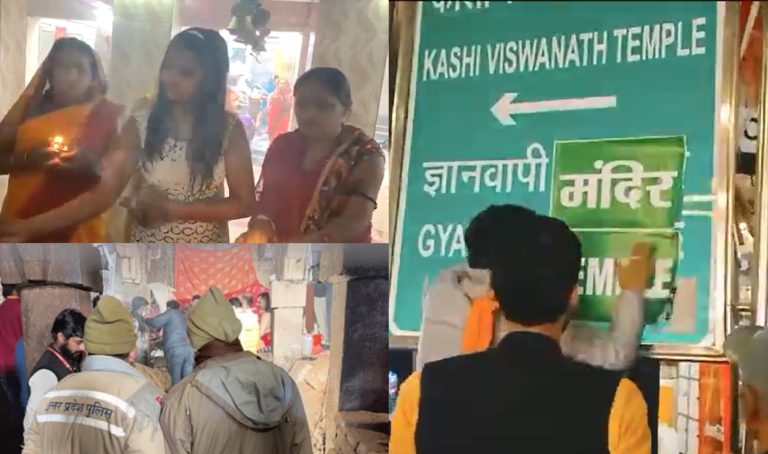
Hours after the Varanasi District Court allowed Hindus to worship at the Vyas Cellar inside the Gyanvapi structure, worship of Hindu idols in the basement was done earlier today. This was done after the district administration opened the locks to the cellar last night and made necessary arrangements for the regular puja of the deities.

In a landmark order, the district court of Varanasi yesterday said that the Hindus have the right to worship the deities in the Vyas Ji Ka Tehkhana (the basement cellar of the Vyas family) at the Gyanvapi complex. Notably, the Vyas cellar is one of the several cellars in the complex, which has been under the control of the Vyas family for centuries. The generations of the family have been worshipping Goddess Shringar Gauri and other deities there since the 16th century, before it was stopped and the cellar was locked in December 1993 by Mulayam Singh govt.

The court had asked the district administration to open the cellar and make arrangements for worship within 7 days. But the administration officials didn’t wait and moved quickly to implement the order. The officials reached the premises on Wednesday late night along with police officials. They removed the steel grill around the southern cellar on the mosque premises, and a pathway leading to the cellar connecting to the road in front of Kashi Vishwanath Mandir was carved out.

After that, the administration officials let the members of the Vyas family to enter the Vyas Ji Ka Tehkhana to perform puja rituals. Officials including the police force remained present at the spot during this time.

As per reports, idols of deities recovered in the cellar, details of which have been mentioned in the recently published ASI report and were in the custody of the district administration, were placed inside the cellar for the puja. Earthen lamps were lit inside the cellar in the night, puja rituals were done, and at last, the Mangala Aarti was performed. The rituals ended at around 3 AM.

Later in the morning, women from the Vyas family entered the cellar for prayers. Visuals from the cellar show three female members of the Vyas family, including a teenage girl, performing puja inside the cellar for the first time after 31 long years. With this, the three women created history by marking a successful end of the struggle by the Vyas family in particular and Hindus as a whole for the right to worship at the holy place, which has been repeatedly destroyed by Islamic tyrants over the last millennium.

According to Varanasi Divisional Commissioner Kaushal Raj Sharma, regular full-fledged puja of the deities inside the cellar would commence in compliance with the district court order from Thursday onwards.

The order by district court judge Dr AK Vishvesha said that the Vyas family has been worshipping there since the British period and they have been doing it up to December 1993. The court order also stated that the state govt had stopped the worship under the basement without any authority to do so. Therefore, the court allowed Hindus to worship at the Vyas cellar. The order was passed in a petition filed by Shailendra Kumar Pathak seeking the right to recite prayers and perform worship rituals at the Vyas Ji Ka Tehkhana located in Varanasi’s Gyanvapi complex.

Notably, the Vyas family had filed a separate plea in 1991, seeking the transfer of the Gyanvapi mosque structure to Hindus. They asserted that, except for the upper structure dedicated to namaz and the domes, the entire structure still belongs to the Lord Visheshwar temple. Even though the Vyas family no longer resides in the Kashi Vishwanath-Gyanvapi complex, they still retain ownership of Vyas Ji Ka Tehkhana, one of the four basements of the mosque.

In a related development, some people at Varanasi changed the name of the Gyanvapi mosque to Gyanvapi temple on a board. They pasted the words Mandir and Temple over the words Masjid and Mosque on the road signage.

Budget 2024: New housing scheme to be introduced for middle class living in rented houses, slums, chawls or unauthorised colonies

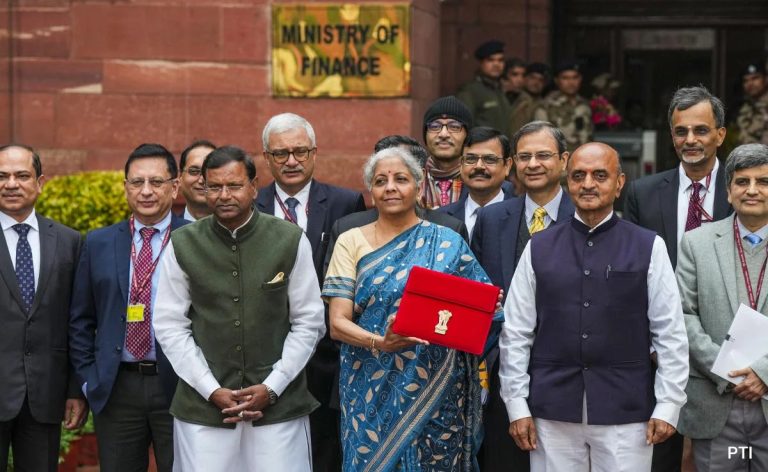
Union Finance Minister Nirmala Sitharaman on Thursday (1st February) presented the 5th and last budget of the Modi government 2.0.

The FM said that there is a need to focus on four major castes namely gareeb, mahilayen, yuva and annadata (poor, women, youth and farmers).

“Their needs, aspirations and welfare are our highest priorities,” she said.

One of the key takeaways of Budget 2024 is the consistency in the extension of housing scheme benefits for the rural population and the middle class.

The FM announced that the Centre is close to achieving a target of giving 3 crore houses under the PM Awas Yojana Gramin.

“Two crore more houses will be taken up in the next 5 years to meet the requirement arising from an increase in the number of families,” she said.

On housing for the middle class, the FM said, “Our government will launch a scheme to help deserving section from the middle class living in rented houses or slums or chawls and unauthorised colonies to buy or build their own houses.”

Additionally, the FM said that through rooftop solarisation, one crore households will be enabled to obtain upto 300 units of free electricity every month.

“This scheme follows the resolve of honourable Prime Minister on the historic day of consecration of Shri Ram Mandir in Ayodhya,” Sitharaman said.

The budget projects savings of up to Rs 15,000 to 18,000 annually for households from free solar electricity and selling the surplus to distribution companies.

Lakhpati Didi: Target for scheme aimed at empowering rural women extended to 3 Crore women in Budget 2024

On Thursday, February 1, while presenting the Union Budget, Finance Minister Nirmala Sitharaman announced the expansion of the ‘Lakhpati Didi’ scheme. The scheme, aimed at empowering women in rural areas, will now target 3 crore women. The initial target for the scheme was 2 crore women, which has now been increased to 3 crore.

During her speech, Ms Sitharaman lauded the role of Self Help Groups (SHGs) who are positively impacting the lives of crores of women in the rural areas making the ‘Lakhpati Didi’ scheme a success. 83 Lakh SHGs are collectively impacting lives of over 9 crore women, the Finance Minister mentioned in her speech.

Ms Sitharaman added that these SHGs have emerged as catalysts of change, transforming the rural economy by empowering women with financial independence.

Apart from extending the Lakhpati Didi scheme, the Finance Minister also announced expansion of Ayushmann Bharat scheme for Anganwadi workers, ASHA workers, and the helpers there.

What is Lakhpati Didi scheme

Lakhpati Didi, an ambitious project of PM Narendra Modi was announced on the last Independence Day from the Red Fort. The scheme aims to empower rural women and help them earn a sustainable income of at least 1 lakh per annum by providing them necessary training.

Under the scheme, crores of poor women associated with Self Help Groups (SHGs) are expected to benefit. The scheme is essentially a skill development program for these women. These women will be provided with necessary skill training to make them capable enough to earn on their own and improve their lives. During the training, these women will also be taught how to start their own small scale businesses.

Lakhpati Didi initiative has been initiated by Deendayal Antyodaya Yojana – National Rural Livelihoods Mission (DAY-NRLM). DAY-NRLM is the flagship program of the Ministry of Rural Development (MoRD) for promoting poverty reduction through building strong institutions for the poor, particularly women.

Under Lakhpati Didi scheme of DAY-NRLM, each SHG household is encouraged to take up multiple livelihood activities coupled with value chain interventions, helping the women get sustainable income of at least Rs 1 lakh.

Since most of the poor women in rural areas are only reliant on agriculture for their livelihood, a need was felt to provide them skill training so that they can start their own small businesses and earn their living.

The scheme aims to improve the quality of life among the poor in rural areas with the help of SHGs, and improve the socio-economic condition of women there.

Budget 2024: FM Nirmala Sitharaman highlights the steps taken by government in 10 years to transform Indian economy

In the interim budget presentation on the floor of the Parliament, Finance Minister Nirmala Sitharaman declared that the Indian economy has undergone a profound positive transformation over the last decade.

“Indian economy witnessed profound positive transformation in the last 10 years,” said Sitharaman, while presenting #Budget2024 in the Parliament

Presenting the Interim Budget for the fiscal year, Sitharaman highlighted the government’s commitment to inclusive development under the vision of “Sabka Saath, Sabka Vikas, and Sabka Vishwas.”

“In the second term, our government strengthened its vision of Sabka Saath, Sabka Vikas, and Sabka Vishwas,” stated Sitharaman, emphasizing the continuity of the government’s commitment to the welfare of all citizens.

She acknowledged the challenges posed by the once-in-a-century pandemic but noted that the country successfully overcame them, continuing its stride towards building an Atmanirbhar Bharat (self-reliant India) committed to Panch Pran and laying solid foundations for the Amrit Kaal.

Sitharaman said, “The country overcame the challenges of once in a century pandemic to clang stride towards Atmanirbhar Bharat committed to Panch Pran and laid solid foundations for the Amrit Kaal”.

Addressing concerns about food security, Sitharaman announced the elimination of worries through the provision of free ration for 80 crore people.

“The worries about food has been eliminated through free ration for 80 crore people”, said Finance Minister.

The Finance Minister also highlighted the impact of Direct Benefit Transfer (DBT), emphasizing that savings through DBT channels have enabled more funds for the PM Garib Kalyan Yojana, a welfare program for the economically disadvantaged.

“With the pursuit of Sabka Saath, the govt has assisted 25 crore people to get freedom from multidimensional poverty in last 10 years”, Sitharaman stated during her Budget speech.

The Finance Minister underscored the need to focus on four major pillars: the poor, women, youth, and annadatas (farmers). “We need to focus on four major pillars — poor, women, youth and annadatas”, said Sitharaman

Highlighting achievements in skill development, Sitharaman noted that the Skill India Mission has successfully trained 1.4 crore youth, contributing to their empowerment and employability.

She reiterated the government’s commitment to inclusive governance, describing the administration under Prime Minister Modi as “secularism in action.”

“In the last 10 years, we have targeted every household for houses for all, water for all, and cooking gas for all,” Sitharaman declared, emphasizing the comprehensive approach towards addressing basic needs and improving living standards.

Additionally, she revealed that 34 crore Mudra Yojana loans have been extended to women entrepreneurs, promoting financial inclusion and empowerment.

“34 cr Mudra Yojana loans been given to women entrepreneurs”, said Finance Minister.

The Finance Minister concluded her budget presentation with a positive outlook, signalling the government’s determination to continue fostering inclusive growth and development.

As the nation navigates through the uncertainties of the present and builds towards the future, the budget reflects a commitment to the welfare and progress of all citizens.

The Budget 2024 is expected to undergo thorough scrutiny and debates in the coming days in the Parliament, as stakeholders assess its potential impact on the nation’s economic trajectory.

(This news report is published from a syndicated feed. Except for the headline, the content has not been written or edited by OpIndia staff)


Indian Economy under PM Modi has witnessed profound transformation: FM Nirmala Sitharaman gives govt’s report card

The Indian economy under Prime Minister Narendra Modi has witnessed a profound transformation in the last 10 years when the government took several pro-people reforms that were structural, Union Finance Minister Nirmala Sitharaman said on Thursday, as she rose to present the interim Budget for 2024-25. 

“In 2014, the country was facing enormous challenges, the government overcame those challenges and undertook structural reforms, pro-people reforms were undertaken, conditions for jobs and entrepreneurship were set in, fruits of development started reaching people at scale, country got a sense of new purpose and hope,” Sitharaman said in her initial remarks in her pre-election Budget speech. 

“In second term, the government strengthened its mantra and our development philosophy covered all elements of inclusivity, namely social and geographical. With a whole of nation approach, the country overcame challenges of the COVID-19 pandemic, took long strides towards Aatma Nirbhar Bharat and laid solid foundations for Amrit Kaal.” 

“In second term, the government strengthened its mantra and our development philosophy covered all elements of inclusivity, namely social and geographical. With a whole of nation approach, the country overcame challenges of the COVID-19 pandemic, took long strides towards Aatma Nirbhar Bharat and laid solid foundations for Amrit Kaal.” 

India has high aspirations, pride in present and hope and confidence in its bright future, she added. 

Inclusive development and growth, our humane approach to development has marked a departure from the earlier approach of provisioning up to village level Development programmes have targeted each and every household and individual through housing for all, Har Ghar Jal, electricity for all, cooking gas for all and bank accounts and financial services for all in record time. Worries about food were eliminated through free rations for 80 crore people MSP for produce of Anna Data are periodically increased, provision of basic necessities has enhanced real income in rural areas. 

She said her government is working towards development which is all round, all inclusive and all pervasive, covering all castes and people at all levels We are working towards making India a Viksit Bharat by 2047. 

“For our government, social justice is an effective and necessary governance model saturation approach of covering all eligible people is the true and comprehensive achievement of social justice, this is secularism in action, reduces corruption, prevents nepotism. There is transparency and assurance that benefits are received to all eligible people, all regardless of their social standing get access to opportunities. We are addressing systemic inequalities which have plagued our society, our focus is on outcomes and not on outlays so that socioeconomic transformation is achieved,” she said. 

The Finance Minister said that the earlier approach to tackling poverty resulted in very modest outcomes. “When the poor became empowered partners in the development process, the government’s power to assist them increased manifold. In the last 10 years, the government has assisted 25 crore people to get freedom from multidimensional poverty,” the Finance Minister said. 

After contracting by 5.8 per cent in 2020-21, the economy recorded a growth of 9.1 per cent in 2021-22. 

The Finance Ministry in its latest monthly economic review said the Indian economy will become third largest in the world in the next three years with a GDP of 5 trillion from the current 3.7 trillion. 

Direct Benefit Transfer of Rs. 34 lakh crore using PM Jan Dhan accounts has led to huge savings for the government. This has been realized through the avoidance of leakages, and savings have helped in providing more funds for the welfare of the poor, the Finance Minister said. 

PM SVANIDHI has provided credit assistance to 78 lakh street vendors, from that total, 2.3 lakh have received credit for the third time PM JANMAN Yojana reaches out to particularly Vulnerable Tribal Groups PM Vishwakarma Yojana provides end-to-end support to artisans and craftspeople scheme for the empowerment of Divyang and transgender people reflects our resolve to leave no one behind, the Finance Minister said. 

Every year under PM Kisan Samman Yojana, Direct financial assistance is provided to 11.8 crore farmers, including marginal and small farmers Crop insurance is given to 4 crore farmers under PM Fasal Bima Yojana. These assist farmers in producing food for the country and for the world. 

The electronic national agricultural market has integrated 1,361 mandis and is providing services to 1.8 crore farmers with trading volume of 3 lakh crores of rupees The sector is poised for inclusive and higher growth. 

Empowering Amrit Peedhi, the youth The National Education Policy 2020 is ushering transformational reforms PM Shri is delivering quality teaching Skill India Mission has trained 1.4 crore youth, upskilled and reskillled 54 lakh youth and established 3,000 new ITIs Large no. of institutions of higher learning namely 7 IITs, 16 IIITs, 7 IIMs, 15 AIIMSs and 390 universities have been set up. 

Economic management over the past 10 years has complimented people-centric development, said Sitharaman. 

“All forms of infrastructure are being built in record time. All parts of the country are becoming active participants in eco-growth. DPI (digital public infrastructure), a new factor of production in 21st century, is instrumental in the formalization of the economy. Strengthening of the finance sector has made things more efficient,” she said. 

At 11 am, Sitharaman tabled the interim budget as the Lok Sabha polls are due to be held this year. This is the Finance Minister’s sixth Budget as the Finance Minister and last in the second term of the Modi government. 

The interim budget will take care of the financial needs of the intervening period until a government is formed after the Lok Sabha polls after which a full budget will be presented by the new government. 

With this Budget Presentation Sitharaman will equal the record set by former Prime Minister Morarji Desai, who as finance minister, presented five annual budgets and one interim budget between 1959 and 1964. 

The Budget Session of Parliament commenced on Wednesday with President Droupadi Murmu addressing a joint sitting of Lok Sabha and Rajya Sabha. 

In her address to Parliament, the President said the year 2023 was a historic year for the country and among other steps, the country kept up the momentum of being the fastest-growing major economy. 

“The year 2023 was a historic year for India when it grew the fastest among major economies despite the global crisis. India grew about 7.5 per cent for two consecutive quarters,” she said. 

The Indian economy is projected to grow close to 7 per cent in the financial year 2024-25 which starts this April, said the Ministry of Finance in a review report. 
India’s economy grew 7.2 per cent in 2022-23 and 8.7 per cent in 2021-22. The Indian economy is expected to grow 7.3 per cent in the current financial year 2023-24, remaining the fastest-growing major economy. 

The last full Budget of Modi government second 2.0 had proposed to increase capital expenditure outlay by 33 per cent to Rs 10 lakh crore in 2023-24, which would be 3.3 per cent of the GDP. It was almost three times the outlay in 2019-20. 

(This news report is published from a syndicated feed. Except for the headline, the content has not been written or edited by OpIndia staff)
‘Will not let any other mosque get martyred’: Hindu Sena chief gets threat letter with three live bullets asking him to withdraw Krishna Janmabhoomi case. Details

0

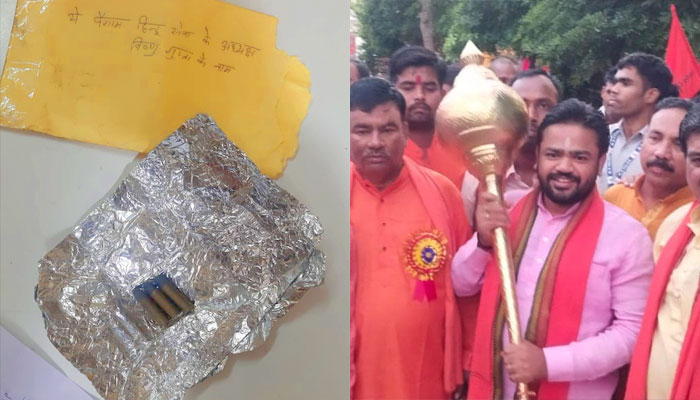
On 30th January, Hindu Sena chief Vishnu Gupta received a threatening letter with three live cartilages. The letter in a yellow envelope had an unsigned letter warning him of the consequences if he did not withdraw from the Krishna Janmabhoomi case.

The letter read, “Babri was martyred, but we will not let any other mosque get martyred. Vishnu, take back the Mathura Eidgah Mosque case; otherwise, you will be killed. You are an intelligent person. As three bullets have already reached you, the fourth will not take time to reach into your head. Allah Hu Akbar.”

When the letter was delivered, Vishnu was not at his residence. He had gone to attend a court hearing in Allahabad High Court that was scheduled for 29th January. When he returned home, he saw the envelope stuffed in the handle of the main door. Speaking to OpIndia, Vishnu said, “When I returned home, I saw the letter. Upon opening it, I found a handwritten letter threatening me to take back the case along with three bullets. I have filed a complaint at the police station.” He added that apart from fighting the cases for Hindu causes, his organisation indulges in several social works.

OpIndia accessed the copy of the FIR registered by Madhu Vihar Police Station in East Delhi district under Section 506 of the Indian Penal Code and Section 25 of the Arms Act. Vishnu has been fighting the case in Allahabad Court since December 2022.

In his complaint, Vishnu said he returned home after attending the hearing on 31st January at around 3:30 PM. He found the letter stuffed in the door handle, threatening him to take back the case. Vishnu called the police and informed them about the letter.

According to the FIR, a team of Delhi Police reached his residence. The letter and bullets were handed over to the ASI. On the envelope, “This message is for the president of Hindu Sena” was written in Hindi. Bullets were wrapped in silver paper while the threatening letter was written on white paper.

In a statement, Vishnu said, “We will not get scared. We will fight this case with full strength. Shri Ram Mandir is being built after fighting the case in the court. The same will happen in Gyanvapi. The Eidgah mosque will be removed, and Shri Krishna Janmbhoomi Mandir will be built there.”

The handwritten letter warned Gupta of severe consequences and talked about the disputed structure of Ayodhya that was demolished following the Supreme Court’s judgment in 2019. The disputed site was handed over to the Hindu side, and a Bhavya Ram Mandir complex is under construction. Ram Mandir Pran Pratishtha has already taken place on 22nd January 2024. The complex is expected to be completed in the next two years.

Krishna Janmbhoomi dispute

Krishna Janmbhoomi‘s and Gyanvapi’s cases are similar to the Ayodhya Land dispute. In 1669, Aurangzeb had demolished Vishwanath Temple in Kashi, and in 1670, he had ordered to destroy Bhagwa Keshawdev Temple in Mathura. Hindu parties are fighting cases to reclaim the land and construct the Bhavya Temples of Bhagwan Shiv and Bhagwan Krishna.