Home Blog Page 5889

IIT-M did not get in touch with us, failed to provide CCTV footage: Alleges father of deceased Fathima

Abdul Latheef, the father of Fathima Latheef, the IIT-Madras first-year student who committed suicide her hostel room at IIT-Madras on November 9, has alleged that IIT-Madras did not get in touch with the family after his daughter’s death, reports The News Minute.

“IIT did not once get in touch with me following my daughter’s death. There was absolutely no response from the institute, even when we went to collect my daughter’s body,” said Abdul Latheef.

Addressing the media after meeting Tamil Nadu DGP, Fathima’s father Abdul Lateef said that notes taken from his daughter’s mobile phone had named one of her professors as the cause of her death. In fact, Fathima had also named two other professors for driving her to take her own life. He had earlier alleged that she was being discriminated against because of her religion by professor Milind Brahme, who was part of the controversial Ambedkar Periyar Study circle.

“She had mentioned that he was a bad man. She was scared to attend his classes. She did not even go to collect her mark sheet from him. Instead, her friend went and got it for her,” Abdul added.

Abdul blamed Sudarshan Padmanabhan for his daughter’s death and stated that he believed the said professor was prejudiced against Fathima as she had consistently topped all her subjects. He claims to have seen e-mails where the professor (Sudarshan Padmanabhan) had asked her to meet him in order to get the additional 5 marks in his paper where she had scored 13 out of 18 marks. Fathima’s relative claimed that her answer to the 5-mark question was also correct.

Criticising IIT-Madras management, Abdul Lateef said that the principal of the institution had failed to hand over CCTV footage on the day of Fathima’s death, despite agreeing to do so.

On Friday, Abdul had visited Chennai along with other relatives to meet the state DGP seeking an investigation into his daughter’s death. While he expressed confidence in the state police to carry out fair investigation, he condemned IIT-Madras for allegedly washing their hands off the whole incident. He added that Fathima had spoken up earlier about harassment from the professor she had accused in her notes.

Abdul Lateef also met Tamil Nadu Chief Minister Edappadi K Palaniswami and called for a proper investigation into the matter.

Meanwhile, the death of IIT-Madras student Fathima Lateef has now taken a political turn as Dravida Munnetra Kazhagam (DMK) president MK Stalin on Friday claimed that death of Fathima Lateef was not a suicide as there are many questions around her death.

“The death of IIT Madras student Fathima is not suicide. After interacting with Fathima’s father it is clear that there are many mysteries and questions around her death,” MK Stalin tweeted in Tamil.


Stalin urged the state government to arrest the culprits in the case and ensure that justice is given to the victim.

The Case:

19-year-old Fathima, a humanities student from IIT Madras, committed suicide last week, who reportedly had left a note on her phone accusing her faculties, one of whom is an advisor to the Ambedkar Periyar Study Circle, of harassing her because she was a Muslim.

Fathima, who hailed from Kerala, was pursuing her first-year undergraduate course in the humanities. She was found dead after committing suicide by hanging from a ceiling fan in her hostel room last week.

Fathima Lateef’s death has opened up another controversy after allegations propped up against faculties of the IIT-Madras of harassment, which according to her parents has supposedly led to her suicide. Fathima’s parents alleged that humiliation and caste discrimination by a faculty member had forced their daughter to take the extreme step.

A purported suicide note written by the deceased Fathima on her phone is doing rounds on social media, in which she has blamed three faculties of the IIT-Madras as the reason for ending her life. She had blamed Hemachandran Karah and Milind Brahme for her death.

In an earlier note, the student had also accused Sudarshan Padmanabhan, an associate professor at the Department of Humanities and Social Sciences at IIT Madras.

Professor Milind Brahme is the faculty advisor of the controversial Ambedkar Periyar Study Circle of the IIT Madras. Milind Brahme, who holds his PhD from Jawaharlal Nehru University, New Delhi teaches Translation Studies or Comparative Studies at IIT Madras.

Sabarimala opens today for annual ‘Mandala Pooja’, no police protection for women activists entering the shrine

Two days after the Supreme Court deferred the verdict on the Sabarimala issue, the holy shrine Lord Ayappa in Sabarimala opens today for the annual Mandala Pooja festival.

As the Sabarimala shrine opens today for the 41-day annual pilgrimage season, the Kerala government has already clarified that the shrine is no place for activism and the women devotees hoping to enter the temple will not be given police protection. In a statement on Friday, Kerala Devaswom Minister Kadakampally Surendran said that women seeking protection to visit the shrine will have to get a court order.

“This (Sabarimala shrine) is not a place for activism. This is not a place for activists like Trupti Desai to show their strength. We won’t take them in. Let them go get a court order,” he said.

The Communist-led Kerala government LDF government had earlier described the verdict of the top court as “very complex” and refused to provide any assistance to women wishing to enter the Sabarimala shrine.

Read: Sabarimala is NOT about ‘impurity’ being associated with menstruation, stop repeating that lie

Reacting to the Supreme Court verdict, controversial ‘activist’ Trupti Desai on Thursday had said that women should be allowed entry into the Sabarimala temple till a seven-judge Supreme Court bench delivers the verdict on the issue.

The controversial activist had also ‘vowed’ to offer prayers at the shrine when it opens for worship this year. Desai said she was planning to visit Sabarimala in the next few days and added that mere police protection by the Kerala government was insufficient to ensure that women could worship at the Ayyapa shrine in peace.

Welcoming the Supreme Court’s decision, Kanakadurga – one of the two women who were accompanied by Kerala police last year to desecrate the holy Sabarimala shrine, said that verdict was encouraging and wished to go again as she claimed that there was no stay on the September 28 verdict.

On January 2, 2019, two women Bindu and Kanakdurga in their 40s, were accompanied by Kerala police, had entered the Sabarimala shrine at 3.45 am causing massive anger amongst the Hindu devotees.

Read: Sabarimala: Kerala govt says it will help menstruating women enter temple after asking Modi govt to protect tradition

Meanwhile, the Sabarimala shrine will open on Saturday evening at 5 pm. The Kerala government has heightened up the security around the hill shrine in Pamba, Nilakal and Erumeli with the deployment of more than 10,000 cops. According to Pathanamthitta District Collector, 800 medical staff have been deployed 16 medical emergency centres have been established.

Pathanamthitta District Collector said that all basic arrangements are in place. Around 2,400 toilets and more than 250 water kiosks are ready.

On Wednesday, the Supreme Court bench led by CJI Ranjan Gogoi could not come to a conclusive decision in Sabarimala review petitions and referred the case to a larger bench by a 3:2 majority. The Supreme Court had reserved its judgment in the Sabarimala verdict after hearing the review petitions in September this year, challenging the court’s verdict of lifting the ban on women of menstrual age to enter the shrine of Sabarimala.

Hearing the review petitions challenging the 2018 verdict, the Supreme Court had said that the issue of women’s entry into the Sabarimala temple is not just limited to Sabarimala, but to the entry of women into Mosques as well.

Telangana: Muslim women chant ‘Ram Mandir todenga’ at a ‘prayer meet’ protesting SC verdict on Ayodhya, booked for sedition

0

On Thursday, a group of women belonging to a Muslim organisation held a congregation at Saidabad Ujale Shah Eidgah grounds. Over a hundred Muslim women congregated to hold a “prayer meeting” protesting the Supreme Court verdict in the Ram Janmabhoomi case where the court awarded the entire 67-acre land to Hindus and mandated that the Muslims would get an alternate 5 acre land in Ayodhya to build their Mosque. The main leaders of this congregation were two daughters of one cleric Maulana Abdul Aleem Islahi — Shabista and Zille Huma.

The police had initially denied permission to them, but later it granted conditional accord, saying they were not supposed to disrupt peace and refrain from communal utterances.

However, the group of Muslim women who had congregated to protest against the Ayodhya verdict raised several communally charged slogans. In a video that emerged, the Muslim women can be seen raising several slogans like ‘todenge todenge, Ram Mandir todenge’ (we will break Ram Mandir), ‘laathi goli khayenge, Babri Masjid banayenge’ (we don’t mind being beaten up with sticks or being shot at, but we will make the Babri Masjid), ‘humari arzoo, shahadat shahadat’. With the slogans of Naara-e-Taqbeer and Allaho Akbar, the Muslim women were seeing stoking tension by vowing to break the Ram Mandir that will be built at Ayodhya and build Babri Masjid.

[youtube https://www.youtube.com/watch?v=TtASWAEhQv4]

After raising the slogans, speaking to the media, the group’s leader criticised the Supreme Court verdict in strong words. She said that the Muslim women do now want ‘charity’. And while raising hateful slogans, hilariously, the Muslim lady said that this verdict has proven that the Supreme Court has ‘surrendered to Hindu terrorists’ and that, the verdict is based on faith and not facts. She further said that Allah has already delivered his verdict, and they will only listen to Allah, on Mosques and that their claim on Babri Masjid would remain till a Mosque is not build at the same site.

She further stoked passions by blaming Muslim organisations of being ‘cowardly’. She said that because they were being ‘cowards’, Muslim women had to come out on the streets to protest. Almost threatening, she said that Muslims are apparently being suppressed and that nobody will understand how the Muslim’s anger against the Ayodhya verdict will manifest itself.

The police had initially denied permission to them, but later it granted conditional accord, saying they were not supposed to disrupt peace and refrain from communal utterances.

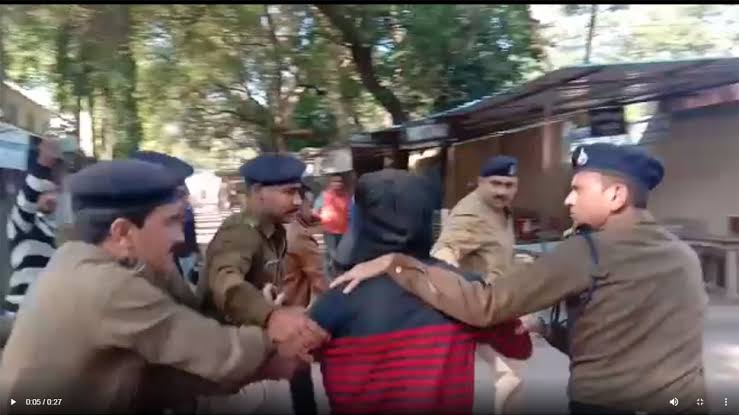
Two daughters of one cleric Maulana Abdul Aleem Islahi — Shabista and Zille Huma have been booked under 124 (A). A case has also been made under IPC Sections 153 A&B (promoting enmity and hatred between the two communities) and 295A (deliberate and malicious acts to outrage religious feelings) has also been filed. Sector sub-inspector DD Singh had filed a complaint with the station house officer, upon which the police issued an FIR.

“We have found the content of the programme highly inflammatory and the congregation had tried to create communal enmity the two communities”, said Saidabad inspector K Srinivas according to Times of India. On Friday, the police tightened security around Mecca Masjid to thwart possible protest after the prayers in connection with the arrest of DJS president and four others by police in a conspiracy case. The task force had picked up four DJS activists from Golconda. Rapid Action Force was deployed near the Mecca Masjid.

The Police also said, “Around 110 Muslim women and girls under the leadership of one woman Jille Huma unlawfully gathered and congregated in the Ujalesha Eidgah ground and offered prayers. After completion of prayers for about 20 minutes, Huma held the mic and raised provocative slogans”.

Amjed Ullah Khan, the Ex Corporator, 35 Azampura Division and youth leader of Majlis Bachao Tehreek in Hyderabad and the son of Amanatullah Khan condemned the case being registered against the Muslim women saying that “praying” is a right granted under the constitution.

Take effective action against urban Naxals and their facilitators: Home Minister Amit Shah to CRPF

In a bid to eliminate the menace of left-wing terrorism and its facilitators in the country, the Union Home Minister Amit Shah on Friday asked the CRPF to carry out an effective and decisive campaign against urban Naxals and left-wing extremism (LWE) in the next six months.

According to the reports, on his maiden visit to the CRPF headquarters on Friday, Union Home Minister Amit Shah stressed the need for action against the “Urban Naxals and their facilitators”.

“The Home Minister directed the CRPF to carry out an effective and decisive campaign against Left Wing Extremism in the next six months. Action needs to be taken against the urban Naxals and their facilitators. The Home Minister emphasised that the road connectivity and medical infrastructure in LWE areas should be upgraded,” a statement by the Ministry of Home Affairs said.

Read: The Quint uses Khalistanis, Urban Naxals and Leftists to show that ‘Punjab and Sikhs are upset over injustice in Kashmir’

Ever since the Narendra Modi government came to power, they have repeatedly stressed that social activists who act as ‘Maoist sympathisers’ won’t be spared.

Last year, in a major crackdown on left-wing terrorists and their sympathisers, the Pune police had arrested ‘Urban Naxals’ P Varavara Rao, Gautam Navlakha, Vernon Gonzalves, Arun Pereira, Sudha Bhardwaj, Anand Teltumbde, Stan Swamy in connection with Elgar Parishad violence and plot to kill Prime Minister Modi.

Earlier, the police had nabbed Naxal sympathisers – Surendra Gadling, Nagpur University professor Shoma Sen, Mahesh Raut, Rona Wilson and Sudhir Dhawale.

Read: Bhima Koregaon violence: Pune court rejects Urban Naxal Gautam Navlakha’s anticipatory bail plea, says custodial interrogation a must

Coming down hard on Naxals, especially in urban areas has been one of the major achievements of the present government. The Narendra Modi government has taken extensive and targeted action against Naxals and combined with wide-spread socio-economic development there has been massive desertion of Naxals, who are now joining the mainstream for better livelihood opportunities.

Meanwhile, Union Home Minister also discussed the security scenario in the newly created Union Territory of Jammu-Kashmir and asked the CRPF to undertake civic action programmes besides organising sports and tours for locals and youngsters.

The minister also directed the force to ensure “proper winter provisioning” for the troops in and directed the officers to look after their welfare.

Home Minister Amit Shah also reviewed the overall preparedness and deployment of the over three-lakh-strong force during the more-than-two-hour-long meeting at the CGO Complex on Lodhi Road.

“I want my masjid back,” Owaisi continues his tirade against the Ayodhya judgement

Continuing his rant against the Ram Janmabhoomi verdict, AIMIM chief Asaduddin Owaisi said that the Ayodhya judgement pronounced on November 9 is a ‘victory of faith over law’ and he wants ‘his masjid back’. In an interview with Outlook, Owaisi said that the Ram Janmabhoomi case was a civil suit between two parties where faith won over law.

“Had the mosque not been demolished (in 1992), would the same judgement have come? Our fight was not for piece of land. It was to ensure that my legal rights are realised. The SC also categorically said that no temple was demolished to construct a mosque. I want my masjid back,” Owaisi said.

In a historic judgement ending a dispute spanning centuries, the Supreme Court of India on November 9 handed over the disputed Ram Janmabhoomi-Babri masjid land to the Hindu parties, making way for Hindu devotees to have a grand Ram Mandir at the birthplace of Lord Ram. The Apex court also ordered the union government to provide 5 acres of land at an alternate site at a prominent location in Ayodhya to the Sunni Waqf Board to rebuild the Babri Masjid which was demolished in 1992.

Read: Owaisi is a traitor, has no faith in India, doesn’t have the ‘aukaat’ to divide India: Baba Ramdev

The Supreme Court said that there is adequate material in ASI report to conclude the following – Babri Masjid not constructed on vacant land. There was a structure underlying the disputed structure. The underlying structure was not an Islamic structure, Supreme Court had observed. The dispute was regarding the ownership of the title of the land.

Further, in his interview to outlook, defending the Mughal emperor Aurangzeb, who is known for his atrocities on Hindus, Owaisi said that as the emperor of India, Aurangzeb had the largest kingdom. “And these right-wingers call him an Islamic bigot. Now, would such a bigot allow prayers not happening in a mosque?” Owaisi said that the ‘secularism’ of Aurangzeb is one of the reasons he disagrees with the judgement.

Read: Fact check: was Aurangzeb a “secular” ruler as his sympathisers claim he was?

AIMIM chief has earlier also stoked passion in light of Ram Janmabhoomi verdict. Speaking at a public rally right after the verdict, Asaduddin Owaisi had said, “If Babri Masjid was legal then why was it (land) handed over to those who demolished it. If it was illegal then why the case is going on and withdraw the case against Advani. And if it is legal then give it to me.”

During the public meeting, Owaisi told the crowd to “not lose heart”. He said, “Stay strong, we have to fight, we have to stay united. The world is not going to end here”.

Later on, on Sunday, Owaisi had said that “Then what does a Muslim see today? That there stood a mosque, for so many years, which has been demolished. Now the court is allowing a building to come upon that site, on an alleged finding that the land belonged to Ram Lalla.”

Interestingly, for Owaisi, a Mosque built by invaders was sacrosanct, while he had no problems mocking the Hindu faith, despite the ASI findings, and calling it an ‘alleged finding’.

Income Tax Tribunal rejects plea by Gandhis in National Herald tax evasion case, says Young Indian is not a charitable organisation

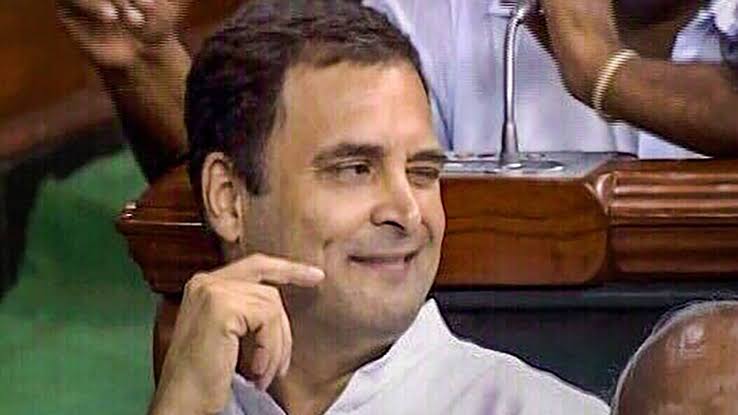
Coming as a major jolt for the Congress party, the Income Tax Tribunal today rejected the demand for tax exemption made by the Gandhi scions. The plea came after the tax department had slapped a Rs 100 crore tax notice on the mother-son duo Sonia Gandhi and Rahul Gandhi in the AJL case in January 2019, stating that they had “escaped” incomes the tune of hundreds of crores in 2011-12.

The tribunal, while hearing the case, held that the company’s activities cannot be termed charitable and ordered to reopen the Rs 100 crore tax file.

According to the copy of the order of the Income Tax Tribunal hearing the case which has been accessed by Times Now, the Gandhi family had refused to declare Rs 100 crore as their income, claiming that Young Indian is a charitable trust and therefore it should be exempt from tax payments.


The tribunal has asserted that the activities which were being carried out in the company do not fall under the category of a charitable institution. Therefore, the applicants’ demand for tax exemption is rejected.

In January 2019, the income tax department had passed an order for a reassessment of their incomes regarding Associated Journals Limited (AJL) and had slapped a Rs 100 crore tax notice on Sonia and Rahul Gandhi, stating, that UPA Chairperson and Congress President have “escaped” a tax liability of around Rs 100 crore.

The amount of tax liability on both Sonia and Rahul Gandhi was pegged at Rs 155.4 crore and Rs 154.96 crore for the same year. This staggering amount is reportedly over the stated income of both Sonia and Rahul Gandhi. Rahul Gandhi had filed a return of income declaring Rs 68.1 lakh while Congress leader Oscar Fernandes had declared Rs 48.9 crore.

Also Read- Acquisition of AJL by Young India a ‘clandestine and surreptitious transfer of lucrative interest, dishonest and fradulent’: Delhi HC

The mother-son duo had submitted that they have no legal obligation to give details of their shares in Young India as they do not form any “interest” in a company. They had also claimed that the shareholding in Young India will not result in any interest that needs disclosure as the shareholder and also does not yield dividends or interest in the property of such a company as it a non-profit and charitable company.

The National Herald case is an ongoing case in a Delhi court against Congress supremo’s Sonia Gandhi and Rahul Gandhi, their companies and associated persons.

As per the complaint filed in the court of the Metropolitan Magistrate, Associated Journal Limited (AJL) took an interest-free loan of Rs 90.25 crores from Indian National Congress. It is alleged that the loan was not repaid. A closely held company, the Young Indian Company, which was incorporated in November 2010 with a capital of Rs 50 lakh had acquired almost all the shareholding of AJL and all its properties (alleged to be worth Rs 5,000 crores). BJP’s Subramanian Swamy, who had filed the case, alleged criminal misappropriation by both Sonia Gandhi and Rahul Gandhi.

Uttar Pradesh: Former army personnel, Dr Ashfaq, amongst those arrested in the Kushinagar Masjid blast case

The Uttar Pradesh Anti-Terror Squad has arrested six persons for the mosque blast that took place on November 11 in the Kushinagar town of Uttar Pradesh. Police arrested Haji Qutubuddin from Gorakhpur, Dr Ashfaq from Hyderabad, and four others in connection with the case. Dr Ashfaq is a former Army Major who was with the Medical Corps.

According to the police, mastermind Haji Qutubuddin had planted the explosives in the mosque. The explosives were reportedly brought with the help of three other aides from Mau to Kushinagar in April this year.


The ATS has also arrested the second accused in the case Ashfaq from Hyderabad. It is being reported that Ashfaq is the grandson of mastermind Haji Qutbuddin. The investigative agencies plan to cross-examine the two prime accused in the case. In this regard, the Varanasi IB team and ATS Lucknow will interrogate the grandfather-grandson duo.

The Uttar Pradesh Police’s Anti Terrorist Squad (UP ATS) is also fishing for a terror connection between the Kushinagar and Bijnor blast. To this end, samples of explosives collected from Kushinagar mosque have been sent to forensic Lab, Agra. The police have also ordered a forensic investigation of explosives found in Bijnor. According to sources, some youths from Meerut and Bijnor are being questioned in this regard.

The investigation into the motives of the explosion is being underway. Resentment following the Ayodhya verdict can also be a strong motivator to carry out the blast and the police are probing all the possible angles into the blast.

An explosion occurred in the Bairagi Patti village mosque in Kushinagar district on November 11. At first, the local police kept asserting that the explosion happened due to batteries, but later the explosive material was recovered from the mosque. Seven people, including the cleric of the mosque, have been booked in the case. Out of these, four people including accused Imam have been arrested and sent to jail. At the time of these arrests, three people, including the main accused Haji Qutubuddin, were on the run. The ATS and the bomb disposal squad conducted an inspection, following which they concluded that low-grade explosive materials were used for explosion. The police believe that it was kept in the mosque to make hand grenades.

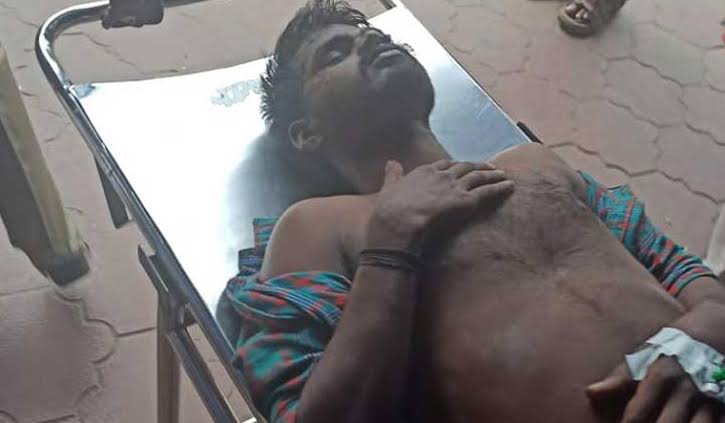
The Bijnor blast took place on November 12 when a thief broke in a locked house with the intention of stealing but was injured by the accidental explosion. The seriously injured burglar was admitted to the hospital, from where he was taken to Meerut. However, later he succumbed to the injuries. Investigation revealed that potash sulfur explosive material was kept in the room in which the thief had entered. The explosion was so severe that along with the surrounding houses, the main house where the explosives were hidden, have developed cracks after the explosion.

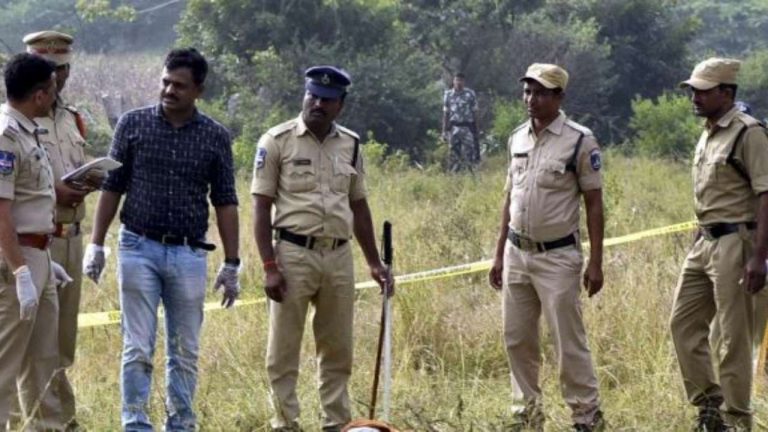
On the other hand, SP Sanjeev Tyagi contended that the thief had brought home bombs with him and died due to an accidental bomb explosion. A forensic investigation into the case has been ordered. Despite the assertions made by SP Tyagi, the ATS is taking the blast seriously and trying to find any possible terror link between the two blasts.

‘Tatva’ of Rama: How did Hindus sustain the struggle for their beloved Ram Janmabhoomi for 5 centuries?

I’ve been working with Hindu refugees from Pakistan for around a decade, and a question has stung me for a while now – why do these Hindus not convert out of their Dharma? Why do they find it easier to leave everything they were and had, and come to India, rather than come recite Kalma? Now that Ram Janmabhoomi decision has come out, the answer gets a little clear.

What would you call a people who struggle for five long centuries, for apparently a piece of land? What would you call a people who were ready to face every torture and hardship, but do not forget that land, nor stop clamoring for it? What would you call such people who withstood barbaric Mughals, slavery of foreigners and genocide of centuries- all in hope that they will get that piece of rock once again?

The Ram Janmabhoomi liberation movement is one of the rare struggles that a people sustained for five centuries.

In these 500 years, most were times of deep despair- the occupying force was so brutal, the occupation was so one-sided, that any hope looked moronic and unimaginable. Not only the alien slavers but the political dispensation and leading historians of the nascent nation-state were also inimical to the Hindu faith that Bhagwan Sri Rama was born on this Punyabhoo.

In such adversity and against every nefarious trick in the communist book, how come the Hindus stubbornly plowed on, is a tale to tell for the whole humanity.

What was this insistence? What was this stubbornness of Hindus? How did they manage to keep the embers smouldering in the threatening storms?

Read: The Reclamation Project: Here’s how the great Maratha warriors fought to reclaim Ayodhya, Prayag and Kashi

Many years ago, I had gone with my elder brother, a Major at that time, to the army cantonment area. A middle-aged soldier saluted him sharply with a “Ram, Ram”. It shocked me- in a good way.

The upper officers of the forces, their wives and children- all conversed in English, but the ordinary soldier had kept the Ram-Nam alive with a forceful insistence. Even if the marauders managed to level the temple of Sri Rama, they could not wipe Him and His Name out of our collective consciousness.

What we lost as Ram Janmabhoomi and the temple, we imbued in our souls and spirits as the ‘Tatva’ of Sri Rama.

Rama became our cry, the refrain on the lips that then was repeated on every occasion a Hindu could find- from the holy songs in birth to the holy nuptials, to when we gave up to Agni the mortal remains to whom we help most dear. Our ancestors knew that no attack in the world can wipe out Sri Rama from our hearts, and this all sprang from this knowing.

In such times when humanity is running blindly after the gross, the achievement of keeping the subtle alive is a no mean feat of the Hindu people. What made Hindus- leaderless, pauper, with nothing to lean on- still keep going, could be interesting research for social psychologists.

Read: Three Generations, One Dream: Here’s why Yogi Adityanath considered the Ram Mandir his life’s mission

The Islamic invaders downed thousands of temples and erected mosques over them. But our Rishis, the Muttadheesh-s, the Gurus did not let time fade the memories of Shiva’s Kashi, Mathura of Krishna’s birth, and Ayodhya- Rama’s Janmabhoomi. They’re not just landmasses- they’re the nerve centres of the Dharma itself. The Hindu psyche did not give up on these even under even the most atrocious conditions.

For the Rama Janmabhoomi, thousands of Hindus and Sikhs toiled on. Goswami Tulsidas and other Bhakti saints and poets kept his memory alive. No Hindu, of any caste or creed, ever gave up on Sri Rama and his birthplace, because they knew in their hearts that Sri Rama and His Name are what keeps the Dharma of Hindus alive. No Rama, No Dharma.

For this, we owe to those unnamed Hindus whose faith could never be trampled. For this, we owe to those unnamed Hindus who never let their children forget that beneath the mosque of Babri, a temple is still there- in wait. For this, we owe to those unnamed Hindus who kept on writing about this incessantly, lest we forget. For this, we owe to those unnamed Hindus who kept doing Puja on the Janmabhoomi.

For this, we owe to those unnamed Nihang Sikhs who swooped down on the Islamic occupation in the middle of the 19th century and freed it- for a while. For this, we owe to those unnamed Hindus who filed all those petitions in the British courts. For this, we owe to those unnamed Hindus who kept the Janmabhoomi out of the clutches of the government during the partition of 1947.

For this, we owe to those lakhs of Kar Sevaks who braved batons and bullets of Mulayam Singh’s police. For this, we owe to those unnamed Hindus who sent one brick and one-and-a-quarter rupee (Sawa Rupaya) from every household for it. It was the collective Consciousness stirring into them that finally liberated the Ram Mandir, and which would manifest now as the Ram Mandir.

The day doors of this Mandir are thrown open, what the world would witness is not just a structure of stone- they will see a monument to the indomitable spirit of humanity in the face of the worst religious persecution. It’ll tell one and all that the past glories and legacy can be recovered.

Ram Janmabhoomi will be the epicentre of Hindu Shraddha, hope and valour.

The destruction of their holy shrines by the Muslims has led to Hindus having journeyed from denial to rage- and this has made Hindus more flexible, powerful, and resilient against atrocities.

It’s time to recognize our own resolve, and orient our faith towards the Dharma- that is in our blood and bones. Our Vedas, Shastras, Sadgurus, and rituals have put in us a fire that may flutter, but cannot be extinguished. A light that makes us stand up again every time we fall.

The specialty of Rama Janmabhoomi is that aside from being the birthplace of Sri Rama, it’s also the most sacred place of Hindu memory and consciousness, that never died and that showed that it can never be erased. We have shown those who jeered at us as “idolators” that we can die for the vacant spot of land.

Read: The comprehensive legal History of Ram Janmabhoomi case: A case that will have its relevance for generations to come

That vacant place has a special corner in every Hindu heart. It’s also a case of criminal genocide- intended solely toward wiping out the culture and Dharma of Hindus. But Hindus stood in the way.

Hindus managed to wrestle the Janmabhoomi out of the jaws of most ruthless cutthroats and most sly communists- we made the impossible possible, with the insistence and Consciousness of the collective.

I once posed this question to the Hindu refugees from Pakistan, that why don’t they take the easier way out and convert. One Teerath Rama Meghwal looked at me, very simply, and said, “Baap-Dadon ka dharma aise kaise chhod dein Sahab?” (“How can we leave the Dharma of our forefathers just like that, sir?”)

I understand Teerath Rama now- and also why the Dharma of Hindus is called Sanatana. I now understand that as long as Sun keeps coming to the horizon the next morning, the Sanatana Hindu keeps alive.

I know today that the ‘Tatva’ of Rama is what transcends the Time itself and comes alive again. The ‘Tatva’ of Rama is the eternal flow that sustains the Hindu society in the vilest hardships, and will continue to do so.

Jai Shri Rama!!!

(The writeup by Omendra Ratnu was originally published in Hindi, and has been transformed to English by Mrinaal Prem Swarroop Srivastava)

Abhiseka ceremony conducted at Prambanan Temple to purify the largest Hindu temple in Indonesia after 1,163 years

0

Hindus across Indonesia turned up in large numbers to attend the Abhiseka ceremony performed at Prambanan Temple on November 12, which is the largest Hindu temple site in Indonesia and the second-largest in Southeast Asia. The Hindu ritual held to clean and purify the temple site was held for the first time in 1,163 years.

“After we discovered the inscription written on the day the temple was established, which is November 12, 856 AD, along with rituals conducted, Hindus then prepared to perform the same ritual. So it is basically to commemorate temple’s inauguration by Rakai Pikatan Dyah Seladu back in that year,” Made Astra Tanaya, a member of the committee that performed the Abhiseka, said.

Abhisheka or Abhiṣeka is a Sanskrit term that means a devotional activity which is conducted by priests by pouring libations on the image of the deity being worshipped, amidst the chanting of mantras. “The ritual of Abhiseka is considered a turning point in returning the energy for both human beings and Mother Nature”, said Tanaya.

The ceremony at the Prambanan Temple began on November 9 (Saturday) by performing the Matur Piuning ritual (notification ceremony), a way of requesting permission from the ancestors.

It continued with the pageantry of the eternal flame of Mrapen and holy water of eleven wellsprings around the area starting from the Boko Temple to the Prambanan temple where people then performed a prayer and took Parikramas or Pradakshina, which refers to circumambulation of sacred places to imbibe their energy.

Also Read- The World and Hinduism: 33 stamps that depict the glorious roots of Hinduism, while we dabble in ‘secularism’

The main rituals were held on November 12 following the method mentioned in 25 Shilaalekh’s (inscriptions) of Hinduism during the Mataram Kingdom era. Another ritual, named Manusuk Sima, was also performed during the three-day-long event.

The event ended with a traditional dance performance of Siwagraha which narrates stories of the Prambanan temple reconstruction.

Built-in the 9th century, the Prambanan Temple, located between Sleman, Yogyakarta, and Klaten, Central Java in Indonesia is the largest temple compound dedicated to the Trimurti, the expression of Lord Shiva as the Creator, the Preserver and the Transformer. Rising above the centre of the last of these concentric squares are three temples decorated with reliefs illustrating the epic of the Ramayana, dedicated to the three Hindu divinities, Brahma-Vishnu-Mahesh and three temples dedicated to the animals who serve them. The temple compound is a UNESCO World Heritage Site.

Pathological compulsion to comment on India’s internal matter, spread hate: India tells Pakistan to stop its ‘juvenile propaganda’ on Ayodhya verdict

0

In a blistering riposte to Pakistani minister Shafqat Mahmood’s propaganda on Kashmir and Ayodhya verdict, the Indian delegation strongly rebutted to the insinuations levelled by Pakistan. The Indian delegation responded at the 40th UNESCO General Conference – General Policy Debate in Paris on Wednesday that the Ayodhya verdict was rooted in the rule of law, equal respect for all faiths, concepts that are alien to the ethos of Pakistan.


India’s strongly worded response came after Pakistan Education Minister Shafqat Mahmood said that he was dismayed by the Supreme Court’s verdict on the Ayodhya land dispute case and asserted that it was not in line with the United Nations Educational Scientific and Cultural Organisation’s (UNESCO) values of religious freedom.

Terming it as “Juvenile Propaganda”, the Indian diplomat slammed Pakistan for making unwarranted remarks on India’s internal affairs. “Judgment on Ayodhya was based on the rule of the law, equal respect for all faiths, concepts that are alien to the ethos of Pakistan. While Pakistan’s lack of comprehension is not surprising, its pathological compulsion to comment on India’s internal matter, with the obvious intent to spread hatred, is condemnable,” India responded.

Read: Diwali again: Hindus welcome Supreme Court verdict on Ram Janmabhoomi by lighting up diyas

Reiterating India’s long-standing stance on Jammu and Kashmir, India said, “The Union Territories of Jammu and Kashmir and Ladakh have and will always remain the integral parts of India. This also includes the territory that is under the illegal and forcible occupation of Pakistan.”

India also censured Pakistan for its continued assistance to terrorism that has caused grave human rights violations in Jammu and Kashmir and other parts of the country. “Tragically, the reality facing us is that Pakistan is the world’s largest producer and exporter of this evil. Pakistan’s political approaches are rooted in terrorist violence and its global engagement is defined by mainstreaming of terrorism as an instrument of statecraft,” the Indian official said.