Home Blog Page 5915

Maharashtra assembly elections 2014: When Sharad Pawar had offered to provide outside support to minority govt of BJP

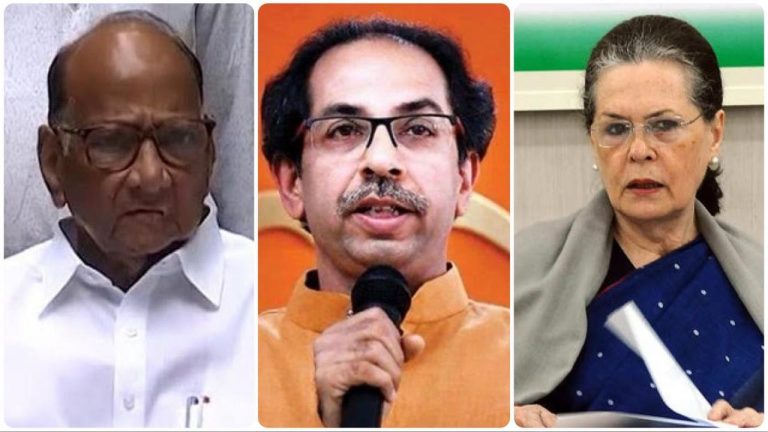
The two alliance partners-Shiv Sena and the BJP in Maharashtra have been at loggerheads following the fractured 2019 Maharashtra Assembly elections mandate declared on October 24. While the Sena has been adamant on what it claims a “pre-poll agreement” with the BJP on sharing the position of CM for 2.5 years each, the BJP, on the other hand, has clearly denied of having agreed upon any such arrangement with its whimsical alliance partner.

The ensuing imbroglio has put the state in a limbo as there is not a single party with a clear majority to stake a claim at the government. The BJP is the single-largest party with 105 seats out of the total 288 Maharashtra Vidhan Sabha seats. Its ally Shiv Sena has bagged 56 seats. The opposition parties NCP and Congress have scored 54 and 44 respectively. However, none of them is individually close to the 145 mark required to form a government in the state, although the BJP-Shiv Sena alliance has a clear majority.

The 2019 Assembly elections bear a stark resemblance with the 2014 Maharashtra Assembly elections, in which, the BJP, riding on the popularity of PM Narendra Modi, emerged as the single-largest party with 122 seats but was still slightly behind the 145-mark required for staking a claim at the government. Shiv Sena, being its usual self, with 63 seats was holding the BJP to ransom that time also, trying to broker a “respectable deal” before extending its support. The NCP had then won on 41 seats while the Congress emerged victorious on 42 seats.

Though BJP and Shiv Sena fought the 2014 Maharashtra Vidhan Sabha elections independently, the power tussle between the two parties continued as Sena attempted to negotiate a favourable bargain with the BJP post the election results realising that the BJP is short of the required number to form a stable government in the state.

With the coalition between the two parties uncertain, the NCP chief Sharad Pawar then declared that he would provide an outside support to the 122-member BJP and abstain from future trust vote in the Assembly. The BJP had then claimed to have the support of 10 independent MLAs. NCP MLAs abstaining from the assembly would have brought the count down from 288 to 247 and the BJP would have had the necessary numbers to form a minority government.

Read: NCP-Congress alliance will not make any attempts to form a government in Maharashtra: Sharad Pawar

Pawar had reasoned that to avoid the need to have fresh elections, he and his party took a “conscious and collective decision” of supporting the minority government of the BJP. However, he ensured that the party would play the role of an effective opposition.

The NCP’s offer was regarded as “mega-clout” for the BJP to negotiate the modalities of an alliance with the Shiv Sena which was under tremendous pressure realising its rapidly shrinking leverage over the BJP. Amit Shah too did not turn down NCP’s offer stating that the party’s parliamentary board, PM Modi would discuss the options. Finally, the uncertainty ended with the Shiv Sena and the BJP coming together to form an alliance and stake a claim at the government.

NCP-Congress alliance will not make any attempts to form a government in Maharashtra: Sharad Pawar

Within an hour after meeting Shiv Sena MP Sanjay Raut, NCP supremo Sharad Pawar confirmed that the NCP-Congress alliance will not make any attempts to form a government in Maharashtra.

Holding a press conference, Sharad Pawar confirmed that the Congress-NCP alliance will sit in the opposition in Maharashtra. He also urged the Shiv Sena and BJP to respect the people’s mandate and form the government soon.

“I don’t have anything to say yet. BJP and Shiv Sena have got the mandate of people, so they should form the government as soon as possible. Our mandate is to play the role of Opposition,” Sharad Pawar said.


Ending the speculations of Congress, NCP and Shiv Sena coming together to form government in Maharashtra, Sharad Pawar said the NCP will not join hands with Shiv Sena and said he was confident that they will form a government soon.

“Where is the question of a Shiv Sena-NCP government? They(BJP-Shiv Sena) are together for the last 25 years, today or tomorrow they will come together again,” NCP supremo Sharad Pawar.

Read: Shiv Sena demands union minister Nitin Gadkari to be brought in to resolve the Maharashtra stalemate

Pawar further added that Sanjay Raut met him today to discuss the upcoming Rajya Sabha session. “There are some issues we discussed on which we can have a similar stand,” said Pawar.

Sharad Pawar’s statement comes a day after senior Shiv Sena leader Sanjay Raut had met NCP chief Sharad Pawar in Mumbai yesterday.

A deadlock has appeared between BJP and the Shiv Sena over the power-sharing agreement to form a new government in the state. The state went to assembly polls in October in which BJP has won 105 seats, Shiv Sena won 56 seats, while NCP and Congress won 54 and 44 seats respectively.

Jharkhand: Tearing up of Lord Hanuman flag at Chhath ghat sparks off communal tension, 3 Muslim youth arrested

0

Communal tension prevailed in Girodih’s Narayan Singhdih village in Jharkhand after some miscreants reportedly uprooted and tore off Lord Hanuman’s flag placed at Chhath Ghat. The angry villagers filed a complaint with the police following which three boys were arrested. The police have booked three individuals, Salamat Raza, Izamul Haq and Wasid Ansari, on the charges of hurting the religious sentiments of people.

Apart from these, Shoaib Ansari, Tanveer Ansari, Shamimullah, Sarafat Ansari and Budhan Ansari are listed by police as accused in the case. Ravindra Kumar Verma, representing agitated villagers, filed an FIR against 11 miscreants of Kasiotol for allegedly ripping apart a religious flag and affronting the religious sentiments of the followers.

Read: Bihar: People object to ‘Muslim community’ named as mischief makers in Chhath Puja notification, DM says, we say it as it is

According to the reports, following the completion of Chhath festival on Sunday(November 3, 2019), the accused pulled out and ripped up the flag on the ghat, flaring up tensions between the two communities. There was an attempt made by the police to settle the matter between the two sides but the tensions did not subside. All the efforts of the police to placate the soaring tensions in this case have so far gone in vain.

Screenshot of news published in Dainik Jagran

The police has asserted that reconciliation between the two warring factions could have struck but it could not happen due to some radical fundamentalists, who did not want the antagonism between the two parties to end.

Peace-building between the two sides is still underway. In an effort to avoid any escalation in the matter, Khorimhua SDM Dhirendra Singh, SDPO Naveen Kumar Singh, Jamua BDO Vinod Karmakar, CO Rambalak Prasad, Police Inspector Vinay Ram camped in Kasiotol and Baddiha throughout the day. Police said that anti-social elements will not be spared. Strict action will be taken against whoever is found guilty. In addition, as a precautionary measure, police personnel have been deployed in Kasiotol so that the matter is kept under check.

Yogendra Yadav claims a verdict in favour of Ram Mandir will test ‘secular politics’ in India: Pro Majority is Anti Minority?

In a rather distorted piece, Yogendra Yadav, known for his body of work in the field of political science, has exercised intellectual overreach by saying the impending verdict on Ram Mandir along with some other crucial proposals will test secular politics in India. I was confounded when I read the headline and therefore decided to read the piece just to ensure it was not a clickbait. Viola! It wasn’t. The once upon a time political scientist actually said it in so many words!

On second thoughts, as someone who has had the opportunity to observe the inside workings of academia, I am not surprised that Yogendra Yadav believes that any verdict in favour of Hindus and Ram Mandir is not secular in nature. His intellectual chicanery does not end here. He is of the opinion that implementation of NRC along with laws such as Uniform Civil Code (UCC), a central Anti-Conversion Act (ACA) and Citizenship (Amendment) Bill (CAB) also deserve a ‘graded response’ and not a unanimous nod.

Read: Will Ram Lalla finally come home: The culmination of a people’s movement spanning over 491 years

His stance reveals two basic infirmities in the idea of secularism that was propounded by Nehru and propagated by his party. One, any decision that is remotely inclined to favour the sentiments of the majority (not necessarily hurt the minority) is not secular. Two, the vision of India is limited to a debate where minority sentiment is the only colour on the canvas; every argument is either pro-minority or anti-minority. I vehemently differ with such views, primarily because just like the minorities, I too am a daughter of the soil and deserve to exercise my opinions and rights.

Ram Mandir: Hindu Assertion is not Muslim Humiliation

Any judgement in favour of Ram Mandir in Ayodhya should certainly not be seen as anti-minority for just one reason and Yogendra Yadav is wrong in doing so. Ayodhya is analogous to Mecca for Muslims. It has been established through ASI reports that there was a grand Hindu temple before it was demolished and subsequently a mosque was built on it. Like any other devout community, Hindus too espouse restoration of the temple, now that the country is free from any sort of authoritarianism or monarchy. A favourable judgement for Hindus does not mean one against the Muslim community, because it is only a section of motivated Muslims who are using the issue to spur sentiments. With minimal Muslim population in the area, there has never been an outcry for a mosque from the local minority community. Cry for a Ram Mandir, on the other hand, has been a common factor across a socio-cultural melange of the majority community, both in India and abroad.

Read: Hindus have been demanding restitution since 1528 for the Ram Temple destroyed by Islamist barbarians, Rajeev Dhavan

Unfortunately, as a consequence of centuries of conditioning majority are led to believe that any assertion of their cultural practices or social norms is the humiliation of minorities. But this is false equivalence. India belongs to both the majority and minority communities. It doesn’t belong more to one and less to another. Ergo, there is no reason why the majority should be embarrassed about just being themselves.

Pro Minority vs Anti Minority for Yogendra Yadav

India is a diverse country that has been held together for aeons by the echo of “एकं सद्विप्रा बहुधा वदन्ति”. In such a land, how can one decide to paint the idea of secularism in one particular colour, and ostracise those attributes ascribed to the majority by calling them brute and anti-secular?

All three proposals, Uniform Civil Code (UCC), a central Anti-Conversion Act (ACA) and Citizenship (Amendment) Bill (CAB), are being propagated as anti-minority by vested interests who reap dividends from social unrest, demographic imbalance, cross-border infiltration. On the contrary, all these three proposals strive to preserve the secular credentials of the country.

  • UCC impacts, benefits and irons out discord across all communities. It is not leaning positively or adversely towards any particular group.
  • An Anti-Conversion Act (ACA) will curb forceful conversions and evangelism seduced by money and material benefits. Like the UCC, it will apply across all religions, irrespective of the religion of the converted, before or after conversion. Any person crying foul and calling ACA anti-minority is suggesting inferences that will eventually leave the minority on a sticky wicket.
  • CAB seeks to provide refuge to Hindus, Sikh, Buddhist, Jains, Parsi or Christians coming from Afghanistan, Bangladesh, and Pakistan and grant them citizenship of India. Once again, this Bill does no harm to the inherent minorities of India. Their rights remain undiluted.

Secularism in India has stood the test of time and a series of assaults over a long period of time. It is not at the mercy of a particular judgement. However, it is clear, that a lot of intellectual fraudsters and spurious analysts like Yogendra Yadav stands to be exposed, just by their sheer reactions in anticipation of a pro-Hindu verdict. It is time that propagandists masquerading as political scientists conceded, that it is the very nature of the majority believed to be secular. Spread over countless sects, Hinduism has always served as an umbrella for people across faiths, ideologies, sects and beliefs. While neo-secularism is a fragile concept, standing at the mercy of support of propaganda and doctrine of binaries, it is the inter-faith culture within the majority, that gives them the patience to accept and embrace.

Madhya Pradesh: Civic body officials beaten up by Kamal Nath cabinet minister’s supporters for removing birthday greeting hoardings

Supporters of Madhya Pradesh Health Minister Tulsi Silawat beat up Indore civic body’s workers for removing posters and hoardings wishing the minister on his birthday. Congress leader Tulsi Silawat, who represents Sanwer constituency in Indore district, celebrated his birthday on November 5. For that, his supporters had put up hoardings.

On Tuesday, MP Chief Minister Kamal Nath had ordered removal of posters of leaders and put up posters highlighting Indore being declared as cleanest city fourth time in a row. For this, Indore civic body had started the work of removal of posters. As soon as the supporters got to know that the civic body personnel are removing Silawat’s birthday posters in Residency area, they reached the spot and started misbehaving with them. Silawat’s supporters beat up corporation officials and started abusing them. As per reports, they even pelted stone on them.

Read: Madhya Pradesh: Journalist assaulted in broad daylight, alleges attack carried out at the behest of a Congress leader

As matters escalated, Indore Municipal Corporation (IMC) workers stopped the removal of posters and reported the matter to higher ups. Later, the posters were removed after the IMC workers were accompanied by a police team to ensure their safety.

Kamal Nath government’s cabinet minister Tulsi Silawat said he was not aware of the ruckus created by his supporters and said that he will look into the matter.

ISIS-K had attempted to conduct suicide attack in India last year but failed: Top US Counterterrorism official

0

The Khorasan group of ISIS, or the ISIS-K, had attempted a suicide attack in India last year, a top US official informed lawmakers on Tuesday. The ISIS-K operates in South Asia and according to Russel Travers, Acting Director of the National Counterterrorism Center, Office of Director of National Intelligence, ISIS-K concerns the US the most among all of its other branches.

“Of all of the branches and networks of ISIS, ISIS-K is certainly one of those of most concern, probably in the neighbourhood of 4,000 individuals or so,” Travers said in response to a question from Maggie Hassan, the junior Senator from New Hampshire. “They have attempted to certainly inspire attacks outside of Afghanistan. They attempted last year to conduct a suicide attack in India. It failed,”  he added.

Travers further said that two years ago, ISIS-K had made an attempt to perpetrate an attack on US soil but the FBI prevented it. Furthermore, he told the lawmakers that by any calculation, there are more radicalized individuals now than there were at the time of 9/11.

Read: ISIS declares new leader as it confirms death of Abu Bakr al-Baghdadi, vows revenge against the US

“Eighteen years later, we face a homegrown violent extremist threat, almost 20 ISIS branches and networks that range from tens to hundreds to thousands of people, al-Qaeda and its branches and affiliates, foreign fighters that flocked to Iraq and Syria from well over 100 countries, Iran and its proxies, and there is a growing terrorist threat from racially and ethnically motivated extremists around the globe,” he said.

“This highlights the importance of terrorism prevention. While some aspects of the threat can only be dealt with through kinetic operations, the residents of the ideology will not be dealt with by military or law enforcement operations alone. The world has a lot of work to do in the non-kinetic realm to deal with radicalisation and underlying causes,” Travers added.

The ISIS-K is mainly active in Pakistan and Afghanistan, but its area of operation covers entire South Asia, including India. Historically, the Khorasan region encompasses parts of modern-day Iran, Central Asia, Afghanistan, and Pakistan.

Kerala Chief Secretary Tom Jose says Maoists are terrorists who don’t have same human rights as citizens, Congress and Communists up in arms

The Kerala Chief Secretary, Tom Jose, has managed to send a cat amongst the Communist pigeons. In an opinion piece for the Times of India, Jose has written about how Maoists should rightly be termed as terrorists and how state action against these terrorist elements in fully and wholly justified.

Tom Jose in his Times of India article cites the official definition of terrorism as agreed upon by the United Nations – that elements who resort to violence to achieve political objectives and put civilians in harm’s way in the process can be called as terrorists. As such, people who engage in armed combat against a democratically elected government causing harm to innocent citizens are terrorists.

Using this rationale, Tom Jose says that Maoists are no different. He writes, “There is no justification in the argument that the Maoists who walk around with automatic weapons and spread the politics of hatred against the established social and political order under the Constitution of India are our brethren. It is the sovereign function of the state to protect peace-loving, law-abiding citizens from such terrorist elements. In the recent shootings at Agali, the security personnel have only carried out their duty to protect the citizens from the onslaught of Maoist terrorists. There is no rationale in stating that Maoists who indulge in armed conflict have got the same human rights and privileges as normal citizens. Not only that it cuts at the very root of the principles we live by, but also mocks and insults the ordinary people who go about their daily lives obeying the laws of the society”.

Read: Left-wing violence shows decline even as Naxalites killed almost 4,000 civilians in 9 years across ten states: MHA report

Essentially, and rightly, Tom Jose defends the state action against Maoists in Agali and also asserts that Maoists, who are terrorists, do not have the same human rights and privileges as normal citizens. He argues that the state has a responsibility to protect its law-abiding citizens from terrorists, including the Maoists.

Slamming the Communist Party of India (Maoists), Jose says that when our soldiers fight the enemies that come from across the border, we hail them as heroes and them fighting the Maoists should be no different. Appreciating the armed forces, Jose also says that in asymmetrical jungle warfare, it is either “killed or be killed”. That the security forces protect even those who criticise them and that them using their weapons against terrorists is justified.

Interestingly, Tom Jose also made an oblique reference to the two ‘students’ who have been arrested under UAPA for distributing Maoist pamphlets and shouting pro-Maoist slogans. He said, “If the terrorists… reach urban areas as they are aiming, then…we must act. We cannot afford to do nothing”, referring to ‘Urban Maoists’ and ‘Urban Naxals’.

Read: Kerala: CM Vijayan says UAPA charges against his party workers arrested over Maoist links will be scrutinised

By all standards, Jose’s article echoes the sentiments of every average Indian citizen that wants the terror of Maoism to end and respects the men and women in uniform who risk their lives every day so citizens can be protected.

However, Jose’s speaking in favour of the nation seems to have irked the Communists and the Congress.

The CPI reacted saying that Jose had “no right” to publish an article supporting police action and that there is a government in place to make such statements. Before the 4 Maoists were neutralised, CPI had led a delegation that had concluded that the police claims of a ‘fierce encounter’ were incorrect. As usual, the CPI had claimed that the encounter was ‘staged’.

“It is inappropriate for a Chief Secretary to write this, it amounts to misuse of power. His views that Maoists don’t have the rights of a normal human being is even against the Supreme Court guidelines. In PUCL (People’s Union for Civil Liberties) versus the state of Maharashtra, the SC had issued 16 guidelines and right to life with human dignity is one among them”, said CPI state assistant Secretary K Prakash Babu according to The News Minute.

Read: Demystifying the ‘Civil Society’: An incestuous nexus

In fact, Ramesh Chennithala of the Congress too raised this “issue” in the Kerala parliament demanding answers from Chief Minister Pinarayi Vijayan to which, the CM said he has not read the article.

State Congress President Mullapally Ramachandran said it’s shocking to see this and one wonders if the Chief Secretary is ruling the state.

“This is not acceptable at all. What is the Chief Minister doing and what’s his response on this,” asked Ramachandran.

While the CPI’s stand comes as no surprise, the Congress’ stand in the matter is also becoming commonplace. It is no secret that the Congress party has now allied itself with Maoists, Naxals, Islamists and the far-Left elements that choose to create chaos in the country and shield elements who pick up weapons against the State.

Read: Radical Left Congress: Where treason and ‘bharat tere tukde honge’ is acceptable, but free speech on Social Media is not

One recalls how Rahul Gandhi had reached Jawaharlal Nehru University (JNU) to support the “student’s freedom of speech” after some of them had chanted “Afzal hum sharminda hai, tere qaatil zinda hai” and “Bharat tere tukde honge, Inshallah Inshallah”. While Rahul Gandhi shamelessly supported the extreme Naxal ideology in JNU, the Congress party then led by Rahul Gandhi had allied with Islamists in Kerala right before the 2019 General Elections.

Read: ‘Urban Naxals’, Congress hacks and ’eminent historians’: What Media won’t tell you about writers who signed the anti-Modi statement

It is indeed a fact that Maoists and Naxals have picked up weapons against the state. Their aim is to overthrow democratic institutions and establish their own Left Caliphate in the country, while the Islamists on the other hand dream of establishing an Islamist caliphate. Tom Jose send the cat among the pigeons with his article. The Left, while pretending to be “liberal”, often espouses the most fascist ideologies of the world – whether that is Maoism and Naxalism or Islamism.

Read: Hindu massacres and demand for Sharia: The story of Rahul Gandhi’s ally IUML, an offshoot of Jinnah’s Muslim league

In the books of the Communists and Islamists, who are more ideologically allied than any other political group, Tom Jose is akin to an apostate who has dared to toe a line which is inconvenient to them.

Earlier, addressing the National Human Rights Commission’s Adalat recently, he had said that Maoists were misleading tribals. This is not something that has been said for the first time. In an interview with OpIndia, surrendered Naxal Pahal Singh had said exactly the same, that tribals are misled by Naxalites and Maoists with promises of revolution and lies about how the State is out to capture their ‘Jal, Jungle, Zameen”.

Read: Maoism is about genocide of Tribals, the ‘jobless intellectuals’ are hypocrites: Surrendered Naxal Pahad Singh

With the Congress joining the far-Left now in normalising hate against those who speak against Maoists and Naxalites, one wonders if the masks have slipped far more than they had hoped for.

Delhi: Alertness of cops prevented 150 criminals from escaping during the clash between police and lawyers in Tis Hazari court

A huge disaster has been saved by the Delhi policemen despite being roughed up by the lawyers at the Tis Hazari court complex on Saturday as the alertness of Delhi police officials made sure that nearly 150 dangerous criminals did not escape from their custody.

Reportedly, the violent clashes which erupted between police and lawyers at Tis Hazari Courts complex on Saturday could have turned into a disaster as more than 150 hardened criminals could have been out on the streets.

The police who were outnumbered and cornered by the lawyers but with their presence of mind, fastened the gates of the lock-up at the court with handcuffs and stationed a table there so that the lawyers could not force their way inside.

Reportedly, the CCTV footage and mobile videos revealed the unfolding of events during the clashes between cops and lawyers at Tis Hazari court complex on Saturday noon. The lawyers kicked and threw tables and chairs to break the lock-up gate. The handcuffs and the table helped reduce the impact of the pounding.

Read- Watch: Delhi lawyers spat with journalists, push and shove a woman journalist when questioned about scuffle with Delhi Police

In the meantime, the police got alerted and moved the inmates into a room at the far end of the lock-up to prevent them from escaping. A few policemen even formed a human chain at the entrance of the corridor to block their view.

However, just when the policemen thought that they had succeeded in their plan, dramatically a bike at the gate went up in flames. As the situation turned dangerous, the policemen continued their duty taking a risk of falling unconscious due to the smoke. Also, petrol had spilt on the ground and there was a chance that the tank could have exploded.

However, the policemen brought the situation under control by throwing water from their camper to douse the fire. Another cop broke open the window panes behind the lock-up to allow the smoke to go out.

As the stand-off didn’t end for 15 minutes, the policemen decided to take a calculated risk. They divided themselves into two teams. One team took the responsibility of stopping the advocates from entering the lock-up and the other group was to secure the criminals in a corner until reinforcements arrived.

To the respite of the policemen, reinforcements arrived and the inmates were packed into vans and taken back to jail.

Read: Here is why Delhi policemen chanted ‘Humara CP kaisa ho? Kiran Bedi jaisa ho’ at the protests at Police headquarters

This alarming episode has now prompted the Special Branch of Delhi Police to issue instructions regarding the handling of inmates until the situation returned to normal. In a message released to the special commissioner (law and order) on Saturday, the special branch asked for providing security at all police posts and lockups with extra focus on those located in court premises.

“Undertrial prisoners may not be allowed to be transported to courts until the situation turns normal. The arrangement is made for video conferencing in urgent and important cases. The judges may be requested to hold courts in jail concerned,” the circular read. It was also advised not to take undertrials outside jails for medical examination.

Tis Hazari incident:

A fight started over the issue of parking at Tis Hazari court flared into a battle between lawyers and policemen on Saturday afternoon.

The incident began around 3 pm on Saturday when a policeman of the Delhi Police got into a fight with a lawyer over parking his car outside the jail lockup, a space reserved for jail vans. However, the argument turned violent when a group of lawyers who were campaigning for the bar council elections got into a heated exchange with the police.

The cops allegedly dragged a few of them and took them to the lockup. While this was happening, some lawyers reportedly set a few bikes parked outside the lockup on fire.  Lawyers even attacked journalists, covering the incident.

Later, the police lathi-charged the lawyers and reportedly damaged their cars and chambers on the court premises. The Delhi Police claimed 20 police officers and 12 lawyers were injured in the clash.

During the clash, an advocate named Vijay Verma was allegedly shot, leading to lawyers setting up fire on police vans. The lawyer was admitted to St. Stephen’s hospital and is under observation.

However, the lawyers did not stop at Tis Hazari court. They continued their vandalism after they went on a violent rampage and indulged in yet another scuffle with a policeman near the Saket district court in Delhi.

The lawyers were seen unleashing crude hooliganism against a police official by slapping him and later throwing a helmet on him. The unfortunate policeman, in a bid to save himself from further beating at the hands of the lawyers, takes a u-turn on his bike and escapes away.

On Monday, lawyers at Delhi’s Karkardooma court reportedly beat up a policeman and have misbehaved with a woman journalist. Social media posts also say that common men, including litigants and some court staff members, have been attacked by the lawyers too.

Nehru Memorial ‘Modi-fied’ as Congress leaders Mallikarjun Kharge, Jairam Ramesh, Karan Singh removed from panel

The Central government on Tuesday reconstituted the Nehru Memorial Museum and Library (NMML) and removed senior Congress leaders Mallikarjun Kharge, Jairam Ramesh and Karan Singh from the panel. Senior journalist Rajat Sharma and poet, lyricist and adman Prasoon Joshi were inducted in the society.

Prime Minister Modi is the president of the society and Defence Minister Rajnath Singh is the vice-president. Along with them, union ministers Amit Shah, Nirmala Sitharaman, Ramesh Pokhriyal, Prakash Javadekar, V Muraleedharan and Prahlad Singh Patel, ICCR chairman Vinay Sahsrabudhhe, Prasar Bharti chairman A Surya Prakash, secretaries of Expenditure, Culture and Housing and Urban Affairs, are its members.

Read: Modi government to change Nehru Memorial to Museum for all Prime Ministers of India

The members are appointed for a period of five years or until next order, whichever comes first. Last year in November, journalist Arnab Goswami had replaced Pratap Bhanu Mehta at NMML. 3 other members, economist Nitin Desai, professor Udayan Mishra and former bureaucrat BP Singh, were also replaced along with Mehta who had opposed the Centre’s proposal of honouring all past prime ministers at the Teen Murti Estate.

In September 2018, the Sonia Gandhi led Jawaharlal Nehru Memorial Fund was asked to vacate the Teen Murti Complex. The ministry of housing and urban affairs had stated in its letter that the JNMF is occupying the premises without any authority of law and the NMML needs the space.

Will Ram Lalla finally come home: The culmination of a people’s movement spanning over 491 years

The Supreme Court is set to deliver its verdict on the vexatious issue of whether Sri Ramlalla Virajman is the legitimate owner of the Ram Janmabhumi temple site in Ayodhya, before Chief Justice of India, Justice Ranjan Gogoi, retires on November 17, 2019. Alternately, the court will decide whether the land belongs to the Sunni Muslim Wakf Board because Emperor Babur conquered the region and erected a mosque in 1528 AD. Hindus have doggedly fought to reclaim this particular spot for 491 years, and now await the judgment with bated breath.

Many who led the struggle to reclaim the site in the twentieth century are no more: Paramhans Ramchandra Das (allegedly behind in the “arrival” of the Ramlalla murtis in the disputed structure in 1949), Mahant Avaidyanath, Gopal Singh Visharad, Ashok Singhal, Acharya Giriraj Kishore, Deoki Nandan Aggarwal, and so many others. However, leaders like Lal Krishna Advani, Murli Manohar Joshi, Uma Bharati and Vinay Katiyar will witness this historical moment. So will Sadhvi Rithambara, then a noted firebrand.

Read: Road to Ram Janmabhoomi, Ayodhya: How Hindus fought for Shri Ram

As a political correspondent at the time, I recall a conversation with Congress leader P. Shiv Shankar wherein he said that the history of India would henceforth be written in terms of pre- and post-December 6, 1992. Like many Congressmen of the time, he was unhappy with the way Prime Minister P.V. Narasimha Rao had handled the matter. Though the political discourse on “communalism” got much fodder with the demolition of the disputed structure, History is more complex and has so far eluded such simplistic prescriptions.

The Supreme Court had dodged the Ram temple bullet when President Shankar Dayal Sharma, on January 7, 1993, under Article 143 of the Constitution, sought its opinion on the question of whether there was a temple at the site before 1528 AD. Coming hot on the heels of the demolition, the court should perhaps have laid out some objective parameters for resolving this long-simmering dispute. However, a five-judge bench headed by Chief Justice M.N. Venkatachelaiah and comprising Justices J.S. Verma, A.M. Ahmadi, S.P. Bharucha and Y.D. Ray returned the Presidential reference on October 24, 1994, expressing an inability to answer the question. In the process, a judicially sponsored opportunity to resolve the vexed issue was lost.

Now, the appeal against the judgment of the Allahabad High Court, which heard the matter as a trial court (unprecedented in the annals of the Indian judiciary), has reached the Supreme Court as the first court of appeal. But there is no higher court of appeal. It may be emphasised here that the Supreme Court has clarified that though five judges are hearing the appeal, the Bench is not a Constitution Bench.

Read: The absurdity of the ‘solution’ to build a Hospital at Ram Janmabhoomi

Looking back, Sri Ramlalla has gone through many vicissitudes to arrive at this crossroad after murtis of Ramlalla “mysteriously” emerged inside the central dome of the structure on December 22-23, 1949. As chief minister Gobind Ballabh Pant refused to remove the murtis despite pressure from Prime Minister Jawaharlal Nehru, the site was declared a disputed property on December 29, 1949. Muslims were barred from entering the mosque and Hindus were permitted to have darshan from a side gate. Both sides filed cases in court. The Nirmohi Akhara suit of December 17, 1959, sought possession and custodianship of the land. The Sunni Central Board of Waqf suit of December 18, 1961, claimed ownership of the site.

The case hung fire for several decades until the Vishwa Hindu Parishad (VHP) took it to the people in 1984. The campaign got an unexpected boost when, on February 1, 1986, the Faizabad district magistrate ordered the gates of the mosque to be opened so that Hindus could worship there. As this was not expected in the regime of Rajiv Gandhi, the shocked Muslim community set up the Babri Masjid Action Committee at the instance of Ali Miyan, president of the All India Muslim Personal Law Board.

Read: Hindus have been demanding restitution since 1528 for the Ram Temple destroyed by Islamist barbarians, Rajeev Dhavan

The stagnant wheels of the Ram chariot began to move and in 1989, the campaign to build a grand temple for Sri Ram gathered heft with the Bharatiya Janata Party endorsing the Ram Janmabhumi movement at Palampur (HP). Briefly, the VHP performed shilanyas (foundation laying ceremony) on land adjacent to the Babri structure on November 9, 1989, with permission from the Rajiv Gandhi government, and BJP president Lal Krishna Advani launched his famous Somnath-to-Ayodhya rath yatra on September 25, 1990. The yatra galvanised the country and seemed invincible until Bihar chief minister Lalu Prasad Yadav ordered Advani’s arrest at Samastipur the same month.

After a two-year stalemate, during which Uttar Pradesh chief minister Mulayam Singh Yadav ordered firing upon Ram bhakts in Ayodhya in 1991, killing an untold number (the bodies were allegedly thrown in the Saryu river), frenzied kar sevaks razed the disputed structure to the ground on December 6, 1992. This apocalyptic event was the most powerful Hindu assertion in northern India since the creation of the Sikh kingdom by Maharaja Ranjit Singh. It sent shock waves through the country, even the world, and led to a new stalemate at the site itself, though prayers and darshan by devotees continued.

The Ram temple now took off from the point at which the Supreme Court returned the President’s reference in 1994. At that time, Justice A.M. Ahmadi had asked the purpose of the reference, to which Solicitor General Dipankar Gupta had responded that if there is a temple the government will act according to the wishes of the Hindus, and if not it will respect Muslim wishes.

In April 2002, a three-judge Bench of the Allahabad high court began hearings and sought to know the truth about the ownership of the land. Accordingly, in 2003, the Canadian firm, Tojo Vikas International, entered the picture with its technology for ground-penetrating radar. It took pictures up to a depth of 1650 feet and reported to the High Court that a huge Bhavan (building) was visible under the ground where the mosque stood. To verify this finding, the court ordered the Archaeological Survey of India (ASI) to excavate the site.

Read: Origins of Hindutva: Re-arming Hinduism in an era of nation-states

Amidst stringent conditions and restrictions, the excavation was conducted under the supervision of Dr B.R. Mani. A two-volume report submitted to the court stated that a “north Indian temple” was found under the disputed masjid; in other words, the masjid was not built on empty land. This let the cat among the pigeons and Muslim organisations and secular intellectuals went into overdrive to dispute and discredit the findings.

It is pertinent that the Allahabad High Court accepted the fact that the central dome of the demolished structure was the birthplace of Sri Ram. On the question of whether a “non-Islamic structure” was destroyed to build the mosque, two judges concurred while one merely agreed that malba (debris) was used in the construction of the mosque. It is reasonable to ask where this debris came from; it would hardly have been transported from outside the area, but it could have belonged to a previous human habitation on the site. But the excavation did not reveal any debris suggesting human habitation at the site; only artefacts relating to the presence of a grand temple were revealed along with the presence of an older and smaller temple below it.

Oddly, proponents of the Babri mosque offered their arguments and “pieces of evidence” outside the courtroom. In the court itself, they conducted themselves quite poorly, unable to substantiate any of their loud claims. Ultimately, on September 30, 2010, the High Court awarded the disputed land to three parties, one-third to Ram Lalla Virajman, represented by the Akhil Bharatiya Hindu Mahasabha; one-third to the Sunni Waqf Board; and the remaining to the Nirmohi Akhara. Aggrieved, all parties approached the Supreme Court in December 2010 and secured a stay order in May 2011.

After a considerable lull, the Supreme Court returned to the matter on March 21, 2017, and observed that as the matter is sensitive, an out-of-court solution should be attempted. This failed, predictably, and on December 5, 2017, the Court said it would hear the 13 appeals in the title dispute on February 8, 2018. In October 2018, the apex court ruled that the dispute would be treated as a title suit (ownership dispute) and would be listed before an “appropriate Bench” in January 2019 and this Bench would fix the schedule of hearings in the case. Ultimately, a five-judge Bench was set up on January 8, 2019, and the first hearing held on January 10, 2019.

During the premiership of Rajiv Gandhi, Congress leaders Buta Singh and Sheila Dikshit tried to open a debate on the very existence of Sri Ram, whether he was born in Ayodhya and where this city was located. In fact, this question was raised even in the tenure of Prime Minister Chandra Shekhar, but the VHP said that if the existence of Sri Ram is questioned, it (VHP) would withdraw from the dialogue. So the Muslim side dropped this question in 1991.

Sri Ramlalla Virajman’s case to recover His birthplace and temple fought via “next best friend” Deoki Nandan Aggarwal, ran for 15 years (1995 to 2010) before the Lucknow Bench of the Allahabad High Court. During the course of the hearing, Justice Rafat Alam asked Zafaryab Jilani (lawyer for BMAC), “do you want to solve the case or to leave it to the next generation?” Jilani replied, “I want it to end” and withdrew the question of the existence of Sri Ram. Justice Alam insisted that he give it in writing that Sri Ram was born in Ayodhya, and accordingly, Jilani submitted in writing: “Now the question ends”.

Read: Rajeev Dhavan’s effusive praise for Aurangzeb captures brilliantly the essential position in favour of Babri Masjid

Nevertheless, once the question is raised, doubts will linger in the minds of citizens, so some points can be made. The most obvious answer is that Sri Ram is the hero of the Valmiki Ramayana, but scholars are undecided about the age of this epic, though they agree that it is thousands of years old. However, the Skanda Purana is generally accepted to be one thousand years old, and in the Vaishnav Khand, Ayodhya Mahatm, chapter 10, there is a description about the location of Ayodhya in relation to the temples surrounding it. This matches the map created by the Government of India in 1950 with the sole difference that the measurements were given in dhanus (one dhanus is a little less than 5 feet).

The Skanda Purana also explains why the Ram Janmasthan is worshipped: its darshan gives moksha (release from the cycle of birth and rebirth). The darshan gives Punya (merit) equal to the donation of one thousand cows. For Hindus, the Janmasthan is itself a deity, a swayambhu, self-manifested expression of divinity.

An interesting aspect of the case in the Allahabad High Court was that the suits of the Nirmohi Akhara (1959) and Sunni Muslim Wakf Board (1961) were dismissed and “no relief granted”; their appeals are now before the Supreme Court. Both parties got one-third share of the disputed plot during “moulding of relief” (vaikalpik rahat), which the court is entitled to grant under Article 142 of the Constitution, in the case where God is plaintiff (filed by Deoki Nandan Aggarwal as “next friend” of deity; after Aggarwal’s death, the Supreme Court-appointed advocate Triloki Nath Pandey to represent the deity).

The most pertinent point in the Ayodhya struggle pertains to the issue of adverse possession. That Muslims have broadly been in possession of the Janmasthan since 1528 is undisputed. But for this to give them legitimate ownership rights requires them to fulfil certain legal conditions, as argued by advocate Parmeshwar Nath Mishra of Kolkata, namely, they must be in continuous possession of the site, the possession must be uninterrupted, and peaceful. None of these conditions apply to Ayodhya. Briefly, Hindus and even Sikh Nihangs have waged armed struggle to reclaim the site from 1528 onwards; Muslims stopped offering namaz in 1936; Muslims were officially barred from the site in 1949 and since; and Hindus are in effective possession of site since December 6, 1992.

The Muslim side invoked the concept of Res Judicata under which if a civil suit is filed and decided, a similar suit cannot be filed in the same matter. Hindus lost a legal battle in 1885. However, the Hindu side responded that the God is a legal entity, a juristic person, and a living entity due to the ritual of pran prathistha (breathing life into the murti); the deity can hold property and the deity is always minor in Law and the property of a minor cannot be taken by anyone. Hence, the claim of adverse possession and Res Judicata does not hold. Further, the Janmasthan is itself a swayambhu deity and the deity cannot be divided.

Interestingly, under Muslim law, the land must be purchased legally from the owner for the mosque to be considered legal (wajib), and this was how Prophet Mohammad built the first mosque in Medina. Namaz on the seized property is not acceptable to Allah. This was why Syed Shahabuddin, a leading personality of the BMAC, had said that if the existence of the temple is proved, Muslims will withdraw their claims. This was brought on record in the White Paper published by the Narasimha Rao government, but pressure from certain historians made the BMAC renege on its promise.

Read: Babri Masjid demolition: Pride or shame lies in the eyes of the beholder. Here is why people can be proud of it

The Supreme Court hearings have now concluded, including failed attempts at mediation. Zafar Farooqi, chairman of the UP Sunni Muslim Wakf Board is reported to have said that Muslims should give up claims to Ayodhya, but he did not make any presentation before the court. So now, Ramlalla Virajman waits for his day in court.

Leading Hindu and Muslim organisations have appealed for calm ahead of D-day and it seems that both sides are prepared to conduct themselves with maturity and goodwill. For the Janmabhumi side, however, there is also the issue of charges against leaders like L.K. Advani, M.M. Joshi, Uma Bharati, Vinay Katiyar and others, who were charged with criminal conspiracy in the demolition case. The verdict could determine whether these charges will be dropped, or will persist. But whatever the verdict, it would be in the fitness of things to drop the charges because this was not a petty crime and involved larger civilisational issues.