Home Blog Page 5914

Bhima Koregaon violence: No relief for ‘Urban Naxals’ as Pune court rejects bail application of all 9 accused

0

The Pune Sessions Court has rejected bail application of all the nine alleged ‘Urban Naxals’ namely, Surendra Gadling, Varavara Rao, Sudha Bhardwaj, Vernon Gonsalves, Arun Ferreira, Shoma Sen, Mahesh Raut and Rona Wilson, accused of instigating the Bhima-Koregaon violence that took place on 1st January 2018 in Pune.


Meanwhile, another alleged Urban Naxal Gautam Navlakha, who is accused of having links with Maoists, Kashmiri separatists, Pakistan’s ISI and banned terror organisation Hizbul, has on Tuesday moved a special court in Pune seeking anticipatory bail in the case, a day after the Bombay High Court directed him to do so. The court will hear arguments from both sides on Thursday.

Read: Demystifying Civil Society: Organization linked to ‘Urban Naxals’ wants schools to teach ‘Human Rights Education’

Earlier, the Supreme Court had granted interim protection from arrest to Navlakha who had appealed against an earlier Bombay HC order refusing to quash his FIR.

Bharadwaj, Gonsalves and Ferreira had been locked in Pune’s Yerawada Jail for almost 14 months. They had moved to the Bombay HC after a special judge in Pune had rejected their bail petitions last year.

On October 15, the Bombay HC had also rejected the bail pleas of alleged Urban Naxals Sudha Bharadwaj, Vernon Gonsalves and Arun Ferreira in the Bhima Koregaon violence case. The bail plea was moved in the month of August and the court had begun hearing on August 27. The court had reserved the judgement on October 7. The three were booked under the Unlawful Activities Prevention Act by the Maharashtra police after it began raids in the Bhima Koregaon violence case.

Read: PM Modi calls out ‘Urban Maoists’, the ‘liberal’ media has a meltdown on Twitter

The five suspected ‘Urban Naxals’, identified as Delhi based activist Rona Wilson, advocate Surendra Gadling, professor Shoma Sen and Mahesh Raut from Nagpur and Mumbai’s Sudhir Dhavle were arrested by the Pune police on 6 June 2018, over charges of organising the Elgaar Parishad held at Pune’s Shaniwarwada on 31 December 2017, which is believed to have instigated the Bhima-Koregaon violence a day later.

The Pune police had filed a 5,000-page charge sheet, which had names of 10 persons, including Nagpur-based lawyer Surendra Gadling, Nagpur University professor Shoma Sen, Mahesh Raut, Rona Wilson and Sudhir Dhawale of Republican Panthers. Addition to these five, absconding underground Maoists Milind Teltumbde, Prakash alias Ritupam Goswami, Prashant Bose alias Kishan da, Manglu and Deepu have also been named in the charge sheet.

Apart from these ten alleged ‘Urban Naxals’, in a nation-wide crackdown, the police had arrested activist P Varavara Rao in Hyderabad, ‘human rights activist’ and ‘journalist’ Gautam Navlakha in Delhi, ‘activists Vernon Gonzalves and Arun Pereira in Mumbai, ‘civil rights’ lawyer Sudha Bhardwaj in Delhi, civil rights ‘activist’ Anand Teltumbde in Goa and ‘activist’ Stan Swamy in Ranchi in relation with Elgar Parishad violence and plot to kill the Prime Minister Modi.

Rajaraja Chola I: Conqueror, temple builder and one of the greatest emperors of India

On Wednesday, the southern state of Tamil Nadu is celebrating the 1,034th Sathaya Vizha marking the birth anniversary of one of the greatest emperors of the country – King Rajaraja Chola.

Rajaraja Chola-I, who was born as Arulmozhi Varman, is also known as Arunmozhi Udayar and respectfully as Periya Udayar. Rajaraja Chola is credited for ending the 30 year period of the stalemate of the Chola dynasty. As an able king, Rajaraja Chola ruled for the period of next 20 years, achieving so many victories that when he died in 1014 AD, he was beyond dispute the lord paramount of Southern India.

The territory of Rajaraja Chola- I included modern day’s Tamil Nadu, Karnataka, Kerala, Sri Lanka and parts of Andhra Pradesh and Orissa.

The conquests of Rajaraja Chola

In the first 8 years of his reign, Rajaraja Chola-I consolidated and augmented his army. Since ages, the Pandyas, Cheras and Sinhala were against the Cholas. The first attack was on Chera King Bhaskara Ravi Varman Thiruvadi and in this campaign in Kerala, Rajaraja I destroyed a fleet in the port of Kandalur. However, some history records say that the port was under Pandyas. This conquest led him to assume the title “Mummudi Chola” which meant the wearer of three crowns Chera, Chola and Pandya.

In 991 AD, a king named Mahinda V of Sri Lanka (formerly called Ceylon) mutinied against him and fled to take refuge in the Southern region of the Island. Rajaraja I, who was waiting for such an opportunity to attack Sri Lanka, raided the island in 993 AD. The army of Rajraja I crossed the ocean by ships, burnt Sri Lanka and destroyed Anuradhapura, the capital of the Sinhala kings of Sri Lanka. Rajaraja could win half of the northern island of Sri Lanka and his son Rajendra Chola-I won rest of the territories in the island.

Read: Findings at Keeladi site trace back to 6th century BCE, graffiti symbols found bear resemblance to Indus Valley Civilisation

In 998-999 AD, Rajaraja Chola captured parts of modern Karnataka from the Ganga Kings. By the turn of the millennium, the Western Chalukyan dynasty had risen to prominent power in North of Cholas. Rajaraja I was victorious against the Western Chalukyan King Satyasraya. When the war with the Western Chalukyas concluded the Tungabhadra river became the northern frontier of the Chola Kingdom. He conquered Vengi and subsequently Kalinga. Raja Raja Chola is also said to have captured the Laccadive Islands and Maldives Islands.

Raja Raja Chola – A champion of Art and Culture

In 1010, Raja Raja built the grand Brihadisvara Temple, also called Rajarajesvaram temple, in Thanjavur dedicated to Lord Shiva. The temple and the capital acted as a centre of both religious and economic activity. It is one of the largest temples in India and is an example of Dravidian architecture during the Chola period. The temple turned 1000 years old in 2010. It is also known as Peruvudaiyar Kovil.

The temple is part of the UNESCO World Heritage Site known as the “Great Living Chola Temples”, with the other two being the Gangaikonda Cholapuram and Airavatesvara temple.

The temple was built by him on a command given by Lord Shiva in his dream. The temple is a testimony to the Chola power and wealth at the time of Rajaraja Chola I. The stories of Rajaraja Chola’s conquest have been engraved on the walls of this temple.

Rajaraja Chola embarked on a mission to recover the hymns after hearing short excerpts of Thevaram in his court. He sought the help of Nambiyandar Nambi. Rajaraja thus became to be known as ‘Tirumurai Kanda Cholan’ meaning one who saved the Tirumurai. Till Rajaraja Chola, Shiva temples only had images of god forms, but after the advent of Rajaraja, the images of the Nayanar saints were also placed inside the temple.

Rajaraja through Nambi arranged the hymns written by three saint poets Sambandar, Appar and Sundarar and ensured that these were sung in all the temples and provided for the upkeep of this service, a tradition which is continued till date. This is perhaps the greatest service to Hinduism and Tamil by Rajaraja Chola-I.

Rajaraja Chola is also credited for being a great temple builder. He also built Tiruvalisvaram temple at Brahmadesam in Tamil Nadu, Uttarakailash at Tiruvadi, Vaidyanath temple at Tirumalavadi, Tamil Nadu.

Though Rajaraja was an ardent devotee of Shiva, he remained a truly secular king. He and his family donated lavishly to build Vinnagarams – Vishnu temples. When the Srivijaya king of present Indonesia approached Rajaraja to help him in constructing a Buddha Vihara, he had donated an entire village, Anaimangalam near Nagappattinam for the purpose and for the upkeep of the Chudamani Vihara in Nagappattinam.

References: 1. Indian History, Cholas by Krishna Reddy

2. Tamil Nadu School Board textbooks

Alert issued as 7 terrorists reportedly entered Uttar Pradesh via Nepal just before the Ayodhya verdict

0

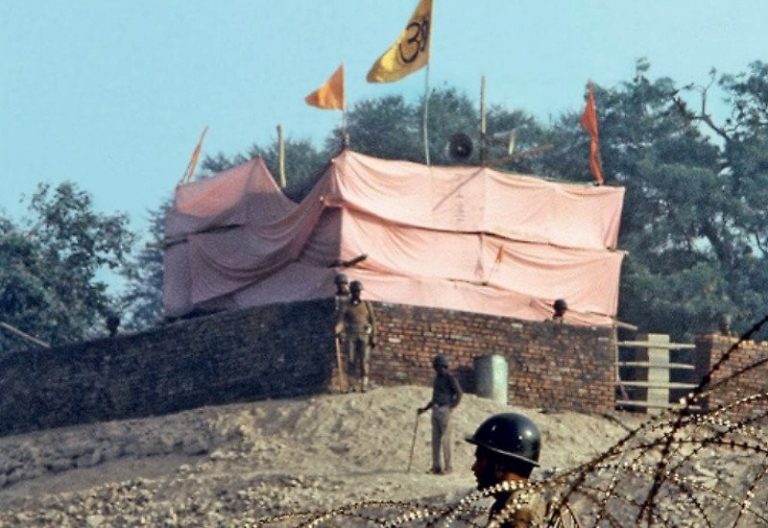
According to intelligence inputs, seven Pakistani terrorists have infiltrated into Uttar Pradesh via Nepal. A red alert has been issued by the security agencies in this regard. The infiltration of terrorists is being linked to the impending judgment of the Supreme Court on the Ayodhya dispute.

It is speculated that the terrorists plan to disrupt the peace in the country just before the apex court pronounces its verdict on Babri-Ram Janmabhoomi dispute.

Security agencies claim that the terrorists may be hiding in Ayodhya, Faizabad and Gorakhpur. The agencies have reportedly identified 5 of the 7 terrorists who have sneaked in Uttar Pradesh from Nepal. They are- Mohammed Yakub, Abu Hamza, Mohammed Shahbaz, Nisar Ahmed and Mohammed Qaumi Choudhry.

It is noteworthy to mention that Pakistan has ratcheted up its agenda of infiltrating terrorists in India. Earlier on Wednesday, it was reported that some Khalistani terrorists supported by Pakistan have infiltrated into Punjab through the international border. This is just before the opening of the Kartarpur Corridor. It is conjectured that terrorists have infiltrated Dera Baba Nanak in Punjab. Security agencies have issued an alert regarding this. Punjab Chief Minister Captain Amarinder Singh has already cautioned that Pakistan might use Kartarpur Corridor as a decoy to revive Khalistani terrorism.

Read: Intelligence reports say Jaish-e-Mohammad, Lashkar planning large-scale terror attacks in winter

A five-judge Supreme Court bench headed by CJI Ranjan Gogoi heard the Ayodhya case on a day-to-day basis for 40 days and reserved its verdict on October 16. The court is expected to deliver its verdict on a dispute over the possession of 2.77 acres of land in Ayodhya district in Uttar Pradesh before November 17, when CJI Gogoi retires.

The Hindu parties have laid claim to the entire 2.77 acres of land claiming that it is Lord Ram’s birthplace and the Muslims came here only after 1528 when a mosque was forcibly built on the ruins of the erstwhile Ram temple.

Catholic Church launches an investigation after two nuns found pregnant on their return from missionary work

0

The Catholic Church ordered an investigation after two nuns were found pregnant accusing them of violating the sacred vow of chastity. The two nuns, belonging to separate religious orders in Sicily, were found pregnant after they returned from the missionary work in their home continent Africa.

Ordering an investigation into the matter, the Catholic Church is of the opinion that the nuns have had sexual encounters while they were commissioned to carry out missionary work in their home continent.

One of them, a mother superior of an institute for the elderly at Ragusa, found she was several weeks pregnant following her visit to her home country Madagascar. The pregnancy of the other woman, a nun, reportedly based at a convent in Sicily’s Nebrodi mountains, came to light when she went to a hospital with a stomach ache. She has moved to Palermo, and is reportedly preparing to give birth to her child and is believed to be contemplating on giving up her monastic life.

Read: UK man waives off anonymity, talks about how he was raped, abused and threatened by Catholic nun

Nuns and Bishops are ordained to abide by the pledge of celibacy and are forbidden to have sexual relations. As per reports, a church source in Rome said that this news has distressed the Church. An investigation into the same has been initiated as both nuns have infringed strict rules of chastity. However, the welfare of their children is paramount. The most probable result would be that both might leave the religious service.

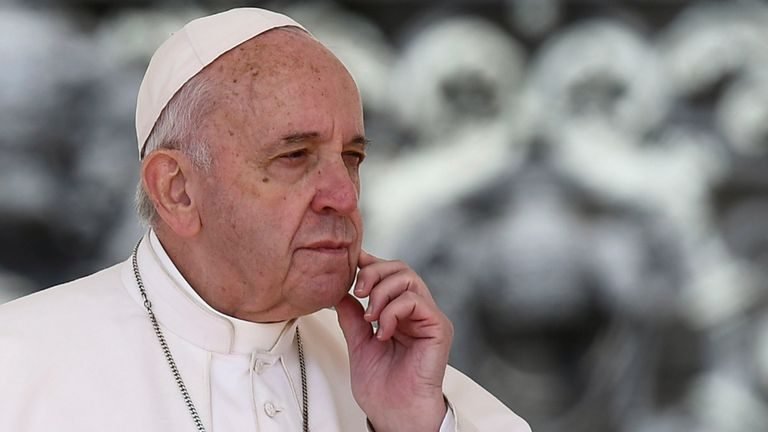
Recently, the Catholic Church has been in the midst of a turmoil, with many nuns coming out to recount their ordeal involving sexual exploitation at the hands of Bishops and priests. In India too, several nuns have slapped serious charge of rape against Bishop Franco. of Reacting to the grave allegations levelled by many nuns, Pope Francis had admitted earlier this year that some nuns had been sexually abused by clerics.

UP police file separate chargesheets against Swami Chinmayanand in rape case and against the victim law student in extortion case

0

A special investigation team of Uttar Pradesh Police probing the accusations against Swami Chinmayanand and the accusations against the victim and her associates, have completed the investigation and filed two separate charge sheets in the court. One against the jailed former Union Minister Swami Chinmayanand in the alleged rape case and the other against the 23-year-old law student and her associates who are under arrest in a purported extortion case.

The probe team in the charge sheets said that all the analysed evidence against Chinmayanand and the student prove the charges against them and it is now up to the court to take cognizance. If it does, then a trial will start in both cases, confirmed the SIT of UP Police.

“We managed to file charge sheets in less than two months. In both investigations, we questioned 105 people, recovered 20 pieces of evidence and also a lot of digital evidence and Call Data Records. We recovered 55 paper trails and are submitting case diaries and charge sheets running into 4,700 pages,” aid Mr Naveen Arora, the head of the special investigation team (SIT).

While Swami Chinmayanand has been charged in a rape case, the law student who had accused Swami Chinmayanand and her associates who had been sent to 14-day judicial custody by a local court in Shahjahanpur have been charged with extortion, criminal intimidation and “disappearance of evidence”.

Recently, the SIT which has been in relentlessly probing the sexual assault case against Swami Chinmayanand recovered a pen drive and a laptop believed to contain video evidence of the incident from a local BJP leader, DPS Rathore, whom the SIT had been questioning for a marathon 12 hours.

Read: UP girl who was traced in Rajasthan admits in SC she left on her own will, ruling out abduction charges against Swami Chinmayanand

Rathore is the younger brother of Uttar Pradesh BJP vice-president JPS Rathore. Both the leaders have been named in the chargesheet filed by the SIT, taking the number of those accused of trying to extort money from Chinmayanad to six. The other four accused are the law student, who had charged Chinmayanand with sexual harassment, Sanjay, Vikram and Sachin. All of them are in jail.

“These leaders had snatched the pen drive from the law student in Dausa, Rajasthan, and had viewed the contents on their laptop. They had later deleted the pictures and demanded Rs.1.25 crore from Chinmayanand to help ensure disposal of the matter. Both have been found guilty on this count,” Arora confirmed.

Chinmayanand was accused of rape by a law student in Uttar Pradesh’s Shahjahanpur. She had accused him of raping and sexually exploiting her after secretly filming her private videos.

After a huge controversy, Swami Chinmayanand, who was arrested on September 20 from his Mumuksha Ashram in Shahjahanpur, had admitted to almost every allegation levelled against him and had said that he was ashamed of his deeds.

The law student and her associates have also been arrested later on extortion charges.

After the controversy erupted, no BJP leader has come forward to extend any kind of support to Swami Chinmayanand, who has been in judicial custody since his arrest on September 20.

The Bharatiya Janta Party’ Uttar Pradesh unit had in September distanced itself from Swami Chinmayanand. The former BJP leader who was arrested by the SIT following charges of rape and physically exploitation on September 20 had been expelled from the party. “Chinmayanand isn’t a BJP member anymore,” confirmed UP BJP spokesperson Harish Chandra Srivastava.

Karnataka HC bats for celebrating a tyrant, tells Government to reconsider its decision to not celebrate Tipu Jayanti

In a shocking observation, Karnataka High Court (HC) has asked the state BJP government led by BS Yeddyurappa to ‘reconsider its decision’ to not celebrate the Islamic tyrant, Tipu Sultan on his birthday. The BJP government had decided to stop celebrating Tipu Jayanti as the Congress had in the past and Karnataka HC has taken exception to that. The government decision was challenged in court through a Public Interest Litigation.

Read: The legacy of Tipu Sultan: Here is why Mandyam Iyengars of Karnataka observe Diwali as a day of mourning

The BJP government had told the Karnataka High Court (HC) that it will not stop any individual from celebrating Tipu Jayanti but the government itself will not be celebrating like the Congress governments used to in the past. To this, the Karnataka High Court has asked the BJP government to reconsider its decision to abandon the celebration of the Islamic tyrant.

The Karnataka High Court has given the Karnataka government two months to take a decision keeping ‘all aspects’ in mind. The case has now been adjourned to January 2020.

Read: Karnataka: Yeddyurappa led BJP govt overturns previous govt order, cancels Tipu Jayanti celebrations

Yesterday, hearing the Public Interest Litigation (PIL) filed by Bilal Ali, a resident of Lucknow, Tipu National Service Association and Tipu Sultan United Forum, the bench led by Chief Justice of Karnataka High court A S Oka questioned State Government the reason behind cancelling the event which was being celebrated from previous four years.

In the PIL the litigant had challenged the government’s move to cancel Tipu Jayanti and had also claimed it to be a violation of Article 14 and 15 of Indian Constitution.

Read: The proper way forward is teaching students accurate history about Tipu Sultan, not removing the Jihadist tyrant from textbooks

Interestingly, in 2016, Karnataka High Court had questioned the rationale behind celebrating Tipu Jayanti. In 2016, Congress was in power and Siddaramaiah was the Chief Minister of Karnataka. It had observed that Tipu was a Monarch and not a freedom fighter and hence, had questioned the government over their rationale of celebrating him.

“What is the logic behind celebrating Tipu Jayanti? Tipu was not a freedom fighter, but a monarch who fought the opponents to safeguard his interests,” Chief Justice Subhro Kamal Mukherjee, presiding over the division bench had observed. Justice Mukherjee had also questioned the logic behind celebrating Tipu Jayanti amid fears of communal tension escalating in Kodagu district and other parts of the state.

Congress puts the ‘slow’ in ‘economic slowdown’, protest rally due in October to be held in December

The grand old party today announced that it will hold an all-party protest rally on December 1 at Ramlila Maidan in New Delhi on issues of ‘economic slowdown and agrarian crisis’. This is the third such ‘protest rally’ announced by Congress since September.


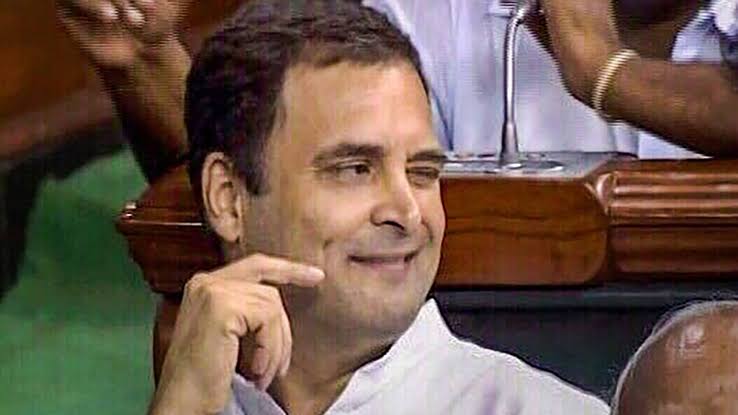
In September, Congress had announced a country-wide agitation from 15th to 25th October on these issues. That, too, was announced a month in advance. Amusingly, even without the hard work of protests, former Congress President Rahul Gandhi was off vacationing at mysterious foreign location after the October protest days flew by.

Read: 23 days after he left for a Bangkok vacation, Rahul Gandhi leaves for another foreign tour, this time Indonesia: Reports

Then, in October, before the last date of planned protests, i.e. 25th October, expired, Congress announced fresh dates of protests against ‘economic slowdown’.


On 22nd October, Congress said they’d protest across the country in first week of November. Congress had announced that starting from 5th to 15th November, the party will hold protests across the country and a rally in Delhi. These protests were also for ‘rising unemployment’, ‘sinking economy’ and ‘farmer distress’.

As 5th November flew by, Congress woke up and realised they missed yet another deadline. So on 6th November, they announced new dates of protests, this time, a combined protest with other parties.


Not too surprisingly, the joke wasn’t lost on netizens who took this opportunity to mock Congress for being a bigger joke than the party’s former President himself.


Congress also got mocked at for being the ‘laziest opposition’.


Netizens even questioned whatever happened to these earlier protests.


In a new low, even Aam Aadmi Party trolls, who are even bigger joke than ex-Congress President, were mocking Congress.


What will happen on 2nd December? Watch this space as Congress turns protests into new year party in 2020.

Have been warning since day one, Pakistan has hidden agenda: Punjab CM Capt Amarinder on Bhindranwale pic in Pak govt’s Kartarpur Corridor ad

0

Punjab chief minister Captain Amarinder Singh has been maintaining that he smells conspiracy in Pakistan’s move to open the Kartarpur corridor. Today while speaking on the Pakistan government’s official video on Kartarpur corridor which features Khalistani terrorists and anti-Indian elements including Jarnail Singh Bhindranwale, the Punjab CM reiterated that Pakistan has a hidden agenda behind the opening of the corridor.

“All this is what I have been warning about since day one, that Pakistan has a hidden agenda here,” stressed the chief minister.


On Monday, Pakistan’s Ministry of Information and Broadcasting had released a video of the official Punjabi song welcoming Sikh pilgrims to Kartarpur Sahib Gurdwara in Pakistan through the Kartarpur Corridor, which displays posters of Khalistani separatist leaders Jarnail Singh Bhindranwale, Maj Gen Shabeg Singh and Amrik Singh Khalsa in the background.

Captain Amarinder Singh has several times in the past asserted that Pakistan’s move to open the Kartarpur corridor ‘indicated an ulterior motive’. He had called the corridor-opening a bigger conspiracy of ISI. Today too, in an interview with India Today the Punjab CM said that the Pakistan Army and ISI were behind the opening of the corridor.

Singh said that he is apprehensive since Pakistan never thought of opening the shrine earlier in so many years. He said the demand for the opening of the Kartarpur Sahib corridor had been pending since 70 years ever since the Partition as several holy Sikh shrines (Sri Nankana Sahib, Sri Panja Sahib, Dera Sahib and Kartarpur Sahib) had been left in Pakistan. Why only now have they thought of opening the Kartarpur corridor? asks the CM. He asserts that this is nothing but Pakistan’s sinister plot to peddle its anti-India agenda.

Earlier in December 2018, while reacting to the statement made by the SJF’s Gurpatwant Singh Pannu soliciting Pakistan’s support to ‘liberate’ Punjab from India, the CM stated that it has exposed the evil nexus between the Pakistan army and the SFJ. In a statement, Amarinder said, “The entire affair of Kartarpur Corridor smacks off a wider conspiracy by the Pakistan Army and ISI to dismember India by reviving militancy in Punjab.” He claimed that it is an ISI ploy to strengthen anti-India forces, including the Sikhs For Justice (SFJ).

He has also indicated that Pakistan was attempting to revive militancy in Punjab and thus everyone should be wary of Pakistan’s motives. He maintained that ISI was trying to foment problems in Punjab by exploiting the religious sentiments of Sikhs. He also said that Pakistan funds and arms Sikhs in USA, Canada and even the UK by exploiting their religious feelings.

And why we can say that Captain Amarinder Singh’ apprehensions over Pakistan’s over-eagerness to open the Karatarpur corridor hold true is because recently Indian Intelligence agencies have accessed information that terrorists are being trained near the border district of Narowal in Pakistan’s Punjab province, the same district where Kartarpur Sahib Gurdwara is situated.

Reportedly, the intelligence alert has been received less than a week from the opening of the Kartarpur corridor for Indian pilgrims.

The Indian intelligence agencies are very much apprehensive about Pakistan’s desperation to open Kartarpur corridor as it provides an opportunity for the terror state to “exploit Sikh sentiments to support Khalistan agenda” in India.

Another worrying issue for Indian security establishment is that spillage of Pakistan mobile network up to 3-4 KM inside Indian territory. The officers said the spillage of the network can be used by drug smugglers and those involved in anti-national activities by using Pakistani SIM cards.

Another major challenge for security agencies is the proscribed group – Sikhs for Justice, whose propaganda through digital media and activities abroad have been a matter of concern.

Pakistan is scheduled to open the Kartarpur Corridor for Indian Sikh pilgrims on November 9. Initially, only 5,000 pilgrims will be allowed to visit daily from India but later it will be increased to 10,000 pilgrims per day. The corridor connects Dera Baba Nanak Sahib in Gurdaspur district of Indian Punjab with the Kartarpur Sahib Gurdwara located in Narowal district of Pakistan’s Punjab.

Climate Change and India: Urban elites should focus their energy on pressuring developed nations to meet emission targets

A recent opposition to the felling of trees in a wooded area near Mumbai, called as the Aarey Colony, threw up some interesting debates and discussions amongst the citizens of India on Climate Change. Apart from the emotional aspect of cutting down trees to make way for a shed of a public transport project, which was important to note was the Climate Change argument.

Keeping aside the political reasons of this particular project, since the state of Maharashtra is going to the polls on 21 October, it is important for Indian citizens to understand the Climate Change politics and dynamics, before it is used an argument to protest against a much needed and important public infrastructure project, particularly an efficient public transport system like a Metro.

While I personally continue to question a lot of Climate Change models, the fact remains that we are causing grave damage to the natural resources around us. Our air and water is dirtier and just these should be reasons enough to act towards environmental conservation. Local action is needed much more than embroiling ourselves into a larger, global and possibly uncontrolled phenomenon of Climate Change.

Read: Greta Thunberg, Climate Change and Indian Dilemma

Having said this, it is also important to understand India’s role in the Climate Change debate and dynamics. Because, without this understanding, citizens will continue to target the wrong things, while large emitters will get away by polluting.

The following data by USEPA gives us economic sectors that are the largest contributors of GHG (greenhouse gases) in the world today.

Electricity & Heat Generation – 25% of all the GHGs are caused due to our need to generate electricity and produce heat (for cold nations). So our everyday lives and our demand to have electricity for all our daily routine is what contributes to the emission of GHGs into the atmosphere.

Industry – 21% of all GHGs are produced because you and I want things for our daily lives – right from our phones to our clothes. This includes everything – all metals mined for our daily things like pens and utensils.

Agriculture, Forestry and Other Landuses – 24% of all GHGs are caused due to a variety of our activities with which we grow our food and poultry etc. So our demand for food primarily gives rise to these emissions. Forests, themselves, also emit GHGs as trees can sequester carbon only during a very short period of their life. Approximately, 20% of this 24% can be considered as its sequestration potential through biomass, soils and dead organic matter.

Read: Aarey: Environmentalism should be a practical concern, not a religion

Transportation – 14% of all GHG emissions are due to our need for mobility, either by cars, rail, aeroplanes or buses. 10% of these emissions are due to private vehicles.

Buildings – 6% of all GHGs are emitted due to our need for a shelter. Our buildings and their services are responsible for these emissions.

Other – 10% of all GHGs are emitted by the Energy sector that is not directly counted during energy generation but is allied emissions.

Ways in which one can reduce contribution of GHGs

From this data, it is seen that there are multiple ways in which we can reduce our contribution of GHGs. Putting the entire onus of GHGs on construction activity and particularly on essential infrastructure building is futile. In fact, with reference to the recent protests at Aarey against the Metro, it is important to note that within the Transport GHGs (14%), 10% are due to private vehicles. Hence, any projects and initiatives undertaken to reduce this 10% have to be a welcome step towards mitigating Climate Change. This is completely missed in the argument when protestors protested against an efficient public transportation system which will give the citizens a more environmentally friendly alternative to their cars.

The Climate Change dialogue amongst nations has recognized that Developing countries like India still need to put in basic infrastructure to bring its citizens out of poverty. The World leaders know that India’s current quest for complete electrification cannot be held as an action against Climate Change. In this quest of rural electrification by the Modi government, collateral conversion of land-use has been done, but the larger benefit to the people is recognized in the climate change debates across the world. Similar is the case with Indian cities and other sectors in India as well.

The vagaries of the weather are often cited as coming of a Climate Change apocalypse. Yes, we should certainly worry about these weather variations, but also accept the fact that our local level actions may not directly impact these phenomena when the developed countries are still putting out much more GHGs into the atmosphere than India. So linking a small scale forest conversion to avoiding Climate Change is not just futile, it is counterproductive to the entire debate when India is trying to put in efficient systems in place.

Read: Why the Indian Right should take the lead on climate change and snatch the issue from the Left

For India, particularly, for the urban elite, to embark on a Climate Change argument without addressing its intricacies is a dangerous game that can threaten India’s development and access of her citizens to good and necessary infrastructure. While, we as a nation accept and acknowledge that environmental conservation is important, to be held ransom to the argument of Climate Change is just plain unfair, particularly to people still living in poverty. It is only with good infrastructure, mobility and access to resources can we expect our economy to perform so that poor are lifted out of their misery. The focus of activism against Climate Change should be governments of developed countries who despite numerous conferences and treaties, have not managed to reduced their emissions to acceptable targets. It is said, and rightly so, that the urban elite of India is often more connected to the global dynamics than with their rural counterparts. They should use their connections and passion for demanding action against Climate Change to put pressure on developed nations to achieve their emission targets

Once a mosque is always a mosque: Jamiat Ulama-i-Hind President Maulana Arshad Madni on Ram Janmabhoomi verdict

Days ahead of the Supreme Court judgement in the long-pending Ram Janmabhoomi-Babri Masjid dispute, Maulana Arshad Madni, President of Jamiat Ulama-i-Hind on Wednesday said that Babri Mosque was a mosque in terms of law and justice and once a mosque is always a mosque.

The mosque existed for almost 400 years, therefore as per Sharia, it is still a mosque, he said while addressing a press conference. However, he clarified that “we will abide by the Supreme Court verdict based on evidence”. Madni claimed that people across India, from Kashmir to Kanyakumari are presently living in an ‘atmosphere of fear’.

The Supreme Court is expected to deliver its verdict on a dispute over the possession of 2.77 acres of land in Ayodhya district in Uttar Pradesh before November 17, when CJI Gogoi retires.

Read: Road to Ram Janmabhoomi, Ayodhya: How Hindus fought for Shri Ram

Yesterday, the Muslim clerics who met Union Minister Mukhtar Abbas Naqvi at his residence ahead of the Supreme Court’s much-awaited verdict on the Ayodhya dispute, urged people to respect the apex court’s decision on the long-drawn row and asked people to maintain peace and calm.

The Chairman of All India Sufi Sajjadanashin Council, Syed Naseeruddin Chisty advised people of all religion to accept the court order. He also claimed that the council will issue guidelines to all dargahs and make an appeal to people to not believe in rumours and fake news.

Another Shia cleric, Maulana Syed Kalbe Jawad echoed similar sentiments saying that everyone should respect the honourable court’s decision and exhorted people to maintain peace and calm as the country primes itself for a resolution in one of the oldest legal disputes.

Read: Ram Janmabhoomi case: Muslim parties ask SC to ‘keep future in mind’ while delivering Ayodhya verdict, make last effort to influence

On November 4, Ayodhya Police had also issued notification calling out the rumour-mongers and cautioning them that strict action will be taken against those who will be found inciting unrest through sharing fake news, communally sensitive videos/messages on Facebook, Whatsapp and other social media platforms.

The district magistrate has instructed people to not make any defamatory comments against any religion, community, deities, eminent personalities on social media platforms. People have also been prohibited from organising any event regarding the Ram Janmabhoomi-Babri Masjid dispute. Section 144 has been imposed in Ayodhya till December 28. Those violating the orders will be booked under Section 188 (disobedience of an order promulgated by public servant) of the IPC.

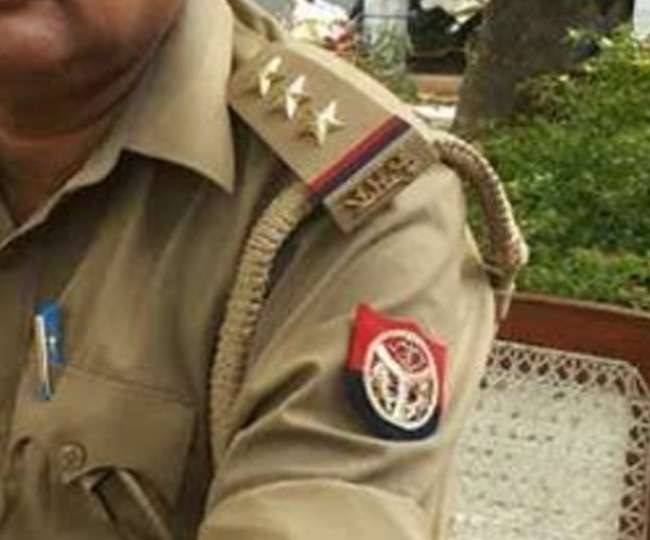
The UP Police has assured that they are completely and absolutely ready for the verdict. The central government has given UP almost 4000 extra Paramilitary personnel to maintain law and order situation in the state after and during the SC much-awaited verdict on the long-drawn Ayodhya dispute. The Ministry of Home Affairs (MHA) has also granted 15 companies of paramilitary forces, including three each of BSF, RAF, CISF, ITBP and SSB, to Uttar Pradesh immediately which will stay in the state till November 18. These companies will be deployed in 12 most sensitive districts and cities in the state.

Read: It is on my table and Indian Express front page, let it be there only: CJI on Muslim party submission leaked to media in Ram Janmabhoomi case

Strict instructions have been passed down to the police station level that no breach of government directives on security and law and order should be tolerated.

A five-judge Supreme Court bench headed by CJI Ranjan Gogoi heard the Ayodhya case on a day-to-day basis for 40 days and reserved its verdict on October 16. The court is expected to deliver its verdict on a dispute over the possession of 2.77 acres of land in Ayodhya district in Uttar Pradesh before November 17, when CJI Gogoi retires.

The Hindu parties have laid claim to the entire 2.77 acres of land claiming that it is Lord Ram’s “janm sthan” (birthplace) and the Muslims came in only after 1528 when a mosque was forcibly built on the ruins of the erstwhile Ram temple.