Home Blog Page 596

From Hamas massacre on October 7, 2023 to Gaza ceasefire: Timeline of events in a war that saw over 50,000 deaths

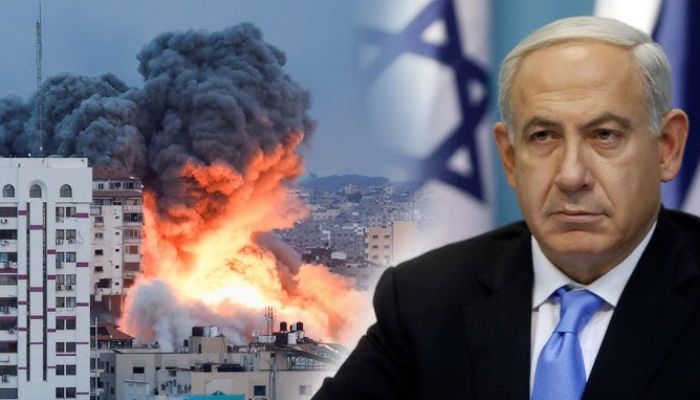
In a respite from the war ongoing between Israel and the Palestinian Islamic terrorist group Hamas for 15 months, the two warring sides have reached an agreement to cease violence in Gaza and exchange Israeli hostages for Palestinian prisoners. While the implementation of the ceasefire agreement is yet to unfold, the ceasefire agreement’s timing is crucial as it comes ahead of US President-elect Donald Trump’s inauguration.

As the warring sides agree upon ceasing hostilities in Gaza, here’s a timeline of events in a war initiated by the Palestinian Islamic terrorist outfit Hamas and escalated by Israeli Defence Forces in retaliation leading to nearly 50,000 deaths.

October 7 massacre

On the 7th of October 2023, the Palestinian terror group Hamas which controlled the Gaza Strip launched an unprecedented attack on Israeli civilians ravaging Kibbutz after Kibbutz killing innocent Jewish people, taking hostages, raping women and mutilating the slain. At least 5,000 rockets were launched into Israel from Gaza, and tunnels were used to breach the Israeli territory and butcher Israeli civilians, particularly in the border villages. A music festival hosting more than 200 people was turned into a slaughter ground with many women raped, mutilated and abducted to Gaza. Shani Louk, a 22-year-old German-Israeli woman, who was abducted to the Gaza Strip and paraded naked during Hamas’s 7th October terror attack. OpIndia later reported how Islamists tried to whitewash Hamas’s atrocities on the innocent German-Israeli woman based on her mother’s hope of her daughter being alive.

At least 1,300 people, including some foreign nationals, babies, women and senior citizens, were killed in the attacks. More than 200 were abducted and taken to Gaza. Following the attack, Israel launched a counterattack to eliminate Hamas as Israeli Prime Minister Benjamin Netanyahu vowed “mighty vengeance” against the Palestinian jihadist outfit.

Meanwhile, Israel launched its Operation Iron Sword against Hamas. Israeli air raids pounded Gaza over the course of the night and killed more than 400 Palestinian terrorists as well as destroyed structures, tunnels and the homes of senior Hamas figures.

October 8: Day 2

On the second day of the war, Lebanon’s Islamic terror outfit Hezbollah came in to support its violent Islamic brethren Hamas and launch strikes on Israeli targets further adding to the escalating hostilities.

October 9: Day 3

On the third day, Israel continued its air bombarding on Hamas targets in Gaza.

October 13: Day 7

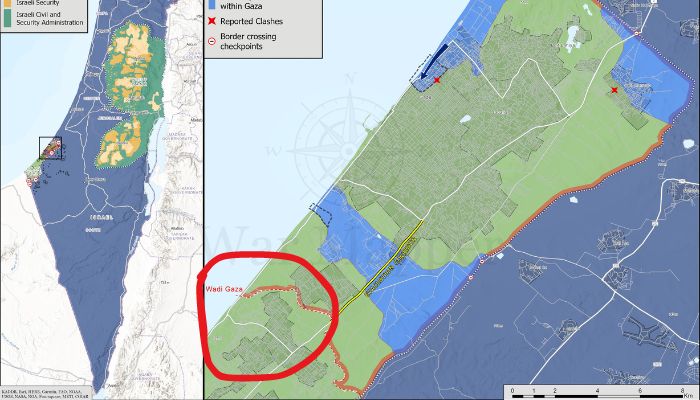
Israel advised nearly one million residents of Gaza city to move South of a stream named Wadi Gaza as Israeli Defence Forces (IDF) launched an operation to target and eliminate Hamas terrorists and their hideouts in Gaza. Following this, Gazan civilians began deserting the city.
IDF announces 4 hour evacuation corridor for Gazans
Wadi Gaza is the only coastal westland in the Gaza Strip (Source: War Mapper/X)

October 19: Day 13

A US Navy warship intercepted missiles and drones launched from Yemen towards Israel. Yemen’s Iran-backed Houthi terrorists continued attacks on Israel and against Red Sea shipping.

October 21st: Day 15

Aid trucks were permitted to access the Rafah border crossing from Egypt into Gaza, where food, water, medications, fuel and other essentials were running low. The humanitarian catastrophe would deepen in the coming months, with aid groups and Western countries demanding that Israel do more to allow aid in.

Image via: Economist

October 26th 2023

Prime Minister Netanyahu announced a “new phase” in the war, deploying ground forces into Gaza and expanding attacks. Israeli troops and tanks conducted a brief ground operation into northern Gaza overnight into 26 October. They destroyed multiple terrorist targets with the aim of “preparing the battlefield” for a widely anticipated full-scale ground assault. On 27th October,

October 31st 2023

Israel launched airstrikes near the Jabalia refugee camp and killed a Hamas commander Ibrahim Biari who led the October 7 massacre. However, some reports claimed that nearly two dozen civilians also lost their lives in the airstrikes.

November 21st 2023: Temporary ceasefire

Israel and Hamas reached an agreement for a seven-day truce on the 21st of November 2023. This truce enabled the exchange of hostages and prisoners: Israel released 240 Palestinian women and minors in exchange for the release of several hostages kidnapped during the initial onslaught. The Israel Defence Forces confirmed the release of over 14 hostages, including 10 Israelis and four Thai nationals, from Hamas captivity. However, the ceasefire broke on December 1st, and the violence resumed with an intensified fervour.

December 4 2023

The Israeli military launched their first major ground assault in southern Gaza, towards the main southern city, Khan Younis.

January 2024

Israeli forces signalled withdrawal from northern Gaza, eventually, however, they were involved in fighting Hamas terrorists in the same area.

South Africa filed a case in the United Nations International Court of Justice accusing Israel of genocide in Gaza, sparking an ironic juxtaposition. The case unfolded at the International Court of Justice (ICJ), where South Africa demanded an emergency suspension of Israel’s military campaign in Gaza, alleging genocidal acts.

Israel’s Prime Minister Benjamin Netanyahu slammed South Africa over its genocide case and said: “We are fighting terrorists, and we are fighting lies. Today, again, we saw an upside-down world in which the State of Israel is accused of genocide at a time when it is fighting genocide. Israel is fighting against murderous terrorists who committed horrific crimes against humanity: they slaughtered, they raped, they burned, they dismembered, they beheaded–children, women, the elderly, young men and young women.”

On 26th January 2024, the International Court of Justice ordered Israel to do more to prevent the killing of Palestinian civilians in Gaza. The ruling pertained to the nine provisional measures sought by South Africa in its genocide case against Israel. Additionally, the court mandated Israel to permit the provision of essential services and humanitarian aid for the Palestinian population in Gaza.

February 2024: Biden vents out frustration against Netanyahu

On 8th February 2024, then US President Joe Biden called Israel’s retaliatory offensive in Gaza as “over the top”. Just days later, Biden said that he is trying to get Israel to agree to a cease-fire, but Netanyahu is “giving him hell”. In private conversations, some of them with campaign donors, Biden expressed frustration over his inability to persuade Israel to change its military tactics in the Gaza Strip. During a private conversation, Biden reportedly called Netanyahu an ‘as***ole’.

April 2024: Israel strikes Iranian embassy in Syria, Iran seeks revenge

On 1st April 2024, suspected Israeli warplanes bombed a building adjacent to the embassy of Iran in Syria, leaving seven of Iran’s military advisers, including three senior commanders dead. Mohammed Reza Zahedi, a top commander in the Quds Force of the Iranian Revolutionary Guards Corps (IRGC), was reportedly killed in the Israeli airstrike in the Syrian capital, Damascus. Following this, Iran’s Supreme leader Ayatollah Khamenei proclaimed that “Israel will be punished” for its attack.

On 13th April, Iran launched an offensive on targets around Israel in which the nation fired a barrage of over 300 unmanned drones and missiles. Iran also hinted at reviewing its nuclear doctrine. Days after, Israel launched missile strikes against Tehran.

A cargo ship with ties to Israel was apprehended by Iran’s Revolutionary Guards on 13th April near the Strait of Hormuz. 17 Indians were also onboard the seizes ship. Zodiac Maritime’s affiliate Gortal Shipping has leased the Aries to multinational shipping company MSC, which is in charge of all vessel operations. Eyal Ofer, an Israeli businessman, owns a portion of Zodiac.

May 2024: From ceasefire to “full operational control”

On 6th May, Hamas claimed to have agreed to a ceasefire proposal, however, Israel denied having agreed to the proposal’s terms.

On 7th May, Israeli Defence Forces took control of Rafah crossing between Gaza and Egypt, pushing into the southern Gazan town. Back then, the IDF said that between 5,000 and 8,000 Hamas terrorists stayed in the southern city, which it deems the Palestinian Islamist terrorist group Hamas’s last stronghold. The military operation came as Israel found that Hamas has four battalions in Rafah and that many senior Hamas terrorists could be hiding there.

The disagreements between Netanyahu and Biden over Israel’s handling of the war in Gaza resurfaced as President Biden said that US would not provide Israel with offensive weapons for its operation in Rafah. However, PM Netanyahu remained undeterred in his resolve to eliminate Hamas terrorists in Rafah as he said “If Israel is forced to stand alone, Israel will stand alone.”

On 11th May, Israel ordered evacuation of Rafah as it prepared to expand its operation in Gaza’s southern city. Later in the month, Israel brought the entire Gaza-Egypt border under its “full operational control” and located 20 tunnels leading into the Egyptian Sinai.

Moreover, the Israeli Knesset plenum approved a preliminary reading of legislation designating the UN Relief and Works Agency as a “terror organisation”. UNRWA has been under fire, with Israeli officials demanding the agency be stripped of its authority in Gaza and defunded amid revelations that members of the agency’s staff participated in Hamas’s October 7 attacks.

June 2024: Heavy fighting slows down but Israel’s war on Islamic terrorism goes on

On 23rd June, PM Netanyahu said that the intense phase of the war had come to an end, however, IDF’s fight against Hamas would continue till the Palestinian jihadist outfit controls Palestine.

July 2024: Israel goes into full-on revenge mode

On 2nd July, Israel ordered fresh evacuation in Khan Younis and Rafah as IDF continued its operation against Hamas terrorists. On 27th July, around 12 people including children were killed in a rocket strike by Hezbollah in the town of Majdal Shams in Golan Heights. The attack was carried out from Lebanon. Although Hezbollah initially took responsibility for killing 12 victims, it later retracted its statement and claimed that it had ‘nothing’ to do with the incident.

On 30th July, Israel avenged the horrific killing of 12 Israelis including children as it killed Fuad Shukr, a senior Hezbollah commander responsible for carrying out rocket strike in the Israel-controlled Golan Heights area.

Just a day after, the Palestinian terrorist group Hamas confirmed in a statement that their chief Ismail Haniyeh had been assassinated in Iran’s Tehran. The group said that Haniyeh was killed in an Israel air strike on his house in Tehran.

August 2024: Israel kills Hamas military chief Mohammed Deif

On 1st August 2024, IDF announced that Hamas military wing commander Mohammed Deif had been killed in an airstrike in the southern Gaza Strip on July 13. The Israeli forces said that it obtained intelligence confirming his death in the past few hours. Deif was targeted in a strike at Hamas’ Khan Younis Brigade commander Rafa’a Salameh’s compound in Khan Younis area on July 13. While Salameh’s death was confirmed, it took a longer time for the IDF to confirm Deif’s death.

On 7th August, the Palestinian terrorist group Hamas named its Gaza leader Yahya Sinwar as its new commander following the death of his predecessor Ismail Haniyeh. Sinwar was the mastermind of the October 7 massacre. Right after his appointment as Hamas’s new commander, the terror outfit’s jihadis launched missiles against Israel.

On the intervening night of August 28th and 29th, Israeli forces killed five Palestinian terrorists who were hiding in a mosque in the West Bank city of Tulkarem. Meanwhile, Israel agreed to a humanitarian pause for the United Nations organisations to hold polio vaccination drives in Gaza.

September 2024: Israel carries out sophisticated pager attack targeting thousands of Hezbollah terrorists, Hassan Nasrallah hunted down and killed

On the 17th of September 2024, the Israeli intelligence agency Mossad carried out one of its most effective anti-terrorist operations against the Islamic terrorist outfit Hezbollah in Lebanon. The sophisticated attack left thousands of Hezbollah terrorists injured and over 30 dead. The attack was the culmination of Mossad’s long-term operation which included setting up a legitimate company in Hungary to supply communication devices to Hezbollah. Several videos showed Hezbollah operatives on the floor with severe injuries around their waist and groin area, pointing to the fact that the pagers exploded in their pockets.

On the 28th of September, in continuance of its operation to eliminate key Hamas and Hezbollah leaders, Israel killed Hezbollah chief Hassan Nasrallah. A day after Israel Defence Forces bombed Hezbollah’s main headquarters in Beirut, Lebanon, Israel officially confirmed that Hezbollah chief Hassan Nasrallah died in the operation. Confirming Nasrallah’s death, the IDF posted on X, “Hassan Nasrallah will no longer be able to terrorise the world.”

The slain Hezbollah terrorist’s dead body was recovered in his bunker in Beirut where he was killed while hiding.

On 29th September, Israel conducted airstrikes targeting Hodeidah port in Yemen in which various assets including fuel tanks were hit. The port is controlled by Houthi Ansarallah movement, which has control over a significant portion of Yemen. Reports said that two power plants were also hit in the strikes.

October 2024: Israel continues operation in northern Gaza, ends Yahya Sinwar’s short reign as Hamas commander

On 3rd October 2024, the Israeli military confirmed that it had eliminated another Hamas leader identified as Rawhi Mushtaha, the head of the Hamas administration in Gaza. The country also stated that two more security officers Sameh al-Siraj and Sami Oudeh along with Mushtaha were eliminated during airstrikes three months ago.

On 5th October, IDF launched an anti-Hamas operation in northern Gaza focusing on the Jabalia refugee camp near Gaza City and Beit Hanoun and Beit Lahiya towns.

On 2nd October 2024, Israel declared UN chief Antonio Guterres “persona non grata”, banning him from entering the country. The decision was taken by the Israeli foreign ministry for failing to unequivocally condemn Iran’s missile attack on Israel a day before. Days later, Guterres rose from his selective slumber and decided to condemn the atrocities committed by Hamas Jihadis on Israelis. On 7th October 2024, as the October 7 massacre completed one year, Guterres said that it is a day for the global community to condemn the “abhorrent acts of Hamas.”

On the 16th of October, Israeli forces killed the newly-appointed Hamas commander Yahya al-Sinwar during its anti-Hamas operation in Gaza. A day after, Israel confirmed that Hamas chief Yahya Ibrahim Hassan Sinwar has been killed in a military operation in Gaza. “The arch-terrorist Yahya Sinwar, who is responsible for the massacre and atrocities of October 7, was eliminated today by IDF soldiers,” Israel foreign minister Israel Katz said.

November 2024

On 21st November, the International Criminal Court issued an arrest warrant against Israeli PM Benjamin Netanyahu former defence chief Yoav Gallant and Hamas’ Mohammed Deif for alleged war crimes in Gaza.

On 27th November, Israel and Hezbollah agreed to a ceasefire in Lebanon. Meanwhile, ISIS jihadis launched an offensive in Syria which culminated in the fall of Hezbollah ally Bashar-al-Asad’s long reign in the country.

December 2024: Trump warns of ‘hell to pay’, calls for hostage release before his inauguration

On 2nd December, US President-elect Donald Trump said there will be “hell to pay” in the Middle East if hostages in Gaza are not freed before his swearing-in ceremony on 20th January. Trump reiterated his stand regarding hostages in Gaza on 16th December.

January 2025: Trump’s “All hell will break out” warning to Israel-Hamas ceasefire

On 7th January 2025, US President-designate Donald Trump warned the terrorist group Hamas that they should release all the hostages they have been holding since the October 7, 2023, terror attack on Israel. Donald Trump warned that all hell will break out in the Middle East if the hostages are not released by the time he assumes office in a couple of weeks’ time.

On 15th January 2025, negotiating parties reached an agreement for a cease-fire in the Gaza war between Israel and Hamas, after 15 months of violence that has killed tens of thousands of Palestinians and caused unprecedented damage in West Asia since Hamas launched its onslaught against Israel on October 7, 2023.

The ceasefire agreement came with the efforts of the United States, Qatar and Egypt. The agreement, which is set to go into effect from Sunday (19th January), calls for a six-week initial truce and the gradual departure of Israeli forces from the Gaza Strip, where tens of thousands of people have died. Hostages abducted by Hamas, the terrorist group that rules the enclave, would be released in return for Palestinian captives held by Israel. Besides, Israel will allow displaced Palestinians to return to northern Gaza. On the 16th day of the ceasefire’s implementation, the release of remaining Israeli hostages is expected to be initiated, meanwhile, Israeli forces will retreat to a defensive belt.

Ceasefire agreement

The final stage of the agreement involves rebuilding Gaza City under the supervision of Qatar, Egypt and the United Nations while Israel will be expected to completely withdraw from Gaza.

Israel’s ratification of the agreement will not become official until it is authorised by the country’s security cabinet and government, with a vote scheduled for Thursday. However, a fresh dispute has emerged after Prime Minister Netanyahu accused Hamas of making last-minute demands and breaking agreements. However, Hamas denied any backtracking.

Whether the ceasefire agreement plays out as decided by the negotiators or not remains to be seen, it has come as a ray of hope for the 15 month conflict to finally come to an end even though it remains highly unlikely that Israel would step back from its resolve to completely annihilate Hamas. The world would look forward to seeing if Hamas despite its weakened position after most of its top leadership was eliminated by Israel continues to hold power in Gaza or if a new non-violent political leadership emerges.

Gaza’s Health Ministry says over 46,000 of its people have been killed in the war. However, some reports, such as Lancet, have claimed that the deaths might be in the 64,000 range just from traumatic injuries in the war, excluding indirect deaths like lack of healthcare and food.

Lebanon’s official casualty figure is at 3000. Official sources from the Israeli government say that over 1700 Israelis have been killed, both civilian and soldiers.
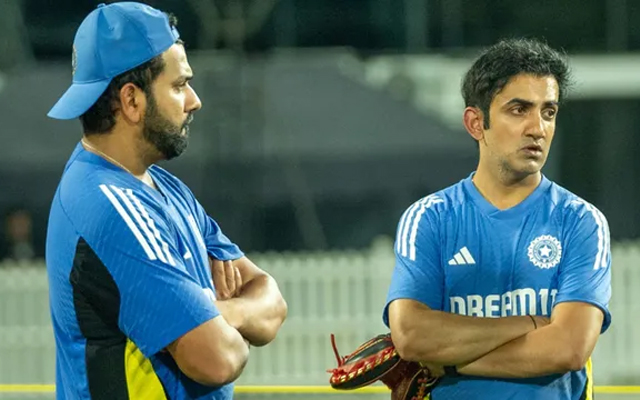

BCCI cracks down on indiscipline- Will bring new rules on family stay, personal staff, domestic cricket participation

0

The Board of Control for Cricket in India (BCCI) is reportedly taking a tough stand on issues of indiscipline among Indian cricketers, with new regulations being discussed to streamline player conduct and commitment.

A BCCI source revealed, “Indian cricketers are indisciplined. Gautam [Gambhir] and one senior player are on the same page on the topic of family stay.”

The players will also be barred from taking independent transport to commute during practice and matches.

For a tour of 45 days, the family members of the players can only be with them for not more than 14 days. Meanwhile, during shorter tours in foreign countries, the immediate family members of a play can stay up to a week.

Additionally, a senior player suggested a bold move during a recent meeting withholding match fees from players who choose to skip domestic tournaments.

“One senior player was in the meeting to suggest the idea to BCCI of not distributing the match fee to players those who doesn’t want to play domestic,” the source added.

In a bid to further enforce discipline, the BCCI has also decided to bar players from travelling with personal staff, including cooks, hairdressers, stylists, or personal security guards, on tours.

“Players are not allowed to travel with their personal staff (cook, hairdresser, stylist, no personal security guard) on tour any more,” the source further stated.

The board’s stringent measures are aimed at ensuring a more professional and unified team culture while prioritizing the development of cricket at all levels.

Team India conceded a disappointing 3-1 defeat to Australia in the recently concluded Border-Gavaskar Trophy 2024-25 and lost the opportunity to qualify for the World Test Championship (WTC) Final at Lord’s.

Skipper Rohit Sharma and star batter Virat Kohli came under fire for an underwhelming Border-Gavaskar Trophy campaign and overall a very disappointing 2024/25 season of Test cricket. Sharma (31 runs in five innings at an average of 6.20) and Virat Kohli (190 runs in nine innings at an average of 23.75 with a century) lacked big time with the bat. Virat fell for the outside-off-stump trap throughout the series, most notably by pacer Scott Boland who dismissed him four times.

The 2024-25 season of Tests has been miserable for ‘Ro-Ko’ (Rohit and Kohli). While Rohit scored just 164 runs in eight matches and 15 innings at an average of 10.93 with best score of 52, Virat scored a shambolic 382 runs in 10 matches and 19 innings at an average of 22.87, with just a century and fifty each.

(This news report is published from a syndicated feed. Except for the headline, the content has not been written or edited by OpIndia staff)

‘Nobody is ready to come up and speak the truth’: OpenAI whistleblower Suchir Balaji’s mother talks to Tucker Carlson, reiterates her son was murdered

On Thursday, 16th January, Poornima, the mother of the deceased AI expert and OpenAI whistleblower Suchir Balaji, expressed dissatisfaction over the police investigation in her son’s death case indicating that he was killed and that he did not commit suicide. In an exclusive conversation with American political commentator, Tucker Carlson, Balaji’s mother said that the police hardly did any investigation to conclude that her son had died of suicide. She said that the authorities at around 2 am on 22nd November knew that the 26-year-old AI expert was dead but they did not disclose it to the family until 5 am.

“The police first called me at around 1 am. However, they refused to enter my son’s apartment saying that they were waiting for two more officers. They didn’t even allow me to enter the apartment. I was worried to the core. Later they asked me to go home and called a white van. It is then when I suspected that my son had died,” Balaji’s mother said adding that no proper investigation was done in her son’s death case. She said that the police in the next 14 minutes concluded that it was a suicide and that Balaji had allegedly shot himself using a gun.

During the post-death rituals then the funeral home suggested to the family that the death didn’t look like a suicide to them. “The authorities at the funeral home said that the death was not normal and that they suspected non-suicidal aspects in the case. They suggested that we do a private autopsy,” the mother said.

Elon Musk, CEO, of Tesla Motors, took cognizance of the interview and said that the entire event regarding the death of Balaji was ‘extremely concerning’.

“Everybody is suppressed, nobody is ready to come up and tell the truth. Even the attorneys have been made to tell that it is a suicide,” Balaji’s mother added as Carlson asked what steps they as parents took to reverse the claims of suicide.

Balaji’s mother said that her child was extraordinary and that he wanted to work for the betterment of humanity. He initially worked at Open AI but raised his voice against the company and its policies only after he left AI. She said that he clearly later stated that Open AI was making copyright violations.

“A lot of investment has gone into the AI industry. He was named as a witness by the NYT. Within a week, he was found dead. He had documents and some information that would have been very critical. It would have shaken the AI industry, especially OpenAI and Microsoft. If he had given his testimony, it would have had a very big impact,” she said.

Suchir Balaji, a 26-year-old Indian-origin AI expert was found dead in his San Francisco apartment on November 26th. The police ruled the event as a suicide but reports suggest that before his death, Balaji had sounded an alarm on OpenAI’s allegedly illegal copyright practices in the development of ChatGPT. He had left OpenAI in August.

Poornima said that her son was not a whistleblower but just wanted to reveal the harmful effects of AI LLM (large language model) which could turn the AI industry upside down.

“He was not a whistleblower against OpenAI, all he was saying was that the AI LLM model is harmful. It doesn’t render the data as it is. This is not only about copyright violations but also about the harm to humanity because the data output is not as expected. A whistleblower is only when he is inside the company, but he had left OpenAI. Until he was there, he never raised his voice against the management,” she said.

Earlier also in December, Poornima stated that her son was killed and nobody from Open AI even cared about his death. Notably, Suchir was found dead just three months after he publicly accused OpenAI, his former employer, of copyright violations during the development of ChatGPT. The revelation made by Suchir was expected to play a vital role in lawsuits against the AI tech company. 

The mother also added that Balaji was not depressed or anxious which could have allegedly triggered him to commit suicide. “He was happy, not depressed or anything. And it was his birthday week,” the mother said adding that his father was the last person he spoke to.

The parents of Balaji have expressed disbelief that their son could take his own life. They have called for an FBI investigation into the death of Suchir Balaji to uncover the truth.

USA: Pulitzer-winning cartoonist Darrin Bell, associated with Washington Post, gets arrested for child sexual abuse material

Pulitzer Prize-winning cartoonist Darin Bell, who has been associated with many mainstream publications including the Washington Post, has been arrested for child pornography. As per reports, the Sacramento Valley Internet Crimes Against Children directive had conducted an investigation after getting a tip from the National Centre for Missing and Exploited Children (NCMEC), and found Bell uploading child sexual abuse material in the form of over a hundred videos.

In a press release, the Sheriff’s office stated that they had got a tip about 18 files, but the team raiding Darrin Bell’s residence found 134 videos of child sexual abuse material uploaded and linked to an account owned and controlled by Darrin Bell. At Bell’s location, the raiding team also found additional evidence, including AI generated videos of child sexual abuse.

The AI generated videos were additional material in addition to the child sexual abuse material he had uploaded on an online platform, as per reports. A recent change in California laws considers even AI-generated child abuse material as criminal.

Bell has been arrested and is currently held at the Sacramento County Main Jail, and his bail bond is placed at $1 million. He is scheduled to appear at court on January 17.

Bell attained fame in 2019 as the first African American journalist to win the Pulitzer for Editorial Cartooning.

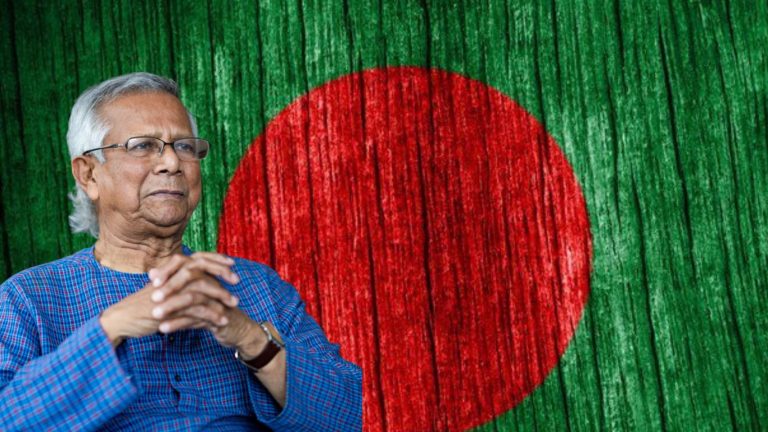
Bangladesh: Nationalism, socialism and secularism set to be removed from Constitution, Reform Commission makes suggestion

0

Following the ouster of democratically elected PM Of Bangladesh, Sheikh Hasina, the interim government of Nobel Peace Prize winner Muhammad Yunus set up six reform commissions to suggest reforms in the governance of the state. Four of the commissions have submitted their recommendations to Chief Advisor Muhammad Yunus on January 14.

The heads of the four commissions, namely, the Election Reform Commission, the Anti-Corruption Commission, the Police Reform Commission, and the Constitution Reform Commission handed over their reports to Yunus at his office in Tejgaon, Dhaka. The heads of the 4 commissions are Badiul Alam Majumdar, Iftekharuzzaman, Safar Raj Hossain, and Ali Riaz.

Notably, this recommendation to remove secularism from constitution comes following months of violence against minorities, particularly Hindus, in Bangladesh under Muhammad Yunus government.

The Constitution Reform Commission suggested replacing the principles of nationalism, socialism, and secularism in the constitution. Addressing the media after submitting the report, Ali Riaz highlighted some key recommendations of the commission which include changing the official Bengali name of Bangladesh from ‘Gana Prajatantry Bangladesh’ to ‘Jana Ganatantry Bangladesh’. However, the English name of the country, ‘the People’s Republic of Bangladesh’, is to remain the same. A provision to hold a referendum for making amendments to the Constitution has also been suggested.

The commission recommended replacing the current Parliamentary system with a bicameral legislature comprising the National Assembly (lower house) and the Senate (upper house). The commission also suggested the constitution of a National Constitutional Council. The Council would include the President, the Prime Minister, the Chief Justice, the Leader of the Opposition, the Speakers of the two houses, Deputy Speakers from the opposition and a representative from other political parties.

About 150 recommendations were submitted by the Election Reform Commission including that a person who has served as the Prime Minister should never be eligible to be appointed as the President at any point in their lifetime. The Police Reform Commission suggested measures to make the police people-friendly.

The commissions were set up after the ousting of the Sheikh Hasina government following violent protests. Upon receiving the reports of the commissions recommending removal of secularism from the constitution, Muhammad Yunus termed it as a ‘historic moment’. In a public address, he said, “This is not just a formality; it is a historic moment, Various committees are formed, reports are published, and formalities are observed, but today’s event transcends all that. This event will be remembered as part of history because these commissions were born out of a historical turning point.”

Union cabinet approves ₹3985 crore to build third launch pad at Satish Dhawan Space Centre in Sriharikota to support space missions

In a step to strengthen India’s space exploration infrastructure, Union Minister Ashwini Vaishnaw announced the approval of a Rs 3,985 crore project for the construction of a third launch pad at the Satish Dhawan Space Centre (SDSC), Sriharikota.

The announcement was made during a cabinet briefing on Thursday, highlighting the government’s commitment to advancing the country’s space capabilities.

The new Third Launch Pad (TLP) will play a key role in supporting the Next Generation Launch Vehicle (NGLV), enabling the launch of heavier payloads and significantly increasing the launch capacity of the LVM3 rocket.

Additionally, it will provide enhanced redundancy for the Gaganyaan missions, particularly the planned Indian Crewed Moon Landing mission, and future human spaceflight endeavors.

Minister Vaishnaw emphasized that the new pad will not only cater to the current launch requirements but will also provide scalable infrastructure for future space missions.

The Third Launch Pad will be co-located with the already established Second Launch Pad (SLP), making the best use of the existing infrastructure. The project is expected to be completed within 48 months, positioning India to meet the growing demands of space exploration.

The scope of the TLP project includes the establishment of several key facilities, such as a jet deflector, launch tower, and lightning suppression systems.

It will also involve the creation of propellant storage and servicing facilities for both liquid methane and cryogenic fuels, in addition to range systems and checkout interfaces to ensure smooth launches.

This approval is part of the government’s broader strategy to invest in India’s space sector. Several other significant projects were also approved, including the Semiconductor Unit under the India Semiconductor Mission (ISM), the Chandrayaan-4 mission, the Mission to Venus, and the development of the next generation of satellite launch vehicles.

Other initiatives such as the Gaganyaan follow-on missions, National Forensic Infrastructure Enhancement Scheme, and the Digital Agriculture Mission were also granted approval.

In total, the Cabinet has sanctioned an investment of Rs 68,405 crore for a range of science, technology, and space-related initiatives, reflecting the government’s focus on enhancing India’s scientific and technological capabilities.


(This news report is published from a syndicated feed. Except for the headline, the content has not been written or edited by OpIndia staff)

Attack on Saif Ali Khan: Doctors say he suffered a major thoracic spinal cord injury, lodged knife removed after surgery

0

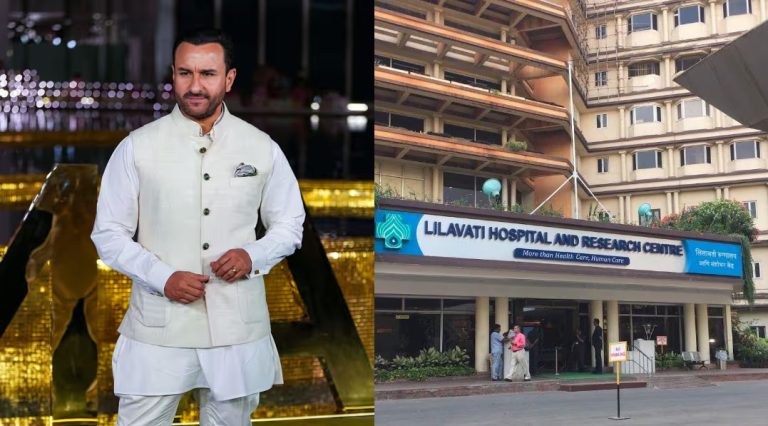
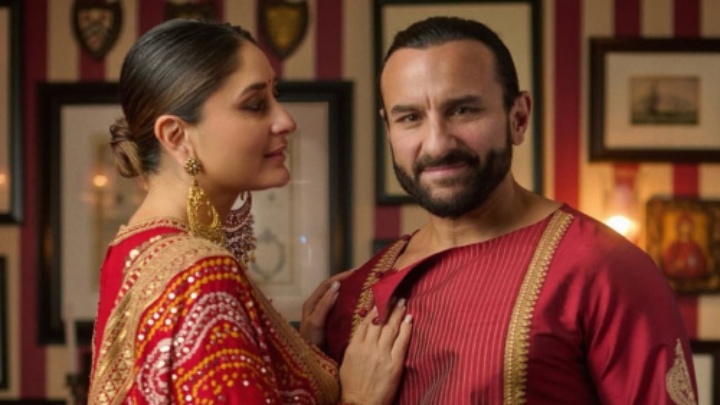
Bollywood star Saif Ali Khan is being treated at Lilavati Hospital after he allegedly got attacked by an intruder at his residence in Mumbai in the early hours of Thursday. The ‘Hum Tum’ star underwent surgery and is now “completely stable”.

Dr Nitin Dange of Lilavati Hospital spoke with the media and shared Saif’s health update, revealing the actor sustained a thoracic spinal cord injury.

“Saif Ali Khan was admitted to the hospital at 2 am with alleged history of assault by some unknown person. He sustained a major injury to the thoracic spinal cord due to a lodged knife in the spine. A surgery was performed to remove the knife and repair leaking spinal fluid,” the doctor informed.

Saif also got deep wounds on his left hand and neck, as per the doctor.

“Two other deep wounds on his left hand and one other on his neck were repaired by the plastic surgery team. He is completely stable now. He is recovering well and out of danger now,” Dr Dange added.

Earlier, Saif’s team also issued a statement stating that the actor is out of danger and is currently recovering.

“Saif Ali Khan has come out of surgery and is out of danger. He is currently in recovery and the doctors are monitoring his progress. All family members are safe and the police is investigating the incident,” the statement read.

“We would like to thank Dr Niraj Uttamani, Dr Nitin Dange, Dr Leena Jain and the team at Lilavati Hospital. Thank you to all his fans and well-wishers for their prayers and thoughts during this time,” Saif Ali Khan’s team added.

Dixit Gedam, DCP Zone 9 of Mumbai Police, who is part of the team investigating an attack on Actor Saif Ali Khan said that one of the accused has been identified.

“It has been discovered that the accused used the fire escape to enter their house. So far, the investigation suggests that it was an attempted burglary. We are making every effort to arrest the accused as soon as possible. Once he is arrested, we will be able to disclose further details,” he said.

“One accused has been identified. He used the staircase to enter, and teams are in the field to arrest him. There are 10 detection teams working in different directions,” DCP Gedam added.

The shocking incident unfolded at Saif Ali Khan’s residence in the ‘Satguru Sharan’ building in Bandra, after an intruder allegedly confronted Khan’s maid. When Saif attempted to intervene and de-escalate the situation, the confrontation turned physical. The actor sustained injuries during the scuffle and was rushed to Lilavati Hospital for treatment.

After learning about the unfortunate incident, several members of the film industry expressed concern regarding actor’s health. Filmmaker Siddharth Anand and his wife visited the hospital to keep a check on the actor.


(This news report is published from a syndicated feed. Except for the headline, the content has not been written or edited by OpIndia staff)

After Tahir Hussain, another Delhi riots accused given ticket by AIMIM, Shifa-ur-Rehman files nomination under police protection: Who is he and why is he in jail

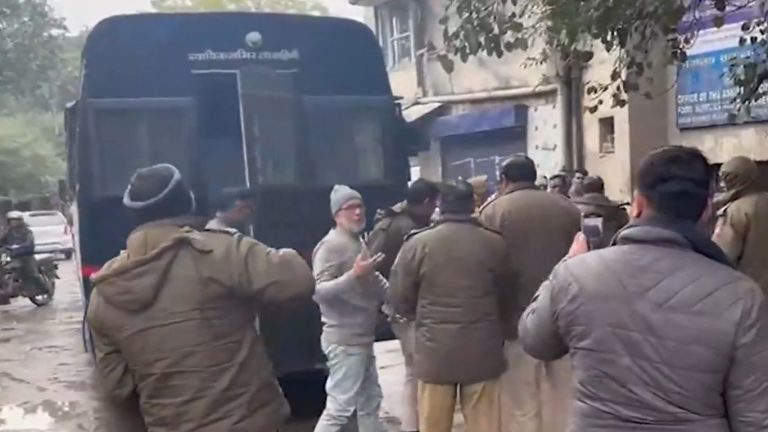
Delhi riots accused and president of Alumni Association of Jamia Alumni Islamia (AAJMI), Shifa-ur-Rehman was taken amid tight security to file his nomination for the Okhla Assembly constituency on Thursday. Rehman will contest the upcoming Delhi Assembly elections from Majlis-e-Ittehad-ul-Muslimeen (AIMIM). The elections are set to be held on February 5.

Rehman has reportedly applied for a four-week interim bail at Karkardooma court to contest the elections. In his bail application, Rehman drew a parallel with former Delhi Chief Minister Arvind Kejriwal who was granted bail in the Delhi Liquor Excise Policy Scam. He pleaded that like Kejriwal, he should also be granted bail on the ground that he too is not a convict and is not a threat to society.

“Even though there are serious allegations against Kejriwal, he was never convicted and does not have any criminal history. He was not seen as a threat to society”, he said in his bail application. “I have a deep sense of serving society and am committed to working for its betterment. Politics is the ideal platform to address the needs of the people”, he told the court.

Who is Shifa-ur-Rehman

Shifa-ur-Rehman was arrested by the Special Cell of the Delhi police in April 2020 in relation to Delhi Anti-Hindu riots under the provisions of the Unlawful Activities Prevention Act (UAPA). Rehman was arrested after CCTV footage revealed his presence in the riot-hit areas of North East Delhi. Ample evidence, including call records and WhatsApp messages, was found by the police against him indicating his involvement in inciting mobs during the riots.

The Delhi Police said that Rehman had received funds from the members of AAJMI based in Middle Eastern countries. He is also accused of coordinating anti-CAA/NPR protests across various sites in Delhi and giving hate speeches. AAJMI is a group of alumni of the Jamia Millia Islamia University in Delhi.

Earlier Delhi Anti-Hindu riots accused Tahir Hussain was granted parole

Another Delhi Anti-Hindu riots accused and former Aam Aadmi Party Councillor, Tahir Hussain had also sought interim bail from the court to contest the upcoming Delhi Assembly elections. Hussain is an AIMIM candidate from the Mustafabad assembly constituency. His bail plea was rejected by the Delhi High Court on January 14. However, he was allowed custody parole on certain conditions to file his nomination.

Tahir Hussain had said in a disclosure statement that he chose his own house as a launchpad for the riots. Given that his house was a high-rise building and was under construction at that time, it was easy to collect stones and bricks without raising any suspicion. Besides,  he and his co-conspirators had started collecting stones, bricks, and other ammunition, well in advance so that they could teach those, who were in support of the CAA, a lesson when the time was right. To that end, 2 to 3 days before the riots broke out, he had also got his licensed pistol released from the police station.

No security at Saif Ali Khan’s apartment? Netizens refuse to believe ‘burglary’ claim: Suspect Bishnoi gang involvement to movie promotion behind attack

Bollywood Actor Saif Ali Khan on Thursday, 16th January was attacked with a knife by an individual in an alleged ‘burglary attempt’ inside his posh Bandra apartment. The actor got stabbed around 6 times in his spine and neck after which he was admitted to the Leelavati Hospital, Mumbai. The said incident reportedly happened at 2:30 am on Thursday when the 54-year-old actor was asleep along with his family members.

As per the reports, the maid working for the family was also attacked after a scuffle occurred in the apartment. The police began an investigation into the case and stated that no CCTV footage checked by the authorities showed the attacker entering the building before midnight.

This indicates that the attacker may have hidden somewhere inside the apartment prior to the attack.

“An unidentified person intruded in the residence of Actor Saif Ali Khan. The actor and the intruder had a scuffle. The actor is injured and is being treated. The investigation is going on,” the police said.

Meanwhile, the family of the actor has also released a statement saying that the attack was part of an attempted burglary at Khan’s residence. “He is currently in the hospital undergoing surgery. We request the media and fans to be patient. It is a police matter. we will keep you updated on the given situation,” they said.

The statement by the actor’s family has sparked confusion among the fans, with netizens questioning how the residence of an ultra-rich celebrity couple can have such lapses in security. The netizens meanwhile also refused to believe the ‘burglary attempt’ claimed by the family saying that there must be more to the story than meets the eye.

“This was not a robbery.. this was MOST LIKELY an extortion or vasooli attempt by the underworld. No way a person got THAT close and that too ALONE. An altercation ensued which led to the stabbing. You can’t rule out a crime when you have stab wounds so it was filed as robbery,” said one of the handles on X.

Another user stated that the building where Khan resides is quite tall and secure and that the place looks actually impossible to penetrate, considering it is a posh locality in Bandra where the richest of the rich in the city live. “The building where Saif Ali Khan has his residence. Located in Bandra – the actor owns 4 floors. Not a Security Expert – but having known the building well, got the feel it’s a very tough place to penetrate,” he said.

Some social media users started to weave political motives behind the attack, indicating that the actor’s recent meeting with PM Modi may have something to do with it. In December 2024, Khan met PM Modi and spoke to him in detail about his career, family, and children. Khan also later lauded the PM saying that he was very attentive and that it was a wonderful experience meeting the leader.

“Everything was going well in Saif Ali Khan’s life, then he met Narendra Modi. Rest is history,” another user said.

The netizens further continued to question the security arrangements at Khan’s residence and claimed that if this big actor could not be protected, how common man be protected by the state? Meanwhile, several refused to buy the burglary event claimed by the family.

Some even stated that Khan’s upcoming film was named ‘Jewel Thief’ and that this claimed robbery event could be a low-key promotional tactic to promote the film. “Saif’s upcoming movie is Jewel Thief, which is a robbery movie. I hope this is not a marketing stunt, otherwise, it’s a very low way of promotion!” he said.

BJP’s Prashant Umrao also claimed that the attack did not look like a burglary event as the CCTV showed no entry or exit of suspected individuals.

It is crucial to note that the attack happened at around 2.30 am on Thursday, 16th January after which the actor was shifted to the Leelavati Hospital. Amid this, the opposition has slammed the Devendra Fadnavis-led government for failing to protect the actor. The actor has suffered severe injuries near the spine.

Shiv Sena (UBT) MP Priyanka Chaturvedi attacked the BJP government and said, “What a shame that Mumbai sees another high-profile attempt on life, the attack on Saif Ali Khan yet again raises questions on Mumbai Police and the Home Minister. This is after a series of incidents that show there is a deliberate attempt to undermine Mumbai by targeting big names.”

She indicated that this was a major attack on the Bollywood person after the murder of veteran politician Baba Siddique and firing outside Salman Khan’s home. “Baba Siddique ji’s family is still awaiting justice after his shocking murder. Salman Khan was forced to live in a bulletproof house. Now it is Saif Ali Khan All in Bandra. An area that has the highest concentration of celebrities, is supposed to have adequate security. If celebrities are not safe then who in Mumbai is? Wishing Saif Ali Khan a speedy recovery,” she added.

The police in the given case have stated that the investigations are underway and questions like the number of attackers, the reason for the attack and the CCTV footage showing no imprints of the attacker are all yet to be ascertained.

Actor Salman Khan is under protection due to threats by the Lawrence Bishnoi gang. Recently, the police investigation had indicated that the motive behind NCP leader Baba Siddiqui’s murder was his proximity to Salman Khan. The Bishnoi gang had vowed to avenge the killing of the blackbuck by Salman Khan in the late 1990s. The Bishnoi community considers blackbucks sacred and raised them as their own children.

Another notable fact is that Saif Ali Khan also starred in the movie Hum Sath Sath Hain and was named in the blackbuck poaching case. His name was also featured in the complaint filed by the Bishnoi community in October 1998 regarding the blackbuck poaching incident.

Orissa HC commutes death sentence of a mob that brutally tortured a woman and her parents to death over ‘witchcraft’ allegations

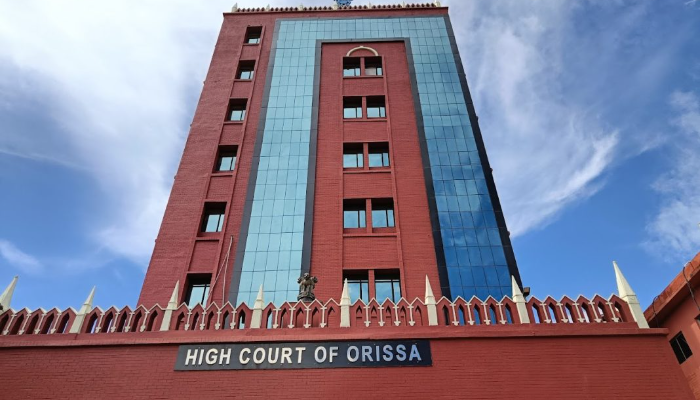
On 15th January, the death sentence handed down to nine individuals by the Sessions Judge in Rayagada for the 2016 murder of three family members on suspicion of witchcraft was commuted by the Orissa High Court. The decision was pronounced by a Division Bench of Justices Sangam Kumar Sahoo and Radha Krishna Pattanaik. The court stated that the reformation of the convicts could not be ruled while reducing the sentence to imprisonment until the end of natural life.

“We should not forget that the criminal, however ruthless he might be, is nevertheless a human being and is entitled to a life of dignity notwithstanding his crime. It is for the prosecution and the Court to determine whether such a person, notwithstanding his crime, can be reformed and rehabilitated,” the bench observed and highlighted that the informant is the only eyewitness to a portion of the crime after reviewing the available evidence.

The counsel representing the appellant contended that her testimony should be treated suspiciously since she is an “interested witness” and a close relative of the victims. However, the court was not persuaded and countered, “We are not inclined to accept such submission as ‘related’ is not equivalent to ‘interested.’ The witness may be called interested only when he or she has derived some benefit from the result of a litigation in the decree in a civil case, or in seeing an accused person punished. A witness, who is a natural one and is the only possible eye witness in the circumstances of a case, cannot be said to be interested.”

Furthermore, it clarified that because the informant was the only person to see the incident, it does not necessarily mean that her evidence should be disregarded or that her sincerity should be questioned. “Neither the legislature (Section 134, Evidence Act, 1872) nor the judiciary mandates that there must be particular number of witnesses to record an order of conviction against the accused. Our legal system has always laid emphasis on value, weight and quality of evidence rather than on quantity, multiplicity or plurality of witnesses. It is, therefore, open to a competent court to fully and completely rely on a solitary witness and record conviction,” the bench conveyed.

The court was also persuaded by the informant’s explanation of the delay in filing the FIR (First Information Report) and mentioned, “Since it was a small village consisting of only 25 houses and she was staying in the house of the Samiti member, she can be said to be under the close watch of not only the appellants but also the Samiti member who appears to have closeness with the appellants. We are of the view that the explanation furnished by P.W.1 regarding delay in lodging the F.I.R. is quite satisfactory and plausible.”

The appellants urged that the informant had merely observed part of what transpired within the cowshed but did not know what subsequently happened to the deceased as their remains were never found. Nonethless, the court rested its verdict on other judgments of the Supreme Court holding that corpus delicti or dead corpses need not in all cases be recovered to convict and relied upon multiple judgments for the same.

Considering the foregoing precedents, the court further observed that once it is apparent that the deceased persons were removed from the cowshed one after another and that the informant was later made aware of the fact that they were murdered, above all, they were not seen alive thereafter, it falls upon the appellants to account, under Section 106, how they met their demise.

Besides the aforementioned, the court shed light on the actions of the appellants which included asking the informant to take a bath in a spring after killing human beings as they could not return home without cleaning themselves but also made an extrajudicial confession about committing the horrific murder. The bench determined it to be pertinent based on Section 8 of the Evidence Act.

Therefore, the appellants were convicted of offenses under Sections 342 (wrongful confinement), 364 (kidnapping or abducting with intent to murder), 365 (kidnapping or abducting with intent to confine someone secretly and wrongfully), 201 (causing evidence to disappear), 506 (criminal intimidation), and 302 (murder) of the Indian Penal Code (IPC).

The bench headed by Justice Sahoo alsp stated that the trial court had ordered posting of the case for a hearing on the question of sentence on 21st October 2021, after issuing the order of conviction against the appellants. After hearing the prosecution and defence counsel, the trial court held the crime to be “rarest of rare” and awarded the severe punishment of death. The court added, “It is thus clear that the learned trial court after convicting the appellants has not given adequate opportunity to them to produce the mitigating circumstances in their favour nor it tried to collect the same nor discussed what the mitigating circumstances are available in favour of the appellants, but merely stated that the aggravating circumstances were outweighing the mitigating circumstances.”

The bench had earlier directed the Superintendent of Prison where the appellants were lodged for more than eight years to collect comprehensive data, including reports on their past, psychiatric state and post-conviction behavior, among other pertinent documents that would indicate mitigating factors. The Senior Superintendent of Circle Jail, Koraput, had filed an affidavit in pursuance of the above decision which included social reports of each appellant, health reports comprising of details about their mental health, and their behavior and conduct while behind bars, which were all considered to be satisfactory.

According to reports given by the jail superintendent, they behaved well during their imprisonment. They were polite, very disciplined, maintained order in the operations of the jail, and conducted themselves well with personnel and other inmates. During the entire period of confinement, no adverse reports were found, per the records. “It cannot be said that there is no possibility of the appellants being reformed and rehabilitated foreclosing the alternative option of a lesser sentence and making imposition of death sentence imperative or in other words, life imprisonment would be completely inadequate and would not meet the ends of justice,” the court conveyed while considering the report of the authority and weighing the aggravating and mitigating circumstances.

It declared, “In view of the foregoing discussions and giving our anxious consideration to the facts and circumstances of the case, and striking a balance between the aggravating and mitigating circumstances, we are of the humble view that the death penalty would be disproportionate and unwarranted. Life imprisonment would be a more appropriate sentence.” As a result, the death sentences were converted to life in prison. It was stated that they would not be eligible for the benefits of commutation or remission under Sections 432 and 433 of the CrPC (Code of Criminal Procedure).

The bench added, “We are of the view that public opinion or the society’s expectation may be to confirm the death sentence awarded to the appellants since it is a case of triple murder and two of the deceased were ladies, but it must be remembered that such opinion or expectation is neither an objective circumstance relating to crime, nor the criminal, and therefore, we therefore are inclined to convert the sentence imposed on the appellant from death to life. However, taking into consideration the gruesome murder of two of his siblings and one nephew, we are of the view that the appellant deserves rigorous life sentence.”

According to Schedule-II of the Odisha Victim Compensation Scheme, the court granted a compensation amount of Rs. 10,00,000 for each death before rendering its decision. This amounts to a total of Rs. 30,00,000 which will be distributed equally among the informant, her sister and her brothers.

“The superstitions of witch-hunting are still alive in some parts of rural areas of our country mainly on account of lack of education and it leads to innocent individuals, often women, fall prey to the practice, publicly targeted, face persecution, torture and even gruesome murders on unfounded accusations of practicing witchcraft,” the court also expressed while addressing the matter.

Background of the case

On 16th September 2016, the informant, Melita Sabar, lodged an FIR against the appellants and a juvenile offender for killing her parents Asina Sabar and Amabaya Sabar along with her older sister, Ashamani Sabar, on the evening of 9th September. According to the complaint, she rushed to the scene when she heard that her parents and elder sister were tied and being tortured in a cowshed. She was also tied her to a stump after arriving there.

She added that the appellants had beaten her mother, father and older sister while accusing them of using sorcery to kill a few of the other villagers and also abused them. The appellants blamed them for continuous fever and ill-health of other locals. Shee disclosed that one of the appellants produced a syringe loaded with pesticides, stuck the needle into her older sister’s mouth, cheek, and eyes as well as threatened to kill her if she refused to tell the truth. Her parents were being brutally attacked by the other nine appellants with sticks.

The three individuals, who were already in a moribund state, were then attacked by the appellants as they led the corpses, one by one, to a cemetery as the severe assault had left them dead. She was ordered by the appellants to keep the information confiential. They also warned her of serious repercussions if she told the authorities about the gruesome incident. She learned that the appellants had exhumed the bodies and burned them, on 15th September.

Afterward, a charge sheet was filed against the appellants and Sections 302, 201, 342, and 506 read with Section 34 of the IPC and Section 4 of the Odisha Prevention of Witch Hunting Act, 2013 were invoked following the completion of the probe that followed the submission of the case.

More similar rulings by Indian courts

Notably, high courts have often delivered such sentences in cases of similar nature. The Telangana High Court changed a rape and murder conviction from death to life in prison in last December. 62-year-old Gaffar Ali was sentenced by the Sangareddy POCSO (Protection of Children from Sexual Offences) Special Court for the rape and murder of a 5-year-old girl after which he filed an appeal with the high court.

The prosecution established that on the day of the incident, the girl was last seen with Ghaffar Ali. Testimony and the postmortem report confirmed that he gave her a cold drink before the crime. She died of shock caused by the abuse, the report unveiled. The injuries to the cheek, eye, neck, and genital parts of the child were also highlighted. These were reportedly inflicted when he gagged her mouth during the rape. Forensic findings and CCTV footage were other evidence supporting the prosecution case.

However, the court declared, “While the evidence unequivocally proves the crime, absence of specific aggravating factors such as a deliberate intent to murder and Ghaffar Ali’s lack of a prior criminal history, led to the reduction in sentence.” The court, though commuting the death sentence, stated that Ali would not be released on any form of parole during the first 15 years of his imprisonment. Pardon, remission, or parole had all been categorically ruled out by the judgment.

Chhattisgarh High Court commuted sentences in two separate cases

“These are the incriminating circumstances, but there is no evidence on record that the appellant cannot be reformed or rehabilitated as at the time of the offense he was aged about 29 years and he is a member of the Other Backward Class (OBC), thereby he belongs to the backward community and his chances of being reformed or rehabilitated cannot be ruled out,” the Chhattisgarh High Court pronounced in December of last year, while overturning the capital punishment awarded to Dipak Baghel for committing rape and murder of a 7-year-old girl in the year 2021.

The court deemed him guilty of rape and murder after considering all available evidence, DNA reports and testimony of the victim’s family. “Thus, after appreciating the entire ocular and medical evidence on record, we do not find any illegality in appreciation of oral, medical, and circumstantial evidence or arriving at a conclusion as to the guilt of the appellant by the trial Court warranting interference by this court and we accordingly hereby confirm the conviction of the appellant recorded under Section 302 of the IPC.”

However, it also addressed the arguments regarding the capital punishment stating that the trial court was wrong in the imposition of the death penalty on the appellant on the same day. “The trial court has not taken into consideration the probability of the appellant being reformed and rehabilitated and has only taken into consideration the crime and the manner in which it was committed and has not given the effective opportunity of hearing on the question of sentence to the appellant. No evidence was brought on record on behalf of the prosecution to prove to the court that the appellant cannot be reformed or rehabilitated, by producing material about his conduct in jail, and no opportunity of hearing was given to the appellant to produce evidence in that respect.”

In December 2024, the same court commuted the death sentence given to a 34-year-old man by the lower court, following his conviction for killing his wife and three little children to life in prison. “Capital punishment can only be awarded in very exceptional and rarest of the rare cases, which is lacking in the present case. Accordingly, the death sentence awarded to the appellant is commuted to imprisonment for life, with a directive that the life sentence must extend to imprisonment for the remainder of the appellant’s natural life,” it stated.

Umend Kenwat strangled his wife, Sukrita Kewat, along with their three children, Khushi Kenwat (5), Lisa Kenwat (3) and Pawan Kenwat (18 months), using a rope because he had some reservations about her character. He then attempted to hang himself, but the rope broke and he fell after which he went to the police station to report the incident.
The court identified the suspicion of the character of his wife as a mitigating element for the killings of his wife and three young kids. He attempted to take his own life, too. All the evidence presented in this case were regarded circumstantial.

The court stated, “Though it shocks the conscience of society at large, yet, in the facts and circumstances of the case, considering the young age of the appellant, upon thoughtful consideration, we are of the view that the extreme sentence of the death penalty is not warranted. This case does not qualify as the ‘rarest of rare,’ where the imposition of the death penalty is justified. In our opinion, life imprisonment is adequate to meet the ends of justice. Accordingly, we direct the commutation of the death sentence to life imprisonment. Furthermore, we direct that the life sentence must extend to imprisonment for the remainder of the appellant’s natural life.”

Supreme Court upheld Bombay High Court’s order commuting death penalty to life

Due to an excessive delay in their execution, the Bombay High Court decided to commute the death sentence of two convicts in the 2007 Wipro BPO employee (22) gang rape and murder to “life term for a period of 35 years.” The decision was then maintained by the Supreme Court of India in December 2024. On 21st June 2019, the high court ruled that the execution of Purushottam Borate and Pradeep Kokade shall be postponed until further directives.

“We find that the delay in executing the death penalty in the present case was undue, inordinate and unreasonable. We find that there has been undue and unexplained delay by both the state and central government in processing the mercy petitions,” the high court stated. It further added, Here we have to consider a case of two convicts who have to be hanged. When the protection of Article 21 of the Constitution of India (Right to life and personal liberty) is at stake then the Executive, Court of Law or the Governor and President of India stand at the same pedestal.”

“Thus, delay by any arm of the state or the central government would be against the fundamental rights of the convicts. It is clear that the actual execution of the death penalty is at the hands of the state government. The state government has to fix a date and obtain death warrant,” the court highlighted and expressed that merely writing letters to the sessions court asking for a date to be set for the execution of the death penalty does not amount to compliance. “In such a situation, we commute the death penalty to life term for a period of 35 years considering the time already spent by the petitioners in jail,” the court concluded.

Madhya Pradesh High Court commuted death sentence

Last November, the Madhya Pradesh High Court commuted the death sentence of a man convicted of raping and killing a 12-year-old girl to life imprisonment. It had noted that while a life sentence lead to retribution, the death penalty was “unique in its absolute rejection of the potential of convict to rehabilitate and reform.” On 10th July 2019, Vishal Bhamore was found guilty over a month later, after a girl went missing while going to purchase gutka for her father from a nearby grocery shop in her neighborhood. A missing persons report submitted on 9th June.

The next day, her body was discovered in a nearby drain, whose further medical reports revealed that she was raped. The court pointed out that the Supreme Court had decided that, to apply the death penalty, a case must first obviously fall under the “rarest of rare,” and second, the alternative of life in prison must be undeniably barred. “In life sentences, there is a possibility of achieving deterrence, rehabilitation and retribution in different degrees. But the same does not hold true for the death penalty. It is unique in its absolute rejection of the potential of convicts to rehabilitate and reform. It extinguishes life and thereby terminates the being, therefore, puts an end to anything to do with the life. This is the big difference between two punishments,” it voiced.

The court further added, “We find that there is no criminal history of the appellant. The learned trial court has not taken this aspect into consideration. It has only said that since such offences are on rise against minor daughters, which are indicative of a perverted mind, then with a view to save the dreams of minor children, conclusive punishment is required to be given to such convicts.”

It is important to remember that the above-cited cases only represent the outer shell of an even larger issue, as Indian courts have made numerous such judgments in many grave and critical cases.