The electrification work for the Mumbai-Ahmedabad Bullet Train corridor has begun, with the first two steel masts erected on the viaduct at a height of 14m from the ground level in between Surat- Bilimora Bullet Train Stations in Gujarat.
As per the official statement of National High-Speed Rail Corporation Ltd., in total, over 20,000 masts, ranging from 9.5 to 14.5 meters in height, will be installed along the corridor. These masts will support the Overhead Equipment (OHE) system, including overhead wires, earthing systems, fittings, and associated accessories, forming the complete 2×25 kV overhead traction system for the MAHSR corridor suitable to run the Bullet train.
?The first electrical masts (14m high) installed between Surat – Bilimora, for Bullet train project. pic.twitter.com/S8DpuafBXh
Promoting the ‘Make in India’ policy, these OHE masts conforming to Japanese standard design and specifications are manufactured in India and would support the overhead traction system for high-speed trains.
On January 13, the construction of a 210-meter-long pre-stressed concrete (PSC) bridge, part of the Mumbai-Ahmedabad Bullet Train Project, was completed over National Highway-48 at Dabhan village near Nadiad in Kheda district of Gujarat.
Completed on January 9, 2025, this bridge is situated between the Anand and Ahmedabad bullet train stations. The bridge has been constructed using the Balanced Cantilever Method, which is used for larger spans, according to National High-Speed Rail Corporation Ltd.
It comprises 72 precast segments and features four spans with configurations of 40 meters + 65 meters + 65 meters + 40 meters.
Several advancements have been achieved in various components of the high-speed rail project. A total of 253 kilometre of viaduct work has been completed, along with 290 kilometre of girder casting and 358 kilometre of pier construction.
Bridges over 13 rivers and five steel bridges have been completed.
Noise barriers have been installed over approximately 112 kilometre and track construction has commenced at multiple locations in Gujarat.
A 21-kilometer tunnel between Bandra Kurla Complex (BKC) and Thane in Maharashtra is currently under construction.
In Palghar district, Maharashtra, seven mountain tunnels are being developed using the New Austrian Tunneling Method (NATM). One mountain tunnel has been completed in Valsad district, Gujarat.
The Mumbai-Ahmedabad High Speed Rail (MAHSR) project passes through high growth rate states of Gujarat and Maharashtra connecting business centres of Mumbai, Surat, Vadodara and Ahmedabad. The project Economic Internal Rate of Return (EIRR) as per feasibility study conducted by JICA was estimated to be 11.8 per cent.
(This news report is published from a syndicated feed. Except for the headline, the content has not been written or edited by OpIndia staff)
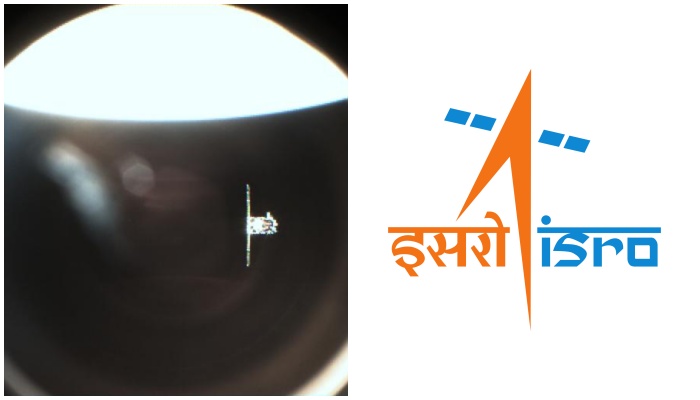
Prime Minister Narendra Modi on Thursday morning extended his wishes as the Indian Space Research Organisation (ISRO) achieved a historic feat by successfully concluding the docking process of two satellites. He said that the success of the Space Docking Experiment (SpaDeX) project was a stepping stone for future space missions.
“Congratulations to our scientists at ISRO and the entire space fraternity for the successful demonstration of space docking of satellites. It is a significant stepping stone for India’s ambitious space missions in the years to come,” PM Modi posted on X.
ISRO on Thursday morning announced that the much-awaited satellite docking has been concluded, with India becoming the fourth country to do the same. “India became the 4th country to achieve successful Space Docking. Congratulations to the entire team! Congratulations to India,” ISRO posted on X.
SpaDeX docking process completed manoeuvring from 15 meters to 3 metres hold point with precision, leading to successful spacecraft capture.
“SpaDeX Docking Update: Docking Success Spacecraft docking successfully completed! A historic moment. Let’s walk through the SpaDeX docking process: Manoeuvre from 15m to 3m hold point completed. Docking was initiated with precision, leading to successful spacecraft capture. Retraction was completed smoothly, followed by rigidisation for stability. Docking successfully completed,” ISRO announced, adding, “Post docking, control of two satellites as a single object is successful. Undocking and power transfer checks to follow in coming days.”
Union Minister Jitendra Singh said this paves the way for the smooth conduct of ambitious future missions including the Bharatiya Antriksha Station and Chandrayaan 4.
“Congrats #ISRO. Finally made it. SPADEX has accomplished the unbelievable… docking complete… and it is all indigenous ‘Bharatiya Docking System’. This paves the way for smooth conduct of ambitious future missions including the Bharatiya Antriksha Station and Chandrayaan 4 & Gaganyaan. PM Sh@narendramodi’s continuous patronage keeps the spirits soaring… here at Bengaluru,” the Union Minister of State (MoS) for Earth Sciences posted on X.
Earlier, SpaDeX project director N Surendran said that this experiment would prove fruitful for future assignments like the Bharatiya Antariksha Station and the Chandrayaan-4 mission since the docking mechanism was becoming necessary.
(This news report is published from a syndicated feed. Except for the headline, the content has not been written or edited by OpIndia staff)
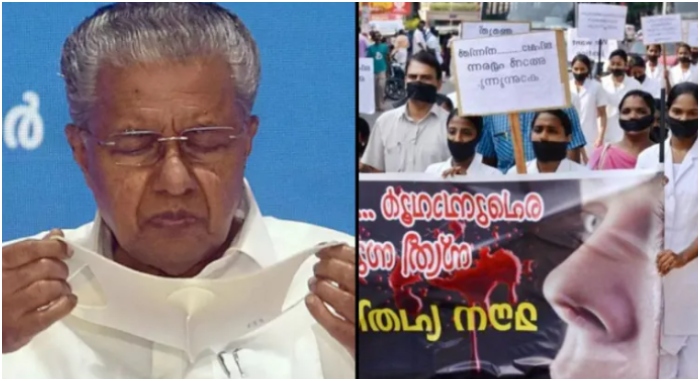
Novel concerns have emerged regarding the safety of children in the state of Kerala which is usually lauded for its social development initiatives by the leftist liberals. An alarming increase in the cases of sexual assault on children has been reported from the state, painting the ruling government in a grim picture.
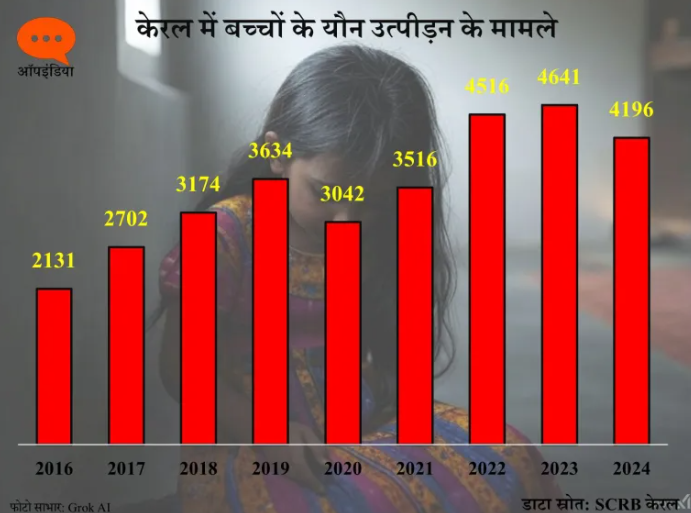
Official statistics obtained reveal a stark reality stating that between 2016 and 2024, over 29,000 cases of child sexual abuse have been registered in Kerala. The number of molestation cases is even higher. Additionally, cases registered under the Protection of Children from Sexual Offences (POCSO) Act have seen a dramatic rise, from 2,131 in 2016 to over 4,100 in just the first eleven months of 2024. The statistics estimate that the number can surpass the mark of 4500, raising troubling concerns.
Notably, the nature of the crimes reported in the data is quite distressing. Recently, a horrific case had come to the fore from the state involving a Dalit girl. The girl was raped by more than 60 individuals in the past 5 years. Among many such reported incidents, the accused persons are either family members or relatives, further highlighting the concerns for the safety of children even at their homes.
In one case, a 13-year-old daughter was repeatedly raped by her father, resulting in pregnancy. The case turned shocking later as it was learned that the mother of the girl initially supported the accused in assaulting the girl and then also helped her husband escape from the legalities of the case. The victim underwent an abortion but suffered massive trauma. The accused meanwhile was awarded two life sentences and a monetary fine.
Apart from families, the children are also sexually assaulted in educational institutions including schools, colleges, and tuition classes. Further, it has come to the fore that in these cases not only girls are the victims but also boys are. One such case reported in July 2023 showed how a minor girl was kidnapped, raped, and murdered by a migrant worker.
As per the reports, other crimes against the children have also increased. In the period between 2016 to 2024, the crimes against children rose from 2879 to 4727. These crimes involve kidnapping and abduction, although recent numbers that have emerged showcase a slight decline.
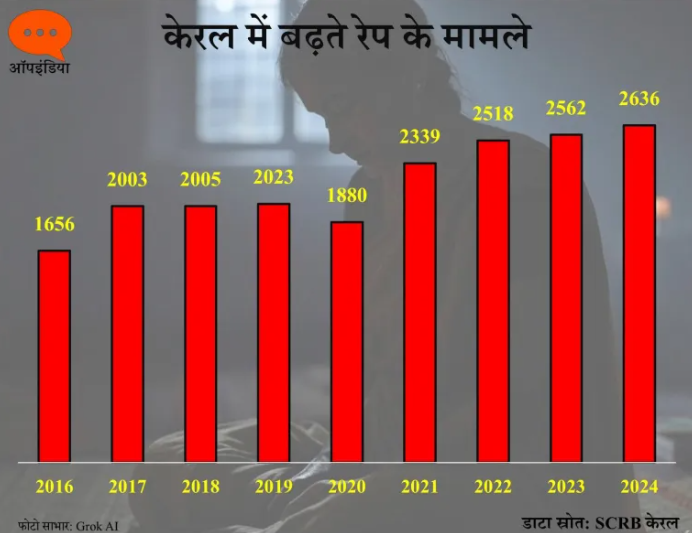
Notably, the safety of women in the state of Kerala is also being questioned as the incidents of rape against women in the period between 2016 and 2024 have risen by 62%. The number of cases has increased from 1656 to 2636. Cases of assault from the Malayalam film industry have also emerged with recent reports exposing widespread sexual exploitation of women at the hands of directors, actors, and producers.
The Justice Hema Committee Report published last year in September revealed horrid tales of sexual abuse, illegal bans, discrimination, drug and alcohol abuse, wage disparity, and inhuman working conditions, especially for women. According to the report, the Cinema industry is male-dominated and has become an exclusive Boys’ Club.
The report emphasized that women were being asked to make certain “adjustments” and “compromises” – euphemisms for sexual favors – to secure or retain opportunities. It added, that these two words are very familiar among women working in Malayalam cinema, who “are asked to make themselves available for sex on demand”.
In the given case, the Kerala Commission for Protection of Child Rights (KESCPCR) confirmed that the cases of assault against children had increased but stated satisfaction with improved reporting mechanisms and mandatory reporting practices of such cases. The commission further said that the number of cases could increase if cases of children running away from home and family disputes are included.
The situation in Kerala presents a complex and deeply concerning picture. While some argue that increased reporting accounts for the rise in cases, others point to a systemic failure in protecting children and ensuring justice. Regardless of the interpretation, the sheer number of reported incidents demands urgent attention and comprehensive action to address the root causes of this disturbing trend.
In a dramatic turn of events, Nathan Anderson, the founder of the controversial US-based short-seller Hindenburg Research announced on 15th January that he would disband the firm. The short-seller’s dubious report had caused a significant fall in the shares of various Adani Group companies in 2023.
In a personal note published by Nathan Anderson on Hindenburg Research’s website on Wednesday, he said that the toll of the “rather intense, and at times, all-encompassing” nature of the work was behind his decision to disband the firm founded in 2017.
“It has also been rather intense, and at times, all-encompassing. I often wake up from my dreams because I’ve thought of a new investigative thread to pull on in my sleep, or an edit that clarifies a point I didn’t realize I was troubled by during the day. Or from the general pressure of it all. We are not fearless—we just have faith in the truth and hope it leads us down the right path,” Anderson wrote adding that there have been days of bizarre, hilarious and ridiculous stories.
On having a specific reason to disband Hindenburg Research, Anderson said: “There is not one specific thing—no particular threat, no health issue, and no big personal issue.”
“The intensity and focus has come at the cost of missing a lot of the rest of the world and the people I care about. I now view Hindenburg as a chapter in my life, not a central thing that defines me,” he added.
Boasting the supposed impact Hindenburg Research reports created, Nathan Anderson wrote, “…More than I imagined was possible at the outset. Nearly 100 individuals have been charged civilly or criminally by regulators at least in part through our work, including billionaires and oligarchs. We shook some empires that we felt needed shaking.”
The Hindenburg Research founder also announced that over the next six months, he would work on a series of materials and videos to open-source every aspect of the firm’s model and how they conduct investigations.
Hindenburg Research’s attacks on Adani
In January 2023, Hindenburg published a report accusing the Adani Group of financial irregularities, leading to a significant drop in the company’s stock price. The group at the time had rubbished these claims.
The Hindenburg report alleged stock manipulation and fraud by the conglomerate. The case is related to the allegations (part of a report by Hindenburg Research) that Adani had inflated its share prices. After these allegations were published, there was a sharp fall in the shares of various Adani group companies’ stocks.
In January 2024, the Supreme Court refused to transfer the probe into the allegations of stock price manipulation by the Adani group to an SIT and had directed market regulator SEBI to complete its probe into two pending cases within three months. By June 2024, Adani group companies’ share prices recovered to their pre-Hindenburg report prices.
On 10th August 2024, Hindenburg Research posted a cryptic message on X saying, “Something big soon India”.
The same day, they released a report that claimed that SEBI chief Madhabi Puri Buch and her husband Dhaval Buch had investments in an offshore firm used in the Adani money siphoning case. The report also alleged that the SEBI chairperson’s involvement showed a lack of transparency in the market regulator when it came to investigating the Adani group.
The next day on 11th August, SEBI chief Madhabi Buch and her husband released a joint statement, calling the report baseless and saying that their financial records were an open book. In a detailed joint statement issued later in the day by Madhabi Buch and husband Dhaval Buch rejected all allegations of Hindenburg as baseless.
In September 2024, Hindenburg Research claimed that Swiss authorities had frozen more than USD 310 million in funds across several Swiss bank accounts over money laundering allegations against Adani Group. The Adani conglomerate strongly rejected the claims made by Hindenburg Research.
It is notable here that Hindenburg’s claims were used by Indian Opposition parties to target the Modi government suggesting the political motives behind the targeting the Adani Group and Indian stock markets ahead of the general elections in 2024. The speculations became confirmation soon when George Soros himself declared that the Adani issue would be raised in the Indian Parliament and Modi would have to answer, indicating that the incident was another of the larger efforts he supports to attack ‘nationalistic governments’ around the world.
Breon Peace’s resignation, Hindenburg Research disbandment ahead of Trump administration’s inauguration
Interestingly, Nathan Anderson’s announcement to disband Hindenburg Research comes just days after US Attorney for the Eastern District of New York Breon Peace, who brought fraud and bribery charges against Adani Group chairman Gautam Adani and seven other executives, announced his resignation.
OpIndia reported about Breon Peace’s links with Hungarian billionaire and regime change specialist George Soros. Breon Peace’s spouse Jacqueline Jones-Peace is the Director of Development & Senior Attorney at Equal Justice Initiative, which is based in Montgomery, Alabama. The non-profit and human rights organisation was founded by Bryan Stevenson who also serves as its Executive Director. However, the interesting part is that he is also a member of the Open Society Foundations US Programs board, which establishes an evident relationship between the Peace couple and George Soros.
The timing of Hindenburg Research’s sudden shutdown has raised many questions. Not to forget, the decision has come right after Rep Lance Gooden, a member of the House Judiciary Committee, wrote to Attorney General Merrick Garland on 14th January 2025 and demanded that all the documents and records related to the Justice Department’s decision to probe Adani Group.
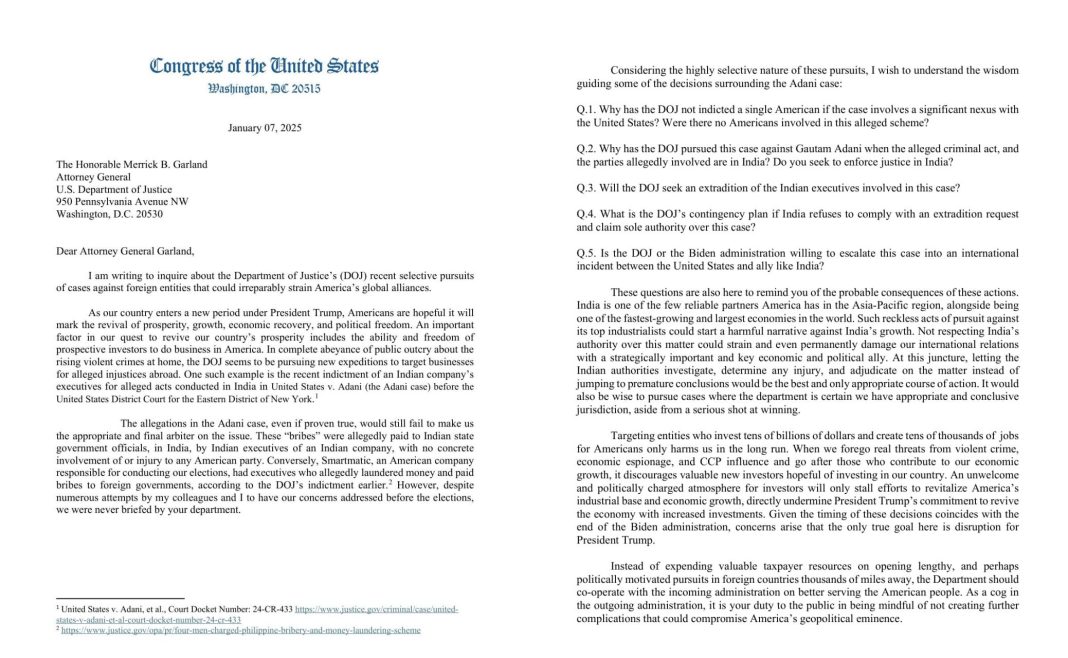
Before this, the Republican leader also raised concerns over Adani Group’s controversial indictment. In his letter to Garland on 7th January, Lance Gooden wrote, “The indictment alleged acts conducted entirely within India, involving Indian citizens and officials, with no apparent injury to U.S. interests.”
He added that even if the allegations are proven true, US could not be the final arbiter in this case since there was no concrete involvement of any American party in the alleged payment of bribes.
“The allegations in the Adani case, even if proven true, would still fail to make us the appropriate and final arbiter on the issue. These ‘bribes’ were allegedly paid to Indian State government officials, in India, by Indian executives of an Indian company, with no concrete involvement of or injury to any American party. Conversely, Smartmatic, an American company responsible for conducting our elections, had executives who allegedly laundered money and paid bribes to foreign governments, according to the Department of Justice’s indictment earlier. However, despite numerous attempts by my colleagues and I to have our concerns addressed before the elections, we were never briefed by your department,” Gooden contended.
Pointing at the selective nature of the US Justice Department’s action against Gautam Adani and his companies, the Republican leader said, “Why has the Department of Justice not indicted a single American if the case involves a significant nexus with the U.S.? Were there no Americans involved in this alleged scheme? Why has the Department of Justice pursued this case against Gautam Adani when the alleged criminal act, and the parties allegedly involved are in India? Do you seek to enforce justice in India?”
Amidst the Republican leaders questioning the Biden Administration’s biased conduct against the Adani Group, the Biden administration appointed US Attorney Breon Peace’s resignation and now the Hindenburg Research disbandment just four days before US President-elect Donald Trump’s swearing-in ceremony raises serious concerns over the timing of these incidents.
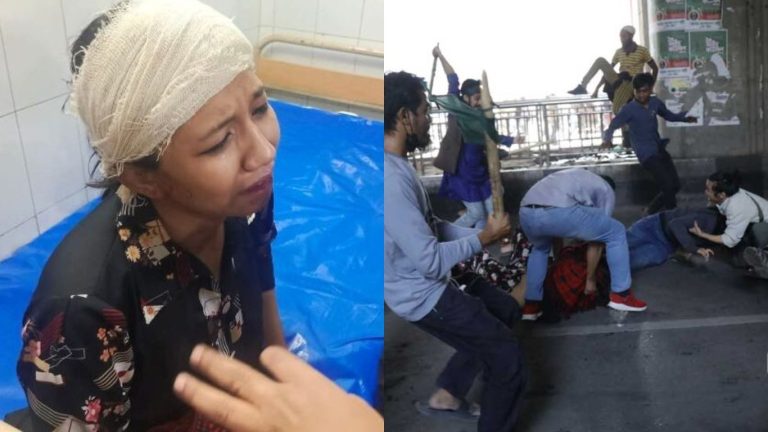
Several students belonging to the Adivasi community were brutally attacked by members of a group of Bengali Muslims called Students for Sovereignty in Motijheel area of Dhaka in Bangladesh on Wednesday. According to reports, the students from the minority Adivasi community were protesting in front of the National Curriculum and Textbook Board (NCTB) against the removal of graffiti with the word ‘Adivasi’ in school textbooks. On the other hand, the other group was supporting the removal.
As per reports, the Adivasi students belonging to Songkhubda Adivasi Chhatra Janata group had organised a protest outside the NCTB to oppose the removal of the word ‘Adivasi’ from the back cover of the 9th and 10th grade Bangla Grammar and Composition Textbook on January. The word Adivasi was used on the back cover of the textbook with a picture depicting a tree with five leaves, each inscribed with a term for a religious or ethnic community in Bangladesh including Muslim, Hindu, Christian, Buddhist and Adivasi. Next to the picture was a message that read, ‘Tearing leaves is prohibited’.
The picture was removed from the online version of the book after the Islamic Chhatra Shibir students from the ‘Students for Sovereignty’ group surrounded the NCTB premises on January 12.
The Adivasi students under the banner ‘Agitated Adivasi Students’ gathered near the Raju Memorial Sculpture at Dhaka University on Wednesday morning, from where they marched towards the NCTB office to hold a protest. However, the members of ‘Students for Sovereignty’ reached the NCTB office in advance to stop the protesters. Anticipating trouble, the police arrived, and when the Adivasi group arrived, the cops tried to keep the two groups separated.
But a clash broke out between them. Police tried to move the two groups farther from each other. But eventually, the ‘Students for Sovereignty’ group overpowered the police, and attacked the Adivasi students. The attackers were armed with sticks. Several Adivasi students sustained serious injuries during the attack. Subsequently, the Adivasi students were reportedly chased away by the other group. ‘Students for Sovereignty’ group remained in front of the office, armed with sticks.
“The Adivasi protestors have left the area after being chased off by the students. Now the situation has returned to normal. The students are staying on one side of the road”, said Motijheel Inspector Mohainmenul Islam.
According to reports, 11 students have been injured in the attacks. Two students sustained grievous injuries and were admitted to Dhaka Medical College Hospital. Rupaya Shresta Tacnchongya, Ishaba Renyoung Mro, Dhanajetra, Juwel Mark, Shaili, and Tani Charing are among the injured students. The attackers have reportedly been identified as Mohammed Abu Sadiq Qayem, President of the Islamic Chhatra Shibir in Dhaka University, S M Farhad, Secretary and Mohammed Yakub Majumdar, Joint Convenor of the Students for Sovereignty.
Muhammad Ziaul Haque Zia , Convenor of the Students for Sovereignty, described the word ‘Adivasi’ as seditious. “Our demands have only been partially met by removing the graffiti featuring an imagery of united India with the seditious term ‘Adivasi’ from the cover of the textbook. But we also demanded the removal of Rakhal Raha alias Sajjad, who was on the revision committee, and the formation of an investigation committee to identify those involved in this”, he told bdnews24.
Tejang Chakma, Deputy Director of the Rights and Risks Analysis Group (RRAG) said that the group would seek the UN intervention in the matter. “The RRAG shall take up the issue with the United Nations, diplomatic community and the interim government to arrest the culprits. The real face of Dr Mohammad Yunus is coming out and Adivasi students cannot even protest in capital Dhaka with safety”, said Chakma.
The U.S. Food and Drug Administration (FDA) has announced a ban on Red Dye No. 3, a synthetic food colouring widely used in candy, baked goods, and over-the-counter medications. The decision follows mounting evidence linking the dye to potential health risks, including its classification as a carcinogen in animal studies.
The FDA gave the decision granting a 2022 petition filed by several food safety and health advocates urging to ban the food dye used for its bright red hue. The agency said that some studies have found that the dye caused cancer in lab rats, and now it has been removed from the list of approved colour additives in foods, dietary supplements and oral medicines.
“Evidence shows cancer in laboratory male rats exposed to high levels of FD&C Red No.3. Importantly, the way that FD&C Red No. 3 causes cancer in male rats does not occur in humans,” said Jim Jones, the FDA’s deputy commissioner for human foods.
Red Dye No. 3, also known as erythrosine, has been used in the food and pharmaceutical industries for decades, chosen for its vibrant hue. However, the dye has been under scrutiny since the 1990s, when the FDA prohibited its use in cosmetics after studies indicated a potential link to thyroid tumors in laboratory animals. Despite these findings, the dye remained approved for food and drug applications, sparking criticism from consumer advocacy groups and health experts.
The FDA’s latest decision comes after years of lobbying by health organizations and a growing body of research questioning the safety of artificial food dyes.
The FDA has set a six-month grace period for manufacturers to comply with the ban, though enforcement will begin immediately for new product approvals. Food manufacturers will have to remove the dye from their products by January 2027, while makers of oral medicines have until January 2028 to do the same.
The agency has also committed to reviewing the safety of other artificial food dyes still in use, including Yellow No. 5 and Blue No. 1, signaling a broader shift toward stricter regulation of food additives.
The FDA decision is expected to be challenged in court by food manufacturers, because so far there is no evidence that the dye causes cancer in humans.
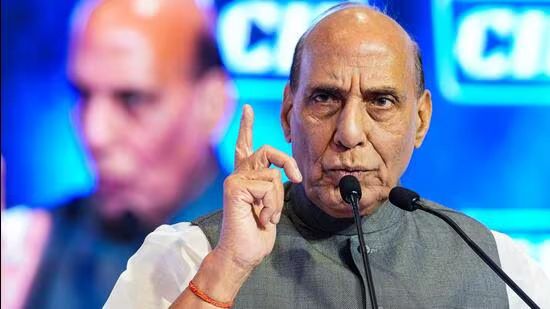
Defence Minister Rajnath Singh on Wednesday emphasised the need for the Armed Forces to transform into a modern warfare machine, citing the increasing use of unconventional methods in today’s warfare — dynamic geopolitical world order and the constantly-changing character of warfare.
He highlighted that conflicts and wars will become more violent and unpredictable, with the emergence of non-state actors and terrorism being major concerns.
Addressing senior Army officials and other personnel at ‘Gaurav Gatha’, an event organised in Pune as part of the 77th Army Day celebrations, he said, “Conflicts and wars will become more violent and unpredictable. The emergence of non-state actors in many countries and their resorting to terrorism is also a matter of concern. Due to rapid technological advancements, future wars witness a change to a great extent. Cyber and space domains are rapidly emerging as new war zones. Along with this, a war of narrative as well as perception is also being fought all over the world. The military must focus on holistic capacity building and reforms.”
Singh stressed the importance of a robust security system, strong military, and secure borders to achieve Prime Minister Narendra Modi’s vision of Viksit Bharat by 2047. He noted that the Ministry of Defence is working to bolster the strength of the Armed Forces by equipping them with the latest weapons and platforms, focusing on modernization through self-reliance.
“India is currently going through a phase of transition. We are moving forward from being a developing country to a developed one. To become Viksit Bharat, every section of society will have to contribute. But their contribution will only be meaningful when our security apparatus is fool-proof and borders are safe. The security system will be robust only when our military is strong. No nation can develop unless its military is powerful,” said Singh.
He echoed the government’s emphasis on the fact that a strong military is a must to ensure peace. He highlighted that India has always prioritised ‘Buddha’ over ‘Yuddha’, and the Armed Forces have, time and again, proved that peace is not a weakness, but a sign of strength.
The Defence Minister also emphasized the need for self-reliance in defence manufacturing, stating that without it, India cannot achieve strategic autonomy. He highlighted the progress made towards achieving ‘Aatmanirbharta’ in defence manufacturing, with domestic defence production reaching a record figure of Rs 1.27 lakh crore in the last financial year.
“A country like India cannot depend on other countries for its security. Today, we are not only manufacturing military equipment on Indian soil, but are exporting them. Domestic defence production touched the record figure of Rs 1.27 lakh crore in the last financial year, while defence exports, which were around Rs 2,000 crore a decade ago, crossed the record figure of Rs 21,000 crore,” he said.
He enumerated the steps taken by the Government to promote self-reliance, including the notification of positive indigenisation lists of over 5,500 items. He stated that MoD is moving ahead at an unprecedented pace and in a planned manner towards making the defence sector strong and ‘Aatmanirbhar’.
Singh also announced that 2025 will be the Year of Reforms in the Ministry of Defence, with efforts to bring in reforms that will ensure modernization of the Armed Forces. He expressed confidence that with concerted efforts, India will soon become Viksit Bharat and its military one of the strongest in the world.
Rajnath Singh virtually laid the foundation stone for the Army Paralympic Node, which will be established at Dighi, Pune and expressed confidence that the node will inspire the specially-abled soldiers of the country.
(This news report is published from a syndicated feed. Except for the headline, the content has not been written or edited by OpIndia staff)
Terrorist groups operating from Pakistan are once again striving to destabilize India by recruiting new members, exploiting the Babri Mosque issue to radicalize young Muslims. This recruitment campaign is being led by none other than Farhatullah Gori, the same terrorist who recently advocated attacks on India’s infrastructure.
As reported by India Today, Pakistani terrorists have created an online network, including a website designed to incite violence. This platform encourages jihad for the reconstruction of the Babri Mosque, calls for targeting Uttar Pradesh Chief Minister Yogi Adityanath, and promotes terrorism. The network extends its influence through social media platforms like Facebook, Instagram, WhatsApp, and others.
The use of encrypted messaging apps like Signal further complicates tracking their activities. According to the report, the website promoting terrorism among Indian Muslims was launched on December 3, 2024. It contains messages supporting the Babri Mosque’s revival and features propaganda videos by Farhatullah Gori.
In one such video, Gori speaks of demolishing the Ram Temple, stating, “With Allah’s will, the Ram Temple will one day be reduced to rubble. Muslims must act on Quranic teachings and commit to terrorist attacks in India—mere social media posts won’t change anything.”
Another video glorifies the terrorist responsible for the Rameshwaram Café bombing in Bengaluru. Gori admits that carrying out attacks has become more difficult since Prime Minister Narendra Modi assumed office.
In 2024, the website disseminated 19 videos aimed at recruiting extremists. It also funnelled users into a Signal group named Saut-Al-Haq, comprising 63 members advocating terrorism.
Previously, Gori had released a video instructing militants on bomb-making techniques for targeting trains, using devices like pressure cookers. Indian security agencies have since obtained this footage. Currently residing in Pakistan under the protection of ISI, Gori continues to plot against India. He is the chief architect behind both the Rameshwaram Café bombing and the Akshardham Temple attack in Gujarat.
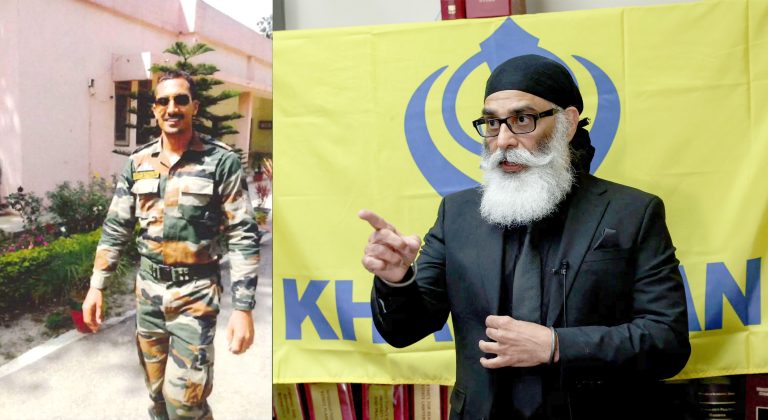
In a press statement released on Wednesday, the Ministry of Home Affairs (MHA) informed that a high-powered committee that was formed by the central government to investigate the US allegations of an assassination attempt on Khalistani terrorist Gurpatwant Singh Pannun has submitted its report. The report has recommended legal action against an unnamed individual accused of the alleged plot.
“After a long enquiry, the Committee has submitted its report to the government and recommended legal action against an individual, whose earlier criminal links and antecedents also came to notice during the enquiry. The Enquiry Committee has recommended that the legal action must be completed expeditiously”, the MHA press statement said.
“The Enquiry Committee conducted its own investigations and also pursued the leads provided by the US side. It received full cooperation from the US authorities and the two sides also exchanged visits. The Committee further examined a number of officials from different agencies and also scrutinised relevant documents in this connection”, it added.
The Committee has further recommended functional improvements in systems and procedures as well as initiation of steps that could strengthen India’s response capability, and ensure systematic controls and coordinated action in dealing with matters like this.
The Indian government constituted the committee in November 2023 to investigate the inputs shared by the US on the alleged failed assassination plot of Pannun. The committee travelled to the US on October 15 last year as part of the investigation to take inputs from the US authorities concerning the matter.
The US authorities had named Vikash Yadav, said to be a former officer of the Indian intelligence agency RAW, in connection with the alleged assassination plot. The Indian government however clarified in October last year that the individual named by the US in the matter was no longer an employee of the government of India.
The US Justice Department had reportedly claimed in an indictment filed in a federal court in Manhattan that an unidentified Indian government employee named (CC-1) recruited an Indian national named Nikhil Gupta to hire an assassin to kill Pannu. Gupta was detained in Prague in June 2023 and was extradited to the US in June 2024.
The US allegations regarding the failed assassination of Khalistani terrorist Gurpatwant Singh Pannun in November 2023 came months after then-Canadian Prime Minister Justin Trudeau alleged the involvement of Indian officials in the murder of Khalistani leader Hardeep Singh Nijjar.
Prime Minister Narendra Modi dedicated three frontline naval ships, INS Surat, INS Nigiri and INS Vaghsheer to the nation, during their commissioning at the Naval dockyard in Mumbai on Wednesday.
“It is for the first time that the tri-commissioning of a destroyer, frigate and submarine was being done,” highlighted the Prime Minister.
According to the Ministry of Defence, INS Surat is a destroyer, INS Nilgiri a frigate and INS Vaghseheer a submarine.
“This historic tri-commissioning reflected India’s rich maritime legacy and commitment to self-reliant defence under Aatmanirbhar Bharat. These vessels, built indigenously, enhance the Indian Navy’s operational capabilities and strengthen India’s role in the Indian Ocean Region,” the ministry’s social media handle said.
Emphasising the significant role of maritime nations like India in shaping global security, economics, and geopolitical dynamics, the Prime Minister highlighted the importance of protecting territorial waters, ensuring freedom of navigation, and securing trade supply lines and sea routes for economic progress and energy security. He also stressed on the need to safeguard the region from terrorism, arms, and drug trafficking.
On the occasion of Army Day commemorated today, PM Modi also saluted every brave warried who would sacrifice his life for the safety and security of the nation.
The PM further highlighted the connection of Chhatrapati Shivaji Maharaj giving a ‘new strength and vision’ to the Navy in India during his rule.
Prime Minister also emphasised that was a matter of pride that all the three frontline platforms were made in India. He congratulated the Indian Navy, all the stakeholders involved in the construction work and the citizens of India for the achievement.
“Today’s program links our glorious heritage with our future aspirations,” exclaimed Modi.
An official statement released by the Ministry of Defence added that the PM mentioned India’s rich history related to long sea voyages, commerce, naval defence and ship industry. Taking cue from this rich history, PM Modi remarked that today’s India is emerging as a major maritime power in the world.
According to the statement, INS Nilgiri is dedicated to the maritime prowess of the Chola dynasty, and the Surat warship, reminiscent of the era when Gujarat’s ports connected India to West Asia.
The PM remarked how Vagsheer submarine is aimed at enhancing both India’s security and progress.
“India is today recognised as a reliable and responsible partner globally, especially in the Global South,” the PM said, while also highlighting that the country has supported an open, secure, inclusive, and prosperous Indo-Pacific Region.
He noted that when it came to the development of coastal nations, India introduced the mantra of SAGAR (Security And Growth for All in the Region) and advanced with this vision.
Stressing on the importance of enhancing and modernising India’s military capabilities in the 21st century, PM Modi highlighted, “be it land, water, air, the deep sea or infinite space, India is safeguarding its interests everywhere.”
He further mentioned how the armed forces have identified over 5,000 items and equipment which will no longer be imported.
Modi noted the establishment of the country’s largest helicopter manufacturing factory in Karnataka and a transport aircraft factory for the armed forces. He highlighted the achievements of the Tejas fighter plane and the development of defence corridors in Uttar Pradesh and Tamil Nadu, which are accelerating defence production.
“The commissioning of three major naval combatants marks a significant leap forward in realising India’s vision of becoming a global leader in defence manufacturing and maritime security,” read the MoD’s statement.
INS Surat, the fourth & final ship of the P15B Guided Missile Destroyer Project, ranks among the largest and most sophisticated destroyers in the world. It has an indigenous content of 75% and is equipped with state-of-the-art weapon-sensor packages and advanced network-centric capabilities.
INS Nilgiri, the first ship of the P17A Stealth Frigate Project, has been designed by the Indian Navy’s Warship Design Bureau and incorporates advanced features for enhanced survivability, seakeeping, and stealth, reflecting the next generation of indigenous frigates.
INS Vaghsheer, the sixth and final submarine of the P75 Scorpene Project, represents India’s growing expertise in submarine construction and has been constructed in collaboration with the Naval Group of France.
(This news report is published from a syndicated feed. Except for the headline, the content has not been written or edited by OpIndia staff)