On Thursday, Rajasthan police arrested two Indian Army personnel who were involved in a honey-trap, posted at Pokhran in Jaiselmer district, for allegedly leaking classified and sensitive information via Facebook and Whatsapp.
The two soldiers, namely, Lance Naik Ravi Verma and Sepoy Vichitra Behera, who has been taken into custody by the Indian intelligence agencies at Jodhpur railway station had reportedly been caught in a honeytrap by Pakistan’s ISI.
Army Sources: Two Indian Army personnel including Lance Naik Ravi Verma and Sepoy Vichitra Behera have been arrested by Rajasthan Police after they were virtually honeytrapped by Pakistani intelligence operatives over social media. (1/3)
Confirming that both have fallen prey to a honeytrap, Umesh Mishra, Additional Director General of Rajasthan Intelligence said that both have been detained and investigation has been initiated after strong evidence was found. “We have detained two army jawans for their involvement in spying activities. They were deployed at an army unit in Pokhran. They were honey-trapped by Pakistani intelligence agency ISI and were sending information across the border through different social media platforms” ADF police (Intelligence ) Umesh Mishra said.
The agencies are enquiring about the handlers modus operandi and their purported links with India. During investigations, it has emerged that the two personnel were involved with one Facebook ID with the name of ‘Seerat’ that was posing as a woman to honey-trap the two jawans.
Army Sources: In the investigation, it has emerged that the two personnel were involved with one Facebook ID with the name of ‘Seerat’ that was posing as a woman to honey-trap the two jawans. (2/3) https://t.co/JNs4sqzoKu
Lance Naik of 12 Guards, Ravi Varma of Madhya Pradesh and cook Vichitra Behera, Odisha resident, lived alone in Pokharan. They got introduced to the woman on Facebook. According to the information, both the soldiers who were honey-trapped for the last year and a half had been sending sensitive information to Pakistan through Facebook and WhatsApp.
Even while the woman Pakistan ISI handler was in Pakistan she managed to trick the jawans as she firstly used VoIP (Voice Over Internet Protocol) with a strong Punjabi accent and secondly she called the soldiers from an Indian number, which allegedly misled the accused personnel and deliberated them from sparing tactical information.
Some of the information was regarding army deployment, equipment and manoeuvres etc. in lieu of which the jawans received a sum of Rs 5000 in their respective accounts, investigations have revealed.
The Army has, however, decided to remain tight-lipped on this case of honey-trap. “We don’t have anything to say on this,” said Col. Shombit Ghosh, PRO defence, South Western Command.
‘Honey Trapping’ is a commonly used technique practised for very long by spy agencies to extract sensitive information. In July, Army jawan Ravinder allegedly leaked information regarding weapons used by his unit and their specific locations to a foreign woman via Facebook. He had also allegedly received money from the said woman in the past.
According to reports, 13 serving and retired defence personnel had been arrested for allegedly spying for the ISI or being part of its espionage racket in recent years.
In June, the Army intelligence has issued an advisory to army personnel against an Instagram profile ‘Oyesomya’ who is suspected of being an enemy spy trying to target army officers and special forces’ troops.
In another case, Rajasthan Police had arrested one Army jawan on charges of espionage in Jaiselmer. After interrogations, it was revealed that he was in touch with the Pakistani ISI operatives through social media.
In December, the Intelligence Bureau had said that Chinese and Pakistani girls being used by ISI to ‘honey trap’ Indian officials. Last year, an engineer working at the Brahmos Aerospace facility was also booked for alleged leaking of information to suspected individuals via social media.
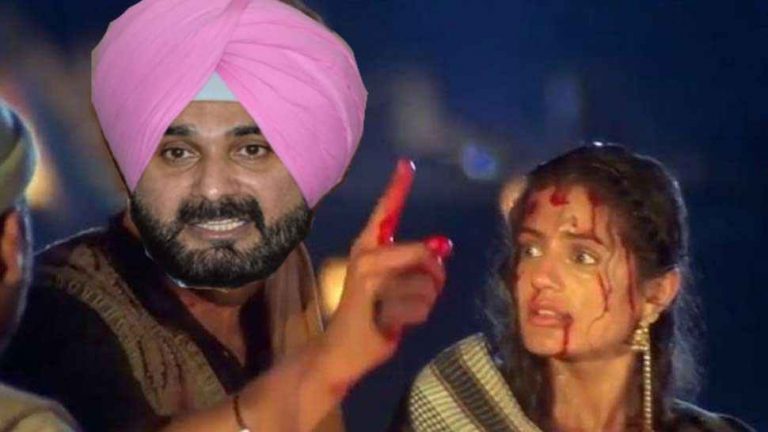
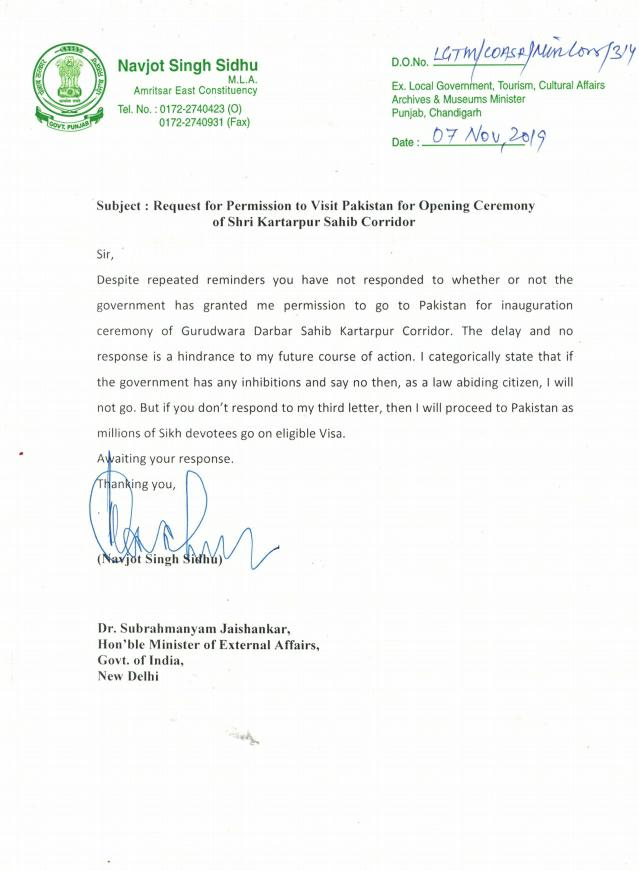
Taking a cue from the legendary character of Tara Singh of the Bollywood film Gadar, controversial Congress leader Navjot Singh Sidhu has written a letter to the External Affairs Minister, S Jaishankar, stating that even if central government does not give him permission, he will go to Pakistan.
Sidhu seeks permission from central government for visiting Kartarpur corridor
Sidhu had applied for permission for visiting Pakistan for the inauguration of the Kartarpur corridor. Sidhu lamented in the letter that despite sending repeated reminders for seeking permission to travel to Pakistan, he has not received any communication from the External Affairs Ministry.
“The delay and no response is a hindrance to my future course of action. I categorically state that if the government has any inhibitions and say no then, as a law-abiding citizen, I will not go. But if you do not respond to my third letter, then I will proceed to Pakistan like millions of Sikh devotees go on eligible Visa,” Sidhu said.
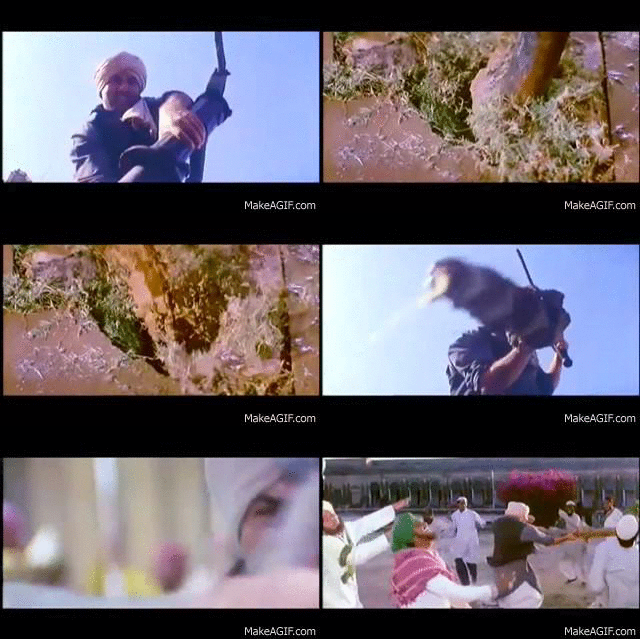
This reminds one of the resolute determination exhibited by Tara Singh from the movie Gadar, in which actor Sunny Deol, playing Tara Singh, travels to Pakistan against significant odds to get his wife(Ameesha Patel) back to India. Ameesha Patel is held up in Pakistan against her wishes by her family who is attempting for her re-marriage in Pakistan. In the pursuit to get his wife back, a tenacious Tara Singh scares the bejesus out of thousands of Pakistanis by uprooting a hand-pump and consequently thwacks scores of Pakistanis trying to stop him from taking his wife back to India.
Tara Singh uprooting handpump in Pakistan in film Gadar – Ek Prem Katha
Meanwhile, MEA has said that Kartarpur inauguration is a historic event and should not highlight one individual. Responding to question on Sidhu’s reminder, MEA spokesperson Raveesh Kumar said that they cannot afford to focus on an individual traveller.
Sidhu has displayed remarkable alacrity in desiring to visit Pakistan. Even during the foundation stone ceremony of the Kartarpur corridor, Sidhu champed at the bit of visiting Pakistan as soon as he received an invitation for the same from Pakistan PM Imran Khan. This was against the wishes of Punjab CM Captain Amarinder Singh, who had advised him to not visit Pakistan, claiming it might be a ruse by Pakistan to revive Khalistani terrorism. However, Sidhu did not heed his advice and enthusiastically proceeded to Pakistan.
Update: According to the latest report, at last the union government has granted political clearance to Sidhu.
Sources: Political clearance has been granted to Congress leader Navjot Singh Sidhu to travel through the Kartarpur Sahib Corridor on 9th November. pic.twitter.com/vVfQexF5hz
News agency ANI reported that the Ministry of External Affairs has granted Navjot Singh Sidhu political clearance to travel through Kararpur Sahib Corridor on 9th November.
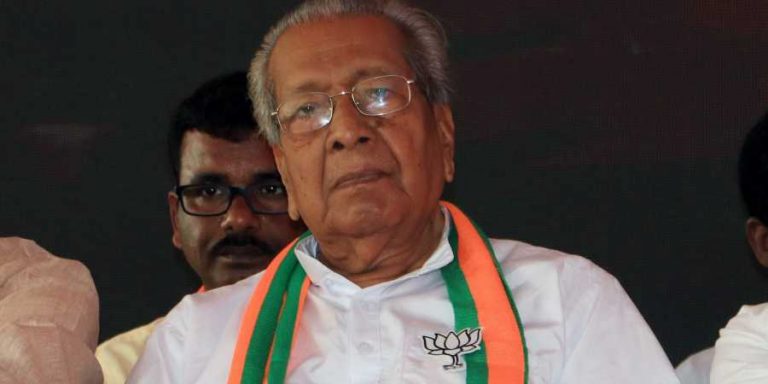
The governor of Andhra Pradesh Biswabhusan Harichandan has ordered an investigation into the alleged ‘job scam’ that was supposedly done by an outsourcing agency on the claim of offering jobs in Raj Bhavan.
The Andhra government had tasked the outsourcing agency M/s Sumathi Corporate Services Pvt Limited with the responsibility of recruiting staffs for the Protocol department on an outsourcing basis. But it soon came to the fore that the agency had collected large sums of money from the job seekers while assuring them that their jobs will be permanent.
The press release stated that a complaint was received by the Raj Bhavan authorities that illicit demand for money was made and collected by the supervisors of the outsourcing agency M/s Sumati Corporate Services Pvt Ltd in collusion with some protocol staff and other people for placing their services in the newly formed Raj Bhavan as Attenders, Receptionist, Office Sub-ordinate, etc.
The press release further added that the committee led by the Secretary to Governor have come to the conclusion that money has been demanded and collected from 9 outsourcing employees by the supervisory staff in connivance with some other people insuring them permanent jobs in the Raj Bhavan vacancies.
According to the sources, the agency had allegedly garnered bribes of Rs 70,000 to Rs 5 lakh for the jobs. In totality, Rs 17.85 lakhs was collected from 9 members for posts of receptionists, attenders, helpers and assistants.
The Governor has directed the Police Commissioner of Vijaywada Dwaraka Tirumala Rao to initiate immediate legal and criminal action against the agency and individuals responsible for this illegal act.
Police are conducting a probe into the alleged job scam. It has registered cases against the culprits under different sections of the IPC including 408, 420, 384, 506 and 120(B).
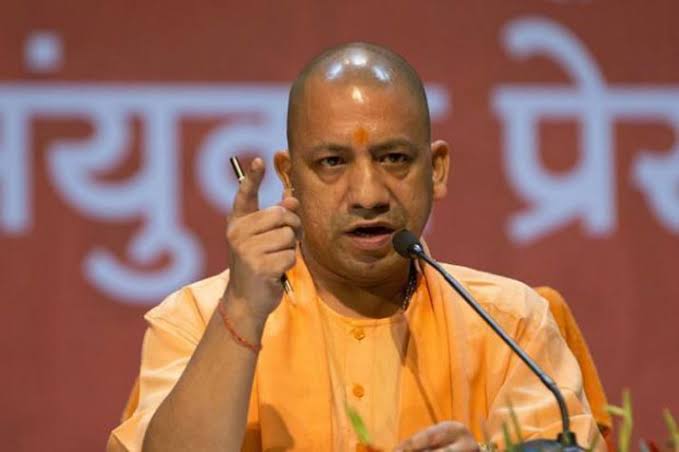
The Yogi Adityanath-led Uttar Pradesh government has decided to sack seven Provincial Police Service (PPS) officers on charges of corruption. As per reports, there were charges of corruption on these officers.
Reportedly, the Yogi Adityanath government dismissed all the seven officers after the findings of the screening committee report and they were given mandatory retirement. The order for the retirement of these officers, all above the age of 50, was issued on Thursday.
The officers who are forced to retire for their involvement in corrupt activities are – Arun Kumar, (Assistant Commandant of 15th Battalion PAC Agra), Vinod Kumar Rana, (Deputy Superintendent of Police Faizabad), Narendra Singh Rana, (Deputy Superintendent of Police Agra) and Ratan Kumar Yadav, (Assistant Commandant of 33rd Corps PSC of Jhansi), Tejveer Singh Yadav, (Assistant Commandant of 27th Corps PAC Jhansi), Santosh Singh, (divisional officer Moradabad) and Tanveer Ahmed Khan, (Assistant Commandant 30th Vahini, Gonda).
Earlier, Chief Minister Adityanath had warned on several occasions that officers who do not perform or have been found guilty of corruption are free to quit or will be compulsorily retired.
Yogi Adityanath’s government in Uttar Pradesh has been strict over action against corruption and inefficiency that had struck the state for decades. In the drive against corruption, the UP government had warned over 400 corrupt officials of severe punishment and decided to give early retirement to around 200 employees. Nearly 200 employees in 29 of the 72 departments were sacked by July this year.
In an earlier incident, the Uttar Pradesh government had registered FIR against more than a dozen policemen. In June this year, an FIR had been lodged against a dozen other cops over charges of corruption and misbehaviour. The cops were also suspended from duty, according to a statement released by the DGP headquarters in Lucknow.
According to the Public Relation Officer (PRO) to Uttar Pradesh DGP, nearly 192 cops have been suspended, 400 transferred, 40 booked and a probe has been ordered against 400 policemen on the basis of complaints received through social media.
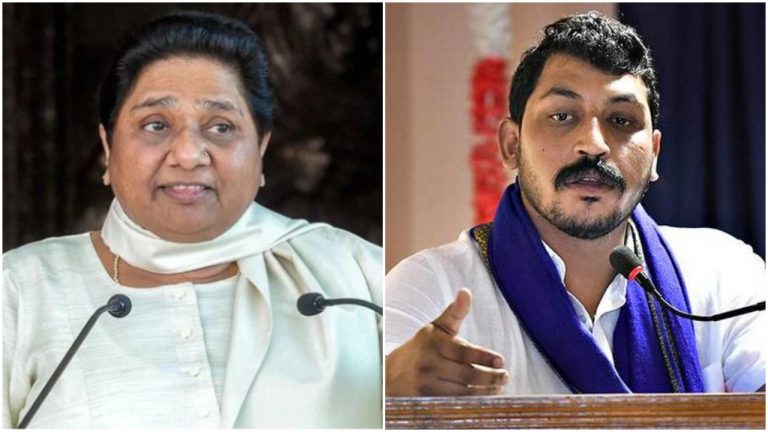
The Bahujan Samaj Party has rejected Bhim Army chief Chandrashekhar Azad’s appeal to party president Mayawati to join hands with him to fight the Bhartiya Janata Party.
Reportedly, a senior party functionary termed a letter written by Bhim Army chief Chandra Shekhar Azad to Mayawati as a ‘ploy to create confusion among Dalits’. He added that the BSP has already launched an awareness campaign in the Dalit-dominated areas in Uttar Pradesh to counter the Bhim Army’s propaganda.
Reportedly, the state and district unit leaders of the party have been directed to make the party cadres aware of Chandra Shekhar’s alleged plan to divide Dalits at the BJP’s instance.
The BSP leader said that Mayawati was the tallest Dalit leader who had not only devoted her life to the uplift of Dalits but also the members of the community considered her as their role model.
Mayawati had already stated that if the Bhim Army leadership or other Dalit organizations were really interested in the empowerment of the community, they should work under the banner of the BSP to take forward the movement launched by Babasaheb Bhimrao Ambedkar and BSP founder Kanshi Ram, he added.
After his release from his arrest over the agitations during the Ravidas Temple incident, Bhim Army chief Chandrashekhar Azad had extended a hand of friendship towards BSP supremo Mayawati asking her to come together to fight against the BJP.
Chandrashekhar, who refers to Mayawati as ‘Bua’ or aunt, had written an open letter to Mayawati asking her to join him in a discussion over strengthening the Bahujan movement to fight the incumbent BJP government for its alleged anti-Dalit policies.
In a four-page letter addressed to the BSP chief, Chandrashekhar had written about the important “political turn” the country is allegedly going through, where “communal and casteist powers are rampant.”
“The BJP has formed government in 2014 and then in 2019 and it is a clear indication that its power has increased. Barring South India, the BJP is in a strong position elsewhere, even in Uttar Pradesh which was considered as a stronghold of Bahujan movement once,” the letter read.
Just before the 2019 Lok Sabha elections, Bahujan Samaj Party supremo Mayawati had lashed out at Bhim Army Chief Chandrashekhar Azad on Twitter calling him a BJP mole. She had alleged that Chandrashekhar contesting from Varanasi seat in the upcoming Lok Sabha elections is a BJP conspiracy to divide the Dalit vote and take advantage.
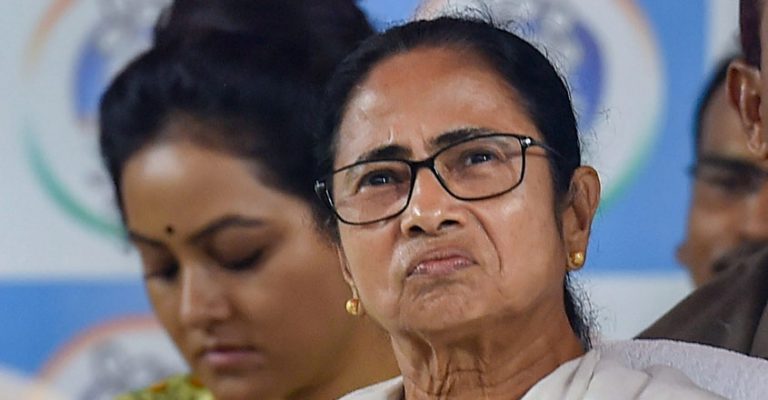
Mamata Banerjee on 7th November had raised a hue and cry and questioned the Modi government over why the JEE-Main exam is conducted only in Gujarati. She asked the Modi government to explain why only Gujarati was being allowed and not other regional languages. Now, the National Testing Agency, which is an Indian government agency that has been approved by the Union Council of Ministers to conduct entrance examinations for higher educational institutions, has issued a clarification and busted Mamata Banerjee’s propaganda.
In a Tweet, Mamata Banerjee had said, “I love Gujarati language. But, why have other regional languages been ignored? If Gujarati has to be there, then all regional languages including Bengali must be there…. Unless this issue is decided gracefully, there will be strong protests all around as sentiments of people who speak other regional languages would be deeply hurt due to this injustice”. In an overdramatic tweet, she had further said, “Our country is India, which is home to so many religions, cultures, languages, creeds and communities.… However, maligning all regions and regional languages is the intention of the government at the Centre…. Why injustice is being meted out to them?”.
However, Mamata Banerjee’s outburst has now been exposed to be mere propaganda. The National Testing Agency has clarified that JEE-Main started in 2013 with an idea of all states admitting their engineering students through this test. The NTA clarification said:
“The request was sent to all the States in the year 2013 itself. Only the Gujarat State agreed to admit their candidates in State Engineering Colleges of Gujarat through JEE (Main) and requested that the JEE (Main) paper be made available in the Gujarati language. Further, in 2014 Maharashtra State also opted for admitting the Engineering candidates in the State Engineering Colleges through JEE (Main). The Maharashtra State requested to provide the question paper in the language of Marathi and Urdu”.
Further, the clarification read:
In the year 2016, both these States withdrew the admission to the State Engineering Colleges through JEE (Main). Therefore, the translation in Marathi and Urdu language was stopped. However, the translation of JEE (Main) question paper in the Gujarati language continued on the request of Gujarat State. None of the other States has approached NTA to provide the JEE (Main) question paper in any other Indian National Language.
Essentially, the NTA has clarified that while Mamata Banerjee is insinuating bias of the Modi government against all regional languages other than Gujarati, the truth is that Mamata Banerjee herself never agreed to the JEE-Main request for the exam to be conducted in Bengali or any other language that might be needed for the state of West Bengal.
In fact, multiple media reports have indicated that NTA may discontinue Gujarati as a regional language for JEE Main altogether and hold the examinations only in English and Hindi from 2021 onwards.
“The advisory committee of the JEE-Main has decided to drop Gujarati as a medium for question papers from January 2021. The questions will be available in Hindi and English only,” The Telegraph quoted an official of the National Testing Agency (NTA).
As the long-drawn-out Ayodhya dispute draws to a close, law enforcement agencies of various states have primed themselves to ensure that no incendiary messages or rumours are circulated online in the wake of the Supreme Court’s verdict on the Ram Janmabhoomi-Babri Masjid title dispute.
The Maharashtra Cyber cell has formed teams to supervise social media to guard against the inflammatory comments and posts made to incite communal hatred ahead of the verdict. The cell will be collecting intelligence and flag alert to the respective state police if any objectionable content is shared by residents of those states. The cyber police team will work from a social media lab situated in the World Trade Centre at Cuffe Parade having essential computer networks, software along with a requisite number of technical experts that will help them in monitoring social media.
The Bhopal District administration in Madhya Pradesh has also been on alert. Proscribing offensive content on the social media platforms such as WhatsApp, Facebook, Instagram, Group SMS and other social media platforms, the Bhopal Collector and District Magistrate Tarun Pithode made it mandatory for users of these social media platforms to inform police if any derogatory content against any religion is shared by miscreants. He also said that in case any hateful remarks or messages are shared on Whatsapp, the admin of that group will be responsible for propagating the hatred.
In order to make sure that law and order prevail in the city, Faizabad police have taken a preventive action by deploying more than 16000 volunteers to keep an eye on the social media platforms ahead of the Ayodhya verdict. According to the Senior Superintendent of Police Ashish Tiwari, a similar number of volunteers have been assigned across 1,600 localities in the district to uphold law and order when the verdict is delivered.
Meerut police have put under scanner several provocative social media accounts who have been posting disparaging religious remarks. The SP(Rural) Meerut Avinash Pandey said that more than 10 Facebook and Twitter that posted objectionable content were brought down by the police. He revealed that many Twitter accounts with Hindu mythological characters names have emerged who are posting insensitive comments. The Meerut police are now trying to ascertain the real identities of these mischief mongers.
A five-judge Supreme Court bench headed by CJI Ranjan Gogoi had heard the Ayodhya case on a day-to-day basis for 40 days and reserved its verdict on October 16. The court is expected to deliver its verdict on a dispute over the possession of 2.77 acres of land in Ayodhya district in Uttar Pradesh before November 17, when CJI Gogoi retires.
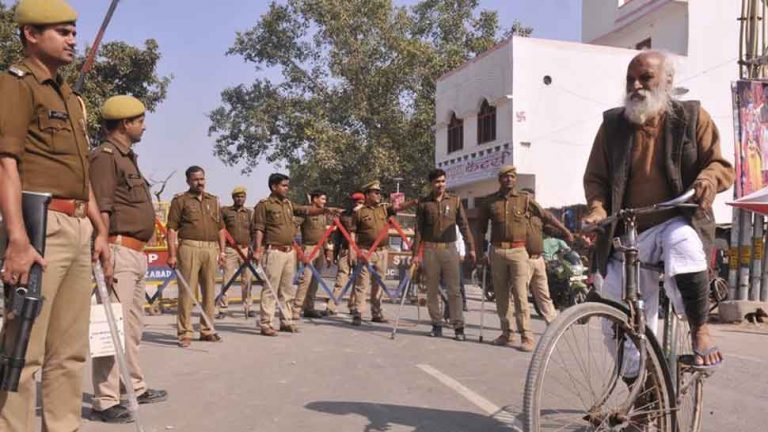
Police forces in Uttar Pradesh and other states too have been put on alert ahead of the verdict. Section 144 has already been imposed in the areas surrounding the Ram Janmabhoomi in Ayodhya.
Security arrangements in Ayodhya and many adjoining districts have been intensified ahead of the crucial Supreme Court verdict in the Ayodhya dispute case which is expected before November 17. The MHA has sent a general advisory to all states and UTs to remain alert and vigilant ahead of the soon expected Ayodhya case.
Ministry of Home Affairs Sources: MHA sends general advisory to all states and union territories to remain alert and vigilant ahead of the probable verdict in Ayodhya case. pic.twitter.com/2VkrWwJGEb
Citing intelligence inputs on terror threat, the Ministry has also directed the Uttar Pradesh government to ensure maximum deployment of the police force on the ground and keep tabs on rumours on social networking sites and through SMS.
Apart from Ayodhya, the circular cautioned the Uttar Pradesh government to keep a close eye on other highly sensitive areas in the state and deploy its police force at specific locations, following apprehensions that “anti-social elements” may provoke religious sentiments of the people.
Yogi Adityanath government in Uttar Pradesh is making all possible arrangements to tackle any chaos or untoward incident that can ensue following the judgement on the highly volatile issue. Since the issue directly involves matters of faith and is expected to spark communal tension, the State, as well as the Central government, are making sure that there remains no lapse in the security arrangements.
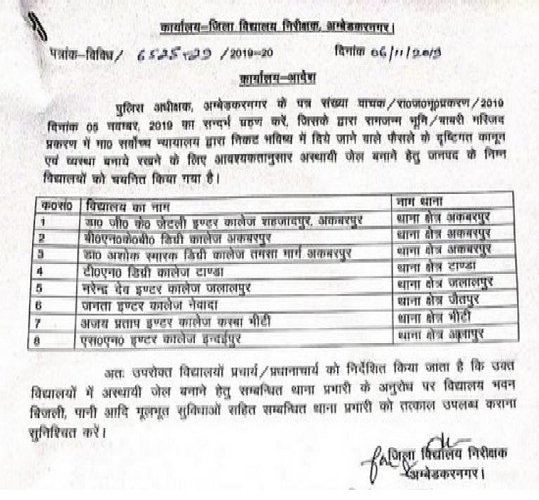
To ensure law and order remains in control, the Ayodhya district administration has set up eight temporary jails in different schools in Uttar Pradesh’s Ambedkar Naga.
Administration order setting up temporary jail in schools
The jails have been set up in schools in Akbarpur, Tanda, Jalalpur, Jaitpur, Bhiti, and Allapur. The principal and staff of these schools would require to provide basic amenities to the station in-charges.
Asserting that the verdict shouldn’t be viewed from the prism of victory and defeat, even PM Modi has in a meeting with the council of ministers issued a directive today asking his ministers to refrain from making any unnecessary remarks on it. BJP also told its MPs to visit their constituencies for maintaining calm.
The Centre has also given the order to deploy 40 companies comprising of around 4,000 personnel of paramilitary force in Ayodhya, including sixteen companies of Central Reserve Police Force (CRPF), around six companies each of Indo-Tibetan Border Police (ITBP), Central Industrial Security (CISF), Sashastra Seema Bal (SSB) and RAF. A total of 13 CRPF companies have already been sent to Ayodhya and others would be sent in two-three days.
Ayodhya Police had earlier issued notification calling out the rumour-mongers and cautioning them that strict action will be taken against those who will be found inciting unrest through sharing fake news, communally sensitive videos/messages on Facebook, Whatsapp and other social media platforms. The UP Police has assured that they are completely and absolutely ready for the verdict.
The district magistrate had instructed people to not make any defamatory comments against any religion, community, deities, eminent personalities on social media platforms. People have also been prohibited from organising any event regarding the Ram Janmabhoomi-Babri Masjid dispute. Section 144 has been imposed in Ayodhya till December 28. Those violating the orders will be booked under Section 188 (disobedience of an order promulgated by public servant) of the IPC.
Senior Superintendent of Police (SSP) of Ayodhya, Ashish Tiwari has said: “Elaborate deployment of forces, intelligence network and confidence-building measures are in place. We have launched a mobile application connecting 16,000 volunteers in 1,600 villages, 10 volunteers each. We are also actively combating rumours on social media.”
A five-judge Supreme Court bench headed by CJI Ranjan Gogoi heard the Ayodhya case on a day-to-day basis for 40 days and reserved its verdict on October 16. The court is expected to deliver its verdict on a dispute over the possession of 2.77 acres of land in Ayodhya district in Uttar Pradesh before November 17, when CJI Gogoi retires.
In a series of tweets, Twitter India today said that Twitter is impartial when it comes to development of policies, product features and enforcement of rules. Twitter India said that it does not take actions based on any political ideology or viewpoint.
Twitter’s commitment to inclusion and diversity is fundamental to who we are and crucial to the effectiveness of our service. Voices from across the spectrum can be seen and heard on Twitter and we are committed to the principles of openness, transparency, and impartiality.
Twitter said that it has its own set of rules and enforces policies judiciously and impartially for all individuals, regardless of their beliefs or backgrounds.
“We have a specialised, global team that enforces Twitter’s Rules. In our trainings we extensively cover topics such as religion and caste to provide them with necessary local context they need to evaluate content,” Twitter said in its tweet.
We have a specialised, global team that enforces Twitter’s Rules. In our trainings we extensively cover topics such as religion and caste to provide them with necessary local context they need to evaluate content.https://t.co/ui7PgFrStC
On rules for hateful conduct on the microblogging giant platform, Twitter India said media depicting hateful imagery is not permitted on the platform.
Media depicting hateful imagery is not permitted within live video, account bio, profile or header images. Twitter has a higher standard in some areas like profile or header images, where there is limited context (unlike a Tweet that may contain an image with accompanying text).
“Twitter has a higher standard in some areas like profile or header images, where there is limited context (unlike a Tweet that may contain an image with accompanying text),” it said.
On its verification rules, Twitter said that it had stopped public verification of profiles back in 2018. And while the platform is reviewing program on case-to-case basis, Twitter verifies profiles of people who are active in public conversation.
We are committed to serving an open public conversation in India and we will continue to be transparent in our efforts.
The Ram Janmabhoomi dispute, dealing with the birthplace of Lord Ram, who is the civilizational symbol of India stretching from Vietnam to the Caribbean, is one of the most important legal disputes in the history of India. It is a legacy of our past and without the resolution of the Ram Janmabhoomi, there can be no effective resolution of historical wrongs.
The Suit Property and the Dispute
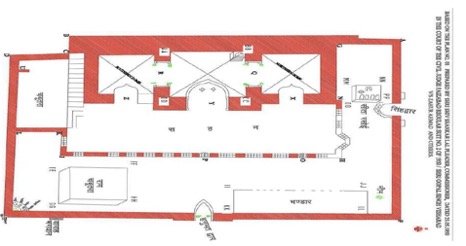
Suit land (Suit-5) is entire premises of Sri Ram Janam Bhumi, which is situated in village Kot Rama Chandra (RamKot at Ayodhya) Pargana Haveli Avadh, Tehsil Sadar, District Faizabad, UP. Suit premises was one integral complex which contained deity, Ram Chabutra, the charan, the Sita Rasoi including Sita Koopa and other idols, however, after the Judgment of Hon’ble Supreme Court in Dr M. Ismail Faruqui etc. Vs. Union of India and others 1994 (6) SCC 360 the area of land in dispute is limited to about 130X80 sq. feet.
Area of Dispute
What is Asthan Sri Rama Janma Bhumi
It is manifestly established by public records of unimpeachable authority that the premises in dispute is the place where Sri Ramchandra Ji Maharaj was born as the son of Maharaja Dashrath, which according to the tradition and the faith of the devotees of Bhagwan Sri Rama is the place where He manifested Himself in human form as an incarnation of Bhagwan Vishnu. The place has ever since ever called Sri Rama Janma Bhumi by all and sundry through the ages. That the place itself, or the Asthan Shri Rama Janma Bhumi as it has come to be known, has been an object of worship as a Deity by the devotees of Bhagwan Shri Rama, as it personifies the spirit of the Divine worshipped in the form of Shri Rama Lala or Lord RAMA the child. The Asthan was thus Deified and has had a juridical personality of its own even before the construction of a Temple building or the installation of the idol of Bhagwan Sri Rama thereat.
Significance of Asthan Sri Rama Janmabhumi
Sri Ramjanamsthan has particular significance for the Hinduism as visiting and performing customary rites confer virtue and gives salvation. It is a firm belief of the Hindus based on their sacred Divine Holy Scriptures, which belief neither can be scrutinized by any Court of Law nor can be challenged by the persons having no faith in Hinduism as this is conscience of the Hindus having special protection under Article 25 of the Constitution of India.
According to the Hindus’ Divine Holy & Sacred Scriptures including “Srimad Atharvaved”, “Srimad Skand-Puranam”, “Srimad Narsimh Puranam”, “Srimad Valmiki Ramayana”, “Rudryamal”, “Vashishth Samhita” “Sri Ramacharitmanas of Goswami Tulasidas” etc. describe the Place of Birth of the Lord of Universe Sri Rama i.e. Sri Ramajanmsthan and the Temple lying thereon in the City of Ayodhya as Abode of God and further says that Sri Ramajanmasthan is most sacred place only by seeing which the devotees acquire salvation and all those virtues which can be acquired by visiting all other Tirthas and thereby said holy sacred Scriptures of the Hindu Dharma make performance of customary rites at Sri Ramajanmasthan integral part of Hindu Dharma.
A number of books of history and public records of unimpeachable authenticity, establish indisputably that there was an ancient Temple of Maharaja Vikramaditya’s time at Sri Rama Janma Bhumi, Ayodhya.
1528 AD: The Dispute Starts with the Demolition of an Existing Temple
The so-called Babri Masjid was made in the 1528 AD, allegedly by Babar or at his command or instance by Mir Baqi or anyone else by demolishing the said temple. The material used was almost all of it taken from the Temple including its pillars which were wrought out of Kasauti or touch-stone, with figures of Hindu gods and goddesses carved on them. However, there is no evidence whatsoever that after its construction, it was ever used as a mosque by Muslims at least till 1856-57.
Records to show the construction of the disputed structure wherein exist of a temple (building of Lord Rama)
One of the most remarkable accounts on the existence of a temple, before it was invaded and destroyed by Babur and his army, was Tieffenthaler’s description in “Historique Et Geographique : Del’Inde” i.e. “The History, Antiquities, Topography And Statistics Of Eastern India” by Montgomery Martin first published 1838, which records, “The bigot by whom the temples were destroyed, is said to have erected mosques on the situations of the most remarkable temples…”
Edward Thornton’s Gazetteer of 1854 published in 1858 mentions that “according to native tradition, they were demolished by Aurangzeb, who built a mosque on part of the site. The falsehood of the tradition is, however, proved by an inscription on the wall of the mosque, attributing the work to the conqueror Baber, from whom Aurungzebe was fifth in descent…”
Historical Sketch of Faizabad in the year 1870 by P. Carnegy, Commissioner/ Settlement Officer of Oudh (Translation by Col. H.S. Jarret in 1891) gives a description on the same stating, “The Janamsthan marks the place where Ram Chandra was born….. If Ajudhia was then little other than a wild, it must at least have possessed a fine temple in the Janamsthan; for many of its columns are still in existence and in good preservation, having been used by the Musalmans in the construction of the Babari Mosque…”
Gazetteer of the Province of Oudh by W. C. Benett (1877) records, “The Janamasthan and other temples.–It is locally affirmed that at the Muhammadan conquest there were three important Hindu shrines, with but few devotees attached, at Ajodhya, which was then little other than a wilderness. These were the “Janamasthan,” the “Swargaddwar mandir” also known as “Ram Darbar,” “Treta-ke-Thakur.” On the first of these, the Emperor Babar built the mosque, which still bears his name, A.D. 1528.”
Archaeological Survey of NW Provinces and Oudh 1889 too supports the argument about the existence of a Ram Temple at the particular place, “The old temple of Ramachandra at Janmasthanam must have been a very fine one, for many of its columns have been used by the Musalmans in the construction of Babar’s Masjid.”
Barabanki Gazetteer by H.R. Nevill (1903) records, “It is reiterated that there was the continuous struggle of Hindus to reclaim the ground on which formerly stood the Janmasthan temple.”
Momental Antiquities and Inscriptions in NWP & Oudh by A. Fuhrer 1891 states, “…It is locally affirmed that at the Musalman conquest there were three important Hindu temples at Ayodhya: these were the Janmasthanam, the Svargadvaram, and the Treta-Ke-Thakur. On the first of these Mir Khan built a masjid, in A.H. 930 during the reign of Babar, which still bears his name…”
Fyzabad A Gazetteer by H.R. Nevill (1905) mentions that in 1528 Babar built the mosque at Ayodhya on the traditional spot where Lord Rama was borne and specifically mentioned that the Janmashtan was in Ramkot, the birthplace of Rama and Babar in 1528 destroyed the ancient temple and on its site built a mosque known as Babur’s mosque.
The Imperial Gazetteer of India, Provincial Series, 1905 records, “The present town stretched is land from a high bluff overlooking the Ghaghra. At one corner of the vast mound is the holy spot where Rama was born where Babur built a mosque.”
Imperial Gazetteer of India (1908) again states, “…At one corner of a vast mound known as Ramkot, or the fort of Rama, is the holy spot where the hero was born”.
Nevill’s Gazetteer of Fyzabad (1928) records, “…He destroyed the ancient temple and on its site built a mosque, still known as Babar’s mosque.”
Imperial United Provinces of Agra and Oudh, Vol. II, published in 1934 clearly mentions that “…At one corner of a vast mound known as Ramkot, or the fort of Rama, is the holy spot where the hero was born. Most of the enclosure is occupied by a mosque built by Babar from the remains of an old temple, and in the outer portion, a small platform and shrine mark the birthplace…. Besides the mosque…”
Uttar Pradesh District Gazetter, Fyzabad (1960) which was published post-independence states, “…It seems that in 1528 AD Babar visited Ayodhya and under his order, this ancient temple was destroyed and on the site was built what came to be known as Babar’s mosque…”
All these documents and records were argued in the High Court of Allahabad (argued by Senior Advocate Shri Ravi Shankar Prasad, who is now the Union Law Minister) and later in the Supreme Court as a part of historical evidence.
1856-1956: Resistance and fight over the ownership of the disputed property continued
There was great resistance by the Hindus and many battles were fought from time to time by them prevent the completion of the mosque and Hindus continued to visit the place for worship as it personifies the spirit of the Divine worshipped in the form of Sri Rama Lala or Lord Rama the child. But the Hindus never forfeited their claim of worship at the site. Multiple orders were passed by the local Magistrates and Police Officers restraining the parties to enter the land and perform prayers. However, Hindus never gave up their fight and continued to build one structure or the other around the disputed site and continued to pray.
In 1934, an incident of cow slaughter was reported in the town of Ayodhya which led the enraged Hindus to damage the Babri Mosque (disputed structure) substantially. As a result, the British Government of that time imposed a hefty fine of Rs. 84,000 on the Hindus of the area. One pious and the elderly lady decided to pay the entire sum on her own on behalf of the Hindus. The issued got resolved after the British Administration repaired the broken structure with the money it collected from the lady (on behalf of the Hindus of that area).
Post Independence: The Fateful Night of 22/23.12.1949
On the night between the 22nd and 23rd December 1949, the idol of Bhagwan Shri Rama was installed with a due ceremony under the central dome of the building. Ram Dev, Sub-Inspector, Ayodhya filed FIR as some persons trespassed into the Inner courtyard and placed idols of Lord Ram. The City Magistrate, Faijabad cum Ayodhya Sri Markenday Singh passed preliminary order under section 145 Cr.P.C. directing both Muslims and Hindus to appear before him on 17.01.1950 at 11 am at Ayodhya Police Station. He called the Muslims and Hindus who were a bonafide resident of Ayodhya. On the same day, he ordered attachment of entire premises as the case being one of the emergency and directed the attached property in the charge of Sri Priya Dutt Ram and further directed to the receiver to submit a scheme for management to the property. The receiver took charge of the premises and inventory were prepared and he attached all the movable properties.
On 16th January 1950, a Civil Suit (Suit 1 of 1950) for an injunction was filed by Gopal Singh Visharad in the court of Civil Judge Faizabad along with an application Under Order 39 Rule 2 and Sec. 151 of CPC and on the same day, an interim injunction as prayed was granted.
The prayer for a temporary injunction was:
“Therefore, the applicant prays that a temporary injunction be issued against the defendants to the effect that they should not remove the idols of Shri Bhagwan Ram Chandra and others from Asthan Janam Bhumi, the details of which are given in the plaint, till the decision of the case, and they further be ordered not to close the Pravesh Dwar and other passages of ingress and egress to the visitors and also that they should not place any obstacle in the Pooja and Darshan.”
Three days later, on 19th January 1950, in Suit 1 of 1950, after service of summons, all the parties appeared and the court modified the injunction dated 16.1.1950 in the following manner:
“Opposite parties are hereby restrained by means of a temporary injunction to refraining from removing the idols in question from the site in dispute and from interfering with pooja etc. as at present carried on.”
On 17th December 1959, the Nirmohi Akhara filed original suit no. 26 of 1959 (OOS 3 OF 1989) (Suit 3) for removal from management and charge of Temple Janam Bhoomi and delivery of the same. The plaintiffs sought relief of grant of a decree for removal of defendant no. 1 from the management and withdrawal of charge of the temple of Janambhumi and to deliver the same to the plaintiffs through Mahant and Sarbarahkar Mahant Jagannath Das.
The U. P. Muslim Waqf Act, 1960 was enacted in the year 1960 and it is then that the Sunni Waqf Board came into the picture by filing a suit. Suit No.4 was filed by Sunni Central Board of Waqf. R.S. no. 120 of 1961 and application under order 1 rule 8 was also filed along with it.
The relief sought was:
“(a) A declaration to the effect that the property indicated by letters A B C D in the sketch map attached to the plaint is public mosque commonly known as ‘Babari Masjid’ and that the land adjoining the mosque shown in the sketch map by letters E F G H is a public Muslim graveyard as specified in para 2 of the plaint may be decreed.
(b) That in case in the opinion of the Court delivery of possession is deemed to be the proper remedy, a decree for delivery of possession of the mosque and graveyard in suit by removal of the idols and other articles which the Hindus may have placed in the mosque as objects of their worship be passed in plaintiff’s favour, against the defendants.
(bb) That the statutory Receiver be commanded to hand over the property in dispute described in the Schedule ‘A’ of the Plaint by removing the unauthorized structures erected thereon.”
Thereafter, in January 1964, Joint applications were filed on behalf of all the parties in Suit 1, 2 3 and 4 requesting for consolidation of all the suits and the same was allowed with the consent of all the parties and Suit-4 Sunni Central Waqf Board Vs. Gopal Singh was ordered to be the leading case. Initially, 16 issues were framed by the civil judge vide order dated 05.03.1964. These issues were:
Is the property in suit is a graveyard and a mosque as alleged in the plaint?
2.Were the plaintiffs in possession of the property in suit upto 1949 and disposed from the same in 1949 as alleged in the plaint?
3. Is the suit within time?
4. Have the defendants or Hindus in general acquired any title by adverse possession?
5(a) Are the defendants estopped from challenging administrations of plaintiff no. 1 in view of the provision of 5(3) of U.P. Act 13 of 1936?
(b) Has the said act no application to the right of Hindus in general and defendants in particular to the right of their worship?
(c) Were the proceedings under the said act conclusive?
(d) Are the said provision of Act XIII of 1936 ultra vires as alleged in the written statement?
6. Whether the Hindus, in general, were duly represented by the defendants as required under Order 1 Rule 8 C.P.C.
7. Was suit no. 61/280 of 1885 Mahant Raghubar Dass Vs. Secretary of State and others instituted by the said plaintiffs representing all the persons interested in the alleged property in suit?
8. Does the judgment of Case No. 6/281 of 1885 Mahesh Raghubar Dass Vs. Secretary of State and other separates as res-judicata against the defendants in suit?
9. Have the plaintiffs served valid notices under section 80 C.P.C.?
10. Whether the plaintiffs have perfected their rights of adverse possession as alleged in the plaint?
11. Is the property in suit the site of Janam Bhumi of Shri Ram Chandraji?
12. Are there any idols of Bhagwan Ram Chandraji and his charan Paduka situated in the site in question?
13. Have the Hindus in general and the defendants, in particular, the right to worship the Charan Paduka and idols situated therein?
14. Have the Hindus in general and the defendants in particular right to go and worship the site of Janam Bhumi as alleged?
15. Have the Muslims been in possession of the property in suit from 1528 A.D. continuously, openly and to the knowledge of the defendants and Hindus in general? If so its effect?
16.To what relief, if any, is the plaintiff entitled?
The 1980s: The Ram Janmabhoomi Movement
In the 1980s, the Vishva Hindu Parishad (VHP) launched a movement to “reclaim” the site for Hindus and to erect a temple dedicated to Ram Lalla at the ‘disputed’ spot. In 1986, a district judge ruled that the gates of the inner courtyard would be reopened and Hindus were permitted to worship inside, providing a major boost to the movement. In September 1990, BJP leader L. K. Advani began the famous “Ram Rath Yatra” to Ayodhya in order to generate support for the movement. Shri Advani later stated in his memoirs, “If Muslims are entitled to an Islamic atmosphere in Mecca, and if Christians are entitled to a Christian atmosphere in the Vatican, why is it wrong for the Hindus to expect the Ram Janmbhoomi in Ayodhya?”
On 1st July 1989, Suit-5 was filed as a fresh suit in the Court of Civil Judge, Faizabad on behalf of Bhagwan Sri Ram Virajman represented by next friend Deoki Nandan Agarwala, a former High Court Judge. The reliefs sought in the suit were:
(a) a declaration that the entire premises of Shri Ramjanambhumi at Ayodhya, as described by Annexures I, II and III belong to plaintiff Deities and
(b) a permanent injunction against the defendants prohibiting them from interfering with or raising any objection to, or placing any obstruction in the construction of the new Temple building at Shri Ramjanambhumi, Ayodhya.
It was at this time that the Vishva Hindu Parishad (VHP) got involved in the court case under the leadership of Shri Ashok Singhal, who later made Shri Champat Rai the person responsible to deal with the case.
In July 1989, all the cases were withdrawn and transferred to the High Court.On 21.07.1989 the Hon’ble Chief Justice constituted a Special Bench consisting of three judges to hear these suits in the Ram Janmbhoomi case.On an application of the State of U.P., High Court passed an interim order dated 14.08.1989 directing the parties to maintain status quo with respect to property in dispute.
6.12.1992: The Watershed Moment in Indian Polity
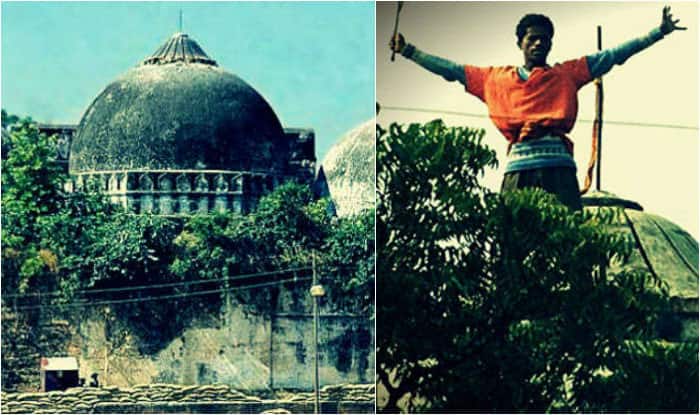
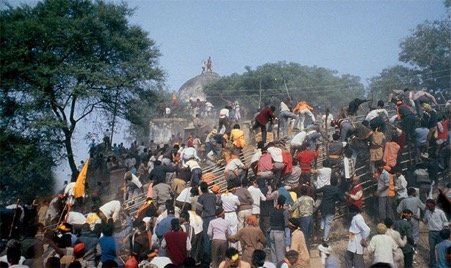
On the fateful day of 06.12.1992, the disputed structure namely, Temple Ramjanambhumi/ Babri Masjid was demolished and on 07.12.1992 a temporary structure was created where the worship and Pooja of Lord Ram/Ram Lala and other Deities continued by the Hindus. This event resulted in a substantial change in the situation and various amendment applications was filed which were allowed by the Court.
BJP’s White Paper on Ayodhya
Subsequently, the Bharatiya Janata Party released “White Paper on Ayodhya and the Rama Temple Movement” in response to the then Congress Government’s White paper on Ayodhya. The White Paper was a document of record. The aim behind bringing this document was to document the full canvas of the Ayodhya movement and to give a true account of its course and direction; of its thrust and implications; of its supporters and detractors; and of the political and social changes the movement has decreed.
The Ayodhya Act of 1993
The Central Government under the Prime Ministership of Shri PV Narasimha Rao in its attempt to get the matter settled amicably out of Court, sought to acquire certain land including the land over which the disputed structure existed and consequently enacted Acquisition of Certain Area of Ayodhya Act, 1993 (Act No. 33 of 1993) (“Ayodhya Act”). The Ayodhya Act was published in the Gazette dated 3rd April 1993 and it came into force w.e. f. 7th January 1993. The total area sought to be acquired was 67.703 acres of land. The Act prescribed for maintenance of the status quo that prevailed just before the acquisition. It meant that the Temple was to remain and the pooja was to be continued.
The President of India in the meantime, on 7th January 1993, also made a special reference to the Supreme Court under Article 143(1) of the Constitution of India on the following question:
“Whether a Hindu temple or any Hindu religious structure existed prior to the construction of the Ram Janma Bhumi–Babri Masjid (including the premises of the inner and outer courtyards of such structure) in the area on which the structure stood?”
Affidavit of the Central Government
The Special Presidential Reference was made to the Supreme Court of India on the question of whether there was a Hindu temple existing on the site where the disputed structure stood. The Government agreed to abide by the opinion of the Hon’ble Supreme Court with respect to the disputed property and determine the rights of the parties in the light of the Court’s opinion.
On 14th September 1994, the learned Solicitor General of India, Shri Dipankar P. Gupta made the following statement in a written affidavit on being asked the Honourable Court to further clarify the stand of the Central Government about the purpose of the Special Reference:
“If efforts at, a negotiated settlement as aforesaid do not succeed, Government is committed to enforcing a solution in the light of the Supreme Court’s opinion and consistent with it, Government’s action in this regard will be even-handed in respect of both the communities. If the question referred is answered in the affirmative, namely, that a Hindu temple/structure did exist prior to the construction of the demolished structure, Government action will be in support of the wishes of the Hindu community. If, on the other hand, the question is answered in the negative, namely, that no such Hindu temple/structure existed at the relevant time, then Government action will be in support of the wishes of the Muslim community.”
Ismail Faruqui (Dr) v. Union of India- The Case everyone talks about
The Vires of Ayodhya Act was assailed before the High Court Court as well as before the Apex Court. The Supreme Court got the petitions filed before High Court transferred, heard all the matters collectively along with the reference made under Article 143 (1) of the Constitution and decided vide its judgment dated 24.10.1994. The court held:
“49.….the interest claimed by the Muslims is only over the disputed site where the mosque stood before its demolition. The objection of the Hindus to this claim has to be adjudicated. The remaining entire property acquired under the Act is such over which no title is claimed by the Muslims. A large part thereof comprises of properties of Hindus of which the title is not even in dispute.”
As a result of the above discussion, our conclusions, to be read with the discussion, are as follows:
(1)(a) Sub-section (3) of Section 4 of the Act abates all pending suits and legal proceedings without providing for an alternative dispute-resolution mechanism for resolution of the dispute between the parties thereto. This is an extinction of the judicial remedy for resolution of the dispute amounting to the negation of rule of law. Sub-section (3) of Section 4 of the Act is, therefore, unconstitutional and invalid
(b) The remaining provisions of the Act do not suffer from any invalidity on the construction made thereof by us. Sub-section (3) of Section 4 of the Act is severable from the remaining Act. Accordingly, the challenge to the constitutional validity of the remaining Act, except for sub-section (3) of Section 4, is rejected.
(2) Irrespective of the status of a mosque under the Muslim Law applicable in the Islamic countries, the status of a mosque under the Mahomedan Law applicable in secular India is the same and equal to that of any other place of worship of any religion; and it does not enjoy any greater immunity from acquisition in exercise of the sovereign or prerogative power of the State, than that of the places of worship of the other religions.
(3) The pending suits and other proceedings relating to the disputed area within which the structure (including the premises of the inner and outer courtyards of such structure), commonly known as the Ram Janma Bhumi-Babri Masjid, stood, stand revived for adjudication of the dispute therein, together with the interim orders made, except to the extent the interim orders stand modified by the provisions of Section 7 of the Act.
(4) The vesting of the said disputed area in the Central Government by virtue of Section 3 of the Act is limited, as a statutory receiver, with the duty for its management and administration according to Section 7 requiring maintenance of status quo therein under sub-section (2) of Section 7 of the Act. The duty of the Central Government as the statutory receiver is to hand over the disputed area in accordance with Section 6 of the Act, in terms of the adjudication made in the suits for implementation of the final decision therein.
Hon’ble Supreme Court in para 86 passed the status quo order as on 7.1.1993 in following words:
“86. The best solution in the circumstances, on revival of suits is, therefore, to maintain status quo as on 7-1-1993 when the law came into force modifying the interim orders in the suits to that extent by curtailing the practice of worship by Hindus in the disputed area to the extent it stands reduced under the Act instead of conferring on them the larger right available under the court orders till intervention was made by legislation.”
In view of the judgment in M. Ismail Faruqui (Dr) v. Union of India, (1994) 6 SCC 360by a Constitution Bench of the Supreme Court, the High Court proceeded to consider the Suits on merits, but with one distinction, i.e., it had reduced the area of the dispute now to be considered in all these suits. The disputed area was now confined to the area within which the structure (including the premises of the inner and outer courtyards of such structure) existed. The land beyond the above was out of the scope of these suits having been validly acquired under Section 3 of the Ayodhya Act. The Supreme Court made a clear distinction between two categories of lands thus:
As described in the white paper, the small area of land over which Ram Janmbhomi-Babri Masjid stood, including the inner courtyard and outer courtyard of the structure before it was demolished on December 6, 1992, is the disputed property,
The undisputed property consists of a large extent of about 67 acres of in the locality, belonging to various persons, including 43 acres belonging to Rama Janmabhoomi Nyas.
As regards the disputed land, the Supreme Court held that the disputed land shall be with the Central government as a receiver and it shall be handed over to the party succeeding in the suits pending before the Allahabad High Court.
On 13th March 2002 Hon’ble Supreme Court in Writ Petition No.160/2002Mohd. Aslam Bhure Vs. Union of India, directed to maintain status quo with regard to the entire land, including the non-disputed acquired plots and passed following directions:
“In the meantime, We direct that on the 67.703 acres of land located in revenue plot Nos. 159 & 160 in village Kot Ramchandra which is vested in the Central Government, no religious activity of any kind by anyone either symbolic or actual including bhumi puja or Shila puja, shall be permitted or allowed to take place.
Furthermore, no part of the aforesaid land shall be handed over by the Government to anyone and the same shall be retained by the Government till the disposal of this writ petition nor shall any part of this land be permitted to be occupied or used for any religious purpose or in connection therewith.”
Sri Deoki Nandan Agrawal, plaintiff no. 3 (Suit-5), died on 08.04.2002 and thereafter vide order dated 25.4.2002 Dr Thakur Prasad Verma was appointed as next friend of plaintiff no. 1 (Ramlalla Virajman) and plaintiff no. 2 (Asthan Shri Ram Janmbhumi). Now Dr. T.P. Verma has also been replaced by Sri Triloki Nath Pandey vide Court’s order dated 18.3.2010.
On 5th March 2003, the High Court of Allahabad at Lucknow directed excavation work to be carried out by Archaeological Survey of India at the sight of the disputed structure. Archaeological Survey of India, under the leadership of Shri B.R. Mani, Team Leader, ASI Excavation Team, completed excavation work upon the order of the High Court and submitted a final report on 22.8.2003. Besides, ASI also submitted the record of excavation. The ASI report showed the presence of Circular Shrine, Makar Pranala, Lotus Motif, Pillar Bases with carvings of animals, etc. which indicated there existed a temple beneath the surface over which the disputed structure stood. In the words of ASI researchers, they discovered “distinctive features associated with the temples of north India“.
The Liberhan Commission, an enquiry commission constituted by the Government of India to investigate the destruction of the disputed structure in Ayodhya in 1992 was led by retired High Court Judge M. S. Liberhan who submitted its report to PM Manmohan Singh on 30th June 2009. The report held 68 people culpable, including top BJP leaders, L.K. Advani, Dr Murli Manohar Joshi, and former Prime Minister Atal Behari Vajpayee, and more critically, Kalyan Singh, former UP Chief Minister, in whose regime the disputed structure was demolished. However, the said report was never debated upon in the Parliament.
The High Court Order
On 30th September 2010, the Allahabad High Court bench at Lucknow pronounced its verdict on four title suits relating to the Ayodhya dispute. As per the order, the land under dispute was to be divided into three parts. One third went to Ram Lalla, one third to Sunni Wakf Board, and the remaining one third to Nirmohi Akhara. The Court said that the site of the Ramlala idol would go to the party representing Ram Lalla Virajman (the installed Infant Ram deity), Nirmohi Akhara to get Sita Rasoi and Ram Chabutara, and the Sunni Wakf Board to get the rest. The court also ruled that the status quo should be maintained for three months.
Details of Allahabad High Court Judgment
Final Order as per Justice Sudhir Agarwal:
It is declared that the area covered by the central dome of the three-domed structure, i.e., the disputed structure being the deity of Bhagwan Ram Janamsthan and place of birth of Lord Rama as per faith and belief of the Hindus, belong to plaintiffs (Suit-5) and shall not be obstructed or interfered in any manner by the defendants.
Certain areas within the inner courtyard belong to members of both the communities, i.e., Hindus (here plaintiffs, Suit-5) and Muslims since it was being used by both since decades and centuries. It is, however, made clear that for the purpose of the share of plaintiffs, Suit-5 under this direction the area which is covered by (i) above shall also be included.
The area covered by the structures, namely, Ram Chabutra, Sita Rasoi and Bhandar in the outer courtyard is declared in the share of Nirmohi Akhara (defendant no. 3) and they shall be entitled to possession thereof in the absence of any person with a better title.
The open area within the outer courtyard (except that covered by (iii) above) shall be shared by Nirmohi Akhara (defendant no. 3) and plaintiffs (Suit-5) since it has been generally used by the Hindu people for worship at both places.
It is however made clear that the share of Muslim parties shall not be less than one third (1/3) of the total area of the premises and if necessary it may be given some area of the outer courtyard. It is also made clear that while making partition by metes and bounds if some minor adjustments are to be made with respect to the share of different parties, the affected party may be compensated by allotting the requisite land from the area which is under acquisition of the Government of India.
The land which is available with the Government of India acquired under Ayodhya Act 1993 for providing it to the parties who are successful in the suit for better enjoyment of the property shall be made available to the above concerned parties in such manner so that all the three parties may utilise the area to which they are entitled to, by having separate entry for egress and ingress of the people without disturbing each other’s rights. For this purpose, the concerned parties may approach the Government of India who shall act in accordance with the above directions and also as contained in the judgement of Apex Court in Dr Ismail Farooqi case.
Final Order as per Justice S. U. Khan
“Accordingly, all the three sets of parties, i.e. Muslims, Hindus and Nirmohi Akhara are declared joint title holders of the property/ premises in dispute.
However, it is further declared that the portion below the central dome where at present the idol is kept in the makeshift temple will be allotted to Hindus in the final decree.
It is further directed that Nirmohi Akhara will be allotted share including that part which is shown by the words Ram Chabutra and Sita Rasoi in the said map.
It is further clarified that even though all the three parties are declared to have one third share each, however if while allotting exact portions some minor adjustment in the share is to be made then the same will be made and the adversely affected party may be compensated by allotting some portion of the adjoining land which has been acquired by the Central Government.
Final Order as per Justice D. V. Sharma
SUIT-5 (Plaintiff- Ram Lalla Virajman)
Plaintiffs’ suit is decreed but with easy costs. It is hereby declared that the entire premises of Sri Ram Janm Bhumi at Ayodhya as described and delineated in annexure nos. 1 and 2 of the plaint belong to the plaintiff nos. 1 and 2, the deities. The defendants are permanently restrained from interfering with, or raising any objection to, or placing any obstruction in the construction of the temple at Ram Janm Bhumi Ayodhya at the site, referred to in the plaint.
SUIT-4 (Plaintiff- Sunni Central Wakf Board)
Plaintiffs are not entitled for the relief claimed and the suit is liable to be dismissed, but defendants have failed to point out the circumstances under which they are entitled to special costs.
SUIT-3 (Plaintiff- Nirmohi Akhara)
The plaintiffs are not entitled to the relief claimed but on behalf of the defendants, no case for special costs is made out. The suit is liable to be dismissed with easy cost.
SUIT-1 (Plaintiff- Gopal Singh Visharad)
In view of my findings referred to above, the plaintiff is not entitled to the relief claimed and defendants are also not entitled to special costs as initially, the plaintiff, who filed the suit is no more.
Allahabad High Court Order Appealed in Supreme Court and Stayed
Upon challenge of the High Court order by all parties in the Supreme Court, the court stayed the Allahabad High Court ruling on 9th May 2011. The Supreme Court admitted a batch of petitions filed by all parties. A Division Bench of Justices Aftam Alam and R.M. Lodha term the High Court Judgment as “strange”.Justice RM Lodha observed “a new dimension has been given by the High Court as the decree of partition was not sought by the parties. It was not prayed for by anyone. It has to be stayed. It’s a strange order. How can a decree for partition be passed when none of the parties had prayed for it?” The relevant portion of the order passed by the Supreme Court on 9th May 2011 is reproduced below:
“…During the pendency of the appeals, the parties shall maintain the status quo in regard to suit land, as directed by an earlier judgment and order passed by this Court in ‘Dr. M. Ismail Faruqui & Ors. vs. Union of India & Ors.’ (1994) 6 SCC 360 vide. paragraphs 86, 87.
As regards the land adjacent to the suit land which was the subject matter of acquisition by the Central Government, the parties shall maintain status quo, as directed by the order of this Court in ‘Mohd. Aslam Alias Bhure vs. Union of India and Others’, (2003) 4 SCC.”
On 25th February, 2013, the Supreme Court bench comprising of Justice Aftab Alam and Justice Ranjana Prakash Desai, on applications filed by the Authorized Person/Commissioner, Faizabad Division, Faizabad, Uttar Pradesh, stating that the tarpaulin, polythene sheet and the ropes, fastening the cover over the makeshift structure have become old and weak and need to be replaced at the earliest, directed that the old and worn out tarpaulin, polythene sheet and ropes over the makeshift structure shall be replaced by new ones of the same size and quality and exactly in the same manner as they were previously placed so that the status quo doesn’t change.
It was also ordered that the process of replacement of the old cover by the new one will be undertaken and completed under the supervision of the two observers who have been visiting the site. Applications were filed by the Registrar General, Allahabad High Court, who sought to implead in the pending appeals in order to seek clarification as to whether the observers appointed by the High Court during the pendency of the trial would still be required to visit the disputed site and the disputed land every fortnight on Sunday and would continue to submit the reports as before. To this, the Court stated, “As regards the two observers who have been visiting the disputed site since their appointment by the orders of the High Court, dated March 26, 2003, and April 26, 2010, we direct that the two observers, namely, Mr S.K. Singh and Mr T.M. Khan, shall continue to visit the site and perform the duties assigned to them by the High Court.
They would additionally see that the direction of this Court as contained in the order dated May 9, 2011, to maintain the status quo at the site is duly observed by everyone. They would continue to keep a vigil over the articles brought out in course of the excavation of the site and shall also continue to submit their fortnightly reports to this Court.”
After a passage on 6 years, On March 21, 2017, the then Chief Justice of India JS Khehar asked the parties to settle the matter out of the court through negotiations. On August 8, the Uttar Pradesh Shia Central Waqf Board told the Supreme Court that it had a legal claim on the disputed land saying that the builder of the mosque, i.e. Mir Baqi, was a Shia. The Shia board, after having removed as a party in 1946 by the Faizabad Court order, also favoured the construction of the Ram Mandir. On August 11, 2017, the Supreme Court scheduled the final hearing of the title suit on December 5. Subsequent to which, on December 5, a special bench of the Supreme Court comprising Chief Justice of India Dipak Misra and Justices Ashok Bhushan and Abdul Nazeer heard the case.
On 14th March, 2018, Dr Rajiv Dhawan, Sr. Advocate, appearing for the Muslim parties argued that the matter deserves to be referred to a larger Bench in view of the decision rendered by the Constitution Bench in Dr M. Ismail Faruqui & Ors. vs. Union of India & Ors., (1994) 6 SCC 360.
On the said arguments, Court directed Dr Dhawan, to address on the aspect whether the judgment in Dr M. Ismail Faruqui requires reconsideration before proceeding on the merits of the appeal. By 20th July 2018, all the parties in the case concluded their respective arguments on the question of whether Judgment of Ismail Faruqui requires reconsideration or not.
Finally, on 27th September 2018, Hon’ble Mr Justice Ashok Bhushan pronounced the judgment on behalf of Hon’ble Chief Justice and himself and held that the judgment in case of Dr M. Ismail Faruqi and Ors. vs. Union of India and Ors. does not require reconsideration. Court held that
“92. …Whatever observations have been made in the judgment of Ismail Faruqui are not to govern the decision in suits and the suits were to be decided on the basis of the evidence on record. The questionable observations made in Ismail Faruqui’s case have to be treated as only observations and not for the purpose of deciding suits and these appeals, they are not to be treated as governing factor or relevant. The said observations are to be understood solely as an observation made in the context of land acquisition and nothing more.”
The Court further held that:
“95…The question as to whether in the impugned judgment, reliance on Ismail Faruqui’s case affects the ultimate decision of the High Court and needs any clarification or correction is a task, which we have to undertake with the assistance of learned counsel for the parties in the present appeals. We, thus, conclude that reliance on the judgment of Ismail Faruqui by the High Court in the impugned judgment and reliance by learned counsel for the appellants and taking grounds in these appeals on the strength of judgment of Ismail Faruqui’s case are all questions, on the merits of the appeals, which need to be addressed in these appeals. Thus, the above submission does not help the appellant in contending that the judgment of Ismail Faruqui’s case needs reconsideration no case has been made out to refer to the Constitution Bench.”
The majority judgment also dismissed the arguments that the matter should be referred to larger Bench looking to the importance of the matter.
Hon’ble Mr Justice S. Abdul Nazeer disagreeing with the view expressed by Hon’ble the Chief Justice and Hon’ble Mr Justice Ashok Bhushan, passed a separate judgment and referred the issues to a larger Bench.
Mediation to Resolve the Dispute
After the retirement of Chief Justice Dipak Misra, Hon’ble Justice Ranjan Gogoi was sworn in as the Chief Justice of India on 3rd October 2018. On 26th February 2019, the five-judge bench led by Chief Justice Ranjan Gogoi heard the matter and advocated an amicable resolution to the Ram Mandir case through mediation. The Supreme Court in its observation favoured peaceful dialogue to solve the contentious issue. Justice SA Bobde (the Chief Justice designate) proposed the suggestion while hearing the case. “We are considering the possibility of healing relations between the two communities. We, as a court, can only decide the property issue.” Justice SA Bobde said. Thereafter, the five-judge bench appointed a panel of 3 mediators in the title suit with Retired Justice Kalifullah chairing the court-appointed and monitored mediation process. The other two members were spiritual leader Sri Sri Ravi Shankar and Senior Advocate Sriram Panchu.
Senior Advocate CS Vaidyanathan, appearing for deity ‘Ram Lalla Virajman’, said he did not want to take part in the mediation any further and would like a judicial decision from the bench as there was no hope for a final settlement since in the past such mediation attempts had failed. The mediation process was going on for about four months, but it did not result in any final settlement and it was yet to decide the matter pending before it.
6th August 2019 – 16th October 2019 (40-day hearing by the Supreme Court)
Seeing that the mediation process was not yielding any substantial result, a 5-judge bench, headed by Chief Justice Ranjan Gogoi, of the Supreme Court of India started final hearing on the case. On 16th October 2019, the bench reserved the final judgment. In these 40 days of marathon hearing, the court heard all the parties on almost all the legal issues concerning the Ram Janmbhoomi case. Amongst those who argued for Ramlalla Virajman and Asthan Shri Ram Janmbhoomi were Senior Advocates K. Pasasaran, C S Vaidyanathan, P.S. Narasimha, etc. assisted by at least half a dozen Advocate on Records and least 30 Junior Counsels. Senior Advocate Ranjit Kumar appeared for another Hindu party in Suit No. 1 seeking his right to pray. Amongst those who argued for the Muslim side were Senior Advocates Rajeev Dhawan, Meenakshi Arora, Shekhar Naphade, Zafaryab Jilani and Advocate Nizamuddin Pasha assisted by more than a dozen Advocate on Records and Junior Counsels. The Nirmohi Akhara was represented by Senior Advocate Sushil Jain. The bench granted three days to contesting parties to file written notes on ‘moulding of relief’. Major points argued by both Hindu and Muslim parties were:
Limitation– Whether the suits were barred by limitation?
Res Judicata- Did Res Judicata apply on the suits?
Faith– Whether Hindus believed that Lord Rama was born at a particular spot? Is their faith validly held? Does that make the place central to Hindu faith and hence sacred?
Adverse Possession-Was the property adversely possessed by Muslims which gave them the right to claim ownership of the property? Did the Muslims enjoy continuous and uninterrupted use of the property over which the disputed structure stood?
Juristic Person- Can a place (a piece of land) be a juristic person and hence become a deity in itself in terms of law to have a claim over the property?
The basic submissions of the Hindu side (Ram Lalla Virajman) were:
Ram Janmbhoomi and Ram Lalla Virajman are juristic persons. By virtue of being juristic persons, they have a claim over the property.
The faith of Hindus that the particular place is the birthplace of Lord Ram is unshakable and has been validly held for centuries. Devotees have been performing pooja and pradakshina/parikrama.
The place/temple has a special significance for the Hindus as a number of religious scriptures like the Skandpurana claim that merely by having a darshan of the Ram Janmbhoomi one attains moksha.
Muslims never had a continued and undisputed claim over the property in order to place their claim under the law of adverse possession. The mosque (disputed structure) was an abandoned property by them.
Nirmohi Akhara cannot be the owner of the property as their claim is limited to Shaebaitey Rights.
The destruction of Ram Janmbhoomi temple in 1528 by Babur and his general, and construction of Babri Mosque was a historical wrong. The case in the Supreme Court is not merely for the construction of a temple, as it existed earlier, but also to correct that historical wrong.
Role of Vishva Hindu Parishad (VHP) in Pursuing the Case in Courts
The Vishva Hindu Parishad has been aggressively involved in the Ayodhya dispute over the Ram Janmabhoomi and has pursued the court cases since the beginning. Apart from its prominent role in the Ram Janmbhoomi Movement, the VHP has been instrumental in pursuing the Ram Janmbhoomi case in courts. Shri Champat Rai, Vice President, Vishwa Hindu Parishad was present in every court hearing since the suit on behalf of Ram Lala Virajmaan was instituted in 1989. Even during the 40-day marathon hearing of the case, Shri Champat Rai and other leaders of the Vishwa Hindu Parishad were present every single day and were co-ordinating with the lawyers on the Hindu side and overseeing the entire proceeding. The Vishwa Hindu Parishad was instrumental in arranging the required documents, maps, historical records, land records, books, scriptures, etc which were used during the course of arguments in the High Court as well as Supreme Court.
As we await the final judgment in the case with bated breath, which is expected to be delivered anytime soon, I remember those who lost their lives fighting for this cause in the last 490 years. Their contribution to this civilizational battle has been monumental.
(The author, Shubhendu Anand, is an advocate practising in the Supreme Court of India. He was one of the members of the team that represented Ram Lalla Virajman in the Supreme Court of India. The author would like to thank Mr Vikramjit Banerjee, Addl. Solicitor General of India for his guidance and insights. The contents of this article are a part of the court records and submissions of the parties.)