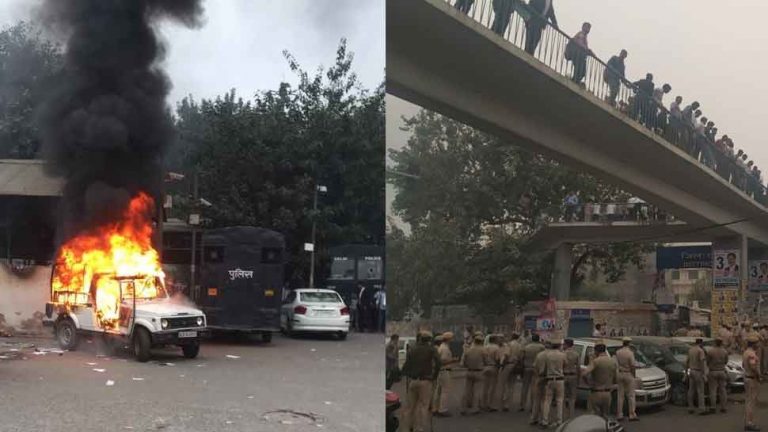
Delhi lawyers got into a verbal spat with ANI news agency journalist Aiman at St Stephen’s hospital. The lawyers who were injured in the scuffle yesterday after some lawyers beat up Delhi Police personnel at Tis Hazari Court were getting treatment there.
#WATCH Delhi: Verbal spat between ANI journalist Aiman & lawyers at St Stephen’s Hospital where lawyers who were injured in yesterday’s clash between police & lawyers at Tis Hazari Court, are admitted. pic.twitter.com/ltacoFNZbX
Some lawyers even pushed and shoved a woman journalist when she tried to ask questions to Delhi Chief Minister Arvind Kejriwal who had gone to meet the injured lawyers there. Delhi Chief Minister Arvind Kejriwal met the lawyers at the hospital who were injured and said that the Delhi Government will bear the expenses of their treatment.
Earlier today, the Delhi High Court directed Delhi Police Commissioner to transfer Special Commissioner Sanjay Singh and Additional DCP Harinder Singh, in connection with yesterday’s clash between. The Court also directed Delhi Police Commissioner to record statements of the injured advocates, and instructed to lodge an FIR immediately. A judicial inquiry has also been ordered which should be completed within six weeks under retired judge of Delhi High Court SP Garg. He will be assisted by Director CBI, Director Intelligence Bureau and Director Vigilance or any superior rank officer appointed by them. The Police officials involved are also directed to be suspended and a lump sump ex-gratia amount of Rs 50,000 to be to Advocate Vijay Verma, and Rs 15,000 and Rs 10,000 to other two injured advocates.
According to the reports, the incident began around 3 pm on Saturday when a policeman of the Delhi Police got into a fight with a lawyer over parking his car outside the jail lockup, a space reserved for jail vans. However, the argument turned violent when a group of lawyers who were campaigning for the bar council elections got into a heated exchange with the police.
The cops allegedly dragged a few of them and took them to the lockup. While this was happening, some lawyers reportedly set a few bikes parked outside the lockup on fire. Lawyers even attacked journalists, covering the incident.
Later, the police lathi-charged the lawyers and reportedly damaged their cars and chambers on the court premises. The Delhi Police claimed 20 police officers and 12 lawyers were injured in the clash.
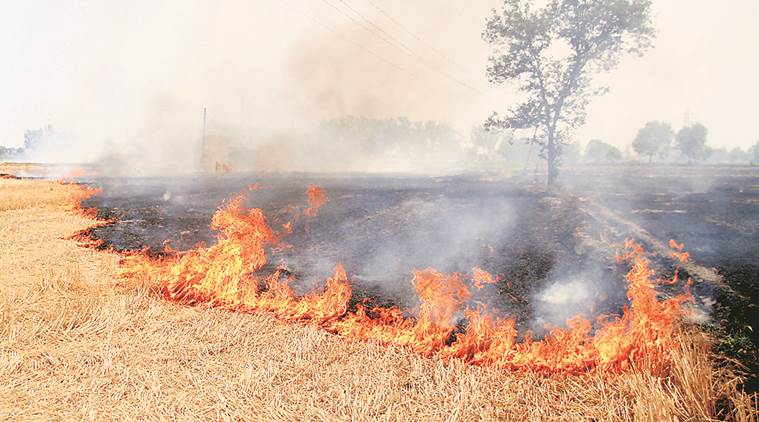
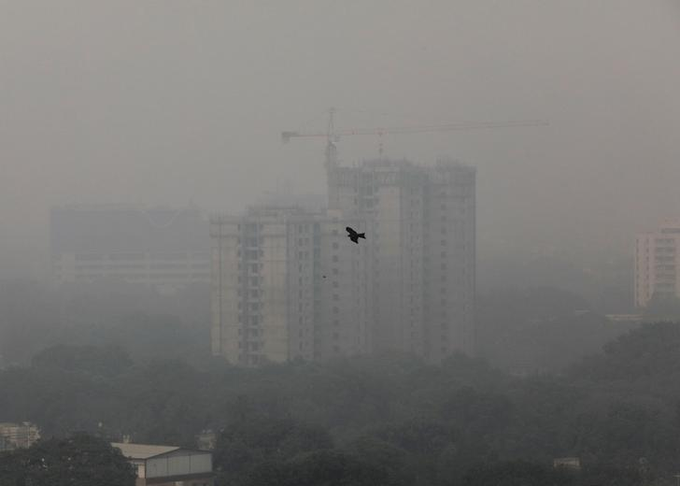
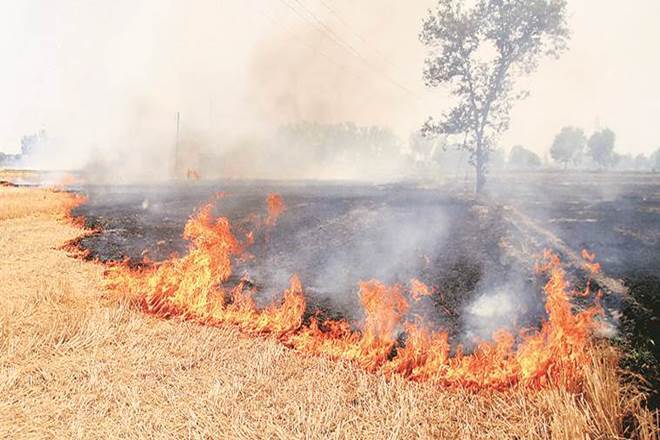
Delhi is facing a very high-level pollution, with visibility so low that several flights had to be cancelled or diverted. The Air Quality Index was recorded above 900 in some places, when an AQI above 150 is considered unhealthy. And for a change, Diwali crackers are not being responsible for this dangerous pollution. Almost everyone has agreed that stubble burning by farmers in the nearby states, mainly in Punjab and Haryana, is the primary reason.
But this has raised a question in the mind of many people, why suddenly this problem of stubble burning aggravated so much to cause such huge pollution. Farmers must have been burning crop residue for decades, why this problem didn’t occur earlier. Moreover, crop farming takes place in the entire country, but why only Delhi region faces this problem.
There are several factors which have contributed to the increase in air pollution due to stubble burning, contributed by several government policies relating to farming. The green revolution, started to end the food insecurity in the country, encouraged food grain farming, which means large areas of the country are used for farming of rice and wheat. Now India produces so much these grains that a lot of them lie rotting in FCI warehouses.
Apart from water from irrigation, farmers also use groundwater for the cultivation of water-intensive crops like paddy. Earlier, farmers in Punjab in Haryana used to plant paddy in April-May. But monsoon rains don’t start at this time, so farmers used to use groundwater. As power for farming has been made free, farmers used run the pumpsets drawing water from below the ground continuously.
This had led to the depletion of water table. To mitigate this problem, the states of Punjab and Haryana passed identical laws in 2009 delaying the sowing of rice crop. The Haryana Preservation of Subsoil Water Act, 2009 and The Punjab Preservation of Sub-soil Water Act-2009 determines the date when farmers can plant paddy. According to the acts, farmers are not allowed to sow nursery of paddy before 15th May, and they can’t transplant the paddy before 15th June. This ensures that the crop receives adequate rain and does not need groundwater.
Before the acts came into effect, the paddy planted in April-May was harvested in September-October, a time when wind keeps moving in and around Delhi. So even if the stubble was burnt earlier, it was flown away by the wind and didn’t create a smog. After the government delayed planting, its harvesting was pushed to October-November, when the wind becomes stationary. This means when farmers burn the husk, the smoke and ash remain suspended on air, creating smog.
The postponing the paddy season started another problem, it leaves little room for farmers to sow the rabi crop, which is mainly wheat in Punjab and Haryana. And as wheat can’t be planted on the ground with standing paddy stubbles, burning them is only the cheap option to remove them quickly. Earlier farmers had 1-2 months of gap between the top crops, so many of them had removed them instead of burning them. Removing the stubble and keeping them in the field improves the fertility of the soil, while burning them degrades the soil. But farmers still burn as they have no other option to start planting wheat on time.
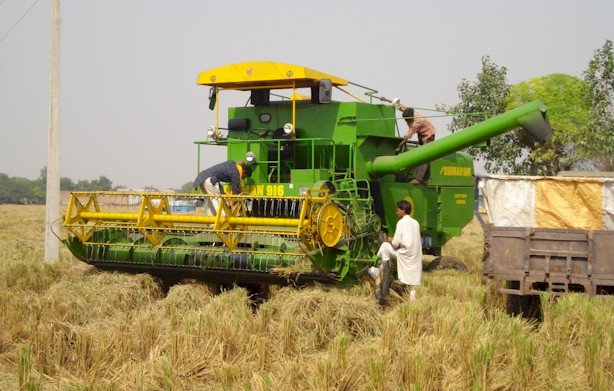
Another reason is the increased mechanisation of farming in Punjab and Haryana compared with other regions. The combines, machines used to harvest the crop and separate the grains on the spot, only reap the grains, leaving the stalks of stubble standing in the field. When crop is harvested manually, the crop is cut much below, and it is taken out of the field for processing, therefore the not much stubble remains on the field.
A Combine
Moreover, husk is fodder for cattle, so farmers harvest and stock it in other states, particularly in North-Eastern and Eastern states. Farmers harvest crop manually in these states, and as these states are hit by flood during monsoon, the harvested husk provides acts as feed for their livestock when the grazing fields are flooded.
These are the main reasons why the stubble burning has turned into such a grave problem in recent years, and why it is mostly localised to Northern India.
Punjab has made the use of Super Straw Management System (SMS) with the harvesters mandatory to prevent stubble burning. These machines, which can be attached with existing combines, cuts the stubble and spread it uniformly in the field, eliminating the need for burning them. But the implementation of this order has not been strict, and all farmers can’t afford them as they are costly. Moreover, there are not enough such machines in use at present to cover the entire area before the planting of wheat. Therefore, farmers burn the stubble despite it been made illegal as per law and imposition of fines for violating the law.
Other than the SMS machine, there are several other options available to deal with stubble without burning them. Some of them are, Happy seeder (which allows planting wheat on a field with standing stubble), Rotavator (used for land preparation and incorporation of crop stubble in the soil), Zero till seed drill (used for land preparations directly sowing of seeds in the previous crop stubble), Baler (used for collection of straw and making bales of the paddy stubble), Paddy Straw Chopper (cutting of paddy stubble for easily mixing with the soil), Reaper Binder (used for harvesting paddy stubble and making into bundles) etc. But these machines are costly, and farmers are not willing to spend money on them when they can easily get rid of the stubble by burning them. Government is providing subsidy for such crop residue management machinery, but more need to be done to encourage farmers to use them.
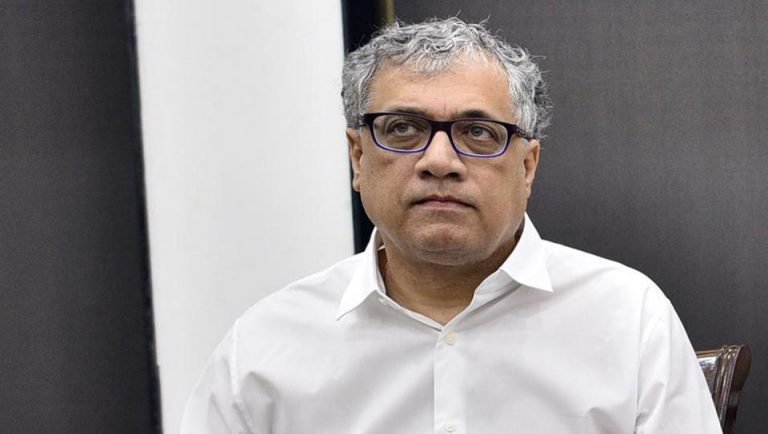
Trinamool Congress leader and MP Derek O’Brien posted two graphs on Twitter on two days to prove that West Bengal was spending more on healthcare compared to the central government, and both graphs turned out to be wrong and misleading. In an effort to show that Mamata Banerjee led TMC government in West Bengal was ahead of the union government in terms of spending on healthcare, he posted a graph on 2nd November with the caption ‘India story versus Bengal story”, with the #healthcare hashtag.
The graph showed that while India had spent 1.28% on healthcare in 2017-18, Bengal had spent 4.01% in 2018-19. But surprisingly, not only the former quizmaster compared figures from different financial years, the numbers he was comparing were different too. For national spend on healthcare, he took the percentage in GDP, while for Bengal, he used the percentage of spend in total budget of the state.
— Derek O’Brien | ডেরেক ও’ব্রায়েন (@derekobrienmp) November 2, 2019
Budget and GDP are different numbers, and if one has to compare the percentage spend on healthcare between two governments, the percentage of the same data has to be used. To use GDP for one and budget for the other is a completely wrong comparison, and it does not provide any meaningful insight.
After several people pointed out to O’Brien that he was comparing two different figures, today he posted another graph, this time by comparing the percentage of spend in healthcare in the budget for the year 2019-20. It shows that in the union budget for healthcare in 2018-19 was 2.31% of the today budget, while for Bengal the figure was 4.01%.
Thank you for suggesting I should compare like-with-like. So here it is. Spend on #healthcare The India Story versus The Bengal Story #1 pic.twitter.com/52rTIniamf
— Derek O’Brien | ডেরেক ও’ব্রায়েন (@derekobrienmp) November 3, 2019
Although the second graph has no statistical anomaly like comparing two different data, it is still misleading and not correct to say that Bengal is spending more on healthcare than the central government.
This is because the union budget has several heads of expenditure which the states do not have. For example, defence is one of the biggest items of the union budget, which the states don’t have. Union budget also has expenditure under the heads of transfer to states, and construction of last scale infrastructures like national highways and important bridges. All these items occupy a significant portion of the union budget, which means that the shares of other items which are common with states become lower. But this does not mean that the actual spend on those areas are lower.
Another important thing to note is that healthcare is included in the state list in the seventh schedule of the Constitution of India. Although the union government spends money on healthcare, it is not included in the concurrent list. Which means the healthcare is the primary responsibility of the states. Therefore, to compare the percentage spend on healthcare by the centre with any state is meaningless.
In an interview with ABP News, Pankaj Shankar, a close aide of the Nehru-Gandhi dynasty has blamed the first family of the Congress party for ruining the party. He said that Sonia Gandhi has ruined Congress because of her ‘putra moh’ (love for her son) and Rahul Gandhi even after so many years in politics is still in his ‘internship’ phase.
[youtube https://www.youtube.com/watch?v=UxGpvrXNLmU]
Pankaj Shankar said that over the years, numerous experiments have been conducted since Rahul Gandhi entered politics and after Youth Congress, NSUI and Amethi, the only thing that is left experimenting with is the Congress party. He said that if these experiments continue, even Congress will be destroyed.
The filmmaker and cartoonist is currently working with Priyanka Gandhi Vadra. In a tweet on the 31st of October, Indira Gandhi’s death anniversary, he slammed Rahul Gandhi for failing to produce any movie on Indira Gandhi while he claimed that Narendra Modi has already succeeded in making several about him. He said that Rahul Gandhi had failed to remind the people of this country about Indira Gandhi’s legacy. He reiterated the same points during the interview.
Pankaj Shankar also slammed Rahul Gandhi for the whole resignation drama that ensued when he refused to continue as the President of the Congress party. He said that the uncertainty that now looms over the future of the Congress party’s post of president affects the ordinary party worker.
“There was a time when there used to be one Murthi of Bajrang Bali in every village and one Congress worker. Now we have a situation where it’s difficult to find even a Congress flag. Whose fault is it? It’s not the worker’s fault. It is the leadership that has slowly but surely ruined the party. And who headed the leadership? It was in his (Rahul Gandhi’s) hands,” said Pankaj Shankar on the decline of Congress party. “He has made himself a coterie, it has its own thinking and he wants to do whatever they say. He doesn’t listen to anyone else,” he added. He also said that soon judgment in the Ram Janambhoomi case will be delivered and they have ‘no line to speak on the matter’.
Most intriguingly, Pankaj Shankar also vouched for Priyanka Gandhi to become the next president of the party. He claimed that she had introduced Rahul Gandhi to the world of politics leading him by his fingers. He also claimed that there was significant fear among the opposition regarding Priyanka Gandhi. Pankaj Shankar said that the Opposition parties were scared of her entry into politics. “What are the reasons that she is being stopped?” he asked. He continued, “Will Rahul Gandhi decide the fate of the party? The workers who toil for the party, do they not have any stake in the matter?”
Considering the fact that Priyanka Gandhi’s political strength begins and ends with her facial similarities to Indira Gandhi, her grandmother, and that her leadership in Uttar Pradesh during the General Election 2019 could not help the party in any manner whatsoever, Pankaj Sharma’s comments do reek of political partisanship.
Most damningly, Pankaj Shankar insinuated that Rahul Gandhi was preventing Priyanka Gandhi from becoming the president of the party. In response to a question of whether Rahul Gandhi was responsible for Priyanka Gandhi not becoming the president of the party, he asked, “Who else do you think is stopping her?” Upon further questioning, he said, “Who is stopping whom, that is an internal matter but the fact is she is where she is. And she is here at this point where the Congress party’s situation is deteriorating day by day. This is the truth. So who is stopping her? The worker isn’t that powerful, so who is stopping her?”
“How long will Rahul Gandhi continue with his experiments? You have given him every opportunity. All these years, opportunities are all that he has received,” Pankaj Shankar continued with his attack on the scion of the Nehru-Gandhi dynasty. He also revealed that a web series is on the works on how the current leadership of the Congress party under Rahul Gandhi has misused the goodwill that the Nehru-Gandhi dynasty has enjoyed over the years. The script has ‘almost’ been finalized and shooting is expected to begin within the next ten days.
Pankaj Shankar claimed that the blame for all of this lies at the feet of Sonia Gandhi. He said that she was the one who made the final call. And the final call was always ‘give Rahul more opportunities’. He also said that the leadership of the Congress party has failed to communicate effectively with the country at large.
The close aide of the Nehru-Gandhi dynasty also said his statements were not motivated by any personal factors. He reiterated that he still believes that the ‘rightwing’ is a great threat to the country. Pankaj Shankar also asserted that people in Rahul Gandhi’s ‘coterie’ are not ‘grounded’ and have no connection with ground realities. “Hawa-Hawai baatein kartey hain. This country runs through the villages. It is necessary to understand the sentiments of the villages and they have not yet understood any of it,” he said.
A fight started over the issue of parking at Tis Hazari court flared into a battle between lawyers and policemen on Saturday afternoon, with lawyers reportedly taking law into their own hands and beating up policemen. In response, the policemen also unleashed violence against the lawyers injuring two of them.
According to the reports, the lawyers went on the rampage at the court premises and attacked the policeman by entering the police station after a fight broke out between lawyers and policemen near the premises of Tis Hazari court.
Reportedly, the attack on policemen by the lawyers is being said to be the spark for the clashes that took between two groups on Saturday. In reaction to the vandalism by lawyers, a group of policemen dragged and hit a lone lawyer triggering further violence.
This CCTV shows this group of policemen dragging and hitting a lone lawyer. Will not hesitate in saying that they behaved like #GoonsInKhaki as well. Shameful. pic.twitter.com/kp2MAuzFA9
According to the reports, the incident began around 3 pm on Saturday when a policeman of the Delhi Police got into a fight with a lawyer over parking his car outside the jail lockup, a space reserved for jail vans. However, the argument turned violent when a group of lawyers who were campaigning for the bar council elections got into a heated exchange with the police.
The cops allegedly dragged a few of them and took them to the lockup. While this was happening, some lawyers reportedly set a few bikes parked outside the lockup on fire. Lawyers even attacked journalists, covering the incident.
Later, the police lathi-charged the lawyers and reportedly damaged their cars and chambers on the court premises. The Delhi Police claimed 20 police officers and 12 lawyers were injured in the clash.
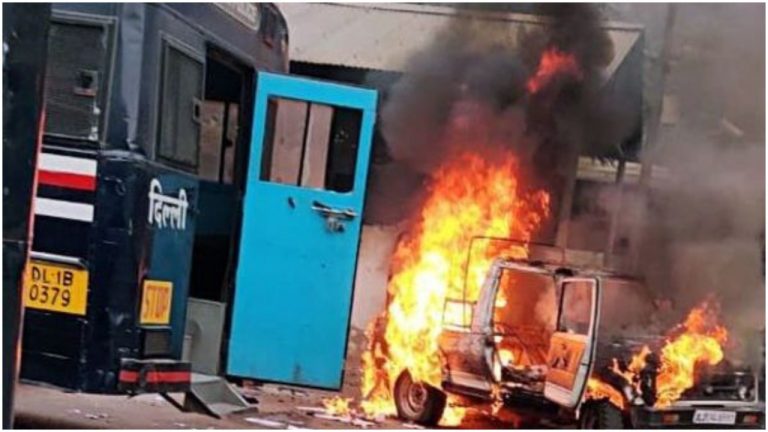
During the clash, an advocate named Vijay Verma was allegedly shot, leading to lawyers setting up fire on police vans. The lawyer was admitted to St. Stephen’s hospital and is under observation.
Additional DCP (north) Harender Singh said that a team of police reached the spot to control the situation but they got into a scuffle. The police allege that a group of about 150-200 lawyers tried to break down the gates of the lockup, at which point a cop fired at Vijay Verma, one of the protesting lawyers. The bullet hit him on his right chest and he collapsed on the spot. Another lawyer identified as Ravi also sustained bullet injuries on his right hand.
The Delhi-NCR region is suffering from an extremely high level of pollution for the past few days. While politicians have been busy playing politics over the issue, the situation has not gotten any better. This morning, major pollutants PM 2.5 and PM 10 levels were at 486 and 459 respectively, both in the ‘severe’ category, in Sector-62 of Noida, according to the National Air Quality Index (NAQI) data. Pollutant levels in Sector-125, Sector-1 and Sector-116 were also in the ‘severe’ category.
Noida: Major pollutants PM 2.5 at 486 and PM 10 at 459 both in ‘severe’ category in Sector-62, according to the National Air Quality Index (NAQI) data. Sector-125, Sector-1 and Sector-116 also in ‘severe’ category. pic.twitter.com/6tOPyjarMP
In Noida, authorities have decreed that schools remain shut till the 5th of November. The order is applicable to all public and private schools till class 12. Public health emergency has been declared in Delhi as well and schools are shut too.
The high levels of pollution have also affected flights at the Delhi Airport. The authorities announced the matter on social media and requested passengers to contact the airline concerned for information about their flights.
Update issued at 1130 hours: Due to low visibility, flight operations at Delhi Airport are affected. All CAT-II compliant pilots are able to operate. Passengers are requested to contact the airline concerned for updated flight information. Any inconvenience caused is regretted.
In Delhi, as of this morning, the Air Quality Index (AQI) reading at Bawana was at 492, ITO crossing was at 487 and Ashok Vihar was at 482, all in ‘severe’ category. In Ghaziabad, Vasundhara, it was 486 and at Indirapuram, it was at 482.
The stats provided by SkymetWeather, which provides updates on weather, represent the horrific levels of pollution that people in Delhi are being subjected to. At some places, the AQi is over 900. If 482 is considered severe, one can understand what 900 must feel like.
People in Delhi are sharing their ordeal over the past few days on social media. The air is thick with smog and the city is suffering from extremely poor visibility. The visuals coming in are extremely distressing, to put it mildly.
Did you know about these Magical Buildings in Delhi?
There is also considerable anger among people regarding how governments are tackling the matter.
The Union Govt, the State Govts of Delhi, Punjab, Haryana and UP are least bothered of tackling the pollution. The entire political leadership and all the bureaucracy sits in office with the best of air purifiers installed.
If fasting can end air pollution in Delhi, why take the trouble to be in the Government? Resign and expose your incapability to end this man-made disaster.
Meanwhile, there’s a cricket match slated to occur later today between India and Bangladesh at the national capital. While many concerns have been raised on the matter and demands were made to shift the venue, the authorities have decided to continue with the match as scheduled.
Uttar Pradesh Minister Sunil Bharala today urged people not to criticise those who are burning stubble. He said that stubble burning is a tradition and instead of criticising, the government should hold ‘Yagna’ and please Lord Indra.
#WATCH Uttar Pradesh minister Sunil Bharala: Farmers have always practiced stubble burning, it’s a natural system. Repeated criticism of it is unfortunate. Govts should hold ‘Yagya’ to please Lord Indra (God of rain), as done traditionally. He (Lord Indra) will set things right. pic.twitter.com/EcImGAbVrl
“Parali (stubble) is an attack on farmers. Those born from farmer families do not understand that when a farmer harvests the crop, waste crop is created. Whether it is urad dal or moong daal, it will have wastage. It has always been burnt. If it is burnt, it will create some smoke. That does not increase pollution. That is a natural system of farmers. This attack on farmers is unfortunate. The government should hold a ‘Yagna’ and pray to Lord Indra so it rains and things will be taken care of,” he said.
A message has gone viral on WhatsApp saying that terrorists are spreading AIDS by injecting people, which is fake according to UP police. The Twitter handle of UP Police fact check said that they completely deny this report, and requested people not to share this misleading information.
UP Police was responding to a query by a local news outlet from Pratapgarh asking to verify the authenticity of the message which has gone viral on WhatsApp. The message in Hindi said, “if some boys and girls come to your house and say that they are medical students and they offer to do sugar and BP and any other blood test free, then please call the police immediately because they are members of terrorist organisation and their injections have AIDS virus which they will inject into your body in the name of collecting blood. Do not let any unknown person enter your house. Issued in public interest.” The message also asks the recipients to share it as much as possible.
UP Police has confirmed that this is fake news which is being spread by certain WhatsApp groups. They said that they completely dent this allegation, and have asked people not to share this misleading post.
This is not the first time this message is circulating on social media. In 2017 to this message had appeared saying that it was issued by UP Police. But the UP police had denied issued any such advisory.
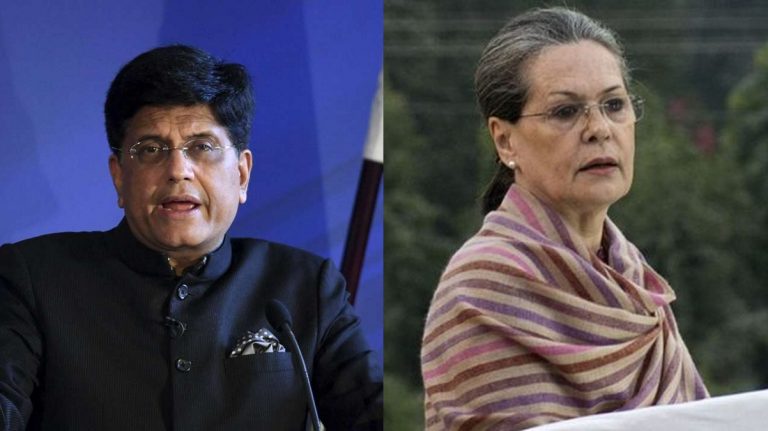
In a series of tweets, Union Minister for Railways and Commerce & Industry Piyush Goyal came down heavily upon Congress President Sonia Gandhi for her remarks against the proposed Regional Comprehensive Economic Partnership (RCEP) and Free Trade Agreement (FTA) between India and China.
Sonia Gandhi had said such an agreement between the two countries would deal a body blow to the Indian economy. “We can ill-afford to become a dumping ground. India being made a dumping ground of Chinese goods is catastrophic. In the past 72 years, no country has signed FTA with China,” she had said.
Piyush Goyal questioned the UPA government for joining RCEP talks with China in 2011-12. He said that the Congress supremo has only now awakened to RCEP and FTAs. He highlighted the fact that India already has FTAs with ASEAN countries, Malayasia, South Korea and Japan.
Smt. Sonia Gandhi ji has suddenly woken up to RCEP and FTAs. So where was she
– When FTA with ASEAN was signed in 2010?
– When FTA with South Korea was signed in 2010?
– When FTA with Malaysia was signed in 2011?
– When FTA with Japan was signed in 2011?
2/5
Piyush Goyal also reminded Sonia Gandhi that the UPA government itself had explored the possibility of an FTA with China in 2007. He also slammed the erstwhile government for opening up 74% of the Indian market to a richer country like Indonesia while they had opened up only 50% of their own market to India.
Where was Sonia ji when her Govt agreed to explore an India-China FTA in 2007? I hope ex PM Dr Manmohan Singh will speak up against this insult to him
4/5
Piyush Goyal also emphasized the fact that the government will make a decision based on what is best for India. He reiterated that it must be a “win-win” situation for both countries and the government will make any decision based on the interests of the Indian people.
Opposition leaders are criticising the government’s move to sign Free Trade Agreement under RCEP. The RCEP is a proposed free trade agreement (FTA) between the ten member states of the Association of Southeast Asian Nations (ASEAN) ( Brunei, Cambodia, Indonesia, Laos, Malaysia, Myanmar, the Philippines, Singapore, Thailand, Vietnam) and its six FTA partners (China, Japan, India, South Korea, Australia and New Zealand).
According to the government, this agreement will be beneficial for India. Data provided by the government show that India’s trade deficit was on a rise due to FTAs signed by previous governments. Officials have pointed out that India’s trade balance is turning more unfavourable for most FTAs. It has doubled since 2011 to Rs 12.86 trillion in 2018-19.
The proposed deal seeks to reverse this trend. For example, during a meeting earlier in October, India had negotiated a 10% advantage over China for tariff removal. This advantage for India will mean that its exporters can access 10% more Chinese product lines without facing tariff barriers. Union government has been assuring that the interests of the domestic industry will be given priority while negotiating the RCEP.
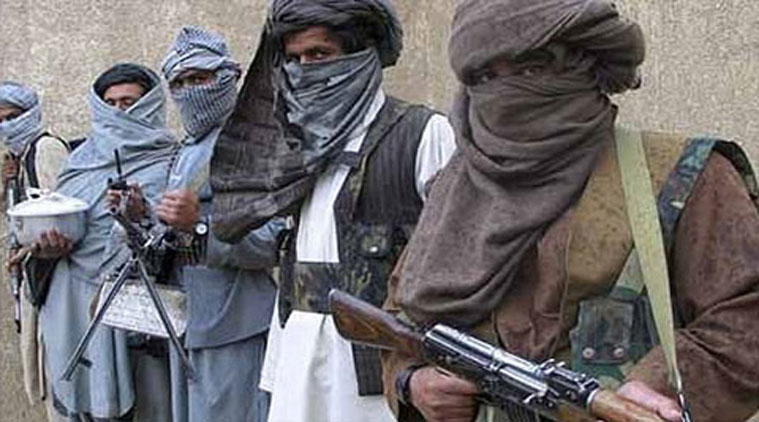
The desperate Pakistani sponsored Islamic terror groups Jaish-e-Mohammed (JeM) and Lashkar-e-Taiba (LeT) are preparing to launch large-scale terror strikes against India in the coming winter, according to the latest intelligence reports.
Reportedly, the terror attacks are aimed at preventing the Union Territory of Jammu and Kashmir’s return to normalcy and also to test the strength of the Narendra Modi government.
The Hindustan Times reported that the inputs conveyed to the government by intelligence agencies suggest that the Jaish leadership has asked its trained and indoctrinated terrorists to report at its Markaz Usman-o-Ali headquarters at Bahawalpur this week as a precursor to possible Fidayeen attacks in India.
JeM chief Masood Azhar, who is bed-ridden and his younger brother or de facto chief Mufti Abdul Rauf Asghar are presently at Bahawalpur. The inputs indicate that LeT’s commander Abu Uzail has claimed that India would soon face a deadly suicide attack.
Further, the inputs also say that Pakistan-sponsored terror groups will attempt to send their cadres across the Line of Control (LoC) after October 26 – the day that Jammu and Kashmir’s erstwhile ruler signed the instrument of accession that made the former princely state a part of India.
As far as now, the Union government and security agencies have managed to keep the region out of any attacks, but national security planners believe that the Pakistan-based groups will attempt a strike this winter to prove their relevance and dominance.
On August 5, in a historic act, the Indian parliament had passed laws and resolutions to split the region of Jammu and Kashmir into two Union territories — Jammu and Kashmir and Ladakh and abrogated Article 370.
Reportedly, the Pakistani General Headquarters (GHQ) at Rawalpindi, the nerve Centre of the Pakistani armed forces and terror apparatus emanating from the country, has apparently given the green signal to infiltration of Jaish-e-Mohammad terrorists into India.
According to the Indian security agencies, due to the counter-insurgency grid that is currently placed in the region since August 5 and the risk of interception of its cadre by Indian security forces at the border, there has been little or no Jaish infiltration in the Sialkot sector over the past three months.
The intelligence reports have specifically highlighted the movement of 20 Jaish cadres, led by seven Afghan commanders, towards the forward launching pads across the LoC in Pakistan for possible infiltration into the Valley. Incidentally, the same cadres were detained by the Pakistan army in the second week of October and sent back to their camp at Balakot, Manshera, Khyber Pakhtunkhwa.
Currently, the Islamic terrorists that are active in the Valley including mixed cadres led by the Jaish are trying to create terror by selectively targeting outsiders. Meanwhile, the LeT leadership has again become active with Hafiz Saeed’s number two Abdul Rehman Makki delivering the Friday sermon from Jamaat-ud-Dawa Markaz Al Qadsia, Lahore on October 18. Makki, who carries a bounty of $2 million on his head, made his first public appearance to deliver the sermon after his arrest on May 15, 2019.
The arrest and detention of LeT leaders is a bit of an eyewash with LeT chief Hafiz Saeed, Makki, Zafar Iqbal – the head of education wing, Yahya Aziz – spokesperson, finance heads Haji Ashraf and Mohammed Bhutvi all under house arrest or detention at the Qadsia mosque at Chowburji in Lahore rather than any Pakistani prison.