Home Blog Page 6055

Former ASI regional director KK Muhammed explains why Muslims should voluntarily hand over the land at Ayodhya to Hindus

The Supreme Court bench hearing the politically sensitive, Ram Mandir-Babri Masjid land dispute case on a day to day basis has tentatively decided to give a verdict by November 18. On the fifth day of the hearing in the case, Ram Lalla’s lawyer, when asked by the court, affirmed that the exact site of Rama’s birthplace is where the Babri Masjid once stood in the present-day Ayodhya, Uttar Pradesh.

It is believed, the Mughals demolished a Hindu shrine that marked the spot and constructed a mosque in its place.

Now, the former regional director, North, Archaeological Survey of India (ASI), KK Muhammed, who was a part of the team of archaeologists which had carried out the first excavation at the site in 1976-77, has endorsed this belief. He, in an interview with Time of India, has confirmed that there is enough archaeological proof of a grand temple below the Babri Mosque.

While speaking to the media house, Muhammed shared his thoughts on what made him feel that Muslims should voluntarily hand over the land at Ayodhya.

The former regional director of the ASI discusses three important aspects which prove the existence of a Hindu shrine under the Babri tomb.

The first aspect- Archaeological evidence:

Muhammed divulged that archaeologically there is enough evidence to say that below the controversial Babri structure, there were temple remains. In fact, there was a grand temple structure, he said.

He goes on to speak about the two excavations which were carried out at the site.

First excavation (1976-77):

The first excavation was carried out in the year 1976-77 under the eminent archaeologist BB Lal, who was the director-general of ASI from 1968-72.

Muhammed said that he was the only Muslim who was a part of the team during the first excavation.

Excavation has two important components. As per the procedure, first surface exploration was conducted to find out the remains on the surface. The former director divulged that during the process he saw 12 pillars of the mosque which were made from temple remains.

On being asked as to how he understood that the pillars were made of the temple remains, the archaeologist explained that in almost all temple structures from 12th and 13th centuries, you get ‘Purna Kalasha’ at the base. It is the structure of a ‘ghada’ (water pitcher) from which foliage is seen coming out. It is the symbol of prosperity in Hinduism. He also said that although there were no gods and goddess, there was ‘Asht-Mangala Chinhas’, the suit of eight auspicious symbols in Hinduism.
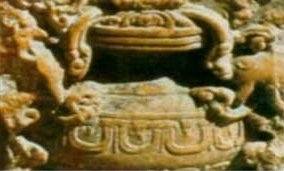
Base of a pillar excavated at the Ram Mandir site

He divulged that the example of this can be still seen at Quwwatul Islam mosque near Qutub Minar. This mosque, he said, was also made out of the remains of 27 temples. There was evidence for this as well, Muhammed confirmed. A book called Taj-ul-Masir, written by Hassan Nizami, also confirms that temples were destroyed and a mosque was constructed out of it.

He added that there is also an inscription in front of the Quwwatul mosque which confirms that it was made out of the spoils of 27 temples. When you go inside, you can see a number of ‘Purna Kalashas’ and a number of gods and goddesses, he confirmed.

Similar things were also present in Babri masjid site also. Though there were no god and goddesses, the presence of ‘Asht-Mangala Chinha’ and other structures archaeologically proves that the pillars of temple remains were found at the disputed site. “So, on the basis of these, any archaeologist would say that these are temple remains”, said the expert while talking tho TOI.

Muhammed went on to recollect that BB Lal had also then undertaken the excavation of the western side of the mosque. The pillar bases were also excavated. A number of terracotta sculptures were found. Had it been a mosque, depictions of human beings or animals would never be there as Islam considers it to be ‘haraam’ (forbidden or proscribed). This means there was a temple, said the former director.

However, Muhammed said that these findings were not highlighted by BB Lal then as their excavation purpose was not to establish whether there was a temple or not but to examine the cultural sequence of the place.

Asked whether these findings were ever highlighted, Muhammed remembered that a group of leftist historians led by Romila Thapar, DN Jha and RS Sharma among others went to the media around 1990 and falsely claimed that no temple remains were found in the excavation and that the report did not mention it either, which was actually a faulty statement.

The expert recollects that though BB Lal had then defended that the excavation team did find temple remains, they did not make an issue about it.

That time the Ayodhya issue was not as heated up as it became later, said the archaeologist.

Moving ahead with his interview, Muhammed said that he had then vociferously claimed that being the only Muslim in the team he could vouch that temple remains were found during the excavation process.

Muhammed opined that this is as important for Hindus as Mecca and Medina for Muslims. Therefore, Muslims should willingly hand it over to Hindus.

Second excavation (2003):

The second excavation was carried out in 2003 under the supervision of archaeologists Hari Manjhi and BR Mani, as per the directions of the Lucknow bench of the Allahabad High Court. By that time the mosque structure had been already destroyed by karsevaks. Before the excavation, a ground-penetrating radar (GPR) survey was conducted. It found that there were several structures below the ground within the compound. Many anomalies were reported. “Anomalies meaning that you will be getting structures below the Babri Masjid”, he said.

Since this time the excavation was being done as per the court’s directive, the report assumes the status of a Court Commissioner’s report and it is fully authentic. The report by the ASI is impartial and scientific, explained the former director.

During this time more than 90 pillar bases in 17 rows were exposed. This meant that the structure was imposing and large. This structure discovered was that of a temple below the Babri Mosque which dated back to the 12th century AD, confirmed Muhammed.

The archaeologists also discovered the temple ‘pranala’. The expert then goes on to talk about the historical significance of the ‘pranala’ in Hindu culture.

We have to bathe the deity and the ‘abhishek jal’ flows through ‘pranali’. The pranali is mostly ‘makara pranali’, having a crocodile face, he explained. Crocodile is a symbol of river Ganga. In some of the temples before reaching the ‘garbha griha’ (sanctum sanctorum), on the one side, there would be a lady standing on crocodile and on the other side there would be a lady standing on a tortoise, which meant taking a symbolic bath in rivers Ganga, the Yamuna and the underground Saraswati. After cleansing yourself of all the previous sins, you are going to the main God.

This ‘makara pranali’ was excavated, exclaimed the expert saying that these are exclusively the property of a temple. Also, on top of the temple just below the ‘kalasha’, there is another architectural member known as ‘amalka’. It was also excavated. Below the ‘amalka’ there is the ‘grivah’ and also the ‘shikhara’, portion of a temple in North India. These were all excavated during the 2003 procedure.

Moreover, 263 pieces of terracotta objects of various gods and goddess, human figures and female figures were excavated from the disputed site in Ayodhya, informed Muhammed.

Apart from all these things, a ‘Vishnu Hari Sheela Phalak’ inscription was also found in two pieces from the site. Though this finding was not a part of the excavation, it was discovered after the demolition of the Babri structure. However, it forms crucial circumstantial evidence, which clearly says the temple has been dedicated to Lord Vishnu who had killed Bali and a 10-headed person.

The team hired by the Waqf Committee said the structure at Ayodhya was another mosque before the Babri Mosque. While they call it a structure, we call it a temple, said the expert, authenticating the presence of a temple under the Babri tomb, which the Muslim counsel has been disputing in the SC hearing.

Had it been a mosque, how could you get these terracotta objects of various living beings? Reiterated the expert claiming that depiction of any living being is prohibited in Islam.

Then how could you get sculptures of living beings had it been a mosque? So, it was not a mosque.

When asked as to what proof was there that the second excavation was impartial, Muhammed confirmed that firstly the entire process was videographed, and apart from the archaeologists, court-appointed judicial members were present at the time when the excavation was being carried out.

Besides, the excavation team which comprised off several eminent Muslim archaeologists namely, Ghulam Syeddin Khwaja from ASI, who retired as director of Arabic and Persian epigraphy at Nagpur, Atiqur Rehman Siddiqui who retired as a superintending archaeologist of Agra, Zulfikar Ali, who presently is the superintending archaeologist of Chandigarh circle and AA Hashmi, who retired from Chanderi, not only carried the excavation but they also were co-authors of the report which was submitted to the Lucknow bench of the Allahabad HC. The report was highly fool-proof, claimed the former director, KK Muhammed.

The report’s conclusion was simple- there was a pre-existing temple under the Babri Masjid in Ayodhya which was dedicated to Lord Vishnu.

Muhammed remembered that though there was no dissenting view, some hired experts of the Waqf committee, who had differing opinion had tried to crate confusion then. But the Court Commissioner’s report is crucial and final.

When asked whether the findings will have an impact on the Supreme Court’s decision, Muhammed said that “I only believe that the Supreme Court cannot come out with any other kind of judgement” since the archaeological evidence is fully in favour of a Hindu temple, but even if for some reason they do give another kind of judgment, the chances of which are bleak, that would be a decision which would not be able to implement, since a lot of Hindu emotions are attached to that place.

The second aspect- Literary evidence:

The expert moves on to talk about the second important aspect of the case, that is the literary aspect to prove that Hindus continued to worship at that place in Ayodhya.

In Ain-e-Akbari Volume III, Abu Fazal says that Ayodhya was worshipped by Hindus in the month of Chaitra.

Secondly, the travelogue of a traveller known as William Filch (1608-1611), who visited India during the time of Jahangir said a lot of people assembled and worshipped at this place in Ayodhya.

In 1631, during the time of Jehangir and Shah Jahan, a Dutch geographer John Daeleat also speaks about the worship of the place by Hindus.

Thomas Herbert (1606-1682) also speaks about the Hindu worship of the place at Ayodhya. And moreover, one Joseph Taissen Thaler, who wrote in 1766, also wrote about the erection of a cradle at the place. It was for the first time, he said that the temple was destroyed either by Babur or Aurangzeb.

The third aspect- Social or emotional aspect:

Muhammed in his detailed interview to TOI divulged on the third and last aspect, which is the social issue. The emotional connect of the Hindus to this place is what he said is the last aspect which leaves no doubt on the existence of a temple at the disputed spot.

He said that Ram Temple at Ayodhya is as important for Hindus as Mecca an Medina is for Muslims.

Since this place is not of any emotional value to the Muslims as it is neither associated with Prophet Mohammed nor any Auliya like Khwaja Moinuddin Chisti of Ajmer, neither Nizamuddin Auliya of Delhi or Salim Chisti of Fatehpur Sikri, so Muslims should willingly hand it over to Hindus.

“If Muslims had shown a willingness on their part, many of the problems that they facing might have been automatically solved. That would have generated goodwill among Hindus also”, said KK Muhammed.

He further adds that the Muslims are trapped by the Marxist historians and therefore are not being able to think independently and prudently. “Even now the time has not elapsed. Before the Supreme Court gives its judgment, Muslims should hand over the place to Hindus and create an example. That is my humble request to them”, said the eminent archaeologist.

Meanwhile, Chief Justice Gogoi has set October 18 as the tentative date to finish the hearing in the case. He had also said that the parties involved in the Ram Janmabhoomi-Babri Masjid dispute case were free to settle the matter, through mediation as well if they so desired. However, senior lawyer CS Vaidyanathan, appearing for deity Ram Lalla Virajman, said yesterday that he did not want to take part in the mediation any further and would like a judicial decision from the bench.
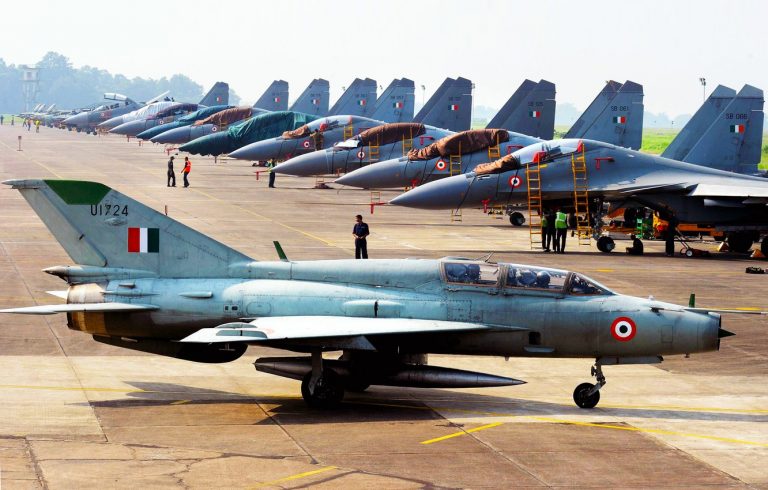

Security of Amritsar Air Force base taken over by Indian Army following inputs of terror attack: Times Now report

0

According to an exclusive report by Times Now, Indian Army has taken over the Indian Air Force base at Amritsar including the ATC tower. Army took over the security of the airbase from CISF following specific inputs that Pakistan based terrorists are planning to attack it using drones or other aircraft including hijacked planes, the report claims.


The report also says that in an unprecedented move, the army has placed snipers at the airbase. Nikunj Garg of Times Now said that the request to deploy army at the airbase came from the Indian Air Force itself. He said that snippers are posted on the top of ATC tower as well as fire safety towers.


The report says that security forces are not only suspecting a ground-based attack, but also attack from the air using drones, gliders or other kinds of aircraft. Nikunj Garg said that the fact that snippers have been deployed points to the threat of an air-based attack, as if the intelligent reports were about attack from land route only, increasing protection around the airbase would have been enough.

AAI to introduce seaplane services in Assam to boost tourism and connectivity, three locations selected

0

In an ambitious move, the government has decided to introduce seaplane service in the state of Assam to boost connectivity in the area. Airports Authority of India (AAI) will introduce water aerodrome or seaplanes in three locations in Assam for the first time, a top AAI official said.

Three locations have been selected to for the seaplane service, and the water aerodromes are expected to be launched by the year 2021. This includes two locations on Brahmaputra river, Guwahati and Kaziranga National Park, while the third location is Umrangso reservoir in Dima Hasao district.

AAI regional executive director Sanjeev Jindal said that these three locations were selected after a countrywide study to launch the service for the first time in the country. He said that not much investment is required to commence the seaplane services in Assam. “Three jetties would be built in three locations at a cost of Rs 50 crore. Some other small works have to be done before launching the new ferrying mode,” he added.

Contrary to land airports which require high investments in construction of runways, seaplanes or amphibian plans can use any open water surface of sufficient dimension for taking of and landings. Only terminal facilities need to be constructed on land, where planes can be docked and passengers can board and deboard the planes.

The seaplane service will be launched under the UDAN (Ude Desh ka Aam Naagrik) scheme, a regional connectivity scheme aiming to develop regional airports to increase the penetration of air travel in the country.

Earlier the government had planned to launch seaplane services in several cities in the country. In December 2017, Prime Minister Narendra Modi had travelled in a seaplane in Ahmedabad which was flown as a demonstration for the service. However, commercial operations could not be started due to various reasons. Kerala government had to abandon a proposal to launch seaplanes in the state due to protests by fishing communities due to apprehensions that the project can affect their livelihoods.

Now the government has renewed the initiative to start seaplane services in the country, and plans to start it with launching the service in Assam within 2 years.

Watch: Balochistan activists hold protests in London against abduction of women and children by Pakistan Army

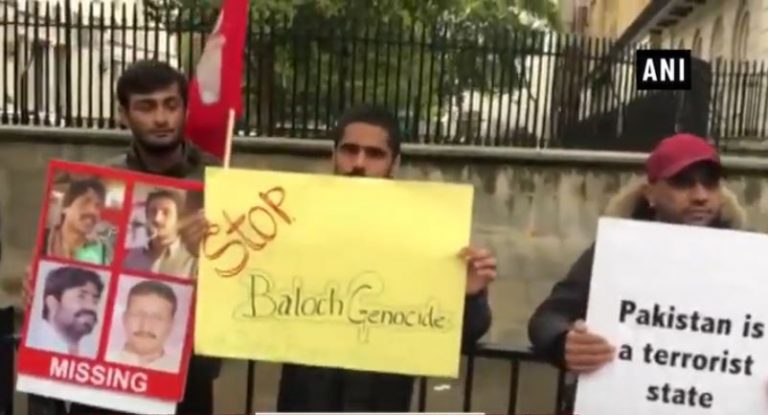
Balochistan which has been long bleeding in the hands of Pakistan has risen to demand justice. A video has emerged in which activists of the Baloch National Movement (BNM) were seen holding protests outside 10 Downing Street, the residence of the British Prime Minister, to raise the issue of the enforced disappearance of Baloch women and children from the southwestern province of Pakistan.

The protestors who were seen holding placards captioned: ‘UK stop Baloch genocide’, ‘restore Human Rights in Balochistan’, ‘Pakistan is a terrorist state’, ‘+25000 Baloch are missing’ etc, were also sloganeering against Pakistan.

The protestors alleged that the Pakistan Army was behind the abduction of hundreds of Baloch women and children from the province.

[youtube https://www.youtube.com/watch?v=dyggxfeAG7U]

The Baloch activists have further initiated a social media campaign with hashtag #SaveBalochWomen to raise the issue on the global platform.

On May 14, Hani Gul Baloch, a student of medicine in Karachi, was abducted along with her fiance, Naseem Baloch. She was kept in military torture cells where she was tormented for three months. Upon her release, she was expelled by the Hamdard Medical University.

“Pakistan’s intelligence agencies recently adopted a new policy of abducting Baloch women and children to pressurise the Baloch political activists, who are fighting against the injustices committed by the Pakistani military establishment in Balochistan. The situation is becoming worse. Now, we have information that there are more than 100 Baloch women who have been abducted by the Pakistani security forces,” Hammal Haider Baloch, Foreign spokesperson of BNM said during the protest.

The people from Balochistan holding the protests said that they wanted to apprise the British authorities of their worsening conditions in Balochistan.

Hakkim Baloch, president of BNM (UK) said: “We wish to make the world aware that the Pakistan Army is abducting Baloch women. Recently they abducted women from Awaran, Dera Bugti, Bolan and various other parts of Makran. They are also abducting women from Karachi. We want to let the world now that they must take action against such inhuman acts of Pakistan”.

The insurgency in Balochistan is a guerrilla war waged by Baloch nationalists against the governments of Pakistan. Balochistan Nationalists have been demanding complete independence from the Islamic Republic of Pakistan.

On September 15, Balochistan rights activists had organised a poster campaign and protests in Geneva to highlight Pakistan’s “egregious infractions” in Balochistan where “enforced disappearances and killings” have assumed “epidemic proportions”.

Significantly, this ‘Stop Baloch Genocide’ poster campaign and protests, organised by the Balochistan Human Rights Council (BHRC) at the Broken Chair monument area had coincided with the 42nd session of the United Nations Human Rights Council (UNHRC).

On August 15, when India was celebrating its 73rd Independence Day, Balochistan activists reached out to India to help in their struggle for their freedom from Pakistan.

In fact, on July 22, speaking exclusively to OpIndia, one such freedom fighter, Dr Allah Nazar Baloch, founder and chief of Balochistan Liberation Front, who has been fighting in the trenches for the better part of his life, said that the step-motherly treatment that Balochistan has got is evident from the social indicators and the extreme lack of basic development that the thin population of Balochistan has to deal with.

Speaking about the atrocities heaped on the people of Balochistan by the Pakistani establishment, Allah Nazar Baloch said that “Pakistan is plundering Balochistan and we appeal PM Modi to support the freedom struggle”.

From 2000 to 2016 itself, the dead bodies of over a 1000 political activists of Balochistan were found. The relatives of most of these victims said that they were picked up by the Pakistani establishment, only to turn up dead.

After the partition, Muhammad Ali Jinnah had negotiated the independence of Balochistan with the Britishers. Before the partition of India, Balochistan consisted of 4 Princely states, Kalat, Lasbela, Kharan and Makran. The three other princely states were beholden to Kalat in one manner or the other. The Government of Pakistan recognizes Kalat as an independent sovereign state in treaty relations with the British Government with a status different from that of Indian States.

Jinnah then had a ‘change of heart’ and decided to annex Balochistan. The Balochistan Assembly had categorically rejected even the suggestion to join the Pakistan state. However, Jinnah had other plans. It bodes well to remember that essentially, Balochistan was an independent and sovereign state that was forcefully annexed by Pakistan by the barrel of the gun. You can read OpIndia’s exclusive interview with Dr Allah Nazar Baloch of Balochistan Liberation Front here.

Buying only Halal meat and not Jhatka, Kosher is discriminatory: McDonald’s India gets legal notice

McDonald’s fast-food chain in India seems to have landed itself in trouble. In August 2019, The global fast-food chain network, McDonald’s, had admitted to discriminating against non-Muslims as part of their business model in India. All their restaurants are Halal certified. As we have reported earlier, Halal is the Islamic method of slaughter which cannot be carried out by non-Muslims.

Owing to this admission, social worker, one Harish Sharma had filed a legal notice to McDonald’s India through advocate Ishkaran Bhandari. The legal notice was sent to McDonald’s India, Mr Amit Jatia (Joint Venture partner and McDonald’s India’s Managing Director) and Mr Vikram Bakshi (Joint Venture partner and McDonald’s India’s Managing Director).

The notice refers to the statement made by McDonald’s India in August where it asserted that all the meat used by them is Halal meat. The notice seeks clarification from the food chain about their policy with regards to Jhatka meat which is more humane and also, is slaughtered and consumed mostly by Hindus and Sikhs as opposed to Halal meat, which is, by Sharia, slaughtered only by Muslims. Since Halal guidelines mandate that only Muslims are involved in the entire slaughtering and packaging process, the notice also says that McDonald’s is discriminating against other religions who are involved in the business and denying them the equal opportunity to earn.

The notice further says that the tweet makes it evident that the food chain serves only Halal meat and not Jhatka or Kosher meat, and hence, choosing to serve only a specific kind of meat amounts to social, racial and religious discrimination and violates basic fundamental rights as enshrined in the Constitution. Further, it says that certain sects are barred from eating Halal meat since the process of slaughter is extremely painful for the animals and hence, by serving only Halal meat, McDonald’s is hurting the religious sentiments of such groups.

The legal notice also includes statements by McDonald’s UK and Canada that specifically say that their eateries do not serve Halal meat and have no plans of introducing the same any time soon.


McDonald’s Canada has too reiterated several times that they do not use Halal meat and not certified to that extent.

The notice had demanded a response from the food chain within 15 days. McDonald’s has now responded to the legal notice denying all charges but also asking for more time to respond to the legal notice in details.

While the time asked by McDonald’s is now coming to an end, Advocate Bhandari says that he is preparing to send a reminder notice to the food chain.

The practice of buying Halal meat exclusively by McDonald’s could also invite charges under the SC/ST Act, OpIndia has learnt from Ishkaran Bhandari. This, since Jhatka meat, is mostly slaughtered and processed by members of the Scheduled Castes and Scheduled Tribes.

Former finance minister Arun Jaitley’s family denies pension, asks money to be donated to lesser paid employees of Rajya Sabha

0

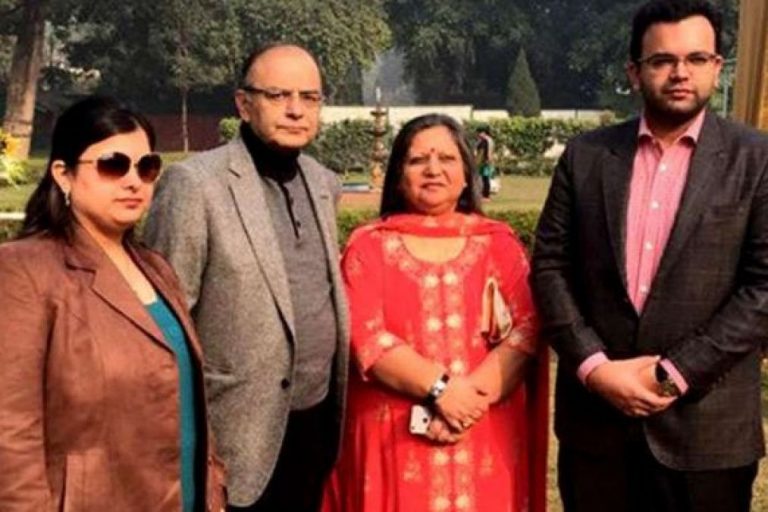
The family of the veteran BJP leader Arun Jaitley, who recently passed away after a prolonged illness, has refused the pension which was due after the former finance minister’s demise. Arun Jaitley’s wife Sangeeta Jaitley on Monday wrote to Rajya Sabha Chairman M Venkaiah Naidu, refusing the pension which was due.

In a letter penned by Sangeeta Jaitley, which was also marked to PM Modi, the former Union Minister’s widow requested the pension due of Arun Jaitley to be transferred to the less paid Class IV employees of Rajya Sabha. She cited Jaitley’s “philanthropic past” as grounds for refusing the pension.

The BJP stalwart breathed his last on August 24 at Delhi’s All India Institute of Medical Sciences (AIIMS) after suffering from a prolonged illness. He was admitted to the hospital on August 9 after he had complained of breathlessness and uneasiness.

According to the Salary and Allowances of Members of Parliament Act, a former MP is entitled to a minimum pension of Rs 20,000 per month and an additional pension of Rs 1,500 per month for every year served as member of either Houses for a period exceeding five years. Jaitley has been a Rajya Sabha member since 1999 which qualified him to receive an additional Rs 22500 per month. The total monthly pension entitled to Arun Jaitley would have been around Rs 47500.

However, Family pension to spouse or dependent of a member or ex-MP is equal to 50 per cent of the pension otherwise sanctioned to such departed member/ex-MP. Thus, Arun Jaitley’s family was eligible to get about Rs 25000 per month or Rs 3 lakh per annum as pension.

P Chidambaram appeals for home-cooked food inside Tihar, court to hear plea on the day his judicial custody ends

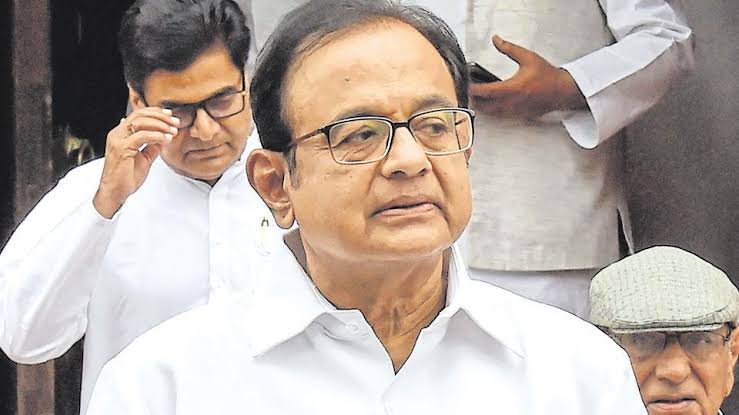
Former Union Minister P Chidambaram has moved a plea in a trial court seeking home-cooked food during judicial custody that ends on October 3. The court heeding to his application has listed the plea to be heard on October 3, the same day when his judicial custody is set to end.


Earlier, the Delhi High Court had on Monday dismissed Chidambaram’s bail plea in the INX Media case. Justice Suresh Kumar Kait dismissed the bail on the grounds that the accused is a member of the bar of advocates as well as an MP and the witnesses are likely to be influenced on his release. Delhi High Court had earlier made scathing remarks about Chidambaram’s involvement in the case, terming the former Union Minister as the kingpin of the INX Media Case.

The court, however, admitted that Chidambaram is not at risk of absconding and there is no possibility of tampering of evidence. Kait rejected the petition after hearing arguments from both sides. During the hearing, on behalf of the prosecution, Solicitor General Tushar Mehta said, “We are at a stage where we have exposed our evidence to the accused.” So the risk of tampering and influencing them is very high.

Chidambaram has been lodged in Tihar since September 5 after his CBI custody ended. Desperate to escape Tihar, Chidambaram had appealed to surrender to ED. But the court had dismissed his pleas. The Delhi HC had already dismissed an earlier plea for home-cooked food.

Alwar, where suspected cattle thief Pehlu was lynched, remains a hotbed for cattle smuggling and related violence: Here is how

Rajasthan’s Alwar district which had made it to the headlines of almost all media houses after the hyped Pehlu Khan incident continues to remain a smugglers’ den as scores of incidents of cow theft are routinely reported from the district. The border districts of Alwar and Bharatpur together account for a third of all cattle smuggling cases recorded in Rajasthan.

According to past reports, an alleged nexus between smugglers and some corrupt officials in police have helped the illegal trade flourish in the state.

Yesterday, in yet another case, Rajasthan police have rescued 14 cows after an encounter took place between the Rajasthan police and cow smugglers in Shahjahanpur area of Alwar.

The encounter happened late on September 29 (Sunday) night when one of the two vehicles, in which the cow smugglers were travelling, hit Quick Response Team (QRT) vehicle of the Rajasthan police. The cow smugglers were being chased by the police for more than 25 km as they tried to flee from the scene. The encounter ensued as the cow smugglers fired at the police which then retaliated by firing shots back at them. More than 30 rounds of firing took place from both sides.

Another vehicle in which the cow smugglers were travelling had entered a home in Gaduvaas village of Shajahanpur area. The cow smugglers fled from the scene abandoning the vehicles they were travelling in.

According to information, there were eight cows in one pick up vehicle and six in the other one. So, the police managed to recover a total of 14 cows from both the vehicles.

Prior to this, Police had recovered 7 bovines from the vehicle of one Munafed Khan, who was also involved in many incidents of cow smuggling in the past. The incident pertains to September 22 evening when Munafed was trying hard to escape police barrier but instead was caught up by the alert villagers who confronted him and started thrashing him believing that he was smuggling cows. The police intervened and stop the people from beating him up. The incident had happened in the same Shahjahanpur area.

July 31, 2019: In Rajasthan’s Alwar, cattle smugglers had opened fired bullets and injured villagers. Salim Khan, who fired at the locals was later caught by the villagers and was handed over to police.

June 21, 2019: Cattle smugglers had attacked Gaushala in Bharatpur, fled with three cows after thrashing the Mahant.

December 2018: In the Tijara area of Alwar district, police had raided a house in the Arandka village and had recovered the flesh and skin of the cows. The police found 4-5 suspects in the nearby field sprinting away. When police went there they found about 20-22 kgs of beef lying down and cowhide of 5-6 cows from the well in the nearby field.

These are only a few of the many incidents of cow smuggling which have been reported in the recent past. Along with Alwar, all its adjoining areas, like Bharatpur, Mewat, bordering area like Haryana’s Nuh district have been a hotbed of cow smuggling.

In Alwar, an average of seven cases were registered every month in 2017 under the Rajasthan Bovine Animal (Prohibition of Slaughter and Regulation Temporary Migration or Export) Act, 1995. Meanwhile, a report from August 2016, mentions that until July 2016, Alwar Police had detected 72 cases of cattle smuggling in Alwar and 40 in Bharatpur. The corresponding numbers for 2015 were 100 and 30 respectively.

This report from December 2017 highlights how lucrative the cattle smuggling business is. “The people who transport at least 5 to 6 cows from Alwar and Bharatpur to Nooh Mewat of Haryana can earn Rs 1 lakh to Rs 2.5 lakh per trip if they managed to deliver a lot of cows safely,” the report quotes a senior officer as saying. The Police claimed at that point of time that at least 500 people were in the business of cattle smuggling in the region.

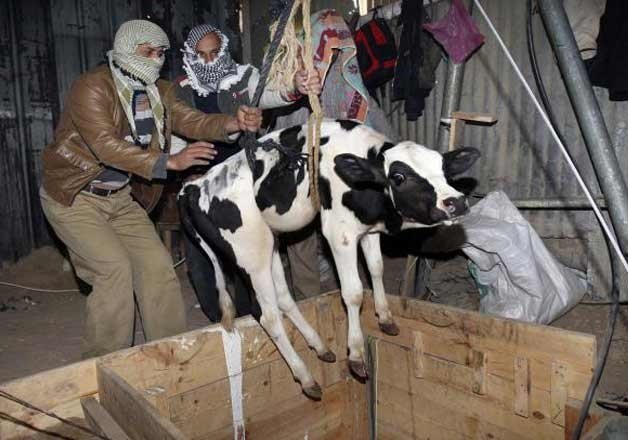
The smuggled animals are often brutalised, stuffed inside small pick-ups and carried without food, water or space to breathe.

Mother Teresa’s Missionary of Charity nun accused of child trafficking gets bail by Jharkhand HC

The High Court of Jharkhand has granted provisional bail to a Missionaries of Charity nun, Sister Concelia, who was jailed on allegations of child trafficking 15 months ago. Sister Concelia Baxla was arrested by police in July 2018 following an allegation that she sold a baby born to an unwed mother under her care.

On September 27, 2019, the Ranchi high court granted provisional bail to the sister on presenting a bail bond of 10,000 rupees with two sureties of the same amount. The court also ordered her to surrender her passport and not to change her residence in Ranchi without seeking permission from the court.

Last year, the Jharkhand police had arrested a woman and detained two nuns of Missionaries of Charity running ‘Nirmal Hriday’ – a shelter home for destitute women, a trust founded by Nobel laureate Mother Teresa, for allegedly selling the infants born to unwed mothers at the institution.

The case of child trafficking at the Nirmal Hriday shelter home is to be heard after 4 months. Representing the nun, advocate Chandan Kumari contended that Sister Baxla should get bail as there were no direct charges against her. She was arrested on July 4, 2018, and has remained in the jail since then after Rupa Verma, chairperson of the Child Welfare Committee (CWC) in Ranchi lodged a complaint against the charity organisation for alleged child trafficking.

Following the child trafficking allegations, Nirmal Hriday was raided and the 13 pregnant women residing there at that time were shifted. 22 children residing there were also shifted to other state-run shelter homes. The Jharkhand police had later stated that all the four infants sold by the organisations have been rescued.

Verma mentioned in her appeal to police that a childless couple from UP had filed a complaint that they paid $2000 to Anima Indwar, a staff member of the orphanage managed by Sister Concelia. The couple were promised that they would be given a baby boy but Indwar reneged on her promise. The prosecution lawyer asserted that Indwar was arrested soon thereafter but she was later released on bail. Police claimed that they recovered 65,000 rupees from Indwar that the couple allegedly paid to her. Indwar has reportedly already got bail.

It is noteworthy to mention that Sister Concelia had been denied bail by both high court and the Supreme Court. Last year in October, the high court refused to grant her bail on the premise that the investigation into the activities of her congregation could be hindered if she was released. The apex court too denied her bail on January 29, 2019, reasoning that the police had not yet pressed charges in the case.

“Wrong and contemptuous to say that SC has allowed prosecution of Devendra Fadnavis”, Maharashtra CMO rubbishes media reports

Today several media houses reported that Maharashtra Chief Minister Devendra Fadnavis has faced a setback as the Supreme Court has ruled that he will have to face trial for allegedly hiding details of criminal cases in his election affidavit. A bench headed by Chief Justice Ranjan Gogoi set aside the Bombay High Court order which had given a clean chit to Fadnavis, the media reports said, claiming that Supreme Court has ordered prosecution of the Maharashtra CM in the case.

But that is totally misleading claim by media, as the Supreme Court has not ordered the prosecution of Fadnavis, the court has only said that a trial court will hear the matter afresh to determine whether a case can be registered against him under the Representation of the People Act. Earlier, the trial court has dismissed the petition, after which the case reached Supreme Court going through the various states of appeals.

Reacting to the media reports saying that SC has allowed prosecution of the Chief Minister, the Chief Minister’s Office has said that it is wrong and contemptuous to say that Supreme Court has allowed prosecution of Devendra Fadnavis.

The complainant, advocate Satish Ukey, had filed a complaint with the First Class Judicial Magistrate in Nagpur that 2 cases, which were private complaints filed by one lawyer against CM, were not mentioned in the affidavit of CM. Ukey had filed the case with a demand to prosecute the CM for allegedly concealing the criminal cases in his election affidavit. The Trial court had dismissed the plea, after which Satish Ukey went to the Nagpur Sessions court. The Sessions Court had set aside the trial court judgement and had sent it back to the trial court for a de novo consideration, or for hearing it afresh.

This order of the Sessions Court was challenged by Devendra Fadnavis in the Bombay High court, and The High Court had set aside the order of the Sessions court in May 2018, saying no case is made out in this matter. After this, the complainant Satish Ukey went to the Supreme Court and now the Supreme Court has sent the case back to the trial court for fresh consideration. Hence it will again be heard in the trial court to ascertain whether a case for the prosecution is made out or not.

The two cases, which the Maharashtra CM didn’t mention in his affidavit, were filed against him in 1996 and 1998. Both of them were private complaints, and no charges have been filed in them. Giving details of the cases, the CMO statement says that in the early nineties when Devendra Fadnavis was corporator he had filed one complaint to the government to remove a Govt pleader and published it in the press, against which the lawyer went for a criminal definition against him. Later the defamation suit was withdrawn by the said lawyer.

The second case is about a slum, where Devendra Fadnavis as a corporator had given a letter to the corporation to apply tax on the slum properties. This land was under urban land ceiling dispute, and the same lawyer had filed a complaint against the corporation authorities and Devendra Fadnavis claiming that the land belongs to him. Later, this complaint was dismissed by the high court.

In both the cases, Fadnavis was acting in public interest and no private interest was involved, the CMO statement said. It claimed that “this judgement of SC has no bearing on Devendra Fadnavis to continue as public representative or to contest the next election”.

While ordering fresh hearing on the complaint against Fadnavis, the apex court said that Fadnavis had had knowledge of the two cases against him which had not been mentioned in the affidavit filed along with his nomination papers, therefore the orders of trial court and high court dismissing the complaint are not tenable, and the complaint of Satish Ukey will be considered afresh by the trial Court from the beginning.