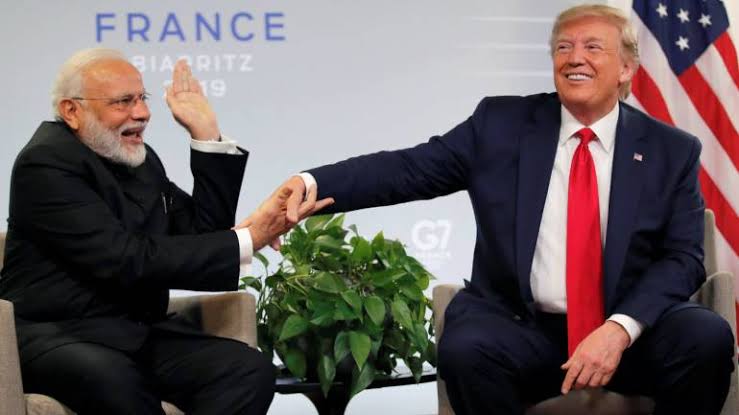
Speculations are rife after US President Donald Trump said that there could be some announcement made by him at the ‘Howdy, Modi!’ event where he is set to join Prime Minister Narendra Modi to address a meeting of 50,000-strong Indian diaspora.
Responding to questions by reporters while he was on his way back from California to Washington DC, Trump replied in affirmative that there could be an announcement made by him when he goes to Houston for the meeting with the Indian leader. “Could be. I have a very good rapport with Prime Minister Modi,” Trump said.
As of now it is uncertain on what front President Trump is contemplating on making a possible announcement. The trade relations between the two nations had strained after Trump stressed on reducing the $30 billion trade deficit with India. Trump was also displeased with India’s decision of imposing higher tariffs on American products. Therefore, speculations are galore that Trump may announce about a trade deal with India that will mutually benefitting the two countries.
The Washington on Monday this week announced that President Trump will join Prime Minister Modi at the latter’s event in Houston on September 22 to accentuate the growing bond between the two countries.
For the 22nd September ‘Howdy, Modi!’ event, more than 50,000 supporters have already registered for the mega community summit which will be held at the NRG Stadium, the host Texas India Forum (TIF), a Houston-based non-profit body, said. ‘Howdy’, which means ‘How do you do?’, is a friendly greeting commonly used in the southwestern parts of the United States.o
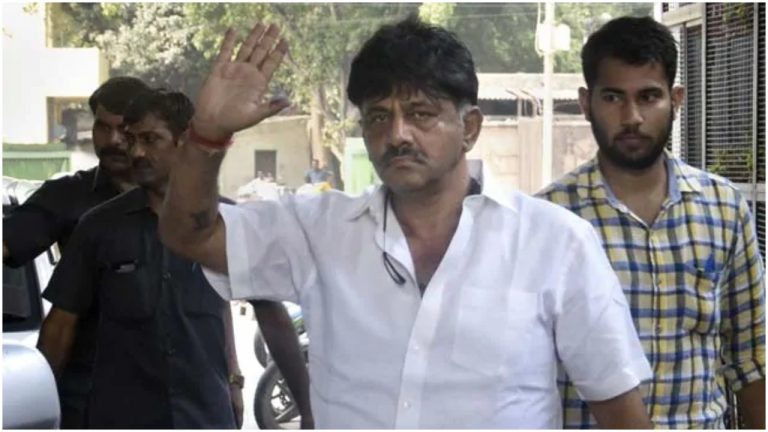
Senior Congress leader DK Shivakumar was sent to Tihar jail on Thursday after he was discharged from the RML Hospital in New Delhi.
According to the reports, DK Shivakumar, who was arrested by the ED on September 3 in a money laundering case, was remanded in judicial custody for 14 days till October 1 by Delhi’s Rouse Avenue Court. DK Shivakumar was in the ED custody since his arrest. He will reportedly be lodged in jail number 7 where economic offenders are usually remanded.
However, DK Shivakumar was admitted to Ram Manohar Lohia Hospital after the special judge Ajay Kumar Kuhar had directed the ED to take him for a check-up.
The Rouse Avenue Court is currently hearing Shivakumar’s bail plea. As per latest reports, the ED has also submitted proof of money transactions done allegedly by Shivakumar during demonetisation.
The alleged money laundering by DK Shivakumar came to light after raids by the tax officials on August 2, 2017, on Shivakumar’s four flats in New Delhi, which led to the seizure of unaccounted cash worth Rs. 8.59 crore without evidence of its source of income.
The tax agencies had filed cases against Shivakumar and four other persons associated with him under Sections 277 and 278 of the Income Tax Act, 1961 and Sections 120(B), 193 and 199 of the Indian Penal Code (IPC).
On the basis of the charge sheet filed by the I-T officials, the ED had booked a money laundering and hawala transaction case in September last year. Shivakumar’s daughter Aishwarya was also interrogated by ED on September 12.
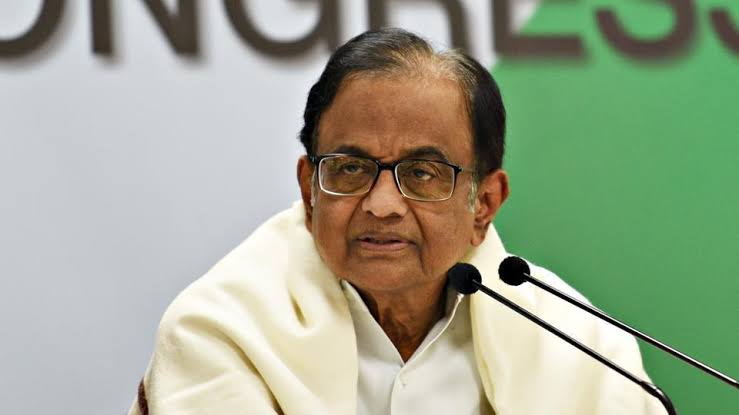
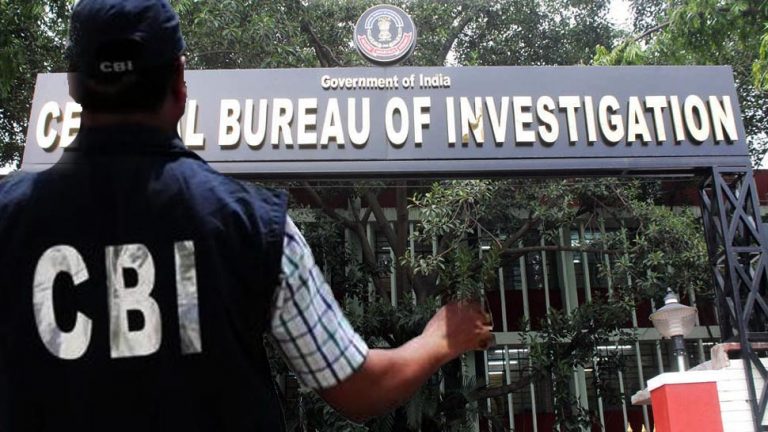
UPA-era finance minister P Chidambaram whose judicial custody is expiring on 19th September 2019, was produced before the court today after the Central Bureau of Investigation filed an application seeking an extension of his judicial custody. The senior Congress politician is accused of misusing his position while he was the finance minister of India and granting illegal clearances to the INX Media. The court granted an extension of Chidambaram’s judicial remand till October 3.
CBI Court extends P Chidambaram’s judicial custody till October 3. #INXMedia#PChidambaram
The former Union Minister P Chidambaram was represented by the lawyer duo-Kapil Sibal and Dr AM Singhvi. Defending his client, Sibal highlighted that the reason for extending the judicial custody of P Chidambaram wasn’t mentioned in the application filed by the CBI. The Judge, however, observed that Chidambaram’s judicial remand can be extended till October 3. But Sibal objected saying that extension of judicial remand cannot be done mechanically.
Representing P Chidambaram another counsel, senior advocate Dr AM Singhvi reemphasised that reasonable grounds must exist to extend the judicial remand and if granted it should not be more than 4 days. Singhvi contended that just because hearing is scheduled on September 23, a “longer date” cannot be given.
An application for medical examination of Chidambaram was placed before the court by Sibal arguing that the defence will accede what the doctors say and that their only request is to get his client’s medical examination done.
Sibal further added that Chidambaram wasn’t provided with a chair to sit and pillow on his bed. “There were 2-3 chairs outside where wardens etc. used and I would sit. Then these chairs were taken away,” said Chidambaram.
Singhvi argued that days at Tihar jail has caused weight loss for Chidambaram. Sibal, on the other hand, requested the court’s permission for Chidambaram to be examined at AIIMS.
Prosecution counsel, Solicitor General Tushar Mehta responded stating that health of any inmate is of primary concern for jail authorities and whatever is permissible in law will be done by them.
Turning down Sibal’s request seeking examination of Chidambaram at AIIMS, the Judge replied that AIIMS does not like court ordering medical examinations. He also mentioned that there was a letter from AIIMS to the High Court raising their concern over the same. However, the court allowed the medical check-up of Chidambaram. The court also allowed him to meet his family members.
Chidambaram was arrested by the CBI in connection with the INX Media case on August 21, a day after the Delhi High Court denied his anticipatory bail petition and observed that Chidambaram might be the ‘kingpin’ of the INX Media scam. Both the CBI and the Enforcement Directorate (ED) had sought his arrest in the case. He was sent to on August 22 and subsequently
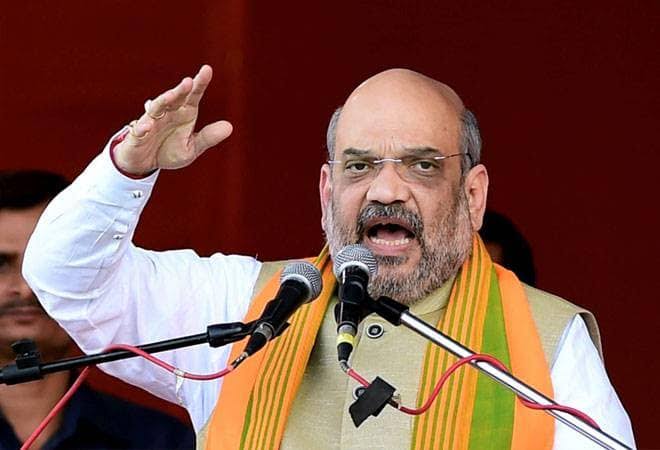
Speaking at the fifth International Ramayana Festival in New Delhi on Tuesday, Home Minister Amit Shah said that if wars were necessary to protect the honour of women, then they must be fought even though it can be devastating.
The Prime Minister’s most trusted lieutenant, Shah said, “How is a woman’s honour protected… Those who understand the horrors of war and its devastating consequences also say that when a woman’s honour is lost, the state is lost, culture is lost. That’s why if a war is necessary to protect a woman’s honour, it must be fought.”
The Ramayana tells the story of Shri Rama who declared war upon Ravana after the latter abducted Sita Mata, the beloved Queen of Ayodhya. Shri Rama destroyed cities and burned them to the ground to rescue His wife from the clutches of the King of Lanka.
Shah’s statement comes at a time when Hindu girls are being abducted and forced to convert to Islam by radical Muslims in Pakistan. Tensions have been simmering between the countries ever since the abrogation of Article 370. Meanwhile, the Indian government has also upped the ante on Pakistan-Occupied Kashmir with authorities in the highest echelons of the government including MEA Jaishankar saying that India will one day have physical jurisdiction over PoK.
The Home Minister also elucidated upon the virtues of the Ramayana. He asserted that the Hindu Epic has lessons on much more than just culture and ideals. It has also lots to offer on more worldly affairs.
Union Home Minister Amit Shah at International Ramayana Festival in Delhi: There is hardly any language in the world in which translation of Ramayana is not available. It is not just about culture and ideals. It also teaches about politics, administration, war and science. pic.twitter.com/J5rDduj5a0
“Ramayan is the treasure of centuries-old Indian culture and has solutions to all problems in the world. It is an unparalleled creation by Maharishi Valmiki on the life and values of an ideal human being. It beautifully depicts the highs and lows of human life and answers questions on morality and ethics arising out of difficult situations in life,” Amit Shah added.
The International Ramayana Festival is a three-day annual festival that began on the 17th of September and will end today. The international dignitaries from various countries attending the event will also visit Ayodhya and offer prayers at Ram Janambhoomi.
The CBI has told a special court on Wednesday that the Unnao rape survivor faces the “highest level of threat” after which the court ordered Uttar Pradesh government to report on how she and her family can be relocated within the state or to one of the neighbouring states.
The teenager has been in the hospital ever since the car in which she was travelling in was hit by a truck in the Lalganj-Raebareli highway near Sultanpur Kheda in the month of July leaving her critically injured. The accident is also being probed after the victim’s uncle has registered the FIR against Sengar, his brother and others over their alleged involvement in the accident.
Meanwhile, the CBI also told the court in Delhi that presently the survivor and her family are under ‘Category A threat perception’ in the witness protection scheme adding that the victim should be given adequate protection.
The Judge, Dharmesh Sharma, then issued a notice to the UP government to file a report within a week on steps that can be taken to shift the rape survivor, her mother, two sisters and brother to a safe place. The court has now put up the case for further hearing on September 24.
The teenager was critically injured when a truck rammed the car she was travelling in with her lawyer and two aunts to meet her uncle in Raebareli on July 28. Since then she is undergoing treatment in Delhi’s AIIMS hospital. Two of her aunts died in the crash caused by the truck, which had a blackened number plate. Reports had emerged then that the truck belonged to Samajwadi Party leader Nandu Lal who claimed that the number plate of the truck that was involved in the accident was blackened out to evade the financiers.
A judge went to the hospital earlier this month for the victim’s testimony. A ‘courtroom’ was set up at the hospital and the accused politician, Kuldeep Sengar was also brought there. A curtain separated the two during the teen’s statement. The court has asked the CBI to investigate the crash which in turn had registered a case against suspended BJP MLA Kuldeep Singh Sengar in Unnao rape victim accident case.
On August 1, the Supreme Court shifted the five cases connected with the Unnao case to Delhi, while ordering interim compensation of Rs 25 lakh for the victim and CRPF security cover for the victim and her family including their lawyer. It also assigned a judge for daily hearings and ordered that the trial be completed within 45 days.
Former BJP MLA Kuldeep Singh Sengar is the prime accused in the 2017 high profile rape case. The case pertains to an alleged rape committed by Sengar and his plot to silence the victim and intimidate her relatives by framing them in police cases based on flippant charges.
Ahead of Prime Minister Narendra Modi’s “Howdy, Modi” rally in Houston in USA on September 22, which is expected to be a mega show with the US President Donald Trump also likely to attend, protests are being planned by some minority communities from India. For the first time, Muslim and Sikh groups have come together to protest against alleged discrimination against non-Hindus in India when Modi visits Houston to attend the event. But in the name of human rights, the protests are actually planned by separatist groups, demanding independent Kashmir ahd independent Punjab.
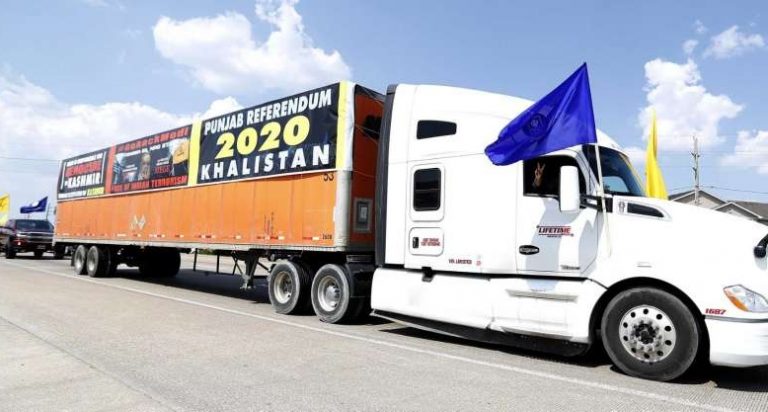
The protest organisers are planning to gather thousands of people for the protest, and they have arranged buses for the protesters to travel. On Saturday, the protesters held a “dress rehearsal” for the protests, where they drove tractor-trailers decorated with flags and protest signages from Sikh National Centre to the NRG centre, the venue of the “Howdy, Modi” event will take place.
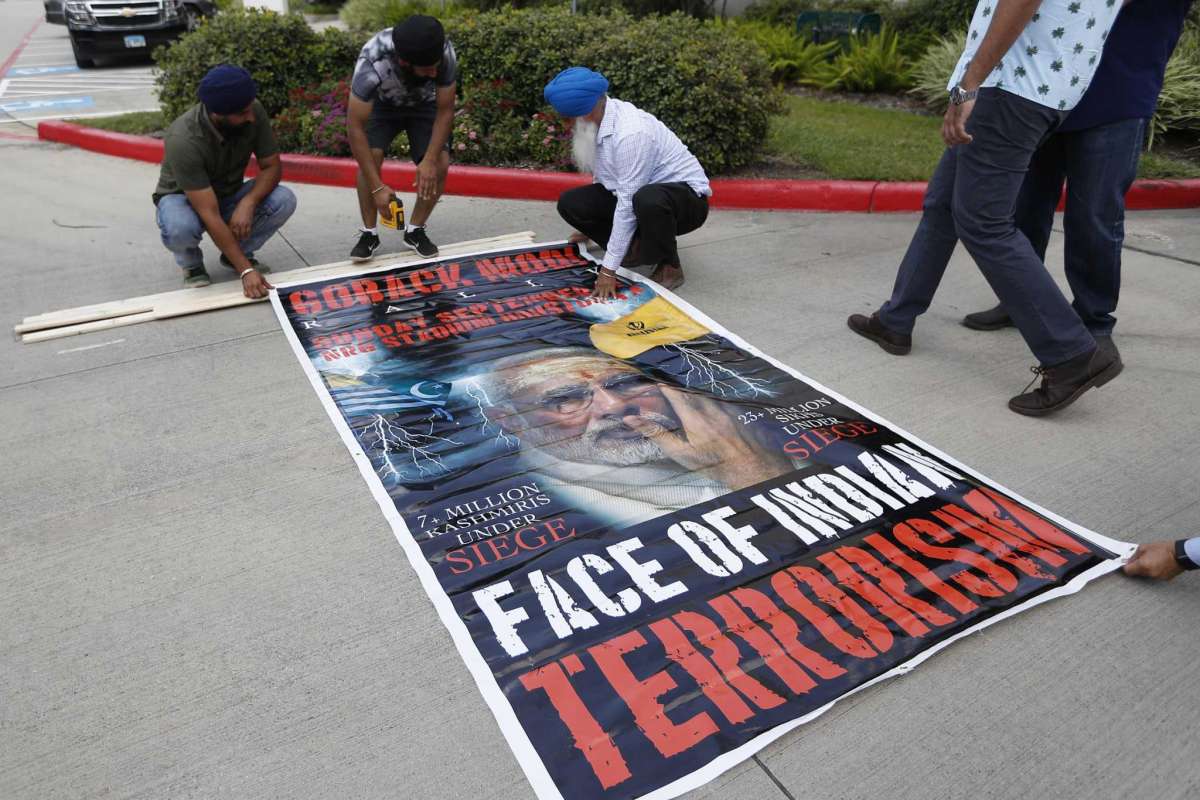
Messages like “Go back Modi”, “Stop the Killing in Kashmir”, “Punjab referendum 2020 Khalistan”, “Free Kashmir” etc were seen in the rehearsal for the rally.
Anti-Modi poster being prepared at Houston
The protests are being held under the banner of International Humanitarian Foundation, and they have published details of transportation facility for the protesters. It is interesting to note that all the locations, from where buses will travel to the event venue, are religious institutions. The organisers have published a list of 17 locations where buses will be stationed, and 16 of them are Mosques or other Islamic centres, while the rest one is a Sikh Gurudwara.
This is the list of the religious institution from where protesters can take buses to the venue.
Masjid Abu Bakr
Maryam Islamic Center
Masjid At-Taqwa
Masjid Hamza (Mission Bend Islamic Center)
Bear Creek Islamic Center/Masjid Al-Mustafa
The Woodlands Mosque
Islamic Center of Baytown
MAS Katy Center
Madrasah Islamiah
Al-Noor Society of Houston
Islamic Education Center
Pearland Islamic Center
Masjid al Salam
Sikh National Center
Mishkah Center
Cypress Masjid
Bilal Masjid North
Few of these mosques are identified as promoting radical Islam by the Clarion Project, like the Islamic Education Center and Masjid At-Taqwa.
The Sikh organisers of the protest talked to Houston Chronicle, and from their comments, it is apparent that they are linked with the Khalistani movement. Jagdeep Singh, one of the Sikh organisers of the protest, is working towards the 2020 Punjab referendum, a Khalistani separatist campaign seeking to organise a referendum in Punjab in 2020 for forming an independent Khalistan. Hardam Singh Azad, chairman of the Sikh National Center, said “it’s a protest rally for freedom”, clearly indicating that the protest is being organised by separatists.
On the other hand, Muslims who are protesting against Modi in Houston are Kashmir separatists. They are openly calling for freedom of Kashmir from India. At a Houston City Council meeting recently, some Muslims demonstrated against the Modi event, holding placards calling for Kashmir’s freedom and with messages against Modi, BJP and RSS.
I just spoke at @HoustonTX – Houston City Council – against #HowdyModi. Provided all 16 city council members with a 50+ page packet of three articles about #Modi, the #RSS (and its white supremacist connection and inspiration by the Nazis, and the RSS in America. pic.twitter.com/EYPCPhUyWF
From the comments of Peter Friedrich, a so-called South Asian Affairs analyst who organised anti-Modi protests during the city council meeting, it is clear that he is just spreading anti-India propaganda in the name of human rights. Peter Friedrich is known for his anti-Hindu views, who was in news recently for publishing an article attacking Gandhi, RSS and VHP.
Howdy Modi is a community summit hosted by Texas India Forum (TIF) for Indian Prime Minister Narendra Modi on Sunday, September 22nd at the NRG Stadium in Houston, Texas at 10 am. Over 50,000 attendees have already registered for the sold-out event through online registration. As per the organisers, it will be the largest gathering for an invited foreign leader visiting the United States other than the Pope.
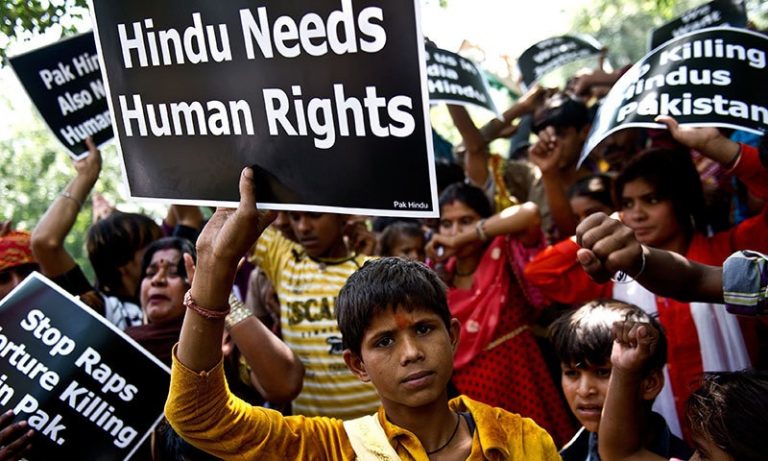
This is Namrita, a Hindu medical student in Pakistan who had her whole life ahead of her.
Hindu medical student, Namrita, who was killed in Pakistan
Her young life brutally cut short. The fate of so many Hindus in Pakistan who are regularly killed for their identity, their places of worship destroyed or desecrated, their daughters kidnapped and forcefully “married” off to Muslim men and so on…
Namrita’s death kicked off a Twitter trend in India that lasted for about 2 hours. Then, everything was forgotten. Even that was a lot of outrage by the standards of what usually happens when Hindus face persecution somewhere.
Of course, global human rights organizations, Nobel Peace Prize winners, etc had nothing to say about the case of Namrita. Why would they care?
As a kid, we all learn the saying: God helps those who help themselves. There are variants of this: if you want respect from others, you have to learn to respect yourself.
We should therefore be asking ourselves: Why do 1 billion plus Hindus need crumbs of sympathy from some global human rights organisation or some Nobel Peace Prize winner? Can we not learn to respect ourselves, speak for ourselves and throw around our weight on the world stage?
Concerns of Hindus anywhere should be problems of Hindus everywhere. If that becomes a reality, nobody can ignore us. There are 1 billion of us. Too many to ignore if we all speak up at the same time.
Hindus in our neighbouring countries regularly face persecution.
Talk to the average Hindu about the condition of Hindus in Pakistan or Bangladesh. Sadly, the most common reaction is one of indifference. A kind of sympathy, yes, but more of a sense of resignation. For the most part, Indian Hindus have given up on Hindus in Pakistan and Bangladesh. As if everything is already lost for them. Yes, Partition happened on the basis of religion. But under no circumstances can it be presumed that Hindus in Pakistan are no longer entitled to their basic humanity.
The attitude towards Hindus in Pakistan or Bangladesh extends for the most part towards Hindus of Kashmir as well. After Kashmiri Hindus were pushed out in the early 90s, it took 3 decades for the Indian government to take the mere first step to restoring their rights in Kashmir. In a democracy, this can only happen when a population is extraordinarily passive.
Ironically, the other side has invested very heavily in studying Hindu society, analyzing our weaknesses, documenting our fissures and how to deepen them. This is why they invest so much capital into any narrative that can tear Hindus apart: Region, language and of course, caste. And these people understand more than anyone else how powerful a united Hindu samaj could be. That’s why they jump on us with expressions like “Hindu Taliban”, “Hindu Pakistan” and smears like Nazi, etc as soon as we talk of united Hindu identity. Observe how they have to borrow all their metaphors from groups that subscribe to Islam, Christianity or Communism.
Again, blaming the other side only goes so far. What have we Hindus done to help ourselves? How have we played the public relations game? Have we taken charge of our own image?
Can you believe that the Citizenship Amendment Bill lies in tatters? The Indian Hindu majority is still not fully convinced that Hindus escaping from Pakistan and Bangladesh are asylum seekers who deserve special treatment. Many are still making this a matter of linguistic and regional identity. As if there is no common threat. As if Hafiz Saeed would check the linguistic identity of a Hindu before designating them as a kafir.
Take Mahatma Gandhi. Historical figures like him live on only in the manner in which they are presented before the world. Everything else is irrelevant. So what story does the world hear about Mahatma Gandhi? Observe how the other side uses Mahatma Gandhi’s message to make a highly successful case for their kind of politics. But the Hindu right has mostly failed to highlight the fact that the Mahatma’s message was rooted in his devout Hindu beliefs.
Therein lies the difference.
Or think about it this way: there is one religion out there which officially prescribes stoning to death as a form of legitimate punishment. Countries which subscribe to this religion often use it as their legal code and officially organize such events where people gather together and stone a human being to death. In 2019.
But who is being defamed across the world as a society of mob lynchers? The Hindus! Imagine how messed up that is.
How about that the religion that prescribes stoning to death? Well, that one is now better known as the ‘religion of peace.’
The important thing to realize is that many of the failures lie inside rather than outside. We don’t live in a perfect world. We can’t go through life expecting other people to selflessly do nice things for us. We can’t expect the global elite to do our PR for us out of the goodness of their heart. Why should they? Would you?
There are two essential things changes that are needed. Of course the first one is to unite, so that concerns of Hindus anywhere become concerns of Hindus everywhere.
But the second most essential thing is to master the language of victimhood, which is the new global currency. The age of empires is at an end. We live in an era where it only pays to play victim. Observe how others deftly play the victimhood game. They made us pay Jazia for hundreds of years, they tore up our country and somehow still managed to play victim! If fake victimhood can go so far, imagine what we Hindus can achieve with our real victimhood of being oppressed for 1000 years.
At one time, they used to call us Aryan invaders. Now they call it “migration” instead. A weasel word that they also use to describe Ghazni’s coming to India. As the skeletons of Rakhigarhi open up about the past, they sneer at us and call us “outsiders.” Why is no Hindu staring right back at them and saying: “My ancestors paid Jaziya to live in this land. Therefore, it’s mine. How’s that?“
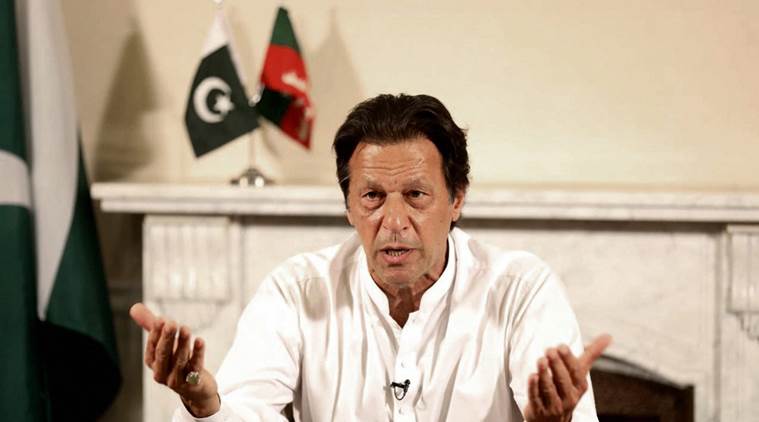
Each time Pakistan’s PM Imran Khan speaks, he touches a new low. This time, while speaking at a press conference in Peshawar, Imran ‘Taliban’ Khan attempted to trivialize a serious attack on the minority Hindus in Pakistan’s Sindh by calling the Ghotki attack a conspiracy to sabotage his UN visit.
Though he outwardly condemned the attack, he curiously stated ‘whoever did the attack’ knew when he was going to be at the UNGA. He further alleged that during Pakistan’s struggle for Kashmir, such attacks would only make India blame them.
“The incident I have seen in Ghotki village, whoever did it, I condemn the attack on our Hindu community strongly. This was done to sabotage my appearance at the UN. Our constitution treats everyone equally. So, whoever is doing this is against our religion and Constitution. Now when we are fighting for Kashmir, India will now see this attack and say such attacks happen within Pakistan also,” he said in the press conference.
Ghotkti attack on Hindu community was to sabotage Imran Khan’s UN speech. He says “jis ne kya hai”, an open secret kis ne kya hai. Brags about “my speech will be nothing like anyone has ever seen”. pic.twitter.com/8gySocU4JE
On September 16 (Sunday), an enraged Muslim mob ran amok in Pakistan’s Sindh province vandalising temples, properties worth millions of rupees and several shops belonging to the Hindu community after the principal of a school, who was a Hindu, was accused of committing blasphemy.
The frenzied mob attacked the SSD Dhaam Mandir and broke open shops in Jillani Market belonging to Suresh Kumar, Gopi Chand, Gurmukh Das and others in broad daylight.
The Human Rights Commission of Pakistan has taken cognisance of the matter and raised concerns over the “outbreak of mob violence”.
Later, a Muslim student in the area had confessed that he cooked up blasphemy charges against Hindu principal which led to violence on Hindus.
Moreover, reports had emerged that the attack was pre-planned by the goons of notorious Radical Islamic leader Mian Mithoo to cover up abduction of a Hindu girl. Reportedly, Mian Mithoo was seen inciting and leading a mob which later vandalised the Hindu temple in Ghotki and unleashed an attack on Hindus.
Interestingly, Mian Mithoo is currently being backed by powerful people and his rampage against the Hindu community is being supported by those people.
Mian Abdul Haq, commonly known as Mian Mithoo, belongs to an influential family in the Sindh province and is an influential political and religious figure in Ghotki. He had been elected as a member of the National Assembly from Ghotki in the elections of 2008 on a Pakistan People’s Party (PPP) ticket. He is also the custodian of a Muslim shrine, Barchundi Sharif.
The Ghotki incidence was one amongst the several cases of atrocities against minorities in Pakistan. There have been several other instances in the past where Hindus in Pakistan have had to go through extreme monstrosity. Merely a day after this violent Ghotki incidence, a Hindu medical student, Namrita Chandani, was found dead under mysterious circumstances inside her hostel room at a college in Larkana area in Ghotki region of Pakistan.
Prior to this, in the month of April, two Hindu girls, Reena, and Raveena from the same region, Ghotki in Sindh, Pakistan were allegedly abducted, forcefully converted to Islam and married off to older men.
Likewise, in March 2019, three back to back cases of forceful abduction and forced religious conversion of minor Hindu girls had been reported.
It is appalling that even when brutalities against minorities continue unabated in the terrorist state of Pakistan, it’s Prime Minister has the audacity to trivialise a serious attack on the Hindu’s by making it all about himself.
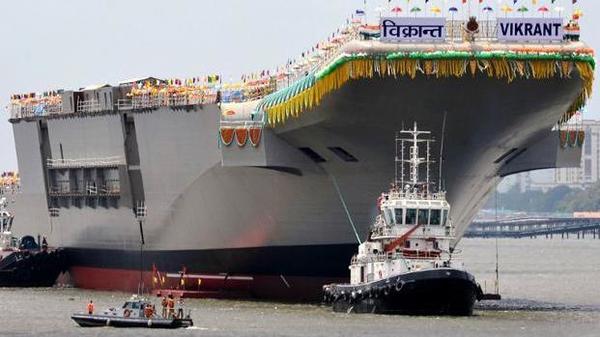
Indian Navy’s under-construction aircraft carrier INS Vikrant was vandalized at Cochin Shipyard Ltd (CSL), as per reports. Four hard disks, random access memory (RAM) and processor were stolen after dismantling four computers installed at the aircraft carrier.
A probe is currently underway but “an internal matter and a possible insider job” is strongly suspected to be the cause behind the theft and vandalism. The probe has been shifted to the State Police. Ernakulam South Police are investigating the complaint by the General Manager of CSL on Sunday.
“The private company handles daily watch and ward. It is a matter of probe if there was any insider hand in allowing someone to leave with the components,” a CISF official was quoted as saying by News18.
A private security firm was hired to watch over the construction area of the dock while the Central Industrial Security Force (CISF) was manning the dock for any suspicious movement or possible terror activity. “The disk contains sensitive information crucial for national security and a probe is underway to check if it was an insider job or not,” a person aware of the matter was quoted as saying by Mint.
“There are CCTVs outside the ship construction area. But there are no cameras inside the ship and the construction work is still going on. We are examining the visuals of previous days. The shipyard authorities have no idea when the theft took place. There are many computers installed by Bharat Heavy Electricals Ltd, based in Bengaluru. But the theft took place in four computers. We cannot disclose more details about the incident,” an investigation officer told TOI.
INS Vikrant, the construction of which began in 2009, is the most prestigious aircraft carrier indigenously built at the Cochin Shipyard. The 40,000-tonne aircraft carrier is at an advanced stage of construction and is being prepared to undergo a series of trial processes and tests before it becomes ready for propulsion and induction into the Indian Navy. The aircraft carrier is slated to be commissioned in 2021.
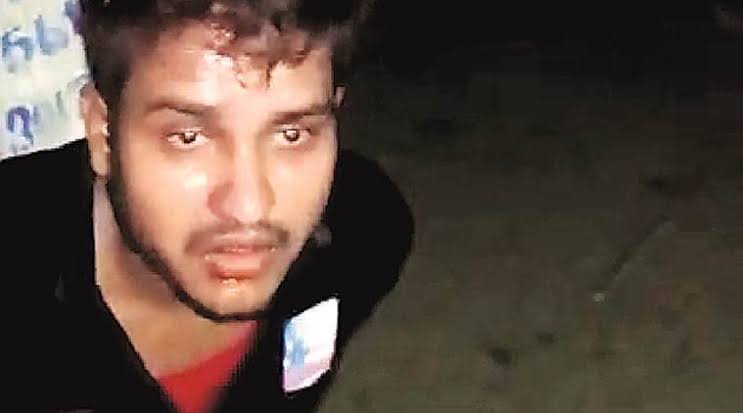
After having dropped the murder charges in the charge-sheet, the Jharkhand police has now taken a u-turn by reinstating the murder charge against the 11 accused.
The development comes within 48 hours of Shaista Parveen, widow of deceased Tabrez Ansari, threatening to commit suicide by self-immolation if justice was denied to her. On Wednesday, the Jharkhand police filed a supplementary charge-sheet in the case slapping murder charge against all all the 13 accused in the case.
Parveen had threatened to set herself on fire on Monday when it came to light that the police had filed a charge-sheet under section 304 of IPC — culpable homicide not amounting to murder. The incident took place in Dhatkidih village on June 18.
The press release issued by the police said, “The police have filed a supplementary charge sheet under section 302 on Wednesday along with other sections of IPC against previously accused 11 persons as well.”
In the earlier charge sheet, the accused were charged under section 304 and not under 302 of IPC. The press release also mentioned that two other people, Vikram Mandal and Atul Mahli, have been charged under sections 147, 149, 341, 342, 323, 325, 302 and 295 A of the IPC.
In addition, the Jharkhand Police said that in the first chargesheet, “opinion on the cause of death” was kept “reserved” in the viscera report. Regarding including the murder charge under Section 302 of the IPC, police claimed they had “additional evidence” in form of opinion sought from a second medical board of directors, which asserted that Ansari’s death was due to the combined effect of “injury and cardiac arrest”.
This year on June 18, some people had gotten into a fight with Ansari accusing him of trying to steal a bike. After police got information about the same, they reached the spot and rescued him. Police had also recovered the stolen bike and some other items. The Police gave him first aid, subjected him to a medical examination and then submitted the report to the Court, only then he was sent to jail. Three days later, his health deteriorated and he died. Therefore, the Police says it is wrong to claim he died due to mob lynching.
In June this year, the investigation team set up by the district administration to inquire into the matter of Tabrez Ansari’s death has concluded that he could have died as a consequence of stress-induced cardiac arrest. Tabrez Ansari was allegedly brutally beaten by a mob in Jharkhand on the 18th June on the accusation of theft. He had died on 22nd in police custody.