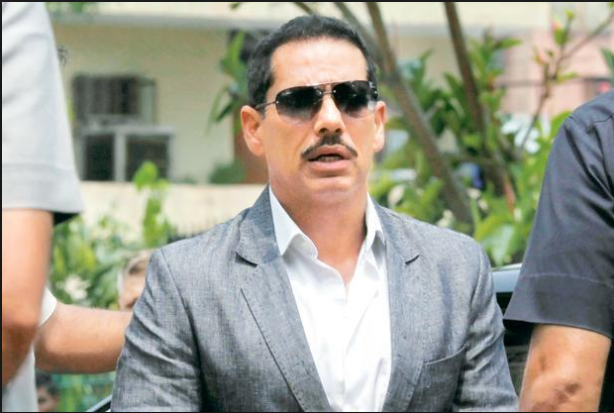
The Haryana Town and Country Planning (TCP) department is all set to cancel the colonization licence granted to Robert Vadra’s Sky Light Hospitality Private Limited in 2008, which was later transferred to realty company DLF Universal Limited for Rs 58 crore.
According to the reports, the Haryana government has decided to cancel the license given to Vadra’s firm after they found irregularities. The license was granted when the Congress party was in power in Haryana.
#Breaking | Sources suggest that Haryana government has decided to cancel the license of Robert Vadra’s company, Sky Light Hospitality Pvt Ltd.
According to KM Pandurang, director of TCP, the department had finished the procedural formalities for cancelling the licence in line with the provisions of the Haryana Development and Regulation of Urban Areas Act, 1975. He added that notices have been served to the colonizer and they have also been provided with an opportunity to be heard.
“The department has grounds for cancelling the licence as the mutation of this land was set aside by the then Director-General, Consolidation of Holdings in 2012, thus affecting the title of the land,” Pandurang said.
‘Mutation’ is the transfer or change of title of a property in the land records of the revenue department. One of the conditions specified during the grant of a colonization licence under the Act of 1975 is that licence holder should have a clear title to the land. A colonization licence allows the holder to set up a colony for residential, commercial or industrial purposes.
Meanwhile, spokesperson of the DLF said the company had followed all regulations and paid all dues to the government for the licence and applied for its renewal in line with official policy. The spokesperson added that the company will examine the cancellation order and would thereafter, decide the future course of action.
Reportedly, the colonization licence was originally granted to Sky Light Hospitality by the Haryana TCP department for setting up a commercial colony on 2.7 acres in Gurgaon’s sector 83 (Shikohpur). Vadra’s Sky Light Hospitality allegedly flouted the rules by selling 3.53 acres of land including the licensed area of 2.7 acres to DLF Universal for Rs.58 crore on September 18, 2012.
The Haryana TCP had given in-principle approval for the transfer of the licence to DLF in April 2012, but final permission for the transfer was not granted. Over the years, DLF Universal had been depositing a renewal fee with the TCP department for the licence on behalf of Sky Light Hospitality, but the department has not renewed the license after 2012.
In 2018, Haryana Chief Minister ML Khattar had said as the state government did not renew it, the licence was deemed to have lapsed.
A criminal case was also registered in Gurugram against Robert Vadra, Former Chief Minister Bhupinder Singh Hooda and others in the context of this land deal. Senior officer Ashok Khemka, the then Director-General, Consolidation of Holdings, had on October 15, 2012, set aside the mutation (number 4513) of Sky Light’s 3.53 acres, which brought the alleged scam into the public domain.
“A mutation was sanctioned without jurisdiction on Sept 20, 2012, to give effect to sale deed of September 18, 2012, by the assistant consolidation officer who is not a revenue officer. Only a revenue officer as defined in Punjab Land Revenue Act is competent to sanction mutations,” read Khemka’s order setting aside the mutation.
Khemka was targeted and harassed by the then Congress government for his decisive action against Vadra. The then BS Hooda government had charge-sheeted him. The charge sheet was dropped and Khemka was promoted when BJP came to power.
Robert Vadra’s firm Sky Light Hospitality is also under probe for alleged Income Tax violations and similar land deals in Rajasthan too.
Robert Vadra is under investigation in several cases by probing agencies, which includes money laundering and illegal land deal cases. According to ED, the money laundering case involves payment of Rs 300 crore in a defence deal and USD 10 million received in a petroleum deal. A 1.9 million GBP London based property allegedly owned by Vadra is also a subject of the probe.
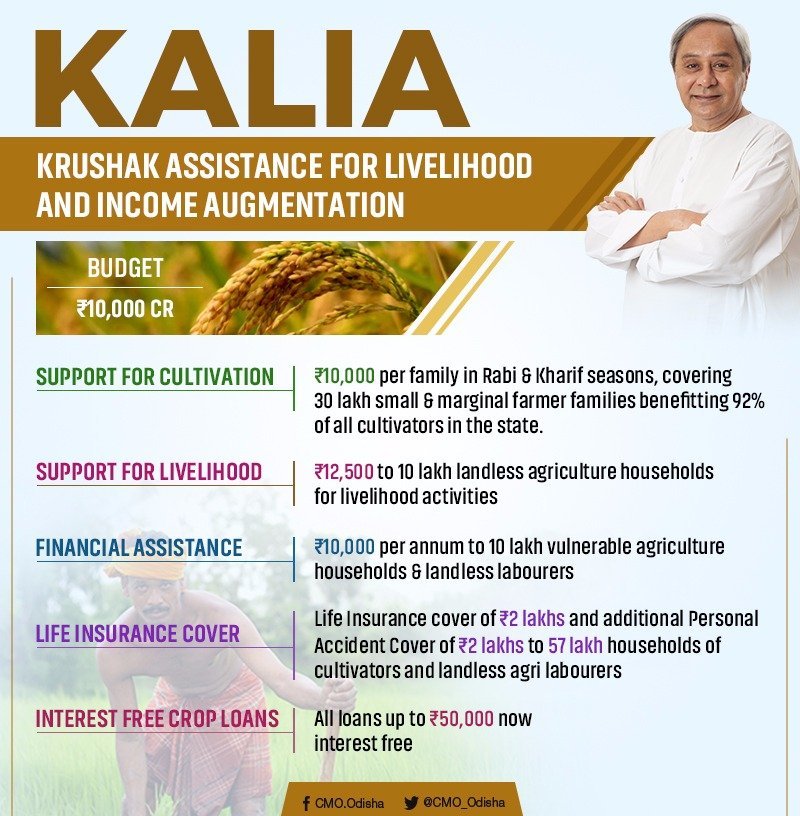
Before the 2019 general and Odisha Assembly elections, Navin Pattnaik-led BJD had announced a major cash benefit scheme for small farmers in the state. Termed ‘Krushak Assistance for Livelihood and Income Augmentation’ or ‘KALIA’ (the popular Odia word for Lord Jagannath) was meant to financially benefit millions of small and marginal farmers, and landless labourers in the state.
The KALIA scheme was seen as BJD’s speed-train that carried it successfully to a consecutive 5th term in Odisha. The main opponent BJP, despite winning a massive mandate in the national general elections, managed to get only 26 assembly seats out of the total 147 in Odisha.
Over 51.05 lakh individuals in the state had received Rs 5000 each under the KALIA scheme, in the first instalment. The scheme was announced in December 2018. The BJP had been alleging that the scheme is nothing but the state govt’s cash for vote plan in disguise. In March 2019, the Chief Election Commissioner of Odisha had stopped money distribution under KALIA scheme citing the model code of conduct before elections. One of the major pre-election promises of Navin Pattnaik was, a BJD government will transfer 2 instalments of KALIA (Rs 10,000) to beneficiaries on the very next day of coming to power in the state, and he did.
Interestingly, while the verification process and identification of eligible beneficiaries for a government scheme should ideally be done before the money gets credited, the Odisha government seems to have done the exact opposite. After distributing the money, adding thousands of new beneficiaries for every new instalment and winning en election riding on its popularity, the BJD government in Odisha took the verification process seriously only after allegations of genuine beneficiaries being left out started to surface.
Govt employees, pension holders, minors and big farmers got money
The state agriculture ministry under minister Arun Sahu appointed Panchayat level nodal officers and started the verification process for 51.05 lakh beneficiaries in August. The verification exercise was carried out from August 6 to August 31. Two days back, Odisha Agriculture Minister Arun Sahu informed that the process has discovered that over 3.41 people who have already got the money, were not eligible for the scheme. The loss to the state exchequer is pegged at a staggering 170 cores.
Government employees & pension holders who have availed benefits under KALIA scheme will be asked to refund the money or the amount will be adjusted against their salaries & pension: #Odisha Agriculture Minister Arun Sahoo #IneligibleBeneficiariespic.twitter.com/mQqnF3U9q2
Arun Sahu told that his ministry has identified that over 20,000 government employees and pension holders had posed as poor landless farmers to get the KALIA money. Over 9,000 beneficiaries are actually minor children and there are thousands of families who have received the money for multiple members. Over 12,000 beneficiaries are big farmers with landholdings of above 5 acres. Simply put, lakhs of people who have got the financial benefits were ineligible for it.
‘We told you so’, says opposition
Opposition parties are already in ‘We told you so’ mode. Congress leader Suresh Rautray said, “Only BJD workers and supporters have benefitted from the KALIA scheme while genuine eligible people have been left out”
BJP’s Pradeep Purohit said, “Since the days the scheme was launched we have been raising questions over its yardsticks for enrolling beneficiaries. The government had no yardstick. They only tried to buy votes by giving cash.”
No mechanism to verify beneficiaries
Minister Arun Sahu and most BJD leaders are totally silent on how exactly 3.41 lakhs people who were not eligible managed to register as beneficiaries and took the government’s money. Times of India has quoted one government officials as saying, “Instead of placing a mechanism to identify beneficiaries, the scheme relied on self-certification by people for their inclusion in the scheme. In the name of landless farmers, thousands of people without documents were brought under KALIA scheme. This resulted in large-scale errors”.
Odisha govt says ‘we will get the money back’
CM Naveen Pattnaik has said that the government will try and bring the money back. Arun Sahu has stated that the government employees and pensioners who have taken the money will be asked to give it back. Else the amount will be deducted from their respective salaries or pensions. The money that was released in the name of minors will be adjusted while granting the next instalments to their parents and for the families who have received money for two members, it will be considered two instalments of the KALIA scheme.
Conclusion
While the government may make grand statements claiming they will recover the money, for practical purposes, it seems a distant dream. They might manage to recover the amount from the government employees and pensioners, but recovering the amount from other ineligible persons, whose numbers run in lakhs, seems doubtful.
The questions that arise now is, will the Odisha government admit openly that in the hurry to ensure votes, they overlooked the fact that they did not have a system in place to check misappropriations at this large a scale? In 2017 and 2018, there were several reports on how the mandatory AADHAR had identified 4.4 lakh fake students in mid-day meal schemes in just three states. There is a long list of schemes where thousands of crores of public money has been wasted due to cheating, false claims and middle-men. In 2018, the central government had informed that AADHAR-based verification for DBT schemes had saved the public exchequer a whopping 90,000 crores. It is indeed a sad spectacle that despite tools being available for effective verification and identification of an eligible beneficiary, there are political parties willing to throw away money at people, just to ensure votes, not sparing a thought for the loss that it causes.
The issue also puts a giant question mark on the public. While we demand development and facilities as per twenty-first century standards, there are people among us who are willing to claim government money that they do not have any right to, the money which could have brought some respite to a poor landless labourer’s family struggling to make ends meet.
A Pakistani spy, part of a larger espionage network, has been caught by the military intelligence from Gurdaspur in Punjab. The accused has been identified as Vipin Singh, a resident of Tibbry area of Gurdaspur.
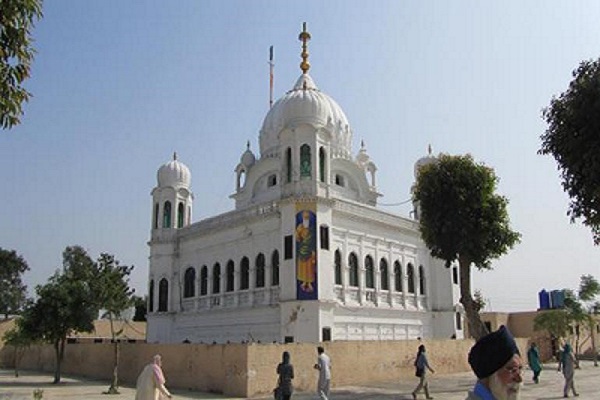
According to an India Today report, the accused Pakistani spy was sending photographs and information related to the construction of Kartarpur corridor to his handlers in Pakistan through his WhatsApp number. The accused Vipin was promised a payment of Rs.10 lakh to supply the photos and vital information.
The accused informed the intelligence officers that his Pakistani handlers had asked him to supply some other secret information besides the Kartarpur corridor.
After the interrogation, the alleged spy has been handed over to the police. However, details are yet to emerge in the case after his interrogation. With his arrest, the suspicions of Pakistan’s intelligence agency Inter-Services Intelligence (ISI) misusing the corridor for anti-India activities have been proved right.
Earlier, the Chief Minister of Punjab, Captain Amarinder Singh had warned the country about Pakistan’s treacherous plans to use the Kartarpur corridor to inflict terror on India, especially by reviving Khalistani terror. Captain Amarinder Singh had reiterated his position on the opening of the Kartarpur Corridor by Pakistan. He claimed that it is an ISI ploy to strengthen anti-India forces, including the Sikhs For Justice (SFJ).
“The entire affair of Kartarpur Corridor smacks off a wider conspiracy by the Pakistan Army and ISI to dismember India by reviving militancy in Punjab,” Amarinder Singh had warned.
On November 22 last year, the government of India had announced its intention to build the Indian side of the Kartarpur Corridor and had urged Pakistan to reciprocate by building the corridor on Pakistan side.
Senior Congress leader Navjot Singh Sidhu had caused a severe controversy after he posed with Khalistani terrorist Gopal Singh Chawla during his controversial visit to Pakistan to inaugurate the Kartarpur corridor.
As the Indian government sought permission from Pakistani authorities to allow PM Modi to fly over Pakistani airspace during his upcoming trip to the United States, social media users reminded the history of Pakistan’s monstrosity of shooting down a civilian aircraft carrying the then Gujarat Chief Minister Balwant Rai Mehta for allegedly entering its airspace.
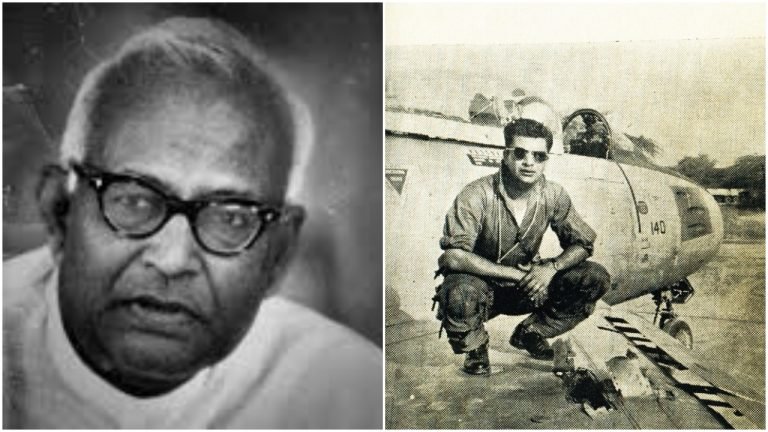
On 19th September 1965, we were in middle of the 1965 India-Pakistan war. The then Chief Minister of Gujarat, Balwant Rai Mehta, a tall Congress leader died after the civilian aircraft he was travelling with seven others was shot down by a Pakistani airforce pilot near Indo-Pak border in the Rann of Kutch.
Mehta took the Beechcraft Model 18 twin-engine light aircraft to Mithapur near the India-Pakistan border. Former Air Force pilot Jehangir Engineer was piloting the aircraft along with a colleague.
The flight took off from Ahmedabad airport toward Mithapur with Mehta, his wife Saroj, a journalist from Gujarati daily Gujarat Samachar and three aides of Mehta. The flight was expected to land in Mithapur at around 3 PM.
At around 3:30 PM in Pakistan (3 PM IST), Flight Lt A I Bukhari and Flying Official Qais Hussain of the no. 18 Squadron were asked to check a ‘suspicious’ radar contact south-west of Bhuj in Kutch, Gujarat. The duo scrambled and around 15 minutes later, Hussain took off. Around twenty minutes later, Hussain entered Indian Air Space at 20,000 feet.
Hussain then ‘spotted the target’ read that the number started with VT and informed the air base in Pakistan about it. Hussain was asked to standby till further instructions and he kept hovering on top of the aircraft. A few minutes later, Hussain got the message he was ‘clear to shoot’.
Hussain positioned his plane behind the aircraft carrying Mehta which had begun to climb up and wagging the wings to signalling it is a civilian aircraft. Hussain paid no heed and took first shot. A splinter flew off the left wing of the plane. He then fired toward the right wing. The plane was unsteady but still flying. Soon, the right engine caught fire and the took a 90 degree vertical dive. It soon blew into a ball of fire, just off the coast.
Hussain then quickly turned back. Pakistani Air Force shot down a civilian aircraft after entering Indian Air Space because it was ‘flying very close to the border for considerable period of time’. Pakistani Air Force suspected that Indian Air Force was using a civilian aircraft for a recce.
Four days later, on 23rd September, 1965, Pakistani dictator Ayub Khan declared ceasefire.
According to Twitter user Adivaraha, Mehta’s tour to the Kutch area was already announced in newspapers.
Balwantrai Mehta – 2nd chief minister of Gujarat..His plane was shot down by PAF in 1965 while he was touring in the border area of Kutch, Gujarat, knowing fully that it was a civilian aircraft. https://t.co/j57BAd7F2c
The Pakistani military, which was already humiliated in the war wanted to capture plane carrying him and his wife as a trophy. The Pilot flying the plane carrying Gujarat Chief Minister Mehta was Jahangir Engineer, one of the celebrated pilots of the Indian Air Force.
Forty-six years after the incident the pilot of the Pakistani fighter aircraft pilot wrote a letter to the daughter of the chief pilot of the Beechcraft and apologised to her. In his letter, he went on to blame Indian media from that time for portraying the incident the way they did ‘due to lack of information’.
The letter was addressed only to Farida Singh, daughter of Jehangir Engineer, the pilot. There were seven other people, including the then Chief Minister of Gujarat and his wife, onboard who were killed because the Pakistani Air Force pilot could.
It does not appear that the pilot, who was somehow ‘forgiven’ by the Indian media for the ‘mistake’ after he offered the ‘healing touch’, or the Pakistani government, ever apologised to Balwantrai Mehta or his family. Or the other members who were killed in that ball of fire. It is almost as if they were expendable.
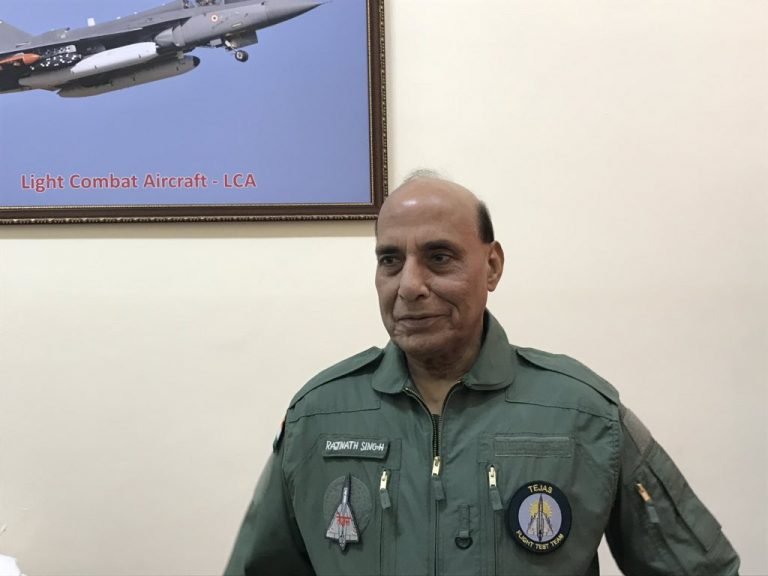
He became the first ever defence minister to fly the indigenous LCA. He was accompanied by Air Vice Marshal N Tiwari Project Director, National Flight Test Centre, ADA (Aeronautical Development Agency) in the familiarisation sortie.
Prior to this, former Defence Minister Nirmala Sitharaman had flown in the Sukhoi 30 MKI jet, becoming the first ever woman defence minister to go on an all-weather, long-range aircraft sortie.
On Wednesday, the American army band played the Indian National Anthem, ‘Jana Gana Mana’, during a joint exercise between the Indian and US Army in Washington.
In a video shared on social media platforms, the US Army band can be seen playing the national anthem of India. The anthem was played on the last day of joint India-US military exercise, the Yudh Abhyas 2019.
#WATCH USA: American Army band playing Indian National Anthem during the Exercise Yudh Abhyas 2019 at Joint Base Lewis, McChord. pic.twitter.com/J9weLpKD3X
Yudh Abhyas- the joint military exercise between India and the US began on Friday in Washington as part of the ongoing defence co-operation between the two nations. It is being conducted at the Joint Base Lewis McChord, Washington. The 2019 edition of Yudh Abhyas started on September 5 and ended on September 18.
Yudh Abhyas is a series of one of the longest-running joint military training and a major ongoing bilateral defence cooperation endeavour between India and the US.
During the Yudh Abhyas – 2019, the officers said that armies of India and the US will jointly train, plan and execute a series of well-developed operations for neutralization of threats of varied nature during the exercise.
A joint exercise will be undertaken by both countries in an operational setting under a UN mandate. Experts from both sides will hold academic and military discussions to share each other’s experiences on varied topics for mutual benefit.
Earlier, the Indian and American soldiers took part in the joint military exercise were seen singing and dancing to the popular ‘Badluram ka Badan’, the marching song of Assam Regiment. A video of the soldiers tapping their feet to the song went viral on the internet last week.
This year’s exercise will be the 15th edition of the joint military exercise hosted alternately by both countries. Last year, the joint military training exercise was held in the Himalayas at Chaubattia, Uttarakhand.
A Miami aircraft maintenance worker who had tampered with an American Airlines plane carrying 150 passengers has possible terrorist ties with the terrorist group Islamic State, the US prosecutors said in court Wednesday.
According to the reports, 60-year-old Abdul-Majeed Marouf Ahmed Alani, who was arrested in September on charges that he sabotaged the navigation equipment of an American Airlines flight, had shared videos stored on his phone of ISIS terrorists, the prosecutors said.
The prosecutors said Alani was an Iraqi born naturalized US citizen, had made statements wishing Allah would use “divine powers” to harm non-Muslims. He had recently sent money to someone in Iraq and has a brother there, who allegedly has ties to the Islamic State.
A federal judge also deemed that Alani was danger and a flight risk and denied bail to 60-year-old mechanic citing new evidence of him being a potential terrorist sympathiser.
Alani, a naturalized U.S. citizen from Iraq who has worked as an airline mechanic for 30 years, allegedly had ISIS propaganda on his phone, Assistant U.S. Attorney Maria Medetis said. A video depicting people being shot was allegedly sent from his phone. Alani also told the individual he sent the video to that he wanted Allah to cause harm to non-Muslims.
Reportedly, the two witnesses appeared before the court and mentioned that Alani had said to them that his brother was in ISIS. An American Airlines coworker claimed that Alani said he had to go to Iraq to visit a brother who was a member of ISIS. However, another roommate alleged that Alani said he had to go because his brother was kidnapped.
Reportedly, the American investigators did not find any evidence of Alani’s brother being kidnapped on the phone. They did provide evidence of a brother in ISIS, though. Interestingly, Alani has not been charged for a terrorism-related crime.
Abdul-Majeed Marouf Ahmed Alani, the mechanic is accused of sabotaging flight equipment admitted that he tampered with a navigation system on the plane so that he could collect overtime work. Abdul Majeed had confessed that he had tampered with the air data module system on Flight 2834 from Miami to Nassau in the Bahamas on July 17 because he was disgruntled about an impasse over a union contract, according to a criminal complaint filed in federal court.
Fortunately, none of the passengers and crew on the flight to Nassau were injured because the tampering with the air data module caused an error alert as the pilots fired up the plane’s engines on the runway July 17.
As a result, flight No. 2834, a Boeing 737-800 aircraft was aborted and taken out of service for routine maintenance at America’s hangar at Miami international airport.
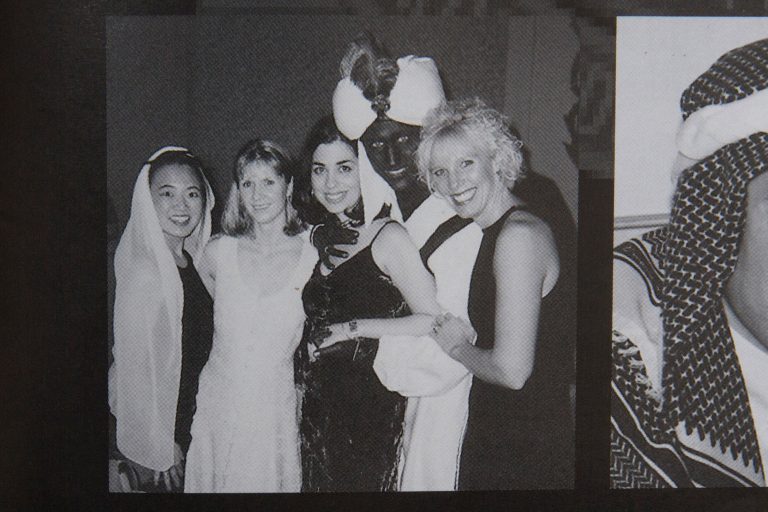
Canadian Prime Minister Justin Trudeau, who started his reelection campaign for upcoming polls in Canada on September 11, wore a racist ‘brownface’ make up at a party in the private school he worked at as a teacher back in 2001. As reported by TIME, the picture was taken at an ‘Arabian Nights’ themed gala where Trudeau had worn brown makeup on his face, neck and hands and is also sporting a turban and robes.
Trudeau, the son of former Canadian Prime Minister Pierre Trudeau, was 29-years-old back then when the picture was clicked. It appeared in the 2000-2001 yearbook of the West Point Grey Academy where he was teaching.
Following the publication of the photograph, Trudeau has apologised for the same. “I shouldn’t have done that. I should have known better and I didn’t. I’m really sorry,” he said. He even added that back then he did not consider it racist but now he “knows better”.
Trudeau, however, by his own admission been quite “enthusiastic about costumes than is sometimes appropriate.”
Reporter: “Do you want to tell Canadians about any other instances where you are concerned that you were racist?”
Trudeau: “I’ve always — and you’ll know this — been more enthusiastic about costumes than is sometimes appropriate.” pic.twitter.com/zFrW363cBE
As per reports, Jagmeet Singh, leader of the New Democratic Party in Canada said that Trudeau’s behaviour was “troubling” and “insulting” while National Council of Canadian Muslims found his appearance with ‘brownface’ “disgraceful”.
Turns out this was not the first time he wore such racist makeup. When Trudeau was in high school had worn the brown make up to sing ‘Day-O’, a Jamaican folk song performed by African-American singer and civil rights activist Harry Belafonte. However, Trudeau “deeply regrets” he did it.
Canada is set to go to polls on 21st October and Trudeau is seeking reelection. Pollsters in Canada suggest it will be a close competition between Trudeau and his opponent Andrew Scheer.
The Union government on Wednesday banned e-cigarettes in India, citing health risk to youths and children. The cabinet approved an ordinance making the production, manufacturing, import, export, transport, sale, distribution or advertisements of e-cigarettes a cognizable offence.
16 states and 1 union territory had already banned e-cigarettes in the year 2018, following an advisory by the central government. They include Punjab, Karnataka, Mizoram, Kerala, Jammu & Kashmir, Uttar Pradesh, Bihar, Maharashtra, Tamil Nadu, Jharkhand, Himachal Pradesh, Puducherry, Rajasthan, Meghalaya, Odisha and Nagaland.
E-cigarette or electronic cigarette is a small electronic device which is used as an alternative to traditional cigarette. They are the most common form of Electronic Nicotine Delivery Systems (ENDS). It is a handheld battery power vaporiser which produces an aerosol or vapour by heating a liquid, and that vapour is inhaled. This provides an experience similar to smoking cigarettes, but without burning tobacco.
An e-cigarette is made up of a mouthpiece, a cartridge where the e-liquid is stored, a heating element or atomiser, a microprocessor, a battery, and some may have a LED to simulate the burning of a cigarette. There are some mechanical cigarettes also which do not include any electronic and is activated by a mechanical switch. The atomiser heats and vaporises the liquid solution, a wicking material carries the vapour to the mouthpiece through which it is inhaled by the user. Some devices have a push button to take a puff, while others are automatic which have sensors to detect inhaling and activate the atomiser.
e-cigarettes in various shapes
The liquid used in e-cigarettes generally contain propylene glycol, glycerine, nicotine, flavourings, additives, and various amounts contaminants. E-cigarettes liquids are available in various flavours, and the various formulations of the liquid is are produced. According to a WHO report in 2014, almost 8,000 different flavours were available in the market.
Since its introduction in 2003, the e-cigarette market has expanded rapidly. They have become extremely popular among teens and youths, contributed by attractive advertisement, easy availability, variety in flavours, and the belief that they are safer than cigarettes. E-cigarettes were even promoted as a way to quit smoking.
e-cigarettes also come disguised as various objects like pen, flash drive, lipstick etc, making it easy for use by teens undetected
As most e-cigarette formulations contain nicotine, this had triggered concern that e-cigarettes will lead to nicotine addiction, and resulting in same health risks as cigarettes. Nicotine is highly addictive drug, and it is equally harmful whether it comes from burning tobacco or heating a liquid.
E-cigarette formulations also contain various kinds of additives and flavours, which pose additional health risks. Some formulations also have been found to contain known carcinogens and toxic chemicals. Dangerous metal particles also may get inhaled from the heating element and the body of the device itself. The devices contain toxic elements like nickel, chromium, cadmium etc, and their particles can get mixed with the aerosol inhaled by the ‘smoker’. E-cigarettes can also be used to inhale other narcotic substances, posing another risk.
Due to the potential health risks of e-cigarettes, many countries have regulated it, and some have banned it. Several countries like Brazil, Mexico, Argentina, Singapore, Uruguay etc have banned it. Japan, Australia, Canada and few others have highly restricted it. In many other countries, including UK and US, only adults can buy e-cigarettes. The EU limits e-cigarette advertisement, and has ordered reduction in level of nicotine and flavours used. In some US states, flavoured formulations have been banned, as it has been found that various flavours make them attractive for non-smokers, which in turn make them addicted to nicotine and convert them into smokers.
The notification issued by government says that while e-cigarettes are promoted as safer alternatives to cigarettes, they actually induce non-smokers, especially teens and youths, towards nicotine use, which leads to addiction and use of conventional tobacco products.
The health risks of e-cigarettes are no longer a matter of debate, and the decision to ban it can’t be questioned. But this raises another question, why ban it when the traditional cigarettes are still allowed? This was asked by many on social media after the decision of government of India was announced. Some people argued why ban it when it can be taxed heavily like cigarettes.
Why ban when you can tax (heavily)?
Banning #ecigarettes while keeping tobacco products is bizarre. Neither health nor fiscal grounds for this decision, so what’s the logic? https://t.co/XYl6i2R9hG
Some people also wondered if the cigarette manufacturers and the tobacco lobby, including tobacco farmers, are behind the decision. The share prices of cigarette manufacturers indeed went up today after the decision was announced.
Trade bodies, users term ordinance to ban e-cigarettes a draconian move – [Seems Tobacco lobby sponsored ban without any medical or scientific study] https://t.co/VUDF12J5GB
The decision to ban e-cigarettes will restart the debate on banning cigarettes, and indeed it seems puzzling why government banned e-cigarettes citing health effects while continuing to allow the sale of cigarettes.
Although it is true that government earns huge revenue from cigarettes due to high taxes on it, it is unlikely that they are not banned due to the taxes. The government also spends huge amount of money in medical treatments of diseases arising out of tobacco consumption, which probably sets off the tax earned on cigarettes. Tobacco inhaling leads to various diseases like heart ailment, cancer, stroke etc, and many people suffering from such conditions avail treatment at government run hospitals.
Currently, most e-cigarettes are imported in India, and the ban will not affect any manufacturing, although it will have an effect on the traders. While only importers and retailers will be affected, any ban on cigarettes will have much wider implication, as lakhs of people are involved in tobacco farming, and work in cigarette manufacturing units. Cigarettes also earn export revenue, which is not the case with e-cigarettes.
Although it has been alleged, it is unlikely that the Modi government came under the pressure of cigarette manufacturers to ban e-cigarette. The government has taken several steps which were not liked by corporates, so it is unlikely for the govt to blink in front of cigarette companies. But the cigarette companies are not the only ones associated with the larger tobacco industry, it also includes the tobacco farmers and the unorganised sector involved in the beedi industry. And this is where it becomes very difficult to take a decision when the livelihood of a large number of farmers and small scale industries are at stack.
In fact, just recently the Bhartiya Kisan Union had requested the government to ban e-cigarettes in the country. In a letter sent to agriculture minister Narendra Singh Tomar and commerce minister Piyush Goyal on Monday, the union had said that if e-cigarettes are allowed in India, it will have a devastating effect on the tobacco farmers in India. They have said that e-cigarette companies who are trying to open shops in India are from outside India and they do not procure tobacco in India.
They had said that the extraction of nicotine from tobacco is done outside India, using tobacco grown outside India. The raw material used in the production of e-cigarette formulation is tobacco dust, which is produced during the processing of chewing and beedi tobacco, no fresh tobacco is used to extract nicotine, BKU had said.
Another important factor behind many countries prioritising ban on e-cigarettes is that, globally the use of cigarettes is coming down among teens and youths, while e-cigarettes are extremely popular among them. Due to declining popularity combined with increasing anti-tobacco campaign and rising awareness about tobacco-related diseases, cigarette sale has declined in recent years, which is a trend seen in globally too. On the other hand, the sale of e-cigarette is steadily rising, and it is more popular among teens and youths.
On the argument of why not tax e-cigarettes at high rates also like cigarettes to discourage its use, it has been seen that high taxes do not hamper the sale of cigarettes. Taxes are raised regularly on cigarettes, but it has not resulted in a decrease in cigarette consumption. Therefore, it was unlikely that imposing high taxes would have discouraged the use of e-cigarettes.
Banning cigarettes will be a highly controversial decision, and will face massive protests from farmers and other stakeholders, and that is the reason perhaps why no government has not banned it yet. As no such opposition is expected from banning e-cigarettes, it was an easier decision to take. It was a good decision to ban e-cigarette before it became difficult to do it, before the industry developed any serious clout in the country. And this is not the case with only India, cigarettes are not completely banned in any country, while several have banned e-cigarettes.
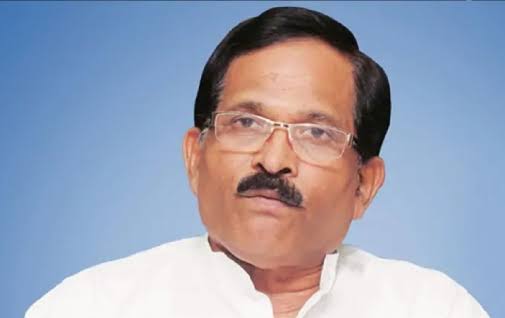
The Minister of State Defence and Minister of Ayush, Yoga and Naturopathy, Unani, Siddha and Homeopathy(AYUSH) was recently seen in videos singing religious hymns about Gods and himself getting into the water to immerse the Ganesha idol.
In the above video, the former Union Minister for Health and Family Welfare can be seen singing devotional hymns to Gods.
Naik has been a passionate Ganesha devotee as in a previous video uploaded on September 7, 2019, the MoS Defence and AYUSH jumps in the water to immerse the Ganesha idol in his Adpai village in Goa.
In this video, Shripad Naik is seen diving in the water while carrying along with him a Ganesh idol. He subsequently immerses the Ganesh idol and then swims back to the shore.
In November 2014, Shripad Naik was anointed as the Minister of State Defence and five years later in 2019 after the Modi government came back to power with an even greater majority, Naik was entrusted with the Ministry of AYUSH. Naik was first elected in the 13th Lok Sabha in 1999 and since then has held his seat of North Goa winning in 2004, 2009, 2014 and 2018 elections.