Home Blog Page 6304

PIA passenger accidentally opens emergency exit door thinking it is toilet, delays flight by seven hours

A female passenger on Islamabad-bound Pakistan International Airlines (PIA) flight from Manchester accidentally opened up the emergency exit thinking it is the toilet, causing the emergency chute to activate. The incident took place when the plane was on the runway, ready to takeoff. During the investigation, the woman revealed that she thought the emergency exit door was the toilet.

As per standard procedure, all the passengers and their luggage was offloaded. The passengers were then adjusted on the next available flight. PIA chief Air Marshal Arshad Malik has ordered inquiry into the incident.

Activating an emergency chute can cost an airline anything between USD 25,000 to USD 30,000. In 2016, when a United Airlines flight attended decided to quit her job in a dramatic fashion by opening the emergency exit and sliding out of the plane without any explanation, experts had said that it may cost the airline as high as UDS 30,000. In 2010, another flight attendant with JetBlue made such an unexpected exit through the emergency exit after an argument with the passenger. That, too, cost the airline USD 25,000.

Video: Crowd shouts ‘chor, chor’ as Vijay Mallya leaves The Oval after India-Australia cricket World Cup match

Fugitive liquor baron Vijay Mallya was in for a rude shock as he left The Oval cricket ground after the India-Australia Cricket World Cup match after India beat Australia by 36 runs. As he tried to leave the cricket ground, the crowd started shouting ‘chor, chor’ as he made his way out.


Earlier, outside the cricket stadium, as he was entering, he was asked about his extradition hearing to which he replied he was there at the stadium to watch the match. Mallya’s next hearing for extradition is scheduled for July. He is accused of defrauding Indian banks to the tune of Rs 9,000 crore.

Last year, in the month of December the Westminster Magistrates’ Court had passed an order of extradition of the liquor baron. The extradition order was approved by the UK government after the UK Home Secretary signed the extradition order against Mallya in February this year. Mallya had filed an application seeking an appeal against the extradition order of the UK government in a UK High Court. However, his appeal was rejected by the High Court. After the court’s denial,  India had decided to send a special team to London to help the Crown Prosecution Service (CPS) in the oral hearing of Mallya’s anti-extradition appeal in the UK High Court.

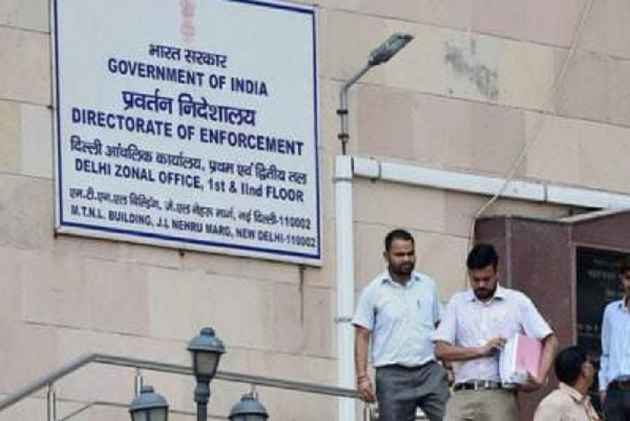
Mallya is facing the charges of money laundering, fraud, and Foreign Exchange Management Act (FEMA) violations. His company Kingfisher Airlines owed a debt of around 9000 crores to the creditors. An investigation conducted by the Enforcement Directorate had revealed that Mallya had no intention to repay these loans.

Virat Kohli, winning matches and hearts at same time

A great moment in cricket world cup arrived when Virat Kohli asked the crowd to stop booing and applaud the Australian cricket, Steve Smith, who was fielding at the boundary. ICC termed this moment as the Spirit of Cricket.

The crowd has been into booing mode ever since Smith landed in England. He was booed in the warm-up games and then again in the first two games of the World Cup. Before Kohli, English off-spinner, Moeen Ali also appealed to the spectators not to boo Smith during the World cup. Steve Smith was banned, along with Warner and Bancroft, for a year after they were caught rubbing the ball with sandpaper, to help it swing more.

In the press conference on crowd booing Steve Smith, Kohli said “He has apologized, and come back. He has been down. It is not okay to boo & didn’t want the Indian crowd to set a bad example. He doesn’t deserve to be booed. So I apologized to him on behalf of the crowd.”

Watch: Kohli asked the crowd to applaud Steve Smith


Kohli further added, “What happened, happened long back. He’s back, trying to play well for his side. Not good to see someone down like that. You don’t want to see a guy feeling heat every time he goes out to play.”

Steve Smith already said after the warm-up game against England that he pays no attention to the crowd.


Virat Kohli, who is known for his aggressive nature, had once shown the middle finger to the Australian crowd during his first tour of Australia. But then he was young, and eight years after that incident, Kohli has matured a lot. He is now the Indian captain and he leads from the front, he apologized on behalf of the Indian fans.

“I just felt for him, and I told him sorry on behalf of the crowd because I have seen that happen in a few earlier games as well. In my opinion, that’s not acceptable,” said the Indian captain.

India will play New Zealand in their next encounter on Thursday.

Another sandpaper moment? Aussie spinner Adam Zampa found doing something suspicious with the ball during India match

One year ago in the month of March, three Australian players were found guilty of ball tampering in a Test against South Africa.

David Warner was banned for 12 months from playing international and domestic cricket, and he was also banned from captaincy for life. Steve Smith was also banned for 12 months from playing international and domestic cricket, also from captaincy for 12 months after the completion of his ban. Cameron Bancroft was banned for only 9 months. They were caught rubbing the balls with sandpaper, to help it swing more.

But it seems like spinner Zampa hasn’t learned anything from the sandpaper saga. During the India-Australia clash in the World Cup on Sunday, Adam Zampa was found doing a suspicious activity during the Indian innings. If you look at the below photo carefully, you will see Zampa is doing something unusual.

Is Zampa doing something here? ©Twitter

In the first and second part of the photo, it seems Zampa is searching for something in his pocket, and in the third part of the photo, it looks like he is rubbing the ball. Although it could be a finger warmer which is allowed by ICC. It will be interesting to see how the ICC reacts to these on-field moments.


Ball tampering is not new to cricket. Different teams have tried to change the condition of the ball in their own way.

In the recently concluded World Cup match between England and Pakistan, umpires spoke to both teams to warn them not to throw the ball into the turf unnecessarily. Both the teams were using the tactic excessively in a bid to alter the condition of the ball.

In the early 90s, Pakistani bowlers were accused of ball tampering to swing the ball more than usual using bottle caps. Former Kiwi captain Martin Crowe bowler Chris Pringle even admitted that they tampered the ball against Pakistan in 1990. Both confessed after their respective retirements, insisting Pakistan were doing it too and the local umpires turned a blind eye to both teams’ actions.

Kanpur: Minor girl raped by a Maulvi in a Madarsa, accused arrested

An incident of rape of a 16-year old girl by a Maulvi in a Madarsa in Machhariya in Naubasta Police station area of Kanpur has come to light. The victim used to study in the Madrassa where the accused Maulvi used to teach. The news of the rape of the minor girl sent a wave of shock in the area. The accused Maulvi had gone into hiding after his actions became public. However, the police were able to nab him by tracking his location through his phone.

According to the police, a case has been registered against the accused Maulvi under Prevention of Children from Sexual Offences (POCSO) Act, 2012 and Section 376 of the IPC. The victim has been sent for medical examination. An investigation is being carried out by the police in the case.

The incidents of sexual abuse against minor girls do not seem to stop. Only a few days ago the news of brutal rape and murder of a 3-year old girl by one Zahid in Tappal, Aligarh had shaken the nation. The minor girl was subjected to unimaginable degrees of torture and was killed over a loan of Rs 10,000 that the girl’s father had taken from the culprit.

Birsa Munda, a tribal legend who was a nightmare for Christian missionaries during the British Raj

Even though he lived for just 25-years, Birsa Munda is one legend who has made a long-standing impact on India’s fight against the British. A young freedom fighter and a tribal leader, whose spirit of activism in the late nineteenth century, is remembered to be a strong mark of protest against British rule in India.

Birsa Munda – a tribal freedom fighter, religious leader and a folk hero belonged to the Munda tribe. Birsa Munda spearheaded an Indian tribal mass movement that arose in the tribal belt of modern Odisha, Bihar, Jharkhand, Madhya Pradesh and Chattisgarh in the late 19th century during the British Raj. Munda is one of the most important faces of Indian tribal movements against the British, who inspired various tribes not only Mundas but also Kharias and Oraons, who accepted him as their leader.

Birsa Munda was born at Ulihatu in the Bengal Presidency (presently in Jharkhand) on 15 November 1875 into a Munda family. Munda spent his childhood amidst poverty in a typical tribal setup, where he converted to Christianity and became Birsa David in order to receive an education from a missionary school.

During the late 1880s, Munda began to understand the nature of exploitation meted out by the British against the native tribals. The huge disruption caused by British agrarian policies made an impact on the livelihood of these tribal people, disrupting their usual way of life which was hitherto peaceful and in tune with nature. Not only British economic and political policies but also aggressive religious and cultural policies of the Christian missionaries which belittled the tribal people and their culture acted as fuel for their fight against the British.

During the period 1886 to 1890, Birsa Munda spent a long period of time in Chaibasa which was close to the centre of the Sardars agitation. By the time he left Chaibasa in 1890, Birsa was strongly entrenched in the movement against the British oppression of the tribal communities.

The British agrarian policies provided for the spark for the Mundas to revolt. The Mundas had followed the Khunkhatti system of joint landholding. The British replaced this with the Zamindari System, which allowed outsiders to enter these tribal areas. The entry of outsiders aided by the British lead to exploitation of the native tribals. Mundas, who were once the landowners were soon reduced to forced labourers resulting in further more impoverishment and deprivations.

As a reaction to the introduction of the Zamindari system or Permanent settlement in tribal areas,  Birsa Munda in 1894 declared “Ulgulan” or revolt against the British and the Dikus – the outsiders. He was soon known as Birsa Bhagwan in these areas and a huge number of tribals began to follow Munda.

In 1894, Birsa also started his own religion and proclaimed he was God’s messenger. With the advent of a new religious order, Munda began to awake masses and also arose them against the British atrocities. Not only the tribals but also many other Hindus and Muslims also flocked to see the new leader of the masses.

Birsa Munda travelled to every village to raise the consciousness of the people by combining his politics and religion. Munda forbade eating all forms of meat and also advocated for wearing the sacred threads. With his politico-military organisation, Munda declared an end to Victorian rule and proclaimed the beginning of Munda rule. He organised an effective movement wherein people stopped paying debts to moneylenders and taxes to the British.

However, the biggest threat for the Britishers and Christian missionaries came after Munda decided to start his own religion. The Christian missionaries were unnerved as Birsa was becoming the stumbling block in the path of conversion. Along with this, many within Christianity also began to join his sect as there was no tax to be a follower as against Christian missionaries, who collected tax to let others follow Christianity.

He was arrested in 1895 and released after two years. After his release in 1897, Munda picked up the movement by re-organising the tribals. Munda went underground and sowed the seeds of revolt against British and the landlords. By 1899, he had built a strong army with proper training to tribal soldiers.

On December 24, 1899, Munda launched an attack on police stations and churches, killing few policemen. The energised tribal had spread to almost entire Chotanagpur region. Birsa Munda called for a decisive war against the British and attacked the places loyal to the British for the next two years. The British forces put all their might to suppress the revolt and attacked heavily on Munda guerrillas. The Britishers with strong organisational skill, modern weapons and better skill made indiscriminate firing attack on the tribals and killed hundreds of people. Birsa had to escape to the hills of Singhbhum.

On February 3, 1900, Birsa Munda was finally caught by the British in 1900 from Jamkopai forest, Chakradharpur. Birsa Munda died on June 9, 1900, while lodged at the Ranchi jail aged just 25. Authorities claimed he died of cholera although this is doubted.

Interestingly, some of the objectives of Birsa Munda’s “Ulgulan” revolt were realised later after his death as the Britishers enacted Chotanagpur Tenancy Act, 1908. The landmark act was an important piece of legislation for the tribal population of Jharkhand as it restricted the transfer of tribal land to non-tribals. The British government also recognised “Khuntkatti” rights of the tribals and also banned ‘Beth begari’ or forced labour.

Even after 119 years of his death, Birsa Munda is remembered by the masses as one of the greatest tribal icons of the country who is a symbol of anti-feudal, anti-colonial struggle despite the fact that left-leaning Marxist historians deliberately subdued his greatness to achieve their ideological aspirations.

Fugitive businessman Vijay Mallya arrives to watch the India-Australia World Cup cricket match in London

Fugitive businessman Vijay Mallya was spotted outside The Kennington Oval stadium today in London while entering the stadium to watch the ICC Cricket World Cup 2019 match between India and Australia. Mallya was intercepted by an ANI reporter while his entry pass was being checked by one security personnel outside the venue.


When asked by the reporter about his extradition proceedings which are going on in a court in the UK, Mallya evaded the questions and said that he was there to watch the game. “I am here watch the game”, Mallya brushed aside the questions before proceeding to the ground.

Last year, in the month of December the Westminster Magistrates’ Court had passed an order of extradition of the liquor baron. The extradition order was approved by the UK government after the UK Home Secretary signed the extradition order against Mallya in February this year. Mallya had filed an application seeking an appeal against the extradition order of the UK government in a UK High Court. However, his appeal was rejected by the High Court. After the court’s denial,  India had decided to send a special team to London to help the Crown Prosecution Service (CPS) in the oral hearing of Mallya’s anti-extradition appeal in the UK High Court.

Mallya is facing the charges of money laundering, fraud, and Foreign Exchange Management Act (FEMA) violations. His company Kingfisher Airlines owed a debt of around 9000 crores to the creditors. An investigation conducted by the Enforcement Directorate had revealed that Mallya had no intention to repay these loans.

Uttar Pradesh: Reduced to a dirty canal, BJP MLA’s consistent efforts give new life to Sarayan river flowing through Sitapur

BJP MLA from Sitapur constituency in Uttar Pradesh, Rakesh Rathore has induced new life into the Sarayan river, a small tributary of Gomti river flowing through Lakhimpur and Sitapur district of Uttar Pradesh which had been reduced to a dirty canal over the years.

The MLA has been putting in efforts to ultimately convert Sarayan river into a riverfront, much in the lines of the Sabarmati riverfront which is being developed along the banks of Sabarmati river in Gujarat and the Gomti riverfront being developed in Lucknow.

Over the years, the Sarayan river flowing through Sitapur district had been reduced to a dumping ground.

Sarayan river reduced to a dirty canal

According to locals, the adjoining areas had become inaccessible due to the foul smell emitted from the garbage dumped along the river, until BJP MLA Rakesh Rathore personally took up the task of cleaning the river. The MLA, without taking any government aide, personally undertook the responsibility.

According to Rakesh Rathore, the sanitisation work is being continuously done for the last 271 days. Rathore further informs that out of the total distance of 7 km, 2 km of the stream has been completely sanitised, meanwhile, work in the next 1 km stretch is in progress.

Sanitization work of Sarayan river in progress

Rathore, recollecting his childhood, when Sarayan river used to be a clean and free-flowing water body in Sitapur, said that he was troubled by the deteriorated conditions of the water body and had decided to take up the sanitization work soon after he became the member of the legislative assembly.

He also confirmed that he had future plans of developing a riverfront along the river after the entire sanitization process is completed. Rathore acknowledged the contributions made by the locals of the area, without whose help, executing such a mammoth task would be impossible.

The BJP MLA said that he met Uttar Pradesh Chief Minister Yogi Adityanath who assured all possible support in his endeavour. He added that till date a sum of Rs 65 lakh has been spent on the project.

The BJP government form the beginning as given extreme importance to clean environment. Since PM Modi was elected to office during his first tenure, he has put great efforts in the ‘Namami Gange Programme’ (Clean Ganga Project).

At the beginning of this year, all the gifts and mementoes that Prime Miniter Narendra Modi has received were put for auction at National Gallery of Modern Art, New Delhi and the proceeds were used by the government to fund projects like Clean Ganga Project.

‘Namami Gange Programme’, an integrated conservation mission, was approved as the flagship programme by the BJP government in May 2015 to accomplish the objectives of effective abatement of pollution, conservation, and rejuvenation of the Ganga.

Last year, in a 1500 km long expedition which lasted over a month, a 40 member team led by Everester Bachendri Pal, the country’s first woman who reached the summit of Mount Everest in 1984, removed over 55 tons of garbage and waste from the Ganga.

In December last year, it was reported that there is a marked improvement in the level of dissolved oxygen in the river in more than a decade. The experts had also asserted that along with dissolved oxygen, even pH amount has reached satisfactory levels.

In fact, it was because of BJP government’s consistent efforts, that the Uttarakhand High Court declared river ‘Ganga’ as the first living entity of India.

Prime Minister Modi pays tribute to Easter Sunday terror attack victims at St. Anthony’s Church during his Sri Lanka visit

Following his visit to the Maldives, Prime Minister Narendra Modi began his Sri Lanka visit by paying tribute to the victims of the ghastly Easter Sundar terror attack victims at St. Anthony’s Shrine, Kochchikade.


Showing solidarity with Sri Lanks and the victims of the deadly terrorist attack which claimed the lives of hundreds of people, PM tweeted that he was confident that the country would rise again and that India stands in solidarity with the people of Sri Lanka.


Prime Minister Modi is on his first overseas visit after taking oath for Prime Minister’s office for a second time. He arrived in Sri Lanka today where he was given a ceremonial welcome by the Sri Lankan Prime Minister Ranil Wickremesinghe at the airport. He was invited by the Sri Lankan President Maithripala Sirisena who had recently attended PM Modi’s swearing-in ceremony. PM Modi is expected to meet Mahinda Rajapaksa, Sri Lankan Leader of Opposition, and Tamil National Alliance leaders.

India had alerted Sri Lanka of a possible Jihadist attack but the country did not pay any attention to the warnings thinking that India was attempting to create enmity between Sri Lanka and Pakistan. Consequently, Sri Lanka paid a heavy price for ignoring intelligence warnings. India is now providing intelligence assistance to Sri Lanka in the investigation of the Easter terror attacks.

Charges of nepotism, favouritism, backdoor appointment, loot and plunder levelled against sacked J&K Bank chairman Parvez Ahmad

After removal of Jammu and Kashmir Bank’s Chairman and Chief Executive Officer Parvez Ahmad Nengroo yesterday, the Anti Corruption Bureau of Jammu and Kashmir police has intensified investigations against him. Soon after Ahmad was replaced by interim chairman R. K. Chibber, the ACB had raided the bank headquarters on the allegations of irregularities in appointments and other dealings in the bank during Ahmad’s term.

Today the ACB levelled several charges of nepotism and corruption by Parvez Ahmad Nengroo as chairman of the bank. According to ACB, he got his nephew appointed at his office, who is known as a key man of the chairman. He also got his daughter in law Shazia Ambreen appointed as PO who is currently heading the Hazratbal Branch of the bank. Two branches of the bank operate from the premises of the chairman and his in-laws. It is alleged that both the Kaprin Shopian and Wuyan branches are located at unsuitable locations from a banking point of view.


Two relatives of Ahmad, Asif Beg and M. Fahim also work in the bank, and they control the HR, board affairs and credit proposals of J&K Bank. Two more relatives, Faheem Nengroo, Taseen Nengroo, work in the chairman’s office. On the other hand, former minister Farooq Andrabi’s brother Shamsuddin Andrabi, who is only 12th passed, was directly appointed as manager and posted at the Bhaderwah branch of the bank.

There is also a question on Ahmad’s date of birth, as according to his School certificate, his date of birth is 21 April 1963, but as per records he passed the matriculation exam in 1977, this means he was only 14 years old when passed the 10th board examination.

Allegations of financial irregularities are also there against the former chairman. According to police, works for interiors of hundreds of branches of the bank were allotted to select few people at an inflated rate. Amounts ranging from ₹50 lakh to ₹1.5 crore were allotted for such work, but the actual cost was only about 30% of the amount paid.

During the term of Ahmad as chairman of the bank, loans worth hundreds of crore of Rupees were paid to select people on the recommendations of Imran Ansari and Sajad Lone, violating rules and guideline of sanctioning loans. Overdrafts of big amounts were also granted to people who had defaulted in payments to other banks, and many such CC accounts had turned into NPAs. It is also alleged that one time settlements were done with few defaulters in exchange of kickbacks.

There were huge variations in cost and income ratio of the bank, and expenditure increased to 200% to 500% during Parvez Ahmad Nengroo’s term as the chairman. It is alleged that ₹8 crore were spent under CSR on beautification of the Royal Spring Golf course. But this is a place used by elites only and common people didn’t benefit from this CSR activity.

The police sources said that action against the former chairman and probe into backdoor appointments, illegalities, loot and plunder is intended to cleanse the system, make it more transparent, and help the bank in maintaining its position as the leading bank of the state.