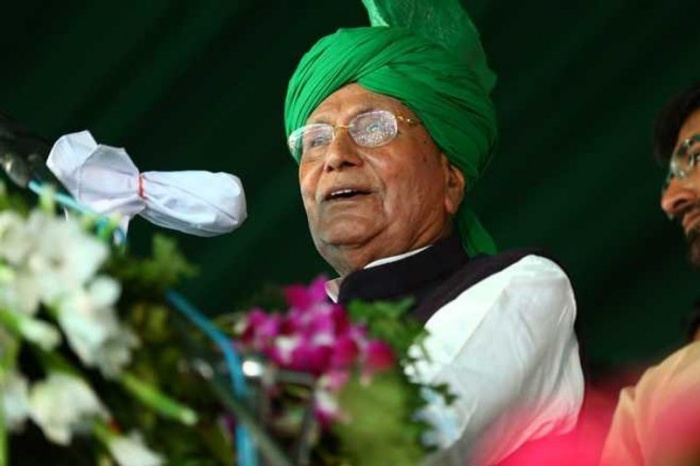
Former Haryana Chief Minister and INLD chief Om Prakash Chautala passed away on Friday at his residence in Gurugram. Chautala had served as Haryana’s chief Minister for five terms.
Prime Minister Narendra Modi condoled the death of the former CM saying, “I am deeply saddened by the demise of former Haryana Chief Minister Om Prakash Chautala ji. He was active in state politics for many years and constantly tried to carry forward the work of Chaudhary Devi Lal ji. My deepest condolences to his family and supporters in this hour of grief. Om Shanti.”
Haryana CM Nayab Saini also condoled the death of the former CM, “The demise of INLD supremo and former Chief Minister of Haryana Chaudhary Om Prakash Chautala ji is extremely sad. My humble tribute to him. He served the state and society throughout his life. This is an irreparable loss for the politics of the country and Haryana state. I pray to Lord Shri Ram to give a place to the departed soul at his feet and give strength to the bereaved family to bear this sorrow.”
Congress MP Randeep Singh Surjewala expressed his grief over the demise of former Haryana Chief Minister and INLD chief Om Prakash Chautala.
In a post on X, the Congress MP said, “The demise of former Haryana Chief Minister, Chaudhary Om Prakash Chautala, is an irreparable loss for the state. May God grant a place to the departed soul in his lotus feet and give strength to the family members to bear the grief.”
“My humble tribute. Om Shanti Om.,” he added.
On the demise of INLD supremo and former Chief Minister of Haryana Chaudhary Om Prakash Chautala, Congress MP Deepender Singh Hooda said, “This is very bad news that we have got. The demise of Om Prakash Chautala is an irreparable loss for the politics of the country and Haryana state.”
Haryana government minister Anil Vij also expressed his sadness after the demise of Chautala.
“This is very sad news. Om Prakash Chautala ji, who has been in politics for a very long time in this state, has contributed a lot to this state. He was also the chief minister many times, and he was an efficient administrator with whom I got the opportunity to work, Anil Vij said.
Congress president Mallikarjun Kharge also expressed his grief and said that the former Haryana CM had made a significant contribution to the service of Haryana and the country.
“The news of the demise of former Haryana Chief Minister and senior leader Chaudhary Om Prakash Chautala is sad. He made a significant contribution to the service of Haryana and the country. In this hour of grief, we express our deepest condolences to his family and supporters and pray for the peace of the departed soul.”
(This news report is published from a syndicated feed. Except for the headline, the content has not been written or edited by OpIndia staff)
The Maha Kumbh Mela, which will take place in Prayagraj in Uttar Pradesh, will not only be a blend of tradition and modernity but will also be unique in every way. Maha Kumbh has been an exceptional forum for religion, culture and tradition as well as socialization and business since ancient times till the present. The state administration will profit monetarily from the pilgrims who visit from all over the world to attend the auspicious gathering.
The British administration also made constant efforts to ensure that Kumbh was organized successfully. Although it was not significant to the British in terms of religion or culture, it was crucial to their economy. The government of British India used to make more money from this event than it spent on sponsoring it, until 1906. The preparations for Prayagraj Maha Kumbh 2025 were initiated by Chief Minister Yogi Adityanath in 2022. He presided over the inaugural Maha Kumbh 2025 meeting, which took place in 2022. He also visited Prayagraj frequently during that time.
The pious occasion has also piqued the interest of Prime Minister Narendra Modi. He travelled to Prayagraj for this purpose to personally assess the festival preparations. CM Yogi and PM Modi also launched, unveiled and inaugurated other projects associated with the Mahakumbh celebration. The two are making great efforts to put this event on a global pedestal in this manner.
Special projects for Maha Kumbh Nagri
It is anticipated that 45 crore people will attend the upcoming Maha Kumbh Mela. This will boost local employment, trade, regional handicrafts and arts as well as tourism and overall development. Kumbh helps the government build the region’s infrastructure in every manner, which eventually helps the people and makes trade easier. Yogi Adityanath’s government in the state has set a target of completing more than 500 projects for Maha Kumbh.
The total cost of these projects is around Rs 6,382 crore which includes the widening of roads, laying of drinking water pipelines and running of new buses, among others along with multiple types of infrastructure development. Over 50,000 labourers are working hard day and night to establish Maha Kumbh City. Bridges are being constructed as needed. Temporary four-lane steel bridges were built in areas where bridge construction was not feasible. Even railroad bridges were set up where required. Furthermore, all of the roads that led to Prayagraj were made broader and more attractive.
An attractive appearance to Prayagraj
The city has been given a unique appearance in an attempt to draw in pilgrims visiting Prayagraj. A budget of Rs 60 crore has been allocated by the Prayagraj Development Authority to give the city walls and important intersections a magnificent appearance. This includes street art on major walls of the city, murals on intersections, sculptures of various styles, landscaping, traffic signs, green belts, horticulture and others. The walls of the city will be inscribed with various symbols of religion, spirituality and culture.
Such images will be created to give the impression that they were communicating with the visitors, describing the historic city to them and welcoming them in the religious and cultural confluence of modernity. They will be portrayed in roughly 10 lakh square feet of the city in this manner.
Employment to local people
According to an estimate, 45,000 families will get work from the Maha Kumbh. 25,000 workers have been employed in Mahakumbh. 45,000 thousand families have been trained under skill development for the event. The state government has created more than 2,000 paying guest facilities in the city to accommodate pilgrims coming from outside. The Uttar Pradesh government formulated a tourism policy in the year 2022, which aimed to train 10 lakh people. These skilled service providers will find work and play a significant part in this Maha Kumbh. Self-employment, such as an eco-friendly axe or stone mill, would be crucial in this. The small-scale industries will greatly benefit from the same.
The Department of Tourism of Uttar Pradesh has been providing all forms of training to various service providers including tour guides, drivers, sailors and street vendors. The Uttar Pradesh Tourism Department has trained more than 2,000 ferrymen to attract tourists and increase their income which includes everything from attending to the devotees to taking care of their safety. Moreover, local women are also selling clay stoves to maintain the purity of food during Kumbh. Every service provider and small business that has a direct or indirect connection to the pilgrims visiting the Mahakumbh has so received training, ensuring that visitors enjoy both the special joy of hospitality as well as religious and cultural experience.
Special arrangements in tent city
The state government has erected over 2,000 Swiss cottage-style tents for devotees in the Kumbh region and a posh tent city is being built for it. The Uttar Pradesh State Tourism Development Corporation Limited (UPSTDC) is in charge of creating these. This city has been founded by UPSTDC in collaboration with six partners. Various blocks are being set up in the tent city. Kumbh Camp India, Rishikul Kumbh Cottage, Kumbh Village, Kumbh Canvas, Kumbh Era, and others are prominent among these. These tents will have five-star hotel facilities per international standards and will be available in Super Deluxe, Tent Villa, Maharaja, Swiss Cottage and Dormitory formats.
Vocal for local
CM Yogi’s government of Uttar Pradesh has made a framework to promote the local products of the state internationally through Prayagraj Mahakumbh 2025. The government has made PM Modi’s “Vocal for Local” its main mantra for it. During this time, ‘One District, One Product’ which means that each district will have a major product. Sarees of Banaras, brassware of Moradabad, terracotta of Gorakhpur and Shajar stone products of Banda are expected to gain more fame and promotion on the international stage. As a result, it is also expected to increase the turnover of the related products of these districts. PM Modi had massively supported “Vocal for Local” and the Uttar Pradesh government has set a new standard in it.
45 crore tourists from 75 countries
Mahakumbh 2025 which is to be held in Prayagraj is believed to attract 45 crore people from more than 75 countries around the world. These comprise devotees to journalists and researchers. The Mahakumbh could alone attract about 4 lakh visitors from Europe. The state Tourism Department has received inquiries from tour companies in many European nations. Muslims from the United Arab Emirates, Bahrain, Kuwait, and other Muslim nations are also making reservations at hotels in Prayagraj to visit Mahakumbh. As a result of the influx of foreign visitors, India will also receive foreign exchange. Both India and Uttar Pradesh’s economies will reap the rewards from this. Additionally, the brand UP will gain international awareness.
There were 24 crore devotees who attended the 2019 Mahakumbh. Twenty-five lakh of them were overseas visitors. This figure appears to be rising swiftly this time. Chief Minister Yogi Adityanath’s exemplary law and order reform in Uttar Pradesh has been welcomed and trusted not only by the nation but also by the entire world. A total of 48 crore tourists visited Uttar Pradesh in 2023, which is the same number as last year. These comprise both foreign and domestic travelers. This number represented a 50% increase over 2022. It is projected that by 2028, this number will have increased to 85 crores. This makes the Mahakumbh of the next year extremely crucial.
Special trains from Prayagraj to other religious places
Devotees coming to Maha Kumbh Mela can also visit famous pilgrimage sites like Vindhyachal, Ayodhya, Varanasi, Vrindavan and Mathura. The state government has created a religious corridor for pilgrims to visit these sacred sites during the Maha Kumbh Yatra. Special arrangements have been made for Varanasi including waterways and special trains. Railways have decided to run 34 trains between Varanasi cantonment and Prayagraj to link the event directly to Varanasi.
It has been decided to run similar special trains between Prayagraj to Ayodhya, Prayagraj to Vindhyachal and Prayagraj to Mathura-Vrindavan. ‘Fast Ring Memo’ service has been launched for these cities which will pass from Prayagraj to Ayodhya, Varanasi and Prayagraj. Similarly, the second train will arrive from Prayagraj to Varanasi, then Ayodhya and again Prayagraj. This service will be available on all days except the main days (when holy baths are taken) of the festivals.
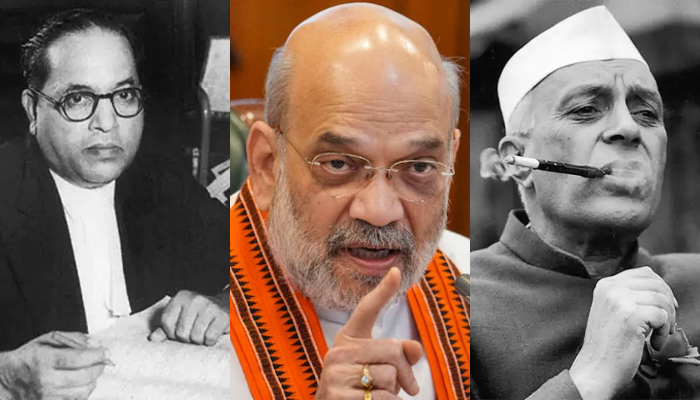
While the Congress party is busy claiming that Home Minister Amit Shah ‘insulted’ Dr BR Amedkar during his parliament speech, by twisting a single sentence from his statement without context, the BJP has been responding by highlighting how the Congress, currently pretending to be an ardent admirer of Amedkar’s policies, has been complicit in ignoring him and sidelining him from its early days in power.
As a further embarrassment to the Congress, a letter from Pandit Jawahar Lal Nehru, India’s first prime minister, has been making the rounds on social media, characterizing Ambedkar as a person who “allied himself with the British Government and against the Congress” and apparently branding him a traitor.
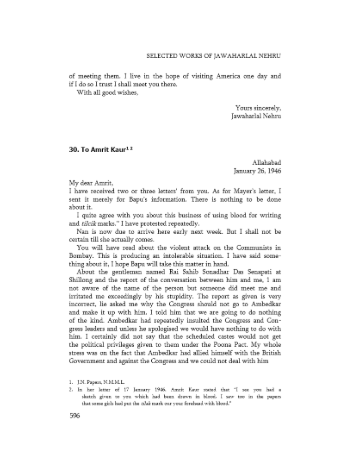
The letter dated 26th January 1946 was addressed to Amrit Kaur (possibly Congress leader Rajkumari Dame Bibiji Amrit Kaur who was appointed the first health minister of independent India). It read, “I have received two or three letters from you. As for Mayer’s letter, I sent it merely for Bapu’s (Mahatma Gandhi) information. There is nothing to be done about it. I quite agree with you about this business of using blood for writing and tilak marks. I have protested repeatedly. Nan is now due to arrive here early next week. But I shall not be certain till she actually comes.”
However, the crucial part of the letter came letter where Nehru informed, “You will have read about the violent attack on the Communists in Bombay. This is producing an intolerable situation. I have said something about it, I hope Bapu will take this matter in hand. About the gentleman named Rai Sahib Sonadhar Das Senapati at Shillong and the report of the conversation between him and me, I am not aware of the name of the person but someone did meet me and irritated me exceedingly by his stupidity.”
He then voiced his views about Ambedkar and conveyed, “The report as given is very incorrect, lie (presumably Rai) asked me why the Congress should not go to Ambedkar and make it up with him. I told him that we are going to do nothing of the kind. Ambedkar had repeatedly insulted the Congress and Congress leaders and unless he apologised we would have nothing to do with him. I certainly did not say that the scheduled castes would not get the political privileges given to them under the Poona Pact. My whole stress was on the fact that Ambedkar had allied himself with the British Government and against the Congress and we could not deal with him.”
Image from Selected Works of Jawaharlal Nehru (Series 1 | Vol. 14 | June 1945 – February 1946)
The historical record further mentioned that in a letter on 17th January 1946, Amrit Kaur stated, “I see you had a sketch given to you which had been drawn in blood. I saw too in the papers that some girls had put the tilak mark our your forehead with blood. Because of this, I think I expressed myself forcibly on this issue. I send back to you the report that the gentleman most probably gave you.” The response of which was delivered by Nehru in his letter.
Nehru’s letter was also shared by BJP’s Amit Malviya. He termed the development as “shocking beyond imagination” and highlighted, “Nehru wrote to Amrit Kaur, referring to the revered Baba Saheb Ambedkar as a traitor and accusing him of collaborating with the British.”
This is shocking beyond imagination. In a letter dated January 26, 1946, Nehru wrote to Amrit Kaur, referring to the revered Baba Saheb Ambedkar as a traitor and accusing him of collaborating with the British.
Malviya cited the pertinent paragraph from the letter and charged, “There can be no greater insult to Baba Saheb Ambedkar, the architect of our Constitution, and to the entire Dalit community. The Congress’s deep-rooted disdain for Dr Ambedkar is both troubling and unacceptable.” Despite the Congress party’s best efforts to discredit the BJP by twisting Amit Shah’s words about Ambedkar, their own previous actions appear to have come back to haunt them and reveal their hypocrisy, leaving them in an uncomfortable situation.
On Wednesday (18th December), a newly married 29-year-old man was attacked with acid by his father-in-law in Maharashtra’s Thane district following a dispute over a honeymoon destination.
The victim, identified as Ibad Atik Falke, has currently been hospitalized. He had recently married the accused’s daughter after which he decided to go to Kashmir for his honeymoon.
However, the accused insisted that the couple travel to their religious destination abroad.
Following this, the 65-year-old accused identified as Jaki Gulam Murtaza Khotal who is absconding at present attacked the victim by throwing acid at him.
The victim has sustained severe injuries on his face and body and is undergoing treatment at the hospital. The accused father-in-law forced the couple to go to their religious destination to offer prayers.
However, the couple desired to go to Kashmir for their honeymoon. Following this severe altercation is believed to have occurred between the accused and the victim. The verbal altercations continued to occur for several days.
On Wednesday night, Ibad was stopped by Jaki while he was on his way to his house from the Lal Chowki area in Kalyan West.
Again, a minor argument occurred between the duo on the issue after which Jaki threw acid on the face of the victim. While Ibad yelled in pain for help, the accused fled from the spot leaving the victim with severe injuries.
“A case has been registered at the Bazarpet police station in this regard and a search operation has been initiated for the accused father-in-law,” police said.
Senior inspector of Bazarpet police station Suresh Singh Gaud further added that the son-in-law was adamant about going to Kashmir while his father-in-law was adamant about sending him to Mecca.
He also added that the father-in-law wanted to end his daughter’s marriage with his victim.
“Prima facie it seems that this led to an argument and the man attacked his son-in-law with acid and fled. Teams are searching various areas for the accused. We are investigating the matter thoroughly,” he said.
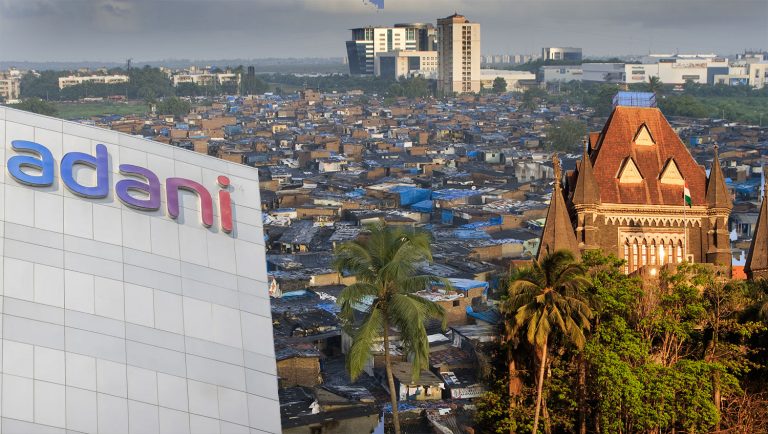
Bombay High Court on Friday upheld the Maharashtra government’s decision to award the Dharavi slum redevelopment project to Adani Properties Private Limited, dismissing a petition by UAE-based Seclink Technologies Corporation that challenged the tender process. The court said that there was no arbitrariness, unreasonableness or perversity in the decision to award the project to the Adani Group company.
A division bench of Chief Justice D K Upadhyaya and Justice Amit Borkar dismissed the petition filed by Seclink Technologies challenging the govt’s decision. The bench noted the company’s petition lacks force and hence stands dismissed.
In 2018, Seclink Technologies had emerged as the highest bidder with a ₹7,200 crore offer for the Dharavi slum redevelopment project. However, the state government cancelled this tender, citing various external factors, including the COVID-19 pandemic and the Russia-Ukraine conflict, which impacted the financial and economic landscape. Additionally, an extra 45 acres of land became available for the project from the Indian Railways in March 2019, further justifying the reissuance of the tender.
In 2022, a new tender was issued with additional conditions, and Adani Properties secured the project with a ₹5,069 crore bid. Seclink Technologies contested both the cancellation of the 2018 tender and the awarding of the 2022 tender to Adani, alleging a lack of transparency and fairness in the process.
Seclink argued that its ₹7,200 crore offer was higher and more deserving than Adani’s ₹5,069 crore bid, and alleged that the decision to cancel the earlier tender issue a fresh one was biased, violating principles of natural justice.
The division bench, comprising Chief Justice D K Upadhyaya and Justice Amit Borkar, found no merit in Seclink’s arguments, stating that the petition lacked “force and effort.” The court accepted the government’s assertion that the tendering process was transparent and fair, leading to the dismissal of Seclink’s plea.
The state govt also stated that even though Seclink had emerged as winner in the 2018 tender, no formal contract was signed with the company, therefore the company does not have any legal right against cancellation of the tender process. The govt said that the 2018 tender was officially cancelled due to significant changes in tender conditions post the “Bid Due Date.”
The Dharavi redevelopment project aims to transform the 259-hectare slum area in central Mumbai into a modern urban space, providing improved housing and amenities for its residents. The project’s progression is expected to significantly impact the lives of Dharavi’s inhabitants and the city’s landscape.
The project has been a subject of politics because the tender has been won by an Adani group company. While the Shiv Sena initially supported the redevelopment initiative during its tenure in the Maharashtra government, the Thackeray-led faction of Shiv Sena started opposing the project after breaking away from the NDA and losing power. The party has been questioning the project’s transparency and the decision to award the tender to the Adani Group.
Opposition parties allege that the new tendering process in 2022 was skewed in favor of Adani Properties, alleging that the company won the tender because of the perceived closeness of the Adani Group to the central government.
The BJP, in turn, dismissed these allegations as politically motivated and aimed at stalling development projects in the state. Maharashtra Chief Minister Devendra Fadnavis has defended the decision to retender the project, emphasizing the government’s commitment to ensuring fairness and efficiency. Fadnavis argued that the inclusion of additional land from Indian Railways and other changes to the tender justified the revised process, which has been validated by the Bombay High Court.
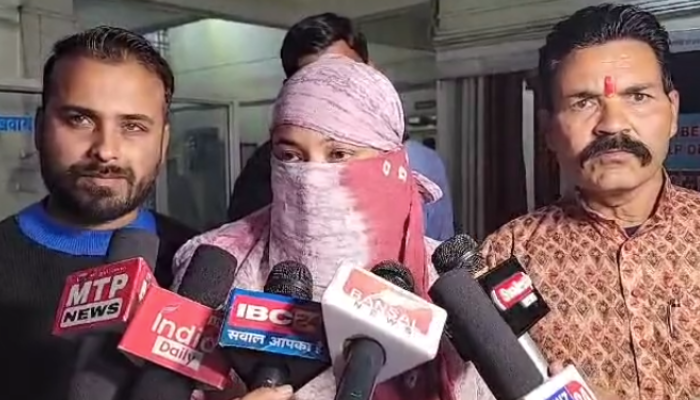
An incident of exploitation and pressure to convert to Islam has come to light in Bhopal, Madhya Pradesh where a Muslim man named Sahil alias Sameer pretended to be Rahul, befriended a young Dalit woman under false identity, raped her and pressured her to embrace Islam. The members of Sanskriti Bachao Manch reached Kolar police station with her to register a complaint.
Afterwards, a case was filed under multiple sections including rape, the Madhya Pradesh Freedom of Religion Act as well as Scheduled Castes and Scheduled Tribes (Prevention of Atrocities) Act. The accused is from Jahangirabad police station area. Hindu organizations have termed this crime as an act of love jihad and demanded strict action.
Kolar police station in-charge Sanjay Soni informed that a 25-year-old woman living in Kolar as a private employee, was approached by the accused under a false identity and started talking to her. This friendship developed into a love affair. Later, she learned that his real name was Sahil after six months and ended the relationship. However, he threatened to kill her or commit suicide if she left him. He even vowed to leave Islam and enter the fold of Sanatan Dharma for her.
The victim disclosed, “He befriended me through the phone. He earlier told me that his name was Rahul. Then when I came to know that he is a Muslim, I started distancing myself from him. However, he manipulated me with his words. He claimed that he really loved me, would change his religion and marry me. However, when I asked him to fulfil his promise, he started a fight and then absconded. Later he pressured me to convert to Islam.”
The woman had narrated that Sahil had sexually exploited her under a false identity and had been putting conversion to Islam as a precondition to getting married. The victim added that Sahil had even abused her with casteist slurs and threatened her. She approached Chandra Shekhar Tiwari, head of Sanskriti Bachao Manch and narrated her ordeal after which the members of the outfit took her to the police station. As the place of the incident was Jahangirabad, the case diary has been sent to the police station there. The matter is currently under investigation.
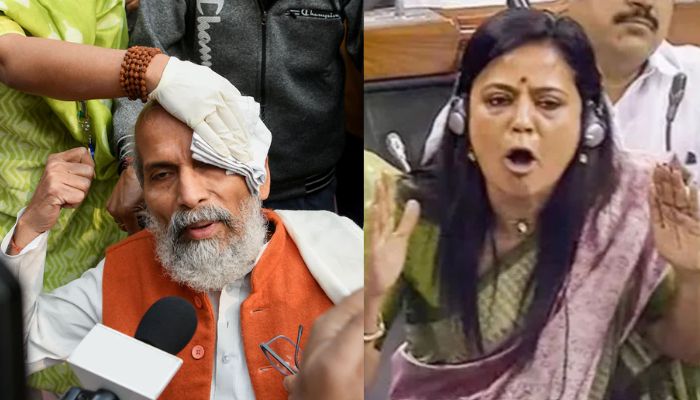
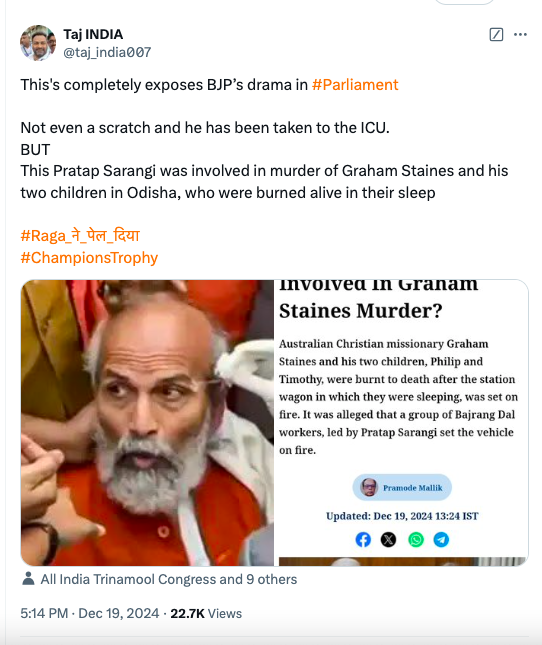
On 19th December, BJP MP Pratap Chandra Sarangi suffered a fall on the stairs of the parliament and so did the sanctity of the temple of democracy. The BJP MP from Balasore was reportedly pushed by Congress MP Rahul Gandhi.
While the 69-year-old BJP leader is undergoing medical treatment for the injuries he suffered, TMC MP Mahua Moitra took the charge to attack and villainise Sarangi by levelling false allegations.
She claimed that Sarangi was involved in the killing of Australian Christian missionary Grahan Staines and his two children in Odisha back in 1999.
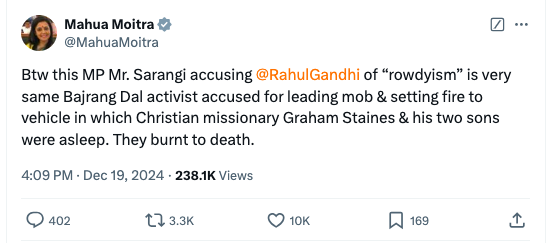
Screengrab of the tweet by Mahua Moitra
In an X post published on Thursday, Mahua Moitra claimed that while Pratap Sarangi accused Rahul Gandhi of rowdyism, Sarangi had led the mob that burnt Australian Christian missionary Graham Staines and his two sons alive in 1999.
“Btw this MP Mr. Sarangi accusing @RahulGandhi of “rowdyism” is very same Bajrang Dal activist accused for leading mob & setting fire to vehicle in which Christian missionary Graham Staines & his two sons were asleep. They burnt to death,” the Trinamool Congress MP from Krishnanagar posted.
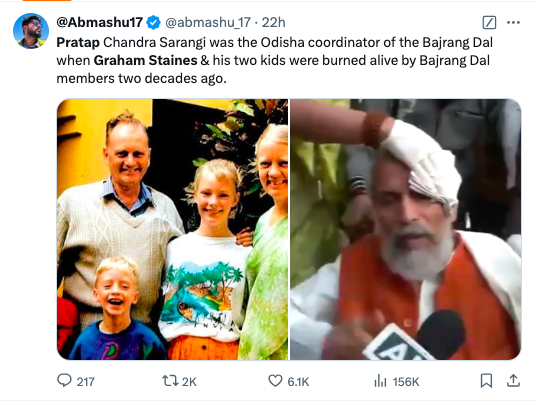
In no time, TMC supporters and the extended anti-BJP ecosystem began accusing Pratap Chandra Sarangi of involvement in the killing of the Australian Christian missionary and his two sons.
Screengrab of the tweet
In this vein, a Congress supporter wrote, “Pratap Chandra Sarangi was the Odisha coordinator of the Bajrang Dal when Graham Staines & his two kids were burned alive by Bajrang Dal members two decades ago.”
Screengrab of the tweet
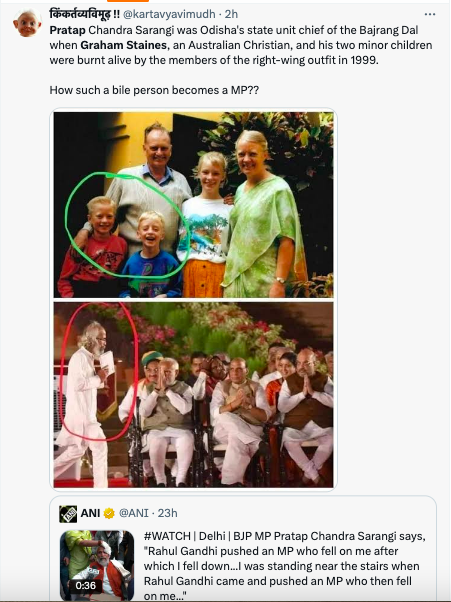
Another one wrote, “Pratap Chandra Sarangi was Odisha’s state unit chief of the Bajrang Dal when Graham Staines, an Australian Christian, and his two minor children were burnt alive by the members of the right-wing outfit in 1999. How such a bile person becomes a MP??”
Screengrab of the tweet
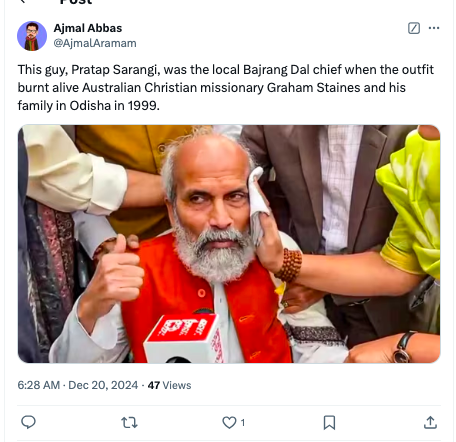
Meanwhile, IndiaToday Chief Sub Editor Ajmal Abbas also insinuated that since Sarangi was a Bajrang Dal office bearer at the time when Staines and his sons were charred, he was also involved in the murder. “This guy, Pratap Sarangi, was the local Bajrang Dal chief when the outfit burnt alive Australian Christian missionary Graham Staines and his family in Odisha in 1999,” Abbas posted.
Screengrab of the tweet
Many others are sharing a 2019 BBC propaganda article titled ‘Pratap Sarangi: India social media hero minister’s dubious past’ wherein stated: “He was the leader of the Bajrang Dal, a hardline rightwing group when a Hindu mob brutally killed Australian Christian missionary Graham Staines and his two children in 1999.”
The truth about the outrageous allegations against Pratap Chandra Sarangi
Contrary to the accusation made by Mahua Moitra, Pratap Sarangi was neither leading any mob which killed Graham Staines and his sons nor was he even named as an accused in the case.
In fact, Dara Singh, an activist linked to Bajrang Dal and 12 others was convicted in 2003 for the murders. On the intervening night of 22nd and 23rd January 1999, Graham Stewart Staines, an Australian missionary and his two small children were all burnt to death while they were sleeping in a station wagon in a remote village Manoharpur, in District Keonjhar of Odisha.
In this case, Rabindra Kumar Pal alias Dara Singh, an activist linked with Bajrang Dal alongside 12 others was convicted in 2003.
A commission under the leadership of Justice D.P. Wadhwa was constituted to investigate the triple murder case. The Wadhwa Commission found Dara Singh guilty, however, it found no evidence to suggest that Bajrang Dal was involved in the murders.
Furthermore, the area in which Staines worked had become a communal flashpoint as a result of Christian missionaries’ conversions.
Due to the continuous Christian conversion activities in the region, communal tensions peaked there. Just a year before his murder, Graham Staines noted in his journal that some people on motorcycles hampered his missionary work.
The police had even asked Staines to leave the area and informed him that they could not provide him security due to elections.
Admitting to his conversion activities, Staines had said, “The first jungle camp in Ranchandrapur was a fruitful one and the Spirit of God worked among the people. About 100 attended, some were baptised at the camp. At present, Misayel and some of the church leaders are touring a number of places where people are asking for baptism. Five were baptised at Bigonbadi.”
Even the Wadhwa Commission report mentions how communal tensions were at the peak in Keonjhar district due to missionary activities and that Bajrang Dal was not involved in the gruesome murder.
“From these issues of the ‘Tidings’ [newsletter published from Australia by Australian Missionary Tidings], following circumstances emerge: .Jungle Camps were regular features in the Districts of Mayurbhanj and Keonjhar. Jungle Camp means four days of Bible teaching, prayer and the fellowship of Christians living together. It enables believers from other churches to meet with local Christians to discuss experiences and encourage one another. Also speakers from other places broaden the vision of those whose lives have been confined to one small village. The teaching helps the church leaders to further develop material for their own regular ministry. The camp can also create hunger in the hearts of those who come just to observe. Each camp has a bookstall, which for many is the only chance to buy Christian literature. Conversions did take place in Jungle Camps. These conversions were not caused by any threat, inducement or duress. There was dispute among Church leaders of Manoharpur Church and attempts were made to sort out the differences among them. Differences were so acute that the Vacation Bible School which was to be held in Manoharpur was cancelled. There was tension in Thakurmunda area between Christians and non-Christians. From July 1998 issue, it does appear that persons, who had been converted to Christianity were Hindus,” the report reads.
Notably, both Dara Singh and Pratap Sarangi had denied the former’s association with Bajrang Dal. Sarangi, who was the state coordinator of Bajrang Dal back then had filed an affidavit before the court saying that “Dara Singh was never associated with the Bajrang Dal. ” Moreover, in his statement, Pratap Chandra Sarangi, who is the State Coordinator of Bajrang Dal in Orissa, was categorical that re-conversion to Hinduism is not one of the objects of Bajrang Dal. In his affidavit, he stated that Bajrang Dal was not involved in the gruesome murder and that Dara Singh was never a member of the Bajrang Dal. Sarangi stated that Bajrang Dal is an independent forum associated with Vishwa Hindu Parishad. He described the objectives and activities of the Bajrang Dal. It is not necessary to go into that as Bajrang Dal is not an unlawful organization,” the commission stated.
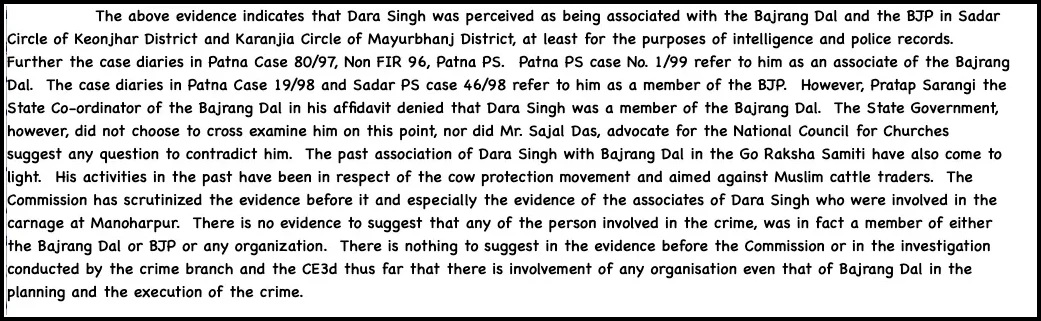
The Wadhwa Commission found that there was no evidence that any of the accused were Bajrang Dal members or had links with the Bhartiya Janata Party.
Excerpt from the Wadhwa Commission report
“The Commission has scrutinized the evidence before it and especially the evidence of the associates of Dara Singh who were involved in the carnage at Manoharpur. There is no evidence to suggest that any of the persons involved in the crime was in fact a member of either the Bajrang Dal or BJP or any organization. There is nothing to suggest in the evidence… that there is involvement of any organisation, even that of Bajrang Dal, in the planning and execution of the crime,” the Wadhwa Commission said.
Conclusion
It is thus, evident from the official records of legal proceedings in the case that Pratap Sarangi was not even named as an accused in the murder of Graham Staines and his children nor was Bajrang Dal involved.
TMC MP Mahua Moitra and the anti-BJP ecosystem are deliberately maligning the image of the BJP MP to downplay his manhandling in the Parliament premises and to normalise violence against MPs of opposing parties.
They believe that it is acceptable to manhandle and injure a person whom they accuse of involvement in criminal activities despite not having a shred of evidence.
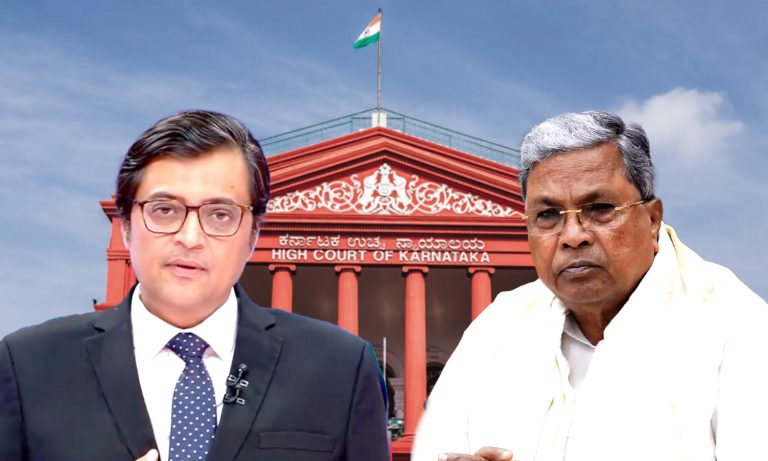
The Karnataka High Court on Tuesday stayed criminal proceedings by Karnataka police against journalist Arnab Goswami in an alleged fake news case. The court called the registration of FIR in the case a “reckless registration of a crime” while passing the interim order to stay the probe against the Republic TV editor-in-chief.
A bench of Justice M Nagaprasanna issued the order in response to a petition by Arnab Goswami pleading to quash the proceedings. The case relates to a news report by the Republic Kannada Channel alleging that an ambulance was stuck in traffic after vehicles were stopped for convoy of Congress Chief Minister Siddaramaiah.
The report was broadcast on 27 March this year, which said that traffic on Bengaluru’s MG Road was stopped to clear the way for the CM’s convoy. As a result, an ambulance was stuck in the traffic, the Kannada report stated.
Following the news report, Congress leader Ravindra MV filed a complaint against Arnab Goswami and Republic Kannada editor Niranjan. In the complaint, Ravindra had said that CM Siddaramaiah was actually in Mysuru at the time of the alleged incident.
Accordingly, police registered an FIR under Section 505 (2) (for creating enmity) of the Indian Penal Code, alleging that the channel had spread fake news ahead of the Lok Sabha elections to mislead the public.
Arnab Goswami refuted the allegations, stating that the report was on air for only a few minutes and then an apology was issued due to the apology. Senior Advocate Aruna Shyam, representing Goswami, informed the Court that the news report was promptly deleted once the channel realised that it was inaccurate.
The court stated that the entire report was about public suffering due to movement of CM’s convoy, and then the report was immediately deleted after it was realised that CM was not there. The court noted that everything happened within 24 hours, and the complaint was filed after that.
Noting that section 505(2) does not apply to the alleged offence, the court stated, “it is ununderstandable as to how 505(2) could spring as to its remotest sense in the case at hand. If such reckless registrations were permitted to be continued, it would be an abuse of process of law.”
The court questioned what was the offence of Arnab Goswami for the Kannada report. Justice Nagaprasanna said, “What has Arnab Goswami done? There is a plethora of things brought out by him. It might have proved good for some and bad for others, but where is the case of inciting? We will hear both parties but now we will stay the investigation,”
The court stayed all further investigations until the next hearing, scheduled for January 16, 2025.
A resident of Manhattan has admitted guilt in US federal court for his involvement in operating a secret Chinese police station in New York, as reported by Radio Free Asia.
The resident has been identified as Chen Jinping, a US citizen, who helped with administrative duties at the secretive station in Manhattan’s Chinatown in 2022, according to Radio Free Asia report.
US prosecutors stated that the station was established by officials from China’s Fuzhou Municipal Public Security Bureau, a division of its Ministry of Public Security, and was used to threaten and silence opponents of the Chinese government in New York.
Chen’s plea in Brooklyn on Wednesday marks the first instance of someone involved in these overseas police outposts being held accountable in court. Over 100 Chinese police stations are believed to have been set up in cities globally.
According to the RFA report, Chen pleaded guilty to conspiring to serve as an agent of a foreign government, a crime that could lead to a prison sentence of up to five years.
The existence of the police station in Chinatown, along with others worldwide, was initially revealed in a 2022 report by the Spain-based human rights organization, Safeguard Defenders.
Laura Harth, the campaign director of Safeguard Defenders stated, “I hope the outcome of cases like this will encourage victims of the PRC’s transnational repression to come forward in greater numbers.”
She further highlighted, “I also hope that the 53 countries where ‘overseas police stations’ have been uncovered take note and take action. This case serves as a warning to anyone considering assisting the CCP in its covert operations: there is no advantage in doing so.”
Matthew G Olsen, Assistant Attorney General for the Justice Department emphasised, “Today’s guilty plea holds the defendant accountable for his brazen efforts to operate an undeclared overseas police station on behalf of the PRC’s national police force — a clear affront to American sovereignty and danger to our community that will not be tolerated.”
(This news report is published from a syndicated feed. Except for the headline, the content has not been written or edited by OpIndia staff)
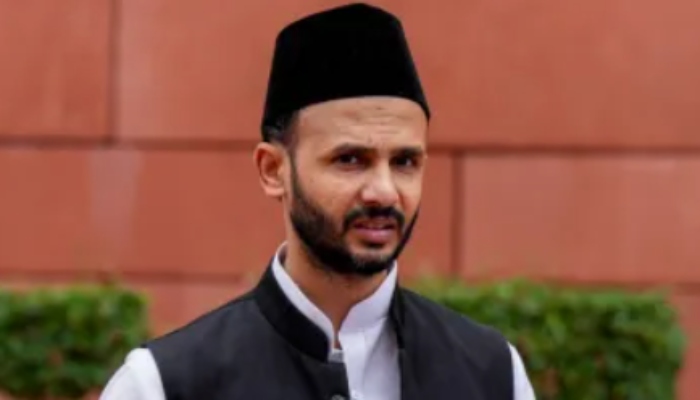
On Thursday, 19th December, the electricity department in Sambhal, Uttar Pradesh slapped Samajwadi Party MP from Sambhal, Zia-ur-Rehman Barq with hefty monetary fine amounting to ₹1.91 crore for alleged power theft. The department filed an FIR against the MP and also disconnected electricity to his residence. The authorities now have also issued a notice to the MP demanding payment of the penalty as soon as possible.
As per the reports, Sub Divisional Officer (SDO) Santosh Tripathi confirmed the development and said that if the penalty amount is not paid by the leader, a recovery certificate (RC) will be issued soon in his name.
This comes after a team from the electricity department along with the state police raided and inspected Barq’s residence in Sambhal to check suspected power theft. The department collected existing meters as evidence as it charged the leader of tampering with the meters, and installed new smart meters.
#WATCH | Sambhal, Uttar Pradesh: A team from State Electricity Department, along with a large number of security personnel, arrives at the residence of SP MP Zia ur Rehman Barq in Sambhal. The State Electricity Department has flagged irregularities in electricity usage at the… pic.twitter.com/Y8eLXbXf1M
Reports suggest that the old meters of the SP MP had been sealed and sent to the laboratory for examination. The complaint in the name of the leader states that Barq had been illegally using the electricity by bypassing his house meters. The current meter at Barq’s residence, as per the authorities, displayed a reading of zero.
However, it is crucial to note that apart from the theft charges, Barq and his associates have also been accused of issuing threats to the electricity department. It is also believed that Barq’s father, Mamluk-ur-Rehman Barq also issued threats to the officials of the department.
“Santosh Tripathi visited the senior Barq’s residence at 7:30 am to inspect electrical equipment. The officials were reportedly obstructed by Barq’s father, who remarked, ‘We will see if the government changes.’ Officials recorded the incident on video as evidence,” Superintendent of Police (Sambhal) Krishna Kumar Bishnoi said.
The State Electricity Department commented on the matter and stated that Barq had taken a 2 kilowatt (kW) connection while the load he used was 16.5 kW. However, the new smart meters established two days ago showed a power load of 5.5 kW. “Barq’s family members said they have installed a 10 kW solar panel and 5 kW generator in the house with which the MP’s house can take up to 19 kW electricity load. The solar panels installed in the home were also not working,” the Superintending Engineer of the Electricity Department said.
The officials further also found heavy electrical appliances that were frequently being used at the residence. The types of equipment included over 50 LED bulbs, a deep freezer, three split ACs, 2 fridges, a coffee maker, a geyser, and a microwave oven. These notably take the electrical load to 16,480 kW.
The charges imposed against Barq are under Section 135 of the Electricity Act, 2003, which pertains to electricity theft and unauthorized use. The bill of the residence for the past six months had notably been reading zero.
The electricity department with a large contingent of security personnel arrived to check suspected power theft at the residence of MP Zia Ur Rehman Barq. Earlier this week, a smart meter was installed at the MP’s residence. As reported earlier, the State Electricity Department flagged irregularities in electricity usage at the premises of the MP.
As the anti-encroachment drive proceeded in Sambhal, industrial-scale electricity theft has been coming to light in densely populated areas. As per reports, in the past 3 months, the Sambhal district police and administration have registered 1250 FIRs and imposed fines amounting to Rs 5.2 crores for electricity theft alone. Multiple mosques and madrasas were found to have used devious means to steal electricity from the supply grid and extend illegal connections around the densely populated areas.
More than 90 FIRs have been filed in the cases of electricity theft including instances at 4 Madrsas and 1 Mosque. A total fine of Rs 5.2 crores has also been filed in the cases.
An entire illegal powerhouse was found running on top of a mosque, supplying stolen power to over 100 houses. In early morning raids in the Deepa Sarai and Nai Sarai localities, the officials found a mosque with 59 fans, over 30 light points, and a fridge, but the meter was shut down.