Home Blog Page 6610

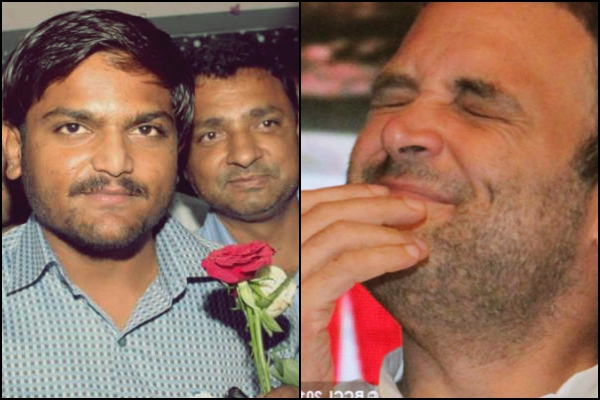
Sentenced for 2 years in prison for rioting, Hardik Patel joins Rahul Gandhi’s Congress to ‘serve 125 crore people’

Right after the Election Commission announced the 2019 Lok Sabha Election dates, convict Hardik Patel has announced that he will be joining Indian National Congress to “serve 125 crore people of the country”.


Hardik Patel also said that IF there is no “legal hindrance” and party (Congress) decides to field him in electoral politics, he will abide by the party’s decision. On 9th March 2019, Hardik Patel has applied to stay his conviction in a rioting case where he has been convicted and sentenced to 2 years in prison, and that would stop him from fighting elections. In 2018 August, the court had suspended his sentence and given him bail. However, since he is still convicted and the conviction itself was not stayed by the court, he wouldn’t be able to fight elections.


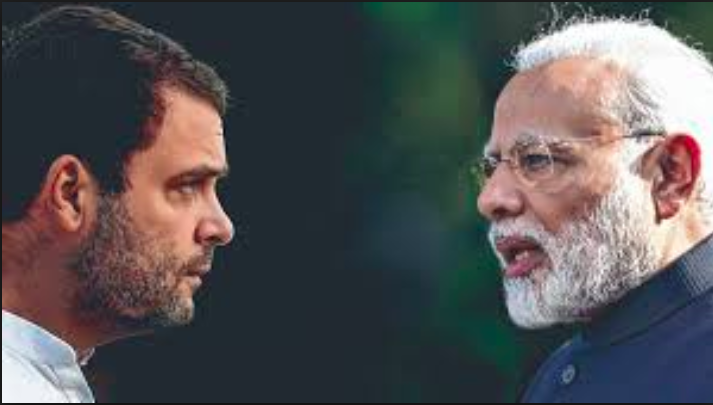
Hardik Patel, who has now joined Congress had threatened to launch a stir against Rahul Gandhi if Congress didn’t make its stand clear on Patidar reservations. Interestingly, Rahul Gandhi is yet to make his stand clear, however, that hasn’t stopped Hardik Patel from pulling an Arvind Kejriwal and joining Congress nonetheless.

The Patidar Andolan in Gujrat had brought the state to a standstill in 2015 as widespread incidents of violence and clashes had caused intense law and order situations. A total of 9 people had died and the Army was deployed to maintain peace. A total of 5000 paramilitary personnel had to be posted in different cities to help control the situation. Then 22-year-old Hardik Patel had made several objectionable remarks in a rally that had turned violent.

Hardik Patel is now convicted for causing riots in Mehasana and has been found guilty of charges related to arson and creating a ruckus at the office of BJP MLA Rushikesh Patel. Charges of sedition have also been framed against him.

Earlier in February, his close aide Nikhil Savani had surrendered himself to police in case of causing riot and arson.

In July 2018, After the suspected hooch tragedy, the ‘Merchants of Menace’, Jignesh Mevani, Congress MLA Alpesh Thakor and Hardik Patel, staying true to their ‘forever agitating’ image, decided to launch a stir against liquor and raid liquor dens all on their own. Two days after this raid, the police has booked the ‘Merchants of Menace’ on charges of house trespassing and providing false evidence about the seizure of liquor from the house they raided.

With his colourful history, while Hardik Patel is now hankering for a Lok Sabha ticket, his political career has been less than impressive, barring the violence he has unleashed on India. In 2018, Hardik Patel was welcomed with eggs and sandals in Madhya Pradesh and had addressed a rally full of empty chairs in Bhopal.

In September 2018, Hardik had sat on an unsuccessful “indefinite fast”, and when he realised that the fast is not earning him any political capital, he had ended his fast and gone for a month long session of ‘strategising’. It would surely appear that what we have witnessed today is the result of that month-long strategising session.

Here are the State-wise poll dates of 7-phase 2019 Lok Sabha Election

The dates for election for 17th Lok Sabha was announced today by the Election Commission of India, which will be held in 7 phases from 11th April to 19th May, while the counting of votes will take place on 23rd May. Here is the detail state wise phases of the election schedule.

Phase Date of poll States with number of seats in bracket Total seats
1st phase  11th April Andhra Pradesh (25), Arunachal Pradesh (2), Assam (5), Bihar (4), Chhattisgarh (1), Jammu and Kashmir (2), Maharashtra (7), Manipur (1), Meghalaya (2), Mizoram (1), Nagaland (1), Odisha (4), Sikkim (1), Telangana (17), Tripura (1), Uttar Pradesh (8), Uttarakhand (5), West Bengal (2), Andaman Nicobar (1), Lakshadweep (1) 91
2nd Phase  18th April Assam (5), Bihar (5), Chhattisgarh (3), Jammu and Kashmir (2), Karnataka (14), Maharashtra (10), Manipur (1), Odisha (5), Tamil Nadu (39), Tripura (1), Uttar Pradesh (8), West Bengal (3), Puducherry (1) 97
3rd Phase  23rd April Assam (4), Bihar (5), Chhattisgarh (7), Gujarat (26), Goa (2), Jammu and Kashmir (1), Karnataka (14), Kerala (20), Maharashtra (14), Odisha (6), Uttar Pradesh (10), West Bengal (5), Dadra and Nagar Haveli (1), Daman and Diu (1), 115


4th Phase  29th April Bihar (5), Jammu and Kashmir (1), Jharkhand (3), Madhya Pradesh (6), Maharashtra (17), Odisha (6), Rajasthan (13), Uttar Pradesh (13), West Bengal (8) 71
5th Phase  6th May Bihar (5), Jammu and Kashmir (2), Jharkhand (4), Madhya Pradesh (7), Rajasthan (12), Uttar Pradesh (14), West Bengal (7) 51
6th Phase  12th May Bihar (8), Haryana (10), Jharkhand (4), Madhya Pradesh (8), Uttar Pradesh (14), West Bengal (8), Delhi (7) 59
7th Phase  19th May Bihar (8), Jharkhand (3), Madhya Pradesh (8), Punjab (13), West Bengal (9), Chandigarh (1), Uttar Pradesh (13), Himachal Pradesh (4) 59


There will be 2 phase elections in 4 states, 3 phase elections in 2 states, 4 phase elections in 4 states, 5 phase election in 1 states, and 7 phase elections in 3 states, while the rest go for single-phase election.

State/UT No. of seats Poll dates No. of Phases
11/04 18/04 23/04 29/04 06/05 12/05 19/05
Andhra Pradesh 25 25 1
Arunachal Pradesh 2 2 1
Assam 14 5 5 4 3
Bihar 40 4 5 5 5 5 8 8 7
Chhattisgarh 11 1 3 7 3
Goa 2 2 1
Gujarat 26 26 1
Haryana 10 10 1
Himachal Pradesh 4 4 1
Jammu & Kashmir 6 2 2 1 1 2 5
Jharkhand 14 3 4 4 3 4
Karnataka 28 14 14 2
Kerala 20 20 1
Madhya Pradesh 29 6 7 8 8 4
Maharashtra 48 7 10 14 17 4
Manipur 2 1 1 2
Meghalaya 2 2 1
Mizoram 1 1 1
Nagaland 1 1 1
Odisha 21 4 5 6 6 4
Punjab 13 13 1
Rajasthan 25 13 12 2
Sikkim 1 1 1
Tamil Nadu 39 39 1
Telangana 17 17 1
Tripura 2 1 1 2
Uttar Pradesh 80 8 8 10 13 14 14 13 7
Uttarakhand 5 5 1
West Bengal 42 2 3 5 8 7 8 9 7
A & N Islands 1 1 1
Chandigarh 1 1 1
Dadra & Nagar Haveli 1 1 1
Daman & Diu 1 1 1
Lakshadweep 1 1 1
NCT of Delhi 7 7 1
Puducherry 1 1 1
Total constituencies 543 91 97 115 71 51 59 59
No of States/UTs in each Poll Day 20 13 14 9 7 7 8

AAP has managed to politicise even a scheduled announcement of election dates, here’s how

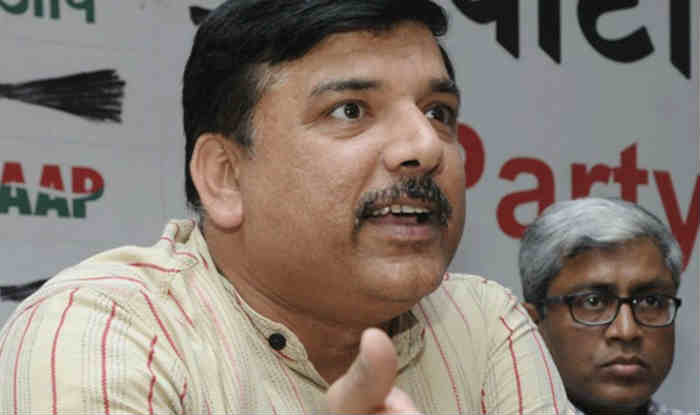
Aam Admi Party leader Sanjay Singh has raised questions over the timings of the dates of Lok Sabha polls to be held this year. After the Election Commission (EC) decided to hold a press conference scheduled at 5 p.m to announce the dates of Lok Sabha elections, the AAP leader accused the highest election body of acting on the instructions of the BJP. Singh posted a tweet from his twitter handle asking whether the Election Commission operates from the BJP office.


Singh tacitly suggested that the announcement of the election has been delayed to suit PM Modi’s schedule. He said that in 2014 election dates were announced on March 5 while this time the election date is being announced today, after allowing sufficient time to Modi to complete his rallies.


Raking up the EVM issue, Singh said that several parties including the AAP had met the Election Commission with a request to count the VVPAT slips of the polls where EVM was used but no reply came from the EC.

The Election dates have always been announced in the month of March as during the 2009 and 2004 Lok Sabha elections also the dates were announced on March 2 and March 1 respectively and this time, the election is happening in 7 phases as compared the 9 phases previously.

Addressing the press conference, Chief Election Commissioner Sunil Arora said that the EC held talks with the Chief Ministers of all the States and Union Territories and with the officials of other departments to ensure smooth conduct of elections.

The opposition parties seem to have made a habit out of casting aspersions on the Election Commission and the Election process. In fact, their demands for VVPAT and grows into a shrill every time they sense the possibility of an imminent loss. Simultaneously, while when they win, they seem to accept the mandate graciously, every time they lose, they seem to want to country to believe that PM Modi magically tampered with the EVMs only in that election.

With the first phase of Lok Sabha elections beginning on 11th April, one can expect to see several more of such inane statements in the near future.

While Dhruv Rathee blames BJP for spending crores on ads, who is sponsoring promotion of his Youtube video on Rafale deal?

0

On 10th March, propaganda video blogger Dhruv Rathee posted on Facebook that BJP supporting pages on Facebook spent ₹2.3 crore on Facebook ads in just one month. He also claimed that this is 70% of all money spent on Facebook advertisements from India.

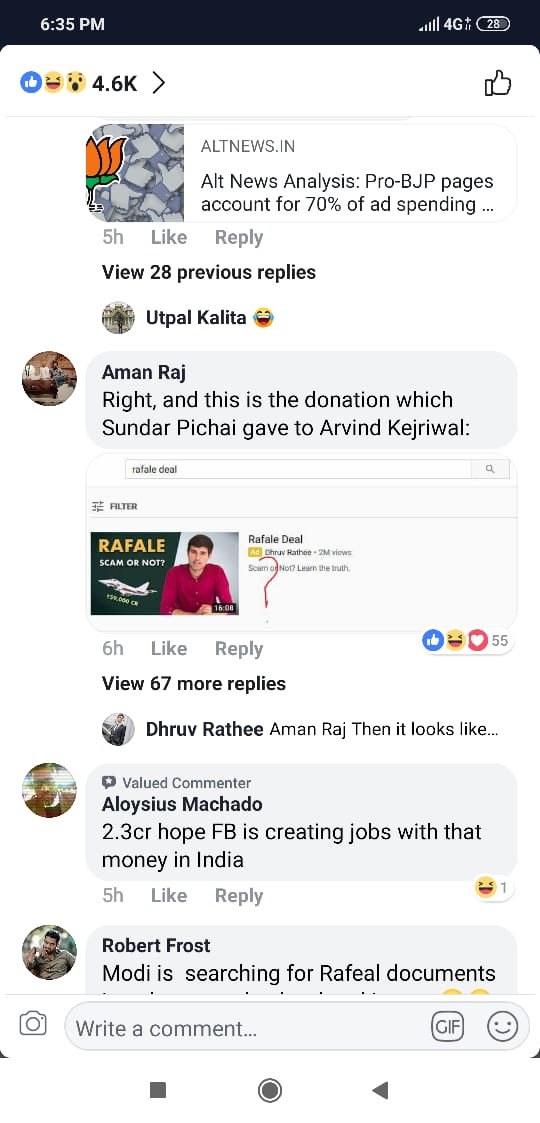
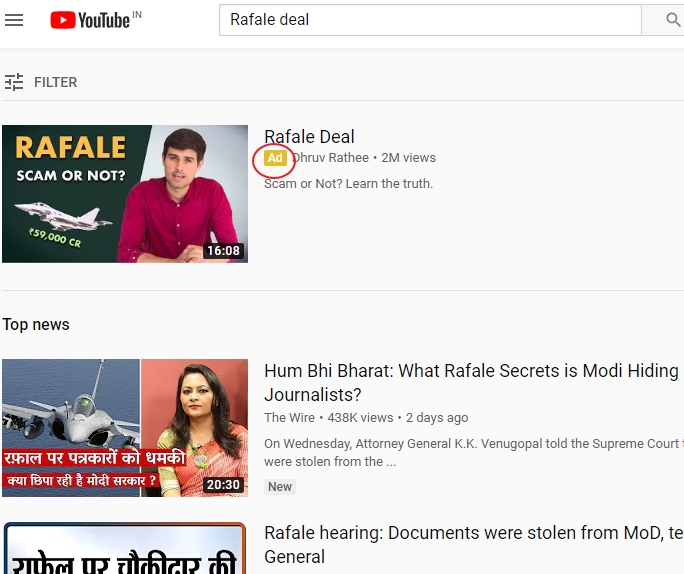
To his post, a Facebook user replied with a screenshot showing that Dhruv Rathee himself was advertising his video on Youtube. The screenshot showed a Youtube search ad for Rathee’s video on Rafale deal.

Reply by Aman Raj to Dhruv Rathee

To this, he claimed that it is Photoshopped, and he never spent money on advertising to promote his videos on Youtube.

Dhruv Rathee’s comment claiming the screenshot is Photoshoped

This is a completely false claim be Dhruv Rathee, because the screenshot is real, not Photoshopped as he claims. When we searched for the term ‘Rafale deal’, we also got an ad for his video on the top of the search results.

Youtube search result showing advertisement for the video

This is known as ‘In discovery ad’ on Youtube, where advertisements for selected video is shown when someone searches videos using specified search terms, or when similar videos are seen on Youtube.

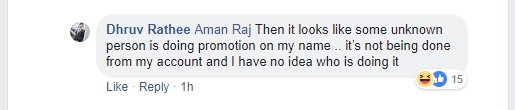
Several persons on Facebook countered Dhruv by saying that the image is not fake and they saw the ad themselves. Caught lying red-handed, he used a new excuse in his defence. He gave a very strange claim saying that some unknown person is doing promotion in his name. He claimed that it is not done from his account and he has no idea who was doing it.

Dhruv Rathee saying someone else promoting his video

One needs to spend money to run advertisements promoting a video, so it is rather strange that someone will be spending money on a video created by someone else. Dhruv’s videos are political in nature, and the most likely candidates who could have spent money on his videos would be political parties which are helped by his videos. More importantly, Dhruv Rathee has monetised his Youtube channel, which means he is running ads on videos posted by him on Youtube, and earning money from those ads through his Google Adsense account. If it is true that someone else is paying to promote his videos, it means someone else is indirectly helping him earn more money by promoting his video.

This points towards a dangerous trend that may be taking place in Youtube, where political parties may be promoting videos that help in spreading their propaganda without taking responsibility for what is being shown or said in such videos. This means anyone can create a video filled with lies targeting a political party, and a rival political party can run ads promoting that video. With increased focus on the influence of social media on politics in various countries, this is also a matter that should be looked into by both the social media companies and authorities.

Several people also raised the doubt whether someone can promote videos they don’t own. So we looked into this aspect also, also Google policy says that to advertise copyrighted content, one must either own the copyright or be legally authorized to advertise with it, it does not seem to prohibit promoting videos uploaded by someone else.

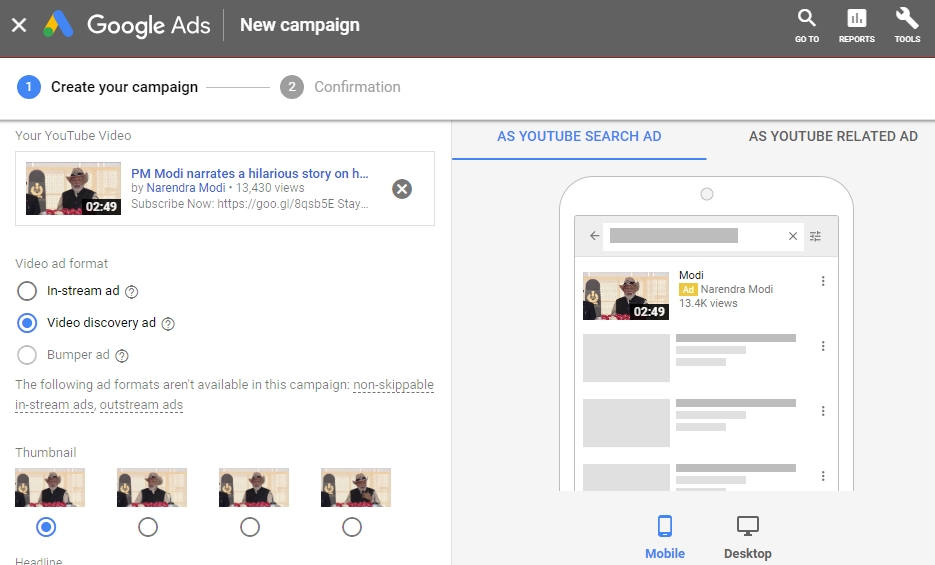
Test campaign on Google AdWords to promote a 3rd party video

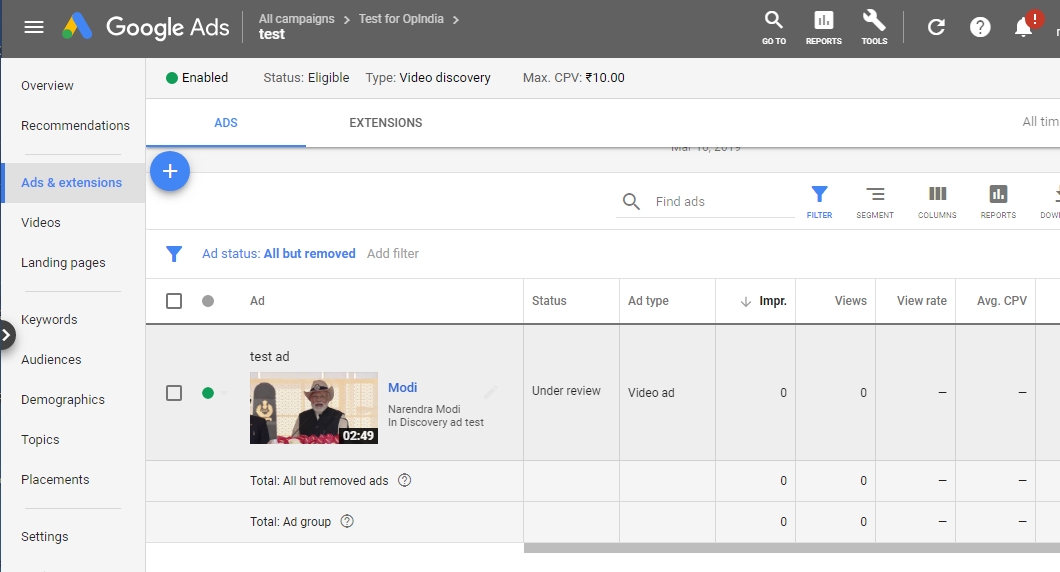
We tested this by trying to create an In Discovery advertisement for a video we don’t own, and we were successful in doing so. As shown in the screenshots here, we created a test campaign to promote a video posted by the Youtube channel of PM Narendra Modi, and the campaign was successfully created. There was no need to obtain permission from the owner of the account that posted the video for promoting the same. This means technically Dhruv Rathee’s claim that someone else may have paid to promote his video may be correct.

Test campaign to promote a 3rd party video (the test campaign was deleted immediately after taking the screenshots)

Although Dhruv Rathee had claimed that he had no knowledge of the ad, just hours after he was confronted with it, the ad was taken down. Now when searches the keyword, the ad is not shown. This means the advertisement was removed after people pointed out the same to him. If someone else was running the campaign, that entity must be monitoring Dhruv Rathee’s Facebook account so closely 24 hours a day that the moment someone raised a question about ads of his video, the ad was taken down. This seems too far-fetched, thus increasing the possibility that the ad was being run by the team of Dhruv Rathee itself.

By the way, if you need to watch any YouTube clip on Rafale deal, it’s this one:

also: Dhruv Rathee speaks the same language as the terrorist who killed 40 CRPF jawans in Pulwama attack

2019 General Elections dates announced: Polling starts from 11th April, counting to be held on 23rd May 2019

The Election Commission today held a press conference at the Vigyan Bhavan to announce the dates of the General Election 2019 with the model code of conduct coming into force immediately. The elections will be held in 7 phases instead of 9 phases previously.

Following are the dates of the Lok Sabha elections as announced by Election Commission today:

Date of Poll (Phase 1): 11th April 2019

Date of Poll (Phase 2): 18th April 2019

Date of Poll (Phase 3): 23rd April 2019

Date of Poll (Phase 4): 29th April 2019

Date of Poll (Phase 5): 6th May 2019

Date of Poll (Phase 6): 12th May 2019

Date of Poll (Phase 7): 19th May 2019

Date of counting: 23rd May 2019

Date before which elections are to be complete: 31st May 2019

The Election Commission (EC) also said that currently, there are 900 million voters now against 814.5 million in 2014 and out of that, 15 million voters are aged between 18-19 years, presumably, first-time voters.

CEC Sunil Arora said that photo voter slips are to be distributed to all registered voters at least 5 days before polling, however, it will not suffice by itself to identify voters.

In another important announcement, CEC said that 100% VVPATs are going to be employed in all polling stations. And for free and fair elections, Fresh SOPs have been put in place for last-mile transportation of EVMs with GPS tracking.

With respect to paid news, CEC said that model code of conduct would also apply to content posted on social media by parties and candidates.

Odisha CM Naveen Patnaik announces 33% quota for women in allocation of tickets for Lok Sabha elections

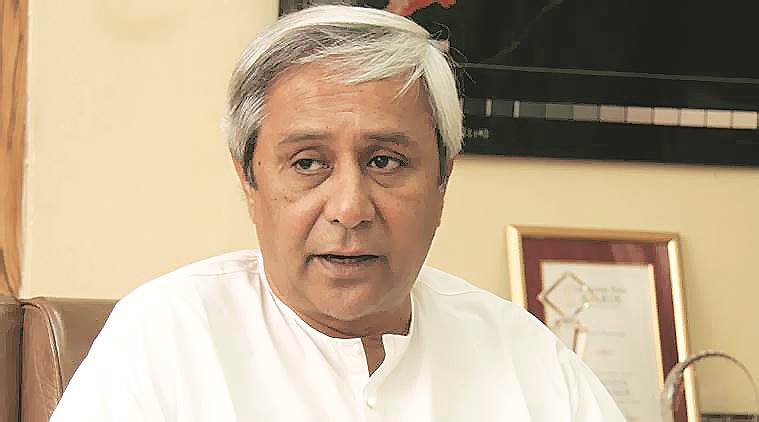
Odisha Chief Minister, Naveen Patnaik has announced today 33 per cent quota for women in the allocation of tickets by his party Biju Janata Dal (BJD) for 2019 Lok Sabha elections. Patnaik made the announcement while addressing the Conclave organised by the Women Self Help Group (SHG) under Mission Shakti. “I would like to announce here at Kendrapara, the ‘karma bhoomi’ of legendary Biju Babu, that Odisha will send 33 per cent women to Parliament in the coming elections”, the CM said.

He said that if India wants to be an advanced country like America and China then women empowerment is the only way to it. “The women of Odisha will lead the way in women empowerment in India. If India is to lead the world if India is to be an advanced nation like America and China, then women empowerment is the only answer,” Patnaik added.

An amount of Rs 1 crore has also been sanctioned by the Chief Minister for Mission Shakti Bhawan at Kendrapara. In 2011, the Odisha government had increased reservation for women in Panchayat and Urban Local Bodies to 50%.

Patnaik’s proposal for women reservation received praise from the United Nations Entity for Gender Equality and Empowerment of Women (UN Women) in February this year. “We would like to take this opportunity to thank you for the support extended by your government in the implementation of the joint programme between UN Women and Panchayati Raj Department, Government of Odisha, to promote Gender Responsive Governance in the state”, the letter of the UN Women addressed to the Odisha CM read.

Patnaik had passed a proposal in November last year seeking the implementation of the 33% reservation for women in Parliament and State Assemblies which had received the support of the BJP and the Congress in the State Assembly.

In January this year, Patnaik had said that BJD will not be joining the Mahagathbandhan for the 2019 Lok Sabha elections and will maintain the policy of equidistance from the BJP and the Congress.

Pakistan and the unsubtle art of messing with the wrong man

Albert Einstein once defined insanity as doing the same thing over and over again but expecting different results. In the modern foreign policy context, nothing better signifies the insanity which Pakistan practices and the recent Balakot air strike by India is yet another unravelling of those foolish policies.

Pakistan had lots of examples to learn from to conclude that the India of Modi is not the pusillanimous incompetent leadership of the earlier regime. It is much more youthful and demanding of those in power. It had consciously chosen Modi as the man to defend its interest particularly in response to the response of Congress which didn’t evoke any confidence in its response to the beheading of our soldiers. Unlike Congress, this Modi Sarkar under BJP places utmost importance on our soldiers and will make enemies pay a heavy price for any misadventures. This Modi Sarkar is the same which had conducted surgical strikes to eliminate groups which are against Indian interest. The Doklam standoff with China should have been a lesson for Pakistan that the days of strategic deniability and attempts to bleed through a thousand cuts are passe now. Pakistan should have seen the grave risk they are taking by continuing to harbour terrorists and letting them loose on India as they did at Pulwama. Justice has to be done and it is done in true Modi style. The message is clear: You ain’t messing with our precious soldiers.

Modi Government in its first tenure already has loads of success which it will take to the people and foreign policy is no small part of it. While it stood its ground in Doklam, it didn’t hesitate to take punitive actions in the surgical strike in another case. What makes matters sweet is that there has been perfection at the operational level in all these strikes all thanks to the able leadership of Ajit Doval. The Balakot strike is yet another example of the operational acumen and leadership combined with a never before seen political will of India to avenge our martyrs. This is the first time after the 1971 war that Indian fighter jets entered Pakistan occupied territory. But this is significant because India made it clear that the days of inaction under the guise of “strategic restraint” is over. The belief of Pakistan that they can continue to bleed India using their proxies and get away with it is shattered. Pakistan being the only nuclear state which always indulged in nuclear blackmail is a joke now as their empty threats unravel.

Back in May 2011, when the US entered into Pakistani airspace and liquidated Osama Bin Laden, calls for similar actions were made in Indian political circles. Indian public was more or less acquainted with the fate of a meek Indian policy that India had to search for decisive actions which ultimately lead Modi Government into power. While there had been talking of ISI actually allowing US Navy SEALs to come in at Abbottabad, India has to be more forthright and brash in its intent and sent the mirage which only Modi Sarkar could have been expected to do. And Modi delivered it for all the people of India who felt let down by the loss of our brave soldiers at Pulwama.

Just a few days before, Narendra Modi has been conferred the prestigious Seoul Peace Prize for his contribution to international cooperation and fostering global economic growth. The action against terrorists by the same person who won the Peace Prize is a testimony to the looming threat of terrorism in the world. Modi by taking the initiative has upheld that peace coming at the cost of loss of lives of soldiers is pure cowardice. Modi has delivered a body blow to the Pakistani establishment which may have thought that a peace prize will have Modi going soft in upholding Indian interest. For those who know Modi and have worked with him, we know that nothing is more important to him than national interest.

In yet another significant move, India has been invited to the inaugural plenary of the foreign minister’s conclave of OIC where Sushma Swaraj will attend as “guest of honour”. What makes it a diplomatic win is that it is for the first time that India has been invited which makes matters worse for Pakistan as OIC has often sided with Islamabad on many issues. With mounting diplomatic pressure on Pakistan over Pulwama attack, the move by OIC a grouping of Muslim majority nations makes their isolation complete and the diplomacy of Pakistan irrelevant.

Modi Sarkar has consistently and successfully treaded the fine line exposing the Pakistani establishment and taking down their terrorists. This non-military strike where no civilian or military casualties were inflicted is the surest sign of Indian security doctrine maturing in line with the mature Indian democratic system. It puts Pakistan at an immense pressure to explain their stand to the world about the status of these terrorists given that civilian government won’t own up to it nor military establishment can be seen to be in cahoots with them. It just was perfection as Foreign Secretary Vijay Gokhale read out the details of the “non-military strike” and “ensuring no civilian and military casualties” leaving Pakistan red-faced on the implications of the said statements and the inability to refute anything. The Mirage jets returned with Modi redrawing the security doctrine and lines for Pakistan where it better settle down, grumble and bear. Pakistan escalating the situation will do it at their own risk for they can’t afford a war nor blackmail for it isn’t working anymore. They are yet to digest the New India which Modi represents and ends up putting itself under grave threat.

To end, I will just quote Modi himself and reassure that “Country is in safe hands” and will remain so for many years to come. Whether Pakistan is safe anymore is something Pakistani establishment should ponder over.

(Shweta Shalini is BJP Spokesperson, Advisor to Chief Minister of Maharashtra and Executive Director of Maharashtra VSTF)

Journalist exposes ignorance about road-safety, claims Expressways should not have speed limits

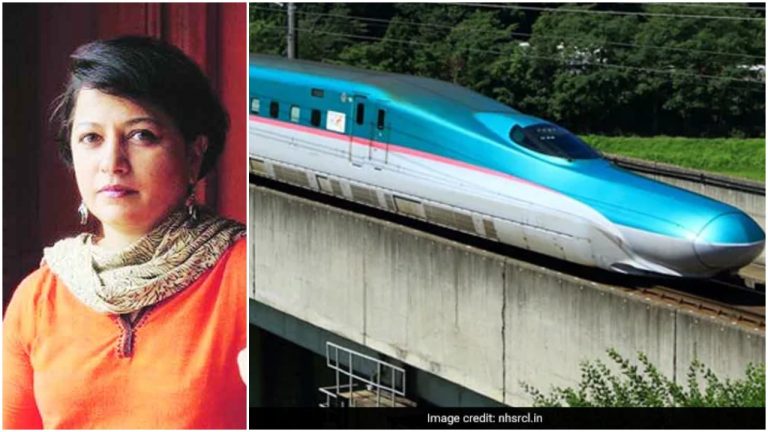
The Lutyens Journalists, who often marinate in their own mediocrity, constantly get exposed on social media for their lack of intelligence and failure to comprehend facts. Sucheta Dalal, one of the members of Lutyens cabal displayed her ignorance concerning the basic road safety rules and went on to discredit Narendra Modi government for introducing high-tech bullet trains in the country.

The recent accidents on Mumbai-Pune Expressway and subsequent action by the Maharashtra highway traffic patrol to install radars and speed guns to nab overspeeding vehicles seems to have not impressed Sucheta Dalal. She criticised the introduction of speed limits and speed guns across the highways while objecting to penalise the overspeeding drivers. However, she did not stop there. Dalal, while criticising the road safety norms, lamented over enforcing the existing rules of speed checks on Highways and questioned the government on whether they will justify the same for Bullet Trains.


According to Sucheta Dalal’s rationale, the authorities must not introduce such road safety norms or check overspeeding drivers on Highways as the original intent of building highways like Mumbai-Pune expressway was ‘speed’. She further questioned the ruling party about the reasoning behind introducing Bullet trains if they are going to introduce such check speeds on Highway. As per Dalal’s logic, the speeding on Highways and high-speed Bullet trains are similar as she questions the government whether such rules are also forced on Bullet trains.

However, Dalal deliberately ignores the fact that there have always been speed limits on highways and expressways to check reckless driving which causes fatal accidents. It is correct that Expressways are built to ensure fast transport, but that does not mean there are no speed limits and safety norms on them. Most importantly she misses the fact that these are not new rules notified either by the Centre or the state government. In fact, the Narendra Modi government had increased the speed limit for vehicles on expressways from 100 kmph to 120 kmph, contrary to what Dalal claims.

Driving recklessly on Highways cannot also be equated with similar speeds of a Bullet-train. As Bullet trains operate under a different set of rules and system, drawing a parallel between high-speed bullet trains and speeding on highways is completely absurd. Moreover, even Bullet trains and other high-speed rail networks across the world have speed limits. There are strict safety norms on high-speed rail networks, and they are never breached. Due to such safety norms, fatal accidents occurring on high-speed train systems are much lesser than road fatalities.

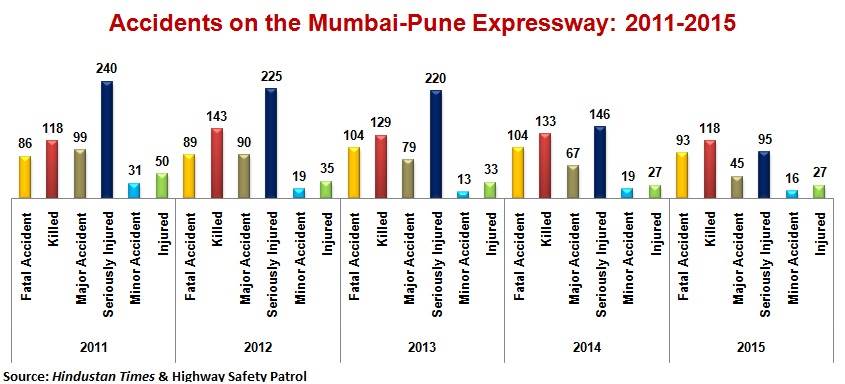
Accidents on Mumbai Pune Expressway

According to the National Criminal Bureau Record (NCRB) data, in 2015, the total road accidents in India accounted for 4,64,674 accidents which have resulted in 1,48,707 traffic-related deaths in India. The Mumbai-Pune Expressway also has witnessed a large number of accidents. In the first 10 years since its opening, there were 1,758 accidents with more than 400 fatalities on this road. Fatal accidents on this road happen regularly, with an average of 125 deaths per year. Realising the importance of reducing traffic-related deaths, the government has taken necessary steps like ensuring speed checks, speed breakers on national highways and expressways.

Although fast travel is important, safety and human lives are of utmost importance, and therefore it is essential to implement safety norms on highways and expressways like speed limits, lane discipline etc. There are speed limits on high-speed roads everywhere in the world, like the freeways in the USA have speed limits ranging from 100 kmph to 120 kmph, and police keep a strict watch on overspeeding vehicles using speed guns and other devices. Therefore, it is ridiculous to claim that there should not be speed limits on expressways in India.

Sucheta Dalal, who claims to be a journalist must stay away from such ridiculous arguments, which not only exposes their weak understanding of the facts but also raises questions regarding the credibility of their ‘intellect’ they claim to possess.

Around 15 million jobs created by the Modi govt per year, but the ‘liberal’ propaganda won’t stop

One of the best articles I read last week was by Dr Surjit S. Bhalla which provided an explanation behind the rise of the use of fake news and fake analysis. The article linked the rise of fake news and of questioning the data on the economy to the record performance of Congress in 2014 as it managed to get its lowest ever tally in its history. The article got me thinking and eventually, I realized that I agree with this conclusion as there has been a lot of unnecessary politicization of a lot of things post 2014 by the opposition.

Ironically, a lot of the new-age media platforms and self-claimed fact checkers have also frequently peddled fake-news that has been then cited by opposition leaders to corner the Modi Government. It takes time to debunk fake-news and the opposition has constructively used this fact to its advantage as it tried to set its own narrative. This article focuses on the issue of jobs as we try to understand the reality of employment creation. At the onset, I must state that I had indicated way back on 22nd May 2018 that missing data on jobs will play a critical role in the 2019 elections. I had also stated in the same article how the issue is not the lack of jobs but the lack of data on jobs.

The issue around PLFS and CMIE

At the onset, I must emphasize that the government should release the Periodic Labor Force Survey (PLFS) to ensure that there is at least some data that can be objectively analyzed by individual researchers. Chances are that PLFS may have findings that may not be consistent with other indicators of job creation in the economy- if that’s the case then they should make the report public to identify potential flaws in the survey so that it could be improved in future.

On PLFS being used and compared with the previous employment and unemployment survey, Mr Kant has rightfully put how they both can’t be compared due to the differences in sampling techniques. So, all the exclusive headlines by “eminent journalists” are just headlines that are devoid of any substance and are only serving the interest of those who benefit from such fraudulent analysis as they mislead their readers and construct a false narrative.

A bulk of the criticism on the lack of jobs from the opposition has come with the start of CMIE’s data on jobs [OpIndia has already expressed concerns regarding the reliability of CMIE’s data and you can read that article by clicking here]. While the sample size of most labour force surveys in India has been historically small, the important aspect is whether CMIE is drawing its sample without any skewness in its sampling technique. Mohandas Pai and Yash Baid make a compelling argument against the use of thin surveys as against verifiable and robust data sets such as EPFO, NPS and PPF.

The true picture of jobs

Now the key question in front of us is the true reality of the labour market over the last five years. I refrained from writing it extensively because there was relatively less data points that were available a couple of months ago [an old blog on this issue can be accessed by clicking here], but now, with multiple data points available we can finally make sound conclusions regarding the situation of job creation in the economy.

Dr Bhalla and Dr Das have arrived at an approximate estimate of 8.7 million annual jobs being added by the government. This is based on the estimate of total employment of 448 million in the year 2017/18. Their estimate seems robust and it is likely to be closer to the true scenario of job creation in the economy.

More that arriving at an exact estimate, let us try to establish the situation of jobs. As evident, Dr Bhalla and Dr Das have provided an estimate that shows the positive situation of jobs. It is also important to highlight that these estimates use the EPFO and NPS data both of which also show a positive trend in the job’s growth post demonetization. EPFO data has improved over subsequent months. In fact, 72.32 lakh new subscribers were added to social security schemes of the Employees’ Provident Fund Organisation (EPFO) from September 2017 to December 2018 as formal sector jobs touch 16-month high at 7.16 lakh in December. This further indicates that there’s a positive change in the data so there must be robust job creation within the economy.

A criticism of the use of EPFO is that it tends to represent more formalization of jobs rather than fresh creation of jobs, but those who criticize the EPFO dataset on these grounds also believe that demonetization didn’t lead to improved tax compliance and more formalization so clearly, their argument is incoherent. Indeed, EPFO data represents a formal sector of jobs and it is likely that some informal jobs may be becoming formal but the robust jobs growth in the 18-21 age group suggests that there must be a high proportion of the EPFO subscribers who are first-time employees. The latest numbers from EPFO suggests that for the categories of sub-18, 18-21 and 22-25 age groups, there has been an addition of 4 million jobs and a bulk of these must be first-time employees. These jobs are formal jobs that come with all social security benefits, so there is a robust creation of good and decent jobs in the economy.

Another source of job creation comes from Mohandas Pai and Yash Baid’s analysis using the data for automobile sector where they found that the sector created 3.4 million jobs in FY18, with a further 2.8 million jobs created in the 9 months ended December 31, 2018. The automobile sector tends to grow only when there is robust demand for automobiles which is again a very healthy sign for the growth of the Indian economy. This robust demand further indicates that the labour market continues to be robust.

Moving on to another indicator, an Aon Hewitt survey indicates that the average salary hike in 2018 is 9.4%. If indeed the labour market would have witnessed massive layoffs and unemployment was at an all-time high, then clearly labour supply would have gone up which would have suppressed incomes. The argument of hysteresis as advocated by some is not valid here as labour supply would have invariably gone up because the unemployment if at all was high (which it wasn’t), it wasn’t high for a prolonged period. Additionally, India has witnessed very moderate inflation for this period so even the real salary hike on an average is robust and positive. Thus, clearly, there must be jobs in the economy which is why companies are keen on retaining their talent.

Leading HR platforms such as Naukri.com also produces its index to measure the employment situation in the country. According to their report, there was a 3 per cent addition in hiring by companies in March 2018 compared to March 2017. Yet again, we find their findings to be consistent with other indicators of job creation in the economy. In the digital space, there are estimates that suggest that the start-up and digital economy added 3.9 million jobs between 2014-18. This means 0.975 million jobs annually.

Recently, even the CII came out with its own numbers for the MSME sector which tends to employ a significant proportion of India’s non-agriculture labour force. According to their report, MSMEs created 14% more jobs in the last four years. This is consistent with the acceleration in growth rates of the GDP that the Indian economy has witnessed over the last couple of years along with the revival of the investment cycle in the economy. The report estimates a total of 13.5-14.9 million job additions per annum. These estimates are again indicative of robust job creation in the economy over the last five years.

While there are ample jobs that are being created in the economy across different sectors, a key area of concern that remains is regarding the skills of those who are entering the labour force. While the government has ensured that there is ample labour demand, what needs to be done now is to ensure that there is a significant push towards augmentation of labour supply through successive skilling and reskilling endeavours. Some amount of policy push has already been given towards skill development and perhaps, in subsequent years we will witness a far more robust and dynamic labour market in India than ever before.

Now that we have multiple sources of jobs, it is important to look at all these sources before we conclude the state of employment in the country. It is evident that apart from CMIE, which is a true sense of outlier for reasons best known to them, all other sources categorically demonstrate that there is robust job creation in the economy. This doesn’t come as a surprise as the government has ramped up public infrastructure projects which have a significant multiplier effect in terms of job creation in the economy. Through these multiple sources of data, we can safely establish that in terms of job creation the last five years have been exceptionally been good and any further debate around jobs would be driven by political considerations rather than all available empirical evidence.

If the ‘liberals’ were not foolish, they would never have to ask these 7 questions about Balakot strikes and its aftermath

This is my personal take on what I *think* happened in Balakot and after the Indian Airforce conducted the airstrike. Not surprisingly, our ‘secular’ opposition and ‘liberal’ ecosystem would rather embrace the Pakistani version of events. And because their opinion on this matter is driven by personal jealousy towards PM Modi, I understand that it is impossible to change their mind. In general, conspiracy theorists of any kind do not respond to logic. Any effort to debunk their foolishness only ends up reinforcing their beliefs.

But, being the idiot that I am, let me try to answer all the  ‘questions’ that the opposition and its ecosystem is raising. Besides, it’s really easy to piece together the puzzle.

Q1. Did Indian Air Force strike at Balakot in Pakistan?

Of course, it did. Pakistan confirmed this directly and did so even before India put out a statement.

Q2. Was there a Jaish terrorist camp at the spot where India struck?

Again, of course. Even Al Jazeera confirmed that there was a Jaish “school” at the spot, even showed us a picture of the sign.

Untitled.png

Jaish is a terrorist organization. Any “school” run by them is a terrorist camp. No more justification needed.

Not surprisingly, Al Jazeera decided to go with the headline of “no casualties”. Even though when you read the actual article, Al Jazeera never talks about actually visiting the spot where the “school” was.

Untitled.png

Why was Al Jazeera unable to visit the site of the school? Did the legs of the reporter covering the story get too tired? The truth is that the Pakistan government has denied media permission to visit.

So the Government of Pakistan points to a spot somewhere in the mountains and said something like: “Nothing happened at that spot over there which you are absolutely not allowed to visit“.

And yet, Al Jazeera relayed the Pakistani Government claim of “no casualties” in its headline as if its automatically true. Why?  You tell me.

Q3. Did India’s air strike kill any terrorists at the Jaish camp?

Well, it has been nearly two weeks and Pakistan still won’t let anyone visit the spot where “nothing happened”. What do you think?

To Indian liberals over here who have invested so much emotional capital into the Pakistani narrative of “no casualties”, I have a simple request: call on your beloved big-hearted Pakistani PM Imran Khan to let people visit the spot and see for themselves.

I want to ask our liberals: Doesn’t Pakistan hold all the cards here? Balakot is in Pakistani territory. They can demolish all of India’s claims in half a second by letting people visit the spot! Why won’t Imran Khan just do that and give the good news to Indian liberals and to the people of Pakistan?

So, yes, there were casualties. Of course, there were. Otherwise, there is no imaginable reason for Pakistan to prevent people from visiting the spot.

In fact, there’s more. Didn’t I hear there was a “school” at the spot? If Pakistan could, don’t you think Pakistan would have invited the whole world by now to come and witness the brutality of India targeting a school? Imagine the kind of public relations nightmare that would have been for India!

Why is Pakistan giving India such a pass? Unless they need time to remove the bodies of terrorists secretly from the spot. Quite a few common people live near the area. It will take time to remove the bodies and cover up the evidence.

Q4. Where did the figure of ‘300 terrorists killed’ come from?

Note that India never officially claimed any figure, people have been talking of ‘300 terrorists killed’ since the day of the strike. Conspiracy theorists want to know how India could have a number, officially or unofficially, without counting dead bodies.

Simple, actually.

Untitled.png

Ah!

Q5. Why won’t the Government of India give ‘proof’?

Anybody asking this question should first answer this one: Did you raise similar doubts at the time of the surgical strike of 2016? If so, have you publicly taken back your comments casting aspersions on the government and the military? Have you apologized to the government, to the military and to the people? If not, why?

In 2016, the details came out slowly, one by one. Every single claim made by the Government proved to be correct. Every claim made by Pakistan proved wrong.

Then, why are the same folks who raised doubts about the surgical strike rushing to embrace Pakistan’s version this time again? Why would you embrace the version of the country that was proven to be lying the last time? And in any case, why do you believe an enemy government above your own? Is it because you hate Modi so much that you feel like he is a bigger enemy than Pakistan?

If so, liberals should say that upfront.

I remember lots of doubts and taunts thrown at the Indian version back in 2016 by these same people after the surgical strikes. I don’t remember many public apologies later. In fact, I don’t remember any apologies. Why so?

Now let us address the question of “proof” directly. Of course, I have no direct knowledge of the matter, but from what I have read in media and from journalists (including media known to be heavily anti-BJP) is that a “friendly” country provided us with the ultra-high resolution satellite photos for the strike. Considering how sophisticated this technology is, I am guessing this “friendly” country is either the US or Israel. Could be Japan also, by the way. As a result of this, the Govt of India is probably not at liberty to make the photographs public, giving away the capabilities of the foreign spy satellite.

Q6. Did India shoot down a Pakistani F-16 when the enemy tried to violate our airspace?

This one is easy. We know Pakistan told two obvious lies about what happened on that day. The first is that they didn’t use any F-16s. That’s demonstrably false because the Indian Air Force made public pieces of the missile that could only have come from an F-16.

Again, why would Pakistan randomly lie about not using F-16s unless they had something to hide?

The second lie that Pakistan told is about capturing two Indian pilots, a claim that they officially retracted later.

Now, people don’t usually get confused between numbers 1 and 2. It’s really easy to count from 1 to 2. It’s so easy that even somebody who studied at a Jaish “school” could do it.

So how did Pakistan’s Government manage to mix up the numbers 1 and 2? People on the Indian side saw the Pakistani F-16 go down and it’s likely that Pakistanis ended up “capturing” their own pilot. I read some reports that say the Pakistani pilot was roughed up and beaten very badly by his own. I should not be laughing, I know.

Q7. Why is ‘international media’ so desperate to believe that India didn’t shoot down a Pakistani F-16?

Please tell me you are not talking about that New York Times story. That read more like an ad for why India should buy more American weapons. And imagine what it does to America’s multi-billion $$$$ defence industry if word gets around that an F-16 was shot down by a mere Mig 21?

That wasn’t hard at all. The pieces fit into place almost obviously.

The only remaining question is this: Why has a section of the opposition and its ecosystem refused to piece together this simple puzzle? Why would they rather believe the fantastic claims of a globally discredited government of an enemy country?

You tell me. I have some guesses, but I won’t say more.