Home Blog Page 6832

Rajasthan: Congress short of 2 seats from majority, rebel MLAs might favour Gehlot as CM

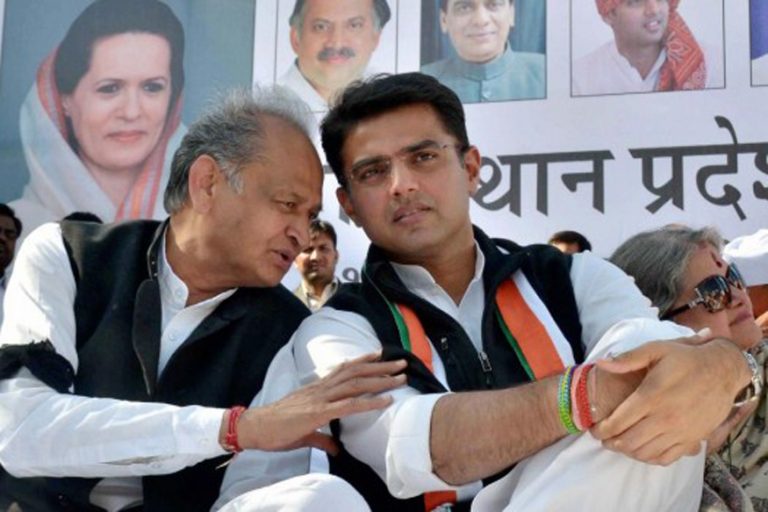
The race for the post of the Chief Minister in the state of Rajasthan has already begun. The Congress has secured 99 seats in 200 member Rajasthan state assembly just two short of the majority mark while the BJP won 73 seats. Senior Congress leader Ashok Gehlot and Rajasthan PCC Chief Sachin Pilot are in the fray for the post of the Chief Minister but the Congress high command is likely to favour Gehlot, as he is believed to more acceptable in the party and most importantly for the independent MLAs.

According to News18, Congress observer KC Venugopal has already arrived in Rajasthan and has met each MLA of the Congress party to ascertain the views of the newly elected members. The party observers have scheduled a Congress legislative party (CLP) meet at 11 am at Jaipur to elect the party’s Chief Minister after garnering the views of the newly elected members.

KC Venugopal has also met both Pilot and Gehlot individually. In a show of solidarity, both leaders had appeared before the media in Jaipur on Tuesday after defeating the BJP in the elections.

The Congress delegation led by KC Venugopal, Rajasthan in-charge Avinash Pandey, Ashok Gehlot and Sachin Pilot is set to meet the Rajasthan governor Kalyan Singh at 7 pm in the evening to claim the right to form the new government in Rajasthan.

Interestingly, Congress party which is just short of 2 seats is relying on regional parties like Bharatiya Tribal Party led by Chhotubhai Vasava and Ajit Singh’s Rashtriya Lok Dal, who has already promised his support to the Congress party. Out of the 12 independents, 9 of them were originally from Congress party but had rebelled after being denied tickets will play a key role in the government formation. Reportedly, some of those members like Sanyam Lodha, Mahadeo Singh Khandela and Babulal Nagar are close to Ashok Gehlot and may support him to be the next Chief Minister of the Rajasthan.

Ashok Gehlot, who won from the Sardarpura seat is eyeing for his third term as Rajasthan’s Chief Minister. Sachin Pilot has been elected from Tonk constituency and has eyes on the post too.

Madhya Pradesh: Shivraj Chouhan to address press shortly, state BJP President still hopeful

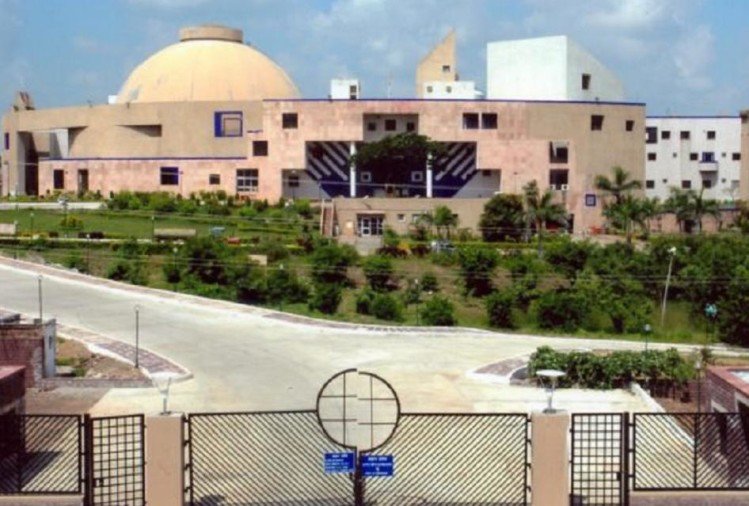
After a long day of a close race of numbers for the Madhya Pradesh legislative assembly, at the final tally, Congress ended up a few seats ahead of BJP. Till last night, when the results of 229 seats were announced, Congress stood at 113 seats and BJP at 109 seats.

Counting for the last remaining seat reportedly continued today morning and finally it too, went to Congress, bringing its tally up to 114 in the 230 seat assembly.

Madhya Pradesh Congress chief Kamal Nath had sent a letter to governor Anandi Ben Patel seeking time to meet and stake claim to form the government in the state. He has claimed that his party has a majority support.


As per reports, the state BJP is yet to accept defeat. Shivraj Chauhan has reportedly called for a press conference at 10 AM today. Yesterday, state BJP President Rakesh Singh reportedly announced that Congress has not got a majority in the state and many independent MLAs are in contact with him.


Samajwadi Party had won 1 seat and BSP has won 2. 4 seats have been won by independent MLAs. As the political atmosphere gets tensed in the state over the claim to form a government and last minute support, it is most likely that the independent MLAs and SP-BSP alliance will play kingmakers in the state.

Can the BJP satisfy its online supporters? If only it were Congress

As I write this, BJP has lost Chhattisgarh and Rajasthan and might even struggle to keep Madhya Pradesh. While Rajasthan results were expected, given that the state has been alternating between BJP and Congress for many elections, Chhattisgarh and Madhya Pradesh results were dampening for BJP, even though one can say that it’s not easy to beat anti-incumbency of 15 years.

There will be a hell lot of analysis coming our way in coming days because these results were being seem as ‘semi-final’ for the parliamentary elections due in next 5 months.

There could be analysis if BJP faltered due to agrarian issues, or was it because of PM Modi’s pet projects for rural India not fructifying, or was it because lack of government jobs, or was it because of GST, etc. – such issues can be analysed with some data, though given the kind of media we have, one can expect that there will be no data provided in articles dwelling upon these issues.

Then there would be another round of analysis where basically you don’t need data, or where reliable data may not be available, but you can still argue in a seeming logical manner – e.g. if certain caste factors were at play, or if there was infighting within the party, or candidate selections etc.

And then there is a third type of analysis, where you are free to take a flight of your fancy and peddle anything – rising intolerance, Yogi Adityanath, gau rakshaks, Vikas vs Hindutva, IT cell, and so on. This category is something we all love, and perhaps with hint of irony, this article could fall in this category itself despite my mocking tone for it.

People who are active on Twitter would have been subjected to relentless analysis of this category, but I want to focus on those that were extended by some BJP supporters or the online ‘right wing’. There were all kinds of theories offered, many of them inherently contradictory. For example:

“BJP must focus on core and cultural issues, vikas is taking the party nowhere.”

“BJP focussed too much on pappu’s gotra and such issues, it should have focused on achievements.”

“BJP is not investing in creating ecosystem, look how Congress rewards people.”

“BJP has rewarded people who are incompetent.”

“Only Ram Temple or war with Pakistan can save us now.”

“Forget rhetorical and emotional issues, show some work!”

And so on and so forth.

While we may itch to reject all of them for being mutually contradictory, the truth is that neither each one of them is absolutely correct assessment nor is anything entirely invalid. And there lies a problem of the BJP – of communicating to its own (online) supporters.

Unlike what the ‘liberals’ love to imagine and actually believe in – BJP’s support base, especially online, is far more diverse than any diversity a JNU student group can achieve. This seemingly incoherent analysis by this bunch is reflective of this fact.

What BJP has failed to do is to communicate effectively with various subsets of this bunch. This would have entailed giving customized messages to each subset. Sounds like Cambridge Analytica?

Yes, it indeed sounds like Cambridge Analytica, but this communication strategy, especially in politics, is hardly something that was invented by Cambridge Analytica. In fact, Congress has historically done it so well. They supported and encouraged crony capitalism while their rhetoric cantered around socialism, or as I had written earlier, in Bihar, they were a party of upper castes while Dalits were painted as their ‘natural voters’.

Even in this election, while in Delhi studios and for their fans in Lutyens media, Congress was fighting against obscurantist views around cow and temple, their manifesto promised gaushalas and corridor named after Lord Ram. This parallel messaging is right from the top itself where Rahul Gandhi goes on to side with supporters of Periyar who hate Brahmins and support physical attacks on Bhramins, while being a janeudhari Brahmin of dattatreya gotra.

This is a trick BJP needs to learn. How do you convince a ‘core’ voter that cultural issues are not being abandoned while also push for ‘vikas, and only vikas’ approach.

BJP’s challenge is far greater than Congress due to two reasons – the media and the intelligentsia of this country don’t beat chests over this doublespeak by the Congress, while Congress’ supporters are.. well.. slaves, who don’t question the party at all.

If the party attempts to send mixed signals, before the media, BJP’s supporters itself start questioning the party. For example, take the issue of ‘Charter of Hindu demands’ – which is being championed by a BJP MP and which is like a dream come true for a ‘core’ supporter. However, the first reaction of a supporter is – Why this drama after 4.5 years? If party is serious, why don’t they simply pass this act in parliament? Etc.

It is said that politics is often about perception, and communication is an important part of perception building. Ironically, this was the biggest strength of the party and the Prime Minister Narendra Modi before the 2014 general elections. Somehow this advantage faded.

There was a need to recalibrate the communication after the 2014 victory, especially when it came to communicating to party’s supporters (not party workers, to make it clear). Perhaps even the party made the same mistake about its supporters, especially online supporters, which the opponents make i.e. it took them as homogenous group. It was not. It was never one.

A one to many mode of communication was needed. I don’t really mean it as a post that should have been created, but essentially the party needed respective liaison officers or ambassadors for different groups of supporters. To keep them hopeful that they are being heard, to keep them engaged, to keep them close.

There were some attempts made e.g. to arrange a meeting of online supporters with Prime Minister Modi in 2015 itself, but that got mired in controversies precisely due to the fact that this group was not homogenous. There were accusations that there was favouritism in selecting people, that ‘opportunists’ were invited, and all kinds of accusations. Perhaps the party developed cold feet after that and they didn’t know how to proceed further. That broken link of communication has got only worse over time.

It’s not easy, and I don’t have ready-made solutions, but I am pointing out that what a common BJP supporter can reject a fellow supporter’s grievances as ‘armchair analysis’ or ‘knee jerk reaction’ is reflective of a problem of communication, which was begging attention since long.

The party has got a lot of things to do – galvanising the karyakartas, working with allies, fighting elections, running the government, and so on, and online supporters might not be a top priority for it, but this is a problem that the party shouldn’t ignore, for it doesn’t enjoy the luxury of having supporters like those of Arvind Kejriwal or Rahul Gandhi.


Here is why BJP lost elections, and of course, it was deliberate

The BJP seems to have been routed in 3 states in which it held the power seat until today. Rajasthan, Chhattisgarh and Madhya Pradesh seem to be slipping out of their hands. As soon as the eternal hope withered and the reality of loss dawned, everyone started looking for obvious reasons for the loss. Beyond reasons for the loss, the eternal hopefuls always look for an explanation. Why did BJP lose? What happened? Is there some invisible hand that we aren’t aware of? Is there some inexplicable rationale that mere mortals like us might be missing?

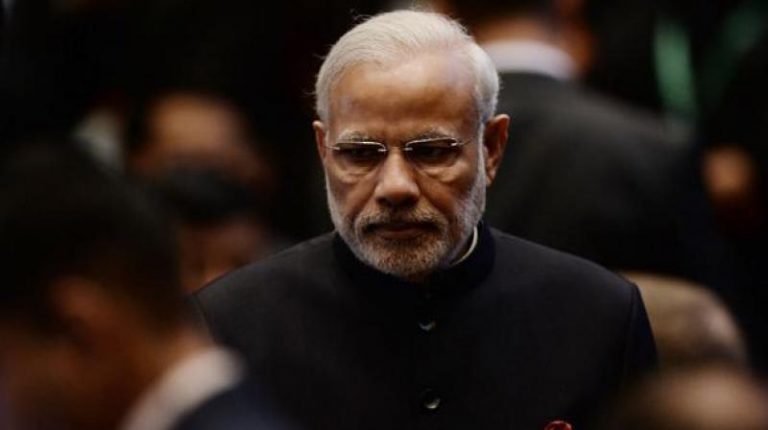
Here, I must agree. There certainly is a secret, invisible, grand plan owing to which BJP lost. That grand plan is called the masterstroke of masterminds like Prime Minister Modi and BJP President Amit Shah.

The only logical explanation for the loss of the infallible Modi-Shah duo is that they lost these elections deliberately. There are several reasons why the masterminds of the BJP leadership decided to pliantly lose 3 crucial states.

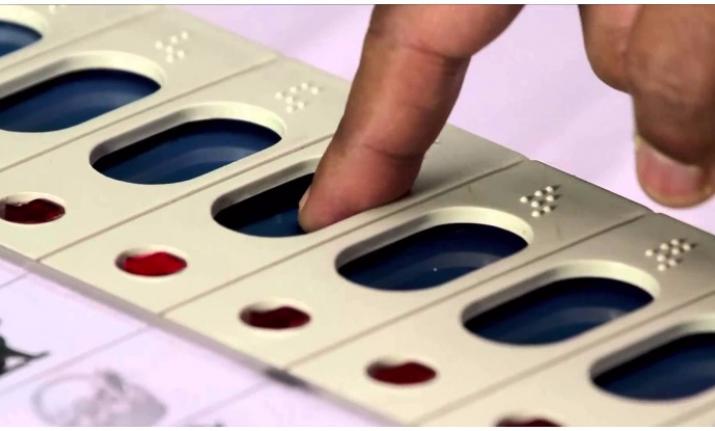
Firstly, they reasoned that if they allow Congress to win these elections, they would take away the annoying Congress drone that goes on and on about EVMs being hacked or manipulated or stolen or some such everytime they sniffers pick up the whiff of defeat. They win, they can’t blame EVM. If they can’t blame EVM, BJP won’t have to waste time mocking Congress for its glaringly duplicitous stand. Brilliant, isn’t it?

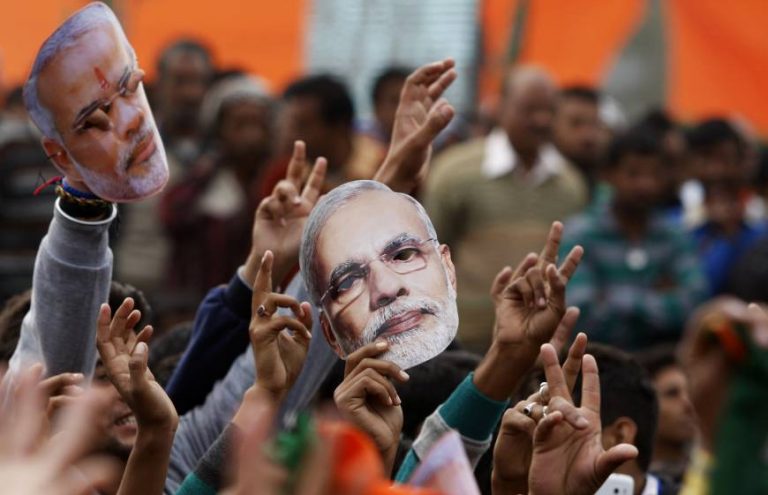
Next, the masterminds of Modi and Shah realised that victory has been taken for granted by the cadre. And hence, they orchestrated this entire facade of the Prime Minister talking in rallies after rallies. He did so just to give his cadre the illusion that Modi’s name could get votes in the states as well, just to yank to cadre out of their delusional stupor. Just in time for 2019, that too.

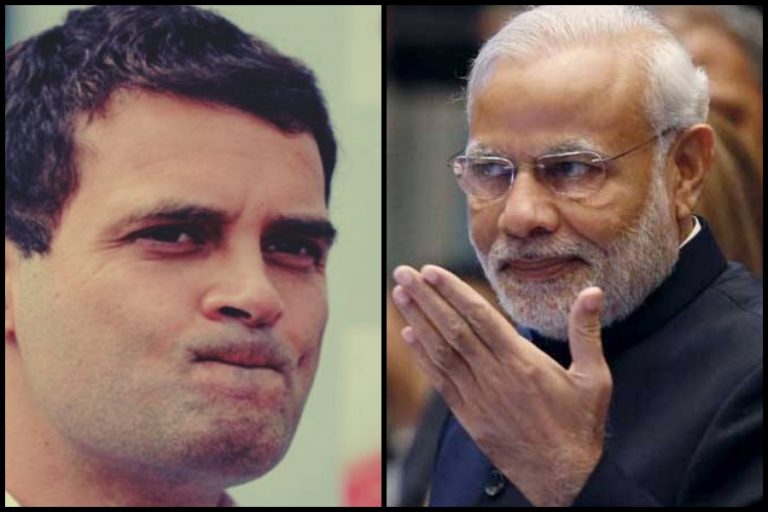
Interestingly, in the process of pulling his cadre down from their delusional high, he also magically transferred that delusion to Rahul Gandhi, because he just wasn’t delusional enough. Not yet. He ensured, by this orchestrated loss, that Rahul Gandhi would feel invincible and would turn 2019 into a Modi vs Rahul fight, all the while, strengthening regional players like BSP and SP to ensure they drive a harder bargain with Congress thus weakening the Mahagathbandhan.

While waking the cadre up, strengthening his best campaigner, Rahul Gandhi, weakening the Mahagathbandhan he also ensures that the ‘suit boot ki sarkar’ tag is shirked off. After all, he knew that the markets would crash and the Industrialists he is accused of befriending by the Congress would lose money. Industrialists lose money and suddenly, Congress would find itself sans their most asinine jibe.

In the end, he probably felt sorry for Barkha, and just to ensure that she isn’t branded as political bad luck, he let the likes of Sachin Pilot, Gehlot and the rest win. After all, he is a benevolent king.

All of this certainly sounds convincing. But delusions can often be convincing too. 

The fact remains that the country hasn’t seen such brute political dominance in the history of its democratic existence and the ones who make pitiable excuses for electoral losses must stop commenting on political developments.

What BJP supporters need to realise is this – no political party ever wants to lose and least of all, a party led by the two most politically aggressive politicians the country has ever seen. Conspiracy theories may be the balm that soothes the bruised ego, but every win is a chance to serve and every loss is an opportunity to introspect and if history bears witness, that is exactly what the Modi-Shah duo must be doing right about now.

AugustaWestland: Court allows CBI to take the signature and handwriting samples of Christian Michel

0

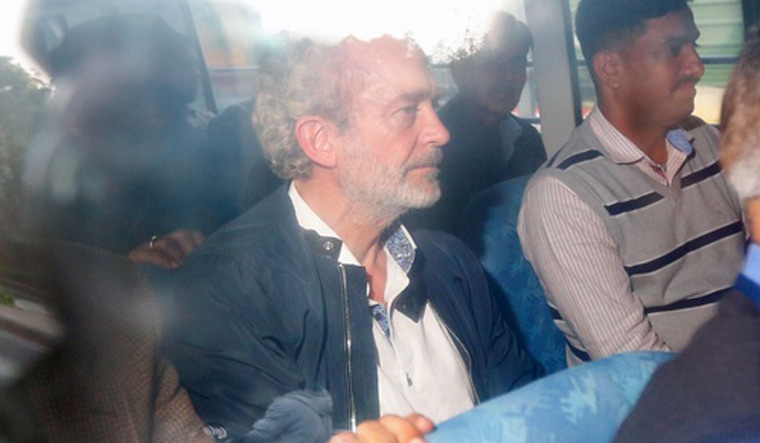
A Delhi Court has allowed the CBI to take specimens of signature and handwriting samples of alleged AugustaWestland middleman Christian Michel. The CBI had filed a plea seeking the court’s permission to take the samples.

Michel’s counsel Aljo K Joseph, a former Indian Youth Congress member, had agreed to the CBI’s plea following which Special CBI Judge Arvind Kumar passed the order. Advocate D P Singh, on behalf of the CBI, had said that the signature and the handwriting samples were required for matching them with the documents already in CBI’s possession.

Michel was extradited to India from Dubai on the night of December 4. The CBI was granted five-day custody of Michel on Dec 5 by the Patiala House Court which was later extended by the CBI Special Court for five more days on the request of the CBI which said that Michel was uncooperative and evasive.

Christian Michel, an alleged middleman in the infamous  ₹3,600 crore AugustaWestland Scam, is accused of organising bribes in exchange of a contract for the purchase of 12 VVIP helicopters to be used by top leaders including the President and the Prime Minister during the UPA-2 government. He is also charged with the offences of money laundering, fraud and bribery by the Indian authorities.

He allegedly paid bribes to the politicians, bureaucrats, defence personnel (former Indian Air Force Chief, Air Chief Marshal S.P. Tyagi) and journalists to reduce the eligibility conditions of the bid invited for the supply of the VVIP Choppers to help AgustaWestland, an Italian arms company, get the deal for the supply of the choppers.

Has PM Modi sounded the start of slog overs with the new RBI Governor’s appointment?

Yesterday, we saw the abrupt resignation of RBI Governor Urijit Patel. Patel cited “personal reasons” for his resignation, but the undercurrents were impossible for anyone to ignore. Irrespective of what may be the actual reason, no one can deny that the relation between the RBI and the Government of India, was tenuous at the very least.

Today, we saw the results of 5 major states’ assembly elections pan out. Counting is still on, but very clearly BJP has under-performed. Anti-incumbency, local factors etc can be argued to be the cause of disappointing results, but the fact of the matter remains that these results do not indicate an easy 2019 campaign.

And just a few minutes ago, it was revealed that Shaktikanta Das, who is currently a member of The Finance Commission and Former Finance Secretary (the one who presided over Demonetisation), has been appointed as the new RBI Governor. India has had several former bureaucrats as RBI Governor, but this is Modi’s first such appointment. And the timing is interesting.


Imagine a Government which feels it is being stifled economically to roll out measures which it believes will improve the economy, and thus general prosperity. Imagine a Government which has tried this by playing the game in a gentlemanly fashion. Imagine a Government which is now in its last few months. What will it do?

By all means, Modi is now going for the kill. He worked with two economists RBI governors, and now he feels its time he plays with one who can aide him and his Government in rolling out all that they want. The last roll of the dice if one may say.

This could mean many things. We may finally see a rate cut in line with the Government’s requirement. We could see lesser curbs on lending to MSMEs, thus spurring their growth. We could see a relaxation of the RBI’s prompt corrective action, which imposed lending curbs on 12 weak PSU banks. We could see more liquidity flowing to the shadow banking sector, reeling under defaults of Infrastructure Leasing & Financial Services (IL&FS). We could see an independent payments regulator, something which the Government wants, but the RBI is publicly against.

What could all of the above mean for India and Modi? It can spur growth and demand, thus creating jobs, and possibly easing some rural distress. It can change the optics (of growth numbers) as well as the actuals (direct increase in demand). And both are crucial, especially in an election year.

Appointing an IAS to the post of Governor is not out of place, but coming on the back of 2 high profile non-bureaucrat appointees, this one may raise a stink in the corridors of policy wonks. But it seems Modi no longer cares for these ivory tower optics. His average voter in UP or MP barely knows and cares for who is the RBI Governor. But he does care if he gets a business loan cheaper and quicker, if his produce has demand, if his son gets his job. This is a trade-off and it appears Modi has settled for this.

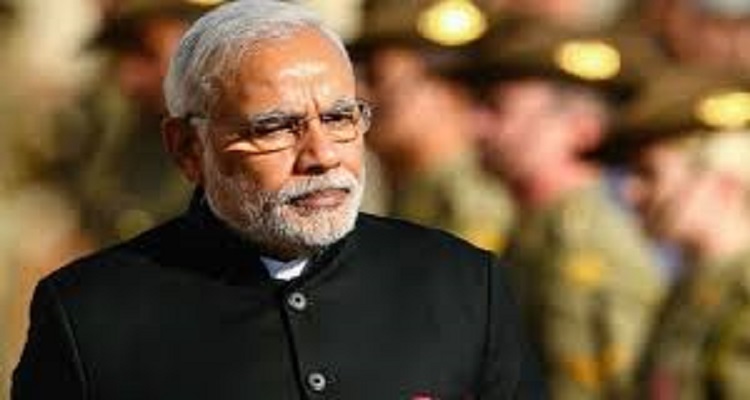
This is almost a signalling of intent by Modi: that he is no longer willing to play Mr Good Guy who loses at the end. And that he is not going into 2019 without a fight. The slog overs have begun, and Modi is padding up, watch out in the stands.

As the last bastion of Mizoram falls, North Eastern India becomes officially ‘Congress Mukt’

As the much-awaited five state assembly elections results are being unfolded, it becomes apparently clear that the Congress has lost its last bastion in the Northeast as Mizo National Front (MNF) has clinched a decisive majority there. The majority mark in the state is 21. The MNF is headed towards majority while Congress trails far behind in the 40-seat assembly.

The final tally shows MNF winning a sweeping 26 seats, Congress bags 5 seats, BJP-1and others-8 in the 40 member house. The Congress, which had bagged 34 seats in the last assembly elections, managed only five this time.

Congress getting completely wiped out from the Northeast and Mizoram slipping for its hands comes as a surprise, but what is more shocking is that the 76-year-old incumbent Chief Minister, Lal Thanhawla of the Congress, who held the post a record 5 times, lost the Assembly polls from both the places that he contested.

Lal Thanhawla lost from Champhai South as well as Serchhip, to Mizo National Front’s (MNF) TJ Lalnuntluanga in the former and to Zoram People’s Movement’s (ZPM) chief ministerial candidate Lalduhoma in the latter.

Mizoram had remained as the Congress’s last bastion in the Northeast. Since 2016, the Congress has lost Assam, Manipur, Arunachal Pradesh, Meghalaya and Nagaland to BJP and its allies.

Though MNF has ruled out an alliance with any party, it is a member of the North Eastern Democratic Alliance (NEDA) led by the BJP and supports the NDA in the centre. Assam BJP minister Himanta Biswa Sharma took to Twitter to congratulate Pu Zoramthanga, the MNF chief, for his historic win.


Seven out of the eight states that constitute India’s Northeast were either run by the Bharatiya Janata Party (BJP) or had governments headed by regional parties broadly aligned with the right-wing national entity. Now with MNF victory in Mizoram, the NDA will hold clear dominance in the region.

The BJP-led National Democratic Alliance (NDA) consolidated its position in the northeast by registering victories in the recently-held Assembly elections in Tripura, Nagaland and Meghalaya. Prior to these states, the NDA already ruled Assam, Manipur, Arunachal Pradesh and Sikkim. With the recent poll results, Mizoram, the lone Congress-ruled state in the northeast has also slipped out of the Congress’ hand and fallen in NDA’s kitty, making the Northeast, a Congress-Mukt region.

Here is a look at the all seven NDA Chief Ministers in the northeast so far:

  1. Biplab Kumar Deb, Tripura: Biplab Kumar Deb, became the first BJP chief minister of Tripura after the red bastion fell to the saffron force in the recent assembly poll, with BJP winning a two-thirds majority with ally IPFT.
  2. Neiphiu Rio, Nagaland: Nationalist Democratic Progressive Party (NDPP) leader Neiphiu Rio, is currently serving his fourth term as chief minister of the state.
  3. Conrad Sangma, Meghalaya: Conrad, backed by BJP, was sworn in as CM recently with other constituents of the new government being United Democratic Party (UDP), Hill State People’s Democratic Party (HSPDP) and People’s Democratic Front (PDF).
  4. Biren Singh, Manipur: He is the first ever BJP Chief Minister in Manipur.
  5. Sarbananda Sonowal, Assam: Sonowal formed his government in the state in 2016, when the BJP had won 60 assembly seats on its own, while AGP and BPF won 14 and 12 seats respectively, taking the alliance’s strength to 86 in the 126-member house.
  6. Pawan Chamling, Sikkim: He became the Chief Minister of Sikkim in December 1994. In Sikkim, Pawan Chamling’s ruling SDF is an ally of the BJP and a member of North-East Democratic Alliance (NEDA).
  7. Pema Khandu, Arunachal Pradesh: In December 2016, Khandu had claimed majority to form the government in Arunachal Pradesh after he moved to BJP with 33 MLAs.

The entire region of the North East has been neglected and often held the significance of an afterthought in Indian politics. But the NDA government relentlessly pushing its inclusive development agenda in the region, bringing rapid enhancements in connectivity and infrastructure, the region is experiencing an increasing importance in national affairs.

SC refuses to revoke its order quashing a frivolous PIL against Arun Jaitley

0

The  Supreme Court has refused to recall an order passed by it quashing a petition against Finance Minister Arun Jaitley which accused him of plundering the capital reserves of the RBI to waive off the loans of certain companies.

Advocate Manohar Lal Sharma had filed a petition against the Finance Minister which was not just rejected by the Supreme Court but resulted in a fine of Rs 50K being imposed by the court on Sharma. The Bench comprising of CJI Gogoi, Justice S S Kaul and Justice K M Joseph which had quashed the petition, today refused to recall its order of quashing the petition. “We are not going to recall our order. You deposit Rs 50,000 then only we will hear your any old or new petition,” the bench remarked.

The Bench had rebuked Advocate Sharma for filing the frivolous petition. “We do not find any credible reason to heed this PIL. You have done great work in the past. You want us to rein in the finance minister. Why are you damaging your credibility,” the court said.

CJI Gogoi had even warned Sharma that he would be banned from filing PILs. “Mr Sharma, the day has come to ban you from filing PILs”, the CJI had commented. Advocate Sharma has a history of his PILs being rejected by the apex court. He has also been fined on at least two previous occasions for filing ‘frivolous’ petitions.

Over 5 years after Naxal attack on its leaders, Congress secures a thumping victory in Chhattisgarh

The Congress party has scripted a stunning victory in the Chhattisgarh Assembly Elections. The party’s remarkable victory is a good time perhaps to revisit the Naxal attack that wiped out its entire state leadership.

In May 2013, around 250 Naxals descended upon a convoy carrying senior leaders of the Congress party and slaughtered 27 people in cold blood. It is believed that the Congress party was warned of a possible attack earlier. The attack was part of the Tactical Counter Offensive Campaign (TCOC) launched by the Maoists. 30 kilograms of explosives are believed to have been employed by the Naxals to carry out the attack.  The Naxalites stopped the convoy after triggering a blast and shouted the names of the people in their hit list.

Former Home Minister of Chhattisgarh, Mahendra Karma, was one of the people in the hit list. It is said that he pleaded with the Naxals to take him but let others go before he was murdered. Karma was also the architect of the Salwa Judum, a people’s movement against Naxalism.

Naxals ambushed the convoy at Jarim Ghat, which is near to Jagdalpur, headquarters of Bastar district. Those unaware, Bastar is a Naxal infested area and has been fighting a war against Naxalism for years. The attack, meticulously planned, had the advantage of an element of surprise.

Apart from Karma, former Congress MLA, Rajnandgaon Udya Mudaliyar, was also shot dead and several other Congress leaders were critically injured. Several Congress activists were also believed to have lost their lives. State party chief Nand Kumar Patel also lost his life. Chief Minister Raman Singh had expressed his shock and grief on the death of Mudaliyar and other politicians. “Udai was my family friend. His sudden demise is a shocker for me”, Singh had said while consoling the family of the deceased. He also said that he had lost a brother as well referring to the late Mudaliyar.

The attack also triggered a spate of conspiracy theories. The Congress party had then alleged that unlike previous occasions, there wasn’t any security cover on the day the attack occurred. “Security lapses could have taken place,” the then junior Union home minister R.P.N. Singh said in Delhi while announcing an NIA probe into the matter.

According to eyewitnesses, at least one person died with his own bullet. Former Union minister V C Shukla’s Personal Security Officer, Prafulla Shukla, used the last bullet he had left after the attack to shoot himself dead. “Sorry sahab, I could not protect you,” are believed to have been his last words.

The Congress’ response to the attack was mixed. Home Minister Sushilkumar Shinde called for joint operations in all Naxal affected areas following the attack and dubbed it an act ‘bigger than terrorism’. “Whatever the ideology may be, we cannot agree to an ideology where one human being kills another human being”, he had said.

Congress Tribal Affairs Minister KC Deo, on the other hand, asserted that there was no point in calling Naxals terrorists. “Calling them terrorists… is it going to help or improve the situation? You can use different terms but ultimately you have to get at the root of the problem… we have to preempt such happenings in the future and also take the path of development and empower the people,” Deo stated.

Later in September that year, in a joint operation by a team of Special Operations Group (SOG) and District Voluntary Force (DVF) in Odisha’s Malkangiri district, at least 14 Naxals were killed. The same Naxals were suspected to have been involved in the attack on the Congress convoy.

The Congress party has come a long way since then and in their victory, perhaps, they will accord the Modi government its full support in wiping out the Naxal menace.

RLD chief directs his MLA to ‘help’ Congress form government in Rajasthan

Chaudhary Ajit Singh, the national president of the Rashtriya Lok Dal, has issued an official diktat directing Subhash Garg, the sole MLA of the party who has just won the Bharatpur constituency, to support Congress.


The letter, signed by the national vice president of RLD Jayant Chaudhary, expresses gratitude to the people of Bharatpur for ‘blessing’ their candidate with a victory.

Adding that his party presented a liberal secular alternative to BJP’s politics, he also thanked his party workers for helping the candidates supporting an alliance with the Indian National Congress.

The letter concludes by adding their party is dedicated to uplift the poor and backward sections of the society and states that the party president has directed the MLA from Bharatpur to ‘respect the people’s mandate’ and help the Congress to form the government.

As per latest updates, Congress is leading in Rajasthan with leads in 103 seats. The Communist Party of India is leading in the two constituencies of Bhadra and Dungarpur.