Home Blog Page 6834

SC seeks Centre’s opinion over ‘leader of opposition’ on panel for appointment in statutory bodies

0

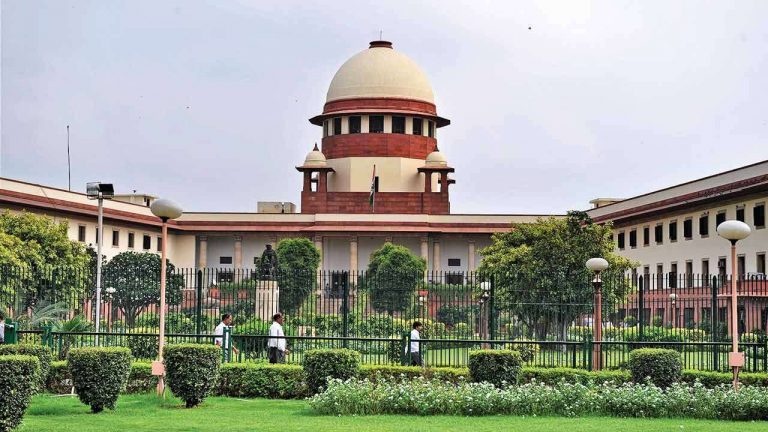
The Supreme court Monday sought a response from the Central government on a plea that the leader of the single largest opposition party is treated as the ‘Leader of the Opposition’ and be included in high-level committees, involved in the appointment of heads of statutory bodies like Central Bureau of Investigation (CBI), Central Vigilance Commission (CVC), Central Information Commission (CIC) and the Lokpal.

A Bench headed by Chief Justice of India Ranjan Gogoi on Monday issued a notice to the Centre, and the four statutory bodies, on a petition raising the issue. Petitioner Youth for Equality has sought a direction that wherever the appointing committee includes the Leader of the Opposition, it should be read as to mean the leader of the single largest opposition party in that House.

The apex court also sought a response from the Centre on the plea by NGO, seeking the quashing of section 17A of the Prevention of Corruption Act which provides a blanket protection to all public servants regardless of status from enquiry in graft cases and mandates a prior sanction.

The PIL also wanted the court to issue a direction for the unanimous vote of the committee in these appointments. However, the SC bench refused to accept this and decided to restrict itself to the other two issues.

Advocate Gopal Sankaranarayanan, who appeared in behalf of the NGO, contended that the amendment in the anti-graft law was discriminatory, manifestly arbitrary and ultra vires of Articles 14 and 21 of the Constitution.

The plea, demanding the leader of the opposition in the appointment committee should be considered as the leader of the single largest party opposition party said that, in cases where the leader of the opposition is not explicitly recognised, they would be merely called upon as “invitee, thereby subverting the statutory intent”.

According to the rules in the parliament, a party would need a minimum of 10 per cent of the total strength in the House so that one of its members could be considered as the leader of the opposition. The Congress though is the single largest party in opposition, it does not have the required number of seats to be the leader of the opposition.

Surjit Bhalla resigns from the part-time membership of the PM’s Economic Advisory Council

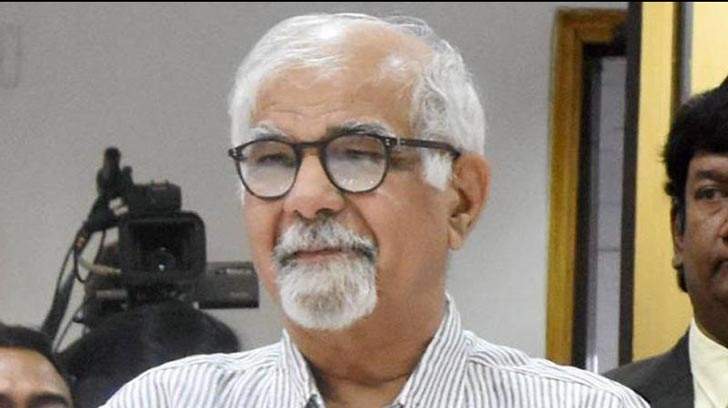
Prominent economist Surjit Bhalla has announced that he has resigned from the part-time membership of the Economic Advisory Council of the Prime Minister. Bhalla took to Twitter to announce that he has submitted his resignation on December 1.

Bhalla, a noted economist and columnist, was a part-time member of the PM’s EAC lead by Bibek Debroy, a NITI Ayog member. Noted economists of the country, Rathin Roy, Ashima Goyal and Shamika Ravi are the other part-time members in the EAC. Bhalla’s resignation has reportedly been accepted by PM Modi.

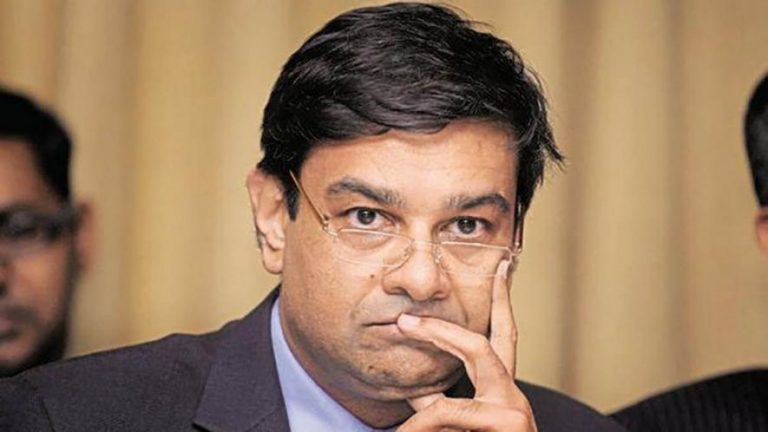
The news of Bhalla’s resignation has come at the wake of RBI governor Urjit Patel quitting from his post. Patel had resigned from his post with immediate effect yesterday citing personal reasons.

Patel’s term was due to end in September 2019. His resignation has come days ahead of the RBI board meeting on 14 December.

The EAC is a think-tank like body that advises the PM of India n crucial economic issues. It is a non-constitutional, non-permanent body. EACs have been constituted several times in independent India.

The present EAC was constituted by PM Narendra Modi on September 25, 2017, and has Bibek Debroy as its chairman. Its term runs parallel to the PM’s term and the previous EAC had resigned with former PM Manmohan Singh on May 17, 2014.

India Today sting: Congress party’s ‘EVM-tampering’ theory fails as party poling agents admit that strongrooms were never breached

The Congress party has once yet again caught up in an embarrassing situation after its claims of EVM tampering during the recent state elections got busted as its party leaders and poll agents are now caught revealing that there was no attempt to influence elections through EVM tampering, rather the Congress party falsely used the issue to try and politicise it to defame BJP, reported India Today.

In a sting conducted by India Today, a Congress party election agent was confronted by a reporter during the sting operation claimed that there were no attempts to enter the strongroom by members of any political party during the recent blackout in Bhopal on November 30 after a power cut in the area. The Congress had raised concerns and protested over EVM-malfunctioning in Madhya Pradesh and Chhattisgarh.


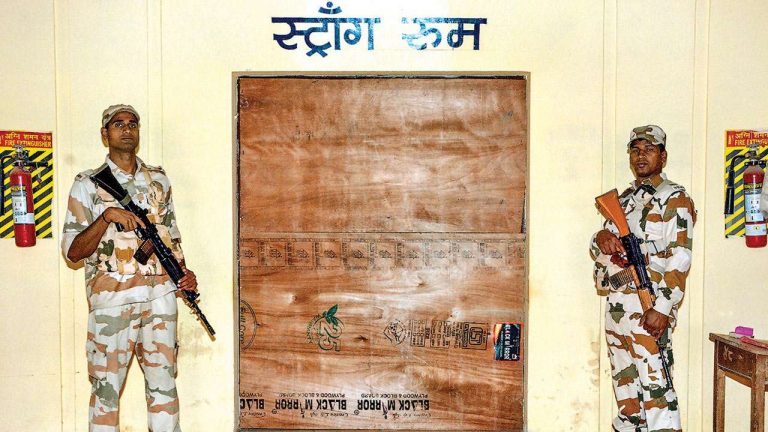
Sayed Shahid Hussain, Bhopal District general secretary and a polling agent has confirmed in the video that it was just a CCTV failure in the strong room and rejected the charges of EVM tampering. Hussain also admitted that strongroom can never be broken into, as it is sealed and locked in the presence of polling agents and confirmed that seals and signatures are still intact.

He went on to confess that EVM tampering drama was staged by the Congress leaders and said that the party needed an issue against the BJP. He further added that the fake EVM tampering issue benefited the party. Shahid Hussain then admitted that the CCTV inside the strongroom was cut in front of the polling agents with the presence of District administration as against Congress party’s allegation against the commission of allowing EVM tampering.

Munnawar Ali, another polling agent of the Congress party confirmed that the strong room was sealed in front of the candidates and there was no way it could be breached. Ali said that Congress party is creating unnecessary controversy over the issue. He too confirmed that the seals are still intact and their signatures can be seen over the locks leaving no doubts that the strongrooms were never breached in the first place.

Recently, the Chief Electoral officials of the Madhya Pradesh had schooled the members of Congress and AAP after their leaders had indulged in propagating fake news regarding EVM tampering during state elections in Madhya Pradesh.

Jyotiraditya Scindia had written a letter to the Chief Electoral office (CEO) of Madhya Pradesh requesting information on the malfunctioning EVMs and VVPAT machines. Congress and Aam Aadmi Party leaders had come up with ‘EVMs are hacked’ theories during the ongoing assembly elections. Senior Congress leader Ahmed Patel posted a video on Twitter on December hinting at manipulation of EVMs.

Following these speculations and attempts by the Congress to discredit independence of the Election Commission, some journalists had also jumped in to spread an allegation that BJP was trying to manipulate the results of the election by tampering with the EVMs.

The Madhya Pradesh High Court had rejected a petition filed by the Congress party in relation to Electronic Voting Machines (EVM) demanding constitution of a SIT to probe alleged irregularities in handling EVMs during the assembly elections.

Prashant Bhushan and left-liberal cabal was actively helping Vijay Mallya in UK court by attacking CBI special director Rakesh Asthana

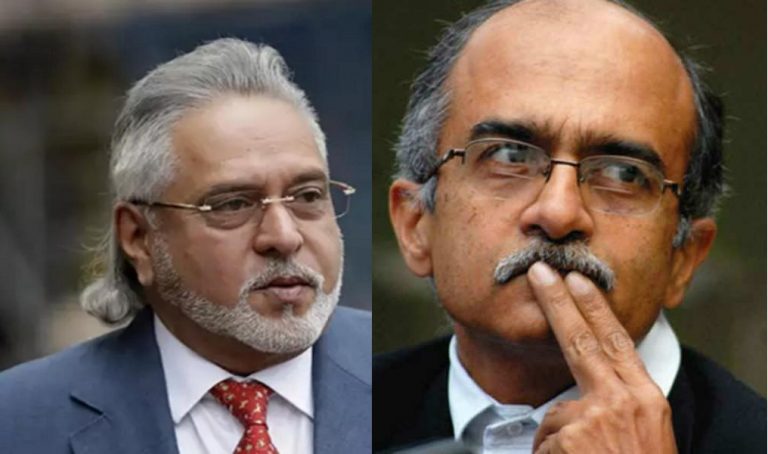
The Westminster Magistrates’ Court in London on Monday accepted the request of Government of India to extradite liquor baron Vijay Mallya to India. Government of India had requested for extradition of the fugitive businessman in 2017, and after extensive written and oral submissions made by both Indian government and Mallya, the court decided that there is no merit in accusations made by Mallya Indian government about unfair trial, and ordered that the proceedings for his extradition to India may be initiated by the UK government.

Just within a week of extradition of AgustaWestland deal middleman Christian Michel from Dubai, this has come as a big boost for the Modi government. But there is another big victory for another person hidden in the judgement, the CBI special Rakesh Asthana. The London court has made very crucial comments about CBI and Asthana which may have far-reaching implications on the CBI vs CBI case that is going in Supreme Court of India.

Like the Christian Michel case, the Vijay Mallya case was also handled by the special director. During the hearing in the case, one of the main allegations raised by the Mallya’s defence was that Rakesh Asthana is a corrupt officer, and that he actions against Mallya were politically motivated. These were serious allegations, hence the court went into the detail of the same. If found true, the court may not have allowed the extradition. But the observations made by the judge about Asthana in particular and CBI and ED in general are very significant.

Referring to the allegations made by Mallya against CBI and Rakesh Asthana, the court noted said, “I found no evidence that the prosecution was corrupt or politically led”.

One of the prominent persons to question the CBI’s integrity was Professor Lawrence Saez from School of Oriental and African Studies. The defence team had engaged Professor Saez for his expert opinions about the case. Saez had said that there were allegations of corruption against Rakesh Asthana before his elevation as Special Director of CBI. He had also said that CVC had opposed Asthana’s appointment as special director, which was factually incorrect as it was CBI director Alok Verma who opposed Asthana’s elevation, not CVC. The professor had made the allegations against Asthana on the basis of a petition filed by NGO Common Cause against Asthana’s appointment.

Although Professor Saez made serious allegations against Asthana in support of Vijay Mallya, his arguments fell apart during cross-questioning. He accepted that the committee that appointed the CBI special director did not find any proof in allegations against Asthana, and that even the Supreme Court of India had cleared his appointment. He had also agreed that he made his comments based on media reports.

Giving the findings in the case, justice Emma Arbuthnot writes, “I find that there is no evidence that Mr Asthana has acted corruptly. I noted the Supreme Court cleared Mr Asthana of the allegations made against his integrity and there was no reliable or significant evidence produced by the defence expert Professor Saez which undermined that finding”.

It is important to note that one of the arguments used by Mallya’s defence team was that CBI special director Rakesh Asthana is corrupt. And his defence team was using allegations made by Common Cause, which had filed a petition against his appointment. This means this NGO, where activist advocate Prashant Bhushan is in governing council, was directly helping Vijay Mallya in his case against the extradition request. First, they supplied arguments against the extradition request to Mallya’s team, making allegations against Asthana which were already rejected by Supreme Court. After that, they filled an additional affidavit in Supreme Court saying that Asthana’s elevation was hampering the case against Mallya as Mallya’s team was using the allegations made by themselves against Asthana. Now the London court order has fully exposed the Prashant Bhushan and his team, as they are targeting Rakesh Asthana who led the case against Vijay Mallya, and Mallya’s team primarily targeted Asthana in their defence.

The entire left-liberal ecosystem in India was attacking CBI during the Mallya’s trial in London. They had argued that CBI was deliberately weakening its case against Mallya. Leftist propaganda website The Wire had argued that CBI was not following proper procedure in the case. Quoting Prashant Bhushan, they had alleged that CBI was helping Mallya by presenting a weak case. As a proof of its allegation, Wire wrote that Asthana was seen shaking hands with Vijay Mallya. Asthana and Mallya are not personal enemies, and it is not unusual to exchange pleasantries with opponents, legal or political. But the fact is that Mallya’s team was attacking Asthana to escape extradition, while the CBI was fighting its case very strongly, which has been confirmed by the judgement.

The judgement reveals that there was no truth in those allegations of left liberals, and by criticising the CBI officers as being politically motivated and biased, they were actually actively helping Vijay Mallya in creating an impression that these accusations are actually true. But the judge saw through this conspiracy, and called the bluff of Mallya and his supporters back in India by asserting that the allegations against Rakesh Asthana are baseless.

As the CBI vs CBI comes up for next hearing in the Supreme Court, it will be interesting to see what impact the comments of justice Emma Arbuthnot will have on the case.


The full judgement:

[googleapps domain=”drive” dir=”file/d/1O1rCWNEK3-C3MaMivVWrFl5NHr7HyEWJ/preview” query=”” width=”640″ height=”480″ /]


No separate religious status for Lingayats: Centre informs Karnataka High court

Central Government has informed Karnataka High Court, that recommendation to provide separate religion tag to Lingayat sect is discarded. Following which, Karnataka High court also dismissed the Public Interest Litigations challenging Karnataka State Minority Commission’s move to constitute a panel to look into the separate religious minority status to Lingayats.

Additional Solicitor General(ASG) Prabhling Navadegi informed the division bench of Chief Justice Dinesh Maheshwari and Justice S Sujatha that central government has already notified Karnataka Government about the decision.

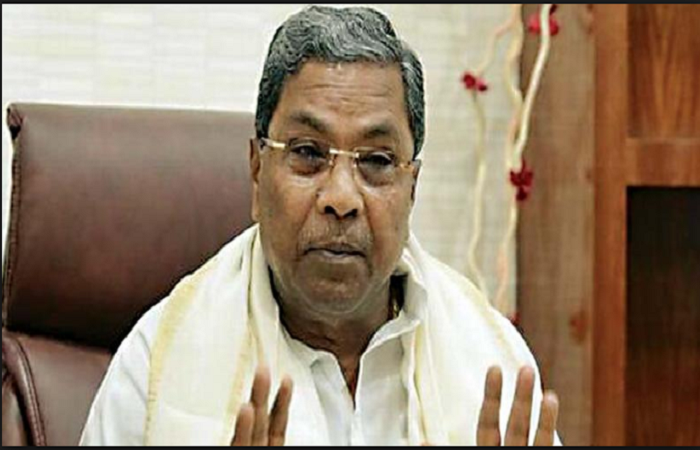
Veerashaiva or Lingayat is a prominent caste group which controls huge stakes in Karnataka’s electoral politics along with Vokkaligas in the state. In a bid to woo these communities during this year’s assembly elections in Karnataka, in March Siddaramaiah government had taken an extreme step of creating a divide among Hindus by recommending a separate religion tag to ‘Lingayat’ community ahead of the elections.

However, despite this move Congress had to face a debacle in Karnataka polls.  The Congress party secured 78 seats, JDS-37 seats, while BJP became the single largest party with 104 seats. The Vokkaliga and Lingayats, who make up a significant percentage of the overall population of Karnataka, had emphatically voted for non-Congress parties.

After elections, Karnataka Minister and party strongman DK Shivakumar openly revealed that the previous Congress government led by Siddaramaiah made a grave mistake by trying to divide people by raking up the Lingayat issue.

“We have committed a grave mistake during our tenure. Any government at any juncture should not politicise religion or interfere in its matters. There were a lot of political developments happening then but no government must intervene in matters of religion. Recently concluded events have reflected the people’s sentiments on this matter”, DK Shivakumar had asserted.

ASG placed before the court the communication sent to Karnataka government. In the letter, the centre had said that Lingaytas are classified under Hindus since 1871 census. To accord religious status to Lingaytas and Veerashaivas, a separate religious tag would deprive them of reservation under SC/ST act.

‘Journalists’ and politicians spread lies about RBI Deputy Governor’s resigning following Urjit Patel’s exit

As soon as news trickled in that Urjit Patel, the RBI Governor has resigned, with immediate effect, citing personal reasons, the rumour mills of mainstream media and politically motivated elements started running over time.

After giving the resignation of Urjit Patel a political colour, journalists and even news agencies started spreading rumours of the Deputy Governor, Viral Acharya, resigning from his post as well.

The first person who started the rumour was abusive “journalist” Swati Chaturvedi. She alleged that Viral Acharya was also going to quit.


Once Swati Chaturvedi floated the conspiracy theory, immediately, a portal called NewsD ran a full-fledged story alleging that Viral Acharya, the Deputy Governor had resigned as well. Ex-NDTV journalist, Rajan Mahan shared the NewsD “news link”.

Following the trend, several journalists tweeted furthering the same unverified news.

Pro-AAP ‘journalist’ Ashutosh Mishra furthered the same lie.

Veteran “journalist” Barkha Dutt too joined the party.

A journalist called Aadesh Rawal, who works for Pankaj Pachauri, former PM Manmohan Singh’s media advisor shared the same fake news.

Dhruv Rathee, a famous YouTuber who is also known for spreading fake news wasn’t to be left behind.

Other than journalists who spread the lie on social media platform, Twitter, after NewsD even MoneyLife had published a report that asserted that Viral Acharya had resigned as the RBI Deputy Governor.

It was no surprise since the managing editor of Moneylife, Sucheta Dalal was herself spreading the fake news on Twitter.

Pro-Congress website NewsCentral24x7 also published a story furthering the same lie.

The article by NewsCentral24x7 was soon pulled down but the archived version is still available.

Following the “journalists” even politicians were not too far behind. Congress’ national spokesperson Priyanka Chaturvedi too, tweeted about the Governor and Deputy Governor of RBI resigning.

However, the truth was far from it. After the entire “liberal” ecosystem had spread the lie and created panic, the RBI spokesperson issued a statement asserting that the Deputy Governor Viral Acharya had not resigned from his post and had no intention of doing so either.


The resignation of high ranking officials of the RBI is the kind of development that could potentially send the financial markets in a tizzy. For journalists to be irresponsible with the fact is not new, but certainly is shocking.

Big victory for India: UK court orders Vijay Mallya’s extradition who is wanted in India for a Rs. 9000 crore scam

A trial which had dragged on for over a year, finally reached its logical conclusion when On Monday, the Westminster Magistrates’ Court has ordered the extradition of liquor baron Vijay Mallya. Mallya is wanted in India for an alleged Rs. 9000 crore financial scam. The extradition order by the UK court is open to appeal.

Vijay Mallya had left India in 2016 and is on a self-imposed exile in London. The extradition verdict was ordered by Chief Magistrate Judge Emma Arbuthnot. Judge Arbuthnot, in conclusion, observed that the final decision on the extradition is to be taken by the Home Secretary of State, UK.

A CBI team, led by Joint Director S Sai Manohar, left for London on Sunday to attend the hearing. Two officials of the ED are also accompanying the CBI officer, sources said.

Vijay Mallya had asserted in court that the charges were politically motivated. He had also asserted that he had drawn the loans to keep his now-defunct company afloat and there is no fraud involved.

CBI, which has fought a long, hard battle for the extradition has welcomed the UK court’s decision to extradite Mallya.


After Christian Michel’s extradition to India, Vijay Mallya had tweeted “I have offered to repay 100 per cent of the principal amount to them. Please take it”. It was seen by many as a sign of nervousness in the liquor baron especially since Michel’s extradition was almost becoming a pipe-dream for India until Ajit Doval led an operation to extradite him.

After stopping BJP’s rath yatra, West Bengal government allows Hindu-hater Bangladeshi Maulana to address meetings in the state

0

After creating obstructions on Hindu festivals like Durga Puja and Ram Navami, and blocking the rath yatra planned by BJP in West Bengal, now the Mamata Banerjee has laid the red carpet for a maulana from Bangladesh known for his anti-Hindu sermons.

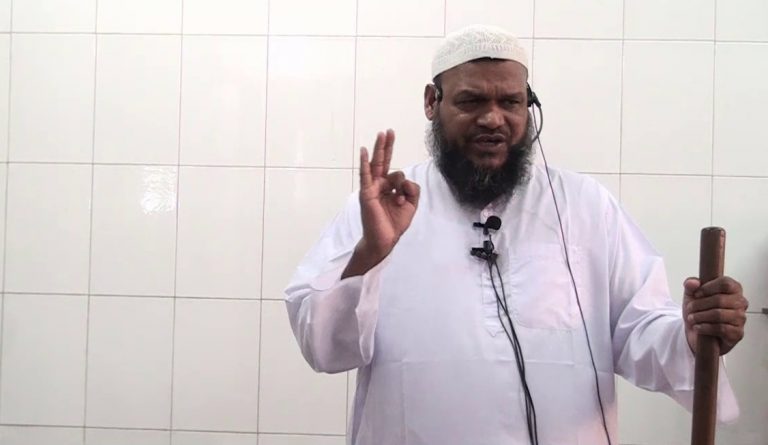
Abdur Razzak Bin Yousuf, an Islamic preacher from Bangladesh, has announced a tour of West Bengal in the third week of December, where he will address meetings at various places in Malda, Murshidabad, Howrah etc places, many of the venues being madrassas. His program in India started on 14th December and ends on 20th December.

The schedule of events in West Bengal

Most of the locations selected by the Maulana are Muslim dominated areas, which have seen widespread communal violence in recent past. There are four events scheduled in Malda, a hotspot of communal tensions in the state. In 2016, communal violence in Kaliachak in Malda saw rampant destruction of police stations, public properties and vehicles. A mob of Muslim protesters had turned violent protesting against remarks made by Hindu Mahasabha leader Kamlesh Tiwari, for which he was already in jail.

Abdur Razzak Bin Yousuf is a preacher on Peace TV, and his sermons are uploaded on Social Media also. This what he says one such video:

In this video, he is heard saying, ‘I want to kick and break idols’, ‘I am Muslim, breaking idols is in our blood, breaking idols is in our community’. He also says that Muslims should not celebrate Bengali new year, and he will bury such Hindu traditions in the grave. His speeches are filled with pure, unadulterated hatred for Hinduism. He also talks about what women are allowed and not allowed to do, in his sexist comments.

Such a Hindu hater has been allowed to hold meetings in West Bengal by the state government. Reacting to the development, state BJP chief Dilip Ghosh said that this is a deliberate strategy of Mamata government to not allow Rath Yatra but to allow the Islamic preacher from Bangladesh.  He said that TMC is doing this to appease Muslim voters. He also demanded that the government should cancel the meetings to be addressed by the Maulana.

In October this year, Abdur Razzak had to cancel a program scheduled to be held at Midnapore in WB, due to massive protests on social media. This time too, social media is seeing protests against the proposed tour by the Islamic preacher.

Modi Sarkar’s performance since 2014: An overview

A few months ahead of the 2019 general elections, one has to wonder what the Prime Minister has achieved in terms of development for this country. PM Modi was largely elected on the plank of development and his record speaks for itself.

Following is a brief, non-exhaustive synopsis of some of the work delivered by Modi government across the sectors of Education, Healthcare, Social Welfare, Infrastructure, Finance and Economy since coming to power in 2014.

Education:

  • 6 new IITs, 7 new IIMs, 20 new AIIMS, 2 IISERs and 8000 new CBSE schools got approved.
  • 5400+ schools equipped with Atal Tinkering Labs (ATL)
  • ATLs expose school children to emerging technologies like 3D Printing, Robotics, IoT and microprocessors with an objective to create a million Indian innovators of tomorrow.

Healthcare:

  • 10 crore (100 million) families to be given free health insurance cover of up to INR 5 lakh under Ayushman Bharat / PMJAYscheme. 3 lakh people already benefited within 50 days of the launch of the program
  • 3.1 crore (31 million) children vaccinated against all preventable diseases under Mission Indradhanush. The program aims to ensure that all children under the age of two and pregnant women are fully immunized against life-threatening diseases

Social Welfare:

  • 1.25 crore (12.5 million) houses constructed for poor under PMAY scheme. This is 5 times the number of houses built under UPA’s last 4 years – 25 lakh (2.5 million). On target to achieve “housing for all” by 2022
  • 20 crore Rural Households got electrified. 16 states achieved 100% electrification status. Real-time status of this program is accessible on Saubhagya dashboard.
  • 5 crore (50 million) women got LPG gas connections for smoke-free cooking under Ujjwala scheme. LPG coverage rapidly increased from 56% to 80%
  • 12 crore (120 million) individuals received collateral free Mudra loans under PMMY scheme to help them start/expand their business. 28% of the beneficiaries are first time entrepreneurs.
  • Cleaning of River Ganga gained momentum under NMCG (National Mission for Clean Ganga) project. As per published data, 12,000 MLD (million liters a day) of sewage is generated in the Ganga basin
  • 2014 treatment capacity was 485 MLD
  • 2018 treatment capacityincreased to 4,000 MLD (8 times higher)
  • Another 94 projects, with a treatment capacity of 1,900 MLD are ongoing
  • 8.8 crore (88 million) toiletsconstructed to eliminate Open Defecation under Swachh Bharat mission.
  • More toilets constructed in 4 years than by all the previous governments put together in lthe ast 67 years.
  • Sanitation coverage soared from 38% to 96%
  • 5 lakh villages, 530 districts and 25 states / UTs achieved Open Defecation Free status.
  • On target to make India 100% Open Defecation Free by October 2019. Real time status of this project is accessible on Swachh Bharat Dashboard.
Source:Swachh Bharat Dashboard

Infrastructure:

  • 73% more highways were built in the four years of BJP government than UPA’s last four years.
  • Highway construction which was in the range of 4000+ km per year from 2008 to 2014, was increased to 6,000 km in FY 2016, 8,000 km in 2017 and 10,000 km in 2018
  • Better connectivity translates to a reduced cost of logistics, faster trade and rapid economic growth
Source:ToI, Bloomberg
  • 15 new cities started Metro rail construction projects. 660+ km of new tracks are under construction. By 2014, Metro was operational in 8 cities with 370 km of tracks.
  • 24 new airports and helipads started under RCS (Regional Connectivity Scheme) out of which 22 are in North East. 9 new airports and helipads in Arunachal Pradesh, 5 in Assam, 5 in Manipur, 1 each in Meghalaya, Tripura, Sikkim and 2 in J&K to increase connectivity with remote hilly areas.
  • Construction started for new International Airports in Navi Mumbai and Noida to reduce the overload on currently saturated airports in Mumbai and New Delhi
  • 2,48,000 km of optical fibre connected 3 lakh villages to high-speed broadband services. UPA II had laid only 350 km.
  • 1,10,000 village panchayats digitally connected by optical fibre. Digitally connected village panchayats from 2011 to 2014 were only 59.
  • Solar Power Generation Capacity increased by 8 times from 2.6 GW in 2014 to 20 GW by 2018, 4 years ahead of its 2022 target. Total solar power generation capacity installed in 5 years from 2009 to 2014 was only 2.6 GW
  • 2022 target is now upped to 100 GW
Source: Mercom India
  • 134% increase in Infrastructure expenditure between last year of UPA government and current year of present government. Investment in road sector itself increased by 189%

Economy & Finance:

  • INR 3 lakh crore recovered from bank loan defaults because of Insolvency and Bankruptcy Code (IBC) within 2 years from launch. As explained in this report, 10 lakh crores of NPAs were created under UPA
  • INR 1.1 lakh crore worth recovered black money recovered through various government schemes
Source:Business Today

  • Number of Income Tax returns zoomed by 80%
  • IT returns filed in FY14 – 3.79 crore
  • IT returns filed in FY18 – 6.84 crore
  • 3 crore new tax filers added within 4 years – almost the same number that was added in previous 67 years
  • INR 10 lakh crore collected in Direct tax collections in FY 2018. Direct tax growth rate soared to 7 years high of 17%
  • FY 15 – 8.9%
  • FY 16 – 6.9%
  • FY 17 – 14.6%
  • FY 18 – 17.1%
  • Direct tax buoyancy has tripled(higher tax buoyancy indicates increasing tax compliance)
  • FY 16 – 0.6
  • FY 17 – 1.3
  • FY 18 – 1.9
  • from FY08 to FY14, direct tax buoyancy had hovered between 0.5 and 1.1
Source:Financial Express


  • Total Tax to GDP ratio soared by 1.5% to touch 11.5%. For more than 50 years, India’s tax to GDP ratio was stuck at 10% or less

  • The number of mobile companies in India increased by 60 times.
  • 2014 – 2
  • 2018 – 120
  • Jobs created – 400,000
  • Global mobile phones produced in India
  • 2014 – 3%
  • 2018 – 11%
  • India became the world’s second-largest mobile producer within 3 years
Source:qz.com
  • India’s home grown digital payment solutions RuPay cards and UPI based BHIM wallet grew exponentially
  • UPI based digital payments in India since 2016 (data source: Forbes)

number of transactions:
2016 – 93,000
2018 – 23.5 crore

value of transactions:
2016 – 3.1 crore
2018 – 46,000 crore

The number of transactions:
FY 2016 – 195 million
FY 2017 – 459 million (up by 135%)

The number of RuPay cards in circulation:
2017 – 365 million
2018 – 494 million (up 35%)

Almost half of India’s 1 billion debit and credit cards now go through country’s homegrown RuPay network giving a tough competition to strong global players like Mastercard

  • India’s rank in “Ease of Doing Business” improved from 142 to 77 – a jump of 65 places – most by any country ever. After cracking “Top 100”, India is now targeting “Top 50”
  • India’s rank in “Global Competitiveness Index” improved from 71 to 39 – ja ump of 32 places – next to only China in BRICS.
Source:Economic Times, ToI
  • Fiscal Deficit consistently brought down from 4.5% to 3.5% of GDP. Since 2008 under UPA, Fiscal Deficit ranged between 5% to 6.5% of GDP
Source:Economic Survey 2012-13& Equitymaster
  • Foreign Exchange Reserves surged from $290 billion to $400 billion. Since 2007, Forex reserves were stuck in the $290 billion range.
Source:Economic Survey 2012-13& TradingEconomics

Areas with improvement potential:

  • Exports have been increasing since 2016 but not fast enough. India is yet to break away from its all-time high of $300 billion in exports
Source:Trading Economics
  • Imports are rising faster than exports, hence Trade Deficit has been widening since 2016
Source:Bloomberg
  • The government needs to find long-term solutions to increase Exports, reduce Imports, control trade deficit and reduce Current Account Deficit
  • The ongoing USA-China trade war provides a strategic opportunity for India to significantly increase exports to both of these world’s two biggest economies. Increased exports will also help in controlling the exchange rate for INR
  • The decline in private investments has continued. The government needs to find ways to shore up private investment if the coveted double-digit GDP growth rate is to be achieved and maintained

RBI Governor Urjit Patel quits with immediate effect

0

Reserve Bank of India governor Urjit Patel today stepped down from his post citing personal reasons with immediate effect.

Days ahead of the crucial RBI board meeting on 14th December, Patel quit before his term could end in September 2019.