Home Blog Page 6946

Newslaundry presents half-truths and whole lies to spread misinformation about Ayushman Bharat

In the Union Budget for 2018, NDA government announced the world’s largest healthcare scheme, targeted to provide an annual health cover of Rs. 5 lakh per family for approximately 50 crore people. Soon after the announcement, a lot of myths about the coverage and cost of the scheme had started floating around social media, which were debunked by OpIndia.

On 23 September 2018, PM Modi formally launched the ‘Ayushman Bharat’ scheme, which provides cashless and paperless access to 1350 medical packages including surgery, diagnostics, daycare treatment and cost of medicines. The scheme also covers all pre-existing conditions, a feature which many private medical insurances do not provide.

In addition to government hospitals, the scheme has so far empanelled 14,000 hospitals on board. 10.74 crore households have been identified as the beneficiaries of Ayushman Bharat, of which 8.03 crore are rural households. Within just 10 days of the launch, Ayushman Bharat had already benefited thousands of people – an early indicator of the scheme’s necessity and success. The Deputy CEO of Ayushman Bharat announced on 21st October 2018 that 1,03,810 patients treated in Ayushman Bharat since the launch 4 weeks back.

However, the usual suspects are back with mischievous propaganda against Ayushman Bharat. The latest attempt is by Newslaundry, a serial offender in spreading half-truths and whole lies. The website recently published an article titled “NL Cheatsheet: Are you excluded from Modi’s Ayushman Bharat?”. The sub-heading of the article says “Fifty crore people are supposed to benefit from the scheme but if you even own a landline or a fridge, you’re excluded from ‘Modicare'”. The said article includes a video which talks about the inclusion and exclusion criteria for beneficiaries of Ayushman Bharat.

Below are some claims made by Newslaundry, and fact-check done by OpIndia:

NL Claim #1: Surprisingly, according to the guidelines issued, even those owning a fridge or a landline phone appear in the exclusion list.

Fact: The beneficiaries of Ayushman Bharat have been identified based on the  Socio-Economic and Cast Census (SECC) conducted in 2011. While it is true that households owning a fridge and landline phone will be excluded from Ayushman Bharat, NL does not mention here that this exclusion criterion was defined in the SECC for determining the socio-economic status of households.

SECC provided for 14 automatic exclusion criteria (including owning a fridge or landline) and 5 automatic inclusion criteria for determining the level of ‘deprivation’ in rural households. So if Newslaundry had done a little research about SECC, they would have realised that there is nothing ‘surprising’ about the exclusion criteria specified in the Ayushman Bharat guidelines.

The table below summarises the findings of SECC 2011 for Rural India:

(Source – SECC Website)

The data shows that 8.73 crore households displayed at least one deprivation (D1-D7). For Ayushman Bharat, rural households belonging to D1, D2, D3, D4, D5 and D7 criteria will be eligible. According to official data, that number is 8.03 crore.

There are two important points to note here:

  1. Deprivation findings have been reported after applying the exclusion criteria, i.e. the 8.03 crore rural households eligible for Ayushman Bharat have already passed the exclusion criteria test of the refrigerator, motorised vehicle, etc.
  2. The exclusion is based on the status of households when SECC was conducted, i.e. in 2011, not today. For example, a household which owns a refrigerator today, but did not have one in 2011 will be eligible for Ayushman Bharat provided it didn’t fall under any other exclusion criteria in 2011.

NL Claim #2: If you thought that slum dwellers and rickshaw pullers in urban areas have something to celebrate about this scheme, think again. A family with even a single member earning more than ₹10,000 a month does not qualify under the Ayushman Bharat (scheme).

Fact: While the Ayushman Bharat guidelines do not explicitly mention about the applicability of exclusion criteria, a self-proclaimed ‘watchdog’ like Newslaundry didn’t bother to do basic research. SECC defined exclusion criteria for calculation of deprivation indicators for rural households only. The SECC questionnaire for urban areas did not have any question related to the monthly income of household members, which means monthly income data is not available for urban households. Thus urban households cannot be excluded/disqualified from Ayushman Bharat based on monthly income. The exclusion criteria of Rs. 10,000 monthly income is, for all practical purposes, applicable to rural households only (SECC rural questionnaire included a question on income levels).

NL Claim #3: Delhi auto-wallas can thank Chief Minister Arvind Kejriwal because Delhi has refused to sign the MoU like four other states.

Fact: Again, going by the SECC definition, the exclusion criteria has been defined only for rural households, and most of the data points related to exclusion criteria are not available for urban households. But irrespective of whether auto-wallas are excluded or not, it’s ludicrous to say that Delhi auto-wallas should thank Kejriwal for refusing to participate in Ayushman Bharat. Kejriwal’s refusal has resulted in the exclusion of not only auto-wallas but also all other eligible beneficiaries.

NL Claim #4: Households having Kisan credit cards with a credit limit above ₹50,000—which is a big chunk of small-scale farmers—don’t qualify.

Fact: As per SECC 2011, only 3.6% of rural households had Kisan Credit Cards with a credit limit of above ₹50,000. How 3.6% translates to “a big chunk of small-scale farmers” is unfathomable. Maybe Newslaundry folks studied some other type of Math which we don’t know.

NL Claim #5: A large chunk of agricultural families have 2.5 acres of irrigated land with at least one irrigation equipment. (The presenter confidently says, “note it when I say this” while making this claim).

Fact: Households having 2.5 acres of irrigated land with at least one irrigation equipment are not eligible for Ayushman Bharat. However, while reporting this, Newslaundry again displayed their inability to do basic research. The presenter confidently claims that “a large chunk” of agricultural families in India fall in this bucket. However, if NL had bothered to give a cursory look at the SECC data, they would have realised that (and NL folks should note it when we say this) only 4.5% of rural households have 2.5 acres or more of irrigated land with at least one irrigation equipment.

NL Claim #6: The obvious question everyone wants to ask you, Prime Minister Narendra Modi, is that who exactly is benefiting from the (presenter uses air quotes) “world’s biggest” health care scheme. The presenter further claims that the current eligible beneficiaries (10.74 crore households) could be excluded if they fall under any exclusion criteria.

Fact: As explained above, the list of 10.74 crore households who are eligible for Ayushman Bharat has been prepared after applying the exclusion criteria. Throughout the video, the presenter gives details of various exclusion criteria, insinuating that all those criteria would result in the large-scale exclusion of deserving households. He fails to mention anywhere in the video that the beneficiary households identified by the government have already passed the exclusion criteria test. So talking about refrigerator or landline phones is inconsequential at this stage.

It is also important to note that Ayushman Bharat was never intended to cover 100% population. From the beginning, the government has been clear that the scheme would be targeted at the 50 crore people at the bottom of the socio-economic strata. If we multiply 10.74 crore households by the average size of household (4.8), the result is 51.55 crore beneficiaries, which is consistent with the target coverage of the scheme.

Only time will tell how successful Ayushman Bharat is, but as far as the claims about the selection and inclusion/exclusion of beneficiaries is concerned, the claims by Newslaundry and other sundry commentators are unfounded.
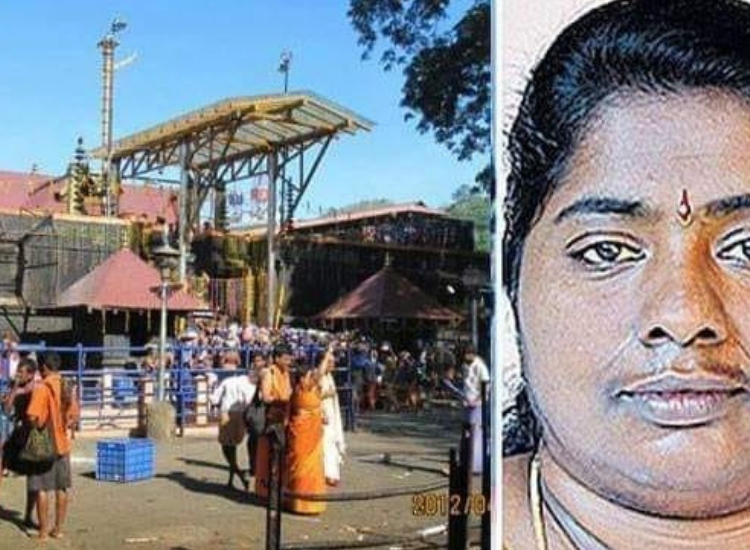
SP Manju who wanted to enter Sabarimala temple fought election on a Congress ticket

As the standoff between thousands of devotees in Sabarimala and the government of Kerala continues, it was reported that another woman named SP Manju wanted to enter the shrine.

According to reports, while the woman SP Manju had arrived in Pamba on Saturday afternoon and tried to continue her journey further, the Kerala police had stated that they will not be able to provide her security unless a background check is run to verify that she was a devotee and not an ‘activist’. There were also reports that she has over 14 criminal cases pending against her.

Inspector general of police S Srijeeth had reportedly told media that seeing heavy rains and a huge turnout of devotees, the police will announce their decision on whether to provide her protection only after checking her background on Sunday.

However, many reports on social media have hinted at a new political conspiracy behind Manju claiming to be a devotee and seeking entry in the revered temple. Reports have stated that SP Manju, presently the 38-year-old president of the Kerala Dalit Mahila Federation, Chathannoor is, in fact, a Congress leader and she had reportedly even fought the election on a Congress ticket.


Social media users are sharing local tv reports claiming that SP Manju’s full name is SP Manju Joseph and she was a Congress candidate in local body elections in the past. Manju’s name indeed features in the list of candidates for the 2010 local body elections and she is registered as an Indian National Congress candidate for Ndeumpana in Kolam district.

According to a report in Livemint, Manju was earlier a CPM and SFI activist. The report quotes P Ramabhadran, the president of Kerala Dalit Federation as saying that Manju had also contested the 2015 local body elections on a Congress ticket.

Many media reports are citing Manju as the ‘Dalit devotee’ seeking entry in the temple, social media users in support of protecting the tradition at Sabarimala are of the opinion that she is just another activist and her seeking entry to the temple has exposed Congress’ double standards as the party has earlier stated that it stands with the devotees of the temple who wish to protect the traditions.


The Kerala government has reportedly ordered media persons to vacate the Sabarimala temple area and also Pamba. Citing reports of a possible attack on media persons, the government has ordered all media persons to be evicted from the shrine area and Pamba. So the latest status of SP Manju’s onward journey is not clear, though several social media users are claiming that she is on her way to the temple under police protection.

Sabarimala devotees had claimed that the media eviction is a tactic planned by the Kerala government to use force on the devotees and making a few women activists enter the temple.

Kerala: Communist govt asks journalists to leave Sabarimala, devotees see conspiracy to desecrate temple

In a rather suspicious act, the Communist government of Kerala through its state police have informed media present around the temple and also at Pamba to vacate the area as police officers claim that there are inputs of an attack being planned on the media, reported ANI.

The recent diktat by the Kerala government has disturbed the devotees of Sabarimala, as they see a well-planned plot by the Kerala government to use such orders to ask media to leave the premises and then use the brutal police force to remove the devotees from the shrine to allow few women enter the Sabarimala shrine on the last day.

According to some devotees, the Kerala government may use huge force to evict devotees present near the temple by depicting that they were creating violence against the state. With directing the media to stay away from the shrine, the Pinarayi Vijayan government may get a free hand in using police force to target the devotees. It is also feared that, if at all some media organisations decide to stay back, there might be concerted efforts to target the media personnel so that the government can claim that there was an attack on media and can use force against protesters.

K Surendran, General Secretary of Kerala BJP said that they have a clear evidence that Kerala Government is secretly putting in efforts to violate the traditions of Holy Sabarimala. “We personally witnessed Journalists leaving by tractor from Sabarimala. Police have also decided to suspend Internet and Mobile connectivity in Sabarimala. This is a clear indication of the Governments intent to push entry of women on the last day before the sacred temple closes for the month”.

Interestingly, journalists of some media organisations seemed happy to leave the premises as soon as Government demanded, who usually restrain from obliging to such diktats, said Surendran. “We have no clue despite serious exploration as to who threatened them and what was the threat? Is the Government intends to turn Sabarimala into a battlefield and shed blood there? We hereby warn that Government that this is a very dangerous game and they are playing with fire”.

Some Devotees of Lord Ayyappa see a large conspiracy of the Kerala government to not only create chaos near the shrine but also discredit and insult Hindus by depicting them in a bad manner.


Few others believe that Kerala government may block the mobile services and ask the devotees to leave so that the government can allow a group of women including Rehana Fatima to enter the temple


The alleged controversy around Sabarimala shrine comes after the Supreme Court in its recent judgement had ordered Sabarimala Shrine to open its doors to women of all ages, repealing the age-old tradition to not let women of a reproductive age of 10-50 enter the Sabarimala shrine.

AAP leader Atishi, who had dropped ‘Marlena’ surname, now named as ‘Atishi Singh’ on banner

It seems AAP leader Atishi has changed her name again, going by the latest party posters bearing her name. The new name of the AAP’s probable Lok Sabha candidate for East Delhi Constituency is Atishi Singh.

In August this year, AAP leader Atishi Marlena had dropped her last name ‘Marlena’ from her name. It was alleged that the name was dropped because it was ‘Christian sounding’, which may not be suitable in her campaign during Lok Sabha elections. The party had denied the allegations, saying that her real surname was Singh and the Marlena surname was given by her parents, which is a combination of Karl Marx and Vladimir Lenin.

Subsequent to this change, the party poster carried only her first name Atishi, and she had changed her Twitter handle from @Atishimarlena to @AtishiAAP. The name was also changed in all party records and campaigning materials and on the AAP website.

At that time, Atishi had said, “My actual surname is Singh and I come from a Punjabi Rajput family. Had I wanted to appease voters then I would have gladly used my real surname.” One AAP leader had said that BJP was trying to project her as foreigner and Christian, and the party didn’t want to waste time and effort in clarifying this allegation, that’s why the decision to drop the Marlena surname was taken.


Two months later, now there has been another change in the name of the AAP leader, at least on banners. On 21st October, the official handle of AAP Delhi posted few photos on Twitter where Deputy CM Manish Sisodia and Atishi was seen in an event related to Vijaya Dashami. And it can be seen that the banner on the background of the stage mentions Atishi’s name as Atishi Singh.

The poster bearing the name Atishi Singh

It is not yet known whether she has decided to change her name again, or it was a ‘mistake’ done by some party worker. The AAP website still mentions her name as Atishi only. During the last name change, she had claimed that she didn’t use her real surname Singh as she didn’t want to appease voters based on caste. In that context, it will be interesting if the AAP leader decides to use her surname now.

Odisha: Uncle, cousin practising black magic held for allegedly beheading minor boy as sacrifice to Goddess Durga

0

The mystery behind the gruesome murder of a nine-year-old minor boy missing since October 13, hailing from Sindhekela village, whose beheaded body was found a few days back from a riverside in Gandhala village of Bolangir district, was finally resolved by the Odisha police.

The decapitated body of the minor, who has been identified as Ghanshyam Rana, was reportedly sacrificed by his uncle, Kunja Rana who is an occultist, and his cousin brother Sambhaban Rana, a believer of black magic. The duo reportedly practised black magic on the minor boy and subsequently sacrificed him as part of a ritual to appease Goddess Durga during Durga Puja.

According to police, both the accused have been arrested and have admitted to the crime.

In August 2017, another man allegedly sacrificed his 10-year-old son on the first day of Navratra “to make my Devi happy.” In November, a man killed his 13-year-old son in Chhattisgarh’s Baloda Bazaar district and chopped off his genitals after a witch doctor convinced him that sacrificing his son will solve all his problems.

In December same year, a six-year-old girl was found murdered with her throat slit in east Delhi’s Gazipur dairy farm area. The father has suspected ‘black magic’ to be the be the reason for her murder as a piece of flesh in the neck area was missing.

In January 2016, it was reported how a Chhattisgarh man had killed his 14-year-old son for the “well-being of his family”.

The National Crime Records Bureau (NCRB) started compiling separate data on human sacrifice since 2014. Altogether 52 persons were reported to have been “sacrificed” to appease some god. 16 in 2014, 24 in 2015 and 12 in 2016. Most of the victims have been minors. Besides, 156 people were killed due to witchcraft in 2014, 135 in 2015 and 134 in 2016.

‘Difficult for Congress to come to power in 2019 on its own’, says Salman Khurshid

0

Senior Congress leader Salman Khurshid feels that it is difficult for Congress to come to power in 2019 Lok Sabha Elections on its own as reported by Indian Express.

“It is difficult for the party to come to power on its own in the present situation, but opposition alliance must not be formed at the “cost of containing Congress”. The allies should also be ready to make sacrifices and adjustments for defeating the BJP in the 2019 general elections”, he told PTI in an interview.

Expressing the keenness of his party to form an alliance against the BJP in the upcoming Lok Sabha elections, Khurshid said, “All our leaders have made it very clear that an alliance (is needed) to change the country’s government. BJP must go. Whatever it takes to sacrifice, adjust and negotiate to make the alliance a reality, Congress is willing to do. But it is only fair that it should be the same attitude of other (opposition) parties.”

Talking about the possibility of Congress coming to power on its own he said, “It is obviously difficult today. If that is the objective (majority on its own) then we will have to work over a period of five years. Because you cannot work towards an alliance for three years and then suddenly say we will fight to win (on our own). You have to fight for five years. Today we are committed to the alliance and we will do our very best to ensure that the alliance succeed”.

While making a comparison between Congress and the other parties of grand alliance, he said, “Congress is the only party that gets seats from all over the country and all other (opposition) parties get seats from their respective states”.

“Now the elasticity in numbers is much greater when you are talking of seats from all over the country and when you are talking of seats only from your state. This is the practical reality with which all the leaders have to deal with an open mind,” he added.

Forming a grand alliance does not appear to be easy as it seems right now. BSP Chief Mayawati has decided to go alone in the upcoming assembly polls in Rajasthan, Madhya Pradesh and Chhattisgarh. The Samajwadi Party has also decided not to forge an alliance with the Congress in Madhya Pradesh, blaming it of being non-committal for too long.

Reminding the opposition parties of the objective of the grand alliance Khurshid said, “the objective of the grand alliance is to defeat the Modi government. If the participants of the grand alliance forget this objective, then obviously it won’t happen and it will be a loss for every party and the country”.

Khurshid expressed hope of getting BSP back in fold saying that the issues in the assembly polls are different from those of the Lok Sabha polls. “Once these five state elections give us some indications of what the public mood is, tying up the grand alliance may become easier,” he said.

Regarding the issue of the post of Prime Minister Khurshid said, “the post of prime minister won’t be an issue in forging the grand alliance when opposition leaders have clearly said that the issue will be decided once the alliance win the election. I think those who are raising this issue (prime ministership) do not want us to succeed against the BJP.”

Khurshid showered praises on his party President Rahul Gandhi for “infusing fresh energy
and determination” into the party and said it was a time for making sacrifices and give the best to the party. “We lost some elections, but we won Punjab and kept the BJP away in Karnataka. In some places, we were ahead of BJP, but they misused power to form government…the upcoming elections in five states will be a measure of how much we have got back on our feet in the last four years,” he said.

Dismissing BJP’s claim that the opposition alliance did not have a leader Khurshid said that there were “leaders in the opposition alliance” along with four to five strong regional parties and that the “Congress even in its weak form is strong across the country”.

Criticizing the foreign policy of Modi government he said, “the Modi government had failed to build upon on what they had got from the previous governments and nothing much to show in terms of accomplishments”.

Khurshid blamed the Modi government for injecting disharmony in the society and called it ‘disastrous’.

Uttar Pradesh: Youth named Arif arrested for allegedly raping a four-month-old calf

0

In a heinous incident in Baghpat of Uttar Pradesh, a youth named Arif s/o Yousuf has been arrested for allegedly raping and killing a four-month-old calf. According to the reports, the shocking incident took place on Wednesday in a village called Tilwada village of Baghpat. The four-month-old calf after being allegedly raped by Arif died on Saturday.

The police have registered a case against the youth under the sections of IPC 377 (unnatural relations) and 429 (cruelty with animals). Speaking to OpIndia, Inspector VK Singh of Chaprauli said that Arif has been arrested and sent to jail.

After the death of the calf, there was a tensed situation in the village as people from Hindu communities gathered in large numbers and demanded the arrest of the accused youth.

An FIR was filed against Arif on Saturday.

As reported by Times of India, Vijay Kumar, SO of Chaprauli, said that a government veterinarian after conducting the test confirmed the death of the calf from the internal injuries. “To confirm the incident of the rape, we have sent a sample to the Agra Lab. We will soon arrest the accused”, said the SHO.

The local youth wing president of Hindu Jagran Manch, Ankit Badoli mentioned that he does not have words to describe the category of the crime.

This is not the first time incidents of bestiality perpetuated by the members of the minority community has been reported. Earlier, a cow has been reportedly raped by an elderly Muslim man named Chotu Khan in Suthaliya town of Madhya Pradesh.

Note: We have updated the report in view of new information obtained by us.

‘All foreign media in control of Jews, Brahmins control media in Hindustan’: Managing Director of Siasat Daily

Managing Director of Siasat Daily, Zaheeruddin Ali Khan, while addressing the valedictory ceremony of the workshop on journalism organized by Majlis-e-Islah wa tanzeem, Bhatkal, has urged Muslims to vote wisely in 2019 and stressed on the need for political vision. Siasat Daily is an Urdu language newspaper published from Hyderabad, Telangana.

[youtube https://www.youtube.com/watch?v=a90WokIOH3U]

Zaheeruddin stated that information was money and urged the audience to learn English. He claimed that foreign media is in the hands of 50 lakh Jews and in India, media is in the hands of Brahmins.

He said, “Look at CNN, look at BBC, look at every newspaper and they are in the hands of the Jews. And not merely that, even the Hollywood film industry is in the hands of the Jews. Their population numbers at only 5 million in the USA and yet they control every news outlet. Similarly, in Hindustan, the media is controlled by the Brahmins.”

“Today, RSS is our enemy, BJP is our enemy, Congress is our enemy as well, every political party is our enemy. No one wants us to develop but despite all this enmity, our community is making progress.” He went on to say, “Wherever our community makes progress, violence is deliberately instigated to destroy our economy. All this is the work of the Brahmin lobby and in the game they play, we are merely pawns. They are Knights, they are Bishops. And we are pawns. And how could pawns ever compete?”

In an interesting advice to the Muslim community, Zaheerudin urged the community to not take to the streets and campaign against the BJP in large numbers as it then leads to Hindu consolidation in favour of the BJP. Instead, he advised, they should do whatever’s necessary on the last day. “If you go outside wearing skull caps and lungis to campaign for the Congress, 80% of the Hindus consolidate after getting the impression that Muslims want the Congress to win.”

Zaheeruddin also asserted that Muslims need to plan for the next 20 years. According to him, no political party truly cares about the welfare of Muslims but the ‘small devil’ is better than the ‘big devil’. Emphasizing on the importance of the 2019 General Elections, he said that if BJP wins 2019 elections, India will no more remain a democracy. “If we commit a mistake in 2019, then our future generations will not forgive us”, he added.

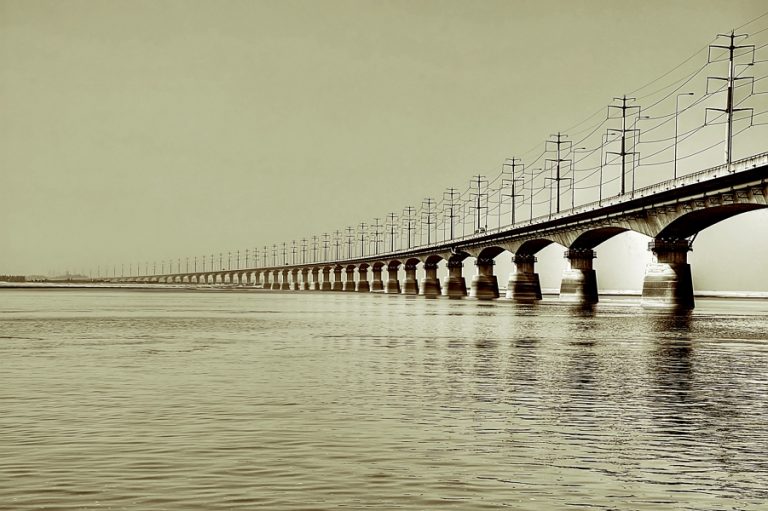
India-Bangladesh water transit project: Bangladesh approves dredging of Jamuna river

0

In a significant development in Modi government’s ambitious plan to develop river transport in India, on Wednesday the Bangladesh government gave its approval for a dredging project on the Jamuna river. The Brahmaputra river is known as Jamuna in Bangladesh, and it forms part of a river route from Varanasi in UP to Sadiya in Assam that Indian government has planned.

In December last year, the two nations had agreed to undertake dredging in two rivers in Bangladesh to facilitate round the year navigation on those routes. As part of the agreement, Sirajganj-Daikhowa section of the Jamuna river and Zakiganj-Ashuganj of Kushiyara river will be dredged with joint efforts of both the countries. India is funding 80% of the project cost, while the rest 20% will be borne by Bangladesh.

The dredging of the approximately 175 km length of the Jamuna river will cost Taka 227.46 crore, and Dharitri Banga Limited of Bangladesh has won the contract, who has to complete the dredging in two years and after that, they have to maintain it for 5 years. The river will be dredged to a depth of 2.5 meters and a width of 30 meters. Around 36 lakh cubic meters of sand will be removed from the riverbed in this project.

Sirajnaganj is near the point where Jamuna (Brahmaputra) river meets with Padma (Ganga) river in Bangladesh, and Daikhowa is near the point where Brahmaputra river enters Bangladesh.

After the dredging work is completed, the river route will become navigable for cargo vessels and northeastern India will be connected to the rest of the country with a major waterway. This will bring down the cost of transportation for the states in the region.

Both India and Bangladesh are developing the said sections in Jamuna and Kushiyara rivers as part of Protocol Routes on an 80:20 cost-sharing basis. The other section on the Kushiyara river will link South Assam with the Ganga-Brahmaputra river system, enabling direct access to the rest of the country. The Kushiayara river is a branch of the Barak river in India which enters Bangladesh and forms Megha river after combining with Surma river. The Jamuna-Padma combine merges with Meghna river and continues as Meghna to the Bay of Bengal, forming the world’s largest delta.

Tulsi Gabbard can become the first Hindu to run for US President in 2020

0

Tulsi Gabbard, a Democrat representative from Hawaii, who was the first Hindu to enter the US Congress in 2012, is reportedly considering running for the US presidential elections in 2020.

Gabbard was the first Representative to use Bhagavad Gita at her swearing-in ceremony. Previously, she had endorsed Bernie Sanders as Presidential nominee against Hillary Clinton in 2016 elections.

Tulsi Gabbard does not have direct links to India or any ancestry with Hinduism. It was her mother who embraced Hinduism, and later her father followed. Her family gave her and other siblings the Hindu names. Tulsi is a strict vegetarian from childhood and follows Gaudiya Vaishnavism sect.

Her views on foreign policy include non-interventionist approach towards Middle-east and Obama like populist approach towards the economy, acquiring her great praise from Bernie Sanders, Democrat Presidential nominee in 2016. She also had sparked controversy in 2017 by meeting Russian backed Syrian Dictator Bashar Assad and expressing scepticism over American claims of Assad using chemical weapons against own people.


She had also criticized Barack Obama for going soft on radical Islam, and refraining to label ISIL as an Islamist group.

She termed the denial of visa by the US to then Gujarat Chief Minister Narendra Modi as a ‘great blunder’ in 2002. In November 2013,  Gabbard opposed a House resolution that called for “religious freedom and related human rights to be included in the United States-India Strategic Dialogue and for such issues to be raised directly with federal and state Indian government officials,” saying it would weaken the friendship between India and US.

Speculations related to Gabbard running for Presidential elections surfaced after reports of employing digital and speechwriting staff for Gabbard. Her assistant Rania Batrice did not deny any speculations related to it, according to Politico.

Gabbard had met Prime Minister Modi after his historic speech in September 2014 at Madison Square. She had gifted Prime Minister, the same copy of Bhagavad Gita, she had taken oath on, in her first swearing-in ceremony and also vocalised her support for International Yoga Day.

She also visited India, subsequently. The leftist portal The Telegraph had labelled Gabbard as the  “the Sangh’s mascot”, citing her penchant for Indic traditions, and Prime Minister Modi.

She has also served in Field Medical Unit in combat zones like Iraq and Kuwait.

Her entry as the Presidential nominee is seen as a direct confrontation with Republican candidate Indian-American Nikki Haley, who is currently US Ambassador to UN (though she will resign by end of the year), who also is speculated to be running for President in 2020.