Home Blog Page 6966

NGO demands investigation into Elgaar Parishad funding which allegedly triggered the Bhima-Koregaon violence

0

A Bengaluru-based NGO, Citizens Forum for Justice (CFFJ) today demanded that a probe is carried out looking into the source of funding of the Elgaar Parishad meeting, held in Pune on December 31, last year, which allegedly triggered violence at Bhima-Koregaon in the district the next day, reported India Today.

While speaking to reporters at the Indian Merchants Chamber, the CFFJ secretary, Uma Mahesh, demanded that an expert committee of historians must be constituted by the state government to bring out facts related to the last rites of Sambhaji Maharaj, the sanads given to Gopal Govind and others.

In a 67-page fact-finding report, submitted to the Governor, Ch Vidyasagar Rao, and Chief Minister Devendra Fadnavis, Mahesh argued that the Elgaar Parishad conclave at Shanivarwada in Pune and the clashes between Maratha and Scheduled Caste communities at Vadhu and Prerna marches organized by the left-wing organizations were linked to each other.

Uma Mahesh furthered that, had the police took preventive measures well in advance and had there been adequate police deployed to tackle the situation the subsequent events that took place, (the Bhima-Koregaon violence) could have been avoided.

Kamal Mehta, a member of the CFFJ fact-finding committee, said that intentional attempts were made then to distort history and set up clashes between two communities. “The depositions made before us made it clear that the Elgaar Parishad leaders were aware of what was going to happen in Koregaon-Bhima.”

Last month, at a press conference, the Maharashtra police had also claimed that the Elgaar Parishad received funds worth Rs 15 lakh in two installments of Rs 5 lakh and Rs 10 lakh, respectively, from the alleged Maoists.

Kamal Mehta further disclosed that despite repeated requests, the Elgar Parishad had never shared their version of the incident. Both Mehta and Mahesh admitted that the Inspector General of Police, Bharipa Bahujan Mahasangh (BBM) leader Prakash Ambedkar and the Nationalist Congress Party (NCP) president Sharad Pawar, had, however, not responded to their invitations to depose before them.

In March, a similar fact-finding report was submitted to the Maharashtra government by a Mumbai-based think tank, Forum for Integrated National Security (FINS), which also pointed towards the involvement of left-wing organisations in the Bhima-Koregaon violence and had blamed the police for not taking preventive action as they failed to gather facts about the states whereabouts.

The police investigation and subsequent reports have claimed that the Elgaar Parishad was involved in inciting violence the next day. Tushar Damgude, the man on whose FIR the Maharashtra police had launched the investigation into the Maoist links to the violence, had stated earlier that he had witnessed the meeting and there was a distribution of highly objectionable pamphlets and literature along with violence-inciting speeches during the gathering.

3 students of AMU suspended for trying to hold funeral prayers for slain terrorist Mannan Wani

0

Yesterday security forces in Kashmir had gunned down dreaded Hizbul terrorist Mannan Wani. According to reports, in an anti-terrorist operation by security forces, two Hizbul terrorists were gunned down in Handwara in Jammu and Kashmir. One of the slain terrorists was identified as Mannan Wani, the former PhD scholar from Aligarh Muslim University who had joined Hizbul Mujahideen.

Wani was a resident of Kupwara in Jammu and Kashmir. His father was a lecturer and his brother is reportedly a junior engineer in Jammu and Kashmir government.

According to reports, after news of Mannan Wani being gunned down by security forces was spread in media, some students in Aligarh Muslim University started agitations inside the university campus. Inside the university campus, social media messages declaring Mannan as a martyr was being circulated and a group of Kashmiri students announced that they would hold funeral prayers or ‘Namaaz-e-Janaaza’ for Mannan Wani inside the Kennedy hall on campus at 3.30 in the afternoon.

Receiving reports of the proposed funeral prayers, the university administration took swift action. A proctorial team lead by proctor Mohsin Khan reportedly reached the Kennedy Hall before the scheduled time. A large group of about 100-150 Kashmiri students had reportedly already gathered in the hall.

Former student union president Faizul Hasan and some of his associates reportedly tried to reason with the gathered students that holding prayers for a slain terrorist will send a wrong message and will defame AMU. According to reports, while some students agreed some were still adamant on holding the prayers. Faizul Hasan reportedly pleaded with the Kashmiri students that the University should not be pulled into politics and if they wanted to mourn for Wani they should visit his family.

While some students agreed to suspend the prayers, some were reportedly adamant. The proctorial team had reportedly made it clear that no funeral prayers will be allowed for a terrorist. The PR department of the University also reportedly announced that the administration will not allow funeral prayers for a terrorist inside the campus. Upon this, a group of students was agitated and an altercation ensued with the proctorial team. The security guards present at the scene managed to disperse the agitating students away. Later the University had taken cognizance of the matter and reportedly suspended three students. The administration has also issued show cause notices to some of the agitating students.

Mannan Wani, 26, was pursuing a PhD on ‘Structural and Geo-Morphological Study of Lolab Valley, Kashmir’ from AMU. After news of his joining Hizbul Mujahideen, the university had expelled him. The UP police had also raided his room inside the campus and had recovered suspicious materials.

Soon after Sabarimala verdict, Kerala HC dismisses plea for Muslim women’s entry in Mosques

0

Kerala High Court has dismissed a petition seeking that Muslim women should be allowed to enter mosques for offering prayers. In the backdrop of contentious Supreme Court order allowing women of any age to enter the Sabarimala temple in Kerala, Akhila Bharat Hindu Mahasabha’s state president Swamy Dethathreya Sai Swaroop Nath had filed this petition before the High Court.

The petitioner had submitted that Muslim women are not allowed into the main prayer hall of mosques and it is a discriminatory practice against women. The petitioner had pointed out that Muslim women are allowed in Mecca but they are not allowed in Indian mosques. This is discrimination and it goes against article 21 and article 14 of the Constitution, said the plea.

Hearing the plea, a bench of chief justice Rishikesh Roy and justice AKJ Nambiar said that the petitioners failed to provide evidence that women are not allowed into mosques. The bench also notes that the petitioner “does not purport to represent the Muslim women in the State, whose rights are allegedly infringed through a denial of entry into a Masjid”. The court says that there is no established practice where Muslim women are not allowed inside mosques, therefore there is no evidence that the rights of Muslim women are violated.

The court also says that that petitioner is not such a person who should be concerned with the rituals and practices of the Islamic religion. This was an interesting comment from that court given the fact that none of the petitioners in the Sabarimala was from Kerala and some of them had no knowledge about the customs of the temple. In fact, some of the petitioners wanted to withdraw their pleas after learning that it was a custom limited to one specific temple and women devotees themselves want to follow this custom. The supreme court also had ignored the beliefs of women devotees of the temple.

The Kerala high court also noted that news about the PIL had already surfaced in media even before the matter was taken up by the court. Therefore, the court thinks the PIL is filed to obtain “cheap publicity”.

The judgement can be accessed here [PDF].

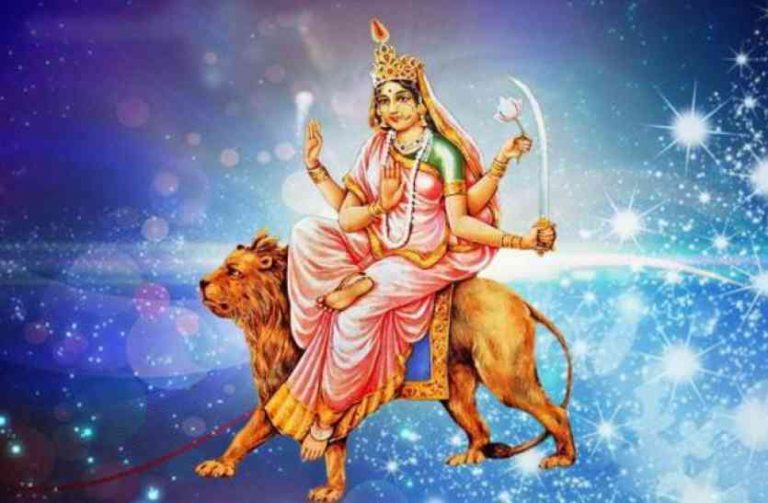
Chandraghanta: The third avatar of Maa Durga who is always ready to fight the demons

The third day of Navratri is devoted to Maa Chandraghanta, the third form of Maa Durga, who is married to Lord Shiva. She adorns a half-moon shaped bell (hence the name Chandraghanta) and has eight hands holding a Trishool, Gada, bow-arrow, sword, lotus flower, bell (ghanta) and kamandal (water pot) and one hand remains in the abhayamudra, the blessing posture. She rides a tiger or a lion to as a symbol of bravery and is also known as Chandika and Rannchandi.

Chandraghanta: The third avatar of Maa Durga, worshipped on the third day of Navratri

As the legend goes, Goddess Parvati was devastated after Lord Shiva said that he would not marry any woman. However, Her sufferings overwhelmed Him and He agreed to the union. When Lord Shiva brought the wedding procession, Parvati’s parents were terrorised to see gods, mortals, ghouls, ghosts, goblins, aghorees in the procession. When Her mother fainted, Parvati took the form of Her fearsome self and transformed herself into Maa Chandraghanta to save her family.

On being persuaded, Lord Shiva re-appeared as a charming prince adorning jewels and the two get married.

While She is a very serene being, when provoked, Her fury could know no bounds. She is always in the fierce war-posture, ready to take on the evil and the demons.

She is worshipped on the third day of Navratri after Maa Shailaputri and Maa Brahmacharini. Each day of the Navratri is devoted to one of the nine avatars of Maa Durga. The nine different forms are Shailaputri, Brahmacharini, Chandraghanta, Kushmanda, Skandamata, Katyayini, Kaalratri, Mahagauri and Siddhidhatri.

While IMF demands disclosure of Pakistan’s China debt, PM Imran Khan spends money he doesn’t have

0

Pakistan PM Imran Khan has now officially, sought help from International Monetary Fund to bail out the country from the economy with a ballooning trade deficit, ailing currency and dwindling foreign reserves, claim reports.

Initial reports suggest that Pakistan government will demand loans of worth $12 billion from IMF. It may be Pakistan’s toughest loans, as it has taken a dozen IMF programs but has failed to put in effect the reforms required, in all but one bailout package.

“The conditions associated with a loan will include some harsh measures and the government will have to be very prepared to explain why Pakistan has been forced to return to the IMF,” said a senior official in Pakistan government to Financial Times.

IMF Managing Director has made it rather clear, that prerequisite for any loan to be granted to Pakistan, is that maintains transparency with regards to already taken loans from countries like China.

It suggests that Pakistan will have to disclose its all details regarding $62 billion investment from China, under One Belt One Road initiative.

Lagarde said an IMF team would visit the Pakistani capital of Islamabad in coming weeks to begin negotiating the terms.

The biggest threat it seems to loans are not from stringent norms of IMF, but from the USA, which has made it clear that it will not let IMF bailout countries stuck in debts by China.

US is the largest stakeholder in IMF and has greater say in loans sanctioned by it, although it does not have a veto. The USA has many-a-times accused China of indulging in ‘debt trap diplomacy’  with smaller countries like Pakistan.

US Secretary of State said it can’t let hard-earned money of IMF go to China, through countries like Pakistan.

All these come in the wake of fresh blow delivered to Pakistan after the Asia Pacific Group on Money Laundering (APGML) and Financial Action Task Force (FATF) asked Pakistan government to intensify actions against money laundering and terror financing. The country is already on the ‘grey list’ of FATF, if it further maintains inaction it can be further blacklisted, making it difficult for it to procure loans from IMF.

We had earlier reported that how Pakistan is easing its overwhelming debts, it had cancelled several projects of CPEC with China, worth $2 billion. It also has tried to cut its excess spendings in the country, but its far from being sufficient. It recently launched a populist housing scheme, in Pakistan is offering five million houses to people, which economists are terming as ‘austerity’.

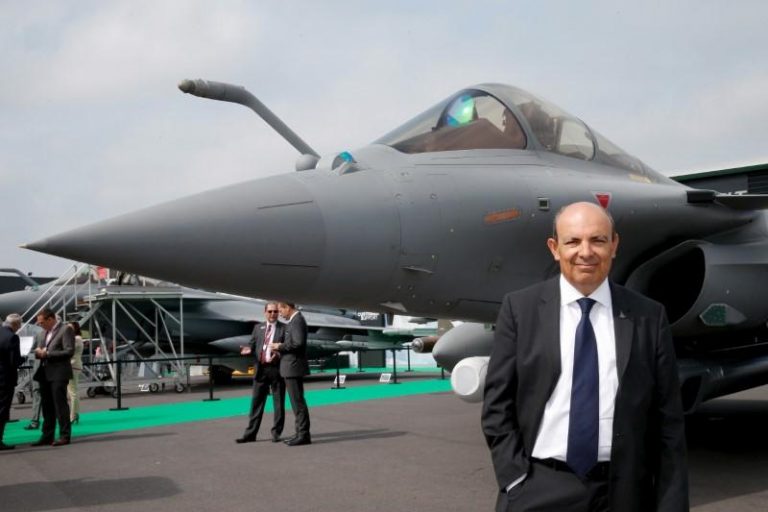
Dassault CEO demolishes lies of Rahul Gandhi about the Rafale Deal

Amid never-ending attacks by Rahul Gandhi on the Rafale deal, Dassault Aviation has been trying to clear the air about the deal and clarify the allegations made about the same. As part of that, Dassault Aviation CEO tried to answer some questions in an interview given to AFP (Agence France-Presse, a France based international news agency).

While answering why the company chose Reliance over HAL as their JV partner, CEO Eric Trappier says that Dassault Aviation wanted to establish a long-term presence in India through Dassault Reliance Aerospace Limited (DRAL), which will be led by an Indian CEO and a French COO. He also mentions that Dassault will maintain technical and industrial control over the operations in the plant, which will make parts for Falcon and Rafale aircraft.

Demolishing claims made by Rahul Gandhi that Reliance is getting Rs 30,000 crore from the deal, Eric informs that Dassault will be able to fulfil about 10% of its offset obligation through DRAL. It is important to note that the total offset obligation in the Rafale deal is around Rs 29,000 core, but Dassault does not have to fulfil this obligation alone. There are four major companies involved in this deal, other than Dassault they are Thales (radar and electronics), Safran (engine) and MBDA (missiles), and all of them have offset obligations. According to reports, Dassault’s share in the offset obligation is around Rs 8,400 crore. This means the share of DRAL in the deal will be around Rs 840 crore, not Rs 30,000 crore as Rahul Gandhi is claiming.

Eric also tried to clear the confusion created by the misleading report published by Mediapart. Quoting this report, Rahul Gandhi had alleged that Narendra Modi is ‘compensating’ Anil Ambani by paying him Rs 30,000 crore. He explains that the English word “offset” is generally written as “compensation” or “contrepartie”, and the mention of “compensation” in the report refers to offset only. He also clarifies that offset obligation is a mandatory requirement as per Indian law, but the choice of partner to implement that obligation is with Dassault.

We have reproduced the English translation of the interview below:

1) The Rafale India contract makes provision for offsets to be provided by yourselves in the country. Where are you with these offsets?

Eric Trappier: To clarify matters, what is called “offset” in English is usually translated into French as “compensation” or “contrepartie”. The reference is the contract we signed and which is called “Offset contract”. With regard to the staff and trades unions organizations, Dassault Aviation uses the term “obligation contractuelle d’offset” or “obligation contractuelle de compensation ”.

Signing an offset contract is a requirement of Indian law (Defence Procurement Procedure). The implementation of offsets is an obligation and, under the Indian regulation, the choice of the partners belongs to us.

In full compliance with this regulation, Dassault Aviation therefore decided to set up the DRAL joint venture with Reliance and build a plant in Nagpur, which should enable us to meet about 10% of these offset obligations. We are in negotiations with about a hundred Indian companies and partnerships have already been concluded with about thirty of them.

2) Why did you choose Reliance over HAL as your Indian partner in the JV?

Eric Trappier: Dassault Aviation decided to establish a long-term presence in India through DRAL, a joint enterprise in which governance is provided by an Indian Chief Executive Officer and a French Chief Operating Officer. Dassault Aviation therefore exercises technical and industrial control over the operations, applying its standards and its flexibility. This JV will produce parts for the Falcon 2000 and Rafale. The choice of the Nagpur site, in central India, was dictated by the availability of land with direct access to an airport runway.

3) Are you confident for the future despite the current controversies in India?

Eric Trappier: Controversies are always unfortunate but we remain calm. Things are progressing rapidly. We set up DRAL on 10 February 2017 and the plant project was officially launched on 27 October 2017.

The first phase of the project involves building a temporary hangar to house the production tool and enable staff training to begin as rapidly as possible. This temporary hangar was completed in March 2018. Activities started on 18 April in the presence of senior executives from Dassault Aviation and the local authorities. We hired an Indian CEO, Mr. Sampathkumaran S. T., who has more than 20 years’ experience in the aeronautical industry. We have hired and trained Indian managers and workers. The first Falcon 2000 parts should roll off the line at the end of the year.

A second phase started in July 2018, with the construction of a final building, completion being scheduled for July 2019. This building will allow a ramp-up in industrial activities. The cooperation between Dassault and India, which has existed for 65 years, has been given fresh impetus by Make in India and we are proud to be able to contribute to it.

India Forward: West Europe set to be the new export market

The Trade Promotion Council of India (TPCI) jointly with the Department of Commerce, Ministry of Commerce and Industry organises an export-focused food and beverages annual trade fair named Indusfood.

The first edition was held on January 14-15, 2018 which saw 40 countries participation with 350 Indian exhibitors and 455 global buyers which culminated into a total business of USD 650 Million which in itself is a resounding success. Now European supermarket chains and top manufacturers of processed food will be sourcing their Food and Beverage(F&B) requirements from India. As per Government, the Indusfood-II is expected to see the participation of more than 600 global buyers from around 50 countries.

It is pertinent to note that such direct Business to Business meets establish direct contacts and provide an opportunity for Indian companies to display their offerings to the major retail chains across the globe. It would be difficult as well as costly for small exhibitors to approach multinational companies individually hence such initiatives are appreciated by all participants across the supply chain.

With retailers like Panda of Saudi Arabia, Magnet of Russia, BIM of Turkey or Rewe of Germany domestic companies will have direct access to international markets.

Such little yet significant steps shall put India on the global F&B map while creating domestic jobs and earning foreign exchange for the country.

Series of absurdities: ‘Womxn’, Quantum Physics and Queer Theory, and Trump adviser’s 3rd grade story

The past few days have yielded a few bizarre news with absurd headlines by some reputed media outlets. A couple of decades ago, even 5-10 years ago, such articles would never have seen the light of day. Here, we will take a look at these articles.

‘Womxn’ and ‘Womyn’ because ‘Women’ is Patriarchal and Misogyny

One such article by Alex Regan for the BBC was headlined “Should women be spelt womxn?” The article reports on the backlash faced by an organization over the use of ‘womxn’ from hundreds of women. Wellcome Collection, a museum and library at London, used the weird spelling in a tweet promoting its event. When it faced a backlash, it explained that it used the spelling because “we feel that it is important to create a space/venue that includes diverse perspectives”.

The Urban Dictionary defines womxn as “A spelling of “women” that is a more inclusive, progressive term that not only sheds light on the prejudice, discrimination, and institutional barriers womxn have faced, but to also show that womxn are not the extension of men but their own free and separate entities. More intersectional than womyn because it includes trans-women and women of colour.”

The use of ‘Womxn’ and ‘Womyn’ began with the advent of postmodernism and its efforts to make the language less patriarchal. The word for the female sex containing ‘men’ was seen as an instrument of patriarchy. As per Gwendolyn Wu, a student at the University of California, “Womyn” and “womxn” are two of the most commonly used substitutes to avoid using the suffix “-men” at the end of the term, but others like “wimmin,” “wimyn,” and “womin” are also sometimes used.”

In an article on Kafila by guest author Sayantan Dutta, one can see that such ideas have also been imported to India. As per a note to the article, “The author believes that the structure of language has mirrored the patriarchal structure of the society, and therefore they practices aungendering mechanism persynally by neutralizing gendered roots of some words.” The author does not limit himself to women but uses weird spellings for every word whose spellings contain words that refer to the masculine gender. Thus, the author spells personal as ‘persynal’, mention as ‘myntion’, harassment as ‘harassmynt’, vehemently as ‘vehemyntly’, moment as ‘momynt’, movements as ‘movemynts’ and disappointments as ‘disappointmynts’ but apparently forgets to spell manifestation as ‘mynifestation’ thus clearly showing that the author, as per his/her/xhe (I do not know ‘their’ personal pronoun preferences) has not escaped his/her/xhe patriarchal indoctrination.

Quantum Physics and Queer Identity

In a video published by BBC again with the caption ‘What quantum physics taught me about queer identity’, Writer and performer Amrou Al-Kadhi (AKA Glamrou) speaks on the ‘inspiration to be found in a ‘beautiful, strange and glorious’ sect of physics.’


The speaker dressed garishly says at one point, “Quantum Physics to Newtonian Physics is, to me, what Queer Theory is to heteronormativity.” According to her, Quantum Physics shows that “Reality is just a set of contradictions with no real fixed foundations.” And that she is greatly comforted by Quantum Physics as a “Queer person with no real fixed identity”. Physicists might like to differ from her interpretation of Quantum Physics but it is unlikely that they will as no one wants to be labelled transphobic and exposed to unpleasant abuse if they can avoid it.

A researcher and a Google scholar was, however, kind enough to point out the flaws in her logic.

Trump Adviser Stephen Miller and the Glue Story from 3rd Grade

In a report by HuffPost headlined “Stephen Miller’s 3rd Grade Teacher Calls Him ‘A Strange Dude’ Who Ate Glue”, David Moye reports on comments made by Trump’s Immigration adviser Miller’s teacher.


The report quotes Nikki Fiske, Miller’s teacher when he was eight years old, telling The Hollywood Reporter, “Do you remember that character in Peanuts, the one called Pig Pen, with the dust cloud and crumbs flying all around him? That was Stephen Miller at 8. I was always trying to get him to clean up his desk — he always had stuff mashed up in there. He was a strange dude. I remember he would take a bottle of glue — we didn’t have glue sticks in those days — and he would pour the glue on his arm, let it dry, peel it off and then eat it.”

HuffPost appears to have taken their opposition to Donald Trump and his administration to a whole new different level. I would guess that every one of us did pretty stupid things when we were eight years old but HuffPost appears to be making character judgments based on them.

People on Twitter appear to agree that none of us would want our character or ability to be determined by things we did when we were kids.


Some people also mentioned that the teacher should not be telling the media embarrassing stories about their students.


Regardless of political inclination, I guess we could agree that we wouldn’t want our stories from 3rd to be part of the national news. But for HuffPost, it appears more decency than they are capable of.

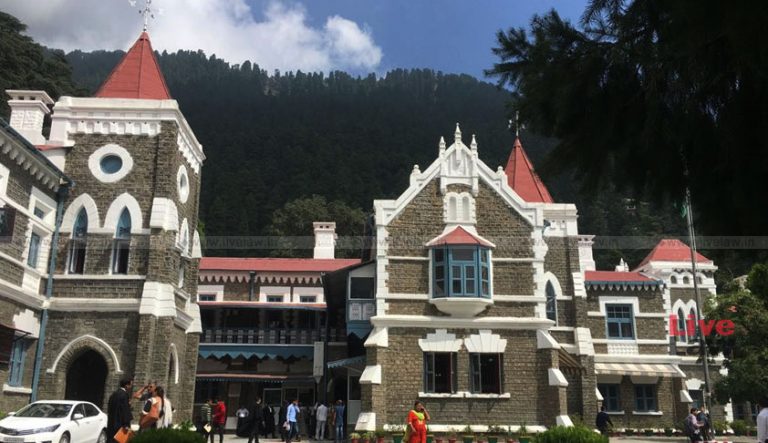
‘It appears the Court is crossing a Laxman-Rekha’, BJP leader on recent orders by Nainital HC

Former Chief Minister of Uttarakhand and BJP leader Vijay Bahuguna has expressed reservations about some of the recent orders passed by the Nainital High Court and stated that it appears that the Court is crossing a certain ‘Laxman Rekha’.


We have reported on some of the contentious orders passed by the Nainital High Court recently. It had directed the government to enforce a strict ban on websites offering pornographic content after taking suo moto cognizance of the gang rape of a student in Dehradun. This goes against the ruling of Supreme Court which had said in 2015 that adults can’t be prevented from watching porn within four walls of their room. More controversially, the Court had asked the government to provide quotas to transgenders in government jobs and educational institutions in addition to building separate toilets for them in public.

In another order issued in August, the Court said people should not be permitted to hold processions and dharnas against their judgment and directed the district magistrates to not allow any demonstrations. “We have also come across a number of news items whereby the persons were permitted to organise processions, dharnas against the judgments/orders passed by the courts with impunity. This is a dangerous trend. This should not be permitted at all,” the court had said.

The Court had also cracked down on tourism in the state. While banning night-stays at high altitudes altogether, the Court had restricted the number of tourists to 200. Tourists and others associated with the tourism were heavily disappointed with the decision and the decision was expected to cause a loss of hundreds of crores to the state.

The High Court had also banned white water rafting, paragliding and all kinds of water sports in the hill state, inflicting major damage on the tourism industry in the hill state. This ban was lifted in September after state government had filed an affidavit.

India Forward: Ro-Ro service to Majuli Island in Assam

Majuli means ‘the land between two parallel rivers’. Once the Siang River enters Assam, it is called the Brahmaputra and it becomes a braided and a mighty furious river. This has created the flood plain of the Brahmaputra Valley. As the Brahmaputra flows, its furious speed cuts through land mass and that’s how picturesque Majuli Islands were formed. The Brahmaputra Valley in Assam is approximately 80 to 100 km wide and almost 1000 km long. At some places the width of the river itself is 16 km. This makes access to Majuli , a River island, all the more difficult. With 150 villages and an approximate population of 1,50,000 people, getting this area mainstreamed and easily connected remained a challenge till date.

As can be seen from the above image, the connectivity from the South of Assam to the North of Assam has to be done either via air, road or ferries. Currently, there are only four road bridges across river Brahmaputra located at Jogighopa, Guwahati, Tezpur and Sadiya for connectivity between southern and northern parts of Assam. This obviously entails that trucks have to travel longer distances to make it across the river.

Meanwhile the people living either on the south or the north side have access to ferries to cross the river. However, those ferries cannot carry goods and machines and the same has to be done only via rail or road by taking a circumtuous route. This obviously increases cost and time.

To resolve all these problems for Majuli Island, Inland Waterways Authority of India (IWAI) will be starting a new Roll on-Roll off (Ro-Ro) facility. A Ro-Ro ship is designed in such a way that a truck or a trailer with goods can directly drive onto the ship and then once the ship sails to its destination, the vehicle can roll off or drive out of the ship onto the land.

The Ro-Ro facility for Majuli Island limits the total distance a truck travels to only 12.7 kms. In absence of this, the trucks were forced to travel 423 kms to cover the same distance. It will lead to huge savings on fuel costs and time for the transporters and the benefits will be passed onto the consumers via price reductions.

Government has procured a new vessel named MV Bhupen Hazarika for a cost of Rs 9.46 Crore for RoRo Service and built docking terminal too. The Ship is 46.5-metre-long, 13.3-metre-wide with capacity of 8 trucks and 100 passengers at one time. More such services will be needed to effectively connect the Upper Assam and Arunachal regions with the other North East states.