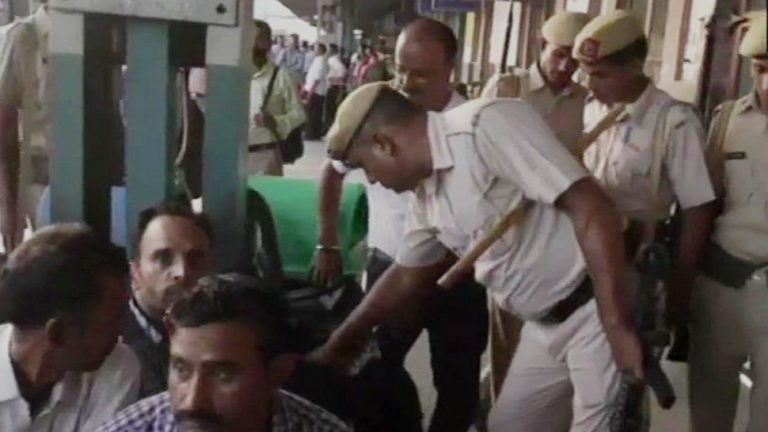
A senior railway official in Ambala has received a letter threatening to blow up railway stations across the country on October 20. According to reports, the letter, allegedly from Pakistan based terrorist outfit Lashkar-e-Taiba (LeT), has warned of blowing up railway stations, religious places and petrol pumps in various states of India. It was found by Ambala Cantonment railway station director. The letter has reportedly mentioned an address in Karachi, Pakistan.
The letter says that the jihadis will blow up railway stations including Ambala Cantonment, Jagadhri, Saharanpur, Rewari, Karnal, Panipat, Kurukshetra, Sirsa, Jakhal, and Hisar on October 20. A letter, allegedly written by LeT area commander ‘Molvi Abbu Bukhari Kishtwar Kashmir’ of Karachi, has also threatened of explosions at petrol pumps, religious places, military establishments and railway infrastructures in Haryana and Uttar Pradesh.
Haryana: Security heightened at Ambala Cantonment railway station after the Station Director found a letter in his office threatening that the station would be blown up. Police say the letter is from Lashkar-e-Taiba & has the address mentioned as Karachi, Pakistan. (25.09.2018) pic.twitter.com/McKll8dsxe
However, the letter did not carry any stamp and appears that someone has placed it on the table of the railway station director. Meanwhile, the security has been intensified at the Ambala Cantonment premises. Station House Officer of Ambala’s Government Railway Police spoke to the media and said that an FIR has been lodged and the investigations are initiated.
Reportedly, the letter says that the LeT is seeking a revenge against the atrocities committed against Muslims by the Hindus and Sikhs. The DSP GRP Shital Singh said that the forces are alert and CCTV footage will be analyzed. He also did not rule out the possibility of a prank by an official of the railway staff. “Maybe some official had rebuked any railway employee and he may have sent the letter. The matter is being investigated. We will check all the angles and find out the truth”, reportedly said Singh.
The officials said that they tried to analyze the CCTV footage of the railway station for any clue but could not find anything as some cameras were not working and the remaining were not covering the room of the station director. A case has been registered at the GRP station under Sections 124 a, 153 a, 295 a, 505 (1) (b) of IPC.
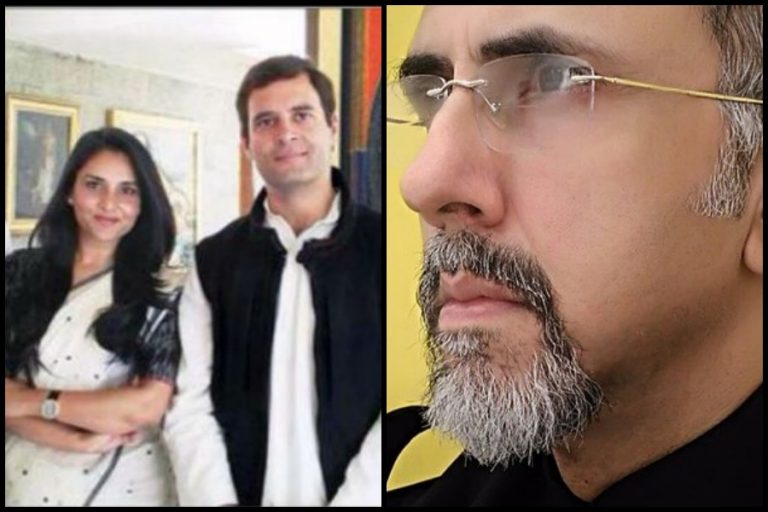
On 24th September 2018, Congress’ IT Cell head, Divya Spandana took to Twitter to share a morphed image of Prime Minister Narendra Modi. This comes after the Congress has been trying its best to insinuate a scam in the Rafale deal signed between India and the French government where they exist none. Recently, the trail led up to the Gandhi family itself when it was revealed that the infamous arms dealer, Sanjay Bhandari, who is allegedly a close associate of Robert Vadra was lobbying at the time to become Dassault’s offset partner.
Lawyer and activist Syed Rizwan Ahmed took strong objection to Spandana’s tweet. He tweeted his objected to Divya several times and also urged her to delete the tweet.
Lady I’m shocked..I have nothing to do with BJP/RSS..
Twitter is room without walls and borders..I’m ashamed..
For God sake, remove it? https://t.co/ZmZxrlSq6y
Mr Ahmed then said that he was so angry at the tweet by Spandana, that it had prompted him to support BJP. A proposition he would have laughed off earlier.
Ma’am..This is not troll by any chance..
Your tweet tore through me,instigating me to join BJP..Few minutes back I would have laughed on such proposition..
I’m trembling in anger..
Remove it..It’s harmful for your own party?@RahulGandhihttps://t.co/ZmZxrlSq6y
*मेरा लोकतांत्रिक विरोध*
मैने आप या राहुल जी को बुरा न कहा…सिर्फ निवेदन किया कि इसको हटाये…जाहिर है आपने नही सुनी।
मैं, मेरा परिवार,औऱ जो कुछ मेरे प्रभाव में अपने मुस्लिम-गैर मुस्लिम के वोट होंगे,हम 2019 में BJP को डालेंगे…बिना शर्त.. बिना सोंचे..कोई भी प्रत्याशी हो https://t.co/ZmZxrlSq6y
On 25th September 2018, a day after Divya Spandana tweeted the morphed image of PM Modi with “chor” written on his forehead, Dr Syed Rizwan Ahmed tweeted that he had filed a case of sedition against the Congress IT Cell head.
@divyaspandana के विरुद्ध धारा 124आ (राष्ट्रद्रोह) 67 आई टी एक्ट में मुकदमा दर्ज।
धन्येवाद @Uppolice .@narendramodi जी आपकी लीगल टीम को और सक्रिय होना होगा।
मैंने और ट्विटर साथियो ने कारवाही की क्यो की आप देश के प्रधानमंत्री हैं न कि किसी दल के?
*आप सब को मुबारक! pic.twitter.com/CYqJhTLaA8
The FIR filed by Dr Ahmed has been filed under the sections 124A of the IPC and a provision of the IT Act. Section 124A pertains to sedition and reads “whoever, by words, either spoken or written, or by signs, or by visible representation, or otherwise, brings or attempts to bring into hatred or contempt, or excites or attempts to excite disaffection towards the Government established by law in 103 [India], shall be punished with 104 [imprisonment for life], to which fine may be added, or with imprisonment which may extend to three years, to which fine may be added, or with fine.
OpIndia.com spoke to Dr Syed Rizwan Ahmed and asked him why he chose to file an FIR invoking harsh sedition laws. Dr Ahmed said:
Deregotory visible representation of a democratically elected Prime Minister of the Nation on a platform which has no borders does not fall under Freedom of Expression, criticism of policy does. But aspersions of grave nature cannot be condoned by any self respecting Republic and Democracy. The Prime Minister is the face of Nation, Face of Republic and Democracy. Mature opposition has sanction to hold him accountable for any policy or action within polity and ethics, especially on International platform. He is face of Government. He represents India Globally. Photoshop on his statue which was mark of global respect in such abusive words is nothg but provoking contempt for post of Prime Minister who is face of Government and the common man.
OpIndia.com, while speaking to Dr Ahmed also asked him what he would say to someone who would counter his FIR by saying that ‘dissent is the safety valve of democracy’ and that his complaint perhaps stifles dissent. Dr Ahmed said:
Dissent is soul of a healthy and vibrant Democracy. But dissent should be such that it does not jeopardize public order, morality and core constitutional values. This is abuse not dissent.
While Dr Syed Rizwan Ahmed has already filed an FIR against Divya Spandana, another lawyer, Vibhor Anand, who had given her a 24-hour deadline to take the tweet down has asserted that he will be filing a Rs. 10,000 crores defamation suit against the Congress IT Cell head.
24 hrs ultimatum given to @divyaspandana ends, as expected she neither deleted the tweet nor issued an unconditional apology, So I would initiate the necessary legal process of filling 10k Cr defamation case and further criminal cases against her tomorrow… https://t.co/WwWwN6266l
Chief justice of India, Dipak Misra, who will retire on 2nd October, heads for a power packed week as he is expected to hear several important cases and is likely to pronounce important judgments during his last week which began on September 24.
A slew of judgements on various important issues varying from the Ayodhya dispute to the validity of Aadhar to female genital mutilation awaits judgement with effectively just five working days left for Dipak Misra to leave office.
With no judgments delivered on Monday, he is effectively left with five days, not counting the fact that the last day of Justice Misra as Chief Justice is a holiday.
Here are few of the cases which are likely to be taken up by Dipak Misra before he hands over his responsibilities to the incoming CJI, justice Ranjan Gogoi.
MLAs, MPs with Criminal Cases to Contest Elections:
A five-judge Constitution Bench of the Supreme Court, headed by CJI Misra, today held that candidates cannot be disqualified from contesting elections merely because charges have been framed against them in a criminal case.
However, the SC stated that the voters have the right to be informed about the criminal antecedents of their candidates, therefore, keeping this in view SC directed that each candidate shall declare his/her criminal antecedents to the Election Commission before contesting an election. It furthered that the onus lies on the Parliament to make relevant laws to prevent people with serious criminal cases pending against them from entering the legislature.
Ayodhya case:
The Ayodhya matter is limited to the question whether a challenge to 2010 Allahabad High Court judgment would be heard by a three-judge bench or a larger bench. Rejecting all intervening petitions the bench had reserved its order in the plea on 20th July, which was filed by a group of Muslim groups who sought to refer the 1994 constitution bench’s judgment to a larger bench.
The validity of Aadhar:
In one of the longest hearings in the annals of the Supreme Court which lasted for 38 days, the first bench reserved verdict on the constitutional validity of Aadhar law, 2016 where the top court is expected to pass a judgment on whether or not the government can continue making Aadhaar, which is driven by personal biometric data, a mandatory identification document in its welfare schemes.
Sabarimala women entry case:
The court which has already orally observed that a ban on entry for women at Sabarimala temple is steeped in patriarchy and chauvinism it is to be seen whether a Constitution Bench led by Chief Justice Misra would lift the centuries-old prohibition on women aged between 10 and 51 to enter the Sabarimala temple in Kerala.
The validity of Adultery Law:
The court headed by Dipak Misra, before his retirement, is expected to deliver a judgement decriminalising adultery, which under section 497 of the IPC is currently a criminal act.
Female genital mutilation:
Hearing on a PIL filed by petitioner Sunita Tiwari, with the support of several gynaecologists and women organisations, the Supreme Court had in July 2018 slammed the practice of Female Genital Mutilation practised by the Dawoodi Bohra community in India.
Now the legal validity of Female genital mutilation will be decided upon before the 2nd of October.
Activist’s arrest:
The Supreme Court today extended the house arrest of the five ‘Urban Naxals’ till September 19, who were arrested in connection with the plot to kill the Prime Minister Narendra Modi and Bhima Koregaon violence. The apex court had reserved its order on a plea filed by Romila Thapar and four others on the same day challenging the arrest. Now the Supreme court is expected to deliver its verdict in connection with the arrest.
Congress leader Ahmed Patel’s re-election to the Rajya Sabha:
The apex court had reserved its verdict on 18th September in the case which sought to disqualify Ahmed Patel’s election to the Rajya Sabha from Gujarat. The plea contested that Patel had secured his seat through corrupt means after he lodged 44 MLAs from his party in a Bengaluru resort to avoid poaching by the BJP.
Live streaming of court proceedings:
The court is also considering allowing live streaming of court proceedings. On August 24, the bench reserved orders on this plea.
With so many hearings and likely judgements to happen within such a small time-frame, the Supreme court is surely headed towards a hectic week ahead.
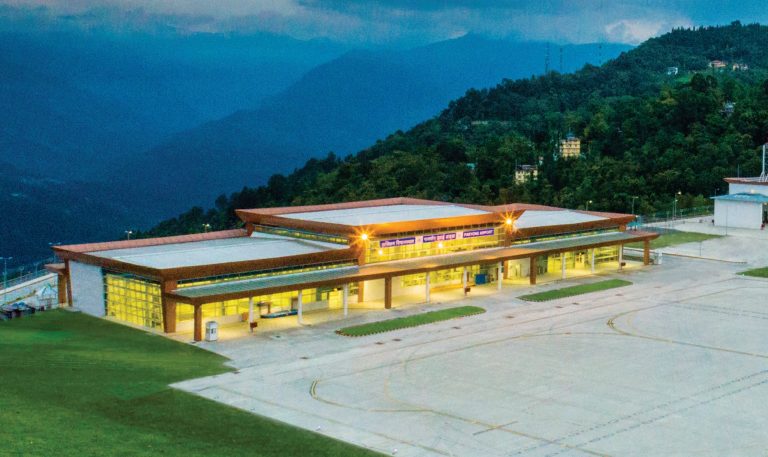
The progress made by the civil aviation industry in India in the past few years is a crowning jewel in the list of achievements of the Narendra Modi led NDA government at the Centre. The Civil Aviation Policy implemented by the government in 2016 was expected to give a major boost to the airline industry in the country and it has started yielding positive results.
Pakyong Airport, Sikkim
“The Indian Civil Aviation sector contributed 15 billion US dollars to GDP in 2017-18 and has been amongst the fastest growing aviation sectors in the world. The catalytic impact of tourism added another 1% to GDP. Last year, India saw a surging demand in air travel with domestic passenger traffic registering a growth of 18.7%, much ahead of the growth experienced by China which is currently the second largest aviation market in the world,” said R.N. Choubey, Secretary, Ministry of Civil Aviation.
As per government figures, the industry has registered a booming growth in the past 4 years. Total passenger trips have increased to 18 crores from 10, the number of aircraft with scheduled operations have increased from 395 at the end of Fiscal Year 2014 to 587 by the end of FY 2018 which is projected to increase to 1500 aircraft in the next 5 years. The number of airports have crossed the 100 mark as well from 75 in FY 14.
Shillong Airport
The government has pursued various initiatives to achieve its objective. One of the better-known ones is UDAN, a regional connectivity scheme. Under UDAN, 30 new airports have been added transforming connectivity in Tier 3 and 4 towns. In addition, system capacity in all areas is sought to be increased under various schemes over 1 lakh crore rupees of investments are lined up for airports in the next 5 years.
“Under the Government, if India’s NABH (Next-Gen Airports for Bharat) Nirman initiative, there is a paradigm shift in the way new state-of-the-art airport terminals are being designed, financed and operated. A Design Council has been established comprising reputed architects, artists and interior designers in order to have aesthetically pleasing exteriors and interiors of the new terminals reflecting local culture, milieu and regional heritage while providing modern facilities and convenience,” said Jayant Sinha, Minister of State for Civil Aviation.
Minister of Civil Aviation, Suresh Prabhu, stated, “Airport infrastructure is rising to meet the challenges at every turn. As of 2013, only 76 airports were schedules for operations by air carriers. The year 2018 marks the operationalization of 100 airports. Propelled by the need for regional connectivity, we have so far awarded UDAN route contracts connecting 56 unserved and 17 underserved airports along with 31 helicopter destinations. 90 routes have already been operationalized.”
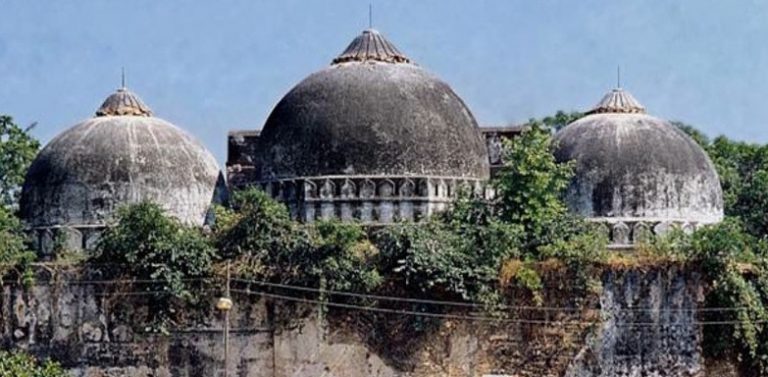
The 6th of December, 1992 could be regarded as the most important event in the history of independent India. The date has assumed such enormous significance that the entire political history of India since independence can be divided into pre-06/12/92 and post it. Of course, mere words cannot impress upon people the importance of the events of that day when the Babri Masjid fell and our politics, to this day, continues to be affected by the events that transpired during that epoch.
The Ayodhya dispute is not merely a disagreement marked by a cataclysmic event, it is an indictment. It is an indictment of the institutions of our state, it is an indictment of our Judiciary that has failed to reach a decisive verdict thus far, it is an indictment of our legislature that has failed to respect the religious sentiments of a long-oppressed people, it is an indictment of the political landscape of our country that has little respect for our civilizational memory.
Indeed, the Ayodhya dispute is the harshest indictment of our Judiciary. In 2010, the Allahabad High Court did pronounce a verdict in the matter where the disputed land was to be divided into equal portions between three entities: Lord Rama represented by the Hindu Mahasabha, Sunni Waqf Board and the Nirmohi Akhara. But only a couple of months later, an appeal was filed against the verdict in the Supreme Court and it has been languishing in the highest court of the country ever since. It reflects poorly on the Judiciary of independent India that a dispute on such a critical matter has been languishing in the courts since 1949 when civil suits were first filed in independent India for ownership of the plot. Indeed, it is the longest running civil dispute in the country and dates back to 1885.
“I visited the land in dispute yesterday in the presence of all parties. I found that the Masjid built by Emperor Babur stands on the border of Ayodhya, that is to say, to the west and south it is clear of habitations. It is most unfortunate that a Masjid should have been built on land specially held sacred by the Hindus, but as that event occurred 356 years ago, it is too late now to agree with the grievances.” These are the words that were uttered by the District Judge, Faizabad in 1886 when Mahant Raghubar Das moved the Courts to seek permission to build a Ram Mandir outside the Babri premises. We were not an independent country then but we are now and the righting of a historical wrong committed on its people is the duty and a true test of sovereignty for any newly independent nation.
Hindus have been struggling hard for a Mandir at Janambhoomi in the Courts for decades. And it could be argued that Judges during the early years of independent India were respectful of Hindu sentiments and made several concessions. On the 16th of January, 1950, a civil suit was filed by a certain Gopal Singh Visharad in the Faizabad Court requesting that he be allowed to offer prayers to worship Shri Rama at His birthplace and a permanent injunction against the removal of Idols from the Masjid. It is pertinent to mention that Hindus in 1949 had managed smuggle Idols of Rama and other Deities inside the Masjid.
Modifying his earlier judgment on the 19th of January, 1950, the Judge ruled, “The parties are hereby restrained by means of the temporary injunction to refrain from removing the idols in question from the site of dispute and from interfering with the puja, etc, as at present carried on.” The Judge again confirmed his interim order a year later on the 3rd of March. “The undisputed fact remains that on the date of this suit the idols of Shri Bhagwan Ram Chandra and others did exist on the site and that worship was being performed…though under some restrictions put by the executives.”
One of the most momentous events was perhaps the opening of the gates of the Masjid to Hindu devotees following a court order in 1986. The foundations for the construction of the Mandir were perhaps laid down at that opportune moment. Arif Mohammad Khan, a senior politician who is claimed to have been involved in the thick of events, has stated that the gates of the Babri were opened to Hindus as part of a deal between Muslim leaders and the Congress party. According to him, it was a balancing act to ameliorate the sentiments of Hindus after Rajiv Gandhi succumbed to the Muslim fundamentalists and reversed the Supreme Court judgment on the Shah Bano case. “The announcement to reverse the SC judgement (Shah Bano case) and the removal of the locks happened within a span of two weeks. This to most people appeared as a balancing act and they hoped that now both the agitating parties would feel satisfied,” Khan told IANS in an interview. Khan had previously parted ways with Rajiv Gandhi following the latter’s capitulation to the Muslim clergy.
The facts on the matter, however, are abundantly clear although it is disputed by Marxist historians and certain Muslim bodies. The Archaeological Survey of India (ASI) confirmed in 2003 after an excavation that structures under the Babri had “distinctive features associated with temples of north India”. Dr Meenakshi Jain, PhD from Delhi University who specializes in cultural studies, eloquently puts forth the mounting body of archaeological and historical evidence of a Temple that was destroyed at the site in a talk for the Srijan Foundation.
Apart from the archaeological evidence, there is also a great deal of evidence which suggests that the site has been sacred for Hindus for centuries and Shri Rama’s association with it. There are multiple accounts from the 16th, 17th and the 18th centuries which mention Hindus offering prayers at what they believed was the birthplace of the King of Ayodhya. Even according to official records from the past, the Babri Masjid was called Masjid-i-Janmasthan. According to British sources as well, Hindus offered prayers at the site in the 19th century.
The dispute exposes the Marxist ecosystem which conspired to deny Hindus the right to worship Shri Rama at His birthplace. Dr K.K. Mohammed, former Regional Director (North) of the ASI, says in his autobiography that Leftist historians prevented an amicable settlement of the Ayodhya dispute. He claimed that an excavation at the site in 1978 by a team of archaeologists he was a member of found evidence of a Hindu Temple. The team was headed by Professor B.B. Lal, then director general of ASI. “The Babri issue would have been settled long ago if the Muslim intelligentsia had not fallen prey to the brainwashing by the Leftist historians. A set of historians including Romila Thapar, Bipin Chandra and S Gopal argued that there was no mention of the dismantling of the temple before the 19th century and Ayodhya is Bhudhist-Jain centre. They were supported by historians Irfan Habib, RS Sharma, DN Jha, Suraj Ben and Akthar Ali,” he told Firstpost.
Thus, we see a Judiciary that hasn’t been able to deliver a final verdict on the Ayodhya dispute for decades. We see a political climate where regular concessions are made to Hindus to ensure that political parties don’t suffer electorally. We see an academia that actively pursues the subversion of history to deny Hindus their right. India was partitioned in 1947 and the entire swathe of land was converted to an Islamic country where the lives of Hindus became hell and continues to be hell and yet after all these years, Hindus do not even have the Bhavya Ram Mandir they so desperately seek.
We can all agree with the fact that what happened during the Ram Janambhoomi movement and the subsequent demolition was by no means an ordinary sequence of events. Kameshwar Chaupal is a Dalit Karyakarta who was awarded the honour of laying the first brick for the foundations of the Mandir at Ram Janambhoomi. He told a magazine, “I can tell you that no one could have stopped that tide. I don’t know what happened. There were walls that kar sevaks brought down with their bare shoulders. We would shout and say, ‘Runaway, the wall will fall on you,’ but nobody listened. They were under some sort of spell.” Chaupal compared the Ram Janambhoomi movement to a War. Chaupal says, “In a battle, only Gods are invoked. We don’t say, ‘Gandhiji ki jai, Nehru ki jai’. We say, ‘Jai Bhavani, Har Har Mahadev’.”
The entire country was catapulted into a different trajectory that day. The rise of the Bharatiya Janata Party can be attributed to the days of the Ram Janambhoomi Movement and the Hindu consolidation that it ignited. The BJP has come a long way since then and yet, there appears to be no certainty with regards to the Temple. However, there is plenty to be optimistic about regarding the future. Hindu issues have gathered momentum and there is a conscious awareness among Hindus about the need to preserve our identity and the imminent dangers that it is faced with. The rise of Narendra Modi has also felicitated and inspired many to render their service for the cause of the Hindu civilization.
The results of the Ram Janambhoomi movement also highlights the limited scope of success for activism about Hindu issues. Hindu intellectuals appear to be of the opinion that the reason the Left is so successful is that they are more effective at activism than Hindus. That, if Hindus take to the streets to highlight the injustices they suffer, their concerns will be taken seriously and they might achieve their goal. In reality, the matter is slightly more complicated. The Ram Janambhoomi movement was by far more potent than any march or rally the Left has been able to organize in India ever. And yet, the Left has achieved success in almost every case it focuses its activism on but even after almost three decades after the Babri demolition, there isn’t any certainty regarding a Ram Mandir at Ayodhya.
Thus, it demonstrates that the reason the Left has achieved so much success is not their activism. The real reason the Left has succeeded, it appears, is because they have managed to indoctrinate the elites of our country about the superiority of their ideas. And as a consequence, their ideas have come to dominate the corridors of power where decisions on important policies that govern the country are made. And unless and until Hindus can occupy the corridors of power themselves, their activism will not bear fruit. The actual purpose of activism is merely to demonstrate that the policies that the Left wants to impose, and probably will impose anyway regardless of public opinion, have popular support.
There is certain vibrancy among political Hindus these days and an urgency is felt to establish a political climate and an academia that respects Hindu concerns and pays homage to the ancient history of our nation. It will, of course, take time for such endeavours to yield fruits. They will falter and fall and rise again over a long period of time before they taste success. It is easy to lose confidence and quit but patience is the key. They have indeed been granted a great boon when Narendra Modi emerged on the national scene. His immense popularity grants them the space they need to learn from their mistakes so that they can succeed in the future. Amidst all these developments, we should remember all that we are witnessing today in Indian politics is a consequence of the Ram Janambhoomi movement.
Nowadays Congress “Crown Prince” Rahul Gandhi eats Rafale, drinks Rafale, sleeps Rafale. French fighter jet Rafale we mean, not some soft drink brand. He has been making outrageous and bizarre allegations about the deal between governments of India and France.
But his one tweet today in this matter has left us dumbfounded, as we are unable to decipher the tweet.
To every Air Force officer and Jawan who has served India. To the family of every martyred Indian fighter pilot. To every person who ever worked for HAL. We hear your pain. We understand how you feel. We will bring to justice all those who dishonoured and stole from you. pic.twitter.com/gNFgnaYn4W
The tweet is addressed to officers and jawans of Indian Air Force, and the families of pilots who were martyred in duty. And the tweet is also addressed to everyone who ever worked for Hindustan Aeronautics Limited (HAL). He says that he understands their pain, he knows how they feel, and he will bring to justice who dishonoured and stole from them. The tweet includes two images of Amar Jawan Jyoti located at Rajpath, New Delhi.
This is one of the most confusing tweets that we have encountered. Rahul Gandhi talks about martyrs of Indian Air Force and giving them justice. And we agree, the martyrs of IAF deserve justice, especially those who died during peacetime in various crashes. India has the rare distinction of losing more fighter planes and pilots during peacetime than war. Most brave pilots of IAF have lost their lives during routine peacetime flights, not during dangerous dogfights engaging enemy aircraft or bombing enemy territories. The MiG21, which was the main fighter plane of IAF till recently, is actually known as flying coffin in India, given its very high rate of crashes. India had purchased 874 MiG21s since 1963, out of which nearly 490 were involved in accidents or crashes, killing almost 200 pilots. HAL has been building the aircraft completely in India since 1970, with parts sourced from Russia.
There have been questions about the quality of the planes due to frequent crashes. In an explosive revelation, a top-level Russian defence official had said that India was buying substandard parts for MiG21 from third parties. He blamed the tender system followed by India to buy parts at the lowest price because genuine parts can be sourced only from fresh productions in Russia, but India was buying as high as 90 per cent of parts from old stocks left in former Soviet nations like Ukraine, Kazakhstan etc. The official alleged that those old parts were just painted over and spruced up by suppliers in those countries who place bids in India, and said that India was accepting those parts without any question.
Of course, MiG21 is not the only plane operated by IAF to have faced a high rate of crashes, almost all other planes have suffered peacetime losses due to accidents and crashes, including other versions of MiG. Several of them are assembled in India by HAL under licence from respective manufacturers. At present the Sukhoi Su-30MKI is the main fighter of Indian Air Force, this advanced Russian jet is also made in India by HAL. In the last 20 years, India has lost as many as 7 Sukhoi planes to crashes, a very high figure for an advance plane like Sukhoi, while its causality count during the war is zero. Human error is not the only reason for the crashes, faulty parts and poor maintenance is also a reason. Is Rahul Gandhi making HAL responsible for these unfortunate crashes and deaths?
Therefore, Rahul Gandhi is indeed correct in demanding justice for the death of IAF pilots. But he is targeting whom? MiG21 was bought and assembled in India during various Congress governments. Will he initiate a case against Jawaharlal Nehru government which decided to buy MiG21, HAL which assembled it, and subsequent governments which bought faulty parts, to give justice to the martyrs? The Amar Jawan Jyoti was built in memory of soldiers martyred in India-Pakistan war of 1971 when Indira Gandhi was prime minister of India. Is Rahul Gandhi prosecuting the Indira Gandhi government for justice of 1971 war martyrs?
Coming to HAL, what pain of its workers? Has the company been shut down? Is it being downsized? No. In the year 2017-18 its turnover was over ₹18,000 crore, which has been rising steadily every year. Aircrafts currently made by the company include the Sukhoi, BAE Hawk, Tejas LCA, HJT-36 trainer, several helicopters including Dhruv, Chetak, Cheetah etc. Yes, every company wants to win every bid, but is it right to cry victimhood if a bid is not won? Is the deal to make some parts for 36 Rafale jets is so vital that HAL employees are being compared with IAF pilots who gave their lives for the country?
We need to reiterate here that all of the 36 Rafales that India is buying will be entirely made in France itself. As per offset clause of the deal, the suppliers will have to offset 50% of their deal value by either investing in India, buying from India, or transferring technology to Indian companies. Snecma Hal Aerospace, where HAL is a joint venture partner, has already been selected by HAL to be its offset partner, just like dozens of others including Reliance, Mahindra, L&T etc. It is not a make or break deal for HAL. Offset obligations can be in any industry, not necessarily in fighter planes only. HAL is not even present in many sectors where offset investments or purchases will be made.
Rahul Gandhi’s rhetoric is getting old and increasingly outlandish. What is surprising is the silence of Nero’s guests, who watch Rahul Gandhi burn down every brick that holds the wall of decent political rhetoric together.
Barely days after the central government brought in an ordinance to criminalise instant triple talaq practised in the Muslim community, it has been challenged in the Supreme Court. According to reports, A Kerala based Sunni organisation has moved to the apex court against the ordinance.
Kerala based Sunni organisation Samastha Kerala Jam’eyyath Al-Ulama, which is an organisation of Sunni Muslim scholars and clerics has reportedly challenged the Muslim Women (Protection of Rights on Marriage) Ordinance, 2018 with a petition in the Supreme Court that cites the ordinance in violation of articles 14,15 and 21 of the Indian constitution. It also reportedly states that the very promulgation of the ordinance is done by a misuse of article 123.
The petition also reportedly states that after the Supreme Court’s ruling in December last year that pronounced that triple talaq is unconstitutional, there was no need for a separate ordinance to criminalise the now inconsequential term. The petition also reportedly questions the timing of the central government’s decision to bring the ordinance and asks why it had not been brought in the 67 years that the constitution has existed and only now. It also adds that the ordinance is brought not to protect the Muslim women but to target the Muslim husbands.
The petition has been filed in the apex court a day after a similar petition was filed in the Bombay High Court where a former councillor, an NGO and an advocate had appealed that the ordinance is null, void arbitrary and it selectively targets the Muslim male.
It is notable here that the central government had brought the ordinance criminalising triple talaq after they could not pass the bill in the Rajya Sabha due to non-cooperation of several political parties. The government had also brought in some changes in the original bill including the provision of bail for the husband and provisions for settlement by mutual agreement between both parties.
Recently. the AIMIM MLA was seen chanting slogans at a Ganesh Chaturthi celebration in one of the pandals in Byculla, Mumbai. During his visit, he had said that Ganapati should remove the problem and all the obstacles from people’s life. He had prayed that Ganapati Bappa will give happiness to everyone, prosperity and success in life.
However, reports have now emerged that the All India Majlis-e-Ittehadul Muslimeen (AIMIM) MLA Waris Pathan has apologised for chanting “Ganapati Bappa Morya” at a pandal in Mumbai recently.
Reportedly, Waris Pathan has now faced flak from his party AIMIM for visiting a Ganesh pandal and shouting religious slogans. In response to his party’s disapproval, it is reported that he has now apologised for his actions and assured the party that such incidents will never happen in the future.
“A few days ago, I said something at an event and I apologise for the same. It won’t be repeated in the future. I am a human being and they often make mistakes”, said Waris Pathan, leading many people on social media to question whether he puts his religion above his duties as a lawmaker.
Appalling that #WarisPathan has to apologize for saying #GanapatiBappaMorya. In a video message the AIMIM MLA begs forgiveness from god. He’s a lawmaker first, a Muslim later and in his official capacity he represents all communities, not just one religion!
Ganesh Chaturthi is one of the most important festivals, especially in Mumbai, as the celebrations often transcend religious barriers. Recently Bollywood star Shah Rukh Khan had also faced criticism and was called ‘Unislamic’ after he shared a picture of his son praying to Lord Ganesha. Waris Pathan’s apology is being termed as the politicisation of a festival which was believed to be a cultural identity of the Mumbai city.
There have been many incidents in the past where celebrities have been slammed by fundamentalists. But a political party pressurising its MLA to apologise for a Hindu religious slogan is being termed as open religious intolerance by the party.
This is not the first time that Waris Pathan has issued controversial statements. Last year he had refused to sing National Song “Vande Mataram” and had said that he will not sing Vande Mataram even if “someone puts a revolver to his head”.
CBI is likely to intensify its investigation in Assam in the high-profile Louis-Berger scam. A team of the agency is likely to visit the state next week and conduct further investigations. Louis-Berger is a US-based construction management firm which had revealed that they had paid bribes to government officials in Goa and Assam to get contracts.
The case goes back to 2015 when top executives of the company pleaded guilty of paying bribes of millions of Dollars worldwide in a federal court. The bribes were paid to win contracts and to avoid prosecution in accounting frauds including overbilling in various counties. The list of corruption included bribes paid to win water projects in Goa and Assam.
According to information released by US department of justice, by A total of $976,630 paid in the two states, which included payments to a minister in Goa government and officials of respective departments in both Goa and Assam in the year 2010. The names of the minister and officials were not revealed by US officials. The bribes were paid to get water projects in both the states. When the contracts were allotted to the company, both states were ruled by Congress governments.
In Assam, the company worked on a water supply project in Guwahati which is being executed by Guwahati Metropolitan Development Authority (GMDA), which comes under Guwahati Development ministry of Assam government. Although the US court reports say that only some officials received bribes in Assam, it did not stop trading accusation by Congress and BJP. Former CM Traun Gogoi has alleged that BJP leader and minister Himanta Biswa Sarma is involved in the scam, as he was Guwahati Development Minister in the Gogoi government when Sarma was in Congress. On the other hand, Sarma says that he was the minister of the department only for a short period and the department was under the Chief Minister for the rest of the time.
After the revelations in the US, investigations started in the two states to find out who got the alleged bribes. In Assam, the case was being investigated by CID of Assam, but last year Gauhati High Court handed over the probe to CBI, expressing dissatisfaction over how CID was handling the investigation. In October last year, CBI took over the case and conducted preliminary investigations.
India has estimated 280 million cows but killing them for meat is legal in only 8 out of 29 states. Meanwhile, neighbouring Bangladesh where beef is in high demand suffers from a severe shortage of cattle.
According to the data from the Department of Livestock Services (DLS), Bangladesh requires 71 lakh tonnes of meat annually but can only produce 62 lakh tonnes. Bangladesh’s slaughterhouses just cannot source sufficient cows from within the country.
Due to such high demand, cows from India fetch 5 to 10 times their price in Bangladesh. A cow that costs Rs 5,000 in India easily fetches up to Rs 50,000 in Bangladesh.
This has given rise to a highly profitable cattle smuggling business across India-Bangladesh border. An estimated 1.5 million to 2 million (15 lakh to 20 lakh) cows are smuggled across the border every year.
According to The Sunday Guardian, an estimated 60,000 cattle are smuggled out of India into Bangladesh, “every day”, which indicates the enormous scale of the trafficking. In monetary terms, this illegal cross-border trade is estimated to be worth Rs 5,000 crore to 10,000 crores (more than $1.5 billion) a year.
Many instances of cow smuggling across the border have been caught on camera and some such videos can be watched here, here, here and here. Short video reports on this issue are also published by India Today and German media DW
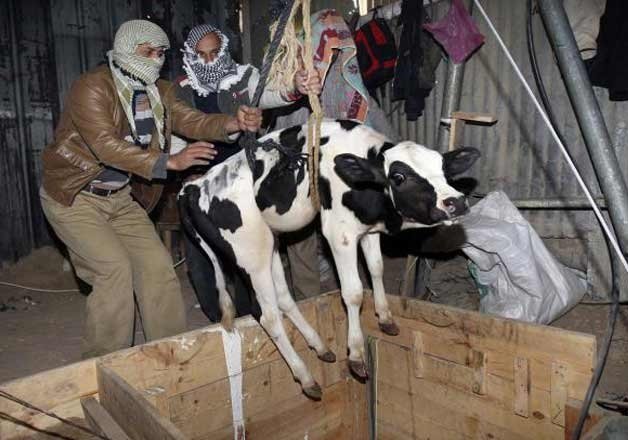
Millions of cows slaughtered in Bangladesh actually originate from India. Most of these cows are sourced by stealing them from some poor farmers of Indian villages in Rajasthan, Bihar, Haryana, Punjab or Odisha – whose livelihood depends upon these cattle.
Many instances of cattle being stolen are caught on CCTV cameras and some such videos can be watched here, here and here
Another market for such stolen cattle is illegal slaughterhouses within India. These are unlicensed abattoirs, not approved by the government, mostly set up under unhygienic conditions and do not follow any safety or hygiene standards for food processing.
Cows stolen from across the country are sold to these slaughterhouses at a premium who then sell their meat to make money. There are approximately 30,000 such illegal slaughterhouses across India.
As per a Hindustan Times report, in just 7 years period between 2009 to 2016, Rajasthan police registered over 3,000 cases of cow smuggling, arrested nearly 6,000 people for the crime and seized over 2,700 vehicles used for cattle smuggling. If there are “thousands” of such criminals in Rajasthan alone, then one can imagine the scale at the country level.
Hordes and hordes of cattle are stolen from poor farmers across the country every day, filled brutally in trucks, transported across the country to border areas in Assam and West Bengal and then smuggled to Bangladesh. Many cattle die during the transport itself and many die while being smuggled across the fence.
Like any other multi-billion dollars but illegal business, cattle smuggling is an organized crime syndicate, comprising of thousands of criminals who are armed, vicious and deadly. Anyone who obstructs the business anywhere along its supply chain is likely to be attacked and murdered.
While sourcing the cattle (stealing from poor farmers), if cattle owners try to stop the act, they are shot, stabbed or crushed under the vehicle and killed.
Then, while transporting the stolen cattle from villages to border areas, if they are stopped by police, they are also shot or rammed by trucks and killed.
The mobs of meat mafia are fearless and these criminals show no inhibitions in violently attacking law enforcement officers, media personnel or animal rights activists if they try to inspect illegal slaughterhouses or even report against them (India Today, Deccan Herald, Times of India, FirstPost)
Recently in UP, two temple priests reported ongoing illegal slaughters in their neighbourhood. The smugglers tied them to a cot, chopped off their tongues and then slit their throats to send a message to anyone who reports to police and this is a recurringtheme.
Under these circumstances, farmers in many villages across India have now formed groups to protect their cattle from theft. In order to protect themselves from armed gangs of smugglers, most such people act in organized groups called “gau-rakshaks” (protectors of cows).
So, does this write-up intend to justify mob violence in the name of cow protection? No, absolutely not.
Violence in response to violence will lead the society into anarchy. Such actions have no place in a civilized society. PM Modi has himself denounced it multiple times and, in many cases, “cow protectors” involved in mob violence have been sentenced to life in prison.
The intention of this write-up is to illustrate many dimensions of this issue that have not been fully analyzed or narrated at all. Indian mainstream media has mostly portrayed this as an issue linked to religion, which is not completely true.
In most cases, “cow protectors” confront people either when they are caught stealing the cattle or when they are seen transporting them. “Cow protectors” do not look for “Muslims” and start attacking them. The religion of the victim is incidental, and not the trigger for the event.
Also, in most cases, “cow-protectors” act as “police informers” and resort to handing the culprits to the police after catching them. But these do not get much media coverage.
Cases of uncontrolled mob fury where victims are killed are few and far between – but these are the ones which get highlighted. This presents a skewed picture of the issue instead of a holistic perspective.
Many elite Indian journalists in English language media have never stepped at any incident site or talked to people involved. Sitting in their ivory towers, they have simply passed the verdict that this is an “anti-Muslim” issue.
Indian journalist Barkha Dutt published an article in Washington Post on acts of violence by “Cow Terrorists” against Muslims. Atish Taseer painted Indian society negatively in NewYork times. Shekhar Gupta called India as Lynchistan. Another Indian journalist Sagarika Ghose has been maintaining a list of incidents on her Facebook page where “Muslims” have been attacked by a mob due to cattle related issues.
Number of lynching incidents in last 4 years according to Ms Sagarika’s list where the identity of victims was “Muslim” = 26
Unfortunately, nobody is maintaining any list of dead victims whose identities were –
Poor farmers trying to protect their cattle
Policemen performing their duty
BSF men protecting the borders
Law enforcement officers, animal activists and innocent citizens who reported such crimes
The above list, if created would contain thousands of names of people belonging to multiple religions.
Meanwhile, when a victim named Rakbar Khan died in one such incident in Rajasthan, the only aspect that got highlighted in most media coverage was his religious identity. Some other aspects of the incident that didn’t get enough attention were that –
he was transporting cows between 12 midnight and 1 am and not during the day
he had no papers about the ownership of animals
he already had one prior FIR against him for smuggling cows in 2014
In other words, he was most likely a repeat offender involved in cattle smuggling.
Unfortunately, violence due to cattle related issues has been painted as a religious issue due to political reasons and shows cow protectors only as fanatics looking to attack Muslims. In reality, it is a socio-economic issue where many such people are themselves in a struggle against an armed and dangerous mafia to protect –
their source of livelihood
their property
their children and their families
Government Actions and Status:
India’s BJP government since 2014 has started a crackdown on cattle smuggling. The government’s stress on completing the new fence along Bangladesh border by 2019 (about 2,800km is already complete) and tighter vigil by BSF armed with night-vision cameras and lasers have made smuggling tougher
About 5.32 lakh heads of cattle valued at about Rs. 350 crore have been seized since 2014
In 2017, “The Sunday Guardian” reported that Indian government efforts have brought a significant drop in cow smuggling along the border
With the effective elimination of cow smuggling, such confrontations between cow protectors and smugglers are expected to die down too
Possible Win-Win Solution:
Fencing and tighter vigil may bring down the scale of business but its lucrative potential may keep attracting cow smugglers. A better problem-solving approach is to address the root cause itself.
As per this CNN Report India is currently the world’s largest beef exporter with large quantities of beef (meat of water buffaloes) being exported to Vietnam, Egypt, Malaysia and Saudi Arabia.
India should explore flooding the Bangladesh market with low price Buffalo beef. Legal export of buffalo beef would make low price meat available in the local market which would kill the demand for expensive smuggled meat and eventually prevent cattle theft from Indian farmers. At the same time, generation of export revenue for India would be an added benefit considering that current illegal cow smuggling market is estimated at $1.5 billion annually.