Home Blog Page 7016

Congress supported Gujarat MLA Jignesh Mevani caught spreading Photoshopped image of PM Modi

A day after we had written about the fake Photoshopped image of PM Modi being circulated where he is shown wearing a skull cap when he went to attend an event by the Dawoodi Bohra community, Congress supported Gujarat MLA Jignesh Mevani was caught spreading the same image in an attempt to take a dig at PM Modi.

In a tweet, which is now deleted, Mevani tweeted the fake image with a skullcap on Modi with a caption, “Jinhe tha inkar kabhi topi se kisi daur mein, masjid ke andar nazar aaye woh sahab Indore mein.”

Jignesh Mevani tweet with Photoshopped image, now deleted

Mevani tried to take potshots at Modi who has till now politely declined to wear the Muslim skullcap has been accused of being ‘communal’. Mevani, former AAP and Dalit leader who was elected Vadgam MLA in Gujarat Assembly elections in 2017 with help of Congress shared a fake image on social media and said that Modi is now ‘wearing the topi’ (skull cap) which he once refused to, inside a mosque to insinuate Modi is doing the same keeping in mind the upcoming General Election.

The original picture as posted by PM Modi is below.


After being pointed out, Mevani quietly deleted the tweet and till the time this report is published has not apologised for spreading a fake image.

Amidst allegations of vote tampering, United-Left alliance wins JNU Students’ Union elections

0

The controversial elections to elect the office bearers of Jawaharlal Nehru University Students’ Union (JNUSU) have finally ended resulting in the left-unity candidates winning all the four posts, while ABVP has come second in all the four posts.


According to the reports, the United-Left alliance won the post of president, vice president, general secretary and joint secretary. N Sai Balaji has been elected as President after securing 2161 votes, Sarika Chaudhary won the post of Vice President with 2692 votes, Aejaz Ahmed Rather is the new General Secretary who secured the victory with 2423 votes, while Amutha Jayadeep got 2047 votes to get elected to the post of Joint Secretary by defeating the candidates of ABVP.

The JNUSU elections conducted on September 14th, were marked with huge controversy, as the left wing students union had allegedly resorted to violence against their rivals ABVP, who came close second against a Left-wing alliance, comprised of Students Federation of India (SFI), All India Students Federation (AISA), All India Student Federation (AISF), Democratic Students Federation (DSF) which was formed to fight the formidable right-wing student union.

We had earlier reported regarding the violence unleashed by Leftist goons against the students of JNU. It was alleged that the SFI and AISA, student wings of Communists Party of India (Marxist) and the Communist Party of India Liberation, respectively, were attempting vote counting fraud, as reportedly they were upset that they may lose out to ABVP.

This year elections saw the highest voter turnout in recent years, with nearly 68% students coming out to exercise their mandate. In comparison to last year, there has been a jump of nearly 10 per cent in voting.

Indian Middle Order conundrum: Will it finally get solved during the Asia Cup?

0

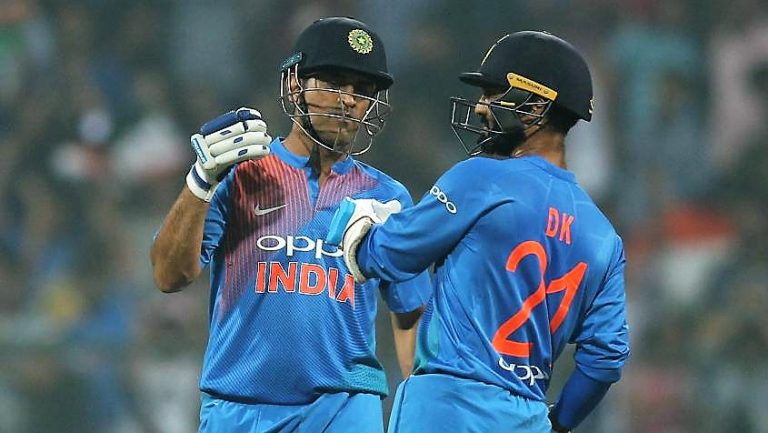
Rahane, Raina, Dhoni, Jadeja, that was the Indian middle order when they lost to Australia in the 2015 World Cup Semi-final. By the time 2017 Champions Trophy final came around, Raina and Rahane had been replaced by Yuvraj and Jadhav, and Jadeja had slipped to Number 8 to make way for Pandya at Number 7.

For Asia Cup 2018, Yuvraj and Jadeja are no longer in the ODI mix, and Pandey, Jadhav, Rayudu, Karthik and Rahul will try to grab the two spots in the middle order that haven’t been filled for a few years now. Through it all, MS Dhoni has been the one consistent feature of the Indian middle order, though there is plenty of debate about his position in the batting order, whether he should come up at 4 to guide the innings or stay back at 6 to provide a finishing touch.

India has been trying hard to find the right combination in the middle of the batting order during these past three years. Rahane, Raina, Jadhav, Pandey, Rayudu, Karthik, Rahul, Manoj Tiwary, Uthappa, Shreyas Iyer, Karun Nair, Gurkeerat Singh, all have been given a look during this time but the ODI batting has remained reliant on the top 3, Dhawan, Rohit and Kohli. Whenever one or two out of the top 3 score big, India end up with a huge total. However, if the opposition gets through the top 3 quickly, the rest of the batting often caves in quickly.

While Rahul is likely to slot in at 3 in Kohli’s absence and Dhoni is going to be there floating around the middle order, two slots remain open with Jadhav, Pandey, Rayudu and Karthik vying for those places.

Pandey has been in great form recently, finishing the recent quadrangular series for India B without being dismissed, hitting a century and two half centuries along the way and will consider himself desperately unlucky if he misses out on the playing XI.

Kedar Jadhav’s more than useful off spin provides an option that the other contenders don’t. Especially on batting tracks in the UAE, a captain will be very thankful to have an option to call upon if one of his main bowlers has an off day. He is also most likely to provide an explosive cameo if he comes in towards the end after a good start by the top 3 (His strike rate of 109 is the 2nd best in the Indian squad, behind Hardik Pandya).

Ambati Rayudu has been in and out of the Indian squad for a long time now and has failed to nail down a spot despite averaging 50 in the ODI format. An outstanding season in the IPL has pushed him into the national reckoning once more but then he failed the Yo-Yo test to miss out on the ODI series against England. Now he is back after clearing the test but will have to wait and see if he gets in the XI.

Dinesh Karthik’s last over heroics in the Nidahas Trophy final seems like ages ago, the wicketkeeper batsman had a nightmare in the Test series against England and will be looking to bounce back in this tournament. Having been around for nearly 15 years, he has only 80 ODI appearances to show for it but will be hoping for a more consistent run in the side on the back of his good performances in the shorter formats recently.

Whichever combination the Indian captain and coach decide in the end, these batsmen will know that time is running out for them to impress ahead of the World Cup next summer.

Jailed Bhim Army chief arrested last year under NSA in Saharanpur violence case released early

0

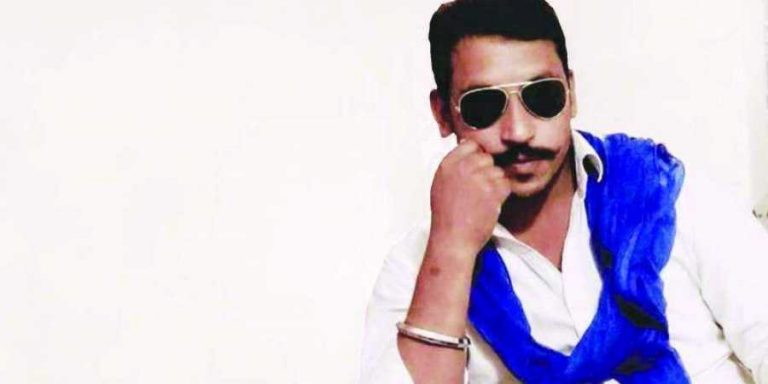
Bhim Army chief, Chandrashekhar alias Ravan, who was jailed under the (National Security Act) NSA charges in connection with the 2017 Saharanpur caste violence case, was released from Saharanpur jail early on Friday, hours after the Uttar Pradesh government ordered his early release.

Though it was reported earlier that the scheduled day of his release was later on 1st November this year, the government apparently released the 31-year-old chief two months before schedule on a request from his mother said the police.

Soon after his release at 2.24 a.m on Friday, which was met with loud chants of ‘Jai Bhim’ by hundreds of gathered supporters outside the prison, the Dalit leader lambasted the government saying that he was confident the state government would frame charges against him again within 10 days of his release. The leader vowed to “teach a lesson to the goondas of BJP” and topple its government in 2019 for sending innocent Dalits to jail.

Chandrashekhar told news agency ANI, “The government is scared that they are going to be rebuked by the Supreme Court, that they ordered an early release to save themselves”.

The shadowy leader, Chandrashekhar, the founder of the Bhim Army which was set up around three years ago in Saharanpur and has gained considerable popularity among members of the Scheduled Castes was first arrested after a month-long hunt, for his alleged involvement in the Saharanpur riots on 8th June 2017. On 2nd November 2017, he was granted bail by the Allahabad High Court. However, a day later, he was arrested again under the provisions of the NSA and lodged in jail.

He was tracked down last year through his traced calls by the police in Dalhousie, a hill resort in Himachal Pradesh. The police had declared a reward of Rs. 12,000 for any information on him.

Saharanpur violence case:

On 5th May 2017, a Dalit group had objected to a procession by the Thakurs in Shabbirpur to mark the birth anniversary of Rajput King Maharana Pratap, triggering violence, in which one person was killed and over 15 injured. Dalits had said that this denial was in retaliation to the Thakurs preventing them from installing a statue of BR Ambedkar in the premises of the Ravidas temple in the village previously.

Members of the Bhim Army had on 9th May last year allegedly torched a bus and set a number of two-wheelers afire after the administration had turned down their request to hold a ‘mahapanchayat’ in Gandhi park to demand compensation for those affected in the 5th May inter-caste clash.

Earlier in May this year, the Meerut police had arrested six Dalit youths, alleging that they were attempting to create similar caste violence by murdering an MLA of an upper caste to avenge the death of Sachin Walia, brother of Bhim Army’s Saharanpur district president, who allegedly died in the accidental firing. The Police had claimed that if the arrested Dalits would have succeeded in killing the MLA, caste-based violence, similar to the ‘Saharanpur violence case 2017’ could’ve taken place in Saharanpur, Muzaffarnagar, Shamli, Meerut and Noida.

World Hindu Congress 2018: Hindu awakening gets institutionalised

After attending the first World Hindu Conference in 2014, Hindus all over the world were looking forward to the World Hindu Congress, 2018 (WHC) with a lot of expectations. And, the event, which took place in Chicago, USA on September 7-8-9, was a mega success with 2,500 Hindu delegates from 60 countries across the globe attending it.

Seven different sections were covered under media, organisation, youth, education, women, economics and politics; and each saw exemplary speakers speaking on their work in the respective fields and reaching out to fellow Hindus to align and grow with them.

The sessions saw Shefali Vaidya devising new acronyms with every sentence spoken, Makarand Paranjape’s hilarious one-liners, the young VP of Surinam charming the crowd, Maharshi like Sri Vamdev Shastri speaking on the need to re-elect Modi in 2019 and Rajiv Malhotra reaching out to young Hindus for aligning with him for scholarly work.

Whether it was the RSS pracharaks from all over Bharat and North America roaming about nonchalantly and talking in Hindi with their sweet Marathi and South Indian accents, or a Brazilian Sadhu ParamAdvaita ji incessantly singing praises for Sanatana Dharma, or the African delegation from Ghana wielding Tilaks and proudly displaying Dharma on themselves, the WHC Chicago was a sort of a modern Kumbh Mela of Hindus from around the world.

Here are some of the takeaways and suggestions from the delegates which are worthy of documenting:

  1. WHC has become a platform of humongous proportions for global Hindus to connect with each other. That collective Hindu consciousness is the only missing link between Hindus and a global resurgence of Hinduism. Hindus have done some brilliant work as individuals and have achieved a lot. But if these trickles of Hindu power were to unite with each other with clear-cut agenda and purpose, within no time Hinduism will become a Tsunami to arrive on the global stage. WHC definitely opened those gates for Hindus to coalesce.
  2. Some brilliant academic work being done by Hindu scholars still evades the ordinary Hindus which leads to our defensive posture in the clash of narratives with Leftist Chrislamic groups. WHC educated fellow Hindus to the academic works of brilliant Hindus like Rajiv Malhotra, Koenrad Elst, and David Frawley (Vamdev Shastri) to be understood and carried forward in an organised and emphatic manner.
RSS chief at World Hindu Congress
Mohan Bhagwat, Sarsanghchalak of the Rashtriya Swayamsevak Sangh, also attended the event.
  1. The presence of RSS chief Mohan Bhagwat, Vice President of Bharat Venkaiah Naidu, US Senators, and other successful personalities from the global Hindu leadership infused huge confidence in the delegates that Hindus are no longer rudderless ‘Pagans‘ but the true inheritors of the great Sanatana Dharma. Symbols have a great importance in any civilisational narrative, and we had enough of them at the WHC.
  2. WHC saw an amazing confluence of two very distinct and far away branches of Hindus happening right in front of our eyes: The raw, rustic, rural Hindu ground workers were seen narrating their little success stories from Bharat to rich, suave, urban Hindus in multiple corners of the venue.
    One Prabhakar (name changed for safety purpose) told us how he quit his plush job in the US and has started reclaiming temples in rural Andhra. How he painstakingly goes from village to village talking to villagers about the beauty of Sanatana Dharma. One Sadananda (name changed) who is also known as Church Sadananda for closing down 300 illegal churches in Andhra Pradesh talked about how he used the local villagers and the law of the land to do that. And the rich urban Hindus were listening with total awe and admiration about the groundwork of these silent Hindu warriors.
    If Hinduism is to be seen as a body, the WHC provided a synthesis of muscle and mind to erect a robust and well functioning body of Hinduism. Anyone who is familiar with the issues Hindus are facing in the world knows how critical it is for the rich, urban Hindus to open their purses and hearts to these ground workers who are fighting conversion mafias with bare hands.

    Vice President at World Hindu Congress
    Vice President Venkaiah Naidu with Swami Vigyaanaananda at the event. The Vice President addressed the closing ceremony.

    Simone Weil, the great French thinker once said, “Who were the fools to tell you that brute force can not defeat an idea! And once an idea is dead, it is nothing but a corpse.“ Sanatana Dharma is a beautiful but fragile idea being carried forward on the bare chests of warriors like Sadananda and Prabhakar. If rich and connected Hindus help these ground workers, the brute force of Chrislamics can be countered very effectively and the idea of Sanatana Dharma can find firm roots in human consciousness.

  3. A very heartening sign at the WHC was the extremely enthusiastic participation of young Hindus and the ‘Matri Shakti‘, the women power. Energetic young boys and girls were engaging in heated debates on the issues and strategies to save Dharma. Nothing is more gratifying than to witness the next generation of Dharmic leaders taking shape right in front of our eyes.
  4. Another interesting aspect was the widespread use and understanding of Hindi by almost all national international delegates. Of course, all languages have their innate beauty of rustic connection to the land one belongs to, along with the strength of nourishment provided by vernacular literature, but to have a common language as Hindi to connect with each other as Hindus is a very enthusing development on a global scale.
  5. It was a heartwarming sight to see various offshoots of Sanatana Dharma like Sikhism, Jainism and Buddhism standing shoulder to shoulder with each other. That the Indic Dharmas had more in common with each other than the differences was underlined by the robust participation of delegations from all sister faiths of Hinduism.
  6. Finally, the Dharmic narrative in the ongoing clash of civilisations is now beginning to shape up. It is crucial in any thought struggle on a global scale to have a narrative to spell out the need and tools of resistance to Adharmic narratives. The Collective Hindu consciousness has arrived finally and it is a robust, compassionate and strong force that will change the course of mankind from darkness to light, from untruth to truth, from death to life.

Amidst the incessant chaos that has engulfed this little world of ours, the Hindu understanding of life is finally being articulated by brilliant and committed minds to spread a warm, friendly and a happy spiritual understanding of forces of life that can de-stress the world and make entire mankind move on the trajectory of evolution in a peaceful non-confrontational manner.

World Hindu Congress
The event also saw cultural performances

There is only one suggestion. A gathering of the scale and class of WHC needs to spell out clear-cut agendas for Hindus living globally. This was initially suggested by Shefali Vaidya but since more and more delegates agreed to this idea, this is the only suggestion that needs to be offered to leaders of Hindu Samaaj.

Most of the Hindus in this world want to help a global cause that aligns them with each other. Unless forums like WHC are used to spell out that global agenda for Hindus, the real fruit of events like WHC will not be realised for Hinduism. Even if half a day of session needs to be devoted to this, it will be a worthy exercise because it will give tangible goals to the global Hindus, raise awareness of the global community on issues faced by Hindus and could give us a chance to assess our progress on the front when we meet again in Thailand in 2022 .

What better forum than WHC than to talk about Hindus rising to save battered Hindus of Bangladesh and Pakistan? When will a Hindu agenda be spelt out that gives shelter to poor and helpless Hindus globally and empowers Hindus who are working for fellow Hindus? Isn’t it time that Hindus reach out to each other and spread the fire of Dharma globally and place Sanatana Dharma to the rightful place in the league of religions?

If not now, then when?
If not us, then who?
If not the WHC, then how?

The Hindu leadership has to ponder upon this and respond or a lot of energy and activity at WHC will be wasted and a Dharmic confluence is reduced to a PR exercise.

As a footnote before concluding, one wonders why didn’t Narendra Modi send a recorded video of his feeling to the WHC? If it was an error of the staff that manages his schedule, it was a grave one which could have been avoided had due diligence been attempted. If the PM chose to send a written message, the Leftists have managed to tame an uncompromising Hindu leader, sadly.

(Dr. Omendra Ratnu is the founder of Nimittekam, an organisation working for rights and rehabilitation of Pakistani Hindus. He attended the World Hindu Congress in Chicago earlier this month.)

Dalai Lama admits of knowing about sex abuse by Buddhist teachers since the 1990s

0

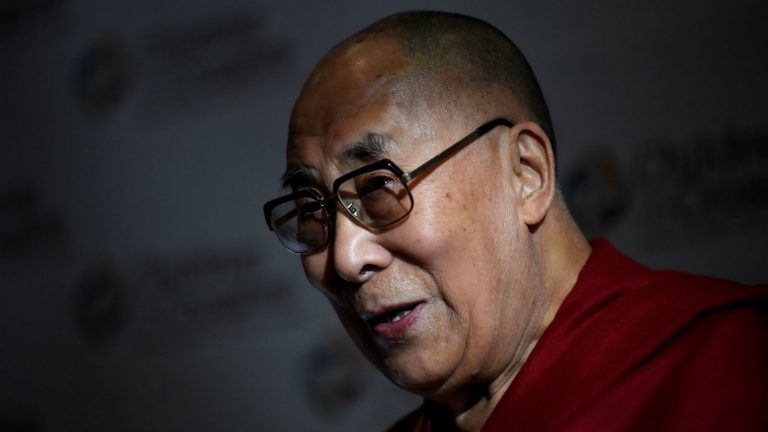
Dalai Lama, the Tibetian spiritual leader admired by millions of Buddhists said on Saturday that he has known about sexual abuse by Buddhist teachers since 1990s and that such allegations are “nothing new”.

Dalai Lama made the admission during his four-day visit to the Netherlands, where he was responding to a petition by the victims asking him to meet them during his trip to Europe.

He met these victims of sexual abuse allegedly committed by the Buddhist teachers on Friday during the four-day stay in the Netherlands.

Responding to what the victims mentioned in their petition that, “We found refuge in Buddhism with an open mind and heart, until we were raped in its name,” Dalai Lama said, “I already did know these things, nothing new, Twenty-five years ago someone mentioned about a problem of sexual allegations” at a conference for western Buddhist teachers in Dharamshala in Himachal Pradesh he added.

People who commit sexual abuse “don’t care about the Buddha’s teaching. So now that everything has been made public, people may concern about their shame,” he furthered.

Tseten Samdup Chhoekyapa, a representative of the Tibetian spiritual leader in Europe said on Friday that Dalai Lama “has consistently denounced such irresponsible and unethical behaviour”.

Tibetian spiritual leaders are supposed to meet in Dharamshala in November this year, the place where Dalai Lama lives in exile.

While responding on Dutch public television NOS late Saturday, he said, “At that time they should talk about it,” referring to the meeting at Dharamshala due in November. “I think the religious leaders should pay more attention,” he added.

Last month the Dalai Lama was caught in a controversy with his suggestion that the 1947 Partition could’ve been avoided had Pt Jawaharlal Nehru accepted Mahatma Gandhi’s offer to Make Mohammad Ali Jinnah as Prime Minister, which he later retracted and apologised for.

Poll strategist Prashant Kishor joins Nitish Kumar’s JDU, may contest 2019 Lok Sabha election from Bihar

0

Poll strategist Prashant Kishor has today joined Nitish Kumar’s Janata Dal and is expected to contest 2019 Lok Sabha elections from Bihar. Kishor is credited with delivering key election win for BJP in 2014 and also for Nitish Kumar in the 2015 Bihar elections.

According to the reports, Prasant Kishor was likely to join the party today at a state executive meet in Patna which was being held to discuss the seat-sharing formula with NDA, for upcoming Lok Sabha elections. Prashant Kishor is also likely to get a ticket to contest in the next Lok Sabha election.

Prashant Kishor shot to fame in 2014, when Kishor’s Citizens for Accountable Governance (CAG) helped BJP with the historic 2014 elections. The innovative ‘Chai pe Charcha’, which became an extremely effective campaigning instrument for BJP was the idea of Kishor. He later worked with the Mahagathbandan in Bihar and is credited to have brought all the opposition parties together in Bihar to script a massive victory of JD(U), RJD and Congress combine in 2015.

Interestingly, Kishor’s election consultancy I-PAC has been working for YSR Congress party’s YS Jaganmohan Reddy from the last two years. Recently, he had hinted of leaving campaignings and had said regarding his interests to “work with the grassroots”. “In 2019, you would not see Prashant Kishore campaigning for anyone in the manner and form in which I have been campaigning in last 4-5 years”, Kishor had said in an interaction with students recently.

Increased vigilance and use of technology has helped BSF block Rohingya infiltration: BSF DG KK Sharma

BSF DG KK Sharma yesterday told the reporters that the Border Security Force (BSF) which guards the 4100 km long India-Bangladesh border has successfully managed to block the illegal migration of Rohingya Muslims from Bangladesh with the help of technology and increased vigilance. He said about eight to ten lakh Rohingyas have fled Myanmar and entered Bangladesh and the BSF has successfully managed to stop their infiltration.

He further added that the Indian government has been providing necessary support to the Bangladesh government while international pressure is being put on Myanmar government to take back the Rohingya immigrants. Speaking about the steps taken by the BSF to contain the influx of illegal immigrants, he said that the infiltration from Bangladesh is a trickle movement and hence they have increased patrolling by boats in river areas, started using flood lights to detect movements as well as put up barbed wires to deter movement on the land. He said that while Rohingyas immigrants tried to infiltrate, the BSF has successfully managed to block them.

Earlier last week, Sharma had said that the West Bengal government has shown a friendly stand towards the illegal Rohingya migrants and even shown willingness to accept them.

Earlier we had reported how Rohingya terrorists have been crossing border pretending to be refugees. The central government, too, had issued letters to state governments urging them to review the matter of illegal immigrants and prevent their entry in India. The Home Ministry, too, has been taking measures to track the illegal Rohingya immigrants and said that they will not be allowed to stay in India.

CBI issues statement rubbishing Rahul Gandhi’s allegations regarding officer aiding Mallya’s escape

0

In an unprecedented move, Central Bureau of Investigation (CBI) has issued a statement responding to Congress President Rahul Gandhi’s allegation regarding the escape of Vijay Mallya from the country. On Friday, Rahul Gandhi had tweeted that CBI joint director A K Sharma had weakened the lookout notice for Vijay Mallya, which helped in fleeing the country.  He also alleged that Sharma is “Blue-eyed-boy” of PM Modi and that this same officer was also in charge of Nirav Modi and Mehul Choksi’s escape plans.


Referring to media reports on the allegation by Congress President, the agency’s spokesperson said that the allegations are baseless. The statement said, “Some baseless allegations have been made by certain individuals against a senior officer of CBI. As has been stated a number of times earlier, the decision to change the LOC against Vijay Mallya was taken because at the time there were not sufficient grounds for CBI to detain and arrest him”.

The CBI has said that the decision to change the lookout notice was taken at the appropriate level of the agency according to the standard process, and it was not done by any individual officer. It said that the decision to change the notice against Vijay Mallya was taken because at that time there was not sufficient ground for CBI to detail and arrest him.

Regarding Nirav Modi and Mehul Choksi, the agency said that CBI had received the complaint about them from Punjab National Bank almost a month after they had left the country. Therefore, the question of any CBI officer having any hand in their fleeing the country does not arise. It adds that prompt action was taken by CBI in the case immediately after the complaint was received from the bank.

Vijay Mallya fled the country in March 2016 and currently is in London, he is accused in several cases like money laundering, wilful default, criminal conspiracy, contempt of court etc. The Indian government has appealed for his extradition and a London court is hearing the appeal which has reached its final stage.

Nirav Modi is accused of criminal conspiracy, criminal breach of trust, cheating and dishonesty including delivery of property, corruption, and money laundering; after he was found involved in a Letters of Undertaking (LoU) fraud in which he had defrauded PNB to the tune of ₹11000 crore.

Maoism is about genocide of Tribals, the ‘jobless intellectuals’ are hypocrites: Surrendered Naxal Pahad Singh

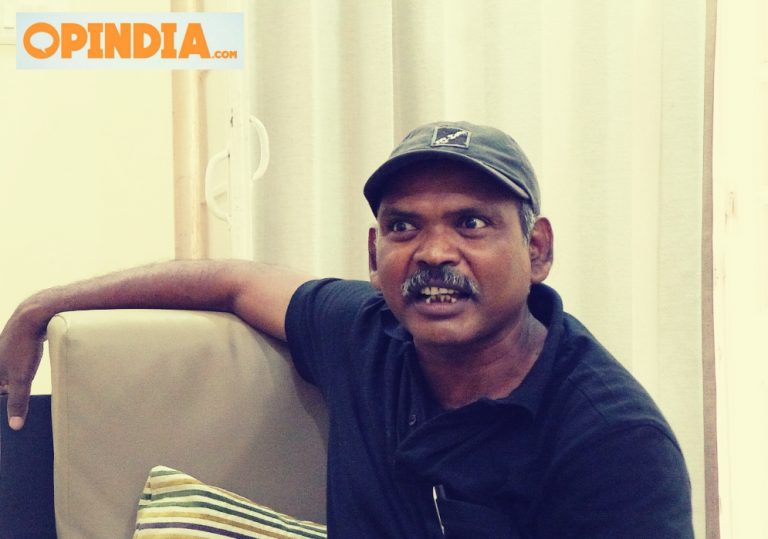
OpIndia’s conducted an interview of surrendered Naxal Pahad Singh who had been an armed Naxal for 18 years. He had surrendered to the Chattisgarh police on 24th August and is said to be a high ranking Naxal. This surrender has proved to be a massive win for the security forces.

In OpIndia’s interview, Pahad Singh had made startling revelations. We had earlier reported that during the course of our interview, Pahad Singh had said that he had met Arun Ferreira in a high ranking Naxal meeting where Singh was made the secretary of two areas. He had also alleged that senior Central Committee members were present at this meet and that Arun Ferreira is actually a member of the “Rajya Committee” of CPI (Maoist). It is noteworthy that at this point in time, the interviewer had not named any of the ‘activists’ arrested by the police.

Pahad Singh had also asserted that he had heard the names of the ‘activists’ like Sudha Bhardwaj, Varavara Rao and Gautam Navlakha from high ranking Central Committee members on various occasions. He spoke about how there is no difference between the unarmed ideologues and gun toting Naxals.

Amidst all the revelations, Pahad Singh, as a man must be understood. It is imperative, that his journey from being a hardworking Tribal, to being a gun-toting high ranking Naxal and finally, his surrender is understood. Therein lies the key to defeating a violent ideology that works against the sovereignty of the nation and even the interest of the very adivasis they claim to fight for.

His early life

When the interview started, Pahad Singh appeared to be a soft-spoken and coy man who, after spending 18 years in the thick of forests, had lost connection with the outside world. However, once probed about the ideology, it didn’t take Singh time to open up. His monologue, his answers, almost an outpour of disgust. What made this deeply ironical was that Pahad Singh was no ordinary man. He was a hardened Naxal, albeit surrendered, who had seen his ‘comrades’ fall and had taken the lives of many, in his time. A hardened criminal who left the ideology that made him so. His journey holds the key to understand how Adivasis are brainwashed into joining Naxalism, how their misery is exploited with dreams of revolution, how they are made to feel like the mirror images of Bhagat Singh, and how, they are mercilessly betrayed.

Pahad Singh sat straight (and looked rather uncomfortable) when spoke about his early life in Maharashtra and Chhattisgarh. His voice picks up pace when he talks about his father who was a school teacher and wrote poems about the lives and struggles of Tribals. He said he was partially disabled as a child and was ridiculed by everyone for his limited physical abilities. He strived to be athletic and continued to be physically active. Eventually, he overcame his physical limitations.

He was inspired by patriotic poems written on Bhagat Singh, Rajguru and other freedom fighters. He completed his matriculation in 1987 and passed higher secondary examinations in 1989. He further added that due to poor financial conditions and his father’s deteriorating health, he used to work in the fields and go for collecting tendu leaves like his fellow villagers.

His first encounter with the Naxals and his subsequent joining

It was in the jungles while collecting tendu leaves that he had first seen Naxals. He recalls that the Naxals used to approach the Tribals and claim that they are fighting for Tribal rights. Adivasi Asmita. The Naxals used to tell the Tribals that the government is corrupt and unable to provide employment to Tribals hence they should join them to fight for their dignity.

Pahad Singh proudly recollects his early days stating he was an ambitious young man who wanted to achieve something in life. He says that when he completed his studies, the first job he had applied for was in CRPF. He tried subsequently for jobs in police forces and school teachership positions. He recollects that even after being selected and having his name displayed in a notice board among the successful candidates for a teaching position, he was denied a job because corruption and petty politics had favoured those who could afford to give bribes.

Disappointed after repeated failed attempts to secure a job, Pahad Singh says he started to see the truth in what the Naxals were claiming. He adds that despite him being an Adivasi and the government announcing various schemes and reservations for Adivasis over jobs and social welfare programs, the benefits still eluded the deserving Tribals because of corruption and neglect.

Pahad Singh recalls that it took almost decade for him to finally join the Naxals. He states that he believes in the rights and dignity of the Tribals and for the world to maintain its ecological and cultural balance, a thriving Tribal population is extremely necessary because it is the Tribals who protect forests and preserve the nature.

The ideological shift after joining Naxalism

He describes his first shock after joining the Naxal cadre as witnessing the ideological shift. He recalls that while the Naxals quote and talk about the ideas shared by freedom fighters like Bhagat Singh and Rajguru while trying to lure bright young people, once a person enters their ranks, it becomes all about Carl Marx, Mao, Stalin and Lenin. Being an educated and inquisitive person, he adds that he took an interest and tried to learn all about the ideologies of these leaders too.

The interviewer then asks what he learnt about Mao’s ideology, in all the years of being associated with the Maoists. Pahad Singh, emphatically replies that the strategy planned by Maoists is to start a guerrilla war from the forests of Gondwanaland and spread it all over India. He adds that while the Naxals pontificate about Tribal rights and dignity, their actual plan calls for war and bloodshed where the very Tribals will be the worst affected victims. He asserts that the ‘jobless intellectuals’ or ‘nithalla buddhijeevi’ as he claims the Naxal strategists are actually working to wipe out the Tribal population for the sake of their political goals. He further adds that in all these years of Naxalism and Maoist insurgency, the only thing the ideology has achieved is a genocide of innocent Tribals.

In a thought-provoking criticism of the Maoist ideology, Pahad Singh claims that it is only ironic that the Maoists claim to care for India’s indigenous Tribal people but they enforce an idea that was conceived and planned in China. Had the Naxals bothered about protecting the culture and rights of Tribals of India, they would have tried to implement the ideas of Chanakya, that were designed to integrate every village and rural settlement into receiving fair governance and sustainable growth.

Pahad Singh was asked what he thinks about the contradiction displayed by the ‘jobless intellectuals’ as they claim on one hand that Tribals are being suppressed by Brahminical impositions by the government and on the other hand they use Tribals themselves to labour and serve them while they dictate rules. His reply was that there is a huge difference between the words and deeds of the Naxal leaders. They preach about Tribals rights and powers while being completely ignorant about the basic structures and needs of the Tribal population.

Upon being asked about who were the people who dictate and rule over the Tribals sitting in ‘Chaar Manzil’ (A hill with bolsters where the Central Committee members or the Naxal ideologues sit), he replied that there were hypocrites who talk tall on Tribal rights and justice. They had power, they had weapons. The Tribals they recruit have no idea about the realities of the world, many of them are the kind of innocent souls who had never seen a train in their lives, such people are exploited for their service and often their lives so the ‘jobless intellectuals’ can run their agenda and enjoy comfortable lives in cities. He asserted that the Tribals don’t even know who the head of the village is, forget understanding what Mao’s ideology was. They trust whoever convinces them in the name of ‘Jal, Jungle, Zameen’ (water, forest, land). He adds that while the rest of the world has been progressing with science and development how can a failed ideology uplift the Tribals. It is worthy to note here, that Pahad Singh himself had seen the city perhaps for the first time in 18 long years.

Upon being asked how exactly the ‘jobless intellectuals’ exploit the Tribals and earn money, Pahad Singh replies that the Tribal areas are full of natural resources and that is the reason why Naxal leaders strive to keep control over the forest areas. They demand a share from contractors and businessmen for every natural product and mineral obtained from the forests. Crores of rupees are accumulated and none of it goes to the Tribals or the lower cadre Naxals. All the money goes to the higher committee. He reveals that the lower cadre Naxals get neither salaries nor benefits. Their families are told that the service to the Maoist cause should be selfless and dedicated. He further adds that the top leaders and urban Naxals often maintain another face for the outside world so the government and media do not get to know of their activities in the Tribal areas.

This portion of the interview can be viewed here:

[youtube https://www.youtube.com/watch?v=4RYH9SLcJM4]