Home Blog Page 7033

Today, an ‘intolerant’ India emancipated the tolerant

0

377 has been read down. The victory though impermanent is one more nail in the “Growing intolerance” canard being peddled by the left. A fascist government run by “Muslim-lynching, cow-loving, homo-bashing bigots” as the narrative goes, basically decided to fight back its core Islamo-homophobic voters and do what a previous progressive government (full of “Muslim-homo-loving, bastions of tolerance and free speech”) had not done – decide to not oppose decriminalisation. Indeed if one were to go by the media narrative that the BJP is the distillate of all regressive forces in India today, the very act of not opposing decriminalisation would count as the single most progressive and courageous stand taken on a social issue in modern history since Lyndon Johnson ended segregation.

Snark aside it is time we examined the extreme fallacies that have plagued this case. The Supreme Court in 70 years has never stood up when it counts, justifying and normalising the very worst abuses of power including insulating itself from accountability and legalising the emergency. The SC has gone with the mood of the day, which was in favour of legalising homosexuality – be it the lack of opposition from the government, to the associations of mental health professionals most of whom have come out in favour of decriminalisation to near complete public apathy. In spite of this, it required a 493-page infantile ramble – that says more about the judges’ literary preferences that it does any legal reasoning – to justify what could have been said in two paragraphs. Issues of judicial pendency arising from every judgement turning in a 493-page senile rant aside, there are some egregious excesses in this judgement. The first of this is the rather curious understanding that the criminalisation of gay sex was based on “majoritarianism”.

Normally the difference between conservatives and progressives has been, that progressive try to legislate social change and conservatives want legal changes to keep step with social change. One fallacy that is used against conservatives in this argument is that America would have never gotten rid of slavery had it not been for a “progressive” Abraham Lincoln. Like most lefty arguments this is one more socialist half-truth and a dangerous one at that.

The fact remains it was an industrial north, that had no need for slave labour, and indeed where the use of slaves would have led to a loss of quality control (quality control being dependent on human capital investment and incentivisation) that forced it down the throat of the south. What did it lead to? emancipation? No – far from it the gains were illusory at best, lasting the better part of 3 to 4 years, after which an economically devastated south, that took close to 150 years to recover (given the failure of reconstruction) doubled down on repression and segregation. Definitely better than slavery, but still living hell, with none of the attached stigmas of slavery. In short as much as the supreme court would like to portray itself as a progressive champion, in this episode it in fact is the biggest social conservative, having come last to the party – save the occasional rabid mullah, sadhu or padre, and passed a judgement secure in the faith that it would have social and press backing and governmental and public indifference.

If anything this judgement also reflects how far divorced the supreme court is from the reality of an India that has always been accepting of gender fluidity and sexuality in practice. This brings the rather problematic issue we have of course by their fundamental nature of accepting the written over practice and verbal, being significantly at variance with a large customary-verbal culture. Essentially then from a supreme court perspective: Gender binary has been written about, therefore it must be true. Indian tolerance of gender fluidity and sexuality is not written but in practice, therefore it cannot be true.

Let us, for example, take this rather charming example on DailyO that posits a persecution narrative of the gay community in India. the methodology used to prove the persecution narrative is no different from the methodology used by Christian fundamentalists to prove that homosexuals tend to be child abusers. Obviously the author is clueless to the irony, and what’s more, expects Nazi-like disciple from the gay community in supporting any course of action – dissent according to him being “gaslighting”. Yet from a judicial point of view it would be acceptable (despite the danger that the same methodology would be used to condemn gay men as child molesters) to take these studies into account, as the reverse – the acceptance of homosexuality is impossible to prove statistically.

What needs to be acknowledged is however that what has been achieved today, has not been because of the LGBT campaign, the supreme court, but rather the fundamentally liberal nature of the Indian People expressed through the organs of the Indian state, restraining the government from opposing and stiffening the supreme courts notoriously weak spine.  What we should, however, accept that the momentous reading down of section 377 is by no means permanent. Should social mores change, the judgement too is prone to being revisited through legislation that overrides the judgement, much like the Shah Bano case. The only guarantee a community has is to write these protections against discrimination based on sexual orientation and recognising gender fluidity in the constitution. Given that this is India, those will eventually happen, but like all things in India, it takes time and patience, not the grandstanding of make-believe heroes.

Telangana Cabinet dissolves State Assembly, state to go in for early polls

0

Following a cabinet meeting, Telangana Chief Minister KC Rao today met the Telangana Governor and informed that the Cabinet has decided to dissolve the state assembly, thereby paving way for early polls in the state.


The state cabinet met in Hyderabad this afternoon to take a decision on dissolving the Assembly, the term of which was ending in May next year. At a massive show of strength rally held on Sunday, the Telangana Rashtra Samiti (TRS) chief KC Rao had presented the report card of his government’s performance in the last four and a half years.

Meanwhile, the Congress is reportedly ready to approach the Election Commission to request postponing the assembly elections till a revised voters list is published. Senior Congress leader M Shashidhar Reddy had said that a request would be put to not club the Telangana elections with the elections in four state assemblies, Rajasthan, Madhya Pradesh, Chhattisgarh and Mizoram which are scheduled to be held before the 2019 General Elections. If the requests are not met, Reddy even suggested that they would take the legal route and move the court.

Telangana, after being separated from Andhra Pradesh, held its first state assembly elections in May 2014 where TRS came to power winning 63 out of 119 seats.

Telangana Governor ESL Narasimhan has approved the dissolution of the assembly and asked Rao to continue as caretaker Telangana chief minister till the new government is formed.

Yogi Adityanath government to invoke NSA against people who leak examination papers

The Chief Minister of Uttar Pradesh Yogi Adityanath has decided to take stringent steps to end the menace of examination malpractices in the State. He has directed investigating authorities to invoke the National Security Act (NSA) against the people who leak question papers during examinations.

Taking note against the frequent disruptions during the exam held in the Uttar Pradesh, Chief Minister Yogi Adityanath said, “The exams should be transparent and corruption-free. The government will not tolerate those trying to play with the future of the youths”.

Yogi Adityanath said that the offenders and other agencies will be booked under the rigorous National Security Act (NSA) if any discrepancies are found in the process. The Chief Minister also warned the agencies will be blacklisted and legal action will be initiated against them.

The NSA allows preventive detention for months if the authorities are satisfied that the person is a threat to national security or law and order.

In recent years, Uttar Pradesh has been infamous for severe malpractices prevailing during the conduct of competitive examinations in the State. However, the Yogi government seems to be determined to combat this menace and end these malpractices once for all.

The Akhilesh Yadav-led Samajwadi Party government was accused of being soft to the organised cheating rackets in schools. Shockingly, Yadav had said that “Everybody does a little bit of cheating, a little bit of it is not cheating”, which had then caused an uproar in the country.

Section 377 verdict: Homosexuality is no longer a crime in India

0

The Supreme Court of India has today in its historic verdict decriminalised homosexuality under section 377, making gay sex legal. According to reports, a five-member bench, delivering the first of its four judgements, announced that consensual sexual relationships between adults of the same gender in private do not fall foul of section 377 of IPC.


CJI Deepak Mishra and Justice Khanwaliker, reading the verdict, reportedly stated that discrimination on the basis of sexual orientation is a violation of freedom of speech and expression. Continuing the verdict, CJI Mishra and Justice Khanwaliker pronounced that bestiality, will still remain a punishable offence and the specific part of section 377, which makes consensual sexual acts in private between two adults, homosexual or heterosexual, is unconstitutional.

A Supreme Court bench comprising of Justices Rohinton Nariman, Indu Malhotra, AM Khanwaliker, DY Chandrachud and CJI Deepak Mishra had begun the hearing for a set of petitions filed to challenge the criminalisation of homosexual relationships under section 377 of the Indian Penal Code in the month of July.

Earlier in 2009, the Delhi High Court had passed a 105-page judgement over the issue stating that criminalisation of gay sex as per section 377, effectively denies a gay person the status of ‘personhood’ which is a violation of the notion of life under section 21 of the Indian constitution.

However, in 2012, the SC had reversed the order of the Delhi HC and had restored the section 377 of the IPC. The SC had maintained that only a minuscule fraction of the Indian population represent the LGBT community and in over 150 years of its existence, less than 200 people have been prosecuted under the section 377.

Another milestone towards the granting of rights to the LGBT community had come when in 2017, the SC decided to hold the right to privacy as a fundamental right. The SC had mentioned that the rights to privacy and sexual orientation is the core of the fundamental rights protected under section 14,15 and 21 of the Indian Constitution.

During the initial hearings in July, Additional Solicitor General Tushar Mehta, appearing for the government of India had stated that the Indian government will not contest the challenge to section 377 and will leave the judgement to the SC’s wisdom, so far as the SC limits the constitutional validity of section 377 to ‘consensual acts of adults in private’.

An NGO named Naaz foundation is one of the main petitioners in the case. Some Christian organisations and the All Indian Muslim Personal Law Board have opposed the petitions and have submitted that they want section 377 to stay.

The Supreme Court verdict is being celebrated widely among the members of LGBTQ community as well as the general public who have long opposed the archaic law.

Your petrol price is high because UPA left 2 lakh crore of oil debt for Modi

Fuel prices are hurting. Petrol prices have broken Rs 85/ litre in several cities. Is this supposed to be Achche Din?

Of course not.

Well, how could it be? We all like to splurge and then we hate it when the bill comes due. Except, in this case, it is not us who splurged, it was our overlords in the UPA government who did and left us stuck with the bill.

Well, why won’t the government just cut the fuel prices? If you are asking this, you probably do not know the kind of deep well that UPA dug for us before they left office.

Untitled.png

When global oil prices rose in 2012, 2013 and 2014, the UPA’s reputation, along with India’s economy, was already collapsing. If public anger had been stoked any further by surging oil prices, the Congress might have been reduced to single digits in 2014. The ruling dispensation had already scammed pretty much everything available on land, air, sea and even in space. There was only one thing left to do. They could scam us out of our future earnings.

So how did the UPA lower oil prices? Instead of paying Oil Manufacturing Companies (OMCs) in cash, the government started ‘paying’ them in ‘oil bonds’. An ‘oil bond’ is not money, it’s just a promise that the government will pay them in the future, preferably under a different ruling party that will be left to bear the brunt.

Think of it as the UPA paying for oil with a post-dated check. Only worse, because when you issue a bond, you also have to pay interest on it. So it is more like a credit card.

By the time Modi Sarkar came to power, the UPA had already swiped its credit card to borrow a whopping Rs 1.3 lakh crore worth of oil. In the last four years, the Modi government has had to pay back UPA’s debt in full along with Rs 70,000 crore in interest.

While Modi has been paying UPA’s credit card bill, the Congress Party has been on the streets asking: why won’t PM Modi cut oil prices? Is this Achche Din?

Think of it as a father who mortgages the ancestral home to pay for his gambling habit and then runs away one day, leaving his sons and daughters to pay back the loan.

Only worse, because once those sons and daughters have worked hard and repaid the loan, the father comes back and asserts his right to ownership of that ancestral home.

Strip the orchard bare and run away. Let someone else tend to the garden. Come back when the fruit is ripe for picking.

This is what Congress has always been: always there for the taking and never there for the making.

West Bengal PWD minister, Aroop Biswas conspicuously missing as mayhem continues after Majerhat bridge collapses

0

As the chaos over the collapse of almost 50-year-old Majerhat Bridge in West Bengal which stood in a congested part of south Kolkata escalates, the Public Works Department (PWD) minister, TMC’s Aroop Biswas, has been apparently absent from the scene.

Biswas who seems to be incommunicado with his core department- PWD, which is one of the most important departments in the state’s infrastructure space, had his phone either ‘switched off’ or ‘unavailable’ after the bridge collapsed as he prefers to accompany the CM to Darjeeling rather than oversee the rescue and the relief work. While West Bengal chief minister Mamata Banerjee and minister of urban development, Firhad Hakim coordinated the rescue work, Biswas was nowhere to be seen.

Biswas is one of the most popular TMC leaders, especially among the celebrities in the film and television industry of Bengal, an erstwhile Left bastion. He made it to the headlines last year for arrogantly not following Centre’s order on the use of red beacons on cars seeking to end the VIP culture. Soon enough, he accelerated to power when Banerjee entrusted Biswas with the responsibility of strengthening the party’s base in the sensitive Darjeeling area. Courtesy the proximity he has shared with Mamata since her days as a fiery Opposition leader, he steadily rose from being a councillor in Kolkata Municipal Corporation to a Minister handling sports and youth affairs and later got the opportunity to flash the position of PWD Minister.

However, since his elevation, Biswas has been seen to be lackadaisical towards his core department. Even though this mishap can be considered as one of the biggest failures of the department, strangely, no comments have come in so far from the minister himself, who is heading the department responsible for the maintenance work of the bridges and flyovers across the state. According to sources in the state secretariat, the CM’s office has instructed the principal secretary of the department to take charge of the situation.

Despite several complaints from the local people and traffic police, the repair work of the Majerhat bridge, which stood for almost 50 years wasn’t ever taken into consideration. The department, in fact, only chose to go for some patchwork on the surface of the road. This mishap can be considered as a blatant example of the department’s negligence.

In April, we had reported how the West Bengal government is yet to dismantle the remaining portion of the Vivekananda flyover that had collapsed in 2016. Even after being aware that the remaining portion of the damaged structure that can collapse anytime is a constant threat for people living there, the department chooses to turn a blind eye.

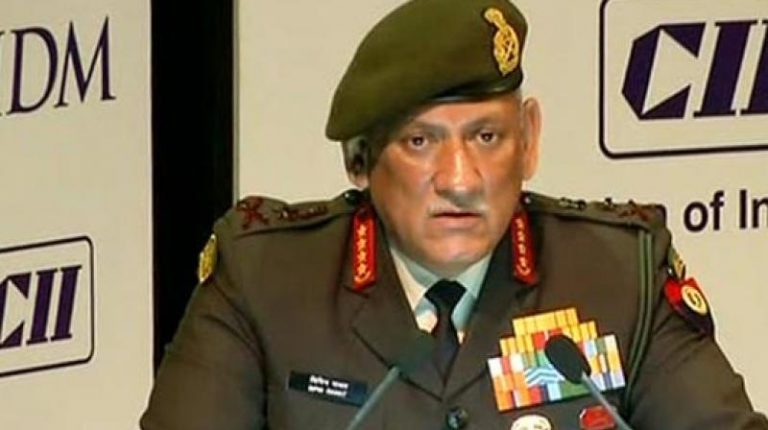
This is what General Rawat said when a journalist asked him about ‘sportsmanship’ at the Indo-Pak border

0

The Chief of Army Staff General Rawat has said yesterday that if Pakistan stops cross-border terrorism, the Indian Army can be like Neeraj Chopra too. According to reports, the COAS was responding to a journalist’s question on whether Neeraj Chopra like sportsmanship is being displayed at the border too. He asserted that since it is Pakistan who is engaged in carrying out cross-border terrorism, they should make the first move of ending it.


It is notable here that the reference to Neeraj Chopra was about the incident when he had reached out to his Pakistani competitor after the javelin throw event in the recently concluded Asian Games at Jakarta. Chopra, who won the Gold medal, was seen humbly greeting and shaking the hand of his Pakistani competitor Arshad Nadeem who had won the bronze medal.


Neeraj Chopra’s warm gesture was widely praised in both India and Pakistan. Many media outlets and individuals had termed it a true show of sportsman spirit.

On Wednesday the COAS was at an event organised to felicitate the Asian Games medal winners from the Indian Army who have just returned from Indonesia. General Rawat stated that a contingent of 73 sportspersons and coaches had participated in the recent Asian games and in total, the Army personnel have won 11 medals, including 4 gold and 4 silver medals. He further stated that preparations for the Olympics in 2016 are on and the Asian games had helped the players get good international exposure. He reportedly urged both medal winners and non-winners to work hard for the upcoming Olympics.

Regarding the situation in Army, the Army Chief reportedly stated that the situation in Kashmir has definitely improved in the last few years and the improvement will continue. He added that many families in Kashmir have been realising that terrorism cannot be an option and are urging their boys to come back to the right track.

General Rawat has always maintained that India will make no compromises when it comes to combatting terrorism. In the past he had reached out to Kashmiri youths several times, telling that their desire of secession is futile and they will never stand a chance against the army.  General Rawat had also made a tough stand against the separatists and terror sympathisers in the Kashmir valley.

Maha police’s chilling affidavit to SC: ‘Activists’ gave input for ‘armed struggle’, smuggling of weapons and more

0

Maharashtra Police has submitted an affidavit in Supreme Court in relation to the recent arrest of five activists in the Bhima Bhima Koregaon case. Police asserted that they were not arrested for their dissenting views against the government, but because police have evidence of their links with banned CPI (Maoist) organisation.

On 28th August 2018, Maharashtra Police had Sudha Bharadwaj, Gautam Navlakha, Arun Ferreira, Vernon Gonsalves and P Varavara Rao, charging them under the Unlawful Activities Prevention Act. The next day, Supreme Court had ordered the state police to keep them under house arrest until September 9 and not take them to jail. Court had also commented that “dissent is the safety valve of democracy”.

Romila Thapar and four other activists had filed a petition in SC challenging the arrest of five ‘urban Maoists’, which a five-judge bench headed by Chief Justice Dipak Misra agreed to hear on 6th September on urgent basis. Responding to this petition, the Maharashtra police have filed the affidavit. It says that there is sufficient evidence to “dispel” the claim that they were arrested for their dissenting views.

Maharashtra government on Wednesday told the Supreme Court that the five rights activists were arrested due to the cogent evidence linking them with the banned CPI(Maoist) and not because of their dissenting views. The state’s response came in the backdrop of the apex court while ordering the house arrest of the five activists on August 29 till tomorrow, categorically stating that “dissent is the safety valve of democracy”.

The police informed the court that the activists were part of a criminal conspiracy and active members of the banned CPI (Maoist), who had arranged public meetings under the banner of ‘Elgaar Parishad’. The affidavit said the state was committed to protecting fundamental rights of every citizen and a mere dissenting view, difference in ideology or vehement objections to political thinking, cannot only not be prohibited but should always be welcomed in any democratic country.

The affidavit says, “Five accused persons for whose benefit the present petition is filed are not arrested based upon any dissenting views expressed by them or difference in their political or other ideologies….during the course of an intense investigation since January 8, 2018 (the date on which the FIR is registered), serious criminal offences are made out and incriminating material has emerged against them.” It also says “This Court is dealing with persons against whom cogent evidence has so far come on record showing that they are active members of the banned terrorist organisation namely, CPI (Maoist), and they are involved in not only planning and preparing for violence but were in the process of creating large-scale violence, destruction of property resulting into chaos in the society as per the agenda prepared by the CPI (Maoist), which was banned as a terrorist organisation in 2009”.

Police also informed the apex court that the arrested persons were not being indicted in the FIR for the first time but some had past criminal antecedents and were imprisoned earlier. It informs that the entire process of searches conducted have been videographed.

The content found in electronic devices seized from the activists showed their preparedness, planning and coordination with other activists to carry out a violent “ambush/rebellion against the enemy (which is our country and its security forces)”. “It would become amply clear that they are found to be committing and were planning and preparing for a series of criminal offences in connivance and conspiracy with other persons,” the affidavit added.

It also mentions that accused were involved in selecting and encouraging cadres to go underground in ‘struggle area’, mobilising and distributing money, facilitating selection and purchase of arms, deciding the rates of such arms and suggesting the routes and ways of smuggling such arms into India for its onward distribution amongst the cadres.

“Some of them have suggested training and laying of booby traps and directional mines. They are also found to be providing strategic inputs in furtherance of the objective of armed rebellion as per the strategic document of the banned terrorist organisation namely CPI (Maoist),” the affidavit adds. The affidavit said the house arrest of the activists merely restricted their physical movement and they can always ensure the destruction of evidence elsewhere while alerting other potential accused by being at home.

Police also challenged the locus of the persons filing the petition for the alleged persons. Terming petitioners Romila Thappar, Prabhat Patnaik, Devaki Jain, Satish Deshpande and Maja Daruwala “strangers” in the case, it says “The petitioners, who are strangers to the offence under investigation, are also praying for bail on behalf of the persons arrested during an ongoing investigation, strictly in accordance with the Code of Criminal Procedure after the investigating agencies having gathered requisite incriminating material against the said individuals”.

Gutka Scam: Tamil Nadu health minister and DGP raided by CBI, all you need to know

0

In a massive embarrassment to the Tamil Nadu government today, the Central Bureau of Investigations (CBI) officials have raided the premises of the current health minister C Vijaybhaskar, current DGP TK Rajendran, DG (Fire and Rescue) S George and several other top officials and politicians in connections to the Gutka Scam. According to reports, the CBI has today raided 31 locations in total.


The premises of former minister BV Ramana and that of several officials of the central excise, food safety and health department have also been raided. While the CBI stated that simultaneous raids have been going on since 7 in the morning in Chennai, Mumbai and Bengaluru, it was reported that the search operations are being conducted by the CBI’s special anti-corruption unit-III from Delhi.

Here is everything about the scam that had come to light in July 2017:

  1. The Gutka scam was unearthed for the first time when income tax officials raided the godown, offices and the residence of prominent tobacco products manufacturer MDM in connection with an alleged 250 crores tax evasion case.
  2. During the raid, tax officials had allegedly found documents and entries that had listed bribes and incentives paid to the ministers, several top police officers and government officials over a period of 2 years. The amount mentioned was total of about Rs 40 crores.
  3. The manufacture, storage and sale of tobacco products including Gutka and pan masala has been banned in Tamil Nadu and Pondicherry since 2013. The papers found at the premises of the manufacturers showed that the bribe amount was being paid to the politicians and officials to facilitate the illegal tobacco trade in the state.
  4. The I-T department had compiled and analysed the documents found and reportedly sent a confidential report about the illegal trade, bribes and persons involved in the illegal trade to the chief secretary and DGP of the state. Though the then chief secretary had confirmed that he had sent the report to the then CM J Jayalalitha, no action was reportedly taken over the allegations.
  5. The TN government had maintained that they had received no such report, but a subsequent I-T raid at the residence of Jayalalitha a copy of the report was found and the state vigilance department registered a case over the issue against several government officials. By then opposition leaders and media had been demanding a CBI probe into the issue and subsequently the case was handed over to the CBI by the orders of Madras High court in April this year.
  6. In May, the CBI had registered an FIR against several persons in the case, including unidentified officials of the health, food safety and central excise department.
  7. One of the accused in the case, a senior official from the health department had moved to the Supreme Court against the Chennai HC’s decision to pass the case to the CBI. However, the SC had upheld the order of the Madras HC last week.
  8. Despite the ban being effective from 2013, the owner of MDM had allegedly admitted to illegally selling Gutka in the state to the tunes of Rs 384 crores between 2014 and 2016.

The Gutka scam has been an issue of massive political debates and has given rise to several lacunae and corrupt practices within government departments.

Hizbul Mujahideen’s ‘hardcore motivator’ Touseef Ahmad Gudna arrested in Jammu and Kashmir

0

A top member of the Kashmiri separatist militant organisation, Hizbul Mujahideen, which is considered to be one of the largest terrorist group in Kashmir and has been instrumental in conditioning young men and women to join the outfit and revive terror activity in Jammu and Kashmir’s Kishtwar district, has been arrested, reports Deccan Chronicle.

Touseef Ahmad Gudna, alias Abu Bakar, was arrested on a tip-off received by the Jammu and Kashmir police on Tuesday, said a police spokesman, and came precisely two months after the police had found out about a fraction of the terror outfit planning to carry out grenade attacks and revive terror activity in the district.

Gudna’s name emerged while the police interrogated two Hizbul members who were arrested on 1st July. The Jammu and Kashmir police are considering this arrest as a mighty punch to the organisation as there is a “likelihood of a decrease in terrorist activities and reduction in the number of youth indulging in anti-national activities”, said the police spokesman.

Gudna, a close associate of Hizbul Mujahideen terrorist Mohammad Amin alias Jehangir, was also involved in a terror case registered in police station Parimpora in Srinagar last year.

The Jammu and Kashmir police, along with the help of CRPF, guided by the National Investigation Agency (NIA), in its constant effort to curb violence in the valley, had last month also arrested Shakeel, son of Hizbul Mujahideen chief Syed Salahuddin. Last year in October, the NIA had arrested his other son, Syed Shahid Yusuf, who was questioned in 2011 terror funding case. While Syed Shahid Yusuf was a Jammu and Kashmir government employee, Shakeel works as a senior lab technician at Sher-I-Kashmir Institute of Medical Studies.

Similarly, in the month of March, in a major crackdown which incapacitated the militant organisation considerably, the Jammu and Kashmir Police had caught an over ground worker (OGW) of the terrorist outfit Hizbul Mujahideen. As per reports a huge cache of incriminating material had also been recovered from his possession.