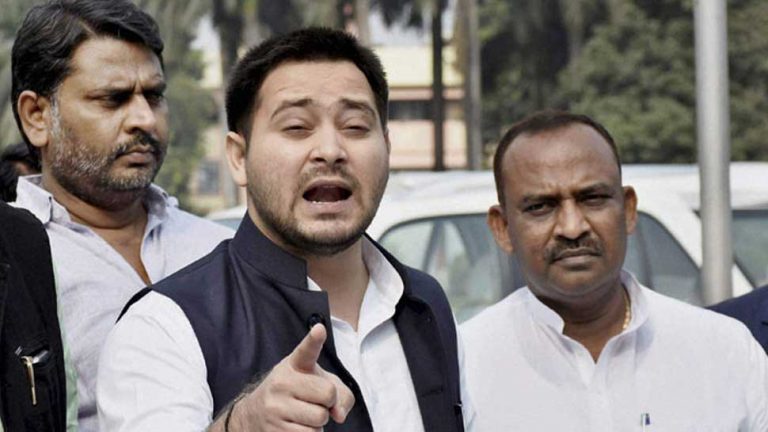
In yet another attempt to unite various opposition forces, Tejaswini Yadav has issued an invitation to Minister Upendra Kushwaha to quit the NDA and join hands with the opposition. The Union Minister rejected the proposal of RJD leader immediately and said that RJD was trying to create an issue since they don’t have anything else to talk about.
RJD has lost its base. To find a base, they are making such statements but theymean nothing to me. It’s necessary for Modi Ji to remain PM in interest of the nation. He will be PM next time too: RLSP’s Upendra Kushwaha on Tejashwi Yadav’s invitation to join ‘Mahagathbandhan’ pic.twitter.com/eZ1sfeE3at
It is said that Upendra Kushwaha has ambitions to be the NDA’s Chief Ministerial candidate in the next elections. He is trying to capitalise the caste of Kushwahas, who comprise about 10 percent in the state of Bihar. The minister had not attended the NDA dinner meet and also arranged Iftar parties, the absence was seen as some sort of disturbance in his engagement with NDA.
The Union Minister said that the NDA is united and there’s no question of him going anywhere. “RJD’s credibility in the society in the opposition is over. That’s why to find some plank to stay relevant, they are saying these things. For me, their statements have no meaning. For the good of the nation, Narendra Modi needs to stay the Prime Minister of India,” he said.
Earlier on Sunday, at a party meeting, Tejashwi Yadav had said the NDA is giving “step-motherly treatment” to Mr Kushwaha.
“The BJP, along with Nitish Kumar, tried to spit your party. You come from a larger OBC caste, but despite that no one was made cabinet minister, while from one caste, there are more than a dozen cabinet ministers,” Tejaswini Yadav said.
Earlier, former chief minister Jitan Ram Manjhi, who was part of the NDA also joined the alliance of the opposition parties. He also urged Kuswaha to join the alliance. Tejaswini Yadav also spoke about whether Kushawaha would accept his proposal, “It is for him to take a decision. If he wishes to come with us, we will think over the matter.” On Sunday, at a party conference in Patna, Tejashwi Yadav said, “The choice is yours. Either choose Gandhi-Ambedkar or Godse-Golwalker”.
It was also reported that there is a sense of rift in RJD, as the elder son of the Lalu Yadav, Tej Pratap Yadav said that he was upset about the rift and has decided to retire, but soon retracted from his own statements and said he is here to stay.
AAP rebel leader Kapil Mishra is all set to sue Delhi chief minister Arvind Kejriwal who, according to Mishra, has less than 10% attendance in the Assembly. Mishra tweeted last night that he will be filing a case against Kejriwal so that the CM is made accountable to attend the Assembly session.
ALERT – Tomorrow at 10 am
A case will be filed in Delhi High Court against Arvind Kejriwal for not attending Delhi Assembly
According to Mishra, Kejriwal has shown a poor attendance record. Kejriwal was conspicuously absent from absent when important discussions took place. While he did not attend a single session for full statehood, he was present for 1 out of four sessions on sealing, 3 out of 16 days for budget session. He has not attended a single day during the question-answer session.
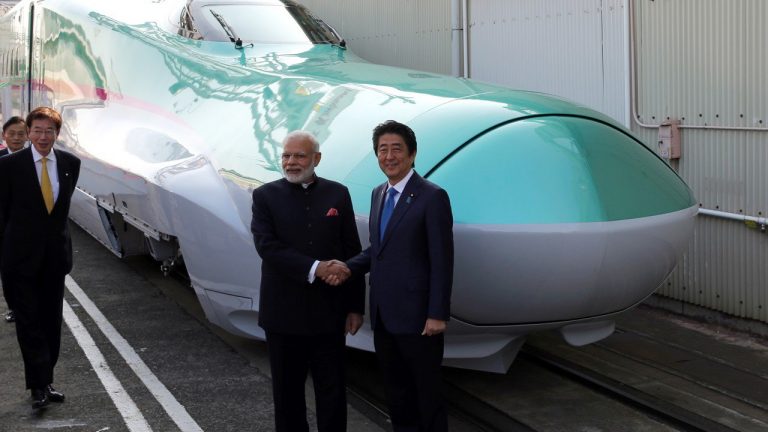
ABP News recently circulated an article headlined “In the cost of one bullet train, India can afford to have 800 Rajdhani trains” This makes for a catchy headline but the basic premise is so amateur that no mainstream media of repute should have even approved it for publishing.
It is already known from the project’s repayment plan agreed with Japan that the “cost of the bullet train” is spread over next 50 years. Hence this comparison has no practical value because India would certainly not continue rolling out 70 km/hr Rajdhani Trains for next 50 years while already trains in Europe, Japan and China today are clocking 300+ km/hr.
Visionary leaders in policymaking roles plan for the next two or three decades in advance. As per this McKinsey report, India is undergoing rapid urbanization with rising income levels:
In next 10+ years (by 2030), 600 million people would be living in cities
In next 30+ years (by 2050), 900 million people would be living in cities
A much larger number of people would require better connectivity between cities. India needs to address its future travel demands by creating high passenger carrying capacity between its cities. The following are globally recommended optimal options for intercity travel:
Short distances of up to 200km: By road/car
Medium distances of 200km to 800km: High-speed trains
Long distances of more than 800km: Flight
Benefits of investing in High-Speed Rail (HSR) over Air Travel:
Aircraft run on expensive air-grade fuel which needs to be imported. HSRs run on electrical energy which is produced locally. Thus, resulting in huge savings of foreign exchange in future
HSRs generate much higher passenger carrying capacity as one train can carry 800 to 1200 passengers compared to only 200 passengers per aircraft
HSRs also generate massive job creation opportunities because tracks, stations, electronic equipment for guidance and monitoring have to be manufactured locally
One train provides connectivity between 7 to 10 cities along the route, compared to only point-to-point connectivity by one flight
They also provide stimulus for the development of satellite towns along the entire HSR route thus enabling further economic growth
For mid-range travel distance, total travel time for passengers in Air-travel is much higher due to associated activities like check-in, security check and baggage claim
Benefits of investing in High-Speed Rail (HSR) over conventional trains:
For most businessmen and MNC executives travelling between business-critical cities like Mumbai and Ahmedabad, time is equivalent to money
Travel time is the unproductive part of any business trip. Sitting in train for 7 hours for a 500 km journey is a wasteful investment when one can finish it in 2 hours, use time for productive business interactions and return the same day
Faster travel means more productive work, faster trade, more business activity within any given time and faster economic growth
Mumbai-Ahmedabad is just the first route. India is also planning to build 10,000+ km of HSR tracks connecting many major cities across the map. After a few projects, India could also potentially build high-speed trains for other countries in future, like we now do for launching satellites through ISRO.
It makes economic and strategic sense to build bullet trains for medium range distances and invest in aviation capability for long distance travel. As per this business report, China with similar challenges as India (large area, large population) had no HSR till just a decade ago. Today, its high-speed trains that move twice as many passengers as its airlines and the demand continues growing.
Billionaire jeweller and the man behind the 13,000 crore Punjab National Bank loan fraud Nirav Modi has reportedly fled to the UK. According to a report by Financial Times, Nirav Modi is seeking political asylum in the UK claiming he is being persecuted.
Nirav Modi is wanted by Indian officials in the loan fraud case. So far the law enforcement authorities have been unable to track him down. He was reported to be living in Hong Kong some time ago but there has been no concrete news regarding his whereabouts. According to reports, British home office has refused to comment citing that they do not provide information on individual cases and Indian officials at the Ministry of External Affairs have stated that they will request Britain for an extradition after the Indian law enforcement agencies confirm his location.
If his location is confirmed, Nirav Modi will be the second Indian man the government will be seeking to extradite from the UK. Liquor and aviation tycoon Vijay Mallya is facing extradition too.
Nirav Modi has reportedly left the country earlier in 2018 before the Punjab National Bank disclosed the news of the mega loan fraud. Modi and his maternal uncle Mehul Choksi are both wanted by CBI and ED in India under non-bailable warrants. Their properties in India have been attached and the CBI has sought legal sanction to attach his overseas properties too. Many business associates and high-level staffers of the two business houses have been arrested by the CBI in connection to the loan fraud and several bank officials have also been held for helping the Diamond tycoons in executing the fraud.
Nirav Modi and Mehul Choksi, in collusion with bank officials allegedly misused the international inter-bank messaging system SWIFT and got huge amounts of loans sanctioned through Letters of Undertaking (LoUs). The PNB fraud is being hailed as the biggest financial fraud in India’s banking history.
On 24th May, the Enforcement Directorate had filed a 12,000-page charge sheet against Nirav Modi, his father, brother, sister and his several companies in the PNB fraud case. A total of 25 people are named in that charge sheet including former PNB chief and several high-level back officials. The agency had also moved to the Interpol seeking a global warrant issued against Nirav Modi. The ED is also seeking to place Nirav Modi’s name under the ‘fugitive economic offenders ordinance.
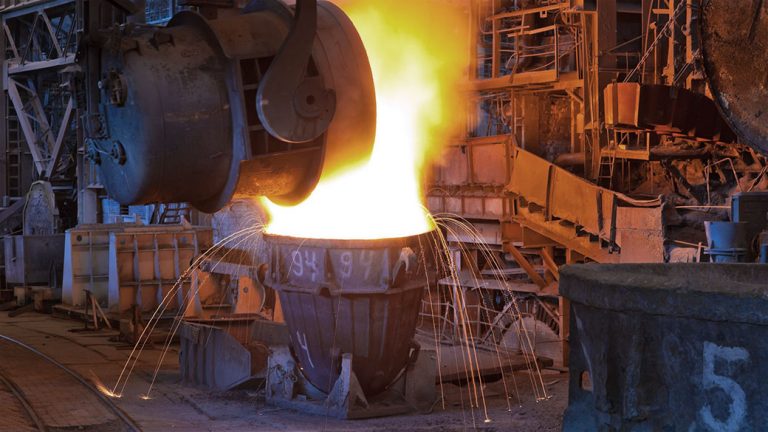
Steel Secretary Aruna Sharma stated that government’s National Steel Policy has saved foreign exchange of Rs 5,000 crores since last year and has added around 24 million tonnes of crude steel capacity during the last four years. The Secretary added that in this year India also replaced Japan as the second largest steel producer.
Sharma also said that the national steel policy announced last year had the target set at raising the capacity 300 MT by 2030 and produce 250 MT of crude steel.
The steel production capacity has been steadily rising under the Modi Government. It increased from 110 MT in 2014-15 to 134 MT in 2017-18, while 7 MT was added in 2017 alone, Sharma pointed out in an interview on achievements and initiatives taken by Ministry Of Steel in past four years.
While talking about steel exports, she stated that in the financial year 2017, India became a net exporter of steel with a significant export of 8.2 MT registering 102 percent growth over the previous fiscal year. The exports grew from 5.6 MT in the financial Year 2015 to 9.6 MT in Financial Year 2018. On the other hand, import has been declining. Between the Financial Year of 2016 to 2018, imports have declined by 36%.
Steel Authority of India Ltd turned profitable under the new government. The Prime Minister inaugurated a steel processing unit of SAIL in Kandori, Himachal Pradesh in October 2017 which adds to the steel production capabilities of the country. This unit will produce high-end special steel TMT bars.
The National Steel Policy aims to increase the per capita steel consumption to 1600 kg by 2030. The Secretary also stated that the new policy envisages decreasing India’s dependence on imports for coking coal. The policy aims to increase domestic availability of washed coking coal to decrease import dependence from 85% to 65%.
Setting a new example of ‘socialism’, former Uttar Pradesh chief minister and current president of Samajwadi Party, left his government accommodation in ruins after he was asked to vacate it on Supreme Court’s orders. Before he moved to his sprawling villa with his family, he trashed the house he lived in on taxpayers’ money.
However, when he was confronted on this, the arrogance he exuded only shows how entitled the politicians of our country are, especially those shoved down our throats because of nepotism. In a video clip that has gone viral on the social media, he could be heard giving veiled threats to the bureaucrats who let the mediapersons take pictures of the house.
Bizarre: Look at the arrogance here. “Jo adhikaari mere samay me cup, plate uthate thhe wo aaj mere khilaaf ye sab karwa rahe hain,” says Akhilesh Yadav after his house was let open for media. It’s this VVIP racism we need to fight against. Never expected this frm @yadavakhileshpic.twitter.com/LLZ5rSQ04x
He could be heard saying, ‘what these bureaucrats are doing, let me remind them that the government will come and go. We have seen many officers lift cups and plates. The officers who are doing this (let media click pictures) are the same who lift cups and plates for us. I would like to remind them that some of my stuff is still left behind.” In fact, he has even asked the government to return his ‘rare plants’ and many of his personal items which he has left behind. He has further claimed that he will ‘pay’ for all the ‘so-called’ missing items if the state government provides him a list.
This is a story of heroics of yet another common man of the country. This time it is by the officers of the Indian Railways. The brave act of a train ticket examiner, Mihir of Vijayawada Junction has saved the life of an infant.
— Aakash Jain ???? (@CantstopulovinM) June 9, 2018
On 6th June, a couple was travelling from Yeshwanthpur to Howrah with an ailing child. The child had serious health issues and was travelling with the support of Oxygen cylinders. The couple had arranged for two oxygen cylinders which would be emptied before reaching Vijayawada. This would have been a major danger to the life of that child.
The train ticket examiner of the concerned train, Mihir understood the gravity of the situation and took charge of it. He tried to get the train to reach Vijayawada to ensure the oxygen supply to the child is not interrupted. Soon Mihir contacted his higher authorities to arrange for oxygen cylinders and asked them to consider this as a high priority. The control room reacted immediately to make sure that the cylinders reach them in time.
Mr Jagga Rao, the chief ticketing inspector spoke to the chief controller and decided that the train would not stop anywhere in the middle of the journey before reaching Vijayawada. The train reached Vijayawada in next 20 minutes, thanks to the efforts of both Mihir and Jagga Rao. Mihir arranged another two oxygen cylinders at Bhubaneshwar and also made sure that there is a constant supply of oxygen to the child. They had also arranged oxygen cylinders in Kharagpur and Garden Reach stations. As soon as the train reached Howrah, he arranged for the ambulance. The child was then taken to the hospital for further care.
This effort by the officers of the Indian Railway has been appreciated by every passenger on that train. They also requested the Railway Minister Piyush Goyal to recognise these heroes and award them for their act.
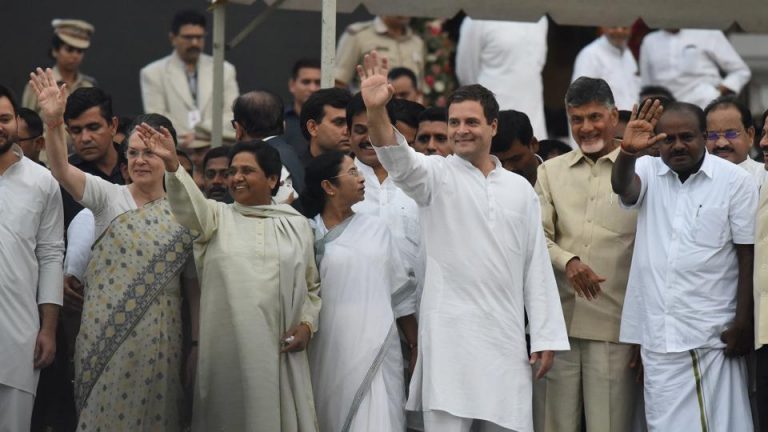
On the day HD Kumaraswamy was sworn in as the CM of Karnataka at the mercy of Rahul Gandhi, many of the BJP’s staunchest supporters’ nightmares came true in the form of Sonia Gandhi, Mayawati, Mamata Banerjee, Sitaram Yechury, etc. joining hands to display a show of “Opposition Unity” that wants to take on the Modi-lead NDA government. While some say that the “Mahagathbandhan” is similar to the Janata government that was formed right after the Emergency, it is also reminiscent of another, rather forgotten coalition, the coalition of the United Front government in 1996.
It is against this backdrop that one views Sushma Swaraj’s speech in Parliament. Around this time, 22 years back, a Confidence-motion for the then HD Deve Gowda led government was being discussed. Swaraj’s speech relating to this debate was not just historic but it was also prophetic. Prophetic because the signs, the times and conditions are very much similar to the ones that relate to the much-touted “Mahagathbandhan.”
At the time, even though the BJP under Atal Bihari Vajpayee was the single largest party, the BJP failed to prove its majority and Vajpayee eventually resigned after 13 days. The subsequent government was that of the United Front with Janata Dal’s HD Deve Gowda as Prime Minister. The Congress which was the second largest party supported this government. Similar scenes were seen in Karnataka where the JDS’ HD Kumaraswamy was made CM with the Congress supporting him.
At the beginning of the speech itself, Swaraj picked out the statement given by PM Gowda that the mandate was for the coalition. She asked a rather pointed and unanswered question about whether the coalition was one in which the Congress was a part of. This is a question that is relevant even in today’s time when in Karnataka, the JDS and Congress have formed a coalition government. The question here too, arises: Was the mandate in Karnataka for a coalition with the Congress?
This is followed by another statement: “Earlier, it was seen that the Government was united while the Opposition was scattered. But today, we see that the Government is scattered, while the Opposition is united.” This makes one wonder if Swaraj had predicted today’s situation more than two decades back. For example, in Karnataka, while the Opposition (the BJP) is a united, 104-seat strong, the government is a flimsy, unholy alliance between the Congress and the JDS, where even the swearing-in of the cabinet ministers took 11 days after the floor-test was conducted due to fissures in the alliance.
Swaraj then proceeds to say: “Those who do the greatest injustice (the coalition) never accept it. Instead, to hide their selfishness they act like they are doing the greatest justice.” Again, we see this in today’s time. Even though it is common knowledge that the coming together of old enemies is done with no other intention other than coming to power, the stake-holders of the Mahagatbandhan or any anti-BJP Opposition is done under the garb of “maintaining secularism”, “protecting democracy” and of course, #SaveConstitution. If the then United Front had accused the BJP of being communal, the now Opposition alleges that the NDA is responsible for rising “intolerance.”
Later, Mrs Swaraj effectively deflates the Congress narrative of secularism itself. The Congress version of secularism begins with abusing Hindus and Hinduism, she says. Considering the bogey of “Hindu” terror, not much has changed in the entire Congress psyche.
To someone like me, who was distressed to watch TV discussions on whether or not “Vande Mataram” must be sung, it is interesting to note that debates about nation, nationality and nationalism occurred even then. These find mentions in the speech and one is shocked to note that these debates took place in the Parliament of India, no less.
What follows next is what runs on the minds of the average political observer even today. The example of how Mamata Banerjee, then a Congressi who was injured in the 1993 Kolkata firing under the Communist regime in Bengal, joined hands with the CPI(M) to come to power is given. Cut to 2018, the visuals of Mamata Banerjee now belonging to the TMC, shaking hands with Sitaram Yechury, is strikingly similar. One major difference is that earlier, there was Red Terror prevalent in Bengal of which Ms Banerjee herself was a victim, while now TMC goons run havoc in West Bengal, as seen in the recent Panchayat elections.
The differences are further elaborated by citing how the Minimum Programme then, included a plan to privatise the insurance sector by the government. The same government that included Communists. The same Communists who today slam the Modi government for promoting “crony capitalism.”
The picture is clear, both then and now. The anti-BJP Opposition is nothing more than a “kicchdi”. All those parties that have been kept out of power by the BJP are now ganging up to take on the BJP even though they are ideologically dissimilar, and have in the past have little on which they have agreed upon. The situation is summed up by Sushma Swaraj in a rather poetic fashion:
“This political orchestra will disperse even before the show begins because they’re so used to singing their own tunes.”
Sure, the SP-BSP-Congress alliance might have won Kairana and other by-poll elections. But it is undeniable that the anti-BJP alliance is riddled with internal inconsistencies as seen in Bihar and more recently in Karnataka. Also, while Rahul Gandhi says that he’s ready to become the PM in 2019. Mamata Banerjee and Mayawati have also thrown their hat into the ring. These inner disputes are bound to arise, if and only if the Mahatgathbandhan manages to turn the tide in the 2019 and this would definitely be inimical to the interests of the nation. The question is will the Mahagathbandhan crumble to dust before the election or after 2019. And will the citizens of this country get to hear a speech similar to that of Mrs Swaraj once again?
Rashtriya Janta Dal (RJD) leader and the party supremo’s elder son Tej Pratap Yadav has yet again stirred up a controversy, this time within his own party. Yadav on Saturday morning tweeted insinuating that he would retire from politics but by the evening he reverted back and said he is here to stay.
मेरा सोंचना है कि मैं अर्जुन को हस्तिनापुर की गद्दी पर बैठाऊं और खुद द्वारका चला जाऊँ।
अब कुछेक “चुग्लों” को कष्ट है कि कहीं मैं किंग मेकर न कहलाऊं।।
In his tweet, he drew references to the Hindu epic, “Mahabharat”, stating his consideration of heading to Dwarka after installing Arjun, here Arjun is believed to be his younger brother Tejashwi, as the King. He ended this tweet of his by stating how there are people who will be troubled to see him as a kingmaker.
Tej Pratap Yadav who was the erstwhile health minister before the coalition government in Bihar broke down there has been little mention of his in the media. This alienation of Yadav is said to have escalated ever since the RJD chief and his father Lalu Prasad Yadav was jailed in December on corruption charges. Sice Lalu’s arrest, his younger son Tejashwi Yadav took charge of the party and has been credited with the party’s three by-poll wins.
Tej Pratap Yadav had earlier stirred up a controversy by threatening to ‘skin’ Prime Minister Modi when his father security was downgraded; even Lalu disapproved of his statement. He is also accused of constructing an illegal temple in the premises of his ministerial bungalow, which was allotted to him when he was a minister. He later vacated the bungalow after alleging that the opposition has let ghosts loose after him.
However, Tej Pratap put an end to the speculations by tweeting and clarifying his stand and blaming the RSS for trying to create a rift between two brothers.
संघीयों.., अफवाह फैलाने की कोशिश मत करो और कान खोलकर सुन लो “तेजस्वी मेरे कलेजे का टुकड़ा है” pic.twitter.com/girzKMY6L2
Since his tweet, Yadav has vehemently denied any rift with his brother and accused anti-social elements within the party of conspiring to break the party from within. He did express his unhappiness with the party’s work and these ‘antisocial’ elements constant instigation to create an internal rift.
Reflective of the isolation Yadav is facing within the party and outside of it, he stated, “People in the party don’t listen to me. There should be discipline”. He even accused state President RC Purve of ‘ignoring the workers’.
All this news of family infighting etc is false, there is no such thing, I have nothing against Tejashwi and Lalu ji but yes some other senior leaders in the party are sidelining youth workers. The state President RC Purve is ignoring workers: Tej Pratap Yadav,RJD pic.twitter.com/Ymxh3zlGVd
Meanwhile, Tejashwi has also come out in support of his brother, denying the rift. He said that Tej Pratap was speaking of unifying the party for the upcoming elections.
All are working to strengthen the party. We shouldn't make mountain out of a molehill. We must focus on discrepancies on education, how students were given 38 out of 35 marks, how 44 young girls were raped. If you ignore this, Bihar isn't going to benefit at all: Tejashwi Yadav pic.twitter.com/M0TSigb7Uf
Remember last year when reporters of the Samajwadi Times and other Lutyens outlets descended on Lucknow to cover the dashing young dynast of Uttar Pradesh? The ‘progressive’ Chief Minister had just signed the dotted line on an alliance with India’s great political dynasty, which made him one of the two most ‘acche ladke’ in the country.
The ‘reporters’ who came from Delhi were left swooning over everything. Some of them got to know the family so well that they could tell which member was visiting the palace by looking at the hyper-expensive car that was parked outside. From going on bicycle rides with the young Shehzada to reporting on their family’s favourite foreign vacation spots, the media brought us all the “news” that was worth covering.
Who had the time to cover an old man, a former tea seller, making his way through the state of Uttar Pradesh, through cities and through the countryside, leaving delirious cheering crowds in his wake, whipping up the wave of a generation?
And then it was time for the voter to speak up, leaving the Lutyens brigade red in the face. For a while, the embarrassed media joined forces with defeated politicians to talk about nothing but EVMs. But elections have consequences and eventually, there was a Supreme Court order booting out Akhilesh Yadav (and all former UP CMs) from their government bungalows.
This is how the Achche ladke left the bungalow built at taxpayer expense.
The tiles, the false ceilings, wiring, expensive fittings … all gone. He even took the taps away. Every single thing that could have been moved was ripped out and taken away. Here is another picture:
Remember folks, this is one of the pools of PM candidates supported by our intellectual class. When those Lutyens’ types gather for their evening cocktail parties, they pray that one of these guys should become India’s Prime Minister. You must have seen the talking heads on TV, the screeching about intolerance, about how “democracy is unsafe”, etc. THIS is who they are really fighting for.
They don’t care if Akhilesh Yadav comes to power tomorrow, strips our country of every resource and takes it away. Because these people will earn a commission out of the plunder.
In these photographs, there are two clear messages for the people of this nation. See those ruins? That is emblematic of the state of the nation when Modi came to power in 2014. Imagine the pettiness of the people who would rip out taps and wires and tiles before moving out of their government bungalows. Can you imagine what they would have done to the nation and its finances before having to give up power in 2014?
Now you know how the Prime Minister felt when he spoke about the mountain of NPAs that had been left behind by the Sonia Gandhi years. The economy had been left in such shambles by Sonia Gandhi that disclosing the full extent of the damage back in 2014 would have led to all remaining investors and businesses fleeing, deepening the economic gloom.
I am glad that photographs of Akhilesh’s ruined bungalow have already flooded the media, within a day or so of his exit. Or else, 6 months later, you can take for granted that these ruins would have been blamed on poor maintenance by the Yogi Adityanath government.
The second message for the people is that these ruins are the *real* manifesto of the secular/federal/whatever alliance that is taking shape for the 2019 elections. This is their real agenda, to suck up the resources of this nation like a sponge and carry it away with them.
I request you to close your eyes and imagine what would have happened before ‘Achche Ladke’ Akhilesh had to vacate his government bungalow. The young Shehzada and his men searching every nook and corner, searching for things that can be ripped out and carted away. Maybe they did this exercise not once, but over and over again, so that they don’t miss one little tile or wire that could be worth some money.
Was the loot loaded into one of the expensive cars that Samajwadi Times reporters were swooning over? Probably not. It is more likely that they used a truck. How big was the truck? What do you think?
Remember, this is their philosophy of governance. In the event of an inherently unstable khichdi government, the loot will intensify, with each person picking up and running away with whatever they can lay their hands on. Of late, the power of opposition unity has brought major cheer to our secular class. When they smile about their prospects in 2019, remember that this merry looting and pillaging is what they are picturing in their minds.