Home Blog Page 7155

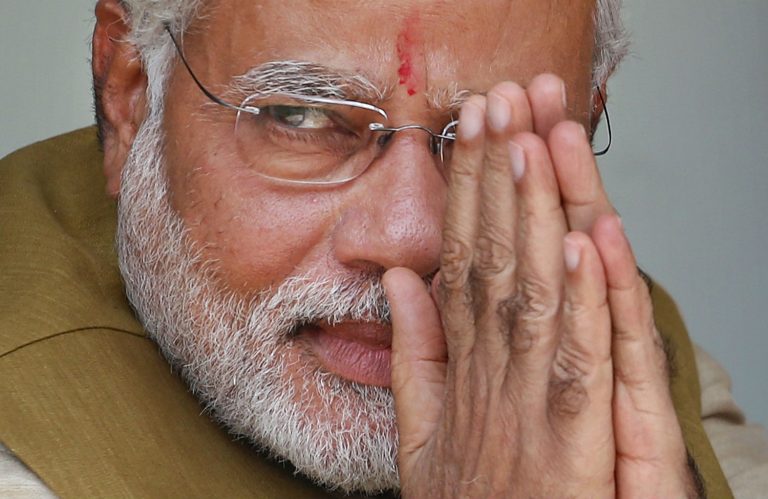
The Renaissance of India’s Power sector under the Modi government

In a recent interview, Minister of state for Power R K Singh said that the achievements of 48 months of the current government compared to 48 years of achievements of other governments as an “eye-opener”.

At a press conference on the completion of 4 years of the current government, he said that the present government has added 24,000 MW power generation capacity per year compared to 4800 MW of earlier governments. He also said that the government intended to provide power supply for 4 crore families by December 2019 under Saubhagya Scheme.

When one looks at the performance of the current government compared with the performance of previous governments, one realises that the current government has invested a lot of resources in transforming the sector.

Generation:

  • The installed capacity of power generation by the end of 2012 under the UPA regime was around 202,979 MW. By the end of March 2018, the power generation rose to 344,002 MW with an outstanding growth of more than 10% every year.
  • The per capita consumption rose to 1122 kWh in 2018 from 883 kWh in 2012.
  • Clean Energy production generation was about 63,493 GW in 2014, where the generation has almost doubled to 114,315 GW (out of which Hydro Projects produce 45,293 MW) which in 2018 thanks to the push given by the current Modi led government.
  • The share of thermal energy in the mix is still very high at 222,906 GW, almost 66 percent of the electricity produced, while the clean energy is about 33 percent of the remaining produced.

 Thermal:

India’s thermal sector contributes about two-thirds of the power generation. The Coal-based power plants produce about 88 percent of the thermal power produced, while the remaining comes from Gas and Diesel based plants. The total thermal power generation has increased from 131,603 MW in 2012 to 222,906 MW in the last 6 years with an average growth of 10 percent per year.

Renewable Energy:

India is one the largest producers of power from the renewable energy with almost 69 GW of energy, excluding large Hydropower generation. The Large Hydropower sector accounts for another 45G W of energy, both combining to form about 33 percent of India’s power generated. The government has set an ambitious target of producing 175 GW of energy from renewable sources – nearly 100 GW through solar power, 60 GW of wind power, 10 GW of biomass power and 5 GW of small hydropower by 2022.

  • Wind Energy: Wind power generation capacity in India has significantly increased in recent years. As of 31 March 2018 the total installed wind power capacity was 34,040 MW, the fourth largest installed wind power capacity in the world. The production in the UPA regime was around 28,214 MW and rose to 52,666 MW in 2018 under NDA regime. The government has set a target of production of 60 GW of energy from Wind alone. Tamil Nadu alone produces about 8197 MW of energy followed by Gujarat and Maharastra. The present government has also invited bids for development of offshore wind power to give a boost to the renewable sector.
  • Solar Energy: Solar power generation projects are seemed to be the pet project for the present government. Prime Minister Narendra Modi has invested a lot in making a global solar producing nation. The government is moving in a clear path to not only just produce power from solar energy, but also to be a global leader in developing technology to harness power using solar. The country’s solar installed capacity reached 20 GW in February 2018. The present government has expanded country’s solar-generation capacity 8 times from 2.63 GW in 2014 under UPA to over 22 GW as on 31 January 2018. The government has achieved this target much earlier than previously scheduled to be done in 2022. The solar power sector has consistently seen a growth of 80% growth every year since 2015.
    The government has revamped National Solar Mission and has set a target of 100 GW of energy from solar energy alone, out of which 40GW is to be produced from rooftop solar plants. In December 2014, the Government of India introduced a scheme to establish at least 25 solar parks and Ultra Mega Solar Power Projects to add over 20 GW of installed solar power capacity.
    Narendra Modi led government wants India to be a leading power in global renewable energy today. It has entered into global alliances like International solar alliance with an objective of being a global giant when comes to Solar power. India is also working with France to co-develop projects related to solar energy.
  • Hydro Power: India is the 7th largest producer of hydroelectric power in the world. India’s Hydropower is comprised of both large and small hydropower projects. India’s installed utility-scale hydroelectric capacity was 44,594 MW or 13.5% of its total utility power generation capacity. While the former produces about 38,247MW, the latter produces only 5056 MW of energy. There is not much of a change in terms of production from the days UPA regime to the current NDA government as there was a production of 44,162 MW during 2014.
  • Nuclear: Nuclear power production is complex and has a long gestation period. As of March 2018; India has 22 nuclear reactors in operation in 7 nuclear power plants, having a total installed capacity of 6,780 MW and another 6 more are under construction. India has a plan to reach a nuclear power capacity of 63 GW in 2032.
    The present government has been credited for resolving the disputes between India-US Nuclear pact and for also entering into an agreement with Japan, who are considered to be hardliners when it comes to nuclear non-proliferation.
  • Other Sources: The production of power from other sources like Biomass, Waste to power generation, Geothermal and Tidal have seen little growth in terms of other sectors. The cumulative production from these sources is about 9000 MW of which 8700 MW is produced by biomass sources. In addition to that, the government has created enabling policies and have de-regulated most of these sectors for private participation.

Transmission and Distribution:

One of the achievements of the present government is revamping the power transmission and distribution (T&D) sectors. The T&D sector is mainly in the hands of state sectors, while the transmission is mainly done by Power Grid Corporation of India, a PSU under the Ministry of Power.

The present government has launched a scheme called Ujwal Discom Assurance Yojana, where state governments will take over the debt of these discoms and even discoms can issue bonds to finance their debts. This will ease up the debt-ridden companies to correct the course and bring efficiency in the distribution sector. The scheme has resulted in both the financial outcome and operational efficiency of reduction in AT&C losses have improved at an aggregate level. This is estimated to have freed up Rs 22,000 crore capital of the banking sector.

Rural Electrification:

  • It can be said that one of the biggest achievement of the present government is in the field of rural electrification. The government had set the target of electrification of all the un-electrified villages and has been achieved this year.
  • Deen Dayal Upadhyay Gram Jyoti Yojana aims to provide 24×7 uninterrupted electricity supply to each rural household across the country by 2022. It aims to strengthen sub-transmission and distribution network to prevent power losses. It focuses on feeder separation for rural households and agricultural purpose.
  • The schemes like ‘Power for All’ intend to provide 24 hours electricity throughout the country by 2022. The other scheme Saubhaya where, the government will provide free electricity to all households identified under Socio-Economic and Caste Census (SECC) data 2011, while others will be charged 500 Rs.
  • In addition to these schemes, the government has taken key initiatives to shift to cleaner energy platforms. The government of India, through the Energy Efficiency Services Limited (EESL) under the Ministry of Power, will retrofit 10 lakh conventional street lights with LED lights under Street Lighting National Project (SLNP).
  • Unnat Jyoti by Affordable LEDs for All (UJALA) was launched by Prime Minister of India Narendra Modi on 1 May 2015, replacing the “Bachat Lamp Yojana”. The main objective of the scheme is to promote efficient lighting, enhance awareness on using efficient equipment which reduces electricity bills and helps preserve the environment.
  • The Ministry of Power along with the Ministry of Textiles has launched Sustainable and Accelerated Adoption of efficient Textile technologies (SATHI) to help small Industries. The Powerloom sector in India is predominantly an unorganized sector and has a large number of micro and small units which produce 57 percent of the total cloth in the country.

The present government, which had inherited dis-functioning electricity sector under UPA regime and has transformed it as a capacity surplus sector. The Modi led government should be credited for making India a power surplus country today. It also invested a lot of time and money on bringing a revolution in clean energy in the country. Along with this, it has eased the regulatory framework for more private sector involvement. The strong power sector is a sine qua non for any country’s economic growth. The government needs to do more, but one can be assured of positive changes in the future if the data holds up and the present government continue this work with the same intensity.
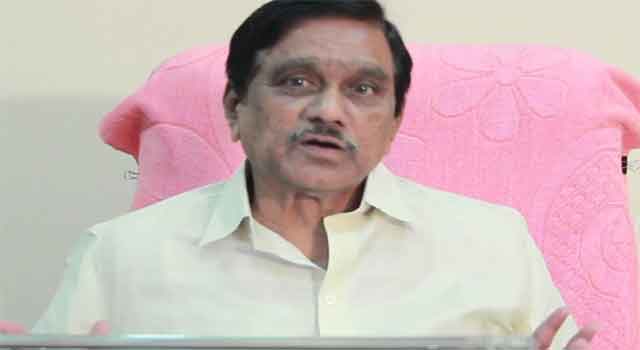

‘Ready to hang myself’ : Andhra Pradesh Deputy CM expresses anguish on possible TDP alliance with Congress

Contending any move on part of the ruling TDP to join hands with Congress, the Andhra Pradesh Deputy CM, KE Krishnamurthy said he was ready to hang himself if the two-party decide to enter into an alliance.

“There is no question of the TDP aligning with the Congress but if that happens, I am ready to hang myself,” he told a press conference in his hometown Kurnool. He went on to add that he was speaking this “on behalf of the party” and it was not his individual view. He, further, said that any alliance would, however, only be decided ahead of the general elections.

Chief Minister and TDP chief N Chandrababu Naidu had last month shared the dais with Congress President Rahul Gandhi at the swearing-in ceremony of Karnataka Chief Minister HD Kumaraswamy. This propinquity amongst the parties had become a hot topic in the state leading to such conjectures.

Naidu, whose party pulled out of BJP-led NDA over its refusal to accord special status to Andhra Pradesh, has already clarified that sharing the stage and shaking hands with Rahul Gandhi does not mean TDP will have an alliance with Congress.

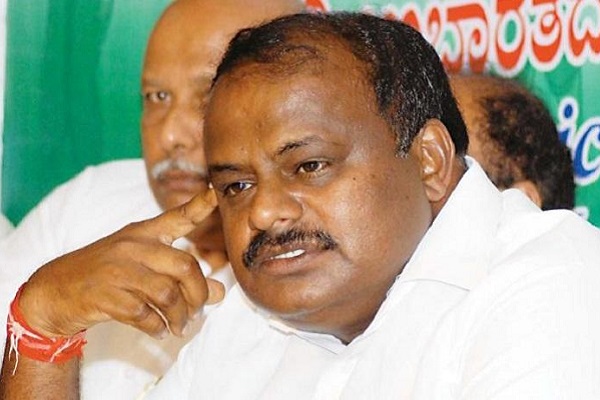
The lust for power and the fire in the belly to rise above the rest can make the politicians cross all boundaries. Karnataka’s new Chief Minister, HD Kumaraswamy while speaking to ‘The Week’ after taking the oath said that “many National leaders including Chief Minister’s – Mamatha Banerjee, N Chandrababu Naidu and K Chandrasekhara Rao advised me to go with the Congress to form a Secular Government in Karnataka.”

It would be interesting to note that both N Chandrababu Naidu and K Chandrasekhara Rao are fighting Congress in their respective states but astutely took Congress’ side to counter BJP.

Krishnamurthy, while talking to the media, also slammed YSR Congress and BJP for what he calls ‘politics of collusion’.He alleged that YSR Congress has entered into a secret deal with the BJP and is playing a farce with the resignations of its MPs over the special status issue.

The Congress-JD(S) alliance need not worry, after all, they have the Indian Express

0

The ‘fake news’ in our mainstream English dailies is a slow poison. This venom seizes our brains, paralyses our actions and manifests itself into a kind of plague. This wind is then seized by off-shore forces which then returns with terrifying ferocity and sinks truth into a bottomless pit.

The ‘expansion’ of H.D. Kumaraswamy’s unholy government in Karnataka on Wednesday was one such news. Karnataka is important to Indians in many respects: It’s a template for opposition unity, albeit, alligators and hippos sunning together. The 6.41-crore people of the state have suffered a thousand cuts with being treated no better than cattle. First, made to lock horns, then kiss each other’s butts and finally, left to numbness inside a deep freezer. A 37-seat party chief was hoisted as Chief Minister in a 224-seat state. All in the name of ‘saving democracy’.

When the gates of Supreme Court were opened after midnight, it wasn’t for democracy. When Rahul Gandhi went abroad, it wasn’t for democracy. If Kumaraswamy and Congressmen parked themselves in the Capital, logging air miles, it wasn’t for democracy. If no portfolio has still been allocated after nearly a fortnight, it isn’t for democracy. If some ministerial berths have been left vacant, to accommodate dissenters, it isn’t for democracy.

Now, look at how our mainstream English dailies have gone about their task on Thursday. Nearly everyone has headlined: “expands cabinet”. What cabinet? What expansion? Who was there in the first place to merit the tag “expansion”? And all without portfolios?

Indian Express, which is famous for its “And they hanged Yakub” headline, unsurprisingly took the cake in its “fake news.” It spelt out all the data: How many ministers, how many Vokkaligas, Lingayats, Muslims, women, Dalits in the “expanded” cabinet. What it skillfully hid from its readers’ view is that the event marked an open revolt among senior Congress-JDS leaders. No mention, not even a vague line as its comrade-in-arms The Hindu casually slipped in: “(it) triggered protests by the supporters of the ministerial aspirants.”

So Indian Express didn’t know about the protests. It didn’t know that HK Patil, who won the Gadag assembly seat, a minister in the outgoing Siddaramaiah government, hailed as the “Tiger of Hulkoti” has openly rebelled? It didn’t know MB Patil, former water resources minister, said after the swearing-in ceremony on Wednesday: “I will call on the former Chief Minister Siddaramaiah and Deputy Chief Minister G. Parameshwara to know why I was not included in the Cabinet…my self-respect is hurt.”

Three-time MLA from Hirekerur, BC Patil said: “MLAs who indulged in blackmail politics and those with money power have been given Cabinet berth.” Patil, an actor, producer and director, has said he would consult his constituency before taking next course of action.

TB Nagaraj, MLA from Hoskote, BK Sangameshwar, from Bhadravati, too criticized party leaders, threatening to quit the party, if he didn’t get a “suitable post.” Satyanarana, MLA for Sira, said: “My name was on the list till last night…I am very much pained.”

Senior leader AH Vishwanath, for Hunsur, remarked: “I won’t accept the post of the Deputy Speaker (even if it comes my way).”

These are just a few MLAs. I am leaving out almost as many who are protesting and dissenting as I have mentioned.

As an aside, do any of us remember what happened to BJP’s call for a day’s strike on May 28 in Karnataka? Well, it couldn’t go ahead as Kamal Pant, ADGP, Karnataka, had put his foot down: “Calling for a bandh is illegal.” You are, of course, unlikely to have read it in your morning’s newspaper.”

So tomorrow, when these dissenting MLAs quit, and the Congress-JDS alliance is in minority on the floor of the House, these very pens for hire would go to the town, claiming “murder of democracy.” Rahul would decry Modi-Shah duo for their fascist tendencies. The New York Times would comment that Indian democracy is subverted. Archbishops of this country would worry about the sanctity of Constitution. The “Mombatti-gangs” would hold protests around the country. A few former Election Commissioners, Chief Justices would write sanguine pieces in edit pages of “journalism of corrupt.” Randeep Surjewala, in his irritating high-pitched tone, would chew out such words: The nation can’t take it any more.

But then, beware of the strike of the silent. You all are out there in open in your full glory. The sight is not pretty for the citizens of this country. The echo-chamber would be of little use. Down you must go. All.

Drama continues: Congress – JD(S) alliance erupts in dissent following Kumaraswamy’s cabinet announcement

Dissent looked to be the dominant emotion among quite a few Congress and JD(S) leaders who were miffed at missing out on a ministerial berth following the cabinet announcement of the HD Kumaraswamy led Karnataka government, The Hindu has reported.

As reported by Times of India, there will be a total of 25 ministers in the Kumaraswamy government with 10 belonging to the JD(S) and the rest 15 to the Congress.

The anger mainly expressed by senior leaders in both the camps, saw them grumbling about their seniority and service being ignored.

Those angered include Congress leader and former water resources minister MB Patil who claimed that his self-respect was hurt owing to the rejection. After vowing to not take up any post offered by his party, Patil claimed that he would call up senior leaders Siddaramaiah and G Parameshwara to demand an explanation.

Another Congress leader BC Patil who too didn’t get any ministry attacked state and central Congress leadership by claiming that the party had shut the door on committed and sincere leaders.

Other Congress leaders who expressed unhappiness at the exclusion included MTB Nagaraj, BK Sangameshwar, Roshan Baig, Tanveer Sait and Ramalinga Reddy.

The JD(S) too was not spared of such a dissent, with its leaders Basavaraj Horatti, A.H. Vishwanath and B. Satyanarayana expressing anger and pain at the way they were being treated.

Such exclusions have also angered the supporters of the said leaders, with ANI reporting acts of protests being carried out by the supporters of Ramalinga Reddy and Roshan Baig:


Incidentally, such a dissent comes after reports of widening cracks between senior state leader DK Shivakumar and the Congress high command, which categorically asked him to not come to Delhi.

It has also been reported how SR Patil the working President of Karnataka North Congress had submitted his resignation by supposedly taking responsibility for the poor performance of his party in the state.

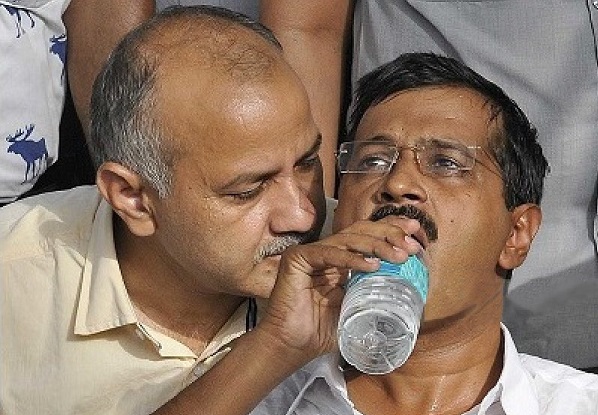
How did Arvind Kejriwal turnaround profit making Delhi Jal Board to Rs 800 crore loss making one?

An RTI query has revealed that in three years of coming to power, Aam Aadmi Party-led Delhi government has turned profit making Delhi Jal Board (DJB) to a Rs. 800 crore loss-making unit. As per reports, when Kejriwal came to power, he had theorised that the DJB should work under no-profit-no-loss basis. He believed that the aim of the board is not to make a profit but to benefit the people. But ever since he took charge of the DJB, it has turned into a loss-making unit.

In response to the RTI filed by RTI activist Sanjeev Jain, in the year 2016-17, the DJB posted the loss of Rs. 533 crore whereas the estimated loss for the year 2017-18 is pegged at Rs. 275 crore. This takes the loss of two years to over Rs. 800 crores. Interestingly, in the year 2013-14, 2014-15 and 2015-16, the board showed no loss. The RTI says that the loss is due to the implementation of 7th Pay Commission. The decision to provide free water may have been a politically wise decision, but financially it does not seem to have done well for the DJB. In a bid to counter the losses, the board had increased tariffs by 20% in December 2017. The increased bill reached the consumers from February onward. Even though the board has the mandate to increase 10% tariff every year, the rates were not increased in last 3 years, which could have added to the loss.

Delhi High Court has also raised questions over the free water provided by Delhi Government. Charge one paisa or 10 paise, but nothing should be given free of cost, the Delhi High Court had said to the Delhi Government.

Two years back, Arvind Kejriwal had said that the board had made a profit of Rs. 178 crore and credited his non-corruption stand on the same. He had credited himself for the profit and said that the money has stopped going to the ministers’ pockets and hence the profit. Interestingly, Kejriwal, who was had not held a single portfolio, took over water portfolio in September 2017 and became the chairperson of the Delhi Jal Board.

Railways to go strict on 3 decades old rule, impose 6 times penalty on excessive luggage

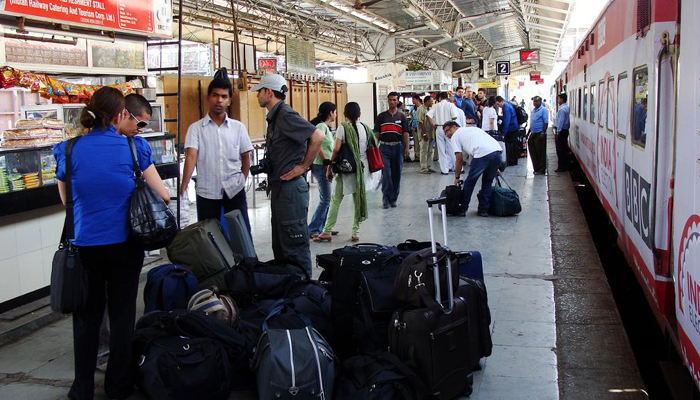
The Indian Railways has decided to strictly enforce the 3 decades old baggage allowance rules. According to reports, the railways has decided to strictly implement the norms and impose a penalty on passengers who are caught travelling with excess luggage without paying for it.

The 3 decades old rule allows Railways to penalise passengers at six times the stipulated amount for excess baggage. As per reports, the rule states that a passenger in the sleeper class can carry luggage weighing up to 40 kg and passengers in second class can carry up to 35 kg without paying anything extra than the ticket price. Beyond the weight limit, they can carry up to 80 kg and 70 kg respectively in their compartments after paying for it at the parcel office. Any extra luggage will have to be put in the parcel van after payment.

In the compartment, the charges for luggage beyond free allowance will be at 1.5 times the luggage rate. The Railways has decided to run a campaign to strictly implement the rules. The penalty for extra luggage will be six times the luggage rate in case the passengers are found with extra luggage beyond the permissible limit. However, The Railways has clarified that unlike airports, there will not be luggage weighing for each passenger but the officials will carry out random checks in trains.

As per reports, the baggage norms and penalty provisions have been there for 3 decades but the Indian Railways has never implemented the rules strictly. But after repeated and numerous complaints from passengers about people travelling with excessive baggage and causing discomfort to fellow passengers, The Railways has decided to enforce the existing rules.

AC first class passengers can carry up to 70 kgs for free and up to 150 kgs after payment of a fee. AC 2 tier passengers can carry up to 50 kgs for free and a maximum of 100 kgs after payment.

The Railways would also reportedly ensure that trunks, suitcases, bags and boxes would adhere to the prescribed maximum dimensions of 100cm x 60cm x 25cm. Any luggage bigger than the prescribed size would have to be carried in the parcel van.

The Railways have launched a special awareness and implementation drive across all its zones during the first week of June.

Congress and Maoist nexus with Jignesh as conduit? TimesNow claims to have accessed incriminating letter

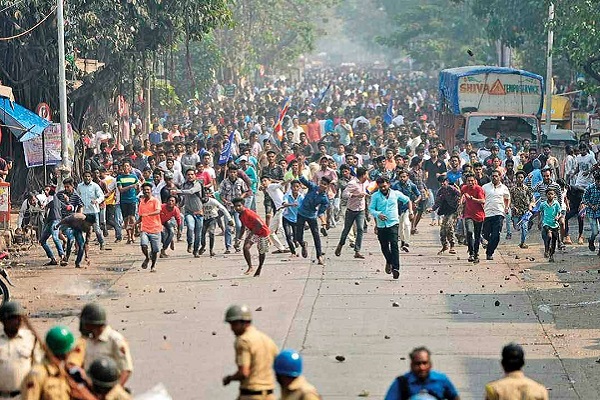
The Pune Police had yesterday arrested five suspected urban Maoists linked with the Bhima Koregaon Violence. They were namely Delhi based activist Rona Wilson, Advocate Surendra Gadling, Shoma Sen and Mahesh Raut form Nagpur and Sudhir Dhavle from Mumbai.

Times Now channel had reported yesterday, that they have obtained an explosive letter that was allegedly one of the documents seized by the police from Rona Wilson. It was a letter written by an individual named Comrade M to Rona Wilson. The channel claimed that the letter was obtained by their staff member from her sources in Maharashtra Police.


As per Times Now, the letter was dated 2nd January 2018, a day after the Bhima Koregaon violence took place and the letter is being considered as an appreciation letter from one Maoist comrade to another. The letter contains explosive information regarding Congress links to the Maoist in mobilising and funding the agitation. It states that senior comrades from the CPIM leadership have had ‘prior talks’ with ‘friends in the Congress’ who suggested them to make the Dalit mobilisation more aggressive and promised all required legal and financial help. The letter, per TimesNow, also mentions that all help will be provided from Congress through the conduit comrade Jignesh. The Maharashtra Police has reasons to believe that the ‘comrade Jignesh; is none other than Congress endorsed Dalit MLA Jignesh Mewani.

The letter also allegedly claims that the Maoist agenda has a strong support from Bharipa Bahujan Mahasangh leader Prakash Ambedkar.


The letter goes on to state that Dalit sentiments are clearly against Bramhin centred BJP and RSS and this should be converted into large-scale mobilisation and chaos. It adds that for the first time since coming to power, the state government has been heavily cornered on this issue and we must keep the pressure through simultaneous programs across many states. It further states that this will undoubtedly help to bring down the Modi juggernaut in 2019.


As per the channel’s claims, the letter goes ahead to state, “comrade Jignesh and comrade Umar are the young fighters of our revolution. With strong support from comrade Prakash (Ambedkar), we can foresee the outcome of their efforts in consolidating many Dalit struggles across the country in a few years. Brima Koregaon agitation has been very effective. The unfortunate death of the youth must be exploited to prepare future agitation as propaganda material.

Times Now carried out a long discussion and revealed many details about the arrested activists and their links with national and international groups. It has also claimed that the letter proves that the entire Bhima Koregaon violence episode was a planned effort by political powers like the Congress party to use Dalits and Maoists as a prop to create chaos in the country to destabilise the Modi government ahead of the 2019 general elections.

Jignesh Mewani, who had been mentioned in the alleged letter a number of times as a young fighter and even as an intermediary between Congress and the Maoists, when contacted by Times Now over the issue, reportedly told that he would quit public life if any of the allegations against him are proven.

All the 5 arrested persons were linked to the Yalgar Parishad held in Pune to commemorate the 200th anniversary of the British victory over Peshwas in one of the battles. It is believed that the Parishad led to the violence on the next day in the city. Maharashtra police had conducted raids and seized documents and other materials from members of the Yalgar Parishad in April. It is notable here that the 200-year battle is spun by leftist historians as a Dalit victory over Bramhins. All the arrested persons have suspected Maoist links.

Reaction to killings in Bengal shows that dehumanization of BJP workers is complete

“It is here that they realise painfully what it is to be in the minority.”

So says Rama Lakshmi, one of the editors writing in The Print, referring to killings of RSS/BJP workers in Bengal and Kerala. Do I detect a licking of the lips, a subtle sense of relish in her words?

Fortunately, Ms Rama Lakshmi also has the sense to add “That is no justification, it is an explanation.”

This kind of reaction from liberals has been typical, in the handful of cases where liberals have had the decency to even react on what has been happening in Bengal.

A left-wing celebrity getting trolled on Twitter is an outrage. A statue of Lenin being torn down is a national emergency. An ISIS style execution of political dissidents in Bengal is a mere statistic.

Let that sink in.

Of the trickle of coverage that these gruesome murders received in the media, the story was almost invariably presented through a series of claims and counterclaims, with the claims of the ruling TMC getting more prominent billing. The objective is clear: to obfuscate the situation, to somehow try and call it even and make it look like the truth is somewhere in between. That “all is well” in Bengal.

The cycle of violence! The cycle of violence!

The shrieking is non-stop when liberals are pressed to speak on the issue of what is happening in Bengal. As if political violence in Bengal is some kind of natural calamity or academic curiosity. As if the massacre of BJP workers in Bengal is to be studied with the dispassionate gaze of a scientist analyzing the food chain; how little animals are eaten up by bigger ones and have always been.

Untitled.png

Articles, books, papers. Sociological reasons. Murder of BJP workers is a matter of academic interest, not a human one. The dehumanization of the BJP worker is complete.

The cycle of violence, they say. Next time, stop them and ask: what cycle in Bengal? Are you referring to violence unleashed by Congress in the 70s, by the Communists from 1977–2011 and by the TMC thereafter?

That’s not a cycle. That’s a straight line. A single straight line of political violence perpetrated first by the Congress and then followed by two of its allies. All three parties are part of India’s secular establishment.

Islamic terrorists based in Pakistan have often attacked bases of the Pakistani Army and even killed their children. The Pakistani Army, in turn, has carried out numerous strikes on Islamic terrorists, especially those based in Pakistan’s lawless tribal areas. That does not make it a ‘cycle of violence.’ The symbiotic relationship between Pakistan’s Army and Islamic terrorists is irrefutable.

Same in Bengal where the secular establishment has been carrying out violence for 70 years straight. There’s no cycle. It’s one straight line.

The secular establishment should own up to what they have done in Bengal and be held to account for it.

The answer from the secular establishment has been to systematically dehumanize the BJP worker. When Prashant Poojary was killed in Karnataka in 2015, one celebrity journalist wrote a signed article explaining why there should not be intense coverage of the murder. Apparently, because his murder apparently has “political context.”

However, the “political context” excuse did not apply to … say Burhan Wani … a certified terrorist neutralized by the Indian Army. It does not apply when violent stone pelters accidentally get crushed under the wheels of security forces. It did not even apply to Yakub Memon, convicted for his role in the massacre of literally hundreds of innocent people.

The murder of Gauri Lankesh received intense wall to wall coverage precisely because liberals suspected that her murder might have a political context.

See? ‘Political context’ can be a reason both for giving less coverage to a murder AND for giving more coverage to a murder?

The real message is that while all human lives are equal, some human lives are more equal than others.

So what do I want the Hindu right wing and its supporters to gather from what I have written above? What is the essence? Is this just another article ‘exposing liberal hypocrisy’?

No, it’s not. I am trying to get the Hindu right wing to realize that we have been dehumanized by the liberal class. That’s what it literally is: dehumanization. This is very very far beyond the point of ordinary hypocrisy.

The Hindu right wing needs to realize that the average liberal no longer sees us as human beings. This realization is important because we need to understand their perspective. They don’t care about killings of BJP workers for the same reason that most people don’t care about the killing of chickens. The modern liberal establishment sees the Hindu right winger as just another animal. Worse, we are more like pests they would rather see exterminated.

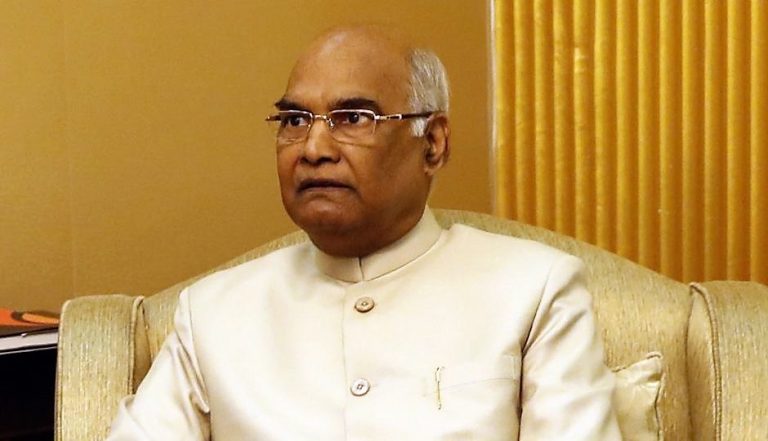
President Ram Nath Kovind follows Dr Kalam’s footsteps, says no to Iftar party at Rashtrapati Bhavan

In a recent decision by the President of India, the Iftar party hosted every year at the Rashtrapati Bhavan won’t be celebrated this year.

“After the Ram Nath Kovind took office, he decided there would be no religious celebrations or observances in a public building such as Rashtrapati Bhavan on taxpayer’s expense. This is in keeping with the principles of a secular state and applies to all religious occasions, irrespective of religion”, said the Press Secretary to President Ashok Malik.


This is a departure from the past, as it is a tradition which has continued for a very long time. The only time it was not celebrated was during APJ Abdul Kalam’s Presidency between 2002 and 2007. The decision not to host Iftar parties was to avoid using secular public institutions to celebrate some religious functions. The practice of Rastrapathi Bhavan hosting official Iftar party is believed to have started in the tenure of Indira Gandhi in 1970s.

It was clear that Iftar would be discontinued when Diwali and Christmas celebrations too were discontinued last year. On Diwali though, the Rashtrapati Bhavan was lit with multi-coloured LED bulbs.

Iftar is the breaking of the ‘roza’ (fast) that is observed by the Muslims during the month of Ramzan.

Last year, the Prime Minister and his cabinet had not attended the annual Iftar party hosted by the then President Pranab Mukherjee. The idea was to dissociate from any religious functions while being incumbent at the public offices to maintain the secular nature of those offices. Prime Minister Modi is understood to be against the policy of appeasing Muslims through symbolic gestures and on the expense of the public exchequer.

West Bengal: maulvi arrested for molesting a minor inside a masjid

A maulvi was arrested in Bardhaman, West Bengal for allegedly molesting a minor inside a masjid. As per reports, the girl’s mother had taken her to the maulvi for ‘black magic’ when the maulvi allegedly took the girl to a room and molested her.

As per reports, he didn’t stop even when the girl objected. Once she started screaming people gathered and caught him in the act. The police have arrested the maulvi, Shinakht Badruddin Shaikh, and further investigation is underway. This, shockingly, happened during the holy month of Ramzan.

An unverified video of the same maulvi being arrested by police went viral on social media.


This is not the first time so-called religious and spiritual leaders are caught sexually abusing minors. Earlier in June, a maulvi was arrested by Jammu and Kashmir Police for physically assaulting a minor boy. Another Jammu and Kashmir Maulvi was booked for allegedly raping scores of minor boys under the pretext of summoning djinns and driving away ‘evil eye’. In September last year, Supreme Court had accepted the appeal against the acquittal of Kashmiri ‘Peer’, Gulzar Ahmad Bhat, who was accused of raping four minor girls. Recently, a Madarsa teacher was held in Kashmir for sexually assaulting a minor student.