Home Blog Page 7350

Budget 2018 : Aiding formalisation and job creation, 3794 crores for MSMEs, 3 trillion rupees for Mudra

0

MSMEs and self employment sectors provide jobs and livelihood for maximum number of people in the Indian economy. Strengthening these two sectors is very important for growth of the economy and job creation.

Allocation for MSMEs

The finance minister while speaking on his plan for MSMEs said

The medium small and  micro enterprises are major engine for growth and employment.  I have provided rupees 3794 crores to the MSME sector for credit support , capital and interest subsidy on innovations. Mass formalisation of business of MSME is taking place in the country after demonetisation and introduction of GST. This is generating an enormous amount of financial information and database of the MSME business and finances. This database will be used for financing the MSMEs and the requirement of working capital.

The finance minister said that it was proposed to take the public sector banks to operate the TReDS system and link it with GSTN . Online loan sanction facilities for MSMEs will be revamped for prompt decision making by the banks he said. Government will soon announce. He also said that the government was looking into measures needed for addressing non performing assets and stressed accounts in MSME sector.

The finance minister has retained 25% corporate tax for MSMEs that were announced last year. He also stated that the NBFC(non banking financial companies) had stepped up lending for MSMEs after demonetisation. He also said that growth of fin-tech would aid MSME sector.

MUDRA yojana

While speaking on MUDRA yojana the finance minister said :

MUDRA yojana launched in April 2015 has led to sanction of loans of rupees 4.6 lakh crores of credit to some 10.38 crore MUDRA loans. 76% of loan accounts are of women and more than 50% of them belong to SC, ST and OBCs. It is proposed to set up a target of rupees 3 lakh crore for lending in 2018-19.

The strengthening of MUDRA loans scheme will further help marginalised sections and entrepreneurs to avail loans from the banks for self employment and business expansion purposes. Thus, the focus on job creation has been given adequate attention by the finance minister in his budget presentation.

Budget 2018 : Government increases allocation for welfare of Scheduled Castes and Scheduled Tribes

0

In the much awaited 2018-19 Union budget, the government has allocated Rs.56,000 crore for the welfare of Scheduled Castes and Rs.39,000 crore for Scheduled Tribes. It is an increase on the Rs.52,393 crores and Rs.31,295 crores that were earmarked for allocation for the SCs and STs in the last budget respectively.


The NDA government has increased the allocation earmarked for Scheduled Castes and Scheduled Tribes every year since it presented its second budget in 2015. In the 2015 budget, Rs.30,851 crore and Rs.19,980 crore were allocated to SCs and STs respectively. The following year, the allocation increased to Rs. 38,833 crore and Rs. 24,005 crore respectively. 2015 had seen a sharp dip however from Rs.50,548 crore and Rs.32,387 crore for SCs and STs respectively.

Budget 2018: Government aims to double farmers’ income by 2022, MSP to be 1.5 times the production cost

0

The 2018 budget, 15 months before the 2019 General Election, brings the focus on agriculture and rural economy. Wooing farmers, a slew of incentives and benefits were announced in the agriculture sector. Along with announcing higher MSP (minimum selling price) for farmers and launch of operation green to boost the produce government has placed higher emphasis on increasing income of the farmers. Government is trying to get 50% more price than the production cost. This could double the farmers’ income by 2022. The government is planning to set up a structure in consultation with NITI Aayog and the state governments are to ensure the farmers get complete MSP even if the market price is lower.

Along with that a corpus of Rs. 2,000 crore will be set up. 470 APMCs (agricultural produce market committee) have already been connected to eNAM (national agriculture market) network and the remaining are expected to be connected by March, 2018. NAM is a pan-India electronic trading portal which networks the existing APMC mandis to create a unified national market for agricultural commodities, thereby providing a single window service for all APMC related information and services.

With a view to boost the food processing sector, the allocation has gone up from Rs. 700 crore to Rs. 1,400 crore whereas the government aims to promote specialized agro-processing and financial institutions.

In 1970, Operation Flood was launched by India’s National Dairy Development Board which transformed India from a milk-deficient nation to world’s largest milk producer. Jaitley announced Operation Green in his Budget speech today which will help farmers generate produce. Rs. 500 crore are allocated for the same. Corpus of Rs. 10,000 was also announced to set up a fund for fishery, aquaculture development and animal husbandry.

Modi govt pushes for Universal Health Care by launching world’s largest govt-funded health programme

1st February, 2018 will do down in India’s financial history as Modi government’s last major budget ahead of of the crucial 2019 polls. What made the budget more special was it being the first, after the implementation of the Goods and Services Tax.

The budget began on a positive note with Finance Minister listing out the positives of the Indian economy like India turning into a $2.5 trillion economy, making it the seventh largest in the world.

One of the major ‘Big Bang’ schemes announced in the first part of the Budget included a major push for universal healthcare via a National Health Protection Scheme (NHPS).

Under this scheme, initially 10 crore poor and vulnerable families would be provided about Rs 5 lakh per year, to go towards medical costs. Expected to benefit about 50 crore people, which turns out to be about 40% of the Indian population, this program is being pegged as “world’s largest government funded health protection scheme”.

While announcing this scheme, FM decided to take things to the next level by indicating that the country might be moving towards Universal Heath Coverage:


Dubbed as Ayushman Bharat, this movement towards Universal Healthcare is 17 times bigger than the current Rashtriya Swasthya Bima Yojana, and is expected to cover about 40% of the Indian population. This as per projections would prevent these 10 crore vulnerable families from falling into poverty due to costs towards healthcare.

Ayushman Bharat, a paperless, cashless and portable scheme, will be further strengthened via setting up of 1.5 lakh health and wellness centres:


Besides these centres, a government medical college would be ensured for every three parliamentary constituencies, which will be achieved by upgrading 24 district level hospitals. A total of Rs 1200 crores has been allocated to the Ayushman Bharat programme for the year 2018-19.

As per the Director (Health) of Niti Aayog, this National Health Protection Scheme would be bolstered via a Public Private Partnership (PPP), and will stimulate private investment in healthcare. This project will also see a streamlined cooperation between small clinics and standardised hospitals, to help develop treatment standards.

In the health care sector, Jaitley also announced an amount of 600 crore for nutritional support of TB patients. And to reaffirm his government’s commitment to public benefit schemes, Jaitley increased the budget for health, education and social security to Rs 1.38 trillion for 2018-19 from Rs 1.22 trillion in current fiscal.

‘We are now firmly on course to achieve a high growth of 8% plus’, Read the Finance Minister’s initial Budget speech remarks

0

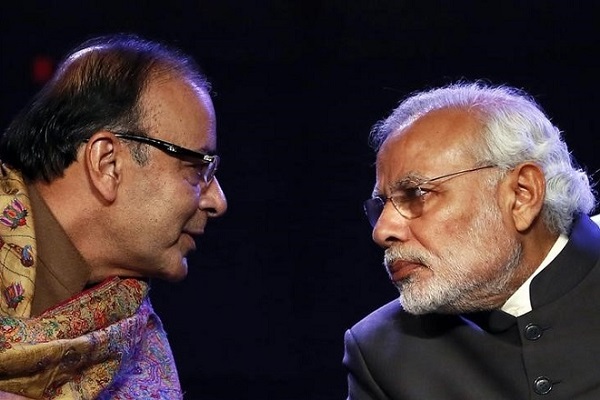
Arun Jaitley stood up to present the final budget of the Modi governments 5 year term in the Parliament. His initial remarks in his budget speech are as below :

  • Four years ago we pledged to the people of India to give to this nation an honest and clean, transparent government. We promised a leadership capable of taking difficult decisions and restore strong performance of the Indian economy.
  • We promised to reduce poverty, expedite infrastructure creation and build a strong, confident and new India
  • When our government took over our country was considered to be a part of fragile five. A nation suffering from policy paralysis and corruption. We have decisively reversed this.
  • The government led by PM Shri Narendra Modi has successfully  in implementing a series of fundamental structural reforms. With the result , India stands out as amongst the fastest growing economies in the world.

The Finance Minister said that the journey has been challenging and rewarding. ‘As a result of this FDI has increased’, he said. He also mentioned that the ease of doing business has improved.

The FM highlighted that the natural resources were being allocated transparently. He said that the benefits to poor has been targeted better with the use of digital technology. Demonetisation has reduced the cash currency in circulation.

‘There is a premium on honesty’ he said.

The insolvency and bankruptcy code had reshaped the lender and debtor relations as per the FM. Jaitley said that these reforms would aid growth in future. Other important remarks of finance minister are :

  • India is now a $2.5 trillion economy, 7th largest in the world.
  • India is expected to become the 5th largest economy very soon, the finance minister informed the house.
  • GDP growth of 6.3% in second quarter signal a turnaround in the economy. We expect to grow 7.2 to 7.5% in the second half (of this fiscal).
  • Manufacturing has returned to returned growth. Service have also resumed high growth in excess  of 8 % .
  • Exports are expected grow at rate 15% in 2017 -18.

“We are now firmly on course to achieve a high growth of 8% plus.”, said an optimistic Arun Jaitley.

‘On one hand Hardik calls for social harmony, on the other, he calls protesting Dalits, goons’ says one Dalit leader

0

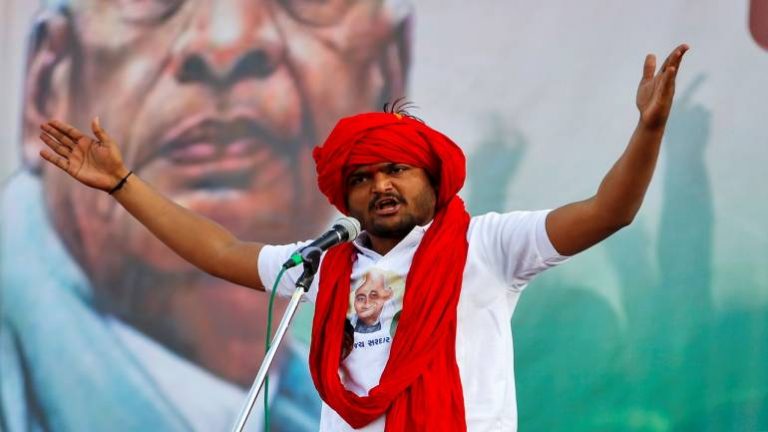
The man behind Patidar reservation stir, Hardik Patel and his new friend Jignesh Mevani were seen supporting opposite parties involved in a land dispute.

The land dispute came to light when 5 Dalit families of the Gitapur village in Ahmedabad sat on an indefinite fast at the mamlatdar’s office in Detroj. They were demanding residential plots for themselves. Dalit leader and independent MLA from Vadgam, Jignesh Mevani visited the Dalit families and extended his support.

The village has a dominant Patidar population and the Patidar leaders were opposed to the demands of the Dalit families. As per reports, they insisted that the land belongs to the village Panchayat. The Patidar leaders also sat in protest at the mamlatdar’s office.

Things took an interesting turn on January 24th when Hardik Patek visited the Patidars sitting in protest, just a day after Jignesh Mevani’s visit. Hardik had also tweeted about the incident.


The administration quickly intervened and resolved the land issue, allowing the Dalit families to convert their agricultural land to non-agricultural plots to build houses. But the Dalit community was angered over Hardik’s statement. They found his statement offensive and were prepared to protest against him. One Dalit leader Kirti Rathod from Hardik’s own hometown Viramgam stated  “On one hand, he (Hardik) talks about social harmony, and on the other hand, he calls protesting Dalits anti-socials and goons. This is not acceptable. We will launch protests against Hardik, seeking his apology for the comments”.
Hardik and Jignesh Mevani’s friendship saw its peak during the Gujrat Elections. While Hardik was seen openly praising Jignesh, Jignesh had supported Hardik during the infamous sex-CD controversy.

On the land-dispute issue, Jignesh Mevani has stated that Hardik’s statements do pose a challenge but that is what caste system does and he will speak to Hardik over the incident.

BJP worker Santosh murdered in Karnataka, one of the accused, Wasim, arrested

0

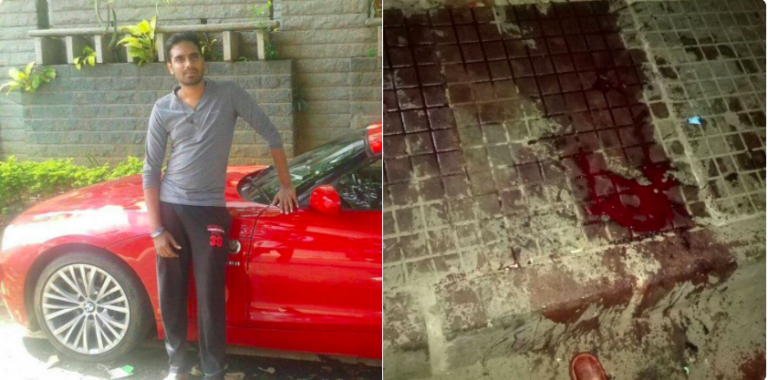
As Karnataka gears up for polls, the bloody campaign seems to have been kicked off as a 28 year old Santhosh, a BJP worker, was stabbed to death by four assailants last night in JC Nagar. Santhosh, who was a member of BJP Yuva Morcha, was allegedly killed over political rivalry. Two of the four accused, Wasim and Philips, have been arrested by the police.

Santhosh, who had the responsibility of a polling booth in the view of upcoming Legislative Assembly elections, was reportedly killed by assailants who held a grudge over his election related activities. The four accused, two of who are arrested, were reportedly planning to kill him since a while, but managed to do it yesterday when he went to have tea.


He was killed when he was putting up buntings for the BJP’s Parivartana Rally, scheduled to be held in the city on February 4. The other two accused, Umar and Irfan, are absconding and according to police, efforts are on to nab the two.

Earlier in January, too, BJP activist Deepak Rao was brutally murdered in Katipalla, Karnataka where six people, Mohammed Rafiq, Irfan, Mohammed Aanas, Mohammed Zahid, Hidayatullah and Imran Nawaz, were reportedly arrested.

As per shocking statistics, as many as 90 political murders have taken place in Karnataka in past 17 years, with upcoming elections expected to rank amongst the most violent in the state.

Has ‘feminism’ gone too far ? Misguided ‘feminist’ says dog sperm is enough to reproduce

0

The simple meaning of feminism is : ‘the advocacy of women’s rights on the ground of the equality of the sexes’. This is a necessity for progress of society and mankind. The basic goal of feminism has been twisted and misinterpreted by some sections of women who claim to be feminists.

Pseudo-feminist logic has been amusing people around the world.  Recently a video of a woman claiming that dog sperm can also be used to give birth has been throwing Twitter into splits of laughter.


The proceedings of the programme on Mahaa News, a regional news channel in South India, went on like this

Female speaker : I broke up with a guy and married another . Am I a playgirl?

Male speaker : No you are not called a playgirl.

Female speaker: Firstly, nobody has the right to label any girl or a boy. It is my choice to do anything. There is no gender here. Just because, you have something extra. I have something extra in my body. It is as simple as that. I have something more. I can give birth. you can’t.

Male speaker: I can give a software to you to give birth. I can give you the formula of a human being.

Female speaker: I was about to say. I don’t need your sperms, even dog sperms can be used to give birth to a human child. Did you know that ? Please read biology.

[ All female participants in the programme clap to this ]

Male speaker: Ok go marry a dog. Find a dog

Female speaker: You are a male chauvinistic dog.

The world is waiting for the its next miracle. A baby born using a dog’s sperm.

Body of Dalit youth beaten to death recovered near a mosque in UP’s Hathras, accused arrested

0

A Dalit youth was beaten to death in the Gadhi Khandari locality (which demographically contains a mixed religious population) of Hathras, UP on Monday night. The body of the youth named Amit Kumar Gautam (27), was recovered from near a Mosque on Tuesday, following which tension spread in the region.

Soon after the incident, the family members of Amit filed a case against five Muslim youths namely Alam, Saddam, Khalid, Sukel and Ashu. Out of these, Alam is a known history-sheeter.

As per the family members, Amit had left home on Monday afternoon saying that he was going out to correct a certificate. After he failed to return home by late evening, they decided to go and search for him, but returned empty handed. At about 7 AM they were informed about his battered body being recovered from the mosque square area.

Reaching that area, to their horror they found him crushed beneath the mosque gate, with grave injuries on his head and neck. The Station House Officer later took possession of the body and after seeing a communal atmosphere being created, police force was deployed in the area and at the postmortem centre.

The police seems to have swiftly acted in this case, and has proceeded to arrest two of the accused named Alam and Saddam.

As per an Amar Ujala report, the murder was committed due to a dispute over a motorcycle. The report claims that Amit had given Alam his motorcycle as a collateral, but was dithering from handing over the bike. It has also been alleged that the accused even tried to attack Amit on Saturday while he was travelling on a bike but was saved after people came to his rescue.

After the news of the incident spread, people protested at the postmortem centre and members of the BJP, Hindu groups like the Hindu Yuva Vahini too reached the area.

Even though the left regularly tries to peddle a “Dalit-Muslim unity” narrative, there have been glaring instances of Dalit persecution by Muslims.

Apart from the aforementioned incident, it was recently reported that Dalit family livingin Mewat Haryana, has alleged that it was brutally attacked by the village goons for refusing to convert to Islam. Besides this even castiest slurs were hurled at them.

In a ground report about the incident by Swarajya, the Dalit family was seen recounting its plight, and then spiritedly reaffirming that they would prefer dying than giving up their religion.

Reports suggest Kasganj’s Chamunda temple could have been the epicenter of communal tension, days before Tiranga Yatra

0

Kasganj has been the subject of a lot of conjecture and surmise. A youth named Chandan Gupta was murdered in communal clashes which erupted over flag march in Kasganj, Uttar Pradesh. While this is quite clear, the exact cause of the flare up is still being debated. Every side has their own version.

The sequence of events reminds one of the celebrated movie maker Akira Kurosawa and his movie named “Rashomon”.  In the critically acclaimed film, a murder is described in four mutually contradictory ways by its four witnesses. This phenomenon, where the same event is given contradictory interpretations by different individuals involved, is now known as the “Rashomon effect”. The unravelling of the Kasganj case is a real life example of that.

The event here is the murder of Chandan Gupta. The build up to the murder, the reasons, the causes, are still being investigated and each day a new version emerges. Media houses are split vertically on ideological lines, each trying to push a particular version ahead. The versions are sometimes of the people involved, and sometimes that of the media houses itself.

Chandan’s parents have claimed that their son was killed for refusing to chant “Pakistan Zindabad”. Media “ground reports” on the other hand spoke to the muslims in the area, who claim that an “unathorised” bike rally disrupted their Republic Day function, ‘objectionable slogans’ were raised, and matters escalated. Bareily DM hinted at a “strange trend” of moving into Muslim dominated areas and provoking them. Yet another report claims that the initial fight began 6 days before on social media, and then descended on to the lanes of Kasganj. The alleged shooter is also said to have links with Samajwadi Party, as per some reports.

Amidst this heavy cocktail of information, the truth is lost. One more version to this gruesome murder is emerging. While all the above theories came to the fore after the murder, this version was first reported on 23rd January 2018, much before any such yatra etc took place.

A report in Amar Ujala on the above date, states that communal tensions had begun rising on 23rd January itself, when an incident took place at the Chamunda temple gate in Kasganj. Initially, a complaint was filed with the local administration that the movement of heavy vehicles from right in front of the Chamunda temple must be stopped. Hence, as per the report, it was decided to place barricades on half the gate, to block heavy vehicles.

However, the home guard on duty installed the barricades on the full gate, thereby blocking the movement of heavy as well as light vehicles. The report claims that this angered the “other community”. They reportedly went to the gate and protested this move. As matters heated up, the home guard called Inspector Padma Singh, who seeing the tension, removed the barricades.

However, he instructed the crowd that only light vehicles will be permitted and the police will act if any heavy vehicles are found moving on that road. Superintendent of Police Sunil Kumar Singh also later clarified that the intention was to barricade only half the gate so as to block only heavy vehicles.

The above report in Amar Ujala is significant because it was published way before the tiranga yatra and the murder. This report is not an attempt to re-imagine and retrace the steps to the eventual incident. Hence the facts presented here do not suffer from the ideological biases which may have crept into reports post the incident.

Was this the starting point of the communal tension? Was the tiranga yatra just the final straw which broke the camel’s back? Some media reports have hinted at this possibility. It may be noted here that this are around the Chamunda temple has been in the news earlier too. It has been a place known for crime and demands have been made to increase security in the area.

Where does this version fit in the various “truths” and “ground reports” of Kasganj? Can there be a more complicated truth which complements all the various versions? It may take a while for the full story to emerge.

As of now, it seems like the truth too is deemed to be a casualty. Just like Chandan.