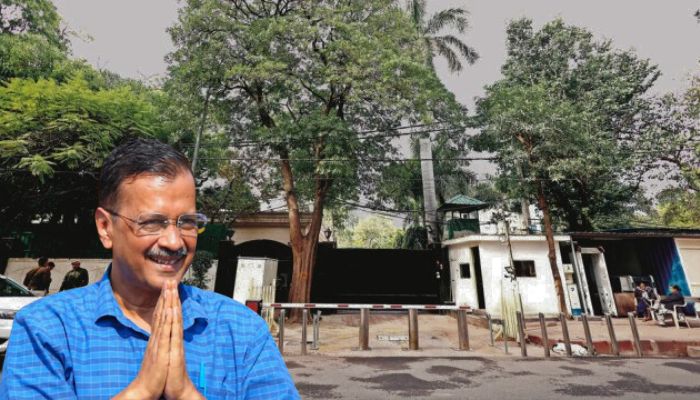
The Public Works Department (PWD) has released a detailed list of inventory in the ‘Sheesh Mehal’ located on 6, Flagstaff Road in Delhi. It was the official residence of former Delhi Chief Minister Arvind Kejriwal for 9 long years.
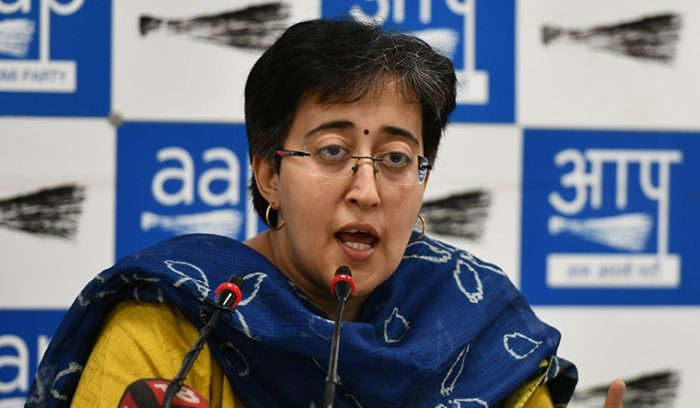
PWD prepared the list of inventory after the Delhi CMO (Chief Minister’s Office) asked it to allot the sprawling bungalow to the incumbent Chief Minister Atishi Marlena.
While slamming the Aam Aadmi Party supremo, BJP spokesperson Amit Malviya tweeted, “Here is the list of electric appliances and gadgets installed in Arvind Kejriwal’s ‘Sheeshmahal’.”
He claimed, “But here is the surprise. Fully automatic, sensor-equipped TOTO smart toilet seats with features like, automatic open-close seat, heated seat, wireless remote deodorizer and automatic flushing, installed for the comfort of Arvind Kejriwal’s bum, go missing. Cost of one such toilet seat ranges between rupees 10-12 lakh!”
Here is the list of electric appliances and gadgets installed in Arvind Kejriwal’s ‘Sheeshmahal’.
But here is the surprise. Fully automatic, sensor equipped TOTO smart toilet seats with features like, automatic open-close seat, heated seat, wireless remote deodorizer and… pic.twitter.com/X7McPV5llH
80 Window curtains – Between ₹4 crores – ₹5.6 crores
Superior Water supply – ₹15 crores
In 2013, Arvind Kejriwal stated that he and his AAP ministers would not occupy the government-provided bungalows and instead opt for smaller government flats. 11 years on, the lofty promises and claims made by him appear nothing but political grandstanding.
Arvind Kejriwal spent ₹45 crores on renovation
The ‘Sheesh Mehal’ of Arvind Kejriwal is spread across a 13000 square feet area. The residence has a 399 square feet lawn area and is equipped with all modern facilities imaginable.
Times Now reported last year that Arvind Kejriwal stayed with his family on the first floor. The ground floor has a large meeting hall and a visitor’s room. The bungalow is spacious with state-of-the-art interior design, flooring and high-grade furniture.
In videos that surfaced on social media in May 2023, it could be seen that the residence of Arvind Kejriwal has automatic motion-sensing doors in all rooms.
Times Now Navbharat had found that the official bungalow of ex-Delhi CM Arvind Kejriwal in Civil Lines was renovated at a cost of almost Rs 45 crore.
The report, termed “Operation Sheesh Mahal,” said that Rs 44.78 crore of taxpayer funds were utilised for the renovations, raising questions about the Aam Aadmi Party’s commitment to promoting austerity.
Actress Shabreen has been arrested for kidnapping a three-and-a-half-year-old boy in Palghar district, the Waliv police confirmed on Sunday.
Shabreen was romantically involved with the boy’s uncle, Brijesh Singh. However, due to differences in their communities, Brijesh’s family opposed their marriage.
Senior officer Jayaraj Ranawane, confirming the arrest, said, “Shabreen was so infatuated with Brijesh that she lost awareness of her actions, despite her roles in crime serials like ‘Crime Patrol’ and films based on real events.”
The police are also investigating Brijesh’s involvement in the kidnapping, as he was seen with an unidentified female accomplice.
Shabreen and Brijesh had been in a relationship for several years, but due to caste and religious differences, Brijesh’s family did not approve of their union. Despite Shabreen’s attempts to win them over, the family remained opposed, leading her to take drastic measures, which resulted in her arrest.
According to the Waliv police, Brijesh’s nephew, Prince, had been attending classes regularly. On Saturday, around 11 AM, Shabreen arrived at the school and later returned to pick him up. As Prince recognised her, he willingly went with her when she claimed she was taking him for medication.
When Prince did not return home by the afternoon, his family enquired at the school and learned that he had left with a woman who claimed she was taking him to the doctor.
The Waliv police reviewed CCTV footage that showed Shabreen taking the child away in an auto-rickshaw, accompanied by another woman. After questioning the auto driver, the police discovered that he had dropped Shabreen off in Naigaon. Witnesses later identified her from photographs. The police traced her mobile phone location and arrested her in Bandra.
During questioning, it was revealed that Prince was being kept in a flat in Naigaon. He was rescued, and Shabreen was taken into custody. Investigations into Brijesh’s involvement are ongoing, as is the search for the unidentified female accomplice.
(This news report is published from a syndicated feed. Except for the headline, the content has not been written or edited by OpIndia staff)
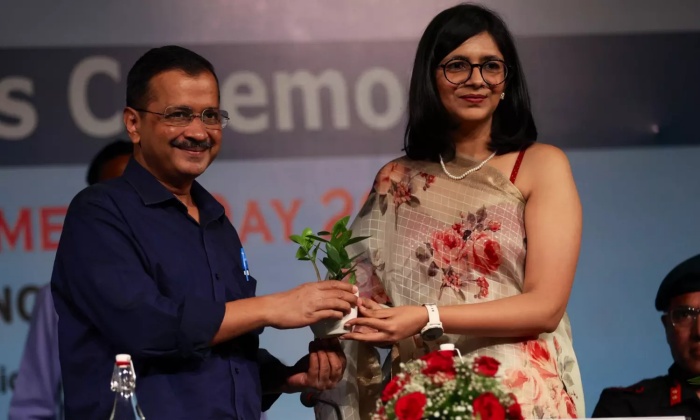
Aam Aadmi Party (AAP) Rajya Sabha MP Swati Maliwal on Sunday questioned how the party’s national convenor, Arvind Kejriwal, could live in a luxurious house when 40 percent of Delhi’s population resides in slums.
Taking to X, Swati Maliwal wrote in a post: “The great man who built this palace had once criticised the 10 ACs installed in Sheila’s house, saying – ‘Who pays the bill for all this? You and I pay it. My heart trembles thinking that when 40% of Delhi’s population lives in slums, how can a Chief Minister live in such a luxurious house?’
“Remote-controlled curtains worth Rs 5.6 crore, railings worth Rs 1 crore, automatic doors worth Rs 70 lakh, TVs worth Rs 65 lakh, remote-controlled lights worth Rs 30 lakh, toilet seats worth Rs 12 lakh each (which are reported to be missing), a fridge worth Rs 9 lakh, a massage chair worth Rs4 lakh, and so much more…”
Earlier on October 8, Maliwal had sharply criticised AAP for its poor performance in the Haryana assembly polls, accusing Kejriwal of coming to Haryana solely to ‘take revenge’ on Congress.
In a post on X, Swati Maliwal accused AAP of “betraying” the INDIA bloc and splitting the Congress vote.
“He came to Haryana only to take revenge on Congress. He falsely accused me of being a BJP agent, yet today he himself is betraying the INDIA alliance and splitting the INC vote! Forget everything else, a candidate was even fielded to defeat Vinesh Phogat,” Maliwal stated. Further attacking Kejriwal, she claimed that the former Delhi Chief Minister couldn’t even manage to save the party’s account in his home state, Haryana. She also urged the party to abandon its “ego” and “stop the drama.”
Maliwal added, “Why has it come to the point where you can’t even save your deposits in your home state? There is still time, let go of your ego, lift the veil from your eyes, stop the drama, and work for the people.”
(This news report is published from a syndicated feed. Except for the headline, the content has not been written or edited by OpIndia staff)
On Saturday, 20th October, Canadian police once again attempted to needle India to secure Khalistani votes and issued a statement that there is no “imminent threat” to the public from India. The remarks by the police came days after the Royal Canadian Mounted Police (RCMP), the country’s national police service, publicly accused “agents of the Government of India” of being involved in violent acts on Canadian soil, including homicides.
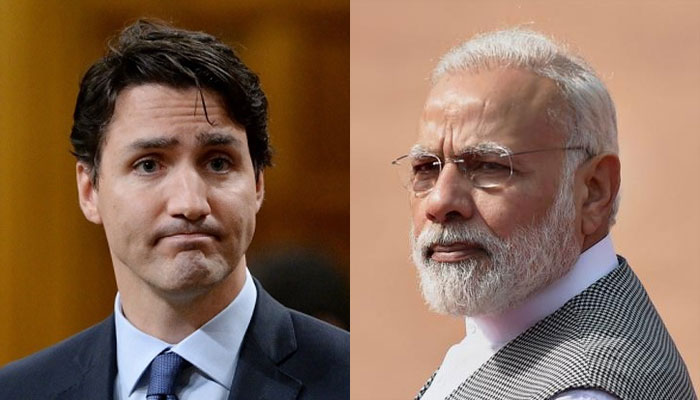
The RCMP’s top officials also accused Indian media outlets of presenting “false” reports on the matter and claimed that the Canadian police were trying to “correct the record.” The RCMP’s remarks against India came hours after the Prime Minister of Canada, Justin Trudeau, publicly accused the Government of India of being involved in the murder of Khalistani terrorist Hardeep Singh Nijjar.
Assistant Commissioner of the RCMP, Brigitte Gauvin, said in a statement to Canadian Broadcasting Corporation (CBC) News, “There was no imminent threat behind the announcement.” The RCMP has claimed to be investigating “widespread acts of violence,” including the murder of Nijjar. In September 2023, Trudeau had accused Indian agents of being behind his murder, and since then, diplomatic relations between India and Canada have deteriorated without any sign of recovery.
In an interview aired on 20th October, on CBC, Gauvin claimed that a number of efforts were undertaken before going public against India, including the presentation of evidence to Indian law enforcement agencies and meetings between senior Canadian and Indian government officials. She further claimed that those efforts were “unsuccessful.”
Notably, in a recent release, India included the name of a Canadian Border Service Agency (CBSA) official on the list of wanted pro-Khalistani terrorists that India wants deported from Canada. According to media reports, Sandeep Singh Sidhu, a member of the banned International Sikh Youth Federation (ISYF), is employed with the CBSA. He was allegedly involved in promoting terrorism in Punjab.
India released the list with Sidhu’s name after the RCMP named Indian High Commissioner Sanjay Kumar Verma and other diplomats as persons of interest in the murder of Khalistani terrorist Hardeep Singh Nijjar. The RCMP has also claimed that the Indian Government has been using the Lawrence Bishnoi Gang for criminal activities in Canada.
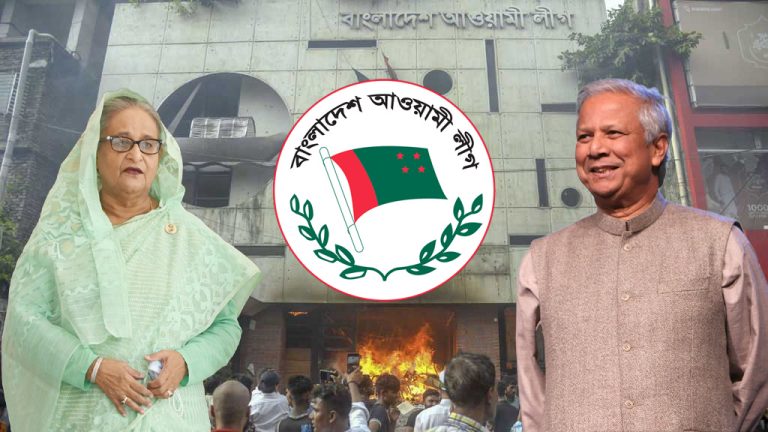
The Interim Government in Bangladesh will not allow the Awami League party to participate in the political process, said the chief adviser’s office yesterday. This means, former PM Sheikh Hasina’s party won’t be allowed to contest the elections, expected to be held next year after extensive constitutional changes.
“Those who had taken part in the last three elections and come to parliament illegally deceived the people, and the interim government will of course put obstacles to their political participation,” said Mahfuj Alam, special assistant to the chief adviser Muhammad Yunus.
The official hinted that apart from administrative orders banning AL from electoral politics, legal measures will also be taken so that the party can’t contest polls and come back to power. Alam said, “You will see how these barriers will come into effect. It has a legal aspect and it has an administrative aspect — you will see it soon. These things will become clearer when the election process starts.”
On the question of banning Awami League altogether, he said that it will be decided after discussions with different political parties, adding that the interim government will not take the decision unilaterally.
Notably, on 1st September, the Bangladesh High Court rejected a writ petition seeking its order to ban Awami League as a political party and cancel its registration. The Attorney General had opposed the petition, saying that the current government has no intention to ban any political organisation.
Notably, in August, then Home Affairs advisor M Sakhawat Hossain had ruled out banning the political party in August. He had said that the party has made many contributions to Bangladesh, and it should contest elections. Soon after his ‘pro-Awami’ comments, he was removed from the home affairs and made the adviser of textile and jute.
During a meeting with chief adviser Yunus yesterday, some parties demanded a ban on AL and its allies, or at least keeping them out of the next national election. Jatiya Party and other allies of Awami League were not invited to the meeting.
Mahfuj Alam said that AL’s allies were not invited because they provided “silent support and participated in the illegal elections”. He said, “The interim government has made it clear that those parties were allies of fascism and consented to genocide — they took a stance directly against the people. Similar views were expressed by the political parties.”
In the meanwhile, the govt is probing how Sheikh Hasina and other AL leaders fled the country on and after 5 August. Shafiqul Alam, press secretary to the chief adviser, said that there was no govt from 5 to 8 August, and the police were on strike for a week, which gave them the opportunity to leave the country.
In the meeting, the parties urged the interim govt to hold the election as soon as possible. Notably, earlier Law Adviser Asif Nazrul said the next national election could be held by the next year. The govt is going to form a new Election Commission through a search committee, after which the polls process will start, beginning with updating the voter list.
Mahfuj said regarding the elections, “The chief adviser said very soon a search commission will be formed to appoint the EC (Election Commission) according to the rules. More discussions will be held on deciding when and how the election will be held and the voter list will be reorganised.”
The material that was used in the blast outside the Central Reserve Police Force (CRPF) school in Rohini, Delhi, resembles a crude bomb, but the details will be clear after full reports are received, Forensic Science Laboratory sources said.
According to the initial investigation, no terror angle has been found, but the final clarity will be given by the Forensic Science Laboratory (FSL) team, sources said.
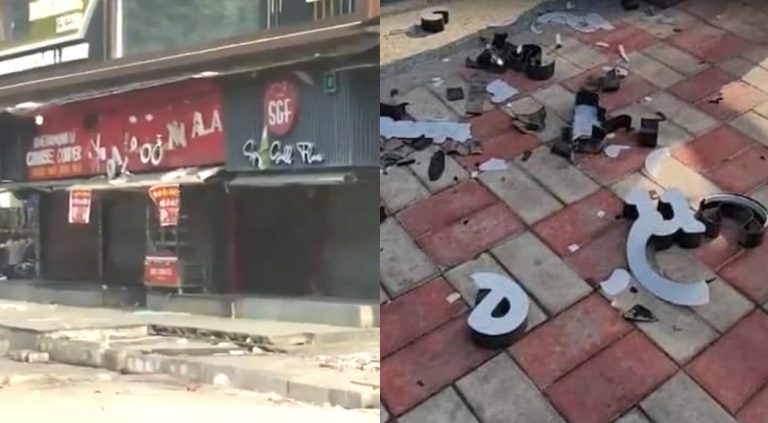
No injury was reported from the blast, but the glasses of nearby shops and a car were found damaged, the police said.
The area has been cordoned off, and a fire brigade team is also present at the spot. The Special Cell of the Delhi Police terror unit also reached the spot.
A loud blast was reported outside the CRPF school in the Prashant Vihar area of Rohini district early Sunday morning.
Delhi police received a PCR call at around 7:45 am informing them about the blast.
The station house officer (SHO) and staff arrived at the scene, where they found the school wall damaged and a foul smell in the air.
“Today at 07:47 AM, a PCR call was received in which the caller informed that a blast with lots of noise took place near the CRPF school in Sector 14, Rohini. The SHO and staff reached the spot, where the school wall was found damaged with a foul smell. The glass of nearby shops and a car parked near the shop were also found to be damaged. Fortunately, no one was injured,” the Delhi Police said in a statement.
A crime team, FSL team, and bomb disposal squad have been called to the spot. The fire department was also notified around 7:50 am, and two fire trucks were sent to the scene.
Fire department teams are at the site and are continuing to investigate and search the area along with police to determine the nature of the blast. The sewer line is also being checked, and CCTV footage is also under review to identify the type of blast involved, the police said.
The National Security Guard (NSG) has also been informed and they may arrive at the crime scene soon.
(This news report is published from a syndicated feed. Except for the headline, the content has not been written or edited by OpIndia staff)
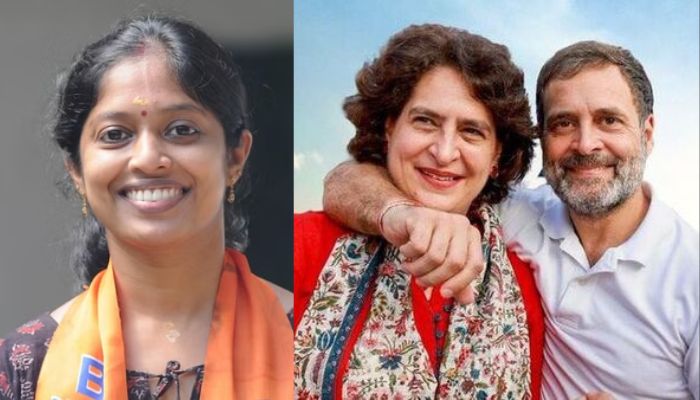
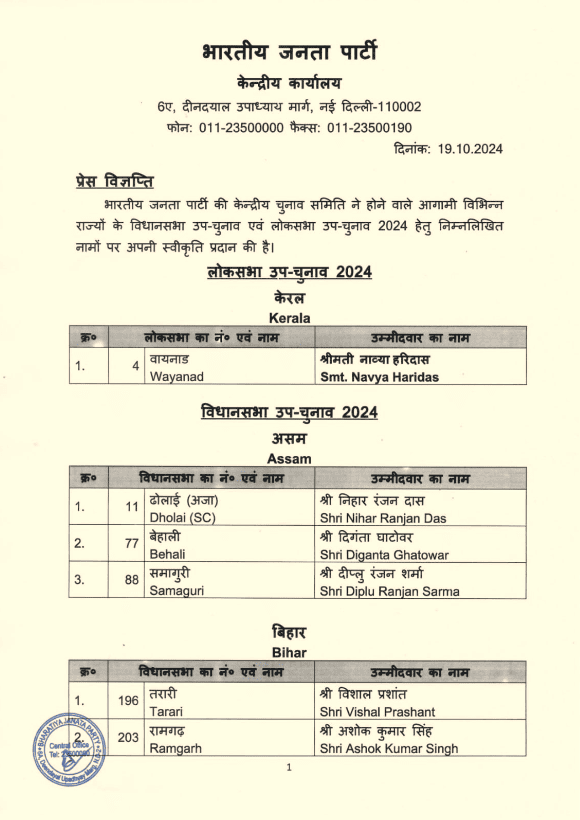
On Saturday (19th October), the Bharatiya Janata Party (BJP) announced Navya Haridas as its candidate for the upcoming Wayanad bypoll, which is scheduled to take place on 13th November this year.
Navya Haridas is the General Secretary (Kerala unit) of BJP Mahila Morcha. She is 39 years old and has served as a 2-time councillor in Kozhikode Municipal Corporation.
An engineer by education, Navya Haridas was previously fielded by the BJP from the Kozhikode South constituency during the 2021 Kerala Vidhan Sabha election.
BJP fields Navya Haridas fielded from Wayanad
While speaking to India Today, she stated, “People in the Wayanad need some advancement there. The Congress family is not actually meeting the requirements of the people of Wayanad.”
Naya Haridas emphasised, “From this election onwards, Wayanad residents need a better member in Parliament who can address their issues. I have administrative experience like I have been elected twice as a councillor in Kerala.”
“So, for the last eight years, I have been in the political field, serving the people, knowing their problems, and always being with them,” she pointed out.
Congress party dynast Rahul Gandhi won from both Amethi and Wayanad Lok Sabha constituency and chose to vacate the latter. The grand old party is now fielding his sister Priyanka from the seat, with a substantial Muslim population.
The results for the bypoll will be declared on 23rd November 2024.
The Aam Aadmi Party led Delhi government has said that a major reason behind the deteriorating air quality in Delhi, especially in the Anand Vihar area, is the buses coming from the neighbouring state of Uttar Pradesh.
Delhi Chief Minister Atishi and Environment Minister Gopal Rai on Sunday carried out an inspection at the Anand Vihar area, where the Air Quality Index (AQI) has fallen to 454 at 8:30 am, classified as “severe.”
Highlighting the steps taken to control air pollution, the Chief Minister said that anti-pollution measures are being strictly deployed and teams have been formed for dust control measures.
Speaking to reporters, Atishi said, “Anti-pollution measures are being strictly deployed in Delhi. We have formed 99 teams who are carrying out dust control measures across Delhi. We have started the process of deploying more than 325 smog guns. PWD and MCD have deployed all their resources to combat pollution in Delhi. Anand Vihar, being on the border of Delhi and UP, is one such hotspot where the AQI is the highest.”
“I and Environment Minister Gopal Rai have personally visited the area to oversee all the pollution control measures… All roads in the area have been repaired to avoid any kind of dust. Encroachment removal drives have been carried out in congestion points,” she added.
CM Atishi further said the major reason behind poor air quality in the Anand Vihar area is the buses coming from Uttar Pradesh, and a discussion is needed with the UP government.
She also expressed concern over the Yamuna River’s rising pollution levels, saying, “We will talk to the UP government as well…The major cause of pollution in Anand Vihar is the buses coming from UP. Haryana and UP release their untreated effluents into the Yamuna.”
Environment Minister Gopal Rai also stressed the issue of buses coming from UP, while claiming that the smoke from those buses is “doubling the pollution” in Delhi. He further requested the UP government to conduct water sprinkling in the Kaushambi bus depot.
“The pollution level in Delhi is in the ‘poor’ category. But the pollution level in Anand Vihar has been at a very high level for the last 4-5 days…Anand Vihar is Delhi’s bus terminal and the Kaushambi bus terminal is right opposite to it. Diesel buses are coming here in huge numbers from Uttar Pradesh. The smoke from those buses is doubling the pollution in Delhi… I request the UP government to conduct water sprinkling in the Kaushambi bus depot… We can bring a solution with joint effort,” Rai told reporters.
On the pollution in Yamuna River, he said, “BJP creates a problem and then makes a video. Our job is to clean it. The cleaning is underway and we are preparing for the Chhath pooja… In Kalindi Kunj also, we will clean all the dirt coming from UP.”
Meanwhile, a layer of fog engulfed parts of the national capital on Sunday morning, as air pollution has been on constant rise. The AQI at Dwarka, sector-8, has fallen to 311 at 8:30 am, marked under the ‘Very Poor’ category.
The AQI at ITO in the national capital stood at 232 at 8:30 am, marked under the ‘Poor’ category. Jahangirpuri has recorded AQI at the mark of 350 at 8:30 am, putting it under the ‘Very Poor’ category. The AQI has been recorded at 254 at Nehru Park and surrounding areas, marked under the ‘Poor’ category.
Notably, as per the Central Pollution Control Board, the AQI, when marked under the ‘Severe’ category, can possibly affect healthy people and seriously impact those with existing diseases. AQI, when under the ‘Poor’ category, can cause breathing discomfort to most people on prolonged exposure, whereas, when under the ‘Very Poor’ category, it can cause respiratory illness on prolonged exposure.
With the rise in pollution level, toxic foam has been evidently visible on the Yamuna River in the Kalindi Kunj area of Delhi for the last few days.
(This news report is published from a syndicated feed. Except for the headline, the content has not been written or edited by OpIndia staff)
On Saturday, 19th October, a revealing yet baffling interview was published by journalist Shubhankar Mishra with former Home Minister and (now retired) senior Congress leader Sushil Kumar Shinde, in which the politician admitted that adding ‘Atankwad’ as a suffix to ‘Bhagwa’ was a mistake. Speaking to Mishra, Shinde said he did not know why Congress added the suffix when it happened. Interestingly, he also failed to acknowledge that Afzal Guru was a terrorist. His expression of faith in Rahul Gandhi’s leadership and some other aspects of the interview made it evident that Congress party leaders, present or former, are still out of touch with the nation’s sentiments.
Bhagwa Atankwad: Congress’s dangerous flirtation with anti-Hindu rhetoric
During the interview, Mishra asked Shinde about his notorious “Bhagwa Atankwad” or “Saffron Terrorism” remark. It is a term coined, popularised, and exploited by Congress leaders to malign the Hindutva movement. Speaking to Mishra, Shinde admitted that the term was a mistake.
Question: Retirement के बाद आपको लगता है कि ‘भगवा आंतकवाद’ कहना ठीक था ?
He said, “I don’t know why the word ‘terrorism’ was used. It shouldn’t have been. It was wrong at that time.” However, this half-hearted admission does not excuse the damage caused by the Congress party’s irresponsible and baseless allegations against Hindus, which have only served to alienate the majority population.
Shinde attempted to downplay the issue and suggested that the term was coined based on certain records. He claimed that it was meant only for the party’s consumption, but the reality is that Congress leaders, including him, have often sought to demonise Hindutva to please the minority vote bank. Saffron, which is a sacred colour in Hinduism, was presented as a symbol of terrorism, and Shinde’s admission only highlighted the deep-seated anti-Hindu bias among Congress leadership.
Afzal Guru execution: A job Congress reluctantly handled
When Mishra questioned Shinde about the execution of terrorist Afzal Guru, he failed to acknowledge that Guru was linked to Islamic terrorism. He said, “The decision was made by the Supreme Court, and as Home Minister, it was my duty to implement that order.” When Mishra asked if he thought Guru was a terrorist, Shinde categorically asked not to put words in his mouth.
Sushilkumar Shinde: देश की कोर्ट के फ़ैसले के अनुसार हमने Afzal Guru फांसी दी।
Question: पर Supreme Court ने Afzal Guru को आतंकवादी मान कर फांसी दी थी। आप आंतकवादी मानते हैं ना ?
This blunt answer and refusal to accept that Guru was indeed a terrorist revealed how Congress leaders feel uncomfortable taking strong stands against terrorists, especially when it comes to appeasing their base in Kashmir and the left-leaning section of society.
Afzal Guru was executed in 2013. The decision was long overdue, and the Congress-led Government of India dragged its feet for years in implementing it. Shinde’s repeated emphasis on the notion that he was only following the apex court’s orders reflects how the Congress party lacks the determination to deal with terrorism with an iron fist. Moreover, as Shinde distanced himself from the decision and presented it as merely a bureaucratic procedure, it exposed the reluctance within Congress to confront Islamic terrorism.
Kasab and the biryani meme: Congress’s weak response to Pakistan’s aggression
Shinde categorically denied any knowledge of 26/11 Mumbai attacks accused Ajmal Kasab being fed biryani in jail. He said that as he was not Home Minister at that time, he did not “know anything about that.” It was revealed by the prosecution that the “biryani” incident did not happen and was just a tactic to form public opinion. Despite this information being in the public domain, Shinde was reluctant to talk on the topic of Pakistan-sponsored Islamic terrorism.
Kasab’s case was not just about the 26/11 terrorist attack. It was about the larger issue of Pakistan-sponsored terrorism in India. Congress failed to send a strong message following the attack. Instead of taking decisive action, the Congress-led Government of India was content with diplomatic hand-wringing. Not playing cricket is not the answer the people of India expected from the Congress party.
Notably, under the Modi government, India has demonstrated that it is capable of taking tough decisions and engaging in actions that show how to deal with terrorism the right way. Surgical strikes and the Balakot airstrike in response to terror attacks were a far cry from Congress’s inaction following the 26/11 terror attack.
Rahul Gandhi’s leadership: A liability, not an asset
One of the most glaring aspects of the interview was how Shinde went on to defend Rahul Gandhi’s leadership. It is a fact that since Rahul became one of the most relevant faces of the Congress party, it has failed to mark any major victories. Being defeated three times in Lok Sabha elections is not what Congress workers and voters would have expected.
Contrary to the facts, Shinde compared Rahul Gandhi’s political journey to that of Indira Gandhi. He stated that just as Indira was called a “dumb doll,” Rahul is being unfairly criticised by the Bharatiya Janata Party (BJP). He said, “If he makes a mistake, he thinks about it and corrects it. That’s his biggest strength,” while desperately attempting to paint Rahul as a leader who learns from his failures.
The reality is far from the idealised portrayal of Rahul Gandhi by Shinde. Since Rahul became an important leader for the Congress party, it has seen disastrous performances in the 2014 and 2019 general elections. There have been issues, including a lack of vision, incoherent policies, and an inability to connect with the electorate under Rahul Gandhi’s leadership.
While Mallikarjun Kharge may be the current president of the Congress party, everyone knows who is running the show. Shinde’s comparison of Rahul to Indira Gandhi is not only laughable but also exposes Congress’s inability to recognise the root cause of its decline—its leadership crisis. The recent defeat in Haryana should be seen as a clear sign that the Congress party needs an overhaul, which it is unwilling to undertake.
Shinde on PM Modi: ‘A hard worker, but held back by his party’s ideology’
An interesting turn of events occurred during the interview when Shinde actually praised Prime Minister Narendra Modi. He admitted that Congress did not expect him to become PM of India, let alone win three times. He acknowledged that PM Modi is a tireless worker and said, “He is hardworking. He puts in a lot of effort, and I’ve observed that since then.” However, Shinde was quick to add that Modi’s potential is held back by the ideology of his party, the BJP. According to Shinde, if the party’s thinking did not limit him, PM Modi “could have achieved even more.”
Congress’s decline in Maharashtra: A party that has lost its way
Shinde’s comments on the upcoming Maharashtra elections only underline Congress’s increasing irrelevance in the state’s political landscape. Despite his attempts to paint a feel-good picture of Congress’s chances, Shinde’s remarks reveal a party that is struggling in the state. He expressed optimism about voters being “tired of the BJP’s politics of breaking alliances,” but failed to acknowledge that it is Congress’s own opportunism and lack of vision that have pushed the voters towards the NDA.
Shinde praised the Shiv Sena-Congress alliance as a strategic move during the interview. However, the truth is that Congress has been rapidly losing ground in Maharashtra and other states. Under the leadership of PM Modi, the BJP has continued to command massive support across the country, including Maharashtra. Shinde’s criticism of the BJP’s third-term victory, calling it a “decline in graph,” reeks of denial, as he fails to understand the clear mandate given to the BJP by the people, as it is a fact that all the opposition parties combined could not match the number of seats (240) that the BJP won during the Lok Sabha Elections. Furthermore, Haryana’s Assembly Elections results have further cemented that the Congress has continued to lose its voter base across the country.
A legacy of contradictions: Shinde’s selective admissions and Congress’s decline
The interview showed how Congress leaders are still living a life full of contradictions. While Shinde admitted in the interview that terms like “Saffron Terrorism” were mistakes, he failed to recognise the lasting damage they have caused. His defence of the Congress’s handling of national security issues, particularly the Afzal Guru execution and the Kasab case, reflects a party that continues to hide behind legalities and bureaucratic procedures rather than taking strong stances. Even though he praised Rahul Gandhi, it remains a fact that Congress is still struggling with leadership failures.
Notably, when asked about the abrogation of Article 370, he claimed that many in Kashmir still wish for Article 370 to be restored. His reasoning was that Umar Abdullah’s party came back to power. He also claimed that the remarks he made about going to Kashmir during his tenure as Home Minister were merely a joke and were blown out of proportion by the BJP. It was clear that he was trying to save his reputation, as he had admitted to being scared of going to Kashmir due to terrorist activities under Congress rule at the Centre.
Ultimately, Shinde’s interview is proof that Congress is still stuck in the past and lacks bold leadership. The party is not interested in taking responsibility for its actions or doing anything that may anger its minority voter base. So much so, Congress leaders do not even want to acknowledge that Afzal Guru was a terrorist. Congress and its current leadership are not bold enough to match the strength of PM Modi, which requires conviction, not confusion.
A 21-year-old Yazidi woman named Fawzia Amin Saydo, who was recently rescued from Gaza, revealed that ISIS terrorists fed them the meat of slaughtered babies.
She was abducted as a child from Iraq at the age of 11. Fawzia was then sold in Syria as a slave. She spent 10 years in ISIS captivity in Gaza before being finally freed in October this year.
Her release was facilitated by human rights activists and the Israeli government after a video of her, pleading for help, went viral on social media.
The Israeli public broadcaster published exclusive recordings of Fawzia Amin Sido, the Yazidi girl who was recently rescued from the Gaza Strip after being kept by a militant for years.
Destroys the lie that Hamas and ISIS have nothing to do with one another. Same ideology,… pic.twitter.com/btQBA09HSu
“I hope you can rescue me from this place. If anyone comes and enters Palestine, no matter the location, I will go to them,” she was heard saying.
During an interview with documentarian Alan Duncan for The Sun, Fawzia revealed being held hostage by Hamas and how it was not different from being under the Islamic terror outfit ISIS.
She was repeatedly raped, abused and subjected to unspeakable violence. The Yazidi girl had to live without food for days before being conspicuously given the meat of dead babies to eat.
Hey, @CBSNews & @Joanne_Stocker, Fawzia Sido wasn’t just stranded—she was sold to a Palestinian ISIS terrorist and held hostage as a sex slave for a decade.
She was only 11 when kidnapped. Israel rescued her after eliminating her captor.
“While we were eating we knew something was wrong because the taste was weird but we just ate because we were hungry. After, we all had stomach ache and felt sick. When we were done, they told us that the meat was from the babies…They showed us pictures of the beheaded kids and babies and said ‘these are the kids you ate’,” she narrated to The Sun.
Fawzia was sold a total of 5 times and her last ‘owner’ was a Palestinian terrorist, who drugged and raped her regularly.
She said, “At the beginning, I would hide in the bathroom until he was asleep because I didn’t know what he wanted from me. I was scared. I didn’t want him to do anything. When he noticed I was hiding, one day he gave me drugs and I fell asleep and he raped me.”
The Devastating Story of Fawzia Amin Saydo:
Handed plates of meat, she and dozens of other desperate women and children realised something was wrong as soon as they started eating.
Having been barbarically left without food for days, they had little choice but to accept it.
Fawzia was rendered pregnant due to the repeated sexual abuse and became a mother of two by the age of 15. She was also forced to convert by ISIS brides. Her life became a living hell under Hamas when the Yazidi woman was taken to Gaza.
“There was one time Hamas held a gun to my head and to my side when I went outside with her friend. They said it was not allowed,” she emphasised. Fawzia informed that Hamas used hospitals as bases for terrorists. She added, “They all had weapons, everyone had weapons everywhere.”
The Yazidi woman was rescued as part of a joint 3-month-long rescue mission by Israel, Iraq and the US. After being subjected to decade-long abuse, Fawzia can now only recall 15% of her past life.
Alan Duncan is hopeful
While speaking about her rescue, documentarian Alan Duncan stated, “The Israelis saw her no different to one of their hostages, they said this was about humanity, and she was just another victim of Hamas – I can’t thank them enough.”
He added, ” But the main thing is she (Fawzia) is now free to start living her life. Having dealings with survivors – I understand this is a step-by-step process. She is back with her family, back with the Yazidi community – and she can start rebuilding her life. Half of her life a slave of ISIS and Hamas – how can you recover from that? But I know she can.”
ISIS has so far killed over 5,000 Yazidis, whom they consider ‘devil worshippers’. More than 10,000 Yazidis were kidnapped and over 5 lakh people were forced to leave their homes. Women and children were sold, raped, and forcibly converted to Islam.