Private sector banks continue to hide a large chunk of stressed assets. There is a huge mismatch between the Reserve Bank of India (RBI) estimation and respective private bank’s own estimation of stressed assets as the private banks under report the non-performing assets (NPAs) figures. This has come to the light during the ongoing audit by the central bank.
On April 18, the RBI introduced new rules that mandate banks to disclose the bad debt numbers, if the divergence between the central bank’s assessment and the bank’s actual assessment is more than 15 per cent. The development came following the RBI was empowered by the government to speed up the recovery of bad loans.
According to reports, the RBI estimates that Yes Bank has Rs 4,930 crore of bad loans for the financial year 2015-16, while the bank has reported the bad loan figures for the same financial year at 750 crore. In percentage terms, while the central bank has estimated the total gross NPAs of Yes Bank for the fiscal year 2015-16 at 5 per cent, the bank, however, has pegged it at 0.76 per cent.
Under-reporting of bad loan numbers is not a phenomenon restricted to YES Bank only. According to foreign brokerage firm Credit Suisse, the gross NPAs of Axis Bank were 4.5 per cent in 2015-16 against the bank’s own estimation of 1.78 per cent. Similarly, the NPA numbers of ICICI bank stood at 7 per cent against 5.85 per cent reported by the bank, the Credit Suisse report states.
The RBI has invoked Prompt Corrective Action (PCA) framework on IDBI Bank Ltd because of its rising bad loans and negative return on assets. Under PCA, banks are assessed on capital ratios, asset quality and profitability. Failure to meet any of the norms can invite action by the RBI.
The total NPAs of IDBI Bank, in the eight quarters till December 2016, stood at a whopping Rs35,245 crore.
The IDBI Bank has two consecutive years of negative return on assets. The bank has reported a loss of Rs3,664.80 crore in FY16 and Rs 1,958 crore loss for the nine months till December in FY17.
“Given these large divergences, the FY17 RBI audit results will be keenly awaited and the narrowing of these divergences will be key for contraction in their valuation gap to the private consumer banks,” Credit Suisse said in a report.
According to available data, private sector banks have been jostling with stressed assets of a staggering Rs 10 lakh crore as of December-end. Similarly, the stressed assets of public sector banks have also reached a whopping Rs 6.07 lakh crore till December end.
The Union Cabinet, on 3 May, had approved promulgation of an Ordinance to amend the Banking Regulation Act, which gives wide ranging powers to the RBI to initiate insolvency proceedings for the recovery of bad loans.
The much-awaited Ordinance was promulgated by President Pranab Mukherjee on 4 May. The Ordinance, which amends section 35A of the Banking Regulation Act, 1949, will be placed in the floor of the Parliament during the upcoming Monsoon Session.
The Ordinance authorises the “Reserve Bank to issue directions to any banking company or banking companies to initiate insolvency resolution process in respect of a default under the provisions of the Insolvency and Bankruptcy Code (IBC), 2016”.
The RBI has been equipped with powers to specify one or more authorities to advise banks for dealing with the problem of NPAs.
The development assumes significance at a time wilful defaulter Vijay Mallya is in his safe haven in London after siphoning up over Rs 9,000 crore of loan taken from different banks in India over a period 11 years.
The NDA government has inherited a legacy of bad loans from the UPA dispensation. Since 2014, the Union Finance Ministry and the RBI have been drawing up strategy for the recovery bad loans.
Sanjiv Bhatt the controversial IPS officer from Gujarat is most well known for making serious but untenable accusations against Narendra Modi. His anti-Modi theories were debunked by none other than the Supreme Court which then proceeded to expose his “unclean hands”.
He has in the past stooped extremely low to spread anti-India propaganda via his tweets about Kashmir. In August 2016 we had reported how he had leveled false allegations against the security forces in Kashmir. He had tweeted a photo of a young boy allegedly trying to hit security forces using a slingshot and had claimed that because of this India has comprehensively failed in Kashmir.
His lies were soon called out and it turned out that the child was only playing with the forces and was not waging a war against the security forces.
But as some people say about habitual offenders, “he’s done it once, he will do it again”, Sanjiv Bhatt has done just that but has stooped even lower this time.
India is currently grieving the death of newly commissioned Army officer Lt Ummer Fayaz, who was abducted from South Kashmir’s Shopian district on 9th May and his bullet riddled body was found the next day in Harmain area of Shopian.
What shocked people even more was the fact that Lt Fayaz unarmed and had gone to attend a wedding when the terrorists kidnapped, tortured, and killed him. People were disgusted, and Sanjiv Bhatt gave them another reason to feel even more disgusted.
This is what the discredited cop tweeted on Thursday regarding the death of Lt Fayaz:
Do we really know who killed Lt. Fayaz? Couldn’t it be the handiwork of renegades on the payroll of Doval & Co. to escalate the conflict?
It is indeed tragic that such a person was once part of the police force of India. Does it reflect his own mindset? It should be noted that Bhatt is accused of many custodial deaths and charges of murder were framed against him on orders of court.
It should be noted that even the Hurriyat leaders or other motormouth politicians of Kashimir had not pointed fingers at India in the killing of Lt Fayaz, but Sanjiv Bhatt showed them the way. Terrorist group Hizbul Mujahideen has now repeated the charge, joining ranks with Sanjiv Bhatt.
Blaming Indian army or agencies after killing people has been an old trick of terrorists and Islamist elements, which has been now revived by Bhatt. The Islamist propagandist blame Indian government even for the exodus of Kashmiri Pandits, who were killed and expelled by Islamic terrorists in 1990s.
Sanjiv Bhatt’s tenure as an IPS officer was always controversial. In 2011 he was suspended for remaining absent from duty without permission. His services were finally terminated in August 2015 on the recommendation of the Union Home ministry.
Looks like his hate for Modi has now transformed into hate for India after Narendra Modi became the Prime Minister of the country.
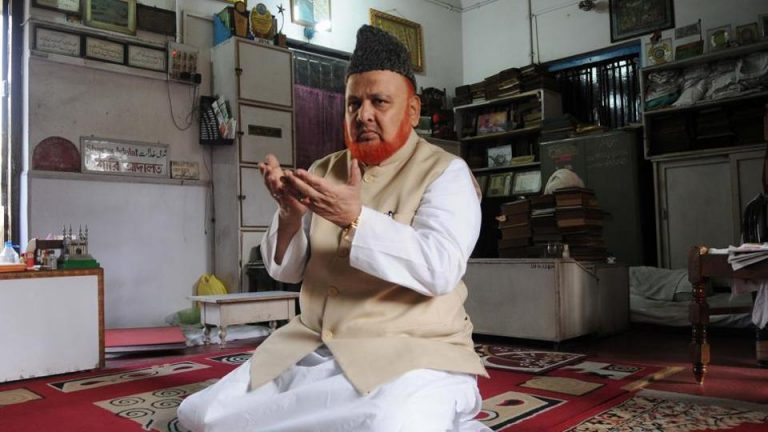
Shahi Imam Barkati of the Tipu Sultan Mosque in Kolkata has notched up multiple FIRs against him, which have been filed by various political and citizen groups of Kolkata.
The FIRs come after the Imam has been in the news for giving various controversial statements and for not honoring the Red Beacon ban which was imposed from 1st May.
Recently we had reported how the Imam when asked about not removing the Red Beacon from his car had openly declined to follow the laws of India and had stated that West Bengal had rules different from the rest of the country.
He also claimed that Mamata Banerjee had personally given him permission to use the Red Beacon after reportedly stating that if something happened, she had his back.
He has also threatened to outcast and beat up Muslims who support the RSS and has openly stated that Narendra Modi was not his Prime Minister.
This has prompted the citizens to respond by filing multiple FIRs against him, in the hope of some action.
One FIR has been filed at the Topsia police station in Kolkata on 10th May, for threatening to not obey the constitutional laws of the country with regards to him using the Red beacon and also for him allegedly giving various hate speeches.
The FIR also complained against a speech of Imam Barkati where he allegedly stated that he would start an open Jihad against India if it becomes a Hindu Rashtra.
FIR against Barkati for refusing to remove Red Beacon (via India Today)
An FIR at the Lal Bazar police station in Kolkata was filed by the Akhil Bharat Hindu Maha Sabha on 12th May for his anti-national and divisive speeches. The FIR called for an immediate arrest of the Imam.
FIR against Kolkata Imam by a Hindu group
Another FIR was filed on 11th May at Gariahat police station by some common citizens of Kolkata. The FIR detailed all the allegations against the Imam which are in the public domain. The citizens claimed that they were terrified of his hate speeches and feared a Kashmir like situation in Bengal. The citizens also claimed that Imam Barka was trying to create riots in the country.
Now that the citizens and various groups have made their angst against Imam Barkati very clear, it remains to be seen whether the West Bengal establishment buckles up and acts against him.
Though when it comes to Imam Barkati himself, he remains unfazed and has openly stated that nobody has the guts to arrest him.
In a very interesting development, a Hizbul Mujahideen leader has called the separatist Hurriyat Conference leaders “hypocrites”, “infidels”, “followers of evil” and threatened to chop off their heads “if they create hurdles in the path of making Kashmir an Islamic state”.
The Hizbul Mujahideen terrorist further declared that the chopped off heads of the separatist leaders would be hanged in Srinagar’s Lal Chowk, the nerve centre of anti-India protests in Kashmir.
The fallout between the separatist leadership and the Kashmiri terrorists, the first of its kinds, came days after Huriyat leaders Syed Ali Geelani, Mirwaiz Umar Farooq and Yasin Malik told in a joint statement that “terrorism and freedom struggle are poles apart” and “freedom struggle” in Kashmir has nothing to do with the global terrorist groups like ISIS or Al Qaeda and there is no role for these groups in “Kashmir’s political struggle”.
It is understood that Hizbul Mujahideen is miffed at the separatists for calling Kashmir a “political struggle” instead of a “religious war for the creation of Islamic state”.
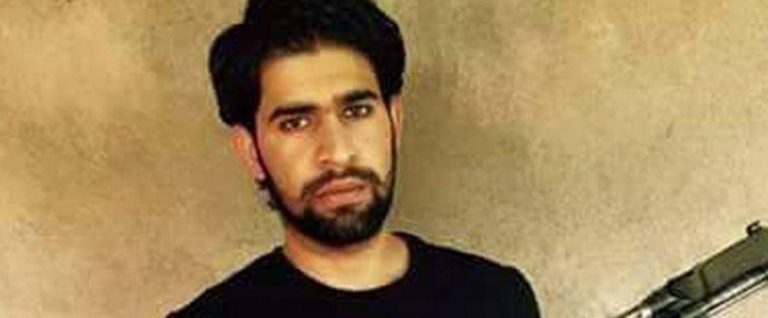
The threat message by Hizbul Mujahideen was delivered through a video clip containing a montage of slides on radical Islam and Sharia. Though the person in the video clip did not identify himself, reports state that he is believed to be Hizbul Mujahideen commander Zakir Musa, who succeeded Burhan Wahi. The report, quoting police sources, says that the voice matched Musa’s earlier video and audio clips:
The video clip, which has gone viral on social media, starts with the quote of slain terrorist Anwar Al Awlaki, an American-born Islamis who had worked as the senior spokesperson for Al Qaeda.
“We just want to ask these hypocrites if Kashmir is a political issue (then) why are you raising slogans like ‘Azadi ka matlab kya,La Illaha Ilallah’ (What is the meaning of freedom? It means Allah is one), ‘Pakistan say rishta kya, La Illaha Ilallah’ (With is the relation with Pakistan? It is Allah is one), “Hizbul commander Zakir Musa said.
“Hurriyat shouldn’t create hurdles in our way. Otherwise we will chop off their heads and hang at Lal Chowk. Our war on Kashmir, particularly of the Mujahideen, is only to enforce Shariah. It is an Islamic struggle. These people need not be confused,” Musa said in the video message.
“It is my request to people that they should unite on the principles that Allah is supreme. We don’t have to unite with the hypocrites,” the Hizbul Mujahideen commander said.
“If Kashmir is a political struggle then why have they been using the pulpits of the mosques for politics? If this a political struggle then why are they coming to the funeral of the Mujahids? Instead, they should hold protests on the roads if this is a political struggle,” he said.
Separatist Hurriyat, who wants to disintegrate Kashmir from the rest of India, claims to represent the “political views” on Kashmir. On the other hand, the terrorists operating on Kashmir have openly declared to bleed India through thousand cuts. However, the nexus between the terrorists and the separatists is an open secret. And it is none other than Pakistan’s Inter-Services Intelligence (ISI) works as a facilitator for the purpose.
The latest fallout between the separatists and the terrorists on Kashmir could well be a deliberate attempt to show that Kashmir problem, which is entirely about radical Islam now, has also a “political” angle.
After at least 25 CRPF Jawans were martyred in a dastardly attack in Sukma Chattisgarh on 24th April, various citizens and celebrities have come out to provide support for the families of the martyred soldiers.
Also what should be mentioned is that, the support provided wasn’t merely token but was a real constructive effort to help out the families.
Cricketer Gautam Gambhir had announced that he via his foundation would bear all the educational expenses of the children of CRPF jawans. He was also responsible for the IPL franchise Kolkata Knight Riders wearing black armbands in memory of the incident.
The IAS officers association too made a touching gesture after announcing that the country’s IAS officers would adopt the families of the martyred soldiers of the defense forces and Central Armed Police Forces (CAPF).
The officers would adopt martyr families preferably from their state, and the adoption would include providing financial assistance, good education, being a mentor to the children of martyrs among others.
Yoga guru Baba Ramdev too has tried to help out by announcing his intention to set up Patanjali Aavasiya Sainik school in Delhi NCR region which would impart free education to the children of the soldiers who sacrifice their lives for the country.
Now Bollywood actor Vivek Oberoi too has come out with a generous gesture for our Martyrs’ families. It was reported that Vivek Oberoi’s company Karrm Infrastructure Pvt. Ltd is in the process of donating 25 flats to the families of the CRPF martyrs in Thane, Maharashtra.
This decision was reportedly announced by Vivek’s organisation in a letter to the kin of the martyrs. According to the reports, 4 flats have already been allotted.
In a development that is bound to spice up politics in the state and within Biju Janata Dal, Odisha Chief Minister and BJD supremo Naveen Patnaik sacked senior party MP Baijayant Panda from the post of BJD Parliamentary Party spokesperson yesterday.
Patnaik removed Panda from the party post with immediate effect; a terse one-liner – signed by party vice-president Suryo Narayan Patro – announced the decision. The announcement did not cite any reasons why Panda was being removed:
Panda on his part too reacted rather economically with words, saying he “respects the party president’s decision”.
This development comes a couple of months after Panda penned an editorial in Samaja about self introspection by the party. His subsequent comments on social media over the need for course correction by the party in wake of BJP’s rising fortunes in the state have not gone down well with many BJD supporters and leaders.
Last week, Naveen Patnaik had announced Rajya Sabha nomination for Pratap Keshari Deb, former MLA from Jay Panda’s parliamentary constituency. Deb had been vocal against Jay Panda’s utterances on social media. He routinely advocated and advised Jay Panda to discuss party affair in party meetings and not to ‘wash dirty linens in public’.
The removal from spokesperson post is believed to be the first warning to the ‘erring’ MP for his ‘anti party’ rumbling in social and mainstream media. Apart from his editorial in Samaja, commenting on the recent joining of former BJD leaders in BJP, this is what Jay Panda had tweeted:
One gone yesterday, another today. Yet when i cautioned last week, was contradicted. Now large sections unrepresented, resentment everywhr ?
Earlier, we had told you how his routine outbursts in the social media were brewing a political storm in Odisha politics. Naveen is known to be a hard task master and doesn’t take any party indiscipline lying down. BJD MP from Cuttack, Shri Bhartruhari Mahatab was earlier served a show cause notice for hinting that BJD should join hands with Congress. Therefore, it comes as no surprise that CM has taken action against Jay Panda after his ‘repeat offences’.
However, it appears that these disciplinary actions are not working to the effect Naveen babu would have wanted. Bhatruhari Mahtab seems to ignore the warning and is continuing his rants against some party leaders, calling some of them ‘cockroaches who are daring to fly’, which was seen by some as veiled reference to new cabinet appointees by the Chief Minister.
Not just Mahtab, there are others too attacking fellow party leaders showing that rift within BJD is not about just one or two leaders. Jairam Pangi, Ex- BJD MP and former Koraput district president of BJD, had earlier raised his voice in the media against BJD’s Rajya Sabha nominee N. Bhaskar Rao. Also, he had termed BJD minister Rabi Narayan Nanda as ‘beimaan’ (dishonest).
Owning to these outbursts, he was suspended from BJD. Last week, he, along with hundreds of volunteers of BJD from Koraput district, joined BJP in the presence of Union minister Dhramedra Pradhan. Last week itself, another BJD leader Amar Nayak from Jajpur district had also joined BJP.
The recent cabinet reshuffle, supposed to have been done to send signals to non-performing members and to make the party stronger and more disciplined, has actually made matters worse. It has thrown up even more dissenters and disgruntled members.
Sundergarh BJD president threatened to mass resign along with district workers due to non-representation in the cabinet. Sambalpur MLA Dr. Smt. Raseswari Panigrahi showed similar concerns and her supporters staged a dharna. Even Jungarh MLA Dibya Shankar Mishra, who is also an official spokesperson of the party, came out in open to criticise the cabinet selection.
A common element in all these can be argued to be resentment of some party members and leaders against what is seen as unilateral decisions by the party high command. With BJP already getting in election mode in the state, coming days are going to be very interesting in Odisha politics.
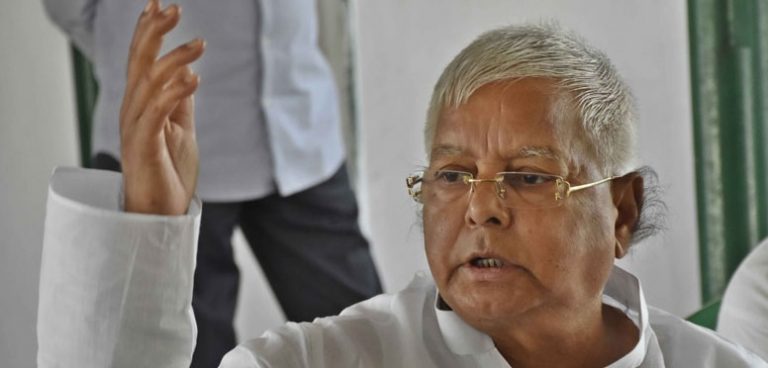
Lalu Prasad Yadav has landed in a huge land scam in some of the most luxurious enclaves of the union capital, thanks to his daughter and son-in-law.
According to an expose done by Times Now, the land was purchased at Delhi’s Tony Sainik farms and Bijwasan luxury farm enclave under the name of Lalu’s eldest daughter and Rajya Sabha member Misa Bharti and her husband Shailesh Kumar under highly suspicious circumstances. The land transactions are reminiscent of the modus operandi followed by Congress president Sonia Gandhi’s son-in-law Robert Vadra.
Lalu’s daughter and his son-in-law had allegedly acquired a farmhouse at Bijwasan, near IGI airport, at a throwaway price of Rs 1.41 crore through mysterious business entities. Going by current commercial rates, the property should fetch anything between Rs 40-50 crore.
Further, the couple also reportedly acquired a farmhouse at Sainik Farms after an intriguing transaction with the owner.
In 2008-09, Mishail Packers and Printers Pvt Ltd, one of the companies together owned by Lalu’s daughter and son-in-law had purchased a farmhouse at 26 Palam Farms in Bijwasan for Rs 1.41 crore. The funds for the purchase of the land were arranged through sale of 1,20,000 shares of Rs 10 each in Mishail Packers at a premium of Rs 90. Within less than a year, the shares were reportedly purchased back by Misa and her husband at Rs 1 or Rs 2.
It is interesting to note that the Mishail Packers and Printers Pvt Ltd was registered on December, 2002, at the address 25, Tuglak Road, New Delhi, which was the then official residence of Rajya Sabha member Lalu Prasad Yadav.
Misa and Shailesh – Lalu’s daughter and his son-in-law – allegedly used another front company called KHK Holdings to ‘buy’ the 2.8 acre farmhouse at H 27/1 Sainik Farms. The company was originally owned by alleged hawala operator Vivek Nagpal, who had reportedly transferred 10,000 shares to the couple at a price of mere Rs 1 lakh.
The revelations come following Bihar BJP leader Sushil Kumar Modi’s allegations that Lalu Prasad used Mumbai-based AB Exports Pvt Ltd, as a “front company” to acquire prime residential property for his family members in one of the posh localities of Delhi. Stating that AB Exports was used as a shell company for purchasing properties only to be “acquired” by Prasad’s family along with assets later, Modi said “the quid pro quo behind the deals must be investigated to unravel the truth.”
Lalu Prasad’s family is also at the centre of another land scam – Patna zoo soil scam. Lalu’s son Tej Pratap Yadav, the incumbent Forests Minister of Bihar, had awarded a Rs 90-lakh contract in Sanjay Gandhi Biological Park, also know known as Patna zoo, for earth-filling and construction of pathways work to a company named MS Enterprises in which the minister, his siblings and mother are shareholders.
Senior BJP leader Sushil Modi alleged that it was Lalu Prasad who influenced Patna zoo soil deal. Modi claims that the soil worth Rs 90 lakh was purchased by the zoo for construction of a pathway from MS Enterprises without floating any tender.
The BJP leader demanded a detailed probe and said that the investigation should look into all the aspects of soil purchase deal.
The Nitish Kumar government has been under tremendous pressure ever since the scam came to the light. On 6 April, Bihar chief secretary Anjani Kumar Singh ordered an investigation into the scam.
A series of scams and mounting allegations of corruption against Lalu Prasad will have a big impact on the RJD-JDU coalition, political observers believe.
The Supreme Court, on May 8, had revived criminal conspiracy charges against the RJD chief in fodder scam cases. Lalu Yadav will be tried separately in each of the four fodder scam cases. Of the 55 cases filed in connection with the fodder scam, Lalu is an accused in five cases. The cases are at their various stages of trial.
The Supreme Court order came at a time when Lalu Prasad is in a tight spot after he was shown in an audio conversation with Mohammad Shahabuddin. In the audio tape, aired on Republic TV, the mafia don is heard passing on instructions to the RJD chief from the comfort zone of the jail.
Mother and Son duo of Sonia and Rahul Gandhi were dealt a huge blow by the Delhi High Court after it gave a go-ahead for an Income Tax probe into the Young India Private ltd, which is involved in the alleged National Herald scam which amounts to about Rs 5000 crores.
Young Indian has approached the High Court to stay proceedings against it in the National Herald case. The High Court bench in turn asked Young India to approach the Income Tax assessing officer, after which the company withdrew its petition, and hence the High Court dismissed the plea clearing the path for the probe.
Before we go ahead, let us quickly recall the facts of the National Herald case, how the Gandhis are involved in the whole thing, and why the Income Tax probe may be a huge blow for them.
National herald was a newspaper which was founded by Nehru in 1938 and ceased normal operations in 2008. During this time, the paper mainly acted as the official mouthpiece of the party.
When the paper ceased normal operation in 2008, its parent company Associated Journal Limited (AJL) had a debt of 90 crores.
According to Subramanian Swamy who is the main petitioners against Young India, in 2011 a firm called Young India limited was created by Sonia and Rahul with a paid up capital of about Rs 5 lakh. In the company Sonia and Rahul each reportedly hold a 38% stake.
The new company then passed a board resolution that they would offer AJL a structure that it would arrange loans to wipe off all its debts. This in itself raises eyebrows as AJL was the owner of various prime real estate properties which amounted to a total of anything between Rs 1600 crores and Rs 5000 crores, hence the debt should never have been a problem in the 1st place.
Now apart from Sonia and Rahul, Oscar Fernandes and Motilal Vora too reportedly held equity in Young India and incidentally the Chairman of AJL was also Motilal Vora, which is a case of conflict of interest.
Swamy further alleged that in-return of Young India clearing all the debt of AJL, the latter would transfer all its shares to Young India (which means Young India will own all the Rs 5000 crore real estate properties).
It was further alleged that AJL was given an interest free loan by the Congress party at the direction of the treasurer who incidentally also was Motilal Vora.
What added another dimension to the whole story was the fact that after Young India took control of the National Herald’s properties, it rented out the Press Area property at about 60 lakh per month for various government services.
So to sum it up, after paying up just 5 lakh to form Young India, Sonia and Rahul allegedly managed to acquire about Rs 5000 crore worth of properties of National Herald and considering their shares in Young India, they each allegedly earned assets worth Rs 1900 crores. Plus they allegedly earned a rent of about Rs 60 lakh per month for renting out the press area property.
Now as a stay on the Income Tax probe has been denied by the High Court, all the allegations surrounding the case may soon end up becoming facts and Sonia-Rahul could be asked to pay taxes or penalties. It can further attract penalties on the party as a political party is not supposed to indulge in commercial activities.
The probe incidentally was ordered by the Patiala House Court, against which Young India had appealed in the High Court. So they may now appeal further in the Supreme Court hence there may be some time before the probe actually gets completed.
Also as a footnote, National Herald was revived by Rahul Gandhi in a digital avatar in November 2016 and it soon ended up in a controversy when it was exposed by people for publishing blatant lies.
The National School of Drama (NSD) is an autonomous institute under the Ministry of Culture, Government of India. It is regarded as a centre of excellence in the field of arts and culture. Bollywood greats like Anupam Kher, Om Puri, Naseeruddin Shah are among the alumni from the NSD, which has also trained current crop of actors like Irrfan Khan and Nawazuddin Siddiqui.
Current superstar Shah Rukh Khan also owes a bit of his training as an actor to NSD, as he used to visit the campus and work with actors there. His father ran a canteen on the campus, which gave him this opportunity. He had said that the experience helped him hone his skills.
Om Puri and Naseeruddin Shah during their NSD days
NSD was registered as an autonomous institute in 1975, while it was given a deemed university status in 2005. However, in 2011, the deemed university status was revoked following a request by the NSD itself. The institute had argued that a deemed university status could undermine the flexibility and freedom a creative institute should enjoy, for it might have to follow too many government rules and regulations.
While it indeed is fine for a creative institute to seek freedom and flexibility in its operations, they should be limited to areas like training, education, and performance. But it appears that the NSD has taken this flexibility and freedom even to its admission process, where it is being accused of not adhering to the rules regarding excluding the ‘creamy layer’ form the seats reserved for the OBC (Other Backward Classes) candidates.
The issue came to light when some RTI activists and a group called ‘India Against Injustice’ were tipped off by a student of NSD in January last year. These set of activists then decided to dig deeper into the case and they discovered that the institute was way too lax in following the admission guidelines. The activists believe that only active collusion or malafide intentions can explain the laxity and incompetence they discovered through their investigations.
Rajesh Tandon, the convenor of India Against Injustice shared with OpIndia.com the documents related to this admission irregularity that he could retrieve with active support from RTI activists Nipun Arora and Shivkrit Rai, both of whom are also 3rd year law students.
Initial tip off that ‘India Against Injustice’ received was regarding the case of a particular 2nd year student who is the daughter of a high-ranking army officer. The girl was given admission under the OBC quota in the year 2015, even though her father, who holds a rank of Major General, surely was earning enough to qualify for the ‘creamy layer’ category.
“We did not blindly believe the tip-off and we carried out our own investigations for months. We even talked to administration members, faculty, graduates and students of NSD trying to extract information, after which we were reasonably convinced that this was a clear case where someone not eligible for reservation benefits was provided the benefits meant for the weakest among the weaker sections,” Rajesh Tandon told OpIndia.com about how this admission malpractice was unearthed.
After he was convinced that the admission to the girl was in violation of the ‘creamy layer’ rule, Rajesh wrote a letter to the NSD Director on 21st June 2016, with all the details. He suspected that either the girl had provided wrong information or the NSD authorities were complicit in violating the rules. However, he didn’t even receive any acknowledgment, let alone any promise of looking into the complaint.
“Our group has been working on similar cases with other top institutes and I can tell you that some NSD officials acted very arrogantly and irresponsibly. NSD runs on taxpayers’ money and 50% of the total no. of students studying at NSD are from reserved category. I expected better conduct and accountability,” Rajesh shared with us his experience.
India Against Injustice complained to the Ministry of Culture a month later on 21st July 2016 seeking high level inquiry into this malpractice. Fortunately, the Ministry took cognizance of the matter and issued a letter on 10th August 2016 to the Registrar of NSD seeking comments from the institutes on priority.
Rajesh Tandon claims that NSD did not provide much information or update over the case despite the Ministry of Culture letter. His attempts to seek responses or information were stonewalled most of the times in the following months. This is when he was joined by RTI activists Nipun Arora and Shivkrit Rai, who decided to use the RTI act to elicit information.
“We filed four RTI inquiries in December 2016 seeking information about not only this particular case of the army officer’s daughter, but about all reserved category students. However, even our RTI queries were responded with ‘information is being collected and will be furnished shortly’ kind of messages, that too after the mandatory 30 days period – basically they were not providing information promptly for some reason,” Nipun told OpIndia.com
The National School of Drama, Delhi.
In February this year, Nipun complained to the NSD about not receiving proper responses to his RTI queries, and on 28th March he complained to the Chief Information Commissioner (CIC) complaining about the same.
Finally, they started receiving some pieces of information, which they claim hint at massive malpractices being followed during admissions to the National School of Drama.
The activists say that they came to know that NSD had formed a committee to look into their complaints after the Ministry of Culture wrote to them in August last year, however, this committee met for the first time only in February this year i.e. after RTI applications were filed, which perhaps sent a message to the institute that the activists were not to ready to give up on the matter so easily.
Early this month, through the RTI replies, they came to know of the following details:
The particular girl, whose case triggered the investigations, had applied for admission twice earlier. First in General category, and second time in OBC category. She was granted admission finally in 2015 under OBC category.
The girl’s caste certificate is not issued by any office of the SDM (Sub-Divisional Magistrate) or of the Tehsil or Revenue Department, whose certificates are considered standard and valid. Activists say that this means that this particular student has neither submitted an OBC certificate nor a non-creamy layer declaration.
The girl was issued a notice on 6th April this year asking her to declare non-creamy layer status within two days, to which she replied that she was not aware about this creamy layer ‘segregation’ at the time of admission and hence her caste certificate doesn’t mention so. She requested the institute to consider her matter in wake of this observation.
Apart from this girl, at least four other students – three of whom were granted admission in 2014 and another in 2015 – who were offered admission under the OBC quota had not submitted any certificates that prove that they don’t belong to the creamy layer.
Activists claim that when they went through the caste certificates (retrieved through RTI) of those granted admission, they discovered that there were also cases where non-creamy layer declarations were old or inadequate i.e. there were more cases where proper documentation regarding the ‘creamy layer’ rule was not followed.
RTI reply from the NSD listing students who had still not provided non-creamy layer information.
These findings clearly show that the NSD authorities have been completely careless and negligent in examining the documents and information furnished by the students. Whether this was result of incompetence or whether this hints at a scam, where these authorities were deliberately allowing admission to students who otherwise don’t qualify, is something that is subject of further investigation.
But Rajesh Tandon, Nipun Arora and Shivkrit Rai believe that this is not just a case of carelessness or lackadaisical attitude. Their suspicion finds roots in the fact that their attempts to get information was stonewalled for months at various stages.
“At least the case of that particular girl appears an open and shut case,” Rajesh said, “For some reason she is not willing to submit a declaration even after being asked so. She was applying for the third time so it is hard to believe that she was not aware about this condition as she claims. She can furnish ITR (income tax returns) copies of her father, but she is deflecting the issue to the caste certificate, even which is also not valid in our opinion. Now NSD says they will talk to the authorities who issued the caste certificate. This is bizarre. She is being given a long rope by the institute, which appears odd.”
“Government (DOPT guidelines) rules clearly state that anyone found to be from creamy layer of OBC in government offices or institutions should be immediately expelled or discharged from the services. She clearly fails the income test of creamy layer provision,” he added.
“Furthermore, the committee that is investigating the whole case has no independent members from the arts or theatre community. How can we trust any impartial or transparent investigation?” he further asked.
RTI reply from the NSD informing about the committee that is looking into the complaints.
“We are sure that irregularities of such level can’t happen without the involvement of an insider. That’s why it is a scam. Rich and people with influence from OBC backgrounds are snatching away the rights of the poor among the poorest. It is a crime!” Rajesh asserted.
Nipun too said that the attitude of NSD officials makes them suspect a foul play.
“I had asked them for an update on Monday itself,” Nipun told us, “But they are still giving standard replies that the issue is being investigated. They say that they have written to the authorities who have issued caste certificates. Isn’t it an attempt to further delay the case? An SDM or a Tehsildar will take his own sweet time. And they are not supposed to know the current income level of parents of the students. Remember, there are some students from the 2014 batch who will be graduating in some time and they have not yet submitted the required documents.”
OpIndia.com too talked to the Mr. OP Sagar, the Deputy Registrar of the NSD on Thursday, and he confirmed that there were some cases of students who had not submitted the required information about the ‘creamy layer’ status and the ‘matter was being investigated’. He confirmed that no final decision had been taken in this case by the institute.
The activists now demand that the entire period from 2006 to 2016 should be investigated and documents of those who were provided admission under the reserved quota should be checked. They believe that the institute is denying admission to rightful candidates by allowing admissions based on incomplete or faulty certificates. And there could be a larger story behind these irregularities.
If your vehicle’s brake fails, what would you do? Try to reduce speed somehow, minimize risk and reach home safely. Or go faster so that you reach home before accident takes place?
The Aam Aadmi Party has faced few very serious electoral setbacks recently and are in the middle of a crisis. One would expect them to choose option one i.e. go back to drawing board and regroup. But they chose option two and started casting doubts on EVM after loss in Punjab and Goa.
Following embarrassing defeats in Rajouri Garden by-polls and MCD elections, they escalated the offensive. During the live demo of ‘Toy EVM’ in Delhi Assembly, AAP has gone to an extent of saying that EC is hand in glove with BJP. Therefore even EC cannot be trusted with conducting election.
AAP has come up with crazy theories to show how EVM can be hacked, I wonder what makes them believe that VVPAT will not be susceptible to hacking? If a determined hacker can rig EVM why can’t they do the same to a VVPAT machine?
If someone can change motherboard of lakhs of EVMs, why can’t the printer of VVPAT machine be rigged (reprogrammed)? Just write a program that forces VVPAT to show a dummy slip to user but in reality it generates rigged slip and drops in the attached box. Done!
Maybe I have given AAP supporters the idea to indulge in the next level of conspiracy theory when they lose the next elections. Or maybe they can take a break and reflect on a few things.
There are three aspects of any system; People, Process and Technology. Together they complement to build a system that functions properly. With complete disregard for the security controls and processes built around polling process, AAP has targeted the technology and people.
They have built their narrative around the fact that EVM is a machine that runs on software, therefore it can be hacked by people. As a remedy, they are gunning for introduction of another machine (which by the same logic should be equally vulnerable for hacking). If I can go as crazy as AAP supporters, I can also argue that the same people who were replacing motherboard of EVM, will now come armed with motherboard of EVM and chip of VVPAT. You don’t solve one problem only to create another one.
Where does this craziness stop? AAP’s current position is that they will not accept any other than either going back to paper ballot or 100% VVPAT integrated EVMs. If we have IITians who claim to know 10 ways to tamper EVM, their friends in Bihar know 100 ways of booth capturing.
VVPAT integration is something EC is already on track to achieve this in 2019 LS elections. Following SC’s direction in 2013, EC decided to implement VVPAT in phases and finish by 2019 LS. In fact, Goa became the first state to deploy 100% EVMs with VVPAT during recently concluded assembly elections where AAP lost deposit in virtually all the seats.
If you are wondering why AAP is going on this path despite knowing that EC is working towards achieving 100% EVMs with VVPAT, answer lies here: When EC comes out with assurance that all EVMs will have VVPAT by 2019 and AAP will claim moral victory for forcing EC to go for VVPAT.
Next, a decision about disqualification of 21 MLAs and the issue of falsification of account books submitted to Income Tax Department will come. AAP is very likely to be found guilty on both the counts. Arvind Kejriwal will play the victim card coming up with arguments like “since we exposed EC and forced them to implement VVPAT, they are taking revenge from us.”
Note: The much talked about Hackathon will not help. EC will ask hackers to operate within the defined security controls (as things happen in real election situation, with all observers and stakeholders keeping watch) and AAP will argue that EC is not giving them the freedom to replace the the EVM’s motherboard and walk out of it.