Home Blog Page 7517

How separatists shut down schools in Kashmir but send own kids abroad to study

Remember, hardline separatist leader Syed Ali Shah Geelani recently said that the schools run by Indian Army are weaning the generation next away from their religion and culture. It could be noted that a large number of children from civilian areas in the valley attend the army-run schools. While most schools remained closed for six months due to unrest, army schools functioned normally.

“We are losing our next generation. We should never send our youth to these institutions. We need to see what sort of education these institutions are imparting to our children,” Geelani had said.

Year in and year out, the separatist leaders have been instigating the youth of Kashmir to leave their studies, come out on the roads and join the stone pelting for a “bigger cause”.

But in a stark dichotomy, this ANI report shows that how kin of these separatist leaders have got the best education, settled abroad and leading a life of peace, safety and luxury far away from the counter currents of stone pelting. Here is the list:

  1. Nayeem Geelani, son of Syed Ali Shah Geelani, is a doctor in Rawalpandi, Pakistan. Nayeem’s son Zahoor is working as a crew member at private airline. Syed Ali Shah Geelani’s daughter is a teacher in Jeddah and her husband is an engineer.
  2. The son of Mohammed Ashraf Sehrai, general secretary of the Tehreek-e-Hurriyat (TeH), the Geelani faction of Hurriyat – is a computer engineer in Dubai.
  3. Rabia Farooq, sister of Mirwaiz Umar Farooq – chairman of the Awami Action Committee of the All Parties Hurriyat Conference – is a doctor who lives in London.
  4. Separatist leader Ghulam Muhmaad Sumzi’s son Jugnu completed his management degree in Delhi.
  5. Rooma Maqbool, the son of Farida Behanjee – the patron of Jammu and Kashmir Mass Movement – lives and works as a medical practitioner in South Africa.
  6. Head of the Jammu and Kashmir Democratic Liberation Party Hashim Qureshi’s sons Iqbal and Bilal live in London.
  7. Spokesman for the Geelani faction of Hurriyat Ayaz Akbar’s son Sarwar Yaqub is a management student in Pune.
  8. Two sons of Abdul Aziz Dar, another prominent leader of the Geelani faction – Umer Dar and Adil Dar – are studying in Pakistan.
  9. Mariyam Andrabi, sister of Asiya Andrabi – head of the women separatist organisation Dukhtran-e-Millat – lives in Malaysia along with her family. Asiya wanted to send her elder son to Malaysia for further studies, but he was reportedly denied a passport. Asiya’s elder son Mohammed Bin Qasim, who pursued Bachelors of Information Technology at Islamic University of Malaysia, is in Australia for his further studies.

India’s rank improves dramatically by 73 places in the World Bank’s Electricity rankings

In a possible recognition for the work the Piyush Goyal led Power Ministry is doing, India has improved its rank by 73 places since 2014 in the World Bank’s electricity accessibility rankings.

India is currently ranked 26, a much improved standing as compared to 99 in 2014. This was reportedly achieved due to the efforts of the power ministry to try and ensure power for each and every citizen of the country. It was reported that 13,000 of the 18,452 villages which did not have power, now have an access to electricity.

According to Piyush Goyal, if a person asks for an electricity connection, he would be able to get one within 24 hrs if power infrastructure is available. In the event of its unavailability he would be able to get a connection within a week. Goyal also claimed that by 2019, every household would be provided with an electricity connection, three years ahead of schedule.

We had earlier reported how the Power Ministry and its auxiliaries have been making steady reforms to try and revive a once ailing sector. A few of the measures undertaken are:

  • The UDAY Discom scheme where the Center would restructure the debt of the state owned Discoms by assuming as much as 75% of the debt and issuing bonds in return at a lower rate of interest.
  • Selling or shutting down loss making, old units and increasing the efficiency of the remaining units
  • Promoting the renewable sector
  • Creating a Mobile APP to help users track the electrification progress in India for greater transparency
  • India becoming the net-exporter of electricity for the 1st time

What message GST Council meet at Srinagar sending across

The choice of the venue for the ongoing two-day meeting of Goods and Services Tax (GST) Council in Kashmir is highly symbolic and significant. Against the backdrop of the renewed protests in the valley, the 14th GST Council is meeting at Srinagar’s Sher-i-Kashmir International Conference Centre is sending out a strong political message.

Far from the cross currents of protests and violence, the narrative of J&K is different as Union Finance Minister Arun Jaitley and finance ministers of 32 states and union territories have converged in Srinagar to take a final call on the new taxation regime and finalise the rates of different commodities and services. This is the last and the final meet before the GST rollout on 1 July. This is for is the first time that such a major policy meeting is being taken place in Srinagar in the past six decades.

The GST Council meeting is sending a strong message to the separatists forces who want to disintegrate Kashmir from the rest of India.

“One nation, one tax” is the Union government’s slogan for the GST. In that slogan, there is slight tinge of Syama Prasad Mookerjee’s slogan of 1950s meant for Kashmir: Ek desh mein do Pradhan, do Vidhan, do Nishan nahi chalegi, nahi chalegi (The country will never accept a system which allows two Prime Ministers, two Constitutions and two National flags). Much changes have been made in Kashmir since the nationalist leader breathed his last in the valley in 1953.

Now, with this GST Council meeting, Jammu & Kashmir set to claim its place in India’s economic history. The meeting is an opportunity to showcase J&K’s increasing integration with India’s socio-economic mainstream.

Mehbooba Mufti-led PDP-BJP government has already signalled the state’s preparedness to be part of the national narrative on GST. The J&K government has already moved on initiatives like a January-December financial year and a universal benefits policy.

“We could look at agreements that the GST council is expected to reach during its consultations as a ‘Srinagar Declaration’,” J&K finance minister Haseeb Drabu was quoted as saying.

The GST council meeting comes a day after a massive cordon and search operation was launched by security forces in Shopian in South Kashmir’s district following information about presence of terrorists. This is the second search operation undertaken this month by the security forces in the troubled Kashmir valley to flush out the terrorists.

Times of India changes headline to ‘protect’ DU professor accused of helping Maoists

In an explosive expose of sorts, Podiyam Panda, a Maoist operative who has now surrendered to the authorities reportedly claimed in a press conference on Wednesday that he used to be the link between senior Maoist leaders and certain prominent activists and citizens of the country.

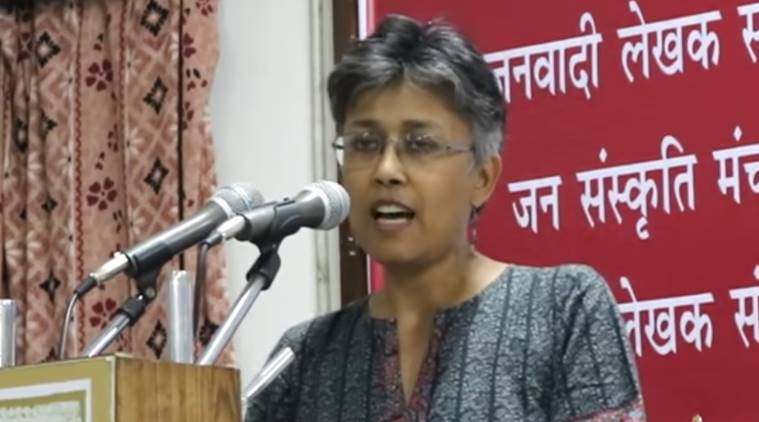
According to the report, Panda who is suspected to be involved in the recent Sukma attack has claimed that he used to drive activists from Delhi including Delhi University professor Nandini Sundar and prominent ‘activist’ Bela Bhatia deep into the forest of Sukma to meet top Maoist leaders.

These allegations have ruffled a lot of feathers as if indeed proven true, they would provide a boost to the ‘Urban Naxal’ theory which talks about various prominent intellectuals, influencers or activists in India being sympathetic to the Naxal cause and working towards spreading insurgency against the Indian state.

According to the report the Sukma SP has claimed that:

Maoist Podiyam Panda was serving as the main link between the Inner cadre of Maoists and the urban network system in Delhi, Raipur and other cities

Also according to the SP, apart from being a contact he was also involved in active warfare against India and had participated in the recent Sukma incident and the Tadmetla attack of 2010 which had claimed the lives of 25 and 75 CRPF Jawans respectively.

This isn’t the first time the DU professor Nandini Sundar has been involved in the Naxal controversy. According to reports, she was named in an FIR lodged in November 2016 for the murder of a tribal who had been getting threats from Maoists for having complained against her and others for inciting tribals against the government. The wife of the murdered tribal had filed complaint demanding action against Sundar for her husband’s murder.

Sundar’s suspected connection and active involvement in Moaist operations had recently prompted the activist group Legal Rights Observatory to file a legal complaint against television journalist Rajdeep Sardesai for inviting her on his show to discuss the Sukma attack.

Even Bela Bhatia, who also has been named by Panda, is a very prominent activist who according to reports currently lives in Bastar. Bela, a PhD from Cambridge University was also reportedly on the panel of the now defunct Planning Commission to ironically look at challenges posed by Maoists to governance.

Both Bela Bhatia and Nandini Sundar are also related to prominent members of the society. Nandini is the wife of Siddharth Varadarajan, the former editor of The Hindu and the founding editor of left-leaning propaganda website The Wire. Bela Bhatia’s partner Jean Dreze had formerly been a member of the National Advisory Council, which was chaired by Sonia Gandhi.

What makes this whole story more intriguing is the fact that hours after publishing the report, Times of India chose to considerably tone down the headline of their article.

Initially it was published under the headline that gave prominence to the expose by the surrendered Maoist:

which was later changed to give prominence to the rebuttal by the accused DU professor:

Even though the heading was changed to indicate that Nandini Sundar had reacted to the story, during the compilation of this OpIndia.com report the content of the TOI article did not contain a single direct or indirect quote from Sundar.

Did the ‘influential’ members of the ‘civil’ society call up top honchos at Times of India warning them not to digress from the accepted narrative? After all, we know what happens to someone in media when they try to break away from the left-dominated narrative. Establishment media’s ganging up against Arnab Goswami is one such recent example. And the same media then cries about ‘freedom of expression’.

Has Times Group scored a self-goal by accusing Arnab Goswami of ‘theft’

0

It is no longer a secret that Times Group is unhappy that Arnab Goswami left them to start his own channel Republic TV, which now competes with their own offering Times Now. Arnab had hinted many a times that it was an acrimonious exit with him not being allowed to access ‘his own’ news studio during his last days at Times Now. But now that war is out in open.

Arnab has been served a slew of legal notices by the Times Group in recent times accusing him of defamation and another notice asking him not to use the phrase ‘the nation wants to know’ – popularized by Arnab during his Times Now debates – as the phrase supposedly belonged to Times Group, not Arnab.

Now this war has taken an ugly turn with Times Group filing a ‘criminal case’ against Arnab Goswami, a Republic TV journalist named Prema Sridevi, and against Republic TV itself, accusing them of ‘theft’ and infringement of copyright & intellectual property rights.

Recently Arnab Goswami and Republic TV had aired certain ‘tapes’ in relation to the Sunanda Tharoor’s suspected murder. The recorded tapes were telephonic conversations between Prema Sridevi, when she was reporter with Times Now, and the late Sunanda Pushkar and her personal assistant Narayan.

Another recording of conversation between RJD chief Lalu Yadav and mafia don Shahabuddin was also aired on Republic TV on the day it launched. Times Group now is claiming that all these tapes are their intellectual properties.

The main argument of Times Group appears that since Arnab and Prema were their employees when they obtained these tapes or recordings of the telephonic conversations, these tapes are ‘intellectual property’ of Times Group i.e. they own a copyright over the tapes and Republic TV couldn’t have used it without proper authorization or license from Times Group.

The intellectual property rights (IPR) are bestowed so as to promote public interest. The basic principle for according “Protection and enforcement of intellectual property rights” is that it must:

  1. be conducive to social and economic welfare;
  2. safeguard an individual’s fundamental rights; and
  3. promote commerce, competition and innovation.

In Copyright “Laws exceptions and limitations” are provisions, which in public interest permit the use of copyrighted works without prior authorization or a license from its owner.

Further reading of the Section 52 of the Copyright Act, 1957 provides for certain acts, which would NOT constitute an infringement of copyright, namely, fair dealing with a literary, dramatic, musical or artistic work not being a computer program for the purposes of:

  • criticism or review,
  • reporting current events in any print media or
  • reproduction for the purpose of a judicial proceeding or of a report of a judicial proceeding;

It should be noted that usually media employment contracts stipulate that any original or creative work produced during the employment period by an employee becomes the IPR of the employer, so Times Group could claim IPR (assuming that Arnab and Prema’s employment contracts had such clauses) over the tapes. However, use of the tapes on Republic TV clearly falls in the first two of the above categories, and thus it should qualify for fair use and not be seen as copyright or IPR infringement. Most probably a court of law is going to take the same position.

The only case, though debatable, Times Group could claim here is if they accuse Arnab and Prema of never sharing these tapes with them while they were employees, which could be argued as breach of contractual duties expected from an employee. However, that will be difficult to prove in a court of law. In fact, it makes no sense why Arnab or Prema would not share such a scoop that happened more than two years ago when there was no plan to launch Republic TV.

Further, if I am allowed some creative interpretation, Arnab had said something on air, which suggests that perhaps these tapes were in the knowledge of some high-profile people but were not aired as Shashi Tharoor called up someone who can pull the strings:


The possibility that these tapes were with Times Group but they didn’t air actually can result in huge self-goal. Republic TV has claimed that Delhi Police would be treating these tapes as evidence. In such a scenario, whoever stopped airing these tapes earlier could be accused of withholding an important piece of evidence.

Red bearded Mullah, who warned jihad against India, sacked as Shahi Imam of Tipu Sultan Mosque

Controversial Islamic cleric Maulana Noor-ur Rehman Barkati – also known as India’s red bearded Mullah – who had refused to take off red beacon from his vehicle and warned of jihad against India, has finally been sacked today from the post of Shahi Imam by the Wakf Estate trustee board of Tipu Sultan Masjid for his objectionable and inflammatory remarks against the country.

“We have removed him as the imam of the mosque for his anti-national statements. We never expect an imam, who is a religious person, to cross his line and misuse his post,” Prince Ghulam Ahmed Wakf Estate trustee Arif Ahmed told reporters.

Ahmed said Barkati was using the mosque for political purpose and for his own financial gains. “He was cautioned earlier for his activities. Recently, he was served a show-cause notice for his speeches to incite people,” he said.

“We have sent him a notice of termination and he has been asked to vacate the office room allotted to him. We have asked his deputy to conduct prayers and we will appoint a new imam very soon,” Ahmed said.

Barkati, the second generation imam from his family, had been holding the post of Shahi Imam of Tipu Sultan Masjid since 1989. He took over the charge of Shahi Imam from his father.

Barkati, considered close to Trinamool Congress chief and West Bengal Chief Minister Mamata Banerjee, had warned of a ‘jihad’ against India. “There will be jihad if anybody try to make India into a Hindu Rashtra,” Barkati had said.

He had openly defied Centre’s directive to use red beacon on non-emergency vehicles. “I have been using the red beacon for decades. I do not follow the orders of the Centre. Who are they to order me? In Bengal, only the orders of the state government are effective. I will use the red beacon,” he had asserted.

While reacting to a question at a Press conference that the Calcutta High Court also denied him to allow his red light in the car previously, he had said, “Does this Calcutta High Court belong to Govt. of India? It was built by the Britishers. It should be destroyed. We have not established it yet. We want to make a new for us”.

Later, Barkati removed the red beacon from his car after multiple police complaints were lodged against him by various political and citizen groups of Kolkata. But he, however, had stated that no one has the guts to arrest him.

Barkati had also said that if Muslims join or work for RSS and BJP then they should be ousted from the community and would be beaten up.

Haryana schoolgirls notch a major victory after State govt agrees to their demands

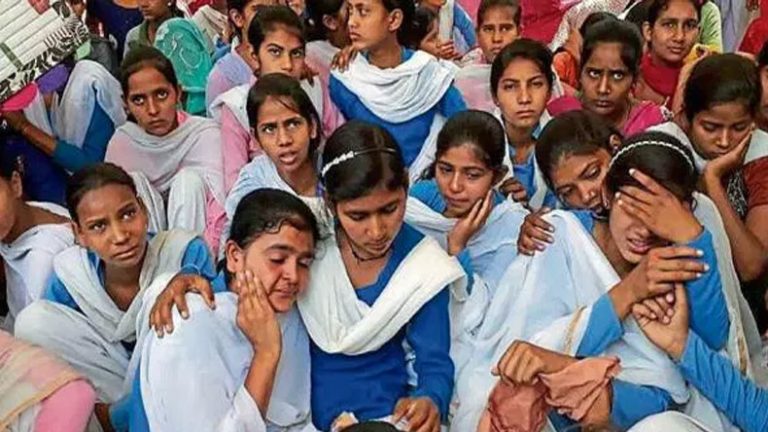
A village by the name of Gothra Tappa Dhaina in the Rewari district of Haryana had been seeing a lot of action since the past 10 days after some schoolgirls belonging to the village decided to sit on a hunger strike. According to reports, the girls took this major step as their long term demand of having a senior secondary school was not being fulfilled by the State Government.

As it turns out, their village school only imparted education up to the 10th standard and in order to attended the 11th and 12th standard the girls had to travel about 3-4 kilometers on cycles (mostly) every-day to attend a senior secondary school in the nearby village of Kanwali.

Apart from having to cover a long distance, the daily journey posed a major problem with the girls having to face regular eve-teasing. The girls reportedly used to be forcefully stopped by boys and harassed, which included being asked to share their mobile numbers or being asked for a picture. There was also very serious incident recorded in 2016 when a girl was reportedly raped on her way to the school.

Things had reached such a level that certain parents had decided to discontinue the education of their daughters, some reports claim.

The local administration though kept disregarding all the persistent demands of the girls citing legality. According to the District Education Officer (DEO), the number of students required for an upgradation of a school was 150, but the current strength only stood at about 86. The DEO though has also claimed that he had previously received no complaints about eve-teasing.

Probably exasperated by everything, at least 80 girls studying in classes 9th and 12th sat on an indefinite hunger strike from 10th may, until their demand of an upgraded school was met. Their protest was soon joined by various parents and villagers.

According to the village Sarpanch, the existing school had sufficient space and infrastructure to allow for an upgrade. Bikram Singh Yadav, the local BJP MLA had reportedly claimed to have gone to the protesters himself along with education officials and assured them of an upgrade if they could meet the required strength of 150. He further claimed that the protesters initially had agreed to withdraw but didn’t do so due to political reasons.

The hunger strike did take a serious turn after it was today reported that 10 students had to be shifted to the hospital. After the issue started escalating, the state government finally relented and issued a notification to upgrade the school:

This decision was taken by the Additional Chief Secretary of the School Education Department, Panchkula. The upgraded status would be accorded from the 2017-18 session itself.

It is also unfortunate that in an age when the girls should spend their time playing and studying, they have had to risk their lives and endure extreme hardships. Plus it also remains to be seen if the existing school is provided optimal facilities as according to the village Sarpanch the school currently has a shortage of 13 teaching staff.

Kashmiri boy who topped the BSF exam now getting threats from terrorists

Nabeel Ahmad Wani, who hails from Kashmir. is currently the Assistant Commandant in the BSF. he has reportedly claimed that he and his sister have been getting threats from terrorists.

What makes Ahmad’s case more prominent is the fact that he had topped the All India Examination for BSF Assistant Commandant (Works), the previous year. After he had topped the exam he had stated in media interviews that his chief aim after joining the force was to fight terrorists. He had also claimed that he in the future wanted to join the National Investigative Agency to further aid his nation. He at that time had also urged the Kashmiri youths to not tread the wrong path and asked them to do something constructive for India.

According to reports, the terrorists have also made threats to his sister who is currently a civil engineering student in Chandigarh. He also claimed the college authorities had wanted her to leave the hostel and move someplace else. This had prompted him to write a letter to Maneka Gandhi on 14th May who replied the very next day. The Women and Child Development ministry convinced the College authorities to allow his sister to stay in the hostel, Maneka Gandhi informed.

What is also noteworthy is the fact that Ahmed had reportedly chosen not to involve the BSF into his personal problems and had written to Maneka Gandhi in his personal capacity. He has been quoted saying that he is now assured of his sister’s safety who wants to become the first Kashmiri woman to serve in the Indian Army.

Further, according to media reports, Ahmed has requested the senior officer at the BSF to allow all the BSF personnel who live in terror prone areas to carry their arms when they go home for a holiday so that they can protect both themselves and their families if some issue arises.

This report comes almost a week after Lt Ummer Fayaz was abducted and subsequently murdered in Kashmir’s Shopian district by terrorist when he was on a break for attending his cousin’s wedding.

Kashmir in recent times has almost become a contrast when it comes to its youths. On one hand a portion of its young population is busy pandering to the separatist line by indulging in Stone Pelting and on the other hand a sizable amount of Kashmiri youths have been participating in the recruitment process of the Indian Army.

It was reported in April that about 19,000 Kashmiri youths had applied for about 800 vacant soldier posts in the Indian Army.

Naveen Patnaik tapping phones of his party men, suspecting them of joining BJP, newspaper claims

Tapping phones of political leaders is not new to India politics. Way back in 1988, Ramakrishna Hegde had to step down as the chief minister of Karnataka over allegations of phone tapping. In 2013, the then Leader of the Opposition in Rajya Sabha and now the Finance Minister Arun Jaitley had alleged that his phone was tapped. In 2015, Andhra Pradesh Chief Minister N Chandrababu Naidu had alleged that his phone was being tapped by the Telangana government led by K Chandrasekhar Rao.

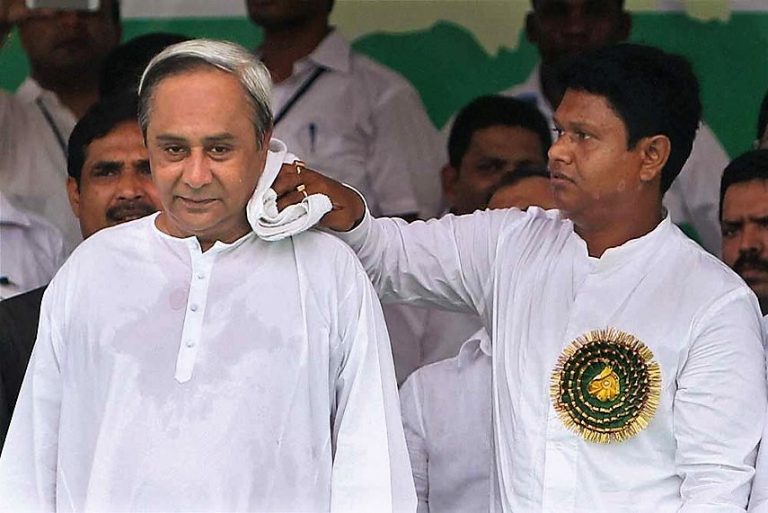
This time, news of massive phone tapping has come from Odisha. Landline phones and mobile phones of as many as 40 MLAs and 10 MPs of the ruling Biju Janata Dal (BJD) are being tapped by the Naveen Patnaik government, leading Odia daily ‘Nirbhay’ has reported.

The report stated that not just the BJD leaders, phones of several Bharatiya Janata Party (BJP) leaders – including Union Minister Dharmendra Pradhan – are under surveillance. Several senior IAS officers, senior journalists and businessmen from Odisha are also in the surveillance list, it said.

What could be more shocking is that Naveen Patnaik government is using the surveillance instruments, provided by the Centre, which are meant to be used for tracking the Maoist activities, the newspaper said. The phone tapings are reportedly done through “clone SIM process”.

The report in Odia

But what could be the reason for the massive phone tapping? It could be noted that post-Panchayat elections, there has been a huge outflow of workers and leaders from the BJD to the BJP. Reports suggest that a number of senior leaders of BJD are waiting to join the BJP in the run up to the 2019 elections. It is pertinent to mention that in the last Pachayat elections, the BJP succeeded in making a giant stride in Odisha politics, leaving Naveen Patnaik-led party in a tailspin.

“Naveen Patnaik is feeling threatened. He is staring at a huge anti-incumbency. An unknown fear is lurking Patnaik that his party MLAs and MPs may defect to the BJP anytime soon. He is using phone tapping as a means to keep track on his own party leaders,” said Navin Das, Editor-in-Chief of ‘Nirbhay’ while speaking to OpIndia.com. “By doing this, Patnaik has imposed an undeclared emergency in Odisha,” Das said.

The fresh report of phone tapping has come at a time when the BJD is locked in a bitter internal feud as the BJP rises in Odisha. Recently, Patnaik has sacked senior party MP Baijayant Panda from the post of BJD Parliamentary Party spokesperson, months he wrote an Op-Ed in Odia daily Samaj asking the party to do a “soul searching”.

Bhartruhari Mahtab, another senior party MP and BJD parliamentary party leader in the Lok Sabha, while writing an Op-Ed in ‘Nirbhay’ had lashed out at his senior party colleagues for their failure to deal with a resurgent BJP.

Recently, Patnaik effected a cabinet reshuffle and brought some changes in the party structure to counter the BJP’s surge. Following this, a crisis of sorts started brewing in the BJD as the reshuffle triggered serious resentment in the rank and file of the party over non-representation of several districts in the ministry.

The resentments and some rebellions (leaders switching over to BJP) were seen as an indication of Naveen Patnaik losing hold over a party he was known to command with authority. Now if these phone-tapping allegations are true, it could hint at a leader being nervous about his slipping hold.

Six ‘awesome arguments’ Kapil Sibal has made in the triple talaq case

Senior Congress leader cum lawyer Kapil Sibal, who is famous for his zero loss theory in the 2G scam, is all set to become famous for more theories. Currently, the senior advocate is a counsel for the All India Muslim Personal Law Board (AIMPLB) in the ongoing triple talaq hearing at the Supreme Court.

The following are some of the arguments the learned Kapil Sibal has made till date while debating the triple talaq issue in the apex court:

  1. “Triple talaq is going on since 1400 years, how can you say it is unconstitutional?” — yes, if something is going on for centuries, it automatically becomes a part of the constitution apparently. Some reports suggest that he said ‘how can you say it is unislamic’. Well, that’s not how it works. Many Islamic experts do consider many prevalent practices (say orchestra/music) as unislamic.
  2. “If Hindus’ faith about Rama’s birth at Ayodhya can’t be questioned, then triple talaq, a matter of faith for Muslims shouldn’t be.”  — well, Hindus’ faith was questioned by the courts during the Ram Janmbhoomi case, and no, triple talaq is not a matter of faith, but a matter of practice. Many practices of Hindus from Dahi Handi to Jallikattu have been questioned by the courts.
  3. “Shariat is personal law and not subject to fundamental rights.” — Lovely! Tomorrow some crazy mullah will say armed jihad is part of shariat and thus it is not subject to the fundamental right of life (of kaafirs/infidels).
  4. “Majority community cannot make laws for the minority unless the reform comes from within the community.” — so now only Muslim MPs will be allowed to vote on bills that concern Muslims? True Congress style secularism. Also read this OpIndia article about why ‘reform must come from within’ is a flawed and dangerous argument.
  5. “Just because a certain section of people was aggrieved by their personal laws, does not warrant a case to seek reform in the area.” — hain? First Sibal says that reform must come from within the community, and when there are some voices from within, he says it doesn’t warrant a case to seek reform!
  6. “Hindu laws of divorce and succession are more discriminatory than triple talaq.” — even if it is true, what is the point? “What about Hindus?” Sibal seems to argue. This is classic whataboutism, which only “trolls” are accused of indulging in.

This might not be all. Perhaps more to come as the apex court will hear more arguments in coming days. We hope to get more gems from Sibal Sir. Amen.