

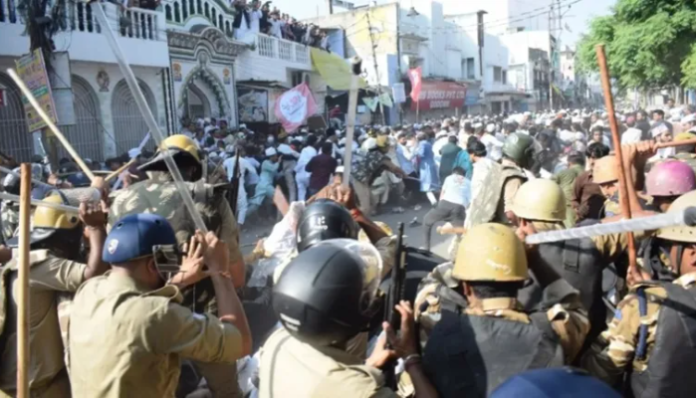
The recent unrest in Bareilly of Uttar Pradesh was not spontaneous, as investigations by the police uncovered that it was a significant and meticulously orchestrated conspiracy. “I Love Muhammad” controversy served only as a tool for it. An estimated 5,000 rioters were already prepared to wreak havoc.
They were positioned in 390 mosques throughout the city and were armed with various weapons including bricks, stones and petrol bombs. The vigilance of the police prevented the city from experiencing severe destruction, although violence erupted simultaneously in multiple areas.
Conspiracy and planning for the riots
Inquiries disclosed that numerous individuals were summoned from Bihar and West Bengal as a part of this plot. These outsiders were given specific duties in various areas of the city. A large crowd emerged onto the streets under the guise of prayers on the day of the violence.
The mob hurled stones at the police and assaulted them with petrol bombs. Media reporters were also attacked, resulting in damage to one journalist’s motorcycle. The cops asserted that the riots were intentionally staged to tarnish the state government’s reputation.
Mastermind and Arrests
The chief architect of this conspiracy is Maulana Tauqeer Raza Khan, president of the Ittehad-e-Millat Council (IMC). According to the authorities, he sought to instigate a repetition of the riots that took place in 2010 in the city. Police have arrested him and 10 other leaders from his party which included Nadeem and Shamshad. 73 people associated with the violence have been arrested and 10 cases have been documented. Raza is mentioned in 7 of these cases.
2010 riots: When a inciting statement set the city on fire and Maulana Tauqeer was arrested
On 2nd March 2010, a massive riot erupted in Bareilly. This outbreak of violence was triggered by a provocative statement made by Maulana Tauqeer Raza. The rioters first focused their aggression on Guddarbagh. Afterward, numerous primary markets and residences, such as Koharapeer and Bada Bazaar, were engulfed in flames.
The scale of violence escalated to such an extent that it became challenging to ascertain the total number of vehicles and homes that were destroyed. Innocent individuals were assaulted after entering several residences.
The police identified Maulana Tauqeer as the primary instigator and subsequently incarcerated him. He wielded significant political power at the time. The BSP government swiftly dismissed the legal accusations (Section 169 of the CrPC) against him after which he was granted him bail within a span of two days.
However, the cleric continued to make provocative remarks even after his release which provoked further violence. The riots also interrupted the 150-year-old tradition of the Ram Barat procession that takes place during Holi each year. The disturbances persisted for several days and it took a considerable amount of time for the city to regain its normalcy.
Action on illegal property
The administration commenced strong action in light of the revelation of the recent conspiracy to perpetrate violence. The administration identified assets valued at around ₹150 crore reportedly associated with the relatives and supporters of Tauqeer Raza. Initially, Hotel Skylark, which is owned by Farhat a relative of Tauqeer Raza was sealed.
Furthermore, the lawn and hotel of his relative Arif, were sealed as well. On 30th September Haji Sharafat Khan’s Humsafar Marriage Lawn was also sealed. A bulldozer was also utilized on the property of another relative of Tauqeer Raza. Actions have also been initiated against the property of a leader from the Samajwadi Party.
The administration is currently undertaking a comprehensive investigation. The police have reason to believe that a significant network is functioning behind these events and additional arrests are anticipated in the forthcoming days.
