

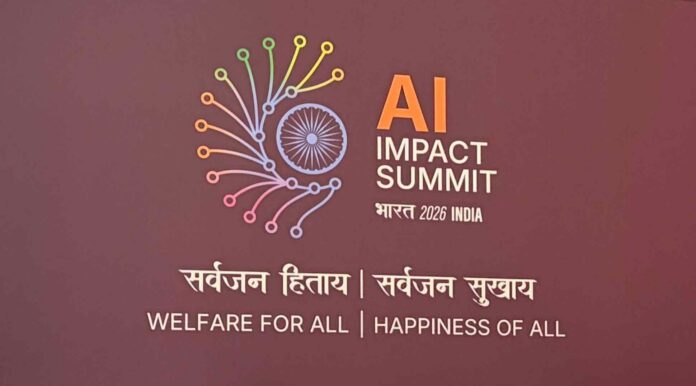
The AI Impact Summit 2026, hosted by India’s Ministry of Electronics and Information Technology, wrapped up in New Delhi on February 19 with the unanimous adoption of the New Delhi Declaration, a landmark framework aimed at harnessing artificial intelligence for global economic growth and social welfare. The two-day event, held from February 18 to 19, brought together representatives from 88 countries and international organisations to emphasise international cooperation, equitable AI access, and respect for national sovereignty under the guiding principle of “Sarvajan Hitaya, Sarvajan Sukhaya,” which translates to ‘welfare and happiness for all’.
Participants spanned a diverse global spectrum, including major powers like the United States, China, Russia, the United Kingdom, and the European Union, alongside nations such as Bhutan, Ethiopia, Fiji, and Rwanda, as well as organisations like the International Fund for Agricultural Development. The summit resulted in a collective commitment to multistakeholder engagement in AI development, ensuring that the technology’s benefits are shared across humanity while advancing trustworthy and accessible frameworks.
The preamble of the New Delhi Declaration states, “Inspired by the principle of “सर्वजन हिताय, सर्वजन सुखाय” (Welfare for all, Happiness of all), we believe that AI’s promise is best realised only when its benefits are shared by humanity.
We, the participants from countries and international organisations, gathered in New Delhi on 19 February 2026 to hold the AI Impact Summit. The advent of AI marks an inflexion point in the trajectory of technological evolution. The choices that we make today will shape the AI-enabled world that future generations will inherit.”
The preamble further states, “This calls for further international cooperation and multistakeholder engagement across our countries along the seven Chakras (pillars) of the AI Impact Summit centred around the principles of development of human capital; broadening access for social empowerment; trustworthiness of AI systems; energy efficiency of AI systems; use of AI in science; democratizing AI resources; and use of AI for economic growth and social good. In complementarity with existing international and other initiatives, we will work to foster shared understanding, while respecting national sovereignty, on how AI could be made to serve humanity, noting the initiatives across the seven Chakras (pillars) of the Summit.”
At the heart of the New Delhi Declaration are seven foundational pillars, metaphorically referred to as “Chakras,” which outline actionable areas for AI’s global impact. These seven chakras are: democratizing AI resources, driving economic growth and social good, ensuring secure and trusted AI, leveraging AI for scientific advancement, promoting access for social empowerment, developing human capital, and building resilient, efficient, and innovative AI systems.
These pillars commit signatories to fostering open-source ecosystems, energy-efficient infrastructure, and AI applications in fields like science, governance, and public services, all while prioritising equitable benefits and strengthened international partnerships.
The summit also adopted seven voluntary global initiatives to translate the declaration’s vision into practical action. There are:
Charter for the Democratic Diffusion of AI, focusing on affordable access to foundational AI tools and supporting locally relevant innovation ecosystems; Global AI Impact Commons for scaling AI use cases through cross-country collaboration; Trusted AI Commons, a repository of tools and best practices for secure systems. Other deliverables include an International Network of AI for Science Institutions to boost research, an AI for Social Empowerment Platform for knowledge exchange, an AI Workforce Development Playbook for skilling and reskilling, and Guiding Principles on Resilient and Efficient AI to enhance infrastructure sustainability.
These frameworks are non-binding, designed to catalyse long-term partnerships and innovation without imposing mandates, positioning India as a key player in shaping AI’s future on the world stage.
The Participants of the summit reaffirmed their commitment to advancing shared global priorities in AI governance, promoting voluntary, non-binding frameworks, and translating vision into action through continued collaboration.
