

The Defence Acquisition Council (DAC), chaired by Raksha Mantri Rajnath Singh, on Thursday accorded Acceptance of Necessity (AoN), or in-principle administrative approval, to a series of capital acquisition proposals for the Indian Armed Forces at an estimated cost of around ₹52,000 crore. The approvals are aimed at modernising key capabilities and enhancing the overall combat readiness of the Army, Navy and Air Force against evolving threats.
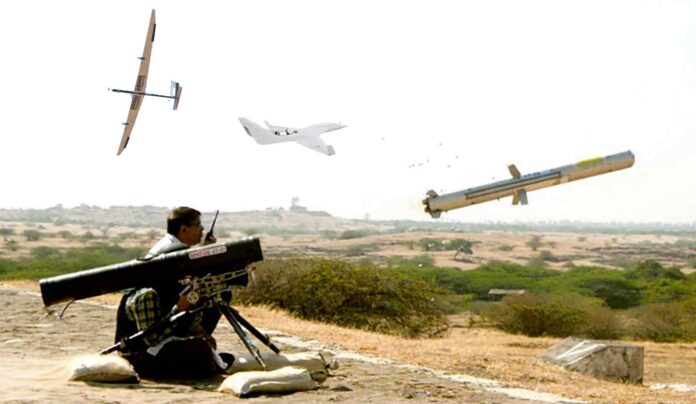
For the Indian Army, the DAC approved the procurement of the Anti-Unmanned Aerial Vehicles (UAV) Electronic Warfare System named ‘AKASH TARANG’, which will provide effective anti-UAV protection to army formations. The Man Portable Anti-Tank Guided Missile (MPATGM) Systems were also cleared to significantly boost the infantry’s ability to counter mechanised threats from adversaries.
In the air defence segment, the Medium Range Surface-to-Air Missile (MRSAM) Weapon System received approval for its role in providing medium-range air defence against a variety of stand-off aerial threats.
Further strengthening short-range air defence, the Very Short Range Air Defence System (V-SHORADS) equipped with multi-spectral sensing will enhance counter-measure resilience and overall effectiveness for army units. The Active Protection System for Tanks was approved to improve the defensive mechanisms of tanks and markedly increase their survivability on the battlefield. Additionally, the Jet-Based Kamikaze Drone System was cleared, offering superior Electronic Warfare capability along with greater lethality and survivability, while remaining cost-effective.
For the Indian Navy, approvals were granted for the Multi Influence Ground Mine (MIGM), which will help deny freedom of manoeuvre to adversaries in the maritime domain. The Naval Shipborne Unmanned Aerial System (NSUAS), fitted with advanced sensors, will enhance the Navy’s situational awareness during operations. The DAC also approved the setting up of a Land Based Testing Facility (LBTF) for Electric Propulsion System to meet the testing requirements of motors and associated propulsion systems for Indian Naval assets.
In the case of the Indian Air Force, the Fixed-Wing Based High Altitude Pseudo Satellite (FW-HAPS) was approved to enable persistent Intelligence, Surveillance and Reconnaissance (ISR), telecommunication and remote sensing capabilities. Other proposals for the Air Force were also cleared as part of the overall package. These acquisitions are expected to provide a significant technological edge to the defence forces and support their operational preparedness in contemporary security scenarios.
