

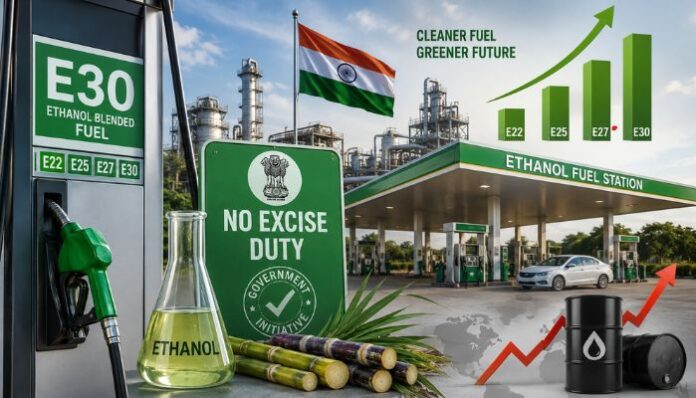
India has taken another major step towards promoting cleaner and alternative fuels by exempting higher ethanol-blended petrol from excise duty. The decision applies to fuel blends such as E22, E25, E27 and E30, which contain different proportions of petrol and ethanol. The move is part of the government’s broader effort to increase ethanol use in the country’s fuel mix and reduce dependence on imported crude oil.
According to a notification issued by the Finance Ministry, E22 fuel contains 22% ethanol and 78% petrol, while E25, E27 and E30 contain 25%, 27% and 30% ethanol respectively. By removing excise duty on these fuel blends, the government hopes to encourage their wider adoption across the country.
Push for Ethanol fuel infrastructure
The latest decision comes as the government prepares to expand ethanol-based fuel infrastructure. Plans are underway to establish between 50 and 100 dedicated ethanol fuel stations in major cities such as Delhi-NCR, Mumbai, Pune and Nagpur. The network is expected to grow significantly, with a target of around 500 ethanol fuel stations by the end of 2026.
Petroleum and Natural Gas Minister Hardeep Singh Puri had earlier indicated that state-run oil marketing companies were preparing to sell E85 fuel at a discount of ₹20 per litre compared to E20 petrol.
The minister had explained that the discount was necessary because ethanol contains less energy than conventional petrol. E85 fuel contains 85% ethanol and 15% petrol, while E20 contains 20% ethanol and 80% petrol. Although E85 offers environmental benefits, vehicles consume it faster due to its lower energy content.
Fuel prices rise amid Middle East crisis
The government’s ethanol push is also taking place against the backdrop of rising fuel prices and growing global energy concerns. Petrol and diesel prices in India have increased by more than ₹7.5 per litre since the conflict in the Middle East escalated, after remaining largely unchanged for nearly four years.
The ongoing war, which began on 28th February, following joint US-Israel strikes on Iran, has disrupted energy markets and pushed global crude oil prices sharply higher. International oil prices have climbed from around $70 per barrel to above $100 per barrel in recent months.
Despite the increase in retail fuel prices, oil marketing companies continue to face significant financial pressure. Industry estimates suggest that companies are still losing around ₹12 per litre on petrol and nearly ₹21 per litre on diesel because rising global crude prices have increased costs faster than retail prices can be adjusted.
