

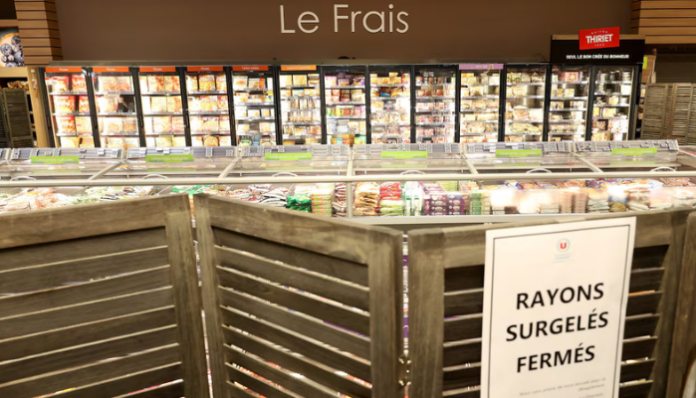
On Tuesday, 10 November, Iran rejected French accusations that it was responsible for cyberattacks on supermarket refrigeration systems last month, calling it “baseless” as a diplomatic dispute over the sabotage campaign intensified.
Iran’s foreign ministry said it categorically rejects the French government’s baseless and one-sided accusations against Iran regarding alleged cyberattacks targeting fridges in French supermarkets and strongly condemns this hackneyed policy of levelling accusations against the Islamic Republic.
Tehran also accused Paris of “projecting its own governance failures” and said it would “not hesitate to take necessary and appropriate measures to safeguard its national interests and security in the face of unlawful foreign activities”.
The denial came a day after French Foreign Minister Jean-Noël Barrot accused Iran’s Revolutionary Guards of being behind the October attacks on commercial refrigerators and freezers across France, saying Paris would “rule nothing out” and that the attack “will not go unanswered”. France summoned Iran’s ambassador and said it would seek sanctions at the European level. The European Union said it would seek a “swift and united response” after consulting member states.
Unable to manage fridges let alone addressing grievances of its people, French government is shifting blame for its failures onto others. Yes, Iran is powerful. But unlike France, we do not exercise power via support for massacres in Gaza or bombings of schools and hospitals.
— Seyed Abbas Araghchi (@araghchi) November 10, 2026
In an X post, Iranian Foreign Minister Seyed Abbas Araghchi accused the French government of deflecting blame for its own failures.
He wrote,“Unable to manage fridges let alone addressing grievances of its people, French government is shifting blame for its failures onto others.”
He added, “Yes, Iran is powerful. But unlike France, we do not exercise power via support for massacres in Gaza or bombings of schools and hospitals.”
Fridge hacking in France: What happened
On 11 and 12 October, the cyberattacks struck when hackers overrode temperature controls on commercial refrigeration systems at hundreds of French supermarkets, raising refrigerator and freezer temperatures and forcing stores to throw away entire inventories of perishable food. In some cases, temperatures were pushed as high as 50 degrees Celsius, causing fires and spoilage.
700 commercial sites were targeted across France, and at least 15 fires broke out. Most affected sites were supermarkets. Small butcher shops, a slaughterhouse and food-processing factories were also hit.
One supermarket owner estimated the total cost could reach tens of millions of euros nationwide. Employees were seen carting away perished meat and melted ice cream. In the immediate aftermath, no group had claimed responsibility and no ransom demand was reported.
Cybersecurity experts said the attack appeared to exploit internet-connected centralised control panels used to monitor and adjust fridge temperatures remotely. France’s national cybersecurity agency, ANSSI, said the targeted remote-monitoring systems were made by Danish company Danfoss, and that similar systems from Copeland and Dixell were also affected.
Danfoss said the affected units were running outdated firmware or had reached end-of-life status and no longer received security updates. A vulnerability in Danfoss firmware had been detailed by cybersecurity firm Claroty in August, and a patch was released shortly afterwards, but experts said a failure to install updates and internet-exposed interfaces appeared to have enabled the intrusion. Similar incidents were then reported in at least 11 other European countries in early November.
The French said they linked Shahid Kaveh to the hacks by connecting the incidents to the digital infrastructure used in the refrigerator sabotage, matching the intrusion pattern to other attacks carried out by Shahid Kaveh, and recovering traces of Farsi in the attack infrastructure.
