

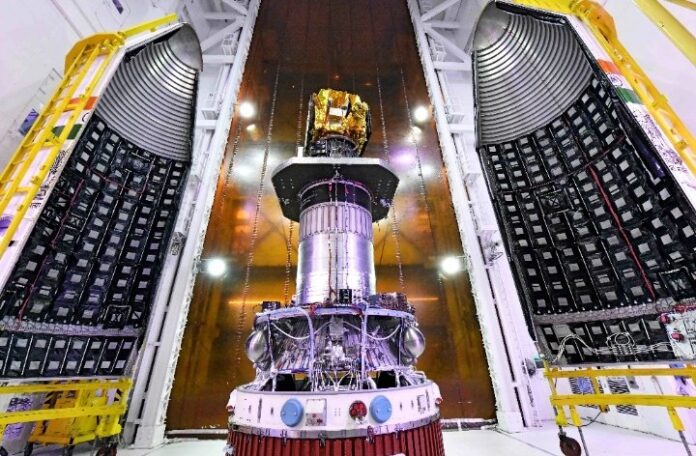
ISRO’s Polar Satellite Launch Vehicle (PSLV-C62) mission failed today at Sriharikota after a third-stage anomaly occurred after liftoff at the Satish Dhawan Space Centre. The failure has most likely destroyed the main payload, a strategic Earth Observation Satellite made by DRDO, along with 15 other ‘co-passenger’ satellites that were being commercially launched for many domestic and international customers.
ISRO is yet to release a full statement. An update stated that a detailed analysis of the failure has been initiated after the third stage launch anomaly.
The PSLV-C62 mission encountered an anomaly during end of the PS3 stage. A detailed analysis has been initiated.
— ISRO (@isro) January 12, 2026
The main payload of today’s mission was the Defence Research and Development Organisation’s (DRDO) EOS N1 ‘Anvesha’, a strategic Earth observation satellite with hyperspectral remote sensing capabilities. The EOS N1 was designed to provide high-resolution, real-time imagery for military surveillance, a critical capability needed for the Indian armed forces.
The PSLV C62 mission’s failure today comes after the May 2025 failure of the PSLV C61 mission, where another critical DRDO Earth observation payload was destroyed. It is notable here that the PSLV has a 95% success rate through the 60+ missions it has flown for the ISRO, with precise polar orbit insertions and commercial launches. The May 2025 mission also failed at the third stage.
The commercial loses of the passenger satellites is expected to be covered by insurance, but the strategic loss of the EOS N1 satellite is being cited as a major setback for India’s defence needs.
Among the commercial co-passenger satellites, Hyderabad-based space start-up Dhruva had 7 satellites onboard the PSLV-C62, along with other satellites from the UK, Nepal, and Brazil. One satellite named LACHIT-1 by the students of Assam’s Don Bosco University was included, too.
Many on social media are suggesting that there might be some ‘sabotage’ involved behind the repeated failures of the PSLV missions
Earlier today, ISRO had informed that the EOS-N1 and 14 co-passengers are planned for injection into Sun Synchronous Orbit, while the KID capsule has been planned for a re-entry trajectory.
